 Skip to content
Drawstring Bags Bulk
Source bulk drawstring bags, cinch backpacks, and promotional gym sacks in polyester, cotton, mesh, and non-woven materials for events, schools, retail programs, sports campaigns, giveaways, and branded promotions. Compare fabric options, logo printing, color choices, reinforced corners, cord styles, size variations, and pack-out planning based on how the bags will actually be used. From lightweight giveaway bags to stronger, reusable brand visibility, carrying comfort, packing efficiency, and styles, the right bulk drawstring bag program improves use and delivery readiness across larger-volume orders.
Choose by Rollout, Not Price
A bulk drawstring bag order usually works best when the bag spec follows the rollout plan, not just the quote sheet. A one-day giveaway, a school distribution, a gym campaign, a charity run, and a retail add-on may all use drawstring bags, but they do not need the same fabric, print area, corner strength, or packing setup. Public bulk listings repeatedly connect these bags with school, beach, gym, events, promotions, bundle quantity, case quantity, and imprint area, which shows that high-volume orders are judged by handling logic as much as by unit price.
The smarter starting question is not “What is the cheapest bag?” It is “What kind of rollout is this bag entering?” For fast event distribution, a lighter spec with a generous print area may be enough. For school or gym use, stronger corners, better cords, and more reliable daily handling matter more. For multi-location distribution, carton flow and quantity per case can become just as important as fabric choice. When the bag is matched to the rollout type first, the project usually becomes easier to price, easier to pack, and easier to deliver without regret later.
Rollout-fit table
| Rollout type | Better direction |
|---|---|
| Event giveaway | Lighter build, clear print area, fast handout logic |
| School use | Stronger corners, better cords, stable daily use |
| Gym campaign | Sport-ready feel, easier carrying, larger usable size |
| Retail add-on | Cleaner look, more controlled branding, better finishing |

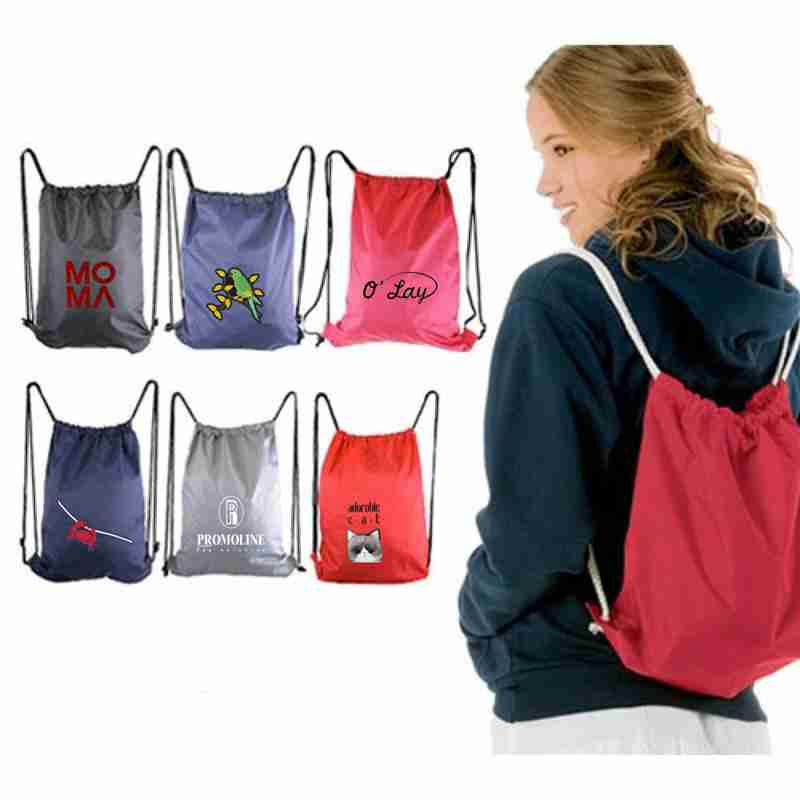
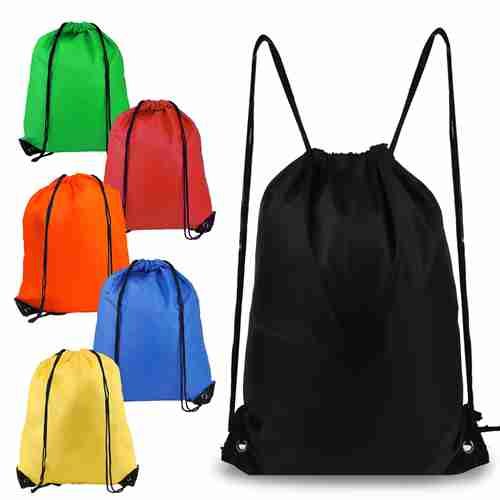
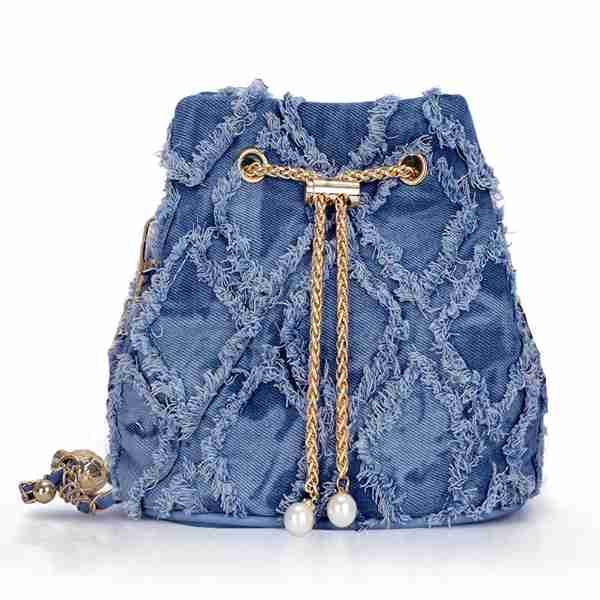

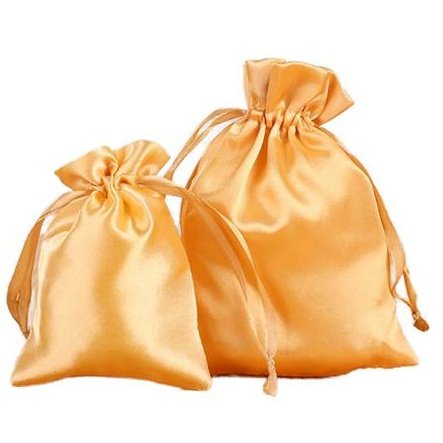



Choose Material by Program
In bulk drawstring bag programs, material choice affects much more than appearance. It changes weight, print feel, handling speed, packing density, daily durability, and perceived value. Public bulk listings repeatedly highlight 210D polyester for promotional cinch bags, often alongside matching drawstrings, reinforced corners, metal grommets, and large imprint areas. Other public category pages keep extending the range into canvas, cotton, mesh, nylon, and non-woven polypropylene, which shows that material is one of the main ways bulk programs separate “short-cycle distribution” from “longer-use value.”
A useful rule is simple: choose material by how the bag will be used after delivery, not by habit. Polyester often makes sense for school, gym, and event programs because it balances weight, visibility, and cost. Mesh is better when airflow matters. Cotton or canvas can give a warmer handfeel and a less promotional look. Non-woven can work well where wide distribution and cost control matter more than long-term reuse. The best choice is usually the one that matches use frequency, print direction, and rollout scale at the same time.
Bulk material table
| Material | Stronger fit |
|---|---|
| 210D polyester | Promotions, school, gym, event rollouts |
| Cotton or canvas, | Softer handfeel, warmer look, everyday reuse |
| Mesh | Airflow-needed use, swim, or gear carry |
| Non-woven | High-volume distribution, budget-focused programs |
Corners and Grommets Matter
On bulk drawstring bags, three details often decide whether the order feels merely cheap or genuinely usable: imprint area, reinforced corners, and metal grommets. Public product guide makes these details highly visible for a reason. Other Factory’s bulk cinch bags repeatedly publish imprint dimensions, plus reinforced corners and metal grommet details alongside 210D polyester, bundle quantity, and case quantity. That is a strong signal that high-volume programs are being judged not only by body fabric, but by how clearly the bag carries graphics and how well the high-stress points hold up in real handling.
A larger usable print area matters when the bag is meant to carry campaign identity across a distance. Reinforced corners matter because that is where tension builds first. Metal grommets matter because they help the cord path move more cleanly under repeated pulling. None of these is a decorative detail. In bulk programs, they decide how the bag behaves after the handout, after the locker use, after the gym trip, or after the repeated open-close cycle. That is why these small-looking details often decide whether a bag is remembered as useful or forgotten as throwaway.
Detail-impact table
| Detail | What it changes |
|---|---|
| Imprint area | Logo visibility and campaign clarity |
| Reinforced corners | Tension, durability, and daily confidence |
| Metal grommets | Smoother cord movement and cleaner wear behavior |
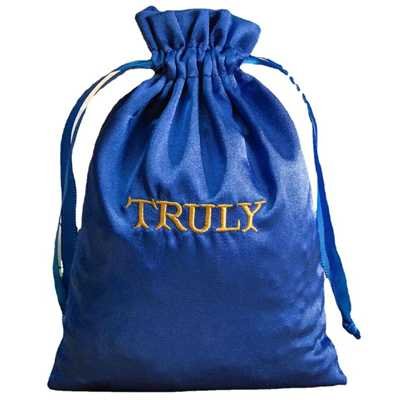
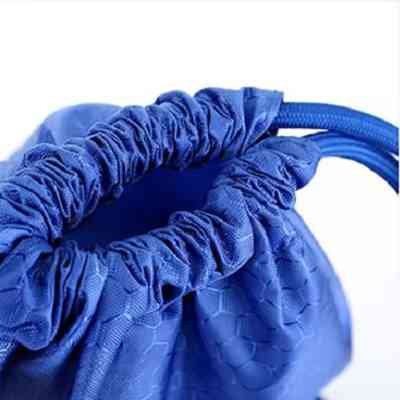


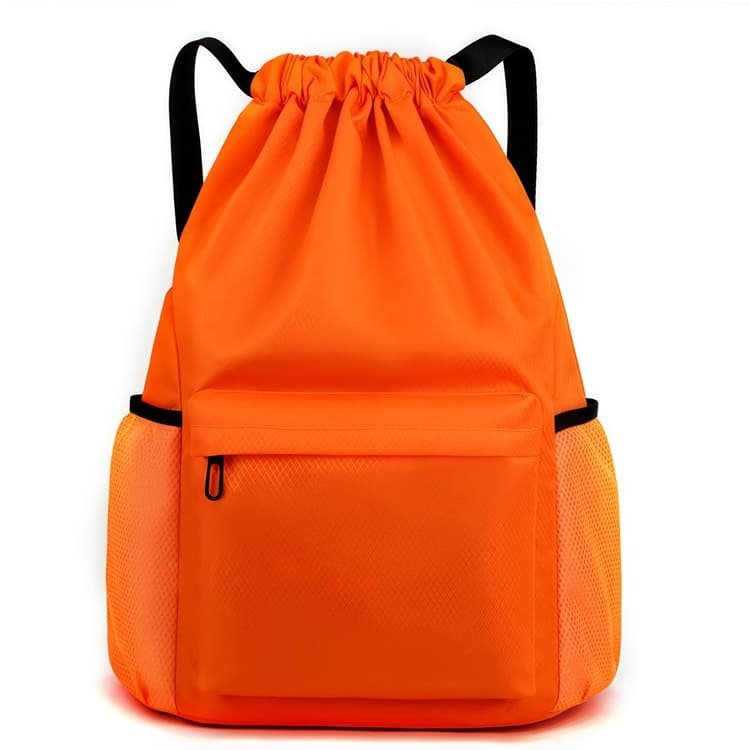
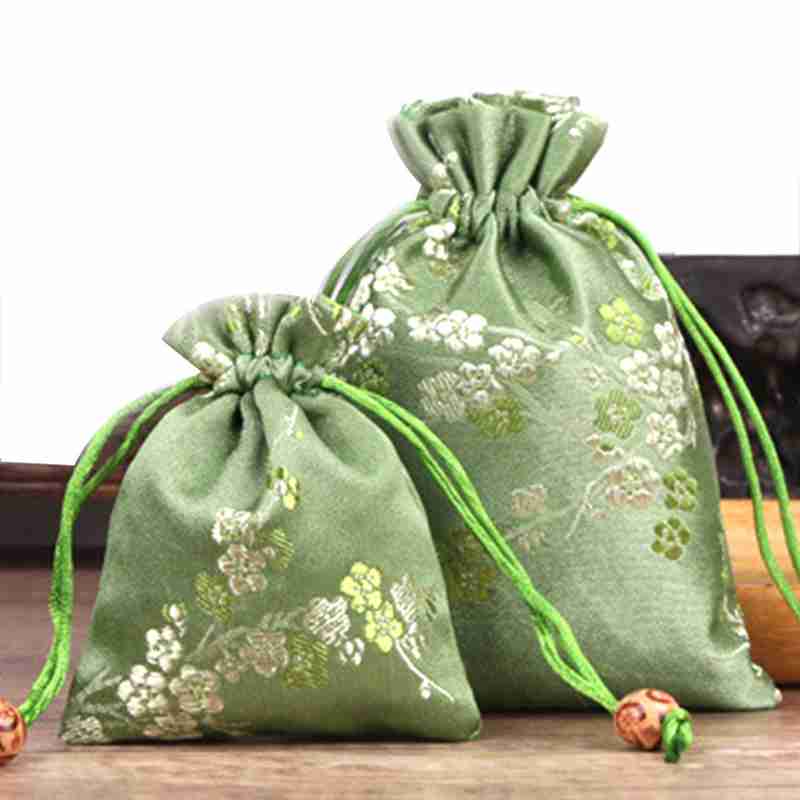



Different Uses, Different Specs
Bulk drawstring bags are often grouped together as one simple category, but the real spec should change with the distribution setting. A fast event giveaway usually needs a bag that is light, easy to stack, quick to hand out, and clear enough for the logo to read at a glance. A school-use bag needs more tolerance for repeated carrying, fuller loads, and rougher daily handling. A gym promotion may need a larger usable size, stronger cord feel, and a more active look. A retail add-on usually benefits from a cleaner finish and more controlled branding because the bag is judged closer and kept longer. Public bulk listings repeatedly separate size, imprint area, and construction details such as reinforced corners and grommets, which shows that high-volume orders are often matched to use a scene rather than treated as one generic bag format.
The safest way to set the spec is to ask what happens after the bag is received. Will it be opened once and forgotten, or used for weeks? Will it carry leaflets, shoes, gymwear, or retail purchases? Will the logo be read from a table display, across a gym floor, or at a registration desk? Once those questions are clear, choices around material, print area, cord thickness, and corner strength become much easier. A bulk order feels more successful when the bag matches the program logic, not just the unit cost target. That is usually what separates a bag that gets used from one that gets dropped aside after distribution.
Program-spec table
| Program type | Better spec direction |
|---|---|
| Event giveaway | Lighter build, simple pack-out, clear logo area |
| School pack | Stronger corners, better cords, steadier daily use |
| Gym promotion | Larger usable size, stronger carry feel |
| Retail add-on | Cleaner finish, tighter visual control |
Early Pack-Out Helps Pricing
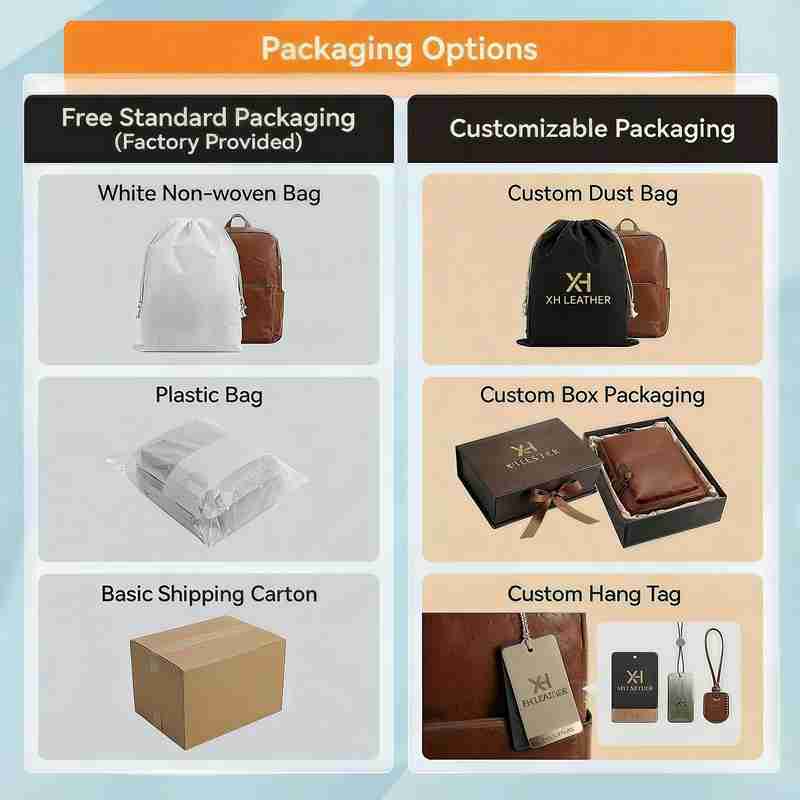
Unit price only tells part of the story in a bulk drawstring bag order. Public product listings often publish bundle quantity, case quantity, size, and imprint area together, which is a strong clue that pack-out planning affects the commercial result as much as the bag itself. Several public drawstring listings show the same basic 210D polyester bag structure but with clearly stated bundle and case quantities, making it obvious that packing flow is part of how these bags are sold and compared.
This matters because bulk programs rarely end with sewing. They move into counting, warehouse handling, event preparation, school distribution, retail sorting, or split delivery. If carton quantity is not planned early, a bag that looks “cheap per piece” can become harder to move, harder to distribute, or more expensive to repack. If pack-out is discussed too late, teams often discover avoidable friction around inner pack counts, label visibility, or how many units a location actually needs. Public workflow guides reinforce this by treating packaging inspection as part of project control rather than a final clerical step.
A better pricing discussion starts with three questions: How many units should each carton carry? How will each destination count or sort them? Does the bag need individual presentation or simple bulk flow? Once those are answered, the price becomes easier to judge in a realistic way. The most useful cost is rarely the lowest unit cost. It is the cost that still supports a clean pack-out, smooth receiving, and fewer avoidable handling mistakes later.
Pack-out planning table
| Early decision | Why it matters |
|---|---|
| Case quantity | Affects warehouse and delivery flow |
| Inner pack logic | Reduces counting mistakes |
| Label visibility | Helps with receiving and sorting |
| Simple vs individual packing | Changes handling speed and presentation |





Lock Specs Before Sampling
Most delays in bulk drawstring bag programs do not begin on the sewing line. They begin when the brief is too loose. Public workflow guides describe a clear pattern: define the concept, confirm technical details, sample, revise, then move toward production with quality checkpoints built in.
For bulk drawstring bags, the most useful items to lock before sampling are usually finished size, intended use scene, material choice, cord style, imprint area, logo method, and pack-out direction. It also helps to lock what should not drift later: reinforced corner method, grommet choice, color direction, label placement, and case-count logic if the order will be split across programs or destinations.
A strong sample is not only there to show how the bag looks. It should answer how the bag will behave when filled, printed, bundled, and shipped.
Pre-sampling lock table
| Lock before sample | Why it matters |
|---|---|
| Finished size | Controls capacity and carton logic |
| Use scene | Prevents wrong material or structure |
| Cord and reinforcement | Protects carrying behavior |
| Imprint area and logo method | Keeps graphics realistic |
| Pack-out direction | Reduces late-stage changes |
Mixed Orders Need Control
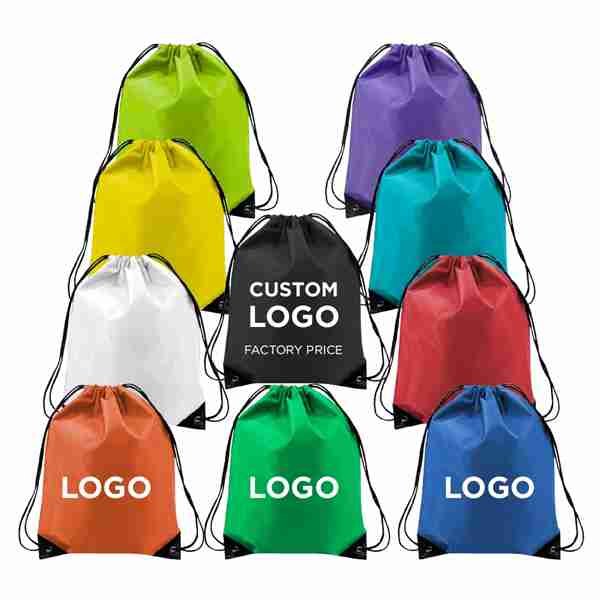
A single-color bulk drawstring bag order is one thing. A rollout that includes multiple body colors, more than one size, shared logo artwork, separate inner packs, or split deliveries is something else entirely. Public bulk drawstring listings already show why this matters. They often separate size, imprint area, bundle quantity, and case quantity very clearly, because once a project scales, organization becomes part of quality. A mixed order is no longer just about sewing the bag well. It is about keeping the information around the bag under control.
The safest way to run a mixed bulk program is to build a clear control structure before production starts. That usually means a color list, size chart, SKU sheet, logo reference, carton ratio plan, and shipment split logic. If one color goes to schools, another goes to an event team, and a third goes into retail bundles, the order should reflect that early. The same applies when one size is used for gym kits and another for promotional handouts. The more organized the order sheet is, the less likely the project is to slow down later with avoidable repacking, labeling errors, or location-level confusion.
Mixed-order control table
| Control item | Why it matters |
|---|---|
| Color list | Prevents body-color mix-ups |
| SKU sheet | Keeps size and style codes aligned |
| Carton ratio plan | Reduces packing mistakes |
| Shipment split logic | Helps each destination receive the right quantity |




Cheap Bags Cost More Later
The lowest quote on paper is not always the lowest project cost in real use. Public bulk drawstring bag guide makes this visible in a simple way: bags that look similar at first glance often differ in fabric weight, imprint area, reinforced corners, metal grommets, bundle quantity, and case quantity. Those details affect not only how the bag looks, but how it performs after distribution. A cheaper bag may save a few cents at the quotation stage, yet create more friction later through weaker carry points, smaller branding space, rougher cord movement, or less efficient pack-out.
This is especially true in bulk programs because the cost keeps moving after sewing. Counting, warehouse handling, event setup, retail sorting, and location-level distribution all add pressure to a bag that looked “good enough” when empty. If the corners fail early, the print area feels too cramped, or the cartons are awkward to move and split, the cheapest line on the quote sheet quickly stops being the cheapest choice.
A more useful cost review starts with four questions: Will the bag survive the real use scene? Will the logo still read clearly? Will the packing setup stay efficient? Will mistakes later cost more than the initial savings? When those questions are answered honestly, price becomes easier to judge in a way that supports the full rollout instead of only the purchase order.
Cost-review table
| Cost lens | Better question |
|---|---|
| Unit price | What has been reduced to reach it? |
| Durability | Will it hold under real use? |
| Branding space | Is the logo still clear enough? |
| Pack-out efficiency | Will handling stay simple later? |
Keep Bulk Orders Organized
A bulk drawstring bag order stays under control when the project keeps one clear thread running from the approved sample to the final carton. Public workflow guides describe bulk bag development as a sequence rather than a jump: confirm the concept, sample it, revise it, move into production with checkpoints, then verify packaging and shipment details before delivery. That structure matters because high-volume orders do not become messy in one dramatic moment. They become messy when small details are left floating between stages.
The approved sample should define more than the bag’s look. It should lock size, fabric, print position, cord style, reinforcement method, label logic, carton count, and mark format. Once those details are treated as one connected system, the order becomes easier to track. Carton marks are especially important in bulk programs because they turn the finished bag into something that can actually move cleanly through counting, storage, and delivery.
A useful test is simple: if the bags are already sewn, could someone still pack, label, count, and ship them correctly without asking five extra questions? If the answer is no, then the order control system is incomplete. In bulk programs, organization is not separate from quality. It is one of the forms quality takes.
Order-control table
| Stage | What should stay aligned |
|---|---|
| Approved sample | Look, size, material, print position |
| Production control | Reinforcement, cords, consistency checks |
| Packing stage | Labels, counts, inner packs |
| Carton stage | Marks, destination split, shipment readiness |




Make A Sample First?
See your idea come to life before mass production.
At Jundong Factory, we offer free design mockups and custom samples to ensure every detail is perfect — from material and color to logo placement and stitching.
Start your project with confidence today: info@jundongfactory.com.
FAQs About Drawstring Bags Bulk
What Is a Practical Starting Quantity for Bulk Drawstring Bags?
A practical starting quantity is usually set by the rollout plan, not by the bag alone. A school program, event giveaway, gym campaign, retail add-on, and charity distribution may all use drawstring bags, but they do not share the same quantity logic. Public custom guide clearly shows that low-entry custom runs do exist, while wholesale-style listings emphasize bundle quantity and case quantity for standardized bulk flow. That means the real question is not “What is the lowest number possible?” It is “What quantity allows this program to run cleanly without forcing the bag spec too low?”
A useful way to judge quantity is to separate it into three stages. The first is a test stage. This is used to check print visibility, cord feel, corner strength, and whether the chosen size actually suits the intended contents. The second is a launch stage, where the quantity must support a real distribution target such as a school term, registration event, gym rollout, or seasonal promotion. The third is a repeat stage, where quantity becomes less about access and more about control: carton ratios, consistent printing, color repeatability, and receiving efficiency all start to matter more.
Many teams make the same early mistake: they chase the smallest possible quantity before they know whether the bag is expected to be one-day promotional stock, multi-week school use, recurring gym use, or a longer-life retail extra. That can push the structure in the wrong direction. A bag built only to satisfy a very small entry quantity can end up too weak at the corners, too cramped for the logo, or too awkward to pack efficiently once the rollout expands.
The stronger starting quantity is the one that still leaves room for the right material, usable print area, realistic reinforcement, and clean pack-out. In other words, a low starting point only helps when it does not create a bag that is harder to distribute, harder to reuse, or harder to expand later.
Quantity planning table
| Stage | Better quantity logic |
|---|---|
| Test stage | Check the look, feel, print, and corner strength |
| Launch stage | Match the real distribution target |
| Repeat stage | Plan around case counts, consistency, and receiving |
Which Material Works Best for Bulk Drawstring Bags?
The best material is the one that matches how the bag will be used after distribution, not the one that sounds best on a quote sheet. Public bulk listings repeatedly center 210D polyester for sport cinch bags and promotional drawstring backpacks, often together with reinforced corners, metal grommets, and large imprint areas. Other public guides extend into cotton, canvas, mesh, nylon, and non-woven polypropylene, which shows that material is one of the main ways a bulk bag program separates short-cycle distribution from longer-use value.
A useful rule is simple: start with the post-delivery job of the bag. If it is meant for school or gym use, polyester often makes sense because it balances weight, visibility, and cost reasonably well. If airflow matters, mesh becomes more useful. If the bag needs a softer handfeel or less obviously promotional look, cotton or canvas may be the better direction. If the main priority is broad high-volume distribution with tight budget discipline, non-woven can work well. Public category pages reflect this same split because they do not present all drawstring bags as one thing; they separate them by fabric behavior and intended scene.
Material also changes more than just its look. It affects print feel, stacking behavior, weight per carton, handling speed, and the gap between “disposable handout” and “kept for reuse.” A 210D polyester bag can be ideal when you need a clear campaign identity and efficient bulk flow. Cotton can make the bag feel more reusable, but may change how the print reads and how the cartons stack. Mesh can solve one problem—airflow—while creating another if the rollout needs stronger logo visibility. Non-woven can help cost control, but may not give the same after-use value as a more robust bag. This is why material should be judged with use frequency, print direction, and distribution scale all together.
Material-fit table
| Material | Stronger fit |
|---|---|
| 210D polyester | Promotions, school, gym, event rollout |
| Cotton/canvas | Softer handfeel, warmer look, better reuse feel |
| Mesh | Airflow-needed carry, swim, or gear use |
| Non-woven | High-volume distribution, tight budget control |
What Should Be Ready Before Sampling Starts for a Bulk Drawstring Bag Order?
The sample phase moves faster when the bulk brief starts with decisions instead of guesswork. Public workflow guides describe bulk bag development as a clear sequence: define the concept, confirm the technical direction, sample it, revise it, then move into production with quality checkpoints built in. That sequence only works well when the front-end decisions are clear enough to stop one small change from triggering five more.
For a bulk drawstring bag order, the most useful items to lock before sampling are usually finished size, intended use scene, material choice, cord style, print area, logo method, and pack-out direction. It also helps to confirm what should not drift later: corner reinforcement method, grommet choice, color direction, label position, and carton-count logic if the order will be split by location or program. Public bulk product listings make this structure visible by separating size, imprint area, reinforcement details, and case quantity rather than describing the bag in one vague sentence.
A strong sample should answer more than “Does the bag look right?” It should also answer: Does the size work when filled? Does the print still read clearly? Do the cords feel right under load? Will the bundle and carton plan still make sense? The more clearly these questions are resolved during sampling, the less likely the order is to lose time later in revision loops. Your internal material supports exactly this logic through Rapid Sampling, Sample-to-Mass Production, In-House QC, Mixed Orders, production updates, and consistency between sample and bulk.
Many delays blamed on “production” are actually front-end decision gaps in disguise. When a bulk drawstring bag order feels slow, the problem is often not the sewing speed. It is the missing decisions about size, structure, print, or pack-out. That is why one complete sample brief usually saves more time than several rushed corrections later.
Pre-sampling checklist
| Item | Why it matters |
|---|---|
| Finished size | Controls capacity and case logic |
| Use scene | Prevents wrong material or spec choice |
| Cord + corner detail | Protects carrying behavior |
| Print area + logo method | Keeps graphics realistic |
| Pack-out direction | Reduces late-stage changes |
Which Logo or Print Method Works Best for Bulk Drawstring Bags?
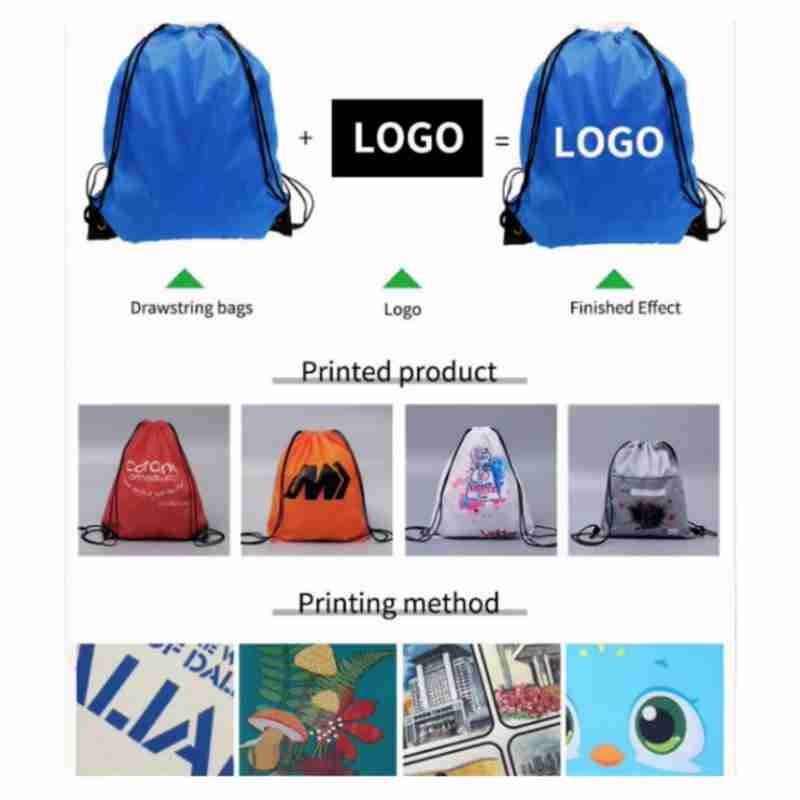
The best print method is the one that matches the fabric, the viewing distance, and the scale of the rollout at the same time. In bulk drawstring bag programs, the logo is rarely judged in isolation. Public listings repeatedly publish imprint area together with material, size, and quantity because the usable print space is one of the first things that affects bag value in promotional and distribution settings. A method that looks good on a mockup can become far less effective when the bag is filled, wrinkled, stacked, or viewed across a gym floor or registration line.
For simpler promotional rollouts, a bold, clean front graphic often works best because it reads quickly and survives high-volume use without relying on delicate detail. Where the bag needs a softer or more reusable look, the print may need to feel less aggressive and more balanced with the fabric. This is also where material matters. A 210D polyester bag can carry a strong promotional graphic well. A cotton or canvas bag may suit a quieter treatment depending on the desired tone. A mesh bag may need the logo strategy adjusted because the fabric itself changes visibility and printing logic. Public pages for cotton and custom drawstring bags make this material–logo connection clear by presenting fabric type and customization options as linked decisions.
The practical test is simple: How will the logo be seen in real use? On a sign-up table, on a locker hook, across a court, inside a school pile, or handed out one by one at an event? That answer changes the right print approach more than trend does. A very detailed logo may be wasted if the bag is mainly read from a distance. Too-small print can disappear once the bag creases. A too-large logo can dominate a smaller bag and make the structure feel cheaper. Your internal document also highlights this directly through Logo Accuracy & Visibility, fast project control, budget alignment, and packaging or label readiness for promotional and wholesale-style programs.
In bulk programs, the best branding method is usually the one that keeps the logo readable, realistic, and scalable without making the bag harder to print, harder to control, or harder to pack.
Print-choice table
| Print logic | Better fit |
|---|---|
| Bold front graphic | Events, schools, gym promotions |
| Quieter branding | Reuse-oriented cotton or canvas bags |
| Adjusted visibility approach | Most of the h or more open-weave materials |
| Distance-readable logo | Large rollout environments |
How Long Do Sampling and Bulk Production Usually Take for Bulk Drawstring Bags?
Most bulk drawstring bag timelines depend more on clarity and project structure than on sewing speed alone. Public custom pages often mention fast sampling for custom drawstring bags, while public wholesale-style listings show standardized specifications and pack quantities that support quicker repeat handling. The difference between those two models is important. A simple standard 210D polyester cinch bag with fixed size and print area moves very differently from a multi-color program with custom cords, split shipments, and location-based carton logic.
Sampling time is shaped by what must be decided before the first physical piece is made. If the size, material, cord style, print area, and logo direction are already clear, the sample stage usually moves faster. If the project still needs shape comparison, material changes, corner-reinforcement review, or pack-out discussion, it expands naturally. This is one reason public guides tie bag development to step-by-step control rather than treating sampling as an isolated technical task. A useful sample is supposed to reduce uncertainty. If the sample begins before the key decisions are ready, it cannot do that job well.
Bulk timing is influenced not only by quantity but also by how organized the project becomes after approval. A single-color school rollout, a gym promotion with two sizes, and an event program split across several locations may all use the same basic bag type but move at different speeds because color count, pack-out logic, and shipment structure differ. This is where your own internal strengths matter, because the file clearly highlights Rapid Sampling, On-Time Delivery, Production Updates, Preventing Delays, Mixed Orders, Order Adjustments, and packaging or label readiness as working capabilities.
A more realistic timeline discussion usually separates four stages: sample preparation, sample review, bulk production, and packing or shipment. Many delays blamed on “production” are actually caused by late artwork changes, pack-out changes, or missing approval details. The safest schedule is not the shortest promise on paper. It is the schedule with the fewest unresolved decisions left in the middle.
Timing table
| Stage | What affects it most |
|---|---|
| Sampling | Brief clarity, material choice, print direction |
| Review | Number of comments and revision rounds |
| Bulk | Quantity, color count, reinforcement details |
| Packing or shipment | Carton logic, labels, split delivery needs |
Can You Match Pantone Colors and Keep Them Stable Across Bulk Reorders?
Pantone matching can usually get very close, but stable repeat color depends on the full bag construction, not only the color code. On bulk drawstring bags, the same code can look different across 210D polyester, cotton, canvas, non-woven, or mesh because each surface reflects and absorbs color in its own way. The cord, print method, coating, reinforcement patch, and even the background density of the fabric can slightly change how the final color is seen. That is why color should never be approved by code alone. It should be checked on the actual material direction chosen for the order.
This matters more in bulk projects than many teams expect. A small color shift may seem harmless on one loose sample, but once thousands of bags are lined up for an event, a school program, or a multi-location rollout, the difference becomes easy to notice. It can weaken logo clarity, make mixed lots feel inconsistent, or create visible mismatch against printed inserts, uniforms, gift items, or campaign graphics. If the project includes more than one material or more than one bag size, color control becomes even more sensitive.
A safer color process usually follows four steps. First, lock the body material. Second, confirm the target shade using a code, chip, or approved reference. Third, confirm the print direction and trim color, because cords, patches, grommets, and logo treatment all influence how the body color reads. Fourth, approve a real pre-production sample before full rollout begins. For repeat orders, it also helps to keep one sealed approved bag as a long-term comparison reference. That way, reorders are judged against something real instead of memory.
The strongest color control mindset is simple: same code does not automatically mean the same result unless the material, finish, print method, and approval standard are also kept aligned.
Color control table
| Checkpoint | Why it matters |
|---|---|
| Body material | Changes how the color appears |
| Print / trim direction | Affects overall visual balance |
| Approved sample | Creates a real comparison standard |
| Sealed reorder reference | Helps future runs stay closer |
How Can We Keep the Approved Sample and Bulk Output Consistent?
Approved-sample consistency is usually protected by detail locking and repeated checks, not by memory or goodwill. A bulk drawstring bag may look simple, but small changes can quickly weaken the final result. A slightly softer fabric, a smaller imprint area, a thinner cord, a weaker corner patch, or a shifted logo can make the bulk run feel noticeably different from the approved bag, even when the order is technically usable. That is why the approved sample must function as a working standard, not just a nice-looking prototype.
The strongest control starts before production. The sample stage should lock the details that most often drift later: finished size, body material, cord thickness, imprint position, reinforcement method, grommet type, label logic, and pack-out direction. Once those details are confirmed, they should be paired with a written specification sheet so that the order is not being interpreted differently by different people. In bulk work, visual reference alone is not enough. The project needs one physical standard and one written standard to move together.
A good control process usually has three anchors. The first is the approved sample. The second is a clear specification sheet. The third is a production-stage checking routine. That checking routine matters because most inconsistencies do not appear all at once. They appear gradually: a corner patch becomes smaller, a cord tone changes, print density softens, cartons get packed differently, or label positions start drifting. Once those small changes spread across a large order, the project feels messy even if there is no dramatic failure.
For repeat programs, one sealed approved bag from the last accepted shipment is extremely useful. It gives the next run a stable comparison target. A simple internal test is this: if the bag is going from one approved sample to 5,000 or 50,000 pieces, can someone clearly state what must stay unchanged? If the answer is vague, the risk is already too high.
Consistency control table
| Control tool | What it protects |
|---|---|
| Approved sample | Visual and handling reference |
| Spec sheet | Prevents hidden drift |
| In-line checking | Stops issues before they spread |
| Sealed reorder bag | Strengthens repeat consistency |
What Details Usually Cause Quality Problems in Bulk Drawstring Bags?
Most quality issues in bulk drawstring bags begin at stress points, print zones, and packing stages rather than in the overall bag shape. Public bulk product listings repeatedly highlight reinforced corners, metal grommets, imprint area, and case quantity because those are the places where trouble often starts. If the corners are weak, the bag may fail under repeated carrying. If the grommets are poorly fitted or skipped where needed, the cord path becomes rough and wears faster. If the imprint area is too cramped or poorly positioned, the logo loses impact once the bag is filled, wrinkled, or stacked. These are not cosmetic details. In bulk programs, they shape whether the bag still feels usable after real handling.
The next group of problems often comes from cords, stitching, and finish control. Cords that look acceptable in one sample can feel thin or harsh across a larger shipment. Uneven stitching may not cause immediate breakage, but it weakens confidence and makes the order look rushed. Finish problems often show up around the corners, top hem, grommet area, and print edges. These are the zones where the bag first starts to look cheaper than intended. On high-volume orders, appearance drift matters because the bags are often seen in piles, rows, cartons, and distribution tables, where inconsistency becomes more obvious.
The last group of problems is frequently underestimated: packing and counting errors. Wrong inner-pack quantity, wrong carton count, wrong color split, wrong labels, or cartons packed out of sequence can turn a usable bag into a difficult rollout. The bag itself may be fine, but the delivery result is not. That is why packaging inspection belongs inside project quality control, not outside it.
A practical inspection mindset is simple: look at the points where the bag is most likely to “give up” first. Check the corners under weight, the cord movement through the top path, the print visibility when the bag is wrinkled, the stitch stability at the opening, and the order accuracy at the carton level.
Risk-area table
| Risk area | Typical problem |
|---|---|
| Corners | Tear or weakness under load |
| Grommets/cord path | Rough pull, fast wear |
| Print zone | Weak visibility after filling or wrinkling |
| Stitching | Uneven finish, lower durability feel |
| Packing/count | Wrong quantities, wrong color split |
Can One Order Include Multiple Colors, Sizes, or Split Shipments?
Yes, one bulk order can absolutely include multiple colors, sizes, or split shipments, but once those variables are added, control logic becomes as important as bag construction. This is common in large rollout programs. A school order may need different colors by grade. An event program may need one size for handouts and one size for crew packs. A gym rollout may need part of the order to move first and the rest later. A retail program may want shared graphics but different body colors by store group. None of this is unusual. What matters is whether the project is organized clearly enough to keep those differences under control.
The safest way to handle a mixed bulk order is to turn it into a documented system before production begins. That usually means a color list, size chart, SKU sheet, logo reference, inner-pack plan, carton plan, and shipment split table. If one color is routed to one site and another color goes elsewhere, the order sheet should show that early. If one size needs a different print scale, it should be locked before sampling or PP review. If part of the order ships early, the carton marks and count logic should reflect that from the beginning.
Mixed orders often make a rollout smarter, not harder. They can reduce freight waste, help one campaign serve multiple groups, and support more than one use scene without forcing separate purchase cycles. But complexity should be introduced deliberately. If multiple differences are added without matching control documents, the risk of wrong color distribution, wrong size allocation, wrong labels, and repacking work rises quickly. At that point, the issue is not the bag. It is the absence of structure around the bag.
A simple test works well here: if someone outside the original project team receives the order sheet, can they still tell which bags go to which destination, how the cartons should be split, and which print or label variation belongs to each item code? If not, the order is already more complex than the paperwork can safely support.
Mixed-order control table
| Control item | What it prevents |
|---|---|
| Color list | Wrong distribution by color |
| Size chart | Size allocation mistakes |
| SKU sheet | Confusion between item versions |
| Shipment split table | Destination and carton errors |
What Packing Details Should Be Confirmed Before Bulk Production?
Packing should be confirmed before bulk starts because a drawstring bag order is not truly ready until it can move cleanly through counting, storage, and delivery. On bulk programs, the key packing details often include bundle quantity, inner pack quantity, case quantity, carton marks, label visibility, simple bulk flow or individual presentation, and destination split logic. Public bulk listings make this unusually visible by publishing bundle and case counts right on the product information, which is a strong sign that these details are part of the commercial decision, not an afterthought.
The right packing plan depends on what happens next. An event handout may need easy counting and fast table-side distribution. A school program may need clear carton quantities by class, site, or grade. A gym campaign may need compact packs that move easily between locations. A retail extra may need cleaner individual presentation even if the bag itself is simple. Once the post-production route is clear, packing becomes much easier to design correctly. Without that clarity, teams often complete the bags but slow the project down because the goods are ready while the delivery format is not.
Packing also protects labor, not just product. If cartons are too heavy, counts are awkward, or labels are unclear, receiving becomes slower and mistakes become more likely. In large rollouts, that hidden labor cost matters. A clean pack-out can save time at every step: warehouse handling, counting, distribution, and final delivery. That is why the most useful packing plan is rarely the fanciest one. It is the one that matches the route, the recipients, and the actual handling rhythm of the project.
A practical packing discussion should answer five questions before production begins: How many bags per bundle? How many per carton? What must be visible on the label? How will each destination count or sort them? Does the rollout need a simple bulk flow or individual presentation? Once those answers are locked, the order becomes much easier to move without friction later.
Packing table
| Packing item | Why it matters |
|---|---|
| Bundle quantity | Speeds counting and handout prep |
| Case quantity | Helps warehouse and transport flow |
| Carton marks | Improves destination accuracy |
| Label visibility | Supports faster receiving and sorting |
| Bulk vs individual packing | Changes handling speed and presentation |
Everything You Need to Know Before Customizing Your Bags
A bulk drawstring bag order looks simple on the surface, but the decisions behind it are rarely simple. The bag has to match the distribution scene, logo visibility, carry weight, carton flow, handling speed, and after-use value at the same time. Public bulk listings repeatedly surface details such as 210D polyester, reinforced corners, metal grommets, imprint area, bundle quantity, and case quantity, which shows that large-volume drawstring bags are judged by rollout logic as much as by fabric and price.
The FAQs focus on the issues that usually decide whether a bulk order is easy to spec, practical to sample, realistic to scale, and clean to distribute. They are written for teams comparing options before the order moves into revisions, repacking, or delivery-stage confusion.
