 Skip to content
Drawstring Bag Manufacturer
Looking for a reliable drawstring bag manufacturer for promotions, retail, schools, sports, travel, giveaways, and daily carry? We support custom drawstring bags in cotton, polyester, nylon, non-woven, mesh, and lightweight fabrics with logo printing, size adjustment, pocket options, reinforced corners, strap upgrades, sample development, and stable bulk production. From simple promotional drawstring bags to retail-ready gym sacks, shoe bags, gift bags, and travel pouches, we help create drawstring bag styles that match your branding, budget, use scene, and repeat-order needs.
Drawstring Bags Need Different Builds
A drawstring bag can look simple, but the right version depends on how it will be used, how long it should last, and what impression it should leave. A light event giveaway, a school cinch pack, a retail add-on, a shoe bag, and a premium gift pouch may all use the same basic closure, yet they should not share the same fabric weight, rope style, print method, or corner construction.
The easiest mistake is treating every project as a “basic promotional bag.” That usually creates one of two problems: either the bag is too cheap for the brand image, or it is overbuilt for the budget and volume target. A better approach is to start with the real use scene. Will it carry shoes, gymwear, swim gear, flyers, launch gifts, or daily essentials? Will it be kept for weeks, months, or one event only? Does the project need a flat pouch shape, a cinch backpack format, or a larger sack with wider shoulder cords?
When the structure follows the actual use scene, the bag feels more intentional. That usually leads to better use rate, cleaner presentation, and fewer regrets after bulk delivery.
Quick Fit Guide
| Use scene | Better direction |
|---|---|
| Event handout | Lightweight polyester or non-woven, clear print area |
| School or gym | Stronger corners, thicker cords, backpack size |
| Retail add-on | Cleaner fabric feel, neater branding details |
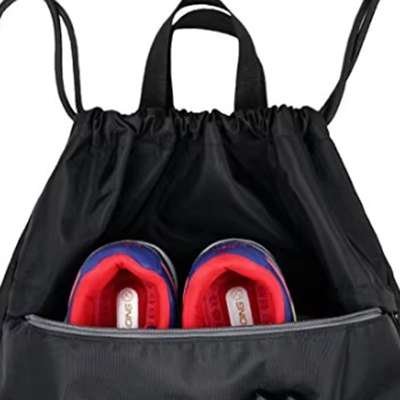
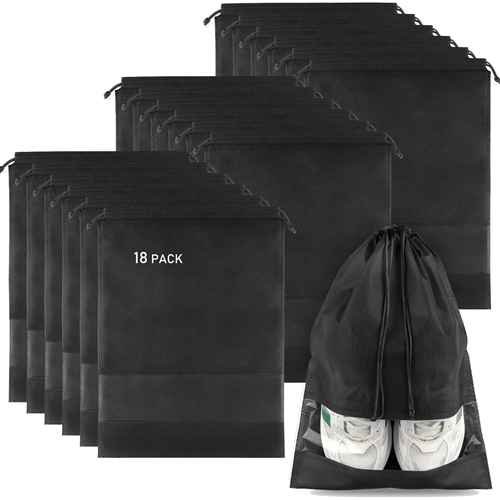
| Shoe or dust bag | Softer handfeel, simpler closure, compact sizing |
| Gift pouch | Better drape, refined cord, and finish |
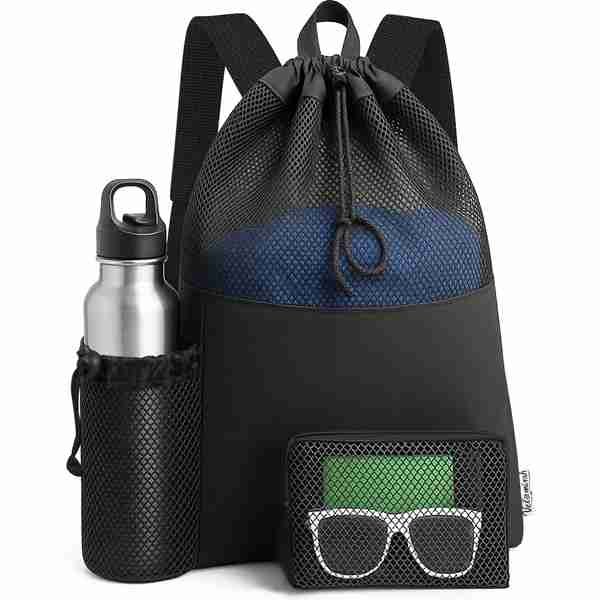
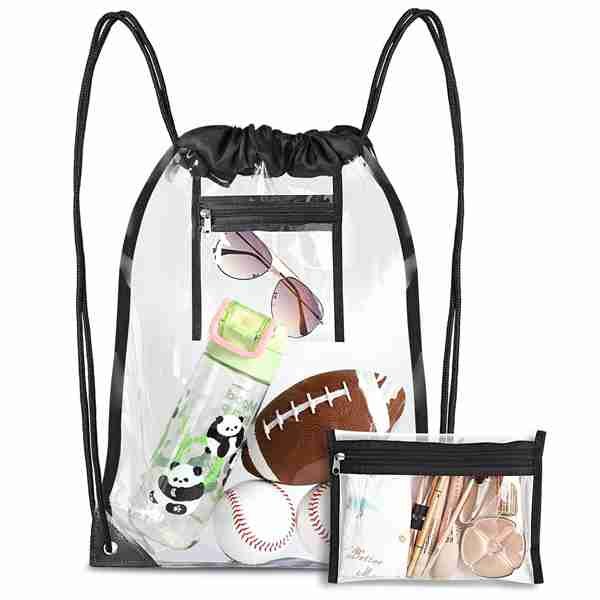

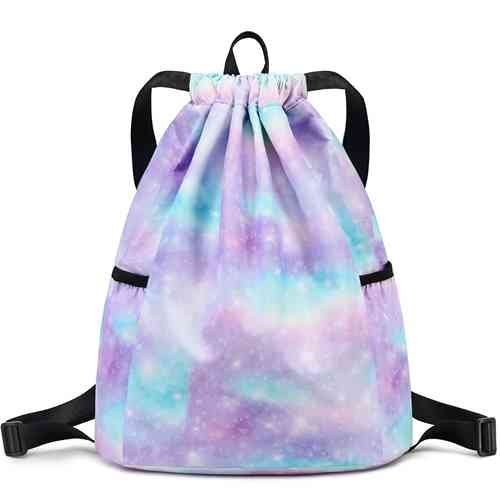
Choose Fabric by Use Scene
Material choice changes far more than appearance. It affects print sharpness, foldability, carry comfort, drying speed, perceived value, and total cost. That is why fabric selection should begin with the use scene, not with habit.
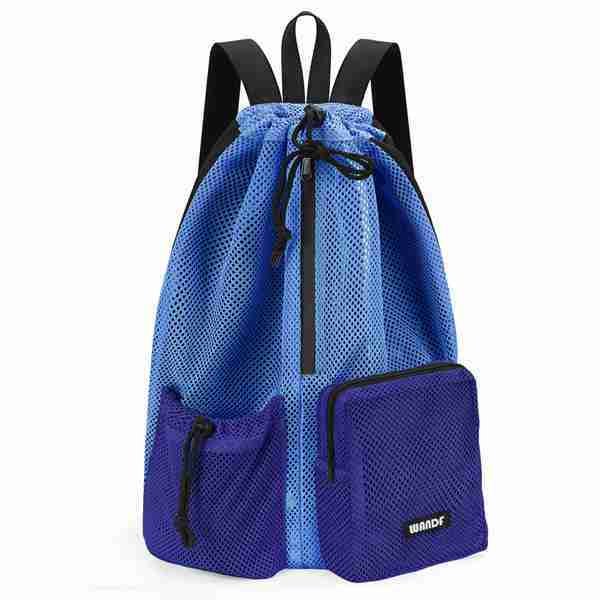
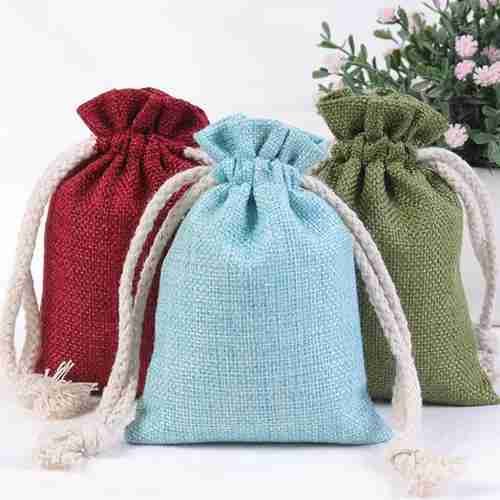
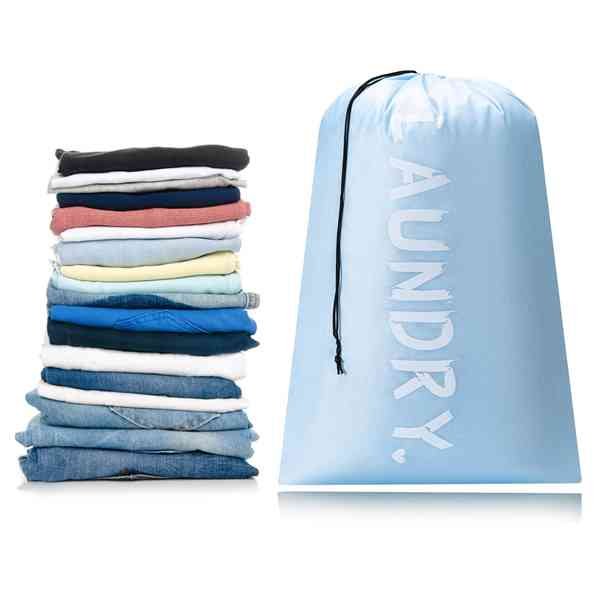
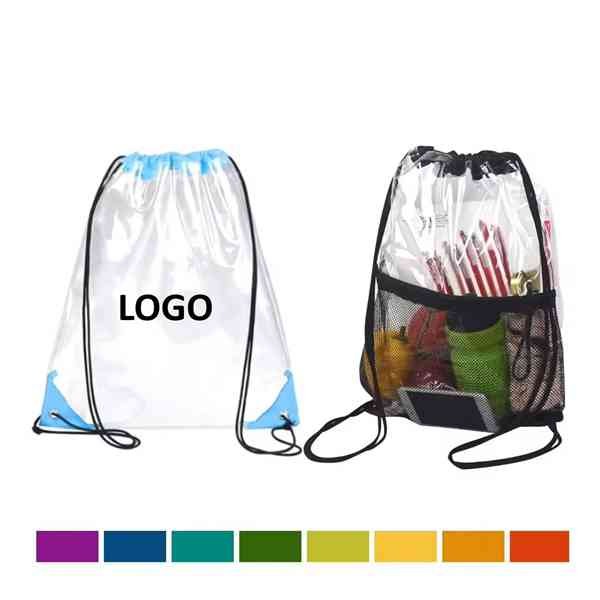
Polyester is often chosen for sports events, school packs, and active-use programs because it is light, practical, and friendly for vivid graphics. Canvas gives more body and a stronger everyday feel, which suits retail-focused styles or projects that want a more substantial handfeel. Cotton sheeting works for softer, natural-looking pouches and simple giveaway use, especially when the bag does not need to carry heavy weight. Mesh helps when airflow matters, such as swim gear, laundry, or shoes. Non-woven can work for short-cycle distributions where low cost and fast movement matter more than long-term reuse. Recycled fabrics can support a cleaner sustainability story when the project also needs traceable material language.
The right question is not “Which fabric is best?” It is “Which fabric best fits this program’s usage, branding style, print method, and cost target?” That question usually leads to a better result much faster.
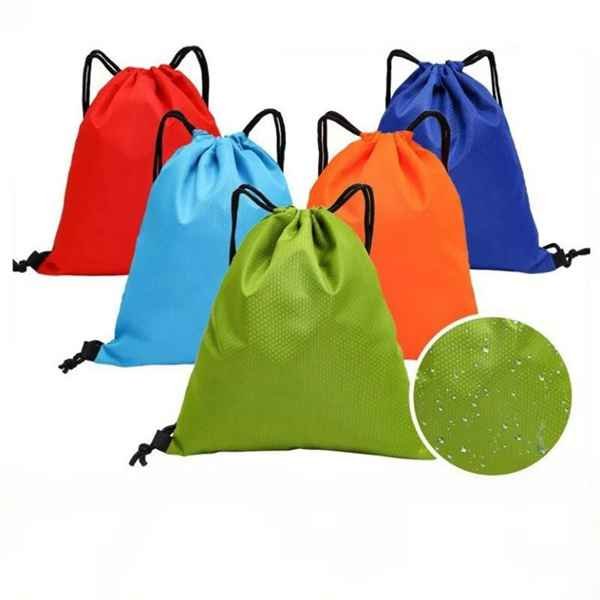




Material Selection Table
| Material | Best for | Notes |
|---|---|---|
| Polyester | Sports, events, school, giveaways | Light, practical, easy to scale |
| Canvas | Retail, lifestyle, daily carry | Fuller feel, stronger structure |
| Cotton | Simple pouches, natural style | Soft handfeel, lighter load use |
| Mesh | Swim, shoes, laundry | Breathable and quick-drying feel |
| Non-woven | Short-term distributions | Budget-friendly, simple use |
| Recycled fabric | Brand collections, eco-focused lines | Good for sustainability storytelling |
Good Cinch Bags Depend on Details
Many drawstring bags look acceptable from a distance. The real difference appears when people pull the cords, fill the bag, wear it for an hour, or use it more than once. That is where overlooked details start to matter.
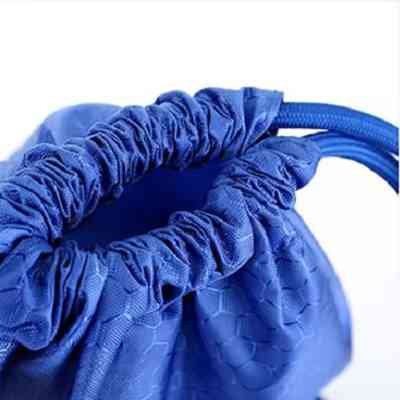
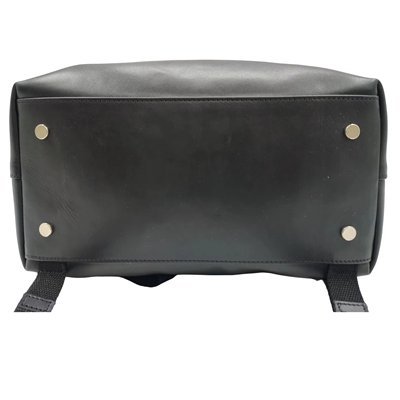
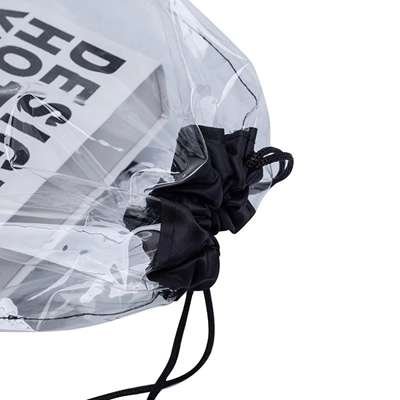
The first is cord proportion. Thin cords may save cost, but they can cut into the shoulder and make the bag feel disposable. The second is corner reinforcement. This is especially relevant for cinch backpacks used for shoes, gymwear, brochures, or daily carry. Without proper corner support, the bag may fail exactly where tension is highest. The third is stitch control. Uneven seams, weak back-tacking, or rushed finishing can make even a good fabric look unreliable. The fourth is print placement and usable print area. A graphic may look good on a flat mockup yet feel too high, too low, or distorted once the bag is cinched. The fifth is opening behavior. A drawstring bag should open smoothly, close evenly, and sit naturally when carried.
Small construction choices decide whether the bag feels like a throwaway or something people actually keep. That difference matters more than many teams expect.
Key Detail Checklist
| Detail | Why it matters |
|---|---|
| Cord thickness | Affects comfort and perceived quality |
| Corner reinforcement | Helps prevent failure under tension |
| Stitching control | Changes durability and visual neatness |
| Print placement | Protects logo visibility after cinching |
| Opening and closing feel | Improves day-to-day usability |
Branding Details Should Work Together
A drawstring bag looks more complete when the branding elements are planned as one visual system, not added one by one. The print method should match the fabric surface, the artwork style, and the intended use cycle. Screen print often works well for bold logos and cleaner layouts. Heat transfer can help with sharper graphics and more color detail. Digital printing suits more complex artwork, especially when the design includes gradients, small elements, or photo-like color transitions. Woven labels, rubber patches, and metal details should support the same visual direction rather than compete with it.
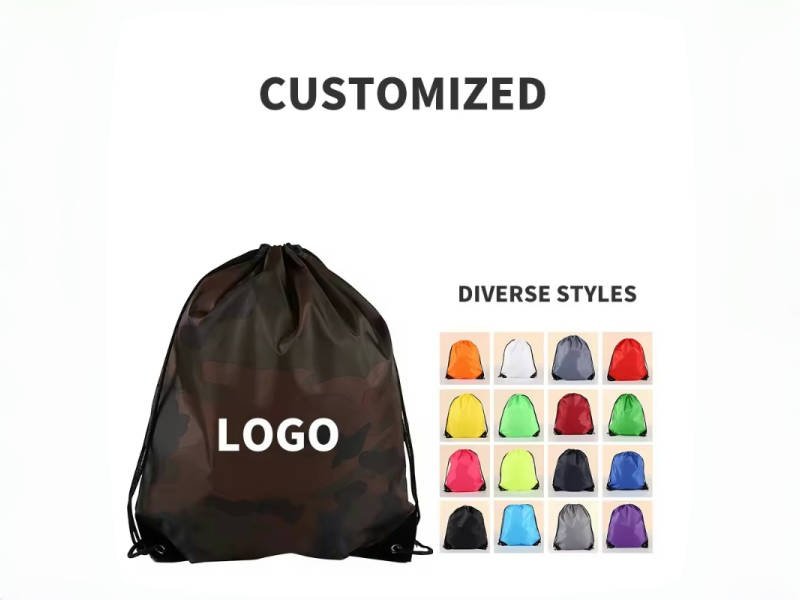

Cord color is often underestimated. Yet on a cinch bag, the cord takes up a large visual area and strongly affects the first impression. A bag with the right cord color, logo scale, print position, and trim detail usually feels more intentional, even when the structure is simple. This matters even more for retail add-ons, launch kits, school programs, and merch drops where brand clarity needs to remain strong without making the bag feel overdesigned.
Branding Match Table
| Element | Better use |
|---|---|
| Screen print | Bold logos, simple graphics, strong contrast |
| Heat transfer | Sharper color detail, cleaner image edges |
| Digital print | Complex artwork, gradients, vivid multicolor layouts |
| Woven label | Small but refined identity detail |
| Rubber patch | Sport or active-use look |
| Cord color matching | Ties the whole bag together visually |
Different Uses Need Different Specs
One reason drawstring bag projects go off track is that the spec is set too early, before the real use scene is clarified. A bag for a one-day handout should not be built the same way as a school cinch backpack that carries clothes and shoes. The same logic should not judge a gift pouch for packaging as a gym sack that needs reinforced corners and stronger cords. Competitor product listings repeatedly separate these directions through fabric, size, reinforcement, and print choices. Polyester sport cinch bags are often positioned with reinforced corners, grommets, and larger carrying sizes. Non-woven is often pushed toward high-volume promo distribution. Cotton and canvas styles are more common for retail, gifting, and everyday use. Shoe bag programs also tend to follow their own sizing logic.
A clearer way to set the spec is to ask four questions early: What goes inside? How often will it be used? How visible should the branding be? What price pressure does the project carry? Those four questions usually tell you whether the bag should be light, structured, soft, breathable, or more display-oriented. That saves time later because the spec starts from the real program, not from a generic bag template.
Use-Scene Spec Table
| Program type | Better spec direction |
|---|---|
| Event giveaway | Light fabric, large print area, easy volume rollout |
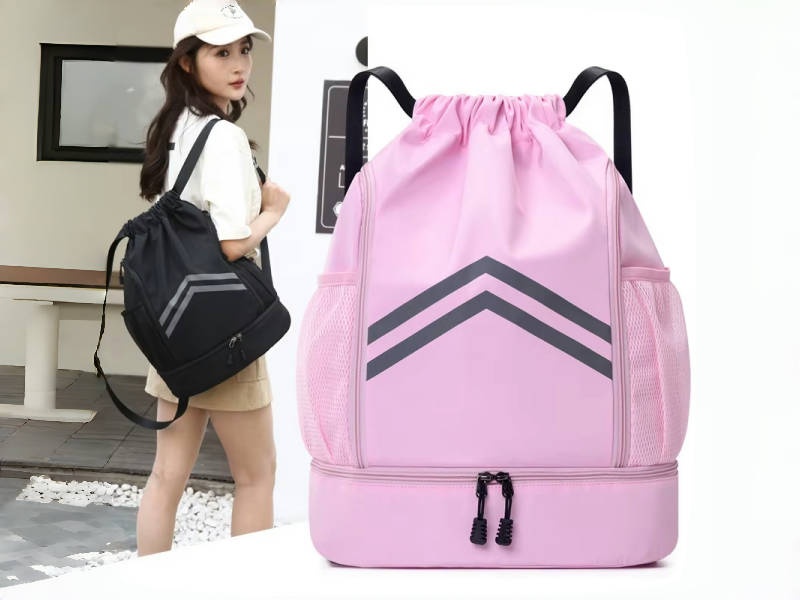
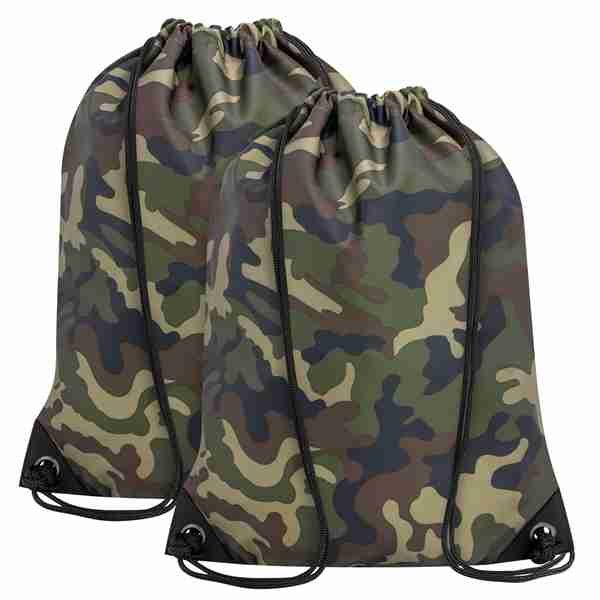
| School or gym | Polyester, reinforced corners, stronger cords, larger size |
| Retail add-on | Cleaner fabric feel, neater finish, more controlled branding |
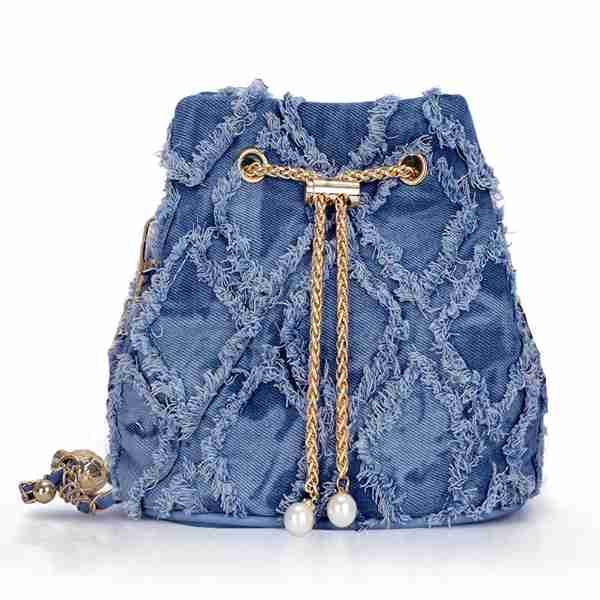
| Gift pouch | Softer body, compact sizing, refined closure |
| Shoe bag | Airflow or wipeable feel, practical size, easy open-close use |

Lock Key Details Before Sampling
Many sampling delays do not come from the sewing room. They begin earlier, when the project starts with a loose brief. Bag development usually moves faster when six items are confirmed early: finished size, intended use, fabric choice, cord style, logo method, and packing direction. Once these are vague, revision rounds often multiply because every new discussion changes more than one detail at the same time. Your own internal checklist already reflects this logic through material sample confirmation, color confirmation, logo approval, multi-round revisions, and PP sample review.
It also helps to lock what should not change between the sample and the bulk. That may include print position, logo scale, cord color, stitching visibility, reinforcement method, barcode or hangtag plan, and outer carton marking if the project is meant for retail, event fulfillment, or export delivery. Clear inputs shorten feedback loops. They also make sample review more useful, because the sample is judged against a real target instead of a moving one. When a drawstring bag project feels “slow,” the problem is often not speed. It is missing decisions at the front.

Pre-Sampling Lock List
| Lock before sample | Why it matters |
|---|---|
| Finished size | Prevents rework on proportion and capacity |
| Fabric and color | Avoids handfeel and shade drift |
| Cord style | Affects comfort and visual tone |
| Logo method and position | Protects the final presentation |
| Reinforcement details | Keeps wear points under control |
| Packing plan | Reduces confusion later in bulk prep |
From Artwork to Shipment Clearly
A smooth drawstring bag program rarely starts with price alone. It usually starts with a clear brief: target use, finished size, fabric direction, logo style, quantity, deadline, and packing needs. Once these are clear, the next steps become far more predictable: material suggestion, logo method review, working sample, approval comments, bulk planning, packing confirmation, and shipment arrangement. Public competitor content around custom bag programs repeatedly highlights the same inputs — look, material, quantity, deadline, sample review, and retail-ready packing — because those decisions control speed more than most teams expect.
The handoff between stages matters just as much as the stages themselves. A sample should not only confirm appearance. It should also lock print position, cord style, reinforcement method, label plan, and packing direction before bulk starts. After that, the strongest programs tend to move with clearer production updates, fewer avoidable revisions, and less risk of confusion at the shipment stage. That is especially useful when the order includes event deadlines, retail launch timing, or cross-border delivery requirements.
Order Flow Snapshot
| Stage | What should be confirmed |
|---|---|
| Brief | Use scene, size, quantity, and deadline |
| Development | Fabric, cord, logo method, color direction |
| Sample | Shape, print position, handfeel, usability |
| Approval | Comments closed, key details locked |
| Bulk Prep | Packing plan, labels, carton marks, timing |
| Shipment | Final check, booking, and handoff accuracy |


Multi-SKU Orders Need Different Rhythm
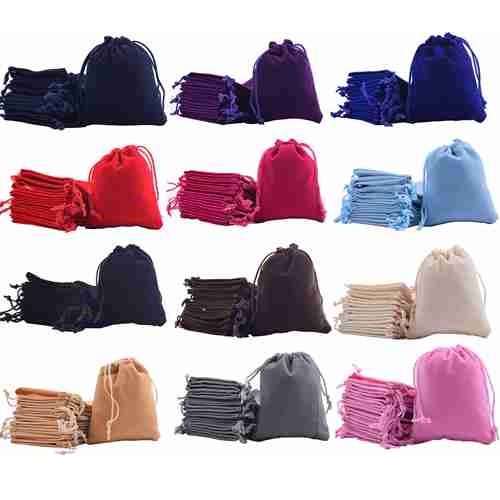
A single-style drawstring bag order is one thing. A mixed program with multiple colors, more than one size, shared branding, separate pack ratios, or phased delivery is something else. This is where many teams discover that the real challenge is not sewing the bag. It is controlling the information around the bag. Your own capability planning already places emphasis on mixed orders, multi-SKU handling, order adjustments, production updates, SKU expansion, and safe scaling, which is exactly the logic these programs need.
The more colors and item codes a program contains, the more useful a simple control system becomes. That usually means a locked color list, a SKU sheet, a size table, print position references, packing ratios, and carton marks that match the shipment plan. Repeat runs benefit even more from this discipline, because a reorder is only fast when the original structure is easy to trace. Public bag listings often separate size, imprint area, bundle quantity, and case quantity very clearly. For that reason, once volume grows, organization becomes part of quality.


Multi-SKU Control Table
| Control item | Why it matters |
|---|---|
| Color list | Prevents shade confusion across styles |
| SKU sheet | Keeps size and style codes aligned |
| Print reference | Protects logo consistency |
| Pack ratio | Avoids packing errors |
| Carton marks | Helps with warehouse and delivery accuracy |
| Reference sample | Makes repeat runs easier to compare |
Cheap Drawstring Bags Cost More
The lowest quote is not always the lowest project cost. Drawstring bags are often compared as if the only variable were fabric price, but public listings already show that small construction changes — such as reinforced corners, metal grommets, matching drawstrings, size, imprint area, and front-pocket additions — materially change how the bag performs and how it is perceived. A low quote may look attractive until the bag feels uncomfortable on the shoulder, the print area is smaller than expected, the corners fail under tension, or the program needs repacking because the shipment details were not planned clearly.
The more useful comparison is not unit price alone. It is usable life, logo visibility, handling comfort, packing accuracy, and delivery reliability. This is why budget-friendly non-woven can make perfect sense for a short-term promo push, while a gym sack, school cinch bag, or repeat retail style often needs a stronger spec. A stronger cost review looks at what the bag must actually do, how many times it will be used, and what failure would cost after delivery. That view usually leads to better decisions than chasing the cheapest number on the sheet.
Cost Review Table
| Cost lens | Better question |
|---|---|
| Unit price | What is included and what is missing? |
| Durability | Will the bag survive the real use scene? |
| Branding | Is the logo still clear after use? |
| Packing | Are labels, ratios, and carton marks already planned? |
| Delivery | What happens if the project ships late or wrong? |


Make A Sample First?
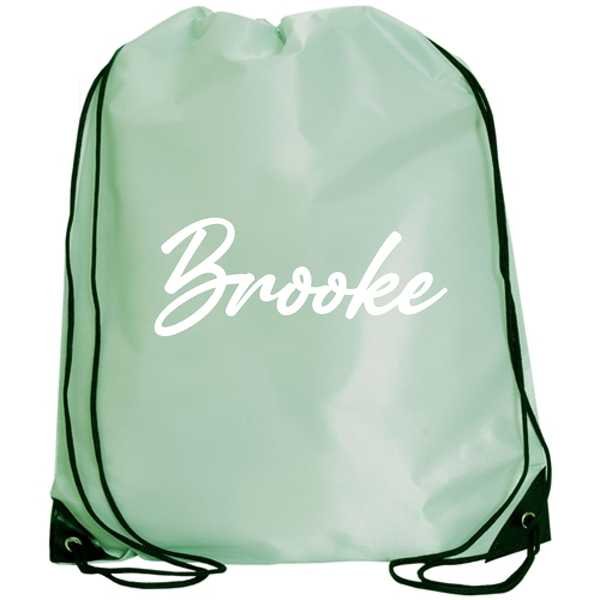
See your idea come to life before mass production.
At Jundong Factory, we offer free design mockups and custom samples to ensure every detail is perfect — from material and color to logo placement and stitching.
Start your project with confidence today: info@jundongfactory.com.
FAQs About Custom Drawstring Bags
What Is a Practical Starting Quantity for Custom Drawstring Bags?
For most projects, the right starting quantity depends less on the bag itself and more on the program behind it. A giveaway push, a school rollout, a merch drop, a retail add-on, and a gift-pouch program can all use drawstring bags, but they rarely follow the same volume logic. Public custom bag listings show that small custom runs do exist, while broader bulk programs are still the norm once branding, color control, and freight efficiency start to matter. Some custom factories openly list 50 pieces as an entry point for certain styles, while wholesale platforms also show very low order thresholds for stock models. That means the real question is not “What is the lowest number possible?” but “What quantity fits this project without creating avoidable cost pressure?”
A useful way to judge quantity is to separate projects into three groups. The first is a test run. This is often used to check fabric feel, print visibility, and response from the intended audience. The second is a working launch quantity. This suits event distribution, a campus program, or a first proper retail batch. The third is a repeat or scale-up quantity, where color consistency, packing ratios, and freight planning start to matter much more than the bare minimum entry quantity. Your own internal capability map already fits this logic well because it includes small batch production, rapid sampling, multi-round revisions, and support for mixed orders and multi-SKU programs.
The most practical approach is to set quantity after four things are clear: use scene, target unit cost, logo method, and delivery timing. If the bag is a simple one-time event handout, a lighter spec and a lower starting volume may make sense. If it is meant for school use, gym carry, shoe storage, or retail resale, a larger quantity often creates a healthier balance between cost, structure, and print quality. In other words, a “low MOQ” only helps when it still leaves room for a bag that feels usable and on-brand. Otherwise, it becomes a false saving.
Quick quantity guide
| Program type | More practical starting logic |
|---|---|
| Test run | Small batch to check look, feel, and print |
| Event handout | Volume based on attendee count plus backup |
| Retail or merch | Quantity based on size split and sell-through pace |
| School/gym use | Better to avoid over-light specs just to hit a tiny run |
| Repeat program | Plan volume with pack ratios and freight in mind |
Which Material Works Best for a Drawstring Bag Project?
The best material is the one that matches how the bag will actually be used, not the one that sounds best on a quotation sheet. Public drawstring bag and laundry bag listings repeatedly point to the same material logic: polyester is widely used for sports, events, and school use; cotton and canvas are chosen when a softer or more substantial feel is needed; mesh is useful when airflow matters; and non-woven polypropylene is common in volume-driven promotional distribution. Those patterns show up across multiple sites because each fabric solves a different real-world problem.
If the bag is meant for gym clothes, sports gear, or campus use, polyester often makes sense because it is light, practical, and works well with stronger color graphics. If the bag is intended as a retail add-on, merch piece, or everyday-use style, canvas or cotton often gives a fuller handfeel and a more deliberate look. If the bag is for shoes, swimwear, or laundry, mesh helps because breathability is part of the job. If the project is a short-cycle event or broad giveaway, non-woven can work because it supports large-volume distribution at a more accessible cost level. Recycled fabric can also be worth considering when the collection needs a cleaner sustainability story.
In real development, material choice should be judged alongside logo method, target cost, load weight, and use frequency. A soft cotton pouch may look attractive, but it is a poor match if the bag must carry shoes daily. A lightweight non-woven bag may be perfectly right for a campaign handout, but it is the wrong starting point for a long-use cinch backpack. The strongest results usually come from treating material choice as a job-matching decision rather than a trend decision. Your internal development structure supports that well through material selection consultation, fabric sourcing, Pantone support, and multi-round sample review.
Material-fit table
| Material | Stronger fit |
|---|---|
| Polyester | Sports, school, active use, and the event distribution |
| Canvas | Retail, merch, daily carry, stronger structure |
| Cotton | Soft pouches, natural look, lighter use |
| Mesh | Shoes, swim, laundry, airflow-needed use |
| Non-woven | Short-cycle promo distribution |
| Recycled fabric | Collections with sustainability language |
What Should Be Ready Before Sampling Starts?
The sample phase moves faster when the project starts with decisions, not guesses. The most useful sample brief usually includes six core items: finished size, use scene, preferred material, artwork file, cord direction, and packing idea. Without those, revision rounds multiply because shape, fabric, logo, and finishing start changing at the same time. Many public custom-bag guides focus heavily on design file, quantity, material, and customization notes for exactly this reason: speed in development usually comes from clarity at the front.
The artwork does not need to be perfect on day one, but it should be usable. A vector logo, print size idea, color preference, and reference images already make a major difference. It also helps to say what the bag must do in practice. Is it carrying shoes, gymwear, leaflets, product kits, cosmetics, or gift items? Is the bag meant to feel budget-friendly, sporty, simple, soft, or more premium? Those descriptions shape the technical direction more than many teams expect. A “nice-looking bag” is too vague. A “15 x 18 inch polyester cinch bag with reinforced corners and a strong one-color logo” is much easier to develop correctly. Public product listings often separate size, imprint area, material, and case quantity for that reason.
Your own project structure already supports a more disciplined sample process, including rapid sampling, sample revision, material confirmation, color confirmation, logo approval, and PP sample review before bulk. That is a strong advantage, because the real role of a sample is not to look nice in a photo. It is to reduce uncertainty before volume begins. The better the first brief, the more useful every sample round becomes.
Sample brief checklist
| Item | Why it helps |
|---|---|
| Finished size | Keeps proportion and capacity on track |
| Use scene | Prevents wrong fabric or structure choice |
| Artwork file | Helps with print planning and placement |
| Material direction | Speeds sampling and cost judgment |
| Cord style | Affects feel and overall look |
| Packing idea | Avoids late-stage surprises |
Which Logo Method Works Best on Drawstring Bags?
The best logo method is the one that fits the fabric surface, artwork style, and expected use cycle at the same time. Public custom-bag pages consistently group decoration methods by how the graphic behaves on the material. Screen print is still one of the most practical choices for bold logos, simple graphics, and strong contrast. Heat transfer works well when the image needs cleaner edges or more color detail. Some sites also push digital or photo-style printing where gradients or more complex visuals are involved. For retail-oriented styles, added details such as woven labels, rubber patches, or embroidery can shift the bag from simple promo use toward a more finished look.
The mistake is choosing the logo method by trend instead of by bag type. A low-cost event bag may not need the same decoration language as a retail pouch or a school cinch pack. A large one-color logo can be exactly right on polyester for sports distribution. A smaller woven label may feel smarter on a canvas pouch. A rubber patch can give an active-use style more identity, while a soft gift pouch may need a quieter finish. The print method should also be checked after cinching, not only on a flat artwork sheet. Some graphics look balanced when the bag is open, but shift too high, too low, or too compressed once the cords are pulled.
Your internal service map already includes logo placement consulting, size proportion advice, screen printing, heat transfer, woven labels, rubber or PVC patch options, and Pantone support. That matters because logo application is not just decoration. It controls first impression, readability, and whether the bag still feels coherent after repeated use. The strongest result usually comes from planning fabric, logo method, placement, and cord color together, rather than making each decision separately.
Logo method guide
| Logo method | Better fit |
|---|---|
| Screen print | Bold logo, simple layout, strong contrast |
| Heat transfer | Cleaner edges, more color detail |
| Digital print | Complex artwork, gradients, fuller visuals |
| Woven label | Small but refined identity cue |
| Rubber patch | Sporty or active-use direction |
| Embroidery | Select retail or gift-focused styles |
How Long Do Sampling and Bulk Production Usually Take?
Most drawstring bag schedules depend on clarity and complexity more than on sewing alone. Public bag sites that publish timing information often give a broad production window rather than one fixed promise. For example, one export-focused bag site states a 2 to 6 week production timeline depending on order size, design complexity, and customization depth. That is a useful benchmark because it reflects the reality of bag development: a simple polyester cinch bag with one-color print moves very differently from a multi-color retail pouch with labels, custom cords, and special packing instructions.
Sampling time is shaped by what must be confirmed before the first physical piece is made. If the size, material, logo method, and color direction are already clear, the process is naturally shorter. If the project still needs fabric comparison, revised artwork placement, cord testing, or more than one round of adjustment, the schedule expands. This is why fast sample support matters, but it only becomes truly effective when paired with a tight brief. Public custom drawstring bag sites often combine “fast sampling” language with low-entry custom runs, but the hidden variable is always how complete the starting information is.
A practical timing plan should separate four stages: sample preparation, sample review, bulk production, and shipping arrangement. Many delays blamed on production actually come from late artwork changes, packaging revisions, or incomplete approval at the sample stage. Your internal workflow already covers rapid sampling, sample revisions, PP sample review, flexible scheduling, production updates, and on-time delivery support. That structure helps because the safest schedule is not the shortest one on paper; it is the one that leaves fewer decisions hanging in the middle. When the deadline matters, it is usually wiser to lock the spec earlier than to squeeze time later.
Timing view
| Stage | What affects it most |
|---|---|
| Sampling | Clarity of brief, fabric choice, and artwork readiness |
| Review | Number of comments and revision rounds |
| Bulk | Quantity, complexity, color count, packing detail |
| Shipping | Booking window, route, delivery method |
Can You Match Pantone Colors Exactly on Drawstring Bags?
Pantone matching can usually get very close, but “exact” color should always be judged together with fabric type, surface texture, and decoration method. The same color code can look different on polyester, canvas, cotton, non-woven, or mesh because each surface absorbs ink or dye differently. A smooth polyester body with a clean print often shows color differently from a heavier canvas or a textured non-woven surface. That is why color should never be approved by code alone. It should be checked on the actual material and, when possible, with the intended logo method or dye direction already in place.
Public bag listings and production guides also show why color decisions need to be practical, not theoretical. Many stocked drawstring bags are sold by pre-set body colors, while custom programs shift toward approved proofs, reference swatches, and production controls because color becomes part of the brand identity once a project includes custom print, repeated reorders, or mixed-color sets. Szoneier’s drawstring and workflow guides repeatedly tie consistency to approved samples and step-based QC, while ToteBagFactory’s listings clearly separate color options, imprint areas, and case quantities, which reflects how color must stay connected to the exact item spec rather than floating as a separate decision.
A practical color plan usually includes four checkpoints: material confirmation, color reference, logo method confirmation, and sample approval. If the project is color-sensitive, it is safer to confirm the body material first, then review printed or dyed output on that exact base. This is also why mixed-fabric collections should not assume one Pantone code will look identical across every style. Your own internal service structure already supports this process through Pantone Color Matching, Custom Color Dyeing, Material Sample Confirmation, Color Sample Confirmation, and Logo Sample Approval. For branded retail, school, event, or merch programs, that sequence is much safer than trying to “fix color later” after bulk has started.
Color control table
| Checkpoint | Why it matters |
|---|---|
| Fabric base | Changes how color appears |
| Print or dye method | Alters sharpness and depth |
| Approved sample | Gives a real visual target |
| Repeat-order reference | Makes later runs easier to control |
How Can We Keep the Sample and Bulk Order Consistent?
Sample-to-bulk consistency is usually protected by locking details early and checking them repeatedly, not by hoping the factory will “remember the sample.” The strongest control starts before bulk: confirm material, color, finished size, cord type, print position, reinforcement method, label details, and packing direction while the sample is still under review. Once those details are written down and approved, the sample becomes a working standard instead of just a visual reference. Your internal planning already treats this as a core capability through Rapid Sampling, Sample Revision, Material Confirmation, Color Confirmation, Logo Approval, and PP Sample review.
Public custom-bag workflow content points in the same direction. Szoneier’s private-label drawstring bag guide states that after sample approval, bulk should follow precise steps to maintain consistency, speed, and quality. Its newer workflow guide breaks QC into incoming material inspection, in-line production inspection, semi-finished product checks, final inspection, and packaging inspection, which is exactly the kind of layered control that reduces drift between sample and bulk. That matters because many problems do not appear at one dramatic moment. They appear gradually: fabric shade shifts, cord substitution, uneven print placement, missed reinforcement, or packing differences from carton to carton.
A safer process usually uses three anchors: an approved reference sample, a clear specification sheet, and a production-stage inspection routine. For repeat programs, it also helps to keep one sealed reference from the last accepted run. When the project includes multiple colors, sizes, or pack configurations, consistency depends even more on disciplined records. The sample should not only say “this looks right.” It should answer “what exactly must stay the same when this becomes 5,000 or 50,000 pieces?” That shift in mindset is what protects long-term reliability.
Consistency control table
| Control tool | What it protects |
|---|---|
| Approved sample | Visual and handfeel reference |
| Spec sheet | Prevents hidden changes |
| In-line inspection | Catches drift before it spreads |
| Final inspection | Confirms finished output |
| Packaging inspection | Keeps shipment consistent, too |
What Details Usually Cause Quality Problems in Drawstring Bags?
Most drawstring bag quality issues come from stress points, finishing details, and packing control rather than from the basic bag shape. Public product specs repeatedly highlight the same structural areas: reinforced corners, metal grommets, matching drawstrings, size, and imprint area. Those features are not there for decoration. They point directly to the places where failure often starts. If corners are weak, tension can tear the bag when it carries shoes or gymwear. If grommets are poorly fitted or skipped where needed, cord movement becomes rough and stress concentrates faster. If the cords are too thin, the bag may feel uncomfortable even before it fails. ToteBagFactory’s listings surface these details again and again because they change durability in real use.
The second group of problems comes from stitching, print placement, and shade variation. Uneven back-tacking, loose thread ends, shifting logo placement, and inconsistent print density can make one batch look unstable even when the material is acceptable. Then comes a third group that many teams overlook: packing errors. Wrong size mix, incorrect labels, inconsistent carton quantities, or missing inserts can turn a usable bag into a delivery problem. Szoneier’s workflow guide is useful here because it treats packaging inspection as part of quality control, not as a separate clerical step.
Your own internal quality structure already supports the right response: Incoming Material Inspection, In-Process Quality Control, Final Product Inspection, Functional Testing, Durability Testing, Load & Stress Testing, and Inspection Report Preparation. That combination matters because good quality control is not just about spotting defects at the end. It is about knowing where defects are likely to begin. For drawstring bags, those starting points are usually easy to identify: corners, cords, stitching, print placement, and packing accuracy.
Common risk table
| Risk area | Typical problem |
|---|---|
| Corners | Tearing under weight |
| Grommets/cord path | Rough pull or local stress |
| Cord thickness | Poor comfort, weak feeling |
| Stitching | Loose seams, uneven finish |
| Print placement | Inconsistent presentation |
| Packing | Wrong mix, wrong labels, wrong counts |
Can One Order Include Multiple Colors, Sizes, or Packing Setups?
Yes, one order can include multiple colors, sizes, or packing setups, but the more variables included, the more important clear order control becomes. This is common in school programs, event kits, retail collections, and merch projects where one graphic system may sit across several bag colors or sizes. Public bag listings already show why this matters: size, imprint area, package quantity, and case quantity are often listed separately because those details change how the order must be packed and shipped. ToteBagFactory’s drawstring listings are a clear example of this kind of spec separation.
The safest way to run a mixed order is to build a simple control structure before bulk starts. That usually means a color list, size chart, SKU sheet, logo reference, pack ratio, and carton marking plan. If one color needs hangtags and another does not, that difference should live in the order sheet, not in memory. If one size goes to retail and another goes to event fulfillment, the packing path should be split clearly from the beginning. This is one reason your internal planning places such strong emphasis on Mixed Orders, Multi-SKU Orders, Order Adjustments, Production Updates, and SKU Expansion. Those are not abstract strengths. They are exactly what makes mixed projects run smoothly.
A mixed order is often a good idea when it reduces total project friction. It can be smarter than placing multiple disconnected orders, especially when branding, timing, and freight need to stay coordinated. But complexity should be added on purpose. If the order includes too many small differences without a clear control sheet, error risk rises quickly. The goal is not to avoid complexity. It is to organize complexity so it stays manageable. That is what makes a mixed-color or multi-size order efficient instead of chaotic.
Mixed-order control table
| Control item | What it prevents |
|---|---|
| SKU sheet | Style and size confusion |
| Color list | Wrong body-color assignment |
| Pack ratio | Packing and shipment mistakes |
| Carton marks | Warehouse confusion |
| Reference sample | Variation between versions |
What Packing Details Should Be Confirmed Before Bulk Production?
Packing should be confirmed before bulk starts because packing is part of product delivery, not an afterthought. For drawstring bag projects, the core packing decisions often include individual polybag or not, hangtag or barcode, insert card, warning label, set packing, carton quantity, carton marks, and shipment route requirements. Public product listings show how seriously even simple bags are organized at this level: ToteBagFactory frequently publishes package quantity, bundle quantity, case quantity, imprint area, and size side by side, which reflects how closely packaging and item specification are linked.
The correct packing plan depends on where the bags are going next. An event project may prioritize fast counting and fast distribution. A retail project may need cleaner folding, barcode placement, and visual presentation. A campus or gym program may care more about practical carton ratios and easy receiving. If the goods are crossing borders, outer carton marking, shipping labels, and route-specific requirements become more important. This is why packaging is often where “almost finished” projects get delayed: the bag is ready, but the bag is not yet ready to move through the next system.
Your internal capability map supports a much more complete packing discussion than many simple bag pages do. It already includes Individual Polybag Packing, Custom Packaging Bags, Color Box Packaging, Gift Box Packaging, Hangtags & Labels, Instruction Cards, Warning Labels, Export Packing Compliance, Product Labeling Compliance, and Mixed Shipment Support. That matters because packing is not only about protection. It also controls counting speed, warehouse accuracy, retail readiness, and delivery efficiency. A good rule is simple: if the receiving side needs to read it, scan it, sort it, display it, or count it, it should be confirmed before bulk begins.
Packing confirmation table
| Packing item | Why it should be confirmed early |
|---|---|
| Polybag / no polybag | Affects presentation and handling |
| Barcode/hangtag | Supports receiving and retail flow |
| Inner pack/carton with qty | Prevents count errors |
| Carton marks | Helps warehouse and delivery |
| Route-specific labels | Reduces shipping friction |
Everything You Need to Know Before Customizing Your Bags
Before a drawstring bag program moves into sample review or bulk planning, the most useful questions are usually the practical ones. Which fabric fits the real use scene? Which logo method works on that surface? How many pieces make sense for this launch? What details should be locked before sampling? How should packing be handled if the goods need to move through retail, event distribution, or export delivery?
These questions help separate a bag that only looks acceptable on paper from one that works well after delivery. They also make project discussions much easier, because they turn vague ideas into clear decisions. The FAQs focus on the issues that usually matter most when teams compare options, review specs, or prepare to move from concept into a working order.
