 Skip to content
Drawstring Bag Fabric
Drawstring Bag Fabrics for Promotions, Packaging, Gift Pouches & Everyday Use
Choosing the right drawstring bag fabric affects how the bag feels, carries, prints, folds, and performs in daily use. From cotton canvas, polyester, nylon, Oxford cloth, mesh, non-woven fabric, RPET, and coated materials to logo printing, lining, drawcord strength, color matching, and packing style, each detail changes the final result. Jundong helps brands develop custom drawstring bags for sports programs, school events, retail merchandise, travel kits, gym packs, promotional gifts, and private label collections with fabric choices matched to real use.
Fabric Defines Drawstring Bag Value
A drawstring bag is often judged long before anyone notices the stitching. The fabric sets the first impression. It decides whether the bag feels soft or harsh, light or substantial, sporty or gift-ready, natural or synthetic. That is why two bags with the same shape can land in completely different price bands and use scenes just because the fabric choice changed. Competitor catalogs consistently separate drawstring bags into cotton, canvas, polyester, nylon, mesh, velvet, satin, burlap, and muslin lines rather than treating them as one interchangeable group.
A practical way to think about fabric is to decide what the bag should feel like before deciding how it should look.
| Fabric impression | What it usually signals |
|---|---|
| Soft and natural | Gift pouch, packaging, retail display |
| Light and graphic-friendly | Event giveaway, campaign use |
| Tough and sport-oriented | Gym sack, swim bag, outdoor use |
| Airy and breathable | Shoe bag, laundry, sports storage |
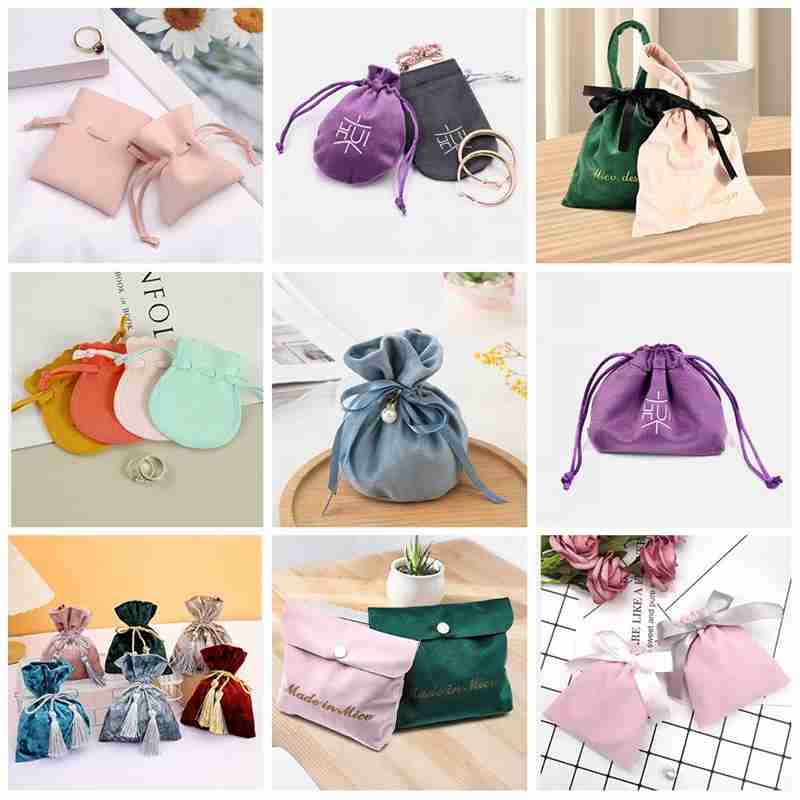
| Decorative and elevated | Jewelry pouch, holiday gifting |

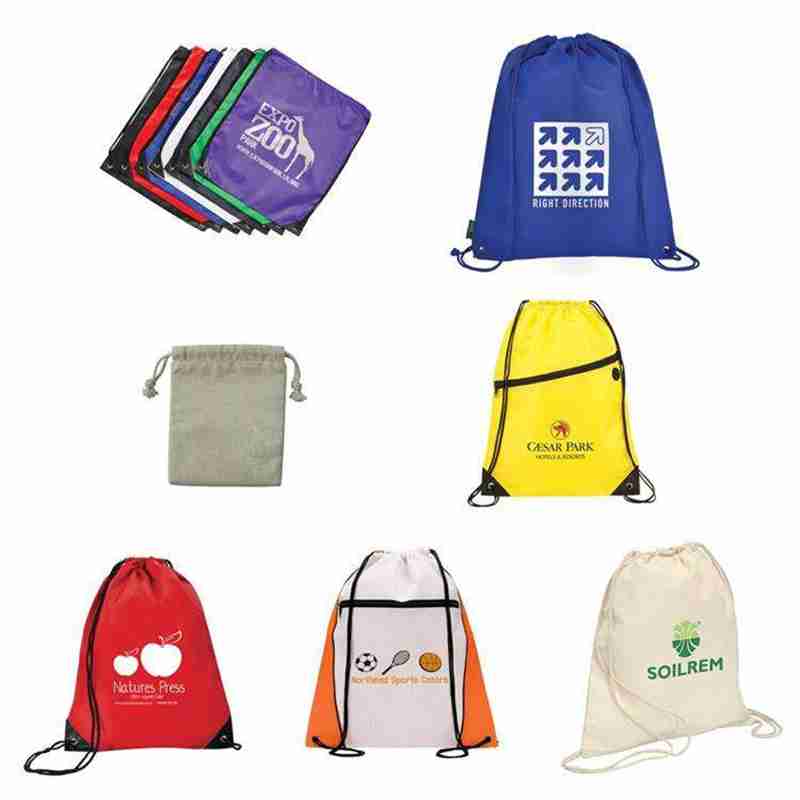

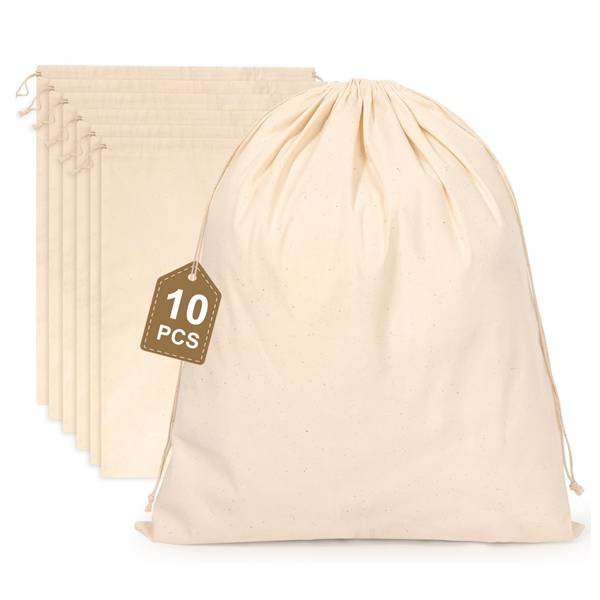
Cotton, Muslin, Canvas Are Different
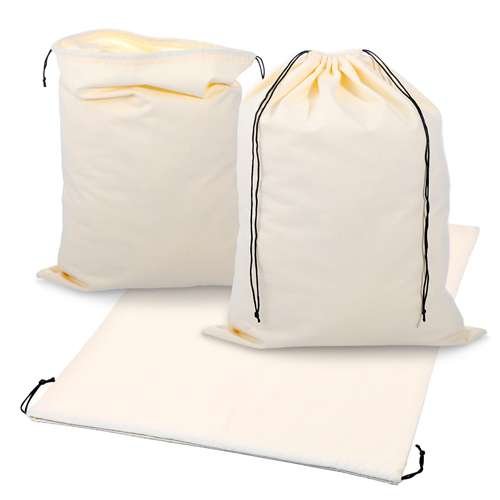
These three fabrics are often grouped together because they all feel more natural than polyester or nylon. But in actual projects, cotton, muslin, and canvas behave very differently. Public fabric guides describe cotton as soft and printable, canvas as heavier and more structured, and muslin as lighter, softer, and often better suited to simple pouches or gentle packaging use. Cotton and canvas are not just two weights of the same material story; muslin adds a third direction that feels looser, lighter, and less rigid in presentation.
A simple comparison makes this clearer:
| Fabric | Often chosen for | Main character |
|---|---|---|
| Cotton | Gift bags, light packaging, simple graphics | Soft, natural, easy to print |
| Muslin | Favor pouches, jewelry bags, lightweight storage | Light, airy, gentle drape |
| Canvas | Retail-ready bags, stronger pouches, heavier loads | Structured, thicker, more substantial |
The better decision is to match the natural-fabric choice to how much body, print clarity, and perceived weight the bag actually needs.
Polyester and Nylon Win Differently
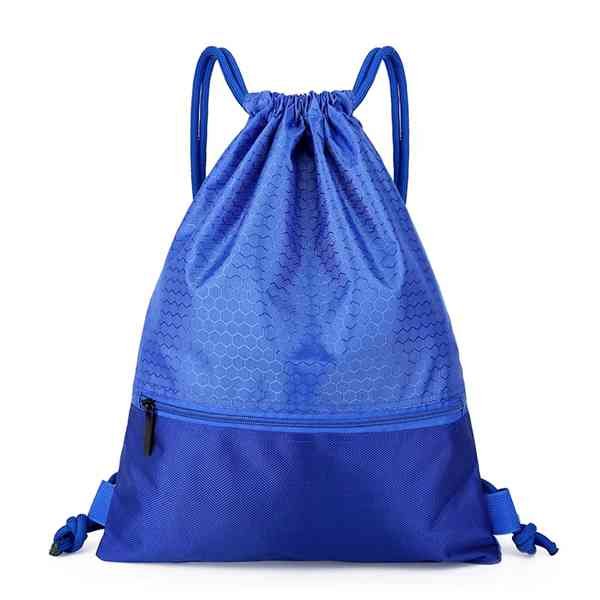
Many teams assume polyester and nylon are interchangeable because both sit on the synthetic side of the fabric map. In reality, they often win projects for different reasons. Public drawstring-bag guides consistently describe polyester as a practical choice for event bags, graphic-heavy styles, cost control, and broad everyday use. Nylon is more often associated with lighter weight, stronger travel or sport positioning, better abrasion performance, and, in some cases, better water resistance or ripstop-based durability.
A quick working split looks like this:
| Fabric | Often wins when the project needs | Typical use scenes |
|---|---|---|
| Polyester | Better print value, lower cost pressure, broad color flexibility | Promotions, events, simple cinch bags |
| Nylon | Lighter strength, travel feel, abrasion resistance | Gym, swim, outdoor, travel use |
| Ripstop nylon/poly | Better tear resistance with a lighter structure | Adventure, active, packable styles |
The better choice depends on whether the bag is being judged more by print visibility, weight, abrasion, or use intensity.





Mesh, Velvet, Satin, Burlap Need Clear Use
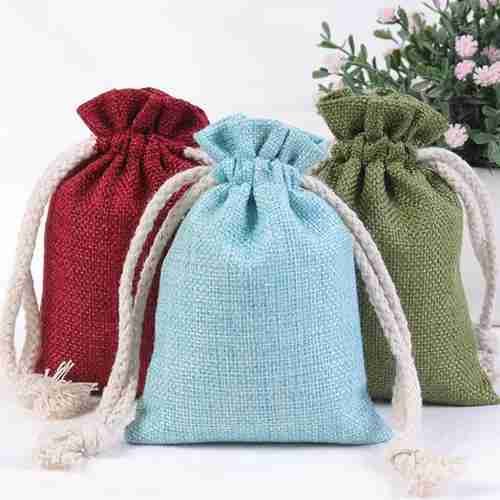
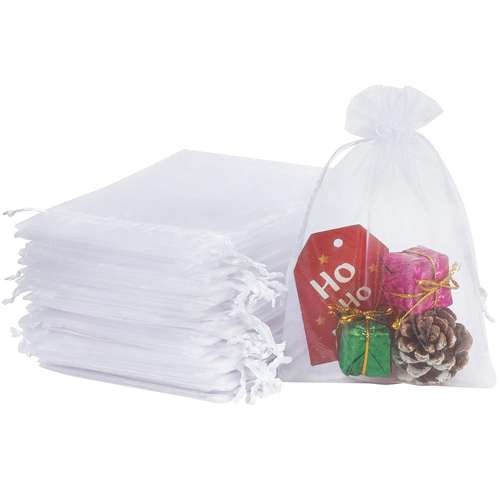
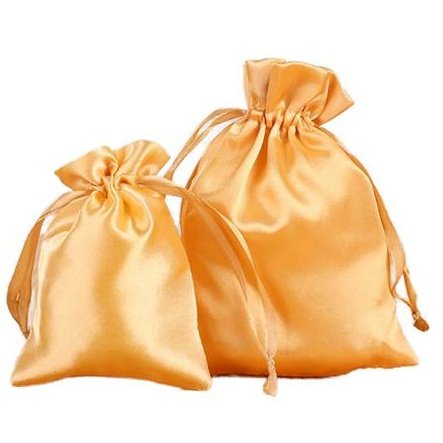
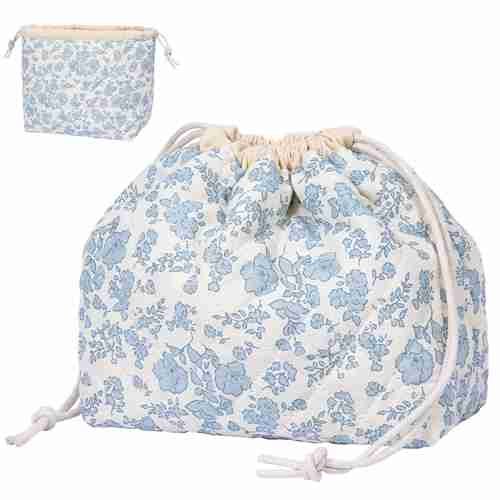
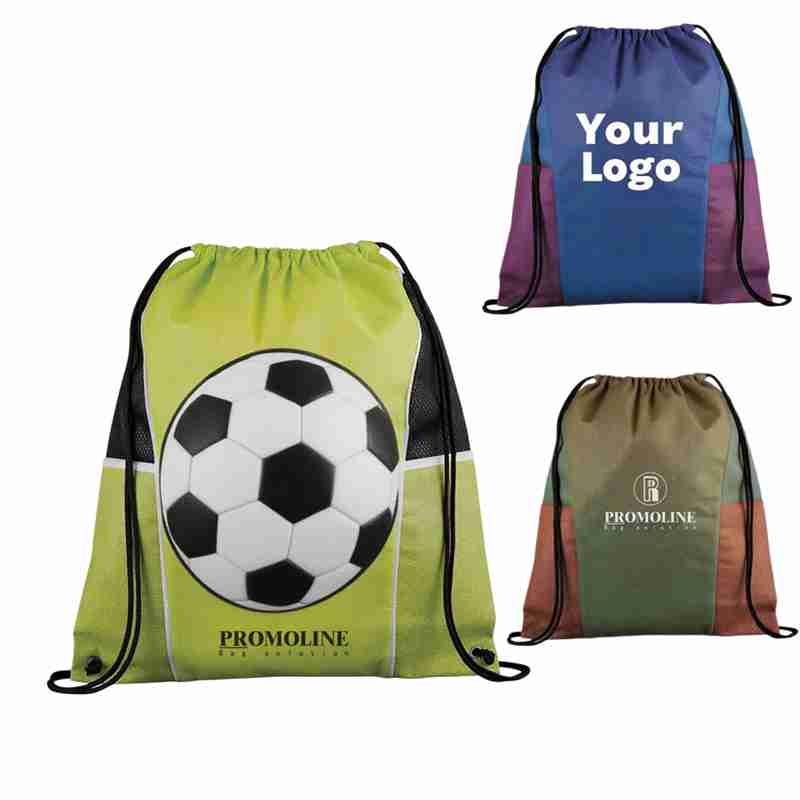
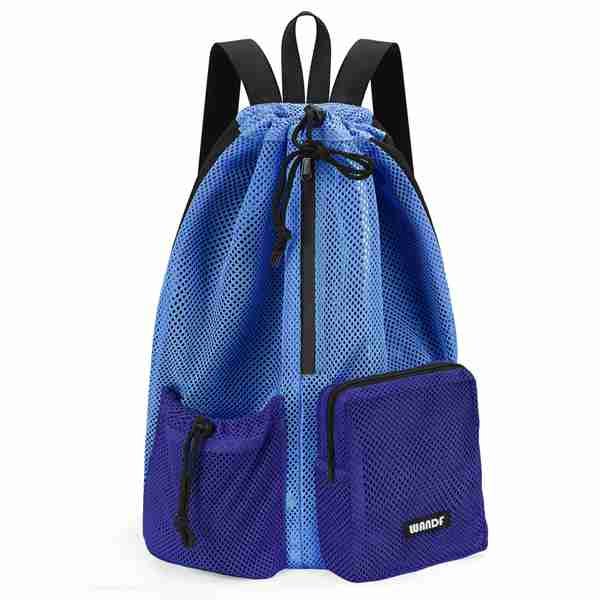
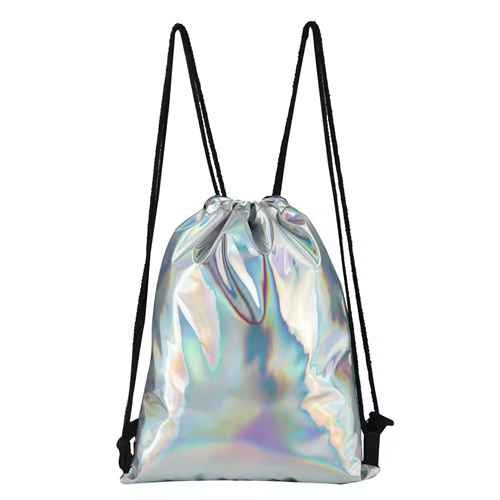
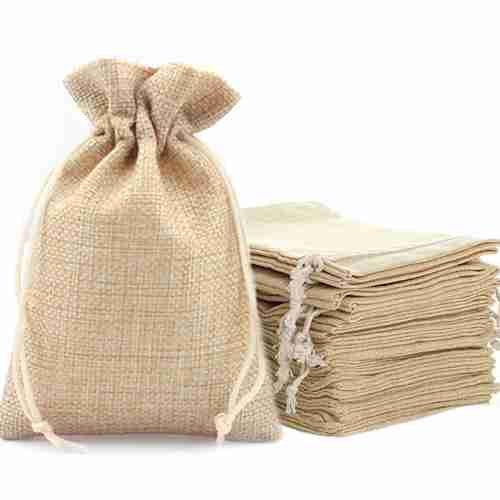
Some drawstring bag fabrics only make sense after the use scene is already defined. Mesh is useful when airflow matters, such as in shoe storage, sports gear, or laundry sorting. Velvet and satin move in the opposite direction: they are chosen more for surface mood, gift value, and a softer opening impression than for rough daily handling. Burlap/jute adds a rustic, natural look and works best when the bag is meant to feel earthy, handmade, or eco-leaning rather than sleek or technical. Public drawstring-bag catalogs repeatedly separate these materials into different style groups because they solve very different jobs.
Quick special-fabric guide
| Fabric | Usually chosen for | Watch-outs |
|---|---|---|
| Mesh | Shoes, gym gear, breathable storage | Not ideal for fine front graphics |
| Velvet | Jewelry pouches, premium gifting | Shows pressure marks more easily |
| Satin | Event favors, soft luxury presentation | Surface can snag or wrinkle more easily |
| Burlap/jute | Rustic packaging, wedding favors, natural gifting | Coarse texture limits refined print results |
Weight, Weave, Finish Change Fabric
Material names alone do not explain enough. Two drawstring bags can both be called “canv fabric weight, weave density, and surface finish. Public bag-fabric guides repeatedly separate lightweight, mas” yet behave very differently due toidweight, and heavyweight canvas because drape, load feels, and structure change quickly across those bands. Other guides also note that tighter weaves hold print edges better, while looser weaves tend to spread ink and soften detail.
What changes the result fastest
| Fabric factor | What it changes |
|---|---|
| Weight | Body, strength, feel, fold behavior |
| Weave tightness | Print sharpness, surface control |
| Surface finish | Handfeel, water behavior, visual mood |
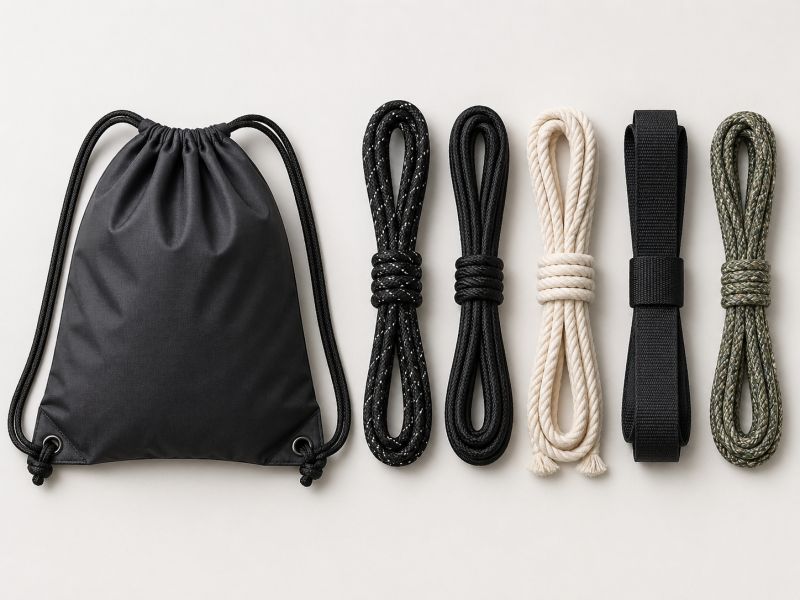
That is why “canvas” is not enough information, and neither is “polyester.” A lightweight canvas can feel casual and soft. A heavier canvas can feel much more structured and retail-ready. A coated synthetic can look cleaner and behave better around moisture, but may change print method choices. The better habit is to compare fabric construction, not just fabric labels. That usually explains why one sample feels right, and another one feels unexpectedly flat, stiff, fuzzy, or weak.



Best Fabric Balances More Than Durability
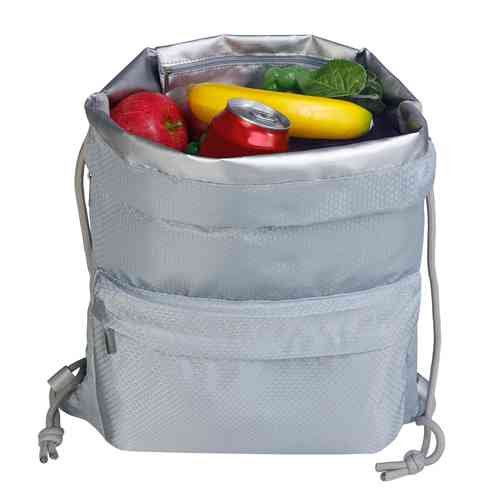
A fabric can be durable and still be the wrong choice. Drawstring bags are often judged not only by how long they last, but by how they print, how they hang, and how they behave after folding or storage. Canvas is often praised for its stronger body and easier dye or print control, while lighter synthetics are often chosen for foldability, lower weight, or travel-friendly use. Travel shoe-bag guidance also emphasizes durability, water resistance, and easy cleaning together, showing that “best fabric” is rarely a single-performance decision.
Better fabric questions to ask
| Instead of asking | Ask this instead |
|---|---|
| Is it durable? | Does it still look right after folding and carrying? |
| Can it print well? | Will the surface hold the artwork cleanly? |
| Is it soft enough? | Does the drape fit the use scene? |
| Is it premium enough? | Does the fabric support the right first-touch impression? |
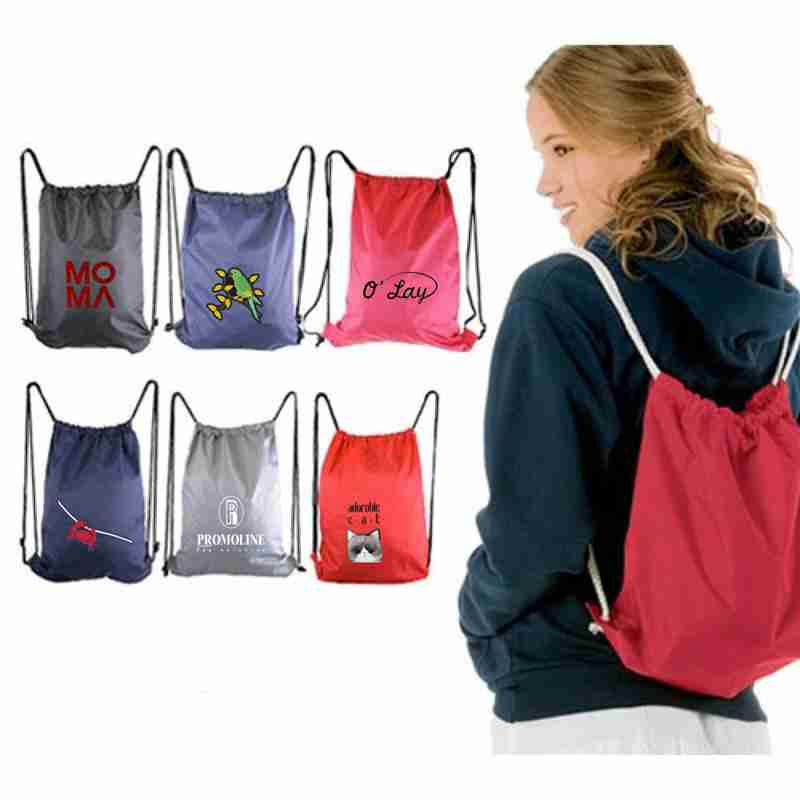
The right fabric usually balances several jobs at once. A promotional bag may need low-cost, clean graphics and easy folding. A gift pouch may need softer drape and a better handfeel than raw durability. A shoe bag may need breathability or easier cleaning more than a refined front print. Once those priorities are ranked correctly, fabric selection becomes much more accurate.
Display Appeal vs Real Use
Cotton and muslin can look soft, natural, and gift-ready at first touch. Canvas can feel more substantial on display. Polyester often performs well when cost, color range, and graphic visibility matter. Nylon and ripstop tend to earn their value later, when abrasion, packability, and repeated use start to matter more than first-touch charm.
A useful comparison is to separate display strength from use strength:
| Fabric direction | Often wins first on | Often wins later on |
|---|---|---|
| Cotton / muslin | Soft presentation, natural look | Light-duty repeat use |
| Canvas | Body, presence, shelf feel | Better structure over time |
| Polyester | Graphic programs, broad utility | Easy handling, lighter upkeep |
| Nylon / ripstop | Less emotional first touch | Better abrasion, packability, active use |
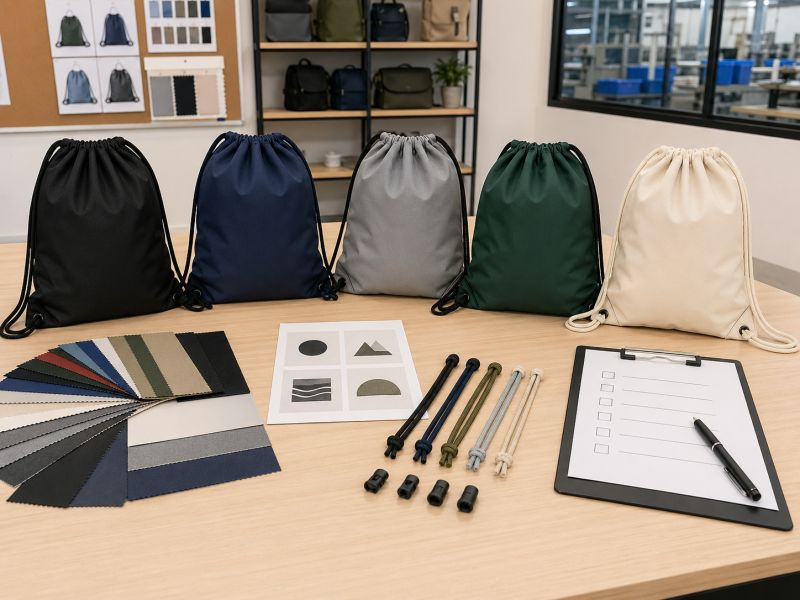
The better fabric is not always the one that feels nicest on a sample board. It is the one that still suits the project after the bag has been filled, folded, pulled, and reused. That is why a gift pouch and a sport cinch bag should not be judged by the same “best fabric” logic, even when both are drawstring styles.


Friction, Stress, Fold Marks Matter
The same fabric can feel strong in one drawstring bag and disappointing in another because the fabric is not working alone. Public cinch-bag guidance repeatedly points to drawcord anchor areas, reinforced corners, grommets, and coated polyester or nylon in the 420D–600D range because those zones absorb most of the friction and load. Fold behavior also matters: lighter technical fabrics may stay packable, while heavier fabrics can show more obvious crease memory or body stress depending on construction and finish.
A better fabric review should include these pressure zones:
| Stress area | Why it changes fabric perception |
|---|---|
| Cord path | Rough drag makes the bag feel cheap fast |
| Exit point/grommet | Weak support makes the wear show early |
| Bottom corners | Load concentration can distort soft fabrics |
| Fold lines | Some finishes mark or whiten more easily |
| Packed state | Storage pressure changes the drape and shape memory |
Narrow Fabric Choices Before First Runs
Fabric decisions become expensive when they stay open too long. General bag-material guidance repeatedly recommends defining the bag’s primary use first, then matching fiber properties such as weight, strength, water behavior, and branding compatibility before expanding color options or style details. Once fabric direction is fixed early, later decisions on print, trim, and sampling become easier to control.
A safer first-run structure often looks like this:
| First-run step | Better move |
|---|---|
| Use scene | Lock one main purpose first |
| Fabric family | Narrow to one or two material paths |
| Fabric construction | Confirm weight or weave before the artwork grows |
| Branding route | Match the print or label method to the chosen surface |
| Color range | Start with fewer shades before expanding |
| Sample review | Test the fabric in the actual use pattern |


Make A Sample First?
See your idea come to life before mass production.
At Jundong Factory, we offer free design mockups and custom samples to ensure every detail is perfect — from material and color to logo placement and stitching.
Start your project with confidence today: info@jundongfactory.com.
FAQs About Custom Cosmetic Bags Wholesale
What is the best fabric for a drawstring bag?
The best fabric for a drawstring bag depends on what the bag is expected to do after it leaves the sample table. Public references for drawstring bags consistently split the category by use: cotton for soft natural-looking pouches and simple promotions, canvas for stronger body and heavier-duty carry, polyester for broad-use event bags and graphic-driven programs, nylon for lighter but tougher sport or travel use, mesh for airflow, and water-resistant fabrics for moisture-sensitive contents. That pattern shows a simple truth: the “best” fabric is not universal. It is tied to the use scene.
A useful way to decide is to rank the bag by four priorities: how it should feel, how it will be used, how it needs to print, and how much handling it will take. A gift pouch usually wins with softness and surface mood, so cotton, muslin, satin, or velvet may make more sense than a sport fabric. A gym sack or travel drawstring backpack usually needs lower weight, better abrasion resistance, and easier drying, so polyester, nylon, or ripstop often becomes more practical. A shoe bag may prioritize breathability or wipe-down ease, which is where mesh or coated fabrics may enter the discussion. A rustic or eco-leaning pouch may work better in jute or burlap, even if that same fabric would feel too rough for a premium jewelry pouch.
| Fabric direction | Usually better for | Main trade-off |
|---|---|---|
| Cotton / muslin | Soft pouches, natural gifting, light packaging | Less structure, easier to mark |
| Canvas | Heavier body, retail-ready drawstring bags | More weight, stronger fold memory |
| Polyester | Event bags, graphics, broad utility | Surface quality varies by grade |
| Nylon / ripstop | Travel, sport, active use, lighter strength | Not always the warmest first touch |
| Mesh | Shoes, sports gear, ventilation | Not ideal for fine front prints |
| Jute/burlap | Rustic packaging, eco-styled gifting | Coarse handfeel, rougher print outcome |
The safest decision usually comes from matching fabric to the bag’s real job, not to a trendy word. Once the job is defined clearly, the “best fabric” question becomes much easier and much less subjective.
How should we choose between cotton, canvas, polyester, and nylon?
The clearest way to choose between cotton, canvas, polyester, and nylon is to compare feel, print behavior, weight, and use intensity together—not one by one. Public bag-fabric guides repeatedly describe cotton as breathable and soft, canvas as stronger-bodied and easier to position as substantial, polyester as versatile and quick-drying, and nylon as notably strong for its weight with better abrasion performance in active use. They also point out that fabric selection should be tied to the end use rather than to familiarity with the material name.
A practical comparison looks like this. Cotton works well when a softer handfeel, natural look, or simple printed gift pouch matters more than hard-wearing performance. Canvas works when the bag needs more body, stronger presentation, or better support for heavier contents. Polyester is often the safer choice for event bags, color-rich graphics, and projects where price discipline matters. Nylon is usually the stronger choice when the bag will be carried, folded, packed, and reused more aggressively, especially in gym, swim, travel, and outdoor scenes. Ripstop versions of nylon or polyester become relevant when low weight and tear resistance both matter.
| Fabric | Strongest when the project needs | Main caution |
|---|---|---|
| Cotton | Softness, natural mood, easy everyday gifting | Lower structure, can mark more easily |
| Canvas | Body, shelf feel, heavier-duty look | Weight and fold memory rise quickly |
| Polyester | Graphics, budget control, broad-use versatility | “Polyester” alone does not define quality |
| Nylon | Lighter strength, abrasion resistance, active use | Can feel more technical and less warm |
The better decision usually comes from asking which failure matters most. Is it worse if the bag feels too stiff, too weak, too heavy, too synthetic, too rough for printing, or too casual for retail? Once that is clear, these four fabrics stop competing as equal options and start falling into a much more logical order.
When should we use mesh, jute, velvet, satin, or other special fabrics?
Special fabrics work best when the use scene is already narrow and specific. Public drawstring-bag catalogs do not place mesh, jute, velvet, satin, or decorative specialty fabrics at the center of every drawstring program. They usually appear in clearly separated sections because they fit very specific jobs: mesh for breathability, jute for rustic or eco-led packaging, velvet for jewelry and premium gifting, satin for soft presentation and event favors, and coated specialty meshes for more technical ventilation or moisture control.
That separation is useful. It prevents the most common mistake: choosing a fabric because it feels interesting before the actual use scene is defined. A mesh bag is excellent when shoes, laundry, or sports gear need airflow, but the same openness makes it wrong for many gift or retail pouches. Jute can communicate natural texture and eco mood quickly, but its coarse handfeel and rougher print surface may fight against a polished brand look. Velvet and satin can elevate first-touch impression and gifting, but they are far less suited to rough daily carry than nylon, polyester, or canvas. In other words, these fabrics do not usually replace the core fabric families; they enter only when the scene clearly rewards their strengths.
| Special fabric | Usually worth choosing when | Main risk if used too broadly |
|---|---|---|
| Mesh | Airflow matters more than print precision | Looks too utilitarian or too open |
| Jute / burlap | Rustic, eco-leaning, natural packaging matters | Surface can feel coarse and less refined |
| Velvet | Gift value and premium first touch matter | Pressure marks and daily wear show quickly |
| Satin | Soft presentation and event gifting matter | Snagging and wrinkling are easier to trigger |
The more specific the job, the more useful these fabrics become. The less specific the job, the safer it usually is to stay with a stronger mainstream option until the role is better defined.
Do weight, weave, coating, and finish matter more than the material name?
In many bag projects, yes—they often matter more than the material name itself. Public canvas, nylon, polyester, and mesh guidance repeatedly explains that weight, denier, weave density, pore size, and coating type can change performance much faster than the basic fiber label. A 600D coated polyester gym-style drawstring bag, for example, behaves very differently from a lightweight polyester giveaway bag. A tight-weave canvas with stronger body behaves differently from a lighter casual canvas. High-denier mesh behaves differently from decorative mesh. In each case, the material family is only the starting point; the construction details create the real result.
That is why two bags described with the same material word can feel as if they belong to different categories. Weight changes drape, fold behavior, and perceived substance. Weave density changes print sharpness, surface control, and how easily the fabric distorts under load. Coating or backing changes water behavior, handfeel, and sometimes even which logo method makes sense. Denier in nylon and polyester changes the balance of strength, bulk, and flexibility. If those details are ignored, it becomes easy to compare the wrong samples and assume the whole material family is good or bad when the real difference came from construction.
| Construction factor | What it changes fastest |
|---|---|
| Weight / denier | Body, strength feel, fold memory |
| Weave density | Print clarity, distortion control |
| Coating / backing | Water behavior, wipe-down ability, handfeel |
| Mesh pore size | Breathability, visibility, containment |
A safer habit is to compare material families only after the construction details are pinned down. Otherwise, “canvas versus polyester” or “nylon versus cotton” becomes too broad to be useful.
Which drawstring bag fabrics work best for printing?
The best printing fabric is usually the one whose surface supports the artwork cleanly without fighting the bag’s actual use scene. Public bag-printing and fabric guides consistently note that print results are tied to surface smoothness, weave control, coating, and how the bag will be handled later. Cotton and many canvases are often favored for strong print response and natural-looking graphics, while polyester is widely used for event bags and broad graphic programs because of its versatility and color range. Mesh is far less ideal for fine front graphics, and rougher natural fibers such as jute or burlap tend to soften detail rather than sharpen it.
The key is to separate print quality from print suitability. A fabric may accept a crisp logo but still be wrong if the bag needs heavy folding, frequent washing, or a premium soft-touch finish that the print method disrupts. A lighter event bag might perform well with straightforward screen printing or transfer work. A stronger canvas pouch may support sharper graphics with more body under the artwork. A technical nylon may need different branding treatment because the surface and finish influence adhesion and edge clarity. In other words, the best print fabric is not just about the flattest surface. It is about whether the artwork stays convincing after the bag is pulled, packed, and used.
| Fabric direction | Printing advantage | Common limitation |
|---|---|---|
| Cotton / canvas | Good surface control, familiar print response | Rougher weaves soften fine detail |
| Polyester | Broad color options, versatile for event graphics | Quality varies by base fabric grade |
| Nylon | Works when the use scene needs stronger performance | Surface finish may complicate print choices |
| Mesh | Better for utility than front graphics | Open surface limits logo precision |
| Jute/burlap | Rustic, earthy graphic mood | Detail edges appear rougher |
The safest way to choose is to ask two questions together: “Will this fabric carry the artwork well?” and “Will it still fit the bag’s real use after printing?” The right answer usually balances both.
How do we match fabric to giveaways, gym sacks, shoe bags, and gift pouches?
The safest fabric match starts with the bag’s real job, not with the broad category name “drawstring bag.” Public material guides for drawstring styles repeatedly separate fabrics by use because the same silhouette behaves very differently when it is used for event giveaways, gym carry, shoe storage, or gift packaging. Cotton and muslin are often positioned toward soft pouches and lighter packaging uses, canvas toward stronger body and shelf presence, polyester toward broad-use promotional bags, nylon toward travel and active carry, and mesh toward breathable storage.
A practical fabric-use map looks like this:
| Use scene | Usually safer fabric direction | Why it fits better |
|---|---|---|
| Event giveaway | Polyester | Lighter cost pressure, wide color range, easy large-volume use |
| Gym sack / sports carry | Polyester or nylon | Better handling for repeated wear, movement, and sweat-heavy scenes |
| Shoe bag | Mesh, nylon, or lighter polyester | Better airflow or easier wipe-down, depending on the need |
| Gift pouch | Cotton, muslin, satin, or velvet | Softer first-touch impression and stronger gift mood |
| Retail-ready drawstring pouch | Canvas or stronger cotton | More body, better presentation, steadier shelf feel |
This matters because many fabric mismatches are not obvious at the quote stage. A giveaway bag that uses heavy canvas may feel overbuilt and unnecessarily expensive. A gift pouch made in basic 210D polyester may look too promotional. A shoe bag made in satin may look elegant for five seconds and feel wrong the moment it is used. The better match usually comes from deciding which one matters most: graphic visibility, softness, breathability, carry strength, or shelf presence. Once that is fixed, fabric choice becomes much more logical.
Do recycled fabrics work well for drawstring bags?
Yes—recycled fabrics can work very well for drawstring bags, but they still need to be judged by construction quality, not by the sustainability claim alone. Current fabric guidance on rPET and recycled polyester repeatedly notes that good recycled polyester can retain the performance profile that makes polyester useful in accessories: durability, versatility, quick drying, and strong accessory use potential. At the same time, several sources stress that quality still depends on fabric construction, processing quality, and traceable standards rather than on the recycled label by itself.
For drawstring bags, recycled options usually make the most sense when the project already leans toward polyester-like performance or cotton-like natural positioning. Recycled polyester can be a strong fit for event bags, travel-friendly styles, or sporty everyday use because it stays close to the lightweight, quick-drying, and print-friendly logic that makes conventional polyester popular. Recycled cotton can make sense when the bag needs a softer, more natural handfeel and the project wants a more visibly natural material story. But in both cases, the same old rules still apply: the weave, weight, finish, and actual use scene matter more than the environmental claim alone.
| Recycled route | Usually works best when the bag needs | What still must be checked |
|---|---|---|
| RPET / recycled polyester | Lightness, durability, color retention, broad utility | Fabric grade, finish, print response, traceability |
| Recycled cotton | Softer natural look, casual gifting, reusable pouch logic | Weight, structure, surface consistency, print behavior |
A strong recycled-fabric decision usually asks two questions together: Does this fabric perform the way the bag needs? and Can the recycled claim be supported clearly? If the bag is meant for repeated use, the construction should still be judged like any other performance fabric. If the project leans heavily on the recycled story, traceability and a clearly stated recycled percentage matter more. When both performance and claim quality are treated seriously, recycled fabrics can be a strong option instead of just a marketing line.
How should we compare samples when the fabric names look the same?
When two samples carry the same fabric name, the real differences usually sit in weight, weave, finish, and construction details—not in the label itself. Multiple bag-fabric guides make this clear by showing how canvas weight bands, polyester denier, coating choices, and weave density can change feel, print quality, fold behavior, and apparent strength even when the base material name stays the same. A “canvas” sample and another “canvas” sample may behave very differently if one is lightweight and loose-woven while the other is heavier and tighter. The same is true for polyester and nylon.
A more useful sample comparison should review the bag in five ways. First, compare body and drape: does the bag stand, slump, or fold the way the project needs? Second, compare surface and print behavior: does the logo edge stay controlled or soften too quickly? Third, compare stress response: how do the corners, cord path, and fold lines behave under light loading? Fourth, compare touch and visual impression: does the fabric feel warm, natural, technical, sporty, rustic, or refined? Fifth, compare packed-state recovery: after folding or shipping simulation, does the bag recover well or keep harsh crease memory? These questions usually reveal the true difference faster than the fabric name.
| Same fabric label, different reality | What to compare |
|---|---|
| Canvas vs canvas | Weight, weave tightness, surface texture, print clarity |
| Polyester vs polyester | Denier, coating, sheen, fold memory, print response |
| Nylon vs nylon | Ripstop or plain, handfeel, abrasion feel, packability |
Which fabric details should be locked before the first run starts?
Before the first run starts, the fabric family alone is not enough—construction details need to be locked too. Fabric guides across bag categories repeatedly point out that function, weight, finish, and brand compatibility should be settled early because later print, trim, and packing decisions depend on them. For drawstring bags, the first-run risk rises quickly when the project still leaves weight, coating, print route, and stress-area behavior open at the same time.
A safer first-run checklist usually locks these items first:
| Fabric detail to lock | Why it matters before bulk |
|---|---|
| Fabric family | Sets the overall use direction |
| Weight / denier / GSM | Changes body, feel, and carry behavior |
| Weave or mesh openness | Changes print, airflow, and containment |
| Coating / finish | Changes water behavior, handfeel, and branding options |
| Color base | Affects print contrast and perceived value |
| Stress-zone support | Needs to match the chosen fabric’s behavior |
This matters because first runs are meant to answer a focused question, not test every possible material story at once. If the project is still unsure about cotton versus canvas, light versus heavy polyester, coated versus uncoated nylon, and smooth versus rough finish all at the same time, the sample stage becomes harder to read and the first order becomes harder to price correctly. Narrowing the fabric path early often does more for project control than adding more colorways or more decoration ideas.
A useful rule is to lock the fabric in this order: use scene first, then fabric family, then weight, then finish, then branding compatibility. Once those are fixed, later decisions become much easier to make without confusing the real cause of a good or bad sample.
How do we compare drawstring bag fabric quotes without comparing the wrong things?
The safest quote comparison starts by aligning fabric construction details, not just the material name. Across bag-fabric guidance, cost-relevant differences repeatedly come back to the same factors: fiber family, weight or denier, weave density, coating or finish, print compatibility, and how well the fabric matches the bag’s actual use. If those details are not aligned first, two “polyester drawstring bag” quotes or two “canvas pouch” quotes can reflect very different materials and very different real performance.
A more useful quote sheet should compare these items side by side:
| Quote area | What must be aligned first |
|---|---|
| Fabric family | Cotton, canvas, polyester, nylon, mesh, recycled, etc. |
| Weight / denier / GSM | Light, medium, or heavy construction |
| Weave / structure | Tight weave, open mesh, ripstop, coated plain weave, etc. |
| Finish / coating | Water-resistant, matte, soft-touch, laminated, uncoated |
| Print route | Screen print, transfer, embroidery, patch, woven label |
| Use scene | Giveaway, gym, travel, gift pouch, shoe bag, packaging |
| Stress handling | Whether corners, cord path, and folds suit the chosen fabric |
This is important because a lower quote may simply be based on a lighter fabric, looser weave, simpler finish, or lower-performance construction. A higher quote may include a stronger denier, a tighter weave that holds print better, a coating that improves moisture handling, or a finish that changes the first-touch feel. If the bag’s real job is not aligned first, the quote comparison can become misleading very quickly.
A safer buying habit is to compare quotes in this order: what the bag is for, what the fabric is built like, how it needs to be printed, and how it will be handled after sale. Once those are aligned, price differences become much more meaningful and much less likely to hide the real source of risk.
Fabric shapes printing, folding, carrying, moisture, and daily feel.
That is why fabric decisions usually create more downstream impact than many teams expect. Public drawstring-bag and bag-fabric guides consistently sort this category by cotton, canvas, polyester, nylon, mesh, waterproof fabrics, jute, and other specialty textiles, then tie those materials to specific uses such as giveaways, gym carry, shoe storage, travel, and gift packaging. They also connect fabric choice to weight, breathability, printability, abrasion resistance, water behavior, and cost control, which is exactly why one drawstring bag can feel casual and low-risk while another needs a much tighter material decision from the start.
The questions focus on the fabric issues that most often shape project decisions: which base fabric fits the job, how natural and synthetic options differ, when special fabrics make sense, and how to avoid comparing the wrong material factors. We will start with the most common high-impact questions first.
