 Skip to content
Drawstring Bag Design for Bulk Custom Projects
Turn your logo idea, campaign concept, or product reference into a sample-ready drawstring bag design with practical support for material choice, logo placement, structure, printing, packing, and bulk production.
- Custom logo, fabric, size, color, drawstring, pocket, label, and packing
- For events, schools, sports teams, gyms, retail, corporate gifts, and promotions
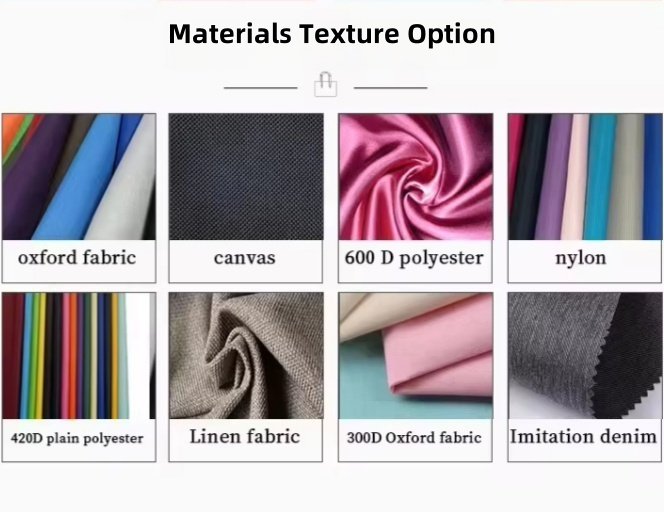
- Polyester, nylon, cotton, canvas, mesh, RPET, non-woven, and PVC options
- Standard MOQ around 500 pcs; simple styles may be reviewed from 200–300 pcs
- Sampling usually 5–7 days; simple styles may be faster
- Bulk production usually 20–30 days after sample approval
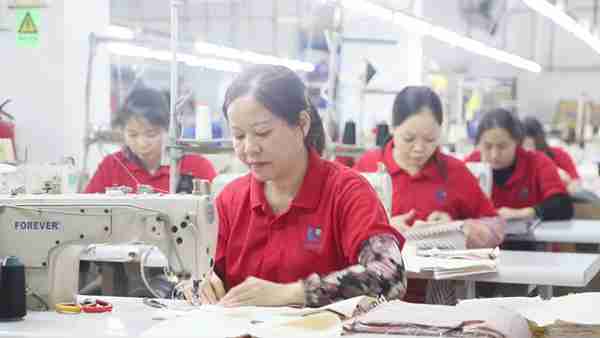
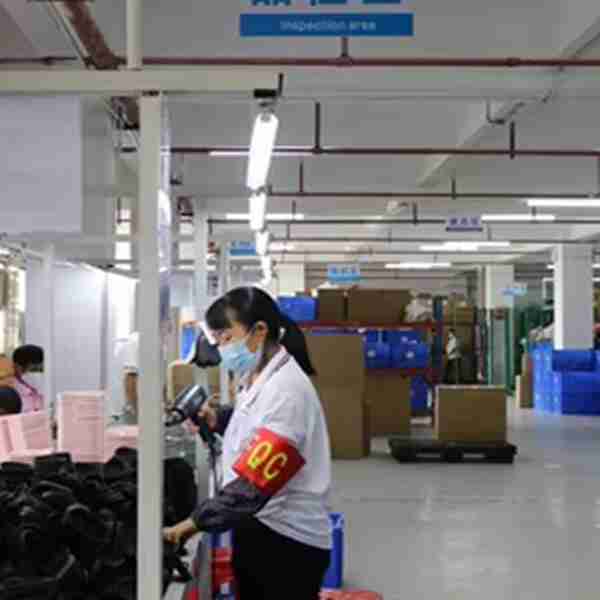
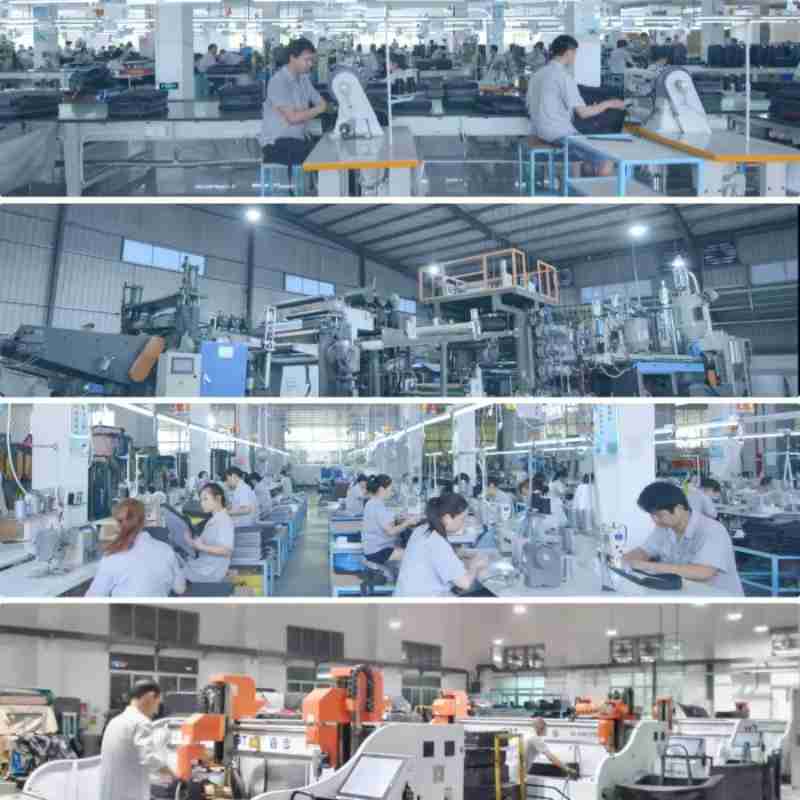
- 80 QC inspectors support material, logo, sewing, packing, and final checks
- Export-ready packing, barcode, carton mark, and label support
Design That Works Beyond the Mockup
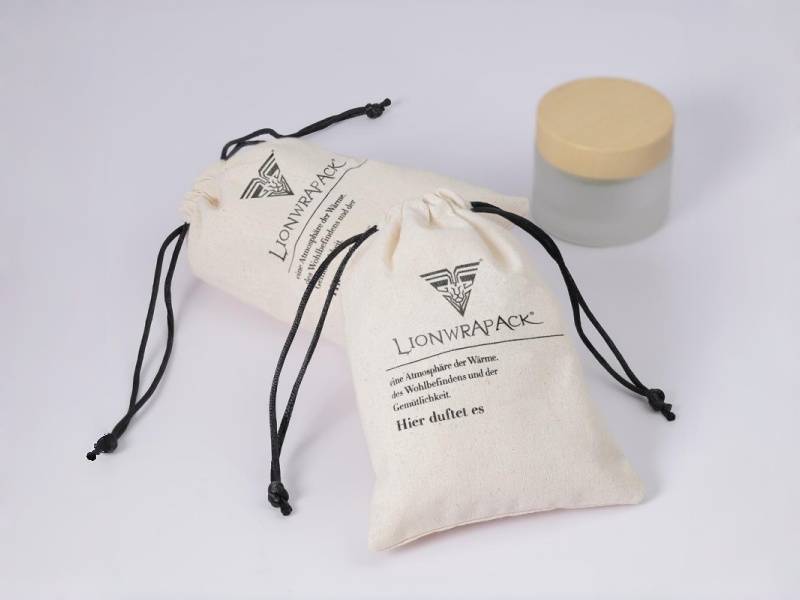
A drawstring bag design should look good on screen, but it also needs to work in real production. Fabric behavior, logo placement, print method, drawcord strength, pocket layout, packing style, and bulk consistency all affect the final result.
Jundong helps partners turn a drawstring bag idea, logo concept, campaign theme, or reference sample into a practical design that can move from review to sample and then into bulk production.
Many drawstring bag projects start with a visual idea: a logo, a sketch, a mood board, a school color, a sports team mark, or an event theme. The design may look simple at first, but several choices can change the final product.
A large front logo may work well for trade shows and event giveaways.
A small woven label may feel better for retail or private label projects.
A full-print pattern can look strong, but it needs the right fabric and panel planning.
A low-cost giveaway bag may need a simpler structure.
A sports or school bag may need stronger corners and better drawcord comfort.
For brands, sourcing teams, distributors, schools, sports organizations, and event companies, the stronger design is not always the most complex one. It is the design that fits the real use case, budget, production quantity, and delivery plan.
Practical Design Review
| Design Question | What Partners Should Check |
|---|---|
| What will the bag carry? | Light event items, sportswear, books, gifts, samples, or retail products |
| Who will use it? | Students, athletes, event visitors, gym members, staff, or end customers |
| How visible should the logo be? | Large front print, smaller brand label, patch, embroidery, or full pattern |
| How long will it be used? | One-day event, seasonal program, retail sale, or repeat daily use |
| How will it be packed? | Bulk packing, individual polybag, barcode label, hangtag, or carton grouping |
Design by Use Scene
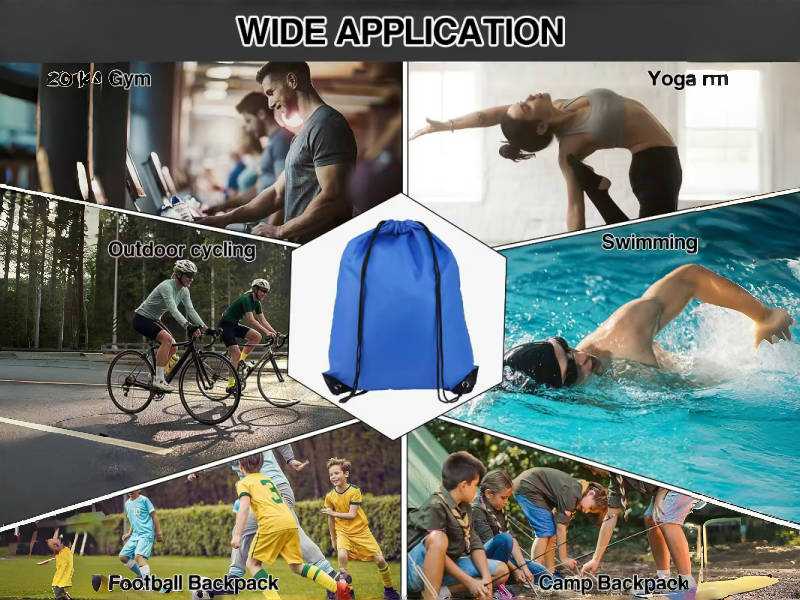
A drawstring bag for a one-day conference can stay light, flat, and easy to distribute. A school program may need stronger stitching and a more comfortable cord. A sports bag may need more capacity and better corner reinforcement. A retail bag may need a cleaner shape, better fabric feel, custom hangtag, and barcode-ready packing.
A good design process starts by asking how the bag will be used after delivery.
For event teams, fast distribution and clear logo visibility matter most.
For schools, durability and simple color planning matter more.
For sports teams, strength and team identity become more visible.
For brands, the bag must protect the brand image, not only carry a logo.
For distributors, the design needs to be repeatable across different clients and order cycles.
Use-Scene Design Guide
| Use Scene | Design Direction | Common Keywords |
|---|---|---|
| Trade shows | Light fabric, large front logo, compact packing | event giveaway bags, trade show bags |
| Schools | Practical size, durable cord, clear color options | school drawstring bags, student bags |
| Sports teams | Strong corners, bold logo, larger capacity | sports cinch bags, team logo bags |
| Gyms and fitness | Smooth fabric, easy-clean surface, small pocket option | gym drawstring bags, fitness bags |
| Retail promotions | Better fabric, hangtag, barcode, clean finishing | retail drawstring bags, private label bags |
| Corporate gifts | Balanced cost, clean logo, simple premium touch | branded drawstring bags, corporate gift bags |
| Fundraising programs | Cost-controlled structure with strong logo visibility | promotional drawstring bags |
Logo Placement That Makes the Bag Work
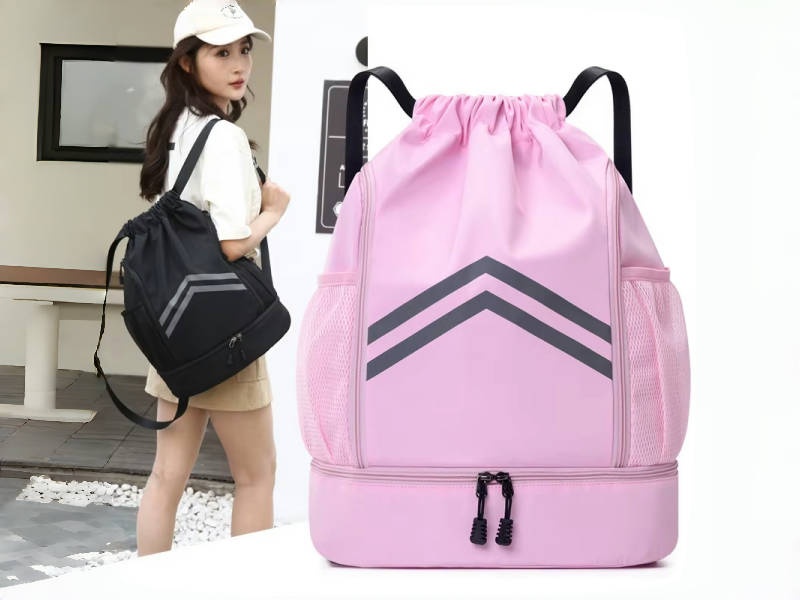
For event giveaways, a larger front logo often works well because it gives stronger visibility in photos, registration areas, and public use. For school and sports programs, the logo should be easy to recognize but not placed too low, where it may bend or disappear when the bag is filled. For retail and private label projects, smaller woven labels, side labels, rubber patches, or embroidery can create a cleaner product feel.
Full artwork, pattern prints, and large sponsor graphics need more planning. The design may look clean on a flat mockup, but seams, drawcord channels, folds, and panel cutting can affect the final look. If the artwork includes fine lines, gradients, or multiple brand marks, the logo method and printable area should be reviewed early.
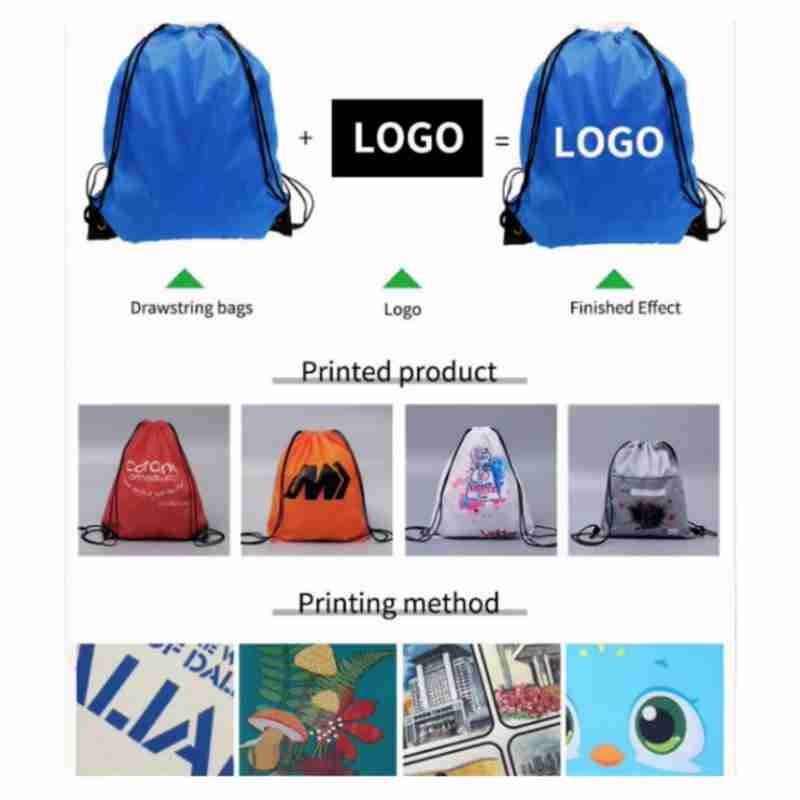
Logo Placement Options
| Placement Style | Better For | Design Notes |
|---|---|---|
| Large front logo | Events, trade shows, campaigns | Strong visibility, good for promotion |
| Center logo | Schools, teams, general branding | Balanced and easy to recognize |
| Small woven label | Retail, private label, lifestyle projects | Cleaner and less promotional |
| Rubber or PVC patch | Sports, outdoor, youth programs | Adds dimension and stronger identity |
| Side label | Minimal brand style | Better for subtle branding |
| Full-panel print | Campaign visuals, seasonal patterns | Needs fabric and panel planning |
| Lower logo area | Some fashion styles | Check the bending after filling |
Material Choices Shape the Final Design
A strong drawstring bag design starts with the right material direction.
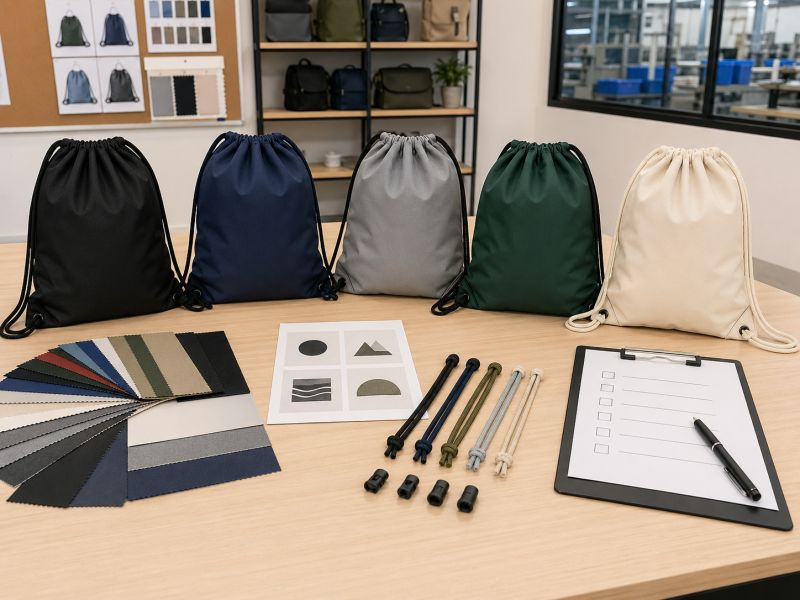
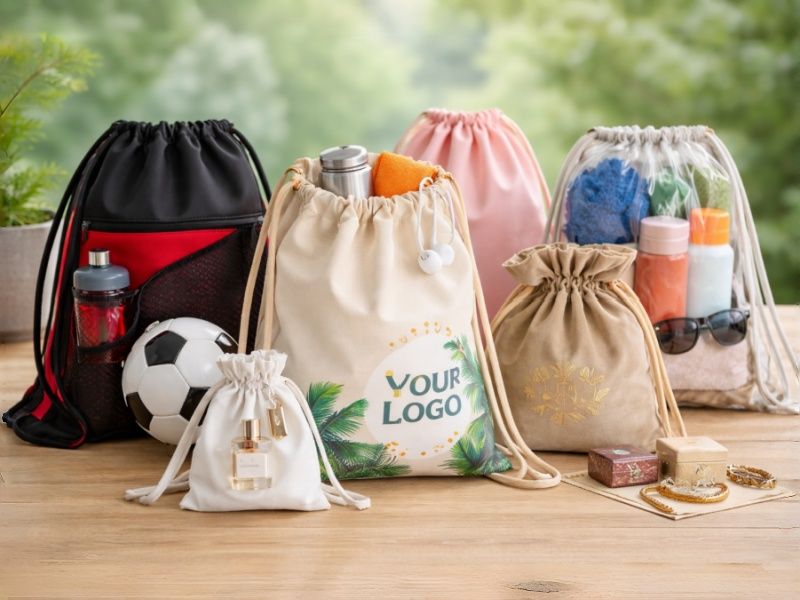
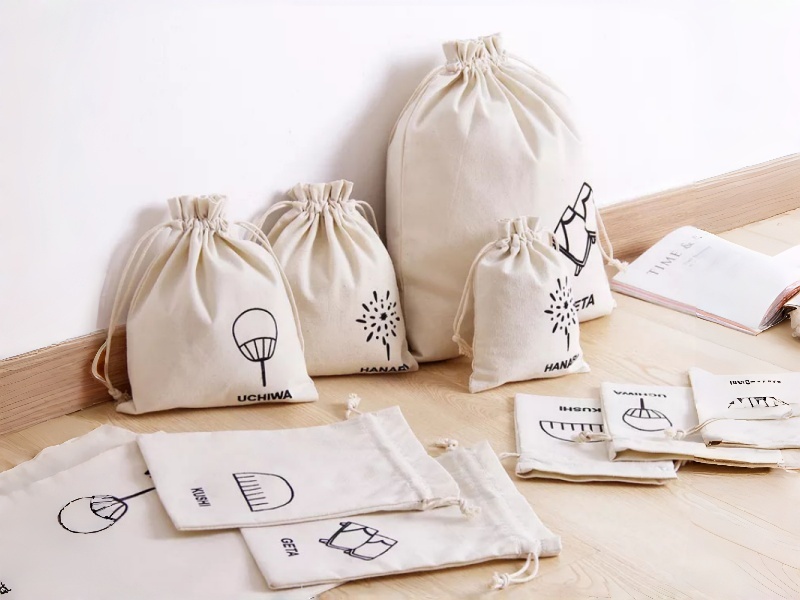
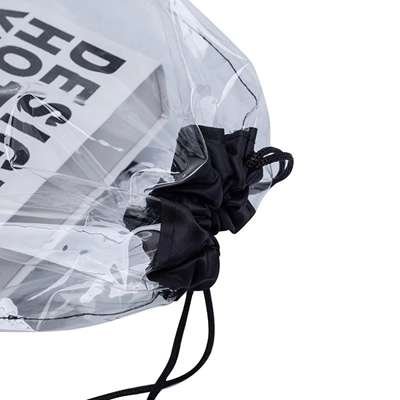
Polyester is often a practical choice for promotional drawstring bags, event giveaway bags, school bags, and bulk logo cinch bags because it is light, printable, and cost-friendly. Nylon gives a smoother and more active feel, which works well for gym programs, sports teams, travel-style bags, and outdoor campaigns. Canvas and cotton create a more natural or premium look for retail, lifestyle, and private label programs. RPET can support recycled-material projects when the buyer wants a sustainability-related product story. Mesh or mixed-material designs can fit sports, summer camps, beach events, and youth programs.
Material also affects printing. A smooth surface may support clearer logo printing. A textured surface may need a different process. A heavier fabric can improve perceived value but may increase cost and packing volume. A very light fabric may help control the budget but may not be suitable for repeated daily use.
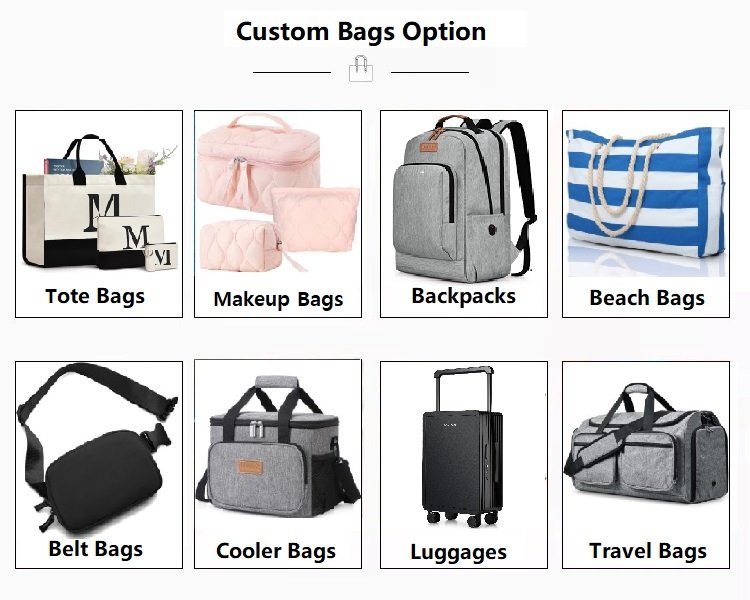
Jundong works with fabric, leather, PU, PVC, neoprene, plush, and other soft material categories, giving partners more room to compare materials across promotional, retail, sports, travel, packaging, and specialty bag projects.
Material Design Guide
| Material | Design Result | Better Fit |
|---|---|---|
| Polyester | Light, clean, cost-friendly | Events, schools, bulk promotions |
| Nylon | Smooth, sporty, stronger feel | Gym, sports, travel-style bags |
| Canvas | Textured, stronger retail feel | Brand programs, retail promotions |
| Cotton | Natural and soft | Eco-style gifts, simple branding |
| RPET | Recycled-material story | Sustainability campaigns |
| Mesh | Breathable and active | Sports, camps, outdoor events |
| Non-woven | Budget-focused | Short-term giveaways |


Print Methods for Different Artwork Styles
Many partners start with one question: “Can you print our design?”
A better question is: “Which method will make this design work best on this fabric and quantity?”
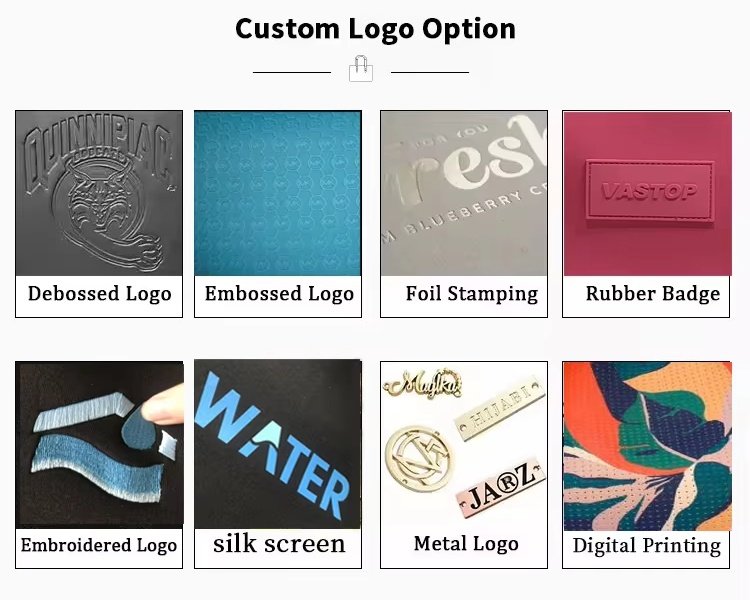
Screen printing is often a practical option for simple logos, large front marks, and bulk promotional drawstring bags. It can be cost-efficient when the artwork uses limited colors and the fabric surface is suitable.
Heat transfer works well for colorful event graphics, sponsor artwork, gradients, or designs that need a stronger visual result. Digital printing may be useful for detailed patterns, illustrations, and smaller runs where artwork complexity matters.
Embroidery gives a stronger textured look for team marks, premium brand programs, retail lines, and private label drawstring bags. Woven labels, rubber patches, and PVC patches are useful when the design needs a more finished product feel instead of a basic giveaway look.
Full print and pattern designs need extra review. The artwork may need to be adjusted for panel size, seam position, drawcord channel, and cutting tolerance. A design that looks perfect on a flat layout may change once the bag is sewn and filled.
Artwork-to-Method Guide
| Artwork Style | Better Method | Partner Notes |
|---|---|---|
| Simple one-color logo | Screen printing | Good for bulk logo bags and school projects |
| Large front branding | Screen printing or heat transfer | Check the size and fabric surface first |
| Multi-color event graphic | Heat transfer | Useful for campaigns, races, and sponsors |
| Detailed illustration | Digital printing | Better for fine lines and complex artwork |
| Premium team mark | Embroidery | Adds texture and higher perceived value |
| Retail brand detail | Woven label or patch | Cleaner for private label products |
| Sport or outdoor look | Rubber / PVC patch | Stronger visual identity |
| Full pattern design | Full-panel print or sublimation route | Needs panel and seam planning |
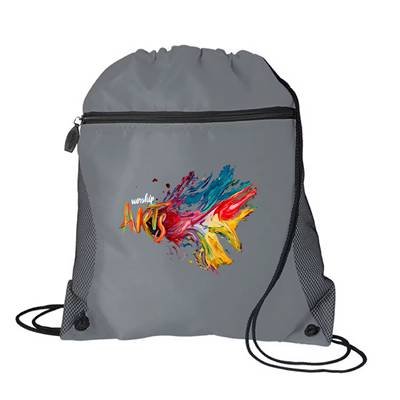

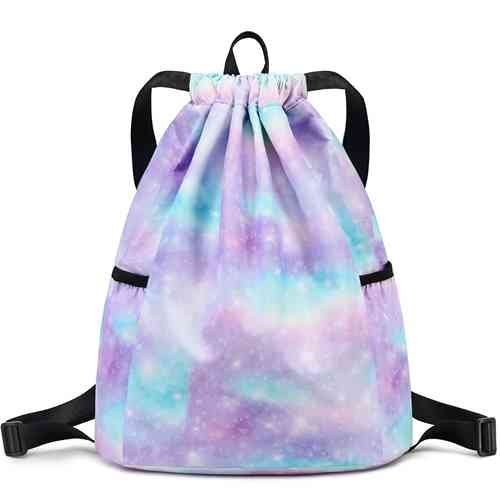

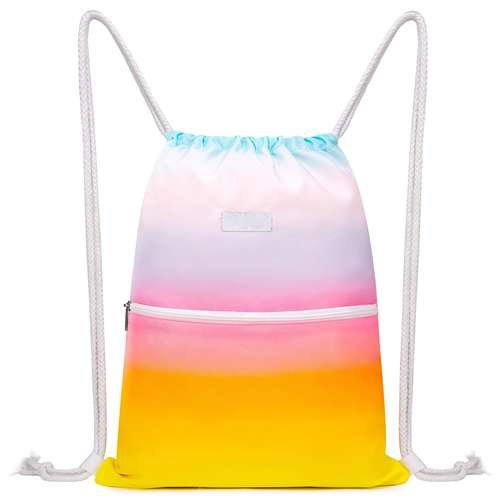

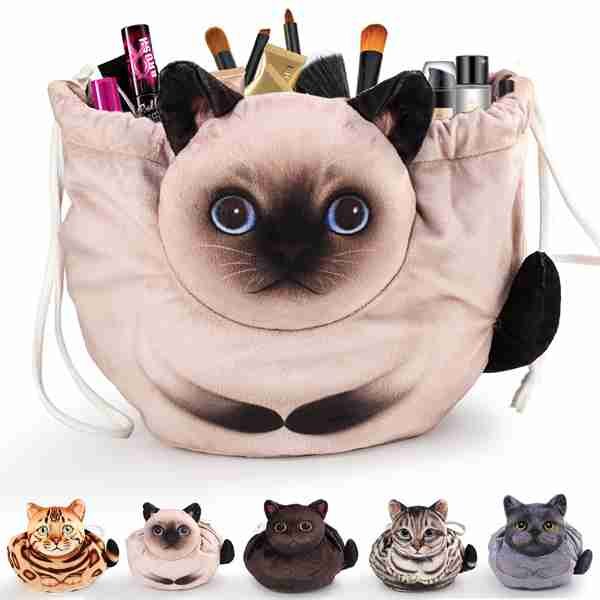
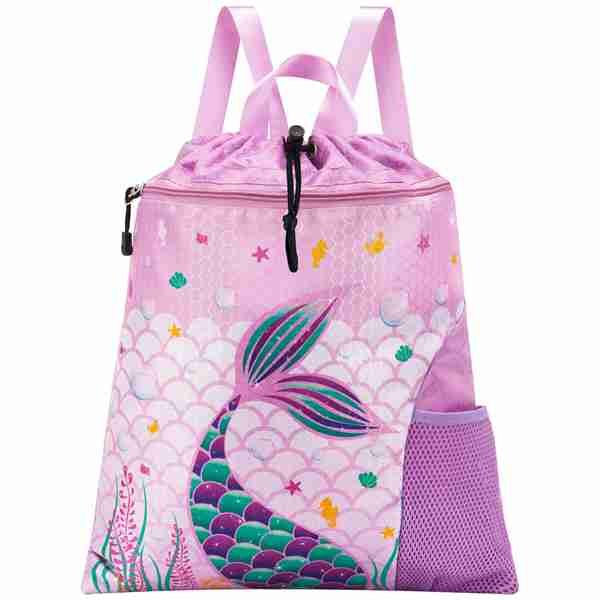

Structure Design: Pockets, Cords, Corners & Size
Basic flat drawstring bags work well for many promotional projects. They are light, easy to distribute, and simple to pack. But some projects need more practical structure.
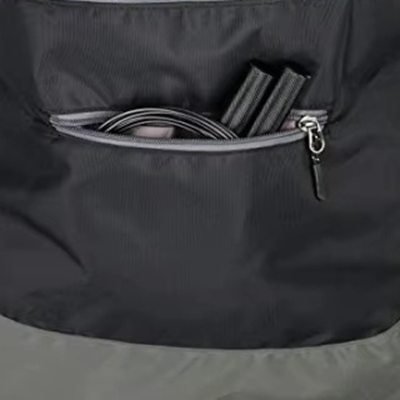
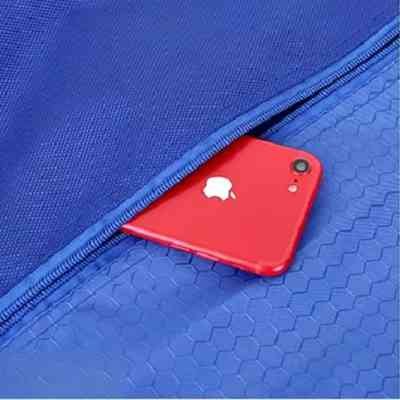
A school drawstring bag may need enough room for notebooks, folders, and small daily items. A sports cinch bag may need stronger corners and a more comfortable cord. A gym drawstring bag may benefit from a front zipper pocket for keys, membership cards, or phones. A travel or retail design may need better fabric, cleaner stitching, and a more finished shape.
Small details can change the user experience:
A thin cord may reduce cost, but feel less comfortable when loaded.
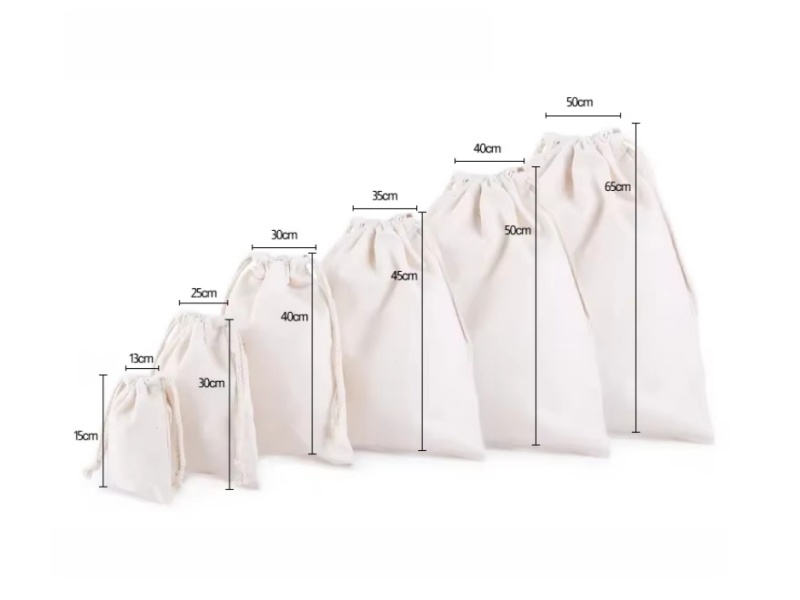
A larger body has greater capacity but requires more material.
A front pocket adds value but increases sewing work.
A reinforced corner can reduce stress at the cord exit point.
A mesh pocket may work well for bottles, sports gear, or outdoor programs.
A reflective strip can support youth, sport, safety, and evening event themes.
Jundong supports structure review, pattern making, size customization, functional adjustment, and prototype development for custom bag projects.
Structure Options
| Design Detail | Useful For | Partner Notes |
|---|---|---|
| Custom size | Schools, sports, and retail programs | Match capacity to real items |
| Front zipper pocket | Gym, event, travel, retail | Adds function and product value |
| Mesh side pocket | Sports, outdoor, camps | Useful for bottles and small gear |
| Inner pocket | Retail and member gift programs | Helps organize small items |
| Reinforced corners | Repeated use, heavier loading | Reduces stress around cord exits |
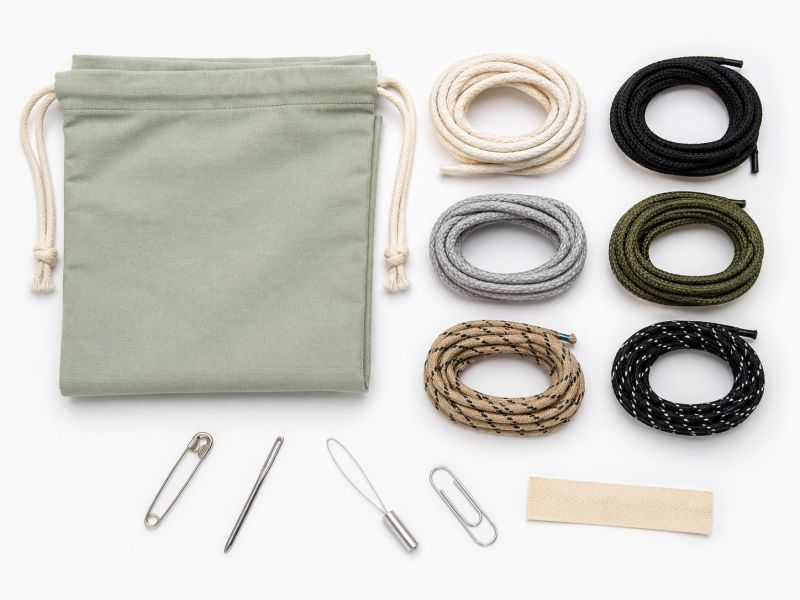
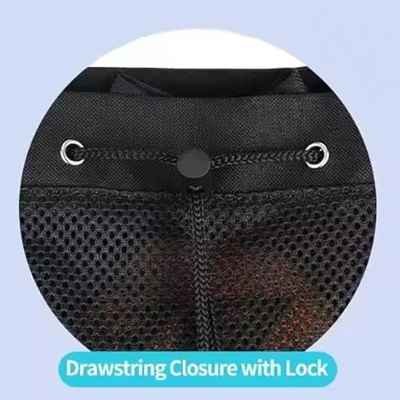
| Metal or plastic grommets | Durability and smoother cord movement | Check weight and style preference |
| Thicker drawcord | Sports, schools, and gym use | Better carrying comfort |
| Reflective trim | Youth, sport, safety campaigns | Adds visibility and function |
Full Print or Front Logo?
A front-logo design is often the safest direction for bulk promotional drawstring bags, school bags, corporate giveaways, trade show bags, and event cinch bags. It keeps the design clean, controls cost more easily, and gives the logo a clear display area.
A full-print design creates stronger visual impact. It can work well for seasonal campaigns, sports events, youth programs, tourism merchandise, retail gift items, and lifestyle brand projects. It is useful when the bag itself needs to carry a theme, pattern, illustration, or campaign identity.
The trade-off is production complexity. Full print may require more artwork planning, fabric testing, color review, panel matching, and cutting control. If the design includes repeating patterns, character artwork, sponsor marks, or edge-to-edge color, the layout should be checked before sampling.
Color-block designs offer a middle route. They can create a stronger design than a plain front-logo bag, while staying more controlled than a full-pattern print. For many partners, contrast panels, custom drawcord colors, small woven labels, and one clean logo can create a more polished result without making production too complex.
Design Choice Comparison
| Design Type | Best Fit | Things to Check |
|---|---|---|
| Front logo | Events, schools, corporate giveaways | Logo size, placement, and fabric surface |
| Full print | Retail, youth, seasonal, tourism, sports themes | Panel layout, print method, color control |
| Color block | Brand programs, team colors, campaign sets | Fabric matching, seam position, logo balance |
| Small label design | Retail, private label, lifestyle products | Label placement, fabric quality, finishing |
| Patch or embroidery | Sports, outdoor, premium programs | Patch size, sewing position, cost impact |
Design Details That Affect Cost, MOQ & Lead Time
A design that looks simple on screen may become more complex in production. Extra pockets, custom-dyed fabric, multi-color graphics, embroidery, full print, heavy canvas, special drawcords, retail packing, barcode labels, or mixed-color cartons can all add time and cost.
This does not mean partners need to avoid custom details. It means each detail should have a reason. A front pocket may be useful for a gym bag. Reinforced corners may be worth it for sports and school use. A woven label may improve retail value. A full print may be powerful for a campaign theme. But if the bag is only for a one-day giveaway, a clean logo on a cost-friendly material may perform better.
For many custom drawstring bag projects, Jundong’s usual MOQ is 500 pcs per design. Some simple styles may be reviewed from 200–300 pcs, depending on material, structure, logo method, and production schedule. Standard sampling is usually 5–7 days, while some simple samples may be arranged faster. Bulk production is usually around 20–30 days after confirmation, depending on project details.
Cost and Time Impact Guide
| Design Detail | Impact |
|---|---|
| Standard polyester and front logo | Easier cost and timeline control |
| Heavy canvas or special fabric | Higher material cost and sourcing review |
| Custom dyeing | May require higher MOQ and longer lead time |
| Multi-color artwork | More print setup and color review |
| Embroidery or patch | Higher perceived value, more production steps |
| Extra pocket | Pattern and sewing work increases |
| Reinforced corners | Better durability, slightly more labor |
| Full print | More artwork, panel, and color control |
| Retail packing | More handling, better presentation |
| Barcode and carton marks | Better warehouse control, extra packing setup |









From Design Idea to Sample
Many partners begin with an idea, not a complete technical file. That is normal.
You may have a brand logo, campaign theme, reference photo, flat sketch, existing bag sample, school color, team mark, or product mood board. These are enough to start the first design review.
During sample development, the design becomes more practical. The material is no longer just a name. The logo is no longer just a file. The bag size can be checked by hand. The drawcord can be tested for comfort. The pocket position can be adjusted. The corner structure can be reviewed. The packing method can be planned before mass production.
For custom drawstring bag projects, a sample can help answer questions that a mockup cannot:
- Does the fabric match the project level?
- Is the logo clear on the selected material?
- Is the bag size useful for the intended items?
- Does the drawcord feel comfortable when loaded?
- Does the pocket position make sense?
- Are the corners strong enough for the use scene?
- Will the packing method work for storage, retail, or event distribution?
Sample Development Flow
| Step | What Partners Can Confirm |
|---|---|
| 1. Idea review | Logo, use scene, reference style, target quantity |
| 2. Material direction | Polyester, nylon, canvas, cotton, RPET, mesh, or other options |
| 3. Structure planning | Size, pocket, drawcord, corner, stitching, opening |
| 4. Logo process review | Screen print, heat transfer, digital print, embroidery, label, patch |
| 5. Sample making | Real material, real logo method, real structure |
| 6. Sample feedback | Adjust size, logo position, fabric, cord, pocket, or packing |
| 7. Pre-production check | Confirm the approved sample before bulk production |
How Design Stays Consistent in Bulk Production
Bulk Consistency Checklist
| Area | What Needs to Stay Consistent |
|---|---|
| Fabric | Material type, color, thickness, hand feel |
| Logo | File version, size, position, print method, color |
| Structure | Bag size, pocket layout, cord channel, corners |
| Trims | Drawcord, grommets, zipper, label, patch |
| Sewing | Stitching line, seam allowance, stress points |
| Packing | Polybag, hangtag, barcode, SKU split |
| Cartons | Quantity per carton, carton mark, destination details |
| Repeat orders | Approved sample, specs, color reference, and packing record |
Quality Control Points
Jundong’s inspection flow covers key production stages:
- Incoming material inspection
- Logo and decoration review
- Cutting and sewing checks
- In-process quality control
- Finished goods inspection
- Packing and carton verification
For partners, this reduces the chance of receiving bags that look different from the approved sample or create sorting problems after arrival.
Design Records for Repeat Orders
A well-managed drawstring bag design can make reordering easier. The most useful records include:
- Approved physical sample
- Final artwork file
- Fabric and color reference
- Logo position record
- Print method and color standard
- Size and pattern details
- Drawcord and trim specification
- Packing and carton mark instruction
Make a sample first ?
A useful custom cinch bag should match more than a logo. It should match the people who will use it, the items it will carry, the event or sales channel it will serve, and the way it needs to be packed, shipped, received, and reordered. When these details are clear from the beginning, the whole project becomes easier to quote, sample, produce, inspect, and deliver.
Client Testimonials
800+ brand Clients Trust Jundong


Ready to Build a Custom Cinch Bag That Fits Your Project? Contact Us!
Your custom cinch bag project may be simple, or it may need several layers of detail. A large event giveaway may need a lightweight polyester bag with a clear front logo and simple bulk packing. A school program may need stronger stitching, color sorting, and reliable drawstrings. A sports team may need mesh, nylon, reinforced corners, or thicker cords. A retail line may need canvas, cotton, RPET, woven labels, hangtags, barcode stickers, and individual packing.
The best result usually starts with a clear project brief. You do not need to have every detail finalized before reaching out. If you already have a logo file, size, material reference, or previous sample, that will help. If not, you can start with the basics: what the bag is for, how many pieces you need, what logo or design should be added, and when the goods need to arrive.
Jundong can help turn those early details into a workable custom cinch bag specification. The review can include fabric choice, bag size, logo method, drawstring type, pocket structure, reinforcement, label options, packing method, MOQ, sample timing, bulk lead time, QC checkpoints, and shipment preparation.
For faster review, send your logo, quantity, use scene, material preference, packing needs, and delivery timeline to info@jundongfactory.com. If your project is still open-ended, share the goal first: event giveaway, school program, sports team supply, gym promotion, retail merchandise, corporate gift, eco campaign, or private label order. A practical recommendation can start from there.
The right custom cinch bag is not always the most complex option. It is the option that fits the project, protects the brand presentation, stays useful for the end user, and can be produced at a realistic cost and timeline.
Custom cinch Bags products Made Easy
At Jundong factory, we make complexity simple! Follow these three steps to get started immediately:
1. Tell Us Your Needs
Provide us with detailed information about your requirements, supply design drawings or tech packs, reference images, and share your ideas.
2. Get Solutions and a Quote
We will customize the best solution based on your needs and drawings, and provide a specific quote within 24 hours.
3. Confirm for Mass Production
Once we receive your confirmation and deposit, we will commence mass production and take care of the subsequent shipping arrangements.
FAQs, You ask, we answer
A drawstring bag design may look simple, but partners often need to confirm many details before starting a custom project. The most common questions are about logo placement, fabric choice, print method, full print design, pocket structure, MOQ, sampling, cost control, packing, and bulk consistency.
These FAQs are written for brands, schools, sports teams, event organizers, promotional product distributors, retailers, e-commerce sellers, and sourcing teams that need a drawstring bag design that can move from idea to sample and then into bulk production.
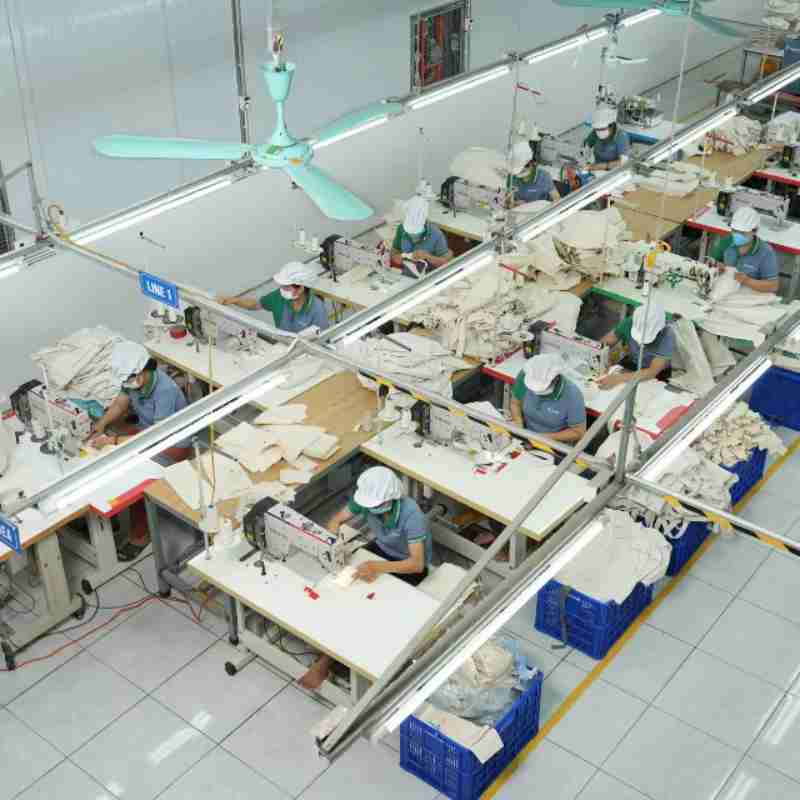
Jundong supports custom bag projects with product development, design support, pattern making, sampling, logo review, material sourcing, QC inspection, packing, and export coordination. The factory has a professional pattern room, product development team, design team, 600+ employees, 18,000㎡ square feet of factory area, and 80 QC inspectors.


A custom drawstring bag design should start with the real use scene, target user, quantity, logo requirement, material direction, and packing method, because these details decide whether the design can be sampled, produced, packed, and delivered smoothly.
Many partners begin with a logo or a rough idea. That is enough to start. You do not need a complete technical file in the first message. A useful starting point is to answer a few simple questions: Who will use the bag? What will it carry? How long should it last? How visible should the logo be? Will it be used for an event, school program, sports team, retail promotion, gym campaign, or brand merchandise project?
A drawstring bag for a one-day trade show can stay light and simple. A school drawstring bag may need stronger fabric, clear color options, and a comfortable cord. A sports cinch bag may need reinforced corners and a larger body. A retail or private label drawstring bag may need better fabric, a woven label, barcode packing, or a cleaner finish.
The design also needs to match the expected order size. A simple front-logo polyester bag is easier to control for a first order. A full print drawstring bag, custom-dyed fabric, embroidery patch, front zipper pocket, mesh pocket, or retail packaging can look better, but it may increase cost, MOQ, and sampling time.
A practical starting checklist is:
| Information | Why It Matters |
|---|---|
| Use scene | Helps define strength, size, and material |
| Logo or artwork | Helps choose print method and placement |
| Quantity | Helps review MOQ and unit cost |
| Target size | Helps estimate material and function |
| Material idea | Helps compare cost, hand feel, and print result |
| Packing need | Helps prepare polybag, label, barcode, or carton mark |
| Deadline | Helps plan sampling and bulk production |
For faster review, send your logo, quantity, use scene, target size, and reference photo. The design can then move into material review, logo placement, sample planning, and cost evaluation.
The best logo placement depends on the bag’s use scene, size, fabric, artwork style, and brand goal; large front logos suit events and promotions, while woven labels, patches, embroidery, and smaller side marks often work better for retail, private label, sports, and lifestyle projects.
Logo placement is one of the most common questions in drawstring bag design. Many partners want the logo to be large and clear, which is useful for trade shows, school events, race packs, corporate campaigns, and promotional giveaways. A front-center logo is easy to see, easy to photograph, and simple for users to recognize.
But bigger is not always better. If the logo is too large, it may cross fold lines, distort when the bag is filled, or look crowded near the drawcord channel. If the logo is too low, it may disappear when the bag carries shoes, clothes, books, or event materials. If the artwork has fine lines or small text, the print method and fabric surface need to be checked before bulk production.
For brand-driven products, a smaller logo can sometimes look more professional. A woven label on canvas, a rubber patch on a sports cinch bag, embroidery on a premium drawstring backpack, or a side label on a lifestyle pouch can create a cleaner product feel. This is especially useful for private label drawstring bags, retail promotion bags, sports merchandise, gym bags, and travel-style drawstring backpacks.
| Logo Placement | Better For | Design Note |
|---|---|---|
| Large front logo | Events, trade shows, giveaways | Strong visibility |
| Center logo | Schools, teams, corporate use | Balanced and easy to read |
| Upper front logo | Bags that carry bulky items | Less likely to bend |
| Woven label | Retail and private label | Cleaner and less promotional |
| Rubber / PVC patch | Sports and youth programs | Adds dimension |
| Side label | Lifestyle and minimal branding | Subtle brand presence |
| Full-panel artwork | Campaign or seasonal design | Needs panel planning |
The safest way to confirm logo placement is to review it on the actual bag size or sample. A flat artwork mockup is helpful, but a physical sample shows how the logo behaves when the bag is filled, folded, and packed.
The best material for drawstring bag design depends on the product use, design style, print method, budget, and durability expectation; polyester is practical for bulk promotions, nylon suits sports and gym programs, canvas and cotton feel more premium, RPET supports recycled-material projects, and non-woven works for short-term giveaways.
Material is one of the first design decisions because it changes how the bag looks, prints, feels, folds, and lasts. The same logo may look clean on smooth polyester, softer on cotton, more textured on canvas, and more active on nylon. A full print pattern may need a different fabric from a simple one-color logo.
Polyester is common for custom promotional drawstring bags, school drawstring bags, event giveaway bags, and bulk cinch bags. It is light, printable, cost-friendly, and easy to pack. Nylon usually gives a smoother, sportier feel, which fits gym campaigns, race events, outdoor programs, and travel-style drawstring backpacks. Canvas and cotton create a more natural or premium look, useful for lifestyle brands, retail promotions, private label bags, and gift packaging. RPET is suitable when buyers want a recycled-material story, but fabric availability, color choice, and logo method should be reviewed early. Non-woven is useful for short-term, budget-sensitive promotions, but it should not be positioned as a long-term daily-use bag.
Material also affects structure. A thin fabric may reduce cost, but the bag may feel weak if it carries books, shoes, or sportswear. A heavy canvas may improve perceived value, but it may increase packing volume and unit cost. Mesh can add breathability for sports or beach programs, while mixed materials can create more visual depth.
| Material | Design Result | Best Fit |
|---|---|---|
| Polyester | Light, clean, printable | Events, schools, bulk promotions |
| Nylon | Smooth, sporty, stronger feel | Sports, gym, travel use |
| Canvas | Textured and retail-ready | Brand and lifestyle projects |
| Cotton | Natural and soft | Gift and eco-style programs |
| RPET | Recycled-material story | Sustainability campaigns |
| Mesh | Breathable and active | Sports, camps, beach events |
| Non-woven | Budget-focused | Short-term giveaways |
For better results, choose the material before locking the artwork. Fabric and design should work together, not separately.
Full print is better when the bag needs a strong visual impact, seasonal artwork, retail value, or campaign identity, while a front logo design is often better for bulk events, schools, corporate giveaways, sports teams, and cost-controlled promotional projects.
Full print and front logo designs serve different goals. Full print can make the whole drawstring bag look more designed. It works well for tourism merchandise, youth programs, limited edition campaigns, holiday gifts, sports graphics, lifestyle brands, and retail collections. When the artwork itself is the main selling point, full print may be worth considering.
However, full print requires more planning. The artwork must fit the panel size. Pattern repeat, seam position, drawcord channel, cutting tolerance, and color control all need attention. A design that looks perfect on a flat digital mockup may shift slightly after cutting and sewing. If the artwork includes faces, characters, sponsor logos, or exact graphic alignment, sample review becomes very important.
A front logo design is simpler and often more practical for custom logo drawstring bags, trade show giveaway bags, school drawstring bags, sports cinch bags, gym bags, and corporate promotional bags. It gives the brand a clear display area and usually makes cost, MOQ, and production easier to control. A front logo design can still look professional if the logo size, position, fabric, and print method are chosen well.
A middle option is color-block design. Buyers can use two fabric colors, contrast panels, matching drawcords, small labels, or patches to create a more custom look without the production complexity of full print.
| Design Type | Better For | Main Advantage |
|---|---|---|
| Front logo | Events, schools, corporate gifts | Clear branding and cost control |
| Full print | Retail, campaigns, tourism, youth programs | Strong visual identity |
| Color block | Team colors, brand programs | Custom look with lower complexity |
| Small label | Private label and lifestyle bags | Cleaner product feel |
| Patch or embroidery | Sports and premium projects | Better texture and identity |
The best choice depends on the project goal, not only the visual style.
The right print method depends on artwork style, fabric surface, color count, order quantity, budget, and desired product value; screen printing suits simple bulk logos, heat transfer works for colorful graphics, digital printing fits detailed artwork, embroidery adds texture, and labels or patches help create a retail-ready look.
A print method should be selected after the design and material are reviewed together. Many clients choose the artwork first and only think about production later. That can create problems. Some artwork looks strong on a computer screen but becomes less clear when printed on textured fabric, folded through packing, or stretched on a filled bag.
Screen printing is often a stable choice for simple logos, school names, event marks, sponsor logos, and bulk promotional drawstring bags. It is usually practical when the design uses limited colors and the print area is clear. Heat transfer is useful for full-color graphics, race event designs, team artwork, or campaign visuals. Digital printing may fit more detailed illustrations or designs with fine lines and color transitions, depending on the fabric and order plan.
Embroidery creates a stronger texture and can improve perceived value. It works well for team logos, premium brand projects, lifestyle bags, and private label drawstring backpacks, but it may not suit very large artwork or extremely fine details. aWoven labels, rubber patches, and PVC patches are useful when buyers want a more product-like finish rather than a basic giveaway appearance.
| Method | Best Fit | Notes |
|---|---|---|
| Screen printing | Simple logos, large quantity | Cost-friendly and clear |
| Heat transfer | Multi-color artwork | Good for campaign graphics |
| Digital printing | Detailed illustrations | Check fabric compatibility |
| Embroidery | Premium logos, team marks | Textured and higher value |
| Woven label | Retail and private label | Clean, repeatable branding |
| Rubber / PVC patch | Sports and outdoor style | Strong visual identity |
| Full-panel print | Pattern or theme design | Needs panel planning |
Before bulk production, request a logo sample or a physical sample with the selected method. This helps partners confirm color, clarity, placement, and surface feel before approving the order.
Yes, custom drawstring bag designs can include front zipper pockets, mesh side pockets, inner pockets, lining, reinforced corners, grommets, thicker drawcords, flat cords, color-matched cords, reflective trims, labels, patches, and custom packing when these details match the real use scene.
Structure customization is useful when a basic flat drawstring bag is not enough. A simple drawstring bag works well for light event materials, brochures, giveaways, or short-term promotions. But if the bag will carry sportswear, shoes, books, bottles, gym items, retail products, or daily-use goods, structure details need more attention.
A front zipper pocket can help users store keys, cards, phones, or small accessories. Mesh side pockets work well for sports, summer camps, beach events, and bottle-carry projects. Lining can improve the inside finish, but it also increases cost and production steps. Reinforced corners help reduce stress around the drawcord exit points, especially when the bag will be reused or carry heavier items. Thicker cords can improve comfort for school, sports, and gym use.
| Custom Detail | Better For | Partner Notes |
|---|---|---|
| Front zipper pocket | Gym, event, travel, retail | Adds function and product value |
| Mesh side pocket | Sports, outdoor, beach, camps | Useful for bottles and small gear |
| Inner pocket | Retail, membership gifts | Helps organize small items |
| Lining | Premium or retail projects | Cleaner inside finish, higher cost |
| Reinforced corners | School, sports, repeated use | Reduces stress at cord exits |
| Grommets | Durability and smoother cord movement | Match material and style |
| Thicker drawcord | Sports, gym, student use | Better carrying comfort |
| Reflective trim | Youth, safety, running events | Adds visibility and function |
The best design does not always need every feature. A stronger decision is to add the details that support how the bag will be used. For example, a race event bag may need bold print and compact packing more than lining. A school bag may need stronger corners more than a decorative patch. A retail bag may benefit from a woven label, hangtag, and cleaner finishing.
Before adding structure details, partners should check quantity, budget, target user, and delivery time. Each feature can improve product value, but it may also affect sample time, sewing steps, MOQ, and unit price.
Cost can be controlled without making a drawstring bag look cheap by keeping the structure simple, choosing the right fabric weight, using a clean logo layout, limiting unnecessary color complexity, and spending budget on the details that buyers and users notice most.
A lower-cost drawstring bag does not have to look poor. The risk comes from cutting the wrong details. If the fabric is too thin for the intended use, the bag may collapse or feel weak. If the logo method does not match the material, the print may look unclear. If the cord feels rough or the corners fail early, users will notice the problem quickly.
A better cost-control method is to decide which details matter most to the project.
For a one-day event giveaway, a simple polyester drawstring bag with a clear front logo and compact packing may work very well. For a school or sports program, it may be better to spend more on corner strength and cord comfort instead of adding decorative features. For a retail or private label project, a small woven label, cleaner fabric, and better packing may create more value than a large full-print graphic.
| Cost-Control Choice | Why It Works |
|---|---|
| Use standard fabric color | Reduces custom dyeing cost and lead time |
| Keep the shape simple | Lowers pattern and sewing complexity |
| Choose one clear logo area | Keeps branding strong without over-designing |
| Limit logo color count | Helps reduce print setup complexity |
| Upgrade cord or corners only where needed | Improves use without adding too many features |
| Use a small label instead of large artwork | Cleaner look for retail-style products |
| Plan packing early | Reduces repacking and sorting after delivery |
Partners should also match design complexity to quantity. A complex full-print design may make sense for a 5,000-piece campaign, but may be expensive for a small test order. A simple logo bag may be better for 500 pcs or first-run testing.
Good design is not about adding more. It is about making the right details feel intentional.
The usual MOQ for many custom drawstring bag designs is 500 pcs per design; some simple styles may be reviewed from 200–300 pcs. Standard sampling usually takes 5–7 days, some simple samples may be arranged in 2–3 days, and bulk production is usually about 20–30 days after confirmation.
MOQ and timing depend on the design details. A simple polyester drawstring bag with a front logo is easier to review than a custom-dyed canvas bag with embroidery, lining, zipper pocket, full print, barcode packing, and mixed carton requirements.
Smaller quantities can be helpful for testing a school program, gym campaign, sports event, or brand giveaway. But buyers should understand that small orders usually have a higher unit cost. Material sourcing, logo setup, sample work, cutting, sewing, inspection, packing, and production preparation still require time even when the quantity is lower.
| Stage | Common Reference |
|---|---|
| Simple style review | Some projects may be reviewed from 200–300 pcs |
| Standard custom MOQ | Usually 500 pcs per design |
| Sample time | Usually 5–7 days |
| Simple sample possibility | Some styles may be arranged in 2–3 days |
| Bulk production | Usually 20–30 days after confirmation |
| Final timing | Depends on material, logo, structure, packing, and schedule |
Sampling time can change based on fabric availability, logo method, structure complexity, and revision needs. A front-logo polyester sample may move faster. A full-print design, custom color, special trim, or structured pocket may need more time for review and adjustment.
To make the process faster,clients can send the logo file, target size, use scene, quantity, material direction, packing needs, and deadline together. Clear information helps avoid repeated questions and makes the sample plan easier to confirm.
For event-driven projects, the order timeline should be planned backward from the required delivery date. Leave time for sample approval, possible revisions, production, inspection, packing, and shipping.
Approved drawstring bag designs stay more consistent in bulk production when the sample, fabric reference, artwork file, logo placement, print method, size tolerance, trim details, packing instruction, and carton marks are confirmed before production starts.
Many bulk order issues begin with unclear design records. The sample may look correct, but if the production team does not have clear references, small changes can appear during bulk production. Fabric shade may shift. The logo may move slightly. The drawcord may feel different. Pocket size may change. Full print artwork may not align as expected. Packing may become confusing if SKU, barcode, or carton mark instructions are not locked early.
A good bulk control process begins before production. Partners should confirm a physical sample and keep a clear specification record. This record can include material type, color reference, print method, logo size, logo position, drawing or measurement sheet, drawcord specification, pocket layout, corner reinforcement, label position, and packing instruction.
| Record to Confirm | What It Controls |
|---|---|
| Approved sample | Overall look, structure, and hand feel |
| Fabric reference | Color, weight, texture, and material type |
| Artwork file | Logo version and graphic accuracy |
| Logo placement | Position, size, and visual balance |
| Print method | Color result and surface effect |
| Size tolerance | Shape and production consistency |
| Trim specification | Cord, grommet, zipper, label, patch |
| Packing instruction | Polybag, barcode, SKU split, carton marks |
Jundong’s QC process covers incoming material inspection, in-process checks, and final product inspection. For custom drawstring bag design projects, these steps help reduce the gap between approved sample and delivered bulk goods.
Repeat orders benefit even more from clear records. Once the design, fabric, logo, structure, and packing details are documented, future orders can move faster and stay closer to the approved standard.
To get a faster drawstring bag design review and quote, send the logo or artwork file, use scene, quantity, target size, preferred material, design reference, print method idea, structure needs, packing requirements, deadline, and destination country.
A clear inquiry helps the factory review feasibility, material, cost, sample direction, and lead time faster. Partners do not need to prepare every technical detail at the beginning, but a few practical details can greatly reduce back-and-forth communication.
If the project is for a school, sports team, trade show, gym campaign, retail promotion, or corporate gift, the use scene is very helpful. It tells the factory whether the bag should be light and low-cost, stronger for repeated use, more visual for campaign exposure, or more polished for retail presentation.
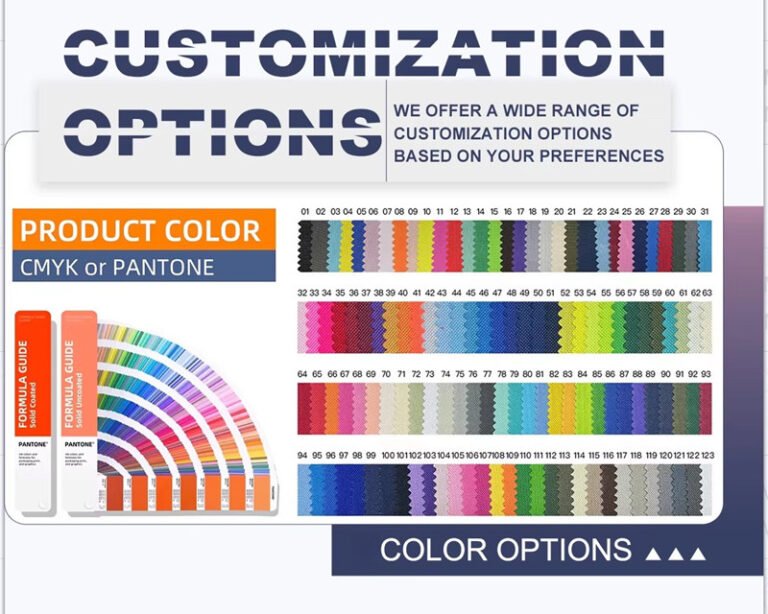
The artwork file also matters. AI, PDF, SVG, EPS, or high-resolution PNG files are helpful for logo review. If brand colors are strict, Pantone references can reduce color uncertainty. If the buyer has a reference bag, photo, sketch, or previous sample, it can help define size, fabric, pocket layout, cord style, and finishing expectations.
| Information to Send | Why It Helps |
|---|---|
| Logo or artwork file | Reviews print method, size, and placement |
| Use scene | Defines material, structure, and durability needs |
| Quantity | Helps check MOQ and price level |
| Target size | Helps estimate material and capacity |
| Material preference | Supports fabric and cost comparison |
| Design reference | Helps clarify style direction |
| Structure needs | Reviews pockets, cords, corners, lining, trims |
| Packing needs | Plans polybag, hangtag, barcode, carton marks |
| Deadline | Checks sampling and bulk production schedule |
| Destination country | Supports export packing and delivery planning |