 Skip to content
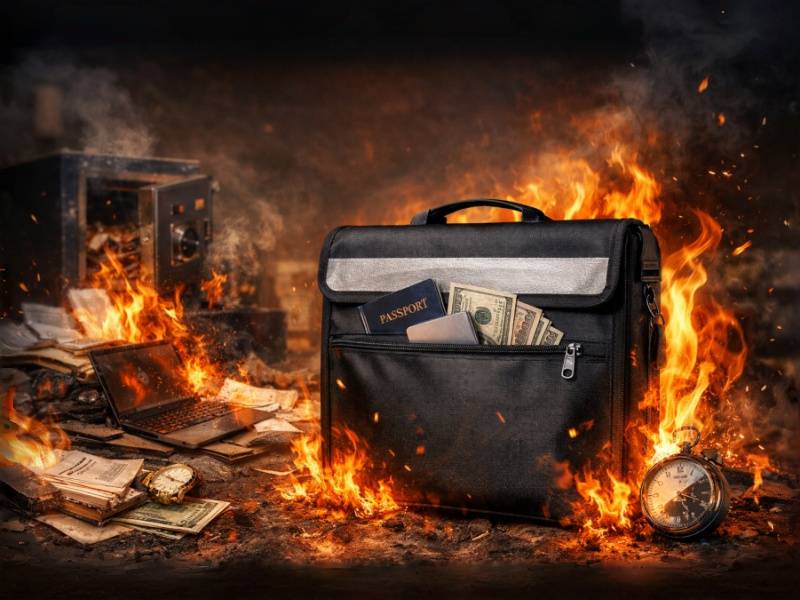
A lot of ask this question only after they have already seen wildly different claims in the market. One supplier says a bag can handle 1,000°F. Another says 2,000°F. Some listings even jump to 5,200°F or more. The problem is not that fire-resistant bags are useless. The problem is that the category mixes real material science, weak testing language, marketplace copywriting, and assumptions into one confusing message. That is where many sourcing mistakes begin.
If you are a wholesaler, importer, brand owner, or project , you do not need a dramatic answer. You need a practical one. You need to know whether a fireproof bag can actually reduce damage during a real fire, whether it can help protect paper records, passports, cash, USB drives, or lithium battery devices, and where its limits begin. You also need to know what a supplier means when they say fireproof, fire-resistant, waterproof, UL tested, or custom OEM. Those words do not all mean the same thing. In many cases, they should not be treated as equal at all. Official emergency-preparedness guidance from Ready.gov and FEMA does recommend keeping important documents in a fireproof and waterproof box or safe or in a safe-deposit box, which shows that protected storage has a real place in disaster planning. At the same time, official UL material makes clear that UL 72 applies to record protection equipment such as safes and similar containers, while UL 5800 applies to battery fire containment products, not ordinary document pouches.
That difference matters. A soft document bag and a rated fire safe do not play the same role. One is usually a portable heat-delay layer. The other is usually a tested record-protection enclosure. who miss that difference often overestimate what a bag can do. who understand it can sell the product honestly, spec it properly, and build stronger long-term demand.
Yes, fireproof bags can work, but only within limits. Most are better described as fire-resistant bags that slow heat transfer and help protect documents for a short period, not forever. They are useful for portable document protection, emergency grab-and-go storage, and added protection inside a safer storage system. They are not the same as a UL 72 fire-rated safe, and should always verify material construction, test method, closure design, and application before placing a bulk order.
In B2B trade, the most profitable way to approach this category is not by selling fear. It is by selling clarity. The strongest suppliers explain what the product can do, what it cannot do, which materials are being used, which tests back up the claims, and what kind of end user the product is actually built for. That is how a product line moves from commodity territory into something trust.
What Are Fireproof Bags, and Do They Really Work?
Fireproof bags do work in a limited, practical sense. They can help slow heat exposure and reduce damage to documents and valuables during a short fire event, but they are not absolute fire barriers. In most cases, fire-resistant is the more accurate term, especially for soft document bags.
When ask whether fireproof bags really work, the first job is to clean up the language. In the market, “fireproof” is often used as a sales term, while the real performance question is whether the bag can delay heat transfer long enough to reduce damage to the contents. That is a very different standard from “nothing inside will ever be harmed.” Many consumer-facing buying guides now openly note that there is no federal regulation specifically governing fireproof document bags in the same way often assume, and that brands usually rely on fire-resistant materials plus their own testing language.
So, do they work? In many everyday use cases, yes. A well-built fire-resistant bag can help protect passports, contracts, invoices, wills, certificates, cash, and backup media from short-duration heat exposure, ash, smoke contamination, and some water splash during emergency response. That is one reason disaster-preparedness guidance repeatedly tells households to keep important records in protected storage, often alongside digital backups and safe-deposit box plans.
Still, the phrase “really work” needs context. A bag may work in a quick, localized fire where suppression happens early. It may work as a secondary layer inside a closet, file cabinet, or safe. It may work as a grab-and-go document organizer in wildfire zones, flood-prone areas, or offices that need emergency evacuation kits. What it usually does not do is perform like a large, insulated fire safe that has been tested as record protection equipment under a formal standard such as UL 72. UL’s own scope language for UL 72 refers to record protection equipment such as insulated bodies with insulated doors, drawers, or lids. That language fits safes and similar containers much more naturally than thin soft bags.
This is where many B2B sellers make a mistake. They treat the category as if a higher printed temperature number automatically means better real-life protection. But end users do not experience fire as a single static number. They experience heat build-up over time, exposure from multiple sides, smoke, humidity, sprinkler water, pressure on seams, and sometimes collapse or debris. A smart asks a harder question: What contents are being protected, for how long, under what test conditions, and with what closure design? That is a sourcing question, not just a marketing question.
For B2B , the better commercial position is this: a fire-resistant bag is a portable protective product, not a miracle product. Sell it for what it is best at. That includes home-document storage, office file protection, landlord and tenant records, on-the-road compliance files, emergency cash and passport storage, and secondary protection inside better systems. If you are developing a custom line, it is much wiser to position the product around document protection, portability, layered safety, organized storage, and honest test-backed claims than around exaggerated language that creates returns and distrust.
That honest positioning can still sell very well. In fact, it usually sells better in the long run because distributors, Amazon brands, retailers, and institutional are tired of products that overpromise and fail under scrutiny. If you want a custom fire-resistant bag line with clearer specifications, factory-side material options, and a more credible OEM positioning, Jundong can help structure that conversation at info@jundongfactory.com.
How Does a Fireproof Bag Work?
A fireproof bag works by using heat-resistant outer materials, layered insulation, and protected closures to slow heat transfer to the contents. It does not stop all fire damage forever. Its real function is to buy time and reduce exposure, especially for documents and other heat-sensitive items.
The simplest way to explain a fire-resistant bag is this: it is a delay system. It does not “beat” fire. It tries to slow down how quickly heat reaches the inside. That delay can matter a lot when the contents are paper records, product certificates, passports, deeds, or paper contracts that would otherwise ignite, discolor, warp, or become unreadable. In the safe industry, the logic is similar. For example, UL Class 350 ratings for record-protection equipment are based on keeping the interior below a paper-damage threshold. That helps explain why time and internal temperature matter more than dramatic exterior temperature claims.
In soft bags, the first working layer is usually the outer shell. Many products in this category rely on fiberglass fabric, often with silicone coating. This construction is popular because fiberglass offers heat resistance and dimensional stability, while silicone coating can improve flexibility, handling, and some degree of water resistance. Market reviews and product testing roundups repeatedly describe silicone-coated fiberglass as a standard material combination in this category.
The second working layer is the insulating build. A bag with only one thin layer of heat-resistant fabric may resist flame contact but still allow interior heat to climb too quickly. Better products often use double layers, padded layers, foil-like reflective layers, or structured compartments that create extra air space and resistance. In simple terms, more thoughtful layering gives the product more time before the inside temperature rises to a harmful level.
The third working layer is the closure system. often overlook this. A bag may use strong outer fabric, but if the zipper area, hook-and-loop flap, folded closure, stitched corners, or edge binding is weak, that area can become the real failure point. Water and smoke can also enter through openings that look minor on a product page but become a big problem in a real event. This is why good factories spend a lot of time on zipper shielding, flap overlap, seam construction, gusset logic, and edge finishing.
There is also a material difference between products built for documents and products built for battery incidents. UL’s official material on UL 5800 makes clear that it was developed for battery fire containment products dealing with thermal runaway hazards. That is a very different application from an office file bag. A seller who uses battery-containment language to market an ordinary document bag is mixing two different product categories.
For , the practical takeaway is this: the bag works by combining material resistance, insulation time, and closure quality. If one of those three is weak, the whole product becomes weaker. That is why two bags that look similar in photos can perform very differently in use. A low-cost bag may save margin at the invoice stage but lose money later through bad reviews, refund rates, and weak repeat orders.
In custom development, this is also where cost really comes from. often ask why one factory is more expensive than another. The answer is rarely “just profit.” It is usually a mix of material weight, layer count, sewing complexity, shielding around the zipper, reinforcement at stress points, inner organization, and QC discipline. Those details do not always show in the main photo, but they decide whether the product feels cheap or credible in the customer’s hands.
How Long Can a Fireproof Bag Protect Contents?
A fireproof bag usually protects contents for a limited period, not indefinitely. Real performance depends on the material, layer count, closure design, fire intensity, and the item stored inside. should trust time-and-test data more than inflated temperature numbers.
This is the question most care about most, and it is where a lot of listings become least reliable. A printed claim like “up to 2,000°F” sounds strong, but on its own it is incomplete. What matters is not just the external heat number. It is how long the product can maintain survivable internal conditions for the contents. Paper is very different from a passport cover, and both are very different from a USB drive or SSD. The best safe standards reflect this logic. UL fire ratings for record protection are not just about furnace temperature; they are about whether the inside remains below a threshold that protects the stored medium.
That is why experienced treat temperature-only claims with caution. A bag may survive short flame exposure on the outside and still allow destructive heat build-up inside after a short time. Many consumer buying guides and brand explainers now describe fireproof bags as products that typically provide short-term resistance, often measured in tens of minutes rather than many hours. The exact number varies by construction and test method.
For B2B sourcing, the better question is not, “What is your maximum temperature claim?” It is:
“What was the test method, what was the exposure time, what happened to the inside, and what contents were simulated?”
That question changes the whole conversation. A supplier with a real engineering mindset will answer with specifics:
- furnace or flame test setup
- duration of exposure
- sample construction
- closure status during test
- whether paper, fabric, electronics, or another medium was inside
- whether the result measured exterior survival or interior content survival
A weak supplier often answers with only one number, usually a dramatic one.
There is also a blunt truth should keep in mind: a bag can only protect contents as long as the surrounding fire conditions stay within what its structure can delay. A flash fire, kitchen flare-up, brief electrical event, or localized storage-area incident is one thing. A long-burning house fire, direct flame engulfment, structural collapse, or battery thermal runaway event is another. The stronger and longer the heat event, the faster the margin disappears.
This matters a lot for channel positioning. If your target market is homeowners who want better-than-nothing protection for papers, a document bag can make sense. If your target market expects vault-like storage for irreplaceable originals, then you should be careful not to oversell the category. Ready.gov and FEMA guidance also point people toward safe-deposit boxes, protected home storage, and digital copies, which supports the idea that smart protection is usually layered rather than dependent on one product alone.
Here is a simple framework:
| Question | Weak Answer | Strong Answer |
|---|---|---|
| How long does it protect? | “Up to 2000°F” | “Tested for X minutes under Y setup” |
| What is inside after test? | “Bag didn’t burn” | “Paper remained legible / interior temperature data” |
| Is it suitable for electronics? | “Yes, for everything” | “Depends on medium and required protection level” |
| Is it safe-grade? | “Same as a safe” | “Not the same as UL 72 record-protection equipment” |
The table above captures the core commercial point. Duration plus interior condition tells you more than a dramatic headline number.
For OEM and private-label , this is also where product line strategy starts. You can create three or four levels of the same category: basic single-pocket file bag, better double-layer organizer, executive lockable version, and premium bag-in-box or bag-for-safe system. That gives your sales team clearer positioning and reduces the temptation to force one bag to satisfy every use case.
Fireproof Bag vs Fireproof Safe: Which Is Better?
A fireproof safe is usually better for long-term record protection, while a fireproof bag is better for portability, convenience, and secondary protection. They do not serve the same role. In many cases, the best setup is a fire-resistant bag inside a better-rated safe or secure box.
This comparison matters because many end users buy a fireproof bag thinking they are getting a soft version of a safe. That is not how the category should be understood. A fire-resistant bag is usually designed for mobility, convenience, lower price, and easier daily access. A fire-rated safe is built around insulation mass, structural rigidity, door sealing, and formal record-protection logic. These are very different design philosophies.
Official UL information on UL 72 helps make that distinction clear. The scope describes record protection equipment as insulated bodies with insulated doors, drawers, lids, and similar constructions. That language aligns naturally with safes, cabinets, and structured containers. It is not the typical language used for thin foldable document pouches.
So, which is better? It depends on the use case.
A fireproof safe is usually better when:
- the contents are irreplaceable originals
- the user wants long-term stationary storage
- theft resistance matters too
- the wants a formal fire rating structure
- the storage location is fixed and secure
A fire-resistant bag is usually better when:
- the user needs portability
- the user wants a lower-cost product
- documents need to stay organized and accessible
- the wants emergency grab-and-go storage
- the product is being used as a second layer inside another system
That last point is one of the most practical. Many experienced users and reviewers treat the bag as a secondary layer, not a complete solution. Even casual consumer discussions often land on the same conclusion: use a fire-resistant bag inside a safer enclosure if the contents matter enough. FEMA and Ready.gov guidance also reinforce the broader principle of layered protection, including protected home storage, safe-deposit boxes, and digital backups.
There is also a price logic here. Bags open the category to a much wider market because the cost of entry is far lower than a real safe. That makes them attractive for mass retail, e-commerce, promotional use, office kits, school admin files, apartment renters, travel files, and temporary records storage. From a B2B perspective, that wider reach is exactly why the category can be profitable. The key is not pretending the bag is a safe. The key is positioning it as a portable layer of protection.
For wholesalers and brand owners, a useful message is:
“This product is designed to add time, reduce risk, and improve organization. It is not a substitute for a properly rated safe when maximum record protection is required.”
That message is honest, easier to defend, and usually better for review quality. It also creates upsell paths. A seller can bundle:
- a document bag plus digital backup checklist
- a bag plus waterproof inner sleeves
- a bag plus safe recommendation content
- a bag plus battery safety organizer for travel lines
- a bag plus home emergency planning kit
This is how a simple product becomes a stronger category business.
What Types and Materials of Fireproof Bags Are Best?

The best fireproof bag type depends on the end use. Common materials include fiberglass, silicone-coated fiberglass, and in some high-performance cases aramid fibers. The best choice is the one that matches the contents, closure design, use environment, and price point.
There is no single “best” fireproof bag for every market. The best one for a household document organizer is not the same as the best one for an office archive pouch, travel compliance bag, battery incident containment product, or private-label file organizer for retail. get better results when they think in terms of type + material + target use rather than one universal winner.
On the document-storage side, the most common retail and e-commerce types include:
- flat document pouches for passports, IDs, and folded papers
- expandable document organizers for letter-size and legal-size files
- lockable zipper bags for cash, contracts, and small valuables
- portable handle bags for emergency evacuation and office transfer
- boxy file bags with compartments for USB drives, certificates, and tablets
For B2B projects, those can then branch into:
- private-label family emergency kits
- office records organizers
- landlord and property-management file bags
- school and hospital admin-document kits
- travel-document bags
- premium branded gift lines
- battery-related containment products, which should be treated as a separate technical category if you are targeting that space
Material choice sits at the center of performance. Market product reviews and buying guides repeatedly point to silicone-coated fiberglass as a standard construction because it combines heat resistance with flexibility and some water-shedding behavior.
In higher-performance discussions, also look at aramid fibers such as Kevlar or Nomex-family materials. DuPont states that Kevlar is inherently flame resistant, protects against thermal hazards up to around 800°F, and does not melt, drip, or support combustion. That does not automatically make Kevlar the best choice for every document bag, but it does explain why aramid-based materials are respected in heat-protection applications.
Still, material names alone are not enough. The right sourcing question is: How is the material being used? A thin token layer of an impressive material may perform worse than a thoughtful multi-layer build with better seam logic and closure shielding. should also evaluate:
- layer count
- GSM or fabric weight
- coating consistency
- hand feel and flexibility
- odor and surface quality
- edge fraying risk
- zipper protection
- needle-hole management around seams
- lining and insert options
This is where cost and performance start to separate. A budget item may use lightweight outer fabric, minimal overlap around the zipper, and weak handle anchoring. A better item may add structured overlap flaps, double stitching, thicker body panels, and dedicated compartments that stop contents from pressing directly against hot outer surfaces.
For B2B customization, material strategy should match channel strategy:
- Mass retail / entry e-commerce: value-focused silicone-coated fiberglass organizer
- Mid-tier brand line: better closure shielding, reinforced handle, upgraded lining, tidier branding
- Corporate / gift market: cleaner look, custom packaging, internal dividers, logo plate or print
- Institutional / admin market: larger capacity, file labeling, stronger carry system
- Battery containment specialty line: separate engineering pathway tied to relevant testing, not ordinary document-bag language
The “best” fireproof bag is not just the hottest claim. It is the product with the clearest match between material, structure, price, and end user.
What Certifications, Standards, and Test Reports Should Check?
should check what standard was actually used, whether the product category matches that standard, and whether the supplier can provide a real test report. UL 72 relates to record-protection equipment like safes, while UL 5800 addresses battery fire containment products. Ordinary document bags should not borrow those references loosely.
This is the section where many B2B deals either become much safer or much riskier.
Let’s start with the most common sourcing mistake: sees UL in a listing and assumes that means the document bag itself has the same status as a rated safe. That assumption can be wrong. Official UL material shows that UL 72 is the standard for Tests for Fire Resistance of Record Protection Equipment. The scope language describes self-contained, movable devices with insulated bodies and insulated doors, drawers, or lids. In plain terms, that is safe territory.
By contrast, UL 5800 was developed for battery fire containment products, particularly in response to lithium-ion battery thermal runaway risk. UL explicitly describes it as a standard for battery fire containment products, including in-flight containment applications. That is relevant if you are sourcing a battery incident bag, but it should not be casually applied to a normal office document pouch.
That means should ask three very simple but powerful questions:
- What exact test standard are you referencing?
- Was the whole finished product tested, or only a material sample?
- Does that standard actually apply to this type of product?
Those three questions eliminate a huge amount of confusion.
A good supplier should be able to provide:
- a third-party test report or at least credible lab documentation
- the date of the test
- the sample description
- photos or diagrams of the tested sample
- the test method or standard name
- what passed and what did not
- whether the report applies to the exact production construction or only a similar one
A weak supplier may only provide a screenshot, a vague “tested to 2000°F” statement, or a report for a fabric roll rather than the finished bag.
Here is the bigger lesson: certification language is not decoration. It changes legal risk, trust, and the kind of customer you can sell to. Institutional , importers, and serious brand owners often care less about flashy claims and more about whether the paperwork is specific, recent, and relevant.
This is also where a factory can add value by being disciplined. Instead of throwing every technical term onto the page, a strong factory builds a layered evidence file:
- material specification
- bill of materials
- sewing and closure drawings
- internal QC checkpoints
- sample approval record
- lab-test references where relevant
- final claim language approved for packaging and listing
That file helps protect both the factory and the brand.
If you are developing a custom line, keep the packaging language clean. Say fire-resistant unless you have very strong reason and evidence to say more. Explain the use case. Explain the limits. Explain whether the product is meant for documents, valuables, travel, office storage, or battery containment. That kind of clarity is not weak selling. It is the foundation of stronger B2B business.
Are Fireproof Bags Waterproof, Smokeproof, and Explosion-Proof?

Some fireproof bags are water-resistant, but not all are truly waterproof. Smoke protection also depends on seam and closure design. Terms like explosion-proof should be treated with extreme caution unless tied to a clearly relevant test and product category.
A lot of end users think the word “fireproof” automatically includes everything else. It does not. A product can have decent heat resistance and still perform poorly against sprinkler water, hose spray, humidity, steam, smoke particles, or pressure at the zipper edge. This matters because in real fire events, water often arrives before the danger is fully over. FEMA and repeatedly pair fireproof and waterproof storage in their guidance for important documents, which tells us something practical: in a real disaster, heat is only one part of the risk.
Most bags in this category are better described as water-resistant rather than fully waterproof. Review roundups often point out that silicone coating and tighter zipper/flap construction can help with splash, spray, and short exposure, but that does not mean the product is airtight or submersion-safe.
Smoke resistance is even more misunderstood. Smoke is not just visible soot. It includes hot gases and tiny particles that can enter through weak closures, seams, and stitching lines. A bag with a large flap overlap, tighter closure, and layered zipper cover may help more than one with an exposed zipper. But very few ordinary document bags should be sold as if they completely stop smoke under all conditions.
Then there is the word explosion-proof. In the fireproof bag market, that term often appears in loose marketing copy, especially around lithium battery products. should be careful. If the product is truly intended for battery fire containment, then the discussion needs to move into the battery safety category and be backed by relevant evidence. UL’s battery containment work under UL 5800 is precisely about that kind of hazard. For an ordinary paper-document bag, “explosion-proof” is usually not the right language.
For B2B product development, it helps to split environmental claims into separate lanes:
| Claim Type | What It Should Mean | What Should Ask |
|---|---|---|
| Fire-resistant | Slows heat/flame exposure | Which test method, how long, what contents? |
| Water-resistant | Resists splash, spray, short wet exposure | What closure type, were seams tested? |
| Waterproof | Stronger water-blocking claim | Is there immersion or pressure data? |
| Smoke-resistant | Helps reduce smoke entry | How is zipper/flap protected? |
| Battery containment | Handles thermal runaway hazards | Which battery-focused standard applies? |
That table matters because it helps prevent overclaiming on packaging, listing pages, and distributor conversations.
A stronger sales strategy is to tell exactly what design elements improve water and smoke performance:
- overlap flap over zipper
- hook-and-loop plus zipper combination
- folded closure logic
- coated outer fabric
- protected seams
- raised or reinforced bottom panels
- internal sleeves for paper and electronics
That kind of explanation sounds more technical because it is. And technical clarity usually converts better in B2B than vague marketing language.
Who Buys Fireproof Bags in B2B Markets, and Why?
B2B of fireproof bags often include importers, wholesalers, office-supply sellers, emergency-preparedness brands, document-storage brands, schools, hotels, property managers, and e-commerce private-label sellers. They buy for practical document protection, portable storage, and category expansion.
This category is bigger than many suppliers think because it sits at the intersection of several buying motives: safety, organization, emergency planning, portability, and low-cost risk reduction. That mix gives the product commercial range far beyond the household market.
The most obvious B2B are e-commerce sellers and private-label brands. They like fire-resistant document bags because the product is relatively simple to ship, easy to explain visually, and broad enough to fit many channels. It can sit in home organization, office supplies, emergency preparedness, travel security, family records, landlord tools, and business continuity storage.
The next layer is office and admin-related channels. Small businesses, accounting firms, HR departments, schools, clinics, churches, and local organizations all handle paper records that need portable storage. They may not want to install a room full of safes. A fire-resistant bag or organizer becomes a practical middle product: better than a plastic file folder, lighter than a box safe, and easier to move during an emergency.
Then there are property managers, landlords, hospitality groups, and project-based teams. They often need a controlled way to store lease records, compliance files, petty cash, access cards, insurance copies, and emergency contact documents. For these , the value is not only fire resistance. It is also organized storage in a product that signals caution and professionalism.
A fourth cluster is preparedness and emergency brands. FEMA materials repeatedly tell households to safeguard critical documents, maintain copies, and use protected storage. That broader preparedness culture creates demand for products that support document control, evacuation readiness, and backup planning.
In many B2B channels, this means the product can be sold in more than one way:
- as a home safety item
- as a family records organizer
- as a travel document bag
- as an office continuity tool
- as a landlord file kit
- as a school admin organizer
- as an emergency gift item
- as a bundled product with digital backup checklists
Why does this matter for factories? Because type should shape product structure.
An Amazon private-label seller may want:
- clean dimensions
- giftable packaging
- broad market positioning
- strong feature graphics
- modest MOQ
A wholesale office-supply may want:
- standard file dimensions
- simple SKU structure
- logo label options
- carton efficiency
- stable reorders
An institutional may want:
- larger format
- file dividers
- carry handle strength
- low odor materials
- conservative claim language
This is why the category should not be approached as one generic SKU. The highest-value factories are not the ones that only make “a fireproof bag.” They are the ones that can map product type to type.
If you want to build a B2B product line that fits your market instead of copying a generic marketplace item, that is usually where custom development starts to pay off.
How Are Custom Fireproof Bags Made in a Factory, and What Is the Sample Process?
Custom fireproof bags are usually made through a process that includes requirement review, material selection, pattern making, sample sewing, performance adjustments, branding setup, and QC planning. The sample stage is where most commercial risk is reduced before bulk production begins.
For , the biggest difference between a weak factory and a reliable one often shows up in the sample process.
A weak factory treats sampling like decoration. It copies the look, adds a logo, and waits for approval. A stronger factory treats sampling as engineering review. It asks what the bag must hold, what claim language will be used, what market it is for, how the zipper should be shielded, whether the bag must stand upright, how the handle should be anchored, and what water-resistance expectations exist.
A typical custom development process looks like this:
1) Requirement Review
The factory confirms:
- size and document format
- target market
- target price
- use case
- expected fire/water positioning
- logo method
- packaging needs
- test-report expectations
- MOQ target
2) Material Matching
The supplier recommends:
- outer fabric type
- inner lining
- reinforcement pieces
- zipper type
- flap structure
- interlayer options
- handle webbing
- label and branding method
3) Pattern Making
At this stage, pattern logic matters more than realize. If the bag is expandable, carries files, includes internal pockets, or has boxy corners, the pattern must balance capacity, closure integrity, and sewing efficiency.
4) First Sample
The first sample should answer structure questions before final packaging and mass production details are locked. should check:
- shape accuracy
- fabric hand feel
- edge cleanliness
- odor
- zipper smoothness
- flap coverage
- inner organization
- carry comfort
- branding placement
5) Revision Round
This is where the best factories save the money. They may adjust:
- material thickness
- gusset depth
- zipper coverage
- handle anchoring
- seam reinforcement
- inner pocket logic
- branding technique
- packaging method
6) Pre-Production Confirmation
Before bulk, the should approve:
- final sample
- materials
- logo file
- packaging copy
- carton specs
- QC checkpoints
- shipping mark rules
The sample stage is also where many claim-related problems should be stopped. If the bag will be marketed as fire-resistant and water-resistant, the factory and should agree on exactly what those words mean in the listing and packaging. This is not just a legal issue. It is a returns issue, a review issue, and a distributor-trust issue.
Here is one more practical point: some want a free sample and expect the factory to do everything else later. That can work for stock styles, but for custom fire-resistant bags, a paid sample process often produces better commercial discipline because both sides are forced to specify the product more carefully.
Factories that handle this category well usually bring value in four places:
- spec discipline
- material honesty
- sample revision speed
- bulk consistency
If your project needs private label, OEM, ODM, or a new fire-resistant bag design for a specific market, you can start the discussion with Jundong at info@jundongfactory.com.
How Much Do Fireproof Bags Cost?
Fireproof bag pricing depends on size, material, layer count, closure design, internal organization, branding, packaging, and order quantity. The cheapest option is not always the best value, because weak construction often leads to bad reviews, returns, and unstable reorders.
Price in this category looks simple from the outside and complicated from the inside.
may see two bags that appear almost identical in photos and assume the lower quote is better. In reality, the lower quote may hide weaker fabric weight, looser seam control, thinner zipper protection, smaller flap overlap, or a downgraded lining. Those differences can reduce both product credibility and user satisfaction.
The main cost drivers are usually:
- body size
- number of layers
- base material
- zipper and hardware level
- handle construction
- inner compartment structure
- logo method
- packaging complexity
- order volume
A flat passport pouch with one compartment is one thing. A boxy document organizer with expandable gusset, carry handles, multiple sleeves, shielded zipper, and custom gift box is another. The second product may take much more labor even if the raw material difference seems small.
For B2B buying, it helps to think in three price bands:
| Price Band | Typical Positioning | Common Build |
|---|---|---|
| Entry | e-commerce traffic item | simple structure, basic fire-resistant material |
| Mid-range | stronger private-label item | better layering, improved closure, cleaner branding |
| Premium | gift, office, executive, institution | upgraded materials, organizer interior, better presentation |
The sample fee is another ares often misunderstand. A factory may charge a sample fee not because the product is hard to sew, but because custom development consumes:
- sourcing time
- pattern time
- setup time
- logo prep
- revision discussion
- QC attention
- courier cost
For stock styles, the sample may be free or refunded in bulk. For new OEM development, a sample fee is often normal and healthy.
should also compare factory price vs trader price with care. A trader may look easier at the beginning because they answer quickly and hide the complexity. But if claims, material control, or sample revisions become technical, the may end up needing direct factory answers anyway. On the other hand, a good factory that understands export communication can shorten the whole project because it removes translation loss between the material decision and the actual sewing floor.
The best price is usually not the lowest piece price. It is the quote that delivers the best mix of:
- claim safety
- sample accuracy
- stable bulk quality
- acceptable margin
- low refund risk
- reorder consistency
That is the number experienced optimize for.
How Do You Choose the Best Fireproof Bag Manufacturer or Factory?

The best fireproof bag manufacturer is the one that can explain materials, tests, sample logic, claim limits, QC steps, and delivery plan with clarity. should choose factories based on process control and evidence, not only on low price or dramatic temperature claims.
In this category, factory selection is where profit protection happens.
A reliable supplier should not just say, “Yes, we can make it.” They should be able to explain how they will make it, why they are recommending certain materials, and what claim language is safe and realistic for your market. That matters because fire-resistant products sit closer to trust-based buying than many ordinary bags do. If your product disappoints, the end user does not feel mildly annoyed. They feel misled.
A strong factory usually performs well in these areas:
1) Spec Clarity
They write down:
- size
- material
- layer logic
- closure type
- stitching method
- logo method
- packaging
- target claim language
2) Claim Discipline
They do not mix UL 72 safe language with a soft bag unless there is a clear reason and evidence. They do not casually turn a document pouch into a battery-containment product on paper. They do not promise “fully waterproof” if the real product is only water-resistant.
3) Sample Control
They keep revision logic organized. They can compare V1, V2, and final approval clearly.
4) QC Execution
They check:
- incoming materials
- seam quality
- zipper performance
- dimension tolerance
- logo placement
- smell and finish
- packing accuracy
5) Communication
They answer questions with specifics, not slogans.
Here is a practical shortlist of questions should ask any manufacturer:
- What exact body materials are you using?
- Is the finished bag tested, or only the fabric?
- What claim language do you recommend for this construction?
- How do you protect the zipper area from heat and water entry?
- What are the weak points in this design?
- What will be checked during inline QC and final QC?
- Can you support custom packaging and private-label branding?
- What is your normal sample lead time and bulk lead time?
- What happens if bulk material differs from the approved sample?
Those questions reveal a lot very quickly.
The final point is one many only appreciate later: after-sales support matters. If a distributor needs updated packaging copy, a replacement test reference, a logo correction, a carton mark change, or a fast repeat order, the supplier’s response speed becomes part of the product value. The cheapest factory is not the cheapest if every reorder turns into another round of confusion.
If your market needs a more structured supplier discussion around custom fire-resistant bags, document organizers, private label, or OEM development, you can contact Jundong at info@jundongfactory.com.
A Practical Buying Guide: How to Choose the Right Fireproof Bag for Your Market
Choose the right fireproof bag by matching the end user, stored contents, claim level, target price, and sales channel. The best product is the one that fits the real use case and can be sold with clear, defensible language.
A lot of overcomplicate this category at the wrong stage and oversimplify it at the important stage.
They overcomplicate it by chasing dramatic numbers early. They oversimplify it by buying a generic bag late.
A more practical buying sequence is:
Step 1: Define the user
Is the product for:
- household document storage
- travel papers
- office records
- emergency evacuation kits
- property managers
- premium gift channels
- institutions
Step 2: Define the contents
Will the user store:
- passports and IDs
- contracts and certificates
- cash and small valuables
- USB drives and SSDs
- tablets or electronics
- battery-related items
Step 3: Define the claim level
Do you need:
- fire-resistant only
- fire-resistant + water-resistant
- organized document storage
- carry-and-go format
- battery containment category
Step 4: Define the price position
Are you selling:
- entry-level volume
- mid-tier branded product
- premium organizer
- institutional spec item
Step 5: Define the sourcing path
Will you use:
- stock style with custom logo
- semi-custom structure
- full OEM
- ODM with packaging and branding
This simple framework avoids many bad buys.
For Amazon sellers, the best product often combines easy visuals, useful size, simple story, and low return risk.
For wholesalers, carton efficiency, stable reorders, and broad usefulness matter more.
For brand owners, packaging, trust language, and material feel become more important.
For institutional , documentation, consistency, and conservative claims usually win.
The final rule is this: do not try to sell one fireproof bag as the perfect answer for every scenario. It is smarter to build a range:
- compact document pouch
- standard organizer
- premium expandable file bag
- lockable version
- box-bag hybrid
- special-category battery containment product, if relevant
That product ladder gives you more keyword coverage, clearer pricing, better upsell logic, and stronger repeat-order potential.
Final Takeaway
So, do fireproof bags really work?
Yes, when they are understood correctly. They work as portable, limited-duration protective products that help reduce risk for documents and valuables. They do not replace the role of a properly rated safe when long-duration record protection is the goal. The best B2B opportunities in this category come from being more honest, more specific, and more disciplined than the average seller.
That means:
- use the right terms
- match the claim to the product
- verify the test language
- build around the user’s real use case
- choose a factory that can explain the process clearly
That is how you build a fire-resistant bag line that is easier to rank, easier to trust, and easier to sell.
FAQ 1. Do fireproof bags really work, or are they mostly a marketing product?
Answer summary: Fireproof bags do work, but only when understand what they are actually designed to do. In most cases, they should be viewed as fire-resistant protective bags that help slow heat transfer and reduce damage risk for documents and valuables during short fire exposure, not as a perfect substitute for a fire-rated safe. Official preparedness guidance from Ready.gov and FEMA recommends storing important records in a fireproof and waterproof box or safe, which confirms that protected document storage has real value. At the same time, UL’s published information on UL 72 makes clear that formal record-protection standards are tied to record protection equipment, such as insulated safes and similar rigid containers, not ordinary soft document pouches.
A lot of confusion in this category comes from the word “fireproof.” see that word and imagine a product that can completely block fire damage under almost any condition. That is not how most soft document bags should be understood. A better mental model is this: a fire-resistant bag is a portable delay layer. Its job is to buy time. It uses heat-resistant outer materials, layered construction, and protective closures to slow the rate at which heat reaches paper, passports, certificates, cash, and sometimes small storage devices. That can make a meaningful difference in real-life scenarios such as a brief electrical fire, a localized room fire, or an emergency where responders contain the fire before exposure becomes extreme.
That said, should stay away from two common mistakes. The first is assuming every printed temperature claim is trustworthy by itself. The second is assuming a fireproof bag performs like a tested fire-rated safe. Those are not the same category. UL 72 is specifically written around the testing of record protection equipment, and its purpose is tied to the performance of those systems during fire exposure. That language fits safes and insulated containers much more naturally than lightweight document pouches. If a supplier blurs that difference, the issue is not only technical. It can become a returns problem, a review problem, and a brand-trust problem later.
For B2B , the smartest approach is to sell the product for what it is best at: portable document protection, emergency storage, organized record keeping, and added protection inside a broader safety plan. That broader plan may include digital copies, elevated storage, a safe-deposit box, or a better fire-rated enclosure. In other words, the bag is often strongest as part of a layered protection strategy, not as a stand-alone miracle solution. who position the product honestly usually build stronger repeat business because end users feel the product matches what was promised.
If you are developing a custom line, the commercial opportunity is not in using the biggest number on the market. It is in creating a product that feels credible, looks organized, uses sensible claim language, and fits a clear end user. That is where a factory discussion becomes valuable. A stronger factory can help you balance materials, structure, cost, packaging, and realistic market positioning so the product is easier to sell and easier to reorder.
FAQ 2. What is the real difference between a fireproof bag and a fireproof safe?
Answer summary: A fireproof safe is generally built for higher-level record protection, while a fireproof bag is built for portability, convenience, and lower-cost secondary protection. They solve different problems. A document bag may help reduce damage in short fire exposure, but a safe is typically the stronger option for long-duration storage of irreplaceable originals. UL’s published scope for UL 72 describes record protection equipment as insulated devices with insulated bodies, doors, drawers, or lids, which shows why rigid safes and similar enclosures sit in a different performance class from soft bags.
This is one of the most important sourcing questions because many end users buy a fireproof bag thinking they are getting a lightweight safe. They are not. A fire-resistant bag is usually designed around mobility, accessibility, and convenience. It can be stored in a drawer, carried in a vehicle, placed in an office cabinet, or grabbed quickly during an evacuation. That makes it practical for households, renters, office workers, schools, landlords, small businesses, and travel users. A fireproof safe, by contrast, is usually designed around insulation mass, rigid structure, and longer-duration protection goals. It is heavier, less convenient, and more expensive, but often much more suitable when the contents are extremely valuable or irreplaceable.
The best way to explain the difference to customers is with real use cases. If someone wants to store copies of passports, business licenses, tax forms, insurance records, USB backups, and some emergency cash, a fire-resistant bag can make good sense. It is affordable, easy to organize, and better than leaving those items in an ordinary file folder. But if someone wants to protect original title documents, legal wills, highly sensitive corporate records, or the only copy of certain irreplaceable files, a real safe or other record-protection solution is usually the better choice. Ready.gov and FEMA guidance both support the broader idea of protected document storage, but they also point users toward safes, boxes, digital backups, and safe-deposit solutions rather than implying one soft pouch solves everything.
For B2B sellers, there is actually a strong sales advantage in explaining this difference clearly. It creates more trust, reduces exaggerated expectations, and opens the door to smarter product line building. Instead of selling one SKU as the answer to every risk, you can create a range:
- entry-level document pouch
- expandable organizer bag
- premium lockable file bag
- bag designed to be used inside a safe
- separate battery-containment bag category, if that is part of your lineup
That range helps you target more types without overclaiming. It also improves SEO because each variant can target a different search intent, such as fireproof document bag, fireproof bag vs safe, portable fire-resistant file organizer, or best fireproof bag for office records. This is the kind of category logic that helps a brand look more professional and more trustworthy over time.
Quick Comparison Table
| Feature | Fireproof Bag | Fireproof Safe |
|---|---|---|
| Portability | High | Low |
| Daily access | Easy | Moderate |
| Weight | Light | Heavy |
| Price level | Lower | Higher |
| Best for | Papers, passports, cash, grab-and-go storage | Long-term storage of critical originals |
| Structure | Soft, flexible, layered | Rigid, insulated enclosure |
| Typical expectation | Short-term heat delay | Stronger record protection logic |
FAQ 3. Are all fireproof bags waterproof too, or is that a separate feature?
Answer summary: No, fireproof does not automatically mean waterproof. Many fireproof bags are better described as water-resistant, which means they may help against splashes, brief spray, or light moisture exposure, but not necessarily full water immersion or pressure. Official Ready.gov disaster-preparedness materials repeatedly recommend keeping critical records in a fireproof and waterproof box, safe, or container, which shows that fire and water should be treated as separate protection needs.
This is one of the easiest ways for to get misled by product listings. A supplier may describe a bag as fireproof and waterproof, but those two claims rely on different design strengths. Fire resistance usually depends on the outer material, inner insulation, and heat-delay construction. Water resistance depends more on the closure system, seam construction, coating quality, fold-over flap logic, and overall barrier design. A bag can perform reasonably well in a short heat event and still allow smoke, steam, hose spray, or sprinkler water to enter through the zipper area or side seams. That is why serious should always ask how the bag manages zippers, folds, stitched corners, and overlapping flaps.
Preparedness guidance from Ready.gov is especially useful here because it reflects real-life disaster logic. In actual emergencies, fire is not the only risk. Documents may also be exposed to sprinkler water, flooding, burst pipes, or humidity after the event. That is why official checklists tell households to keep paper copies in a fireproof and waterproof box or safe, and to create password-protected digital copies as backup. In other words, even government preparedness guidance treats fire protection and water protection as separate but equally practical concerns.
For product development, should think in layers. A good fire-resistant bag may include:
- silicone-coated fiberglass outer fabric
- a zipper plus flap combination
- tight seam finishing
- water-resistant inner sleeves
- raised edge construction around the opening
That still does not mean the bag should automatically be sold as “fully waterproof.” In many cases, water-resistant is the safer and more accurate claim unless there is stronger test support. For B2B sellers, accurate wording is a long-term asset. If you overstate water protection and customers store critical records in a basement flood zone, the refund and reputation damage can cost far more than the margin you gained from aggressive wording.
A practical sales position is this: fire-resistant bags can reduce heat risk, and some models can also reduce water exposure risk, but should match the product to the actual environment. If your customer base lives in flood-prone or wildfire-prone areas, it may make sense to develop a more advanced closure system, better flap overlap, and internal waterproof sleeves. That kind of thoughtful product planning gives you a stronger market story than simply copying a generic listing and repeating buzzwords.
FAQ 4. What certifications or test reports should ask for before placing a bulk order?
Answer summary: should always ask what exact standard was used, whether the finished product or only the material was tested, and whether the standard actually applies to that product type. UL’s official materials show that UL 72 is for record protection equipment such as safes and similar insulated devices, while UL 5800 is for battery fire containment products. Those are not interchangeable references, and suppliers should not use them loosely.
In this category, paperwork matters almost as much as the physical product. A fireproof bag may look convincing in photos, but the real question is whether the supplier can back up the claims in a way that makes sense for the product. A lot of see UL or tested on a listing and assume that means the product has gone through a directly relevant, rigorous certification process. That may or may not be true. The safest approach is to ask the supplier three direct questions:
- What exact standard or test method are you referencing?
- Was the whole finished bag tested, or only a fabric sample?
- Does that standard actually apply to this type of product?
This matters because UL 72 is specifically described by UL as applying to record protection equipment, meaning insulated devices with bodies, doors, drawers, or lids designed to protect records during fire exposure. That description naturally fits safes and similar rigid enclosures. On the other hand, UL 5800 was developed around battery fire containment products, especially products intended to contain the hazards of lithium-ion battery thermal runaway. UL’s own certification and explainer pages make that scope very clear. So if a supplier is selling an ordinary soft document bag and casually references UL 5800 or UL 72 without context, the should stop and ask for clarification immediately.
For practical sourcing, a good supplier should be ready to provide:
- a third-party test report or credible lab documentation
- the test date
- the sample description
- whether the finished bag or only the base fabric was tested
- photos or notes showing the test setup
- a summary of what was actually measured
- confirmation that the report still reflects the current production construction
This last point is often overlooked. A test report on an old version of a bag or on a material swatch alone may not fully represent the bulk product you are about to order. In real manufacturing, details like zipper type, seam density, layer arrangement, fold design, and inner reinforcement can materially change how the finished bag performs.
For OEM and private-label , the commercial lesson is simple: do not buy a claim, buy a documented process. A factory that explains its test references honestly is usually a safer partner than one that just prints dramatic technical terms onto the packaging. That kind of documentation discipline also supports better SEO and AI visibility later, because your product page language is more specific, more trustworthy, and easier for both search engines and to understand.
FAQ 5. Can fireproof bags be used for lithium batteries, power banks, or battery fire containment?
Answer summary: Not all fireproof bags are suitable for lithium battery incidents. Ordinary document fireproof bags and battery fire containment bags are different product categories with different risk profiles. UL’s published information on UL 5800 shows that it is a standard for battery fire containment products, especially those designed to mitigate and contain hazards from lithium-ion battery thermal runaway. should never assume that a normal document pouch is qualified for this use.
This question is getting more common because more want multi-purpose safety products. They ask whether the same bag that protects passports and certificates can also hold power banks, loose lithium batteries, or damaged electronic devices. From a sales perspective, that sounds attractive. From a technical and liability perspective, it can be risky if the category boundaries are not kept clear.
A normal fire-resistant document bag is usually designed to delay external heat transfer and help protect paper or small valuables. A battery fire containment product is designed for something much more aggressive: thermal runaway. In a lithium-ion battery failure, the hazard can include rapid heat generation, flames, gas release, pressure, and chemical byproducts. That is why UL developed UL 5800 specifically for battery fire containment products. UL’s own materials explain that this standard provides test methodology and performance criteria for products used to contain personal electronic devices in the event of a battery fire, with a strong focus on aviation and in-flight applications.
So the answer for is straightforward: do not market an ordinary fireproof document bag as a battery containment solution unless the design and supporting evidence clearly justify that use. Mixing the two can expose the seller to refund claims, compliance issues, and in serious cases, safety complaints. For B2B importers and brand owners, that is a risk not worth taking casually.
That does not mean the battery-related market should be ignored. It means it should be treated as its own specialty product path. If your brand wants to enter that segment, the right approach is to develop:
- a separate product structure
- different inner materials and reinforcement logic
- more specialized testing strategy
- more careful warning and packaging language
- a clearer use-case definition
In other words, document storage and battery containment can both be valuable categories, but they should not be combined loosely just because both involve heat-related language. For serious , category clarity is one of the easiest ways to look more professional than low-end competitors.
FAQ 6. How should evaluate a fireproof bag factory before starting OEM or private-label development?
Answer summary: The best factory is not just the one with the lowest price. It is the one that can explain materials, claims, test references, sample logic, and quality control in a clear and disciplined way. should judge factories on process clarity, spec discipline, claim accuracy, and sample-to-bulk consistency, not only on fast quotations.
Many think factory evaluation starts with the quote sheet. In reality, it starts with the supplier’s ability to explain the product in a way that reduces risk. A strong factory should be able to tell you:
- what body materials it recommends
- why one structure is safer or more practical than another
- how the zipper area is protected
- what wording is realistic for the finished product
- what will be checked during sample review and final QC
- how bulk production will stay aligned with the approved sample
Those answers matter because fireproof bags sit in a trust-sensitive category. If a cosmetic bag feels cheaper than expected, the customer may still keep it. If a fireproof bag feels misleading, the customer may leave a harsh review, ask for a refund, or reject the product line entirely. That is why supplier discipline matters so much here.
A practical factory evaluation process should include these checkpoints:
Factory Evaluation Checklist
| Area | What to Look For | Why It Matters |
|---|---|---|
| Material clarity | Supplier explains exact outer and inner materials | Reduces fake or vague claims |
| Claim discipline | Uses accurate wording such as fire-resistant when appropriate | Protects your brand credibility |
| Sample process | Can produce, revise, and document samples clearly | Cuts development mistakes |
| QC logic | Has incoming, inline, and final inspection steps | Improves reorder stability |
| Communication | Answers specific questions directly | Prevents hidden misunderstandings |
| Packaging support | Can align warning language and usage notes | Reduces marketplace risk |
A good should also test the factory during communication. Ask specific questions like:
- Was the report based on the finished bag or only the fabric?
- What is the weak point of this design?
- How do you handle zipper shielding?
- What changes when we move from sample to bulk?
- Which claims do you recommend we avoid?
A weak supplier will often answer with slogans. A stronger supplier will answer with structure. That difference becomes very visible once sampling starts.
For private-label growth, the best factories are usually the ones that help you build a category, not just ship a SKU. They help with product positioning, structure refinement, packaging alignment, and honest claim language. That makes your fireproof bag line easier to rank on Google, easier for AI systems to summarize correctly, and easier for serious to trust. If you want to turn this product from a commodity into a long-term B2B line, factory selection is where that outcome begins.
FAQ 7. How long can a fireproof bag really protect documents in a fire?
Answer summary: A fireproof bag usually protects contents for a limited period, not forever. Real protection time depends on the material system, layer count, closure design, test conditions, and the type of item stored inside. should trust time-based test logic and interior protection outcomes more than dramatic temperature claims alone. UL’s published scope for UL 72 shows that record-protection standards focus on fire-resistance classification of record protection equipment, which is a reminder that real document protection is about performance over time, not just one outside temperature number.
This is one of the most important questions in the category, and it is also where many marketplace listings become the least reliable. A claim like “up to 2000°F” sounds impressive, but by itself it does not tell what they actually need to know. The real question is not just how hot the outside gets. The real question is: how long can the bag delay heat transfer before the inside becomes unsafe for paper, cash, passports, certificates, or storage media? That is a very different standard of thinking.
This is exactly why more formal record-protection standards focus on the ability of equipment to protect records during a duration of fire exposure, rather than just advertising one dramatic temperature number. UL’s public scope for UL 72 states that the requirements cover test procedures applicable to the fire-resistance classification of record protection equipment intended to provide protection to one or more types of records when exposed to various durations of fire exposure. That wording matters because it highlights something many sellers skip: duration matters.
In a real fire, end users do not experience a simple fixed number. They experience:
- rising heat over time
- exposure from multiple directions
- smoke and steam
- sprinkler or hose water
- pressure on seams and closures
- sometimes debris or structural collapse
That means a bag that survives a quick external flame contact test is not automatically providing long-duration protection for the contents inside. Paper records are especially sensitive because once internal temperatures pass a certain point, they can scorch, curl, discolor, or become unreadable even if the bag itself is still physically intact.
For B2B , the smarter sourcing questions are:
- How long was the exposure?
- What was inside during the test?
- What happened to the contents, not just the shell?
- Was the bag closed normally or sealed in a special way?
- Was the whole bag tested, or just a fabric sample?
Those questions move the discussion from marketing into product reality.
There is also an important commercial truth here: different customer groups need different expectations. A customer buying a fire-resistant document bag for household passports, printed insurance records, emergency cash, and backup papers usually wants better-than-nothing protection and portability. A corporate storing irreplaceable originals may need a much stronger solution. Ready.gov and FEMA guidance support this bigger picture by recommending that people keep important documents in a fireproof and waterproof box or safe, and also maintain digital copies and other backup arrangements. That is another reminder that smart protection is usually layered, not dependent on one soft bag alone.
So the practical answer is: a fireproof bag can provide useful short-term protection, but should resist any supplier who treats it as unlimited protection. If you want to build a product line that is easier to sell and easier to defend, it is better to position the bag around portable heat-delay protection, document organization, and layered emergency planning than around unrealistic claims.
FAQ 8. What materials are best for fireproof bags, and which ones matter most in manufacturing?
Answer summary: The best fireproof bag material depends on the use case, but what matters most is the full construction, not just one material name. Common materials include fiberglass, silicone-coated fiberglass, and in some specialized applications aramid fibers such as Kevlar or Nomex. DuPont’s technical information notes that Kevlar is inherently flame resistant and thermally stable up to about 800°F / 426°C, which helps explain why aramid-based materials are respected in heat-protection applications.
A lot of ask, “Which material is best?” That sounds like a simple question, but in this category the better question is: Which material system is best for this product, this price point, and this use case? A fireproof bag is not just a sheet of fabric. It is a combination of outer shell, inner layers, seams, closures, and structure. A bag made from a well-known heat-resistant material can still perform poorly if the zipper zone is weak, the seams are badly finished, or the layer structure is too thin.
In the current market, the most common material family for document-style fireproof bags is fiberglass fabric, often combined with a silicone coating. That combination is popular because fiberglass has useful heat resistance characteristics, and silicone coating can help improve flexibility, handling, surface finish, and some resistance to moisture and dirt. It is also commercially practical because it supports a wide range of price levels.
For more specialized heat-protection applications, sometimes look at aramid fibers such as Kevlar or Nomex. DuPont’s published technical materials state that Kevlar is inherently flame resistant, does not melt, drip, or support combustion in the same way many common fibers do, and remains thermally stable up to around 800°F / 426°C. Their technical guide also notes that Kevlar decomposes at relatively high temperatures rather than melting in the ordinary sense. That does not mean every fireproof bag should use Kevlar, but it does explain why aramid fibers have strong credibility in high-heat environments.
That said, should not get trapped by “hero material” thinking. A product page may highlight one material name, but the real performance is often shaped just as much by:
- layer count
- fabric weight
- coating quality
- lining arrangement
- zipper shielding
- fold-over flap depth
- seam density
- edge binding quality
- internal compartment design
From a manufacturing point of view, this is where two bags that look almost identical online can be very different in cost and real use. One may use lighter material, simpler stitching, and weaker closure coverage. The other may add more overlap, cleaner seam construction, stronger handle anchoring, or thicker protective panels. Those details may not jump out in photos, but they strongly affect how the product feels in the hand and how credible it appears to serious .
For OEM and private-label projects, the best approach is usually to match materials to the target market:
| Market Position | Material Strategy | Commercial Goal |
|---|---|---|
| Entry-level retail | Silicone-coated fiberglass | Good value, broad appeal |
| Mid-range branded line | Upgraded multi-layer fiberglass system | Better feel, stronger claims control |
| Premium organizer line | Enhanced structure + upgraded lining + cleaner finishing | Stronger brand perception |
| Specialty heat-protection line | Aramid-based or hybrid system where justified | Higher technical credibility |
The key takeaway is simple: should source a system, not a buzzword. The right factory should be able to explain not only what materials are being used, but why they are arranged in that specific way for the intended market.
FAQ 9. Can passports, cash, contracts, USB drives, and SSDs all be stored in the same fireproof bag?
Answer summary: Yes, many users store mixed items in the same fireproof bag, but not all contents have the same heat tolerance or storage needs. Paper documents, passports, and cash are common use cases. Digital media and small electronics can also be stored, but should remember that a fireproof bag is not the same as a formal record-protection safe, and sensitive media may need stronger protection depending on the risk level. Ready.gov recommends both protected storage for physical records and password-protected digital backups, which supports the idea that one storage method should not carry the whole risk alone.
This is one of the most practical customer questions because it touches daily use, not just technical specs. In real life, people rarely want a fireproof bag for one single item type. They usually want to store a mix of valuables:
- passports
- IDs and certificates
- printed contracts
- tax records
- insurance documents
- emergency cash
- USB drives
- SSDs
- old photos
- backup keys
From a convenience standpoint, that makes sense. A well-designed fire-resistant bag is often strongest when it works as an organized emergency folder, not just a plain pouch.
The issue is that not every stored item responds to heat in the same way. Paper records are one thing. Plastic cards, USB casings, external storage devices, battery-powered accessories, and laminated IDs can behave differently under heat and moisture. That is why should be careful about promising that one soft bag will protect every kind of item equally well in every fire situation.
Ready.gov’s preparedness guidance is useful here because it encourages households to store paper copies in protected containers and also create password-protected digital copies. That tells something important: official emergency planning does not rely on one storage method alone. It encourages a redundancy mindset.
For B2B product design, this means a good fireproof bag should consider internal organization, not just external materials. Smart layout options may include:
- separate sleeves for passports and IDs
- flat sections for contracts and certificates
- padded small pockets for USB drives
- zippered mesh compartments for cash or keys
- gusseted sections for thicker document sets
That kind of structure improves real usability and also makes the product easier to market. Instead of saying only “fireproof bag,” you can speak directly to customer intent:
- fireproof passport bag
- fire-resistant document organizer
- fireproof bag for cash and certificates
- portable file bag for emergency records
This matters a lot for SEO because search engines and AI systems increasingly reward content that aligns with specific use cases rather than generic category terms.
A final point: if the customer wants to store highly sensitive media or items that are extremely difficult to replace, it is smarter to advise a layered storage plan. That could mean digital backups in another location, a bag stored inside a more protective safe, or duplication of the most critical files. That advice builds trust because it sounds like real risk management, not just sales language.
FAQ 10. What MOQ is reasonable for custom fireproof bag production?
Answer summary: A reasonable MOQ depends on the level of customization, the complexity of the bag, the material sourcing method, and the packaging requirements. For simple private-label versions of existing styles, MOQ can often be relatively manageable. For fully custom OEM development with new structure, custom packaging, and special materials, MOQ is usually higher because the factory must spread setup cost, sourcing effort, and production risk across the order.
MOQ is one of the first questions most importers ask, and for good reason. It affects cash flow, test-market risk, warehousing pressure, and how aggressively can launch a new product line. But in the fireproof bag category, MOQ is not just a number pulled out of the air. It is shaped by several real production factors:
- whether the bag is stock-based or fully custom
- whether the materials are common or special-order
- whether the logo is simple print or a more custom application
- whether the packaging is basic polybag or a printed retail box
- whether the size and structure are standard or newly developed
For a private-label who is using an existing factory style, changing only the logo, hangtag, or packaging, MOQ can often stay at a more approachable level. The factory already knows the pattern, already sources the materials, and already understands the sewing process. But once the asks for:
- a new size
- a new interior layout
- a different closure system
- custom box packaging
- upgraded layering
- special test-backed claim language
the MOQ usually rises because the project becomes more operationally demanding.
This is where a lot of make a mistake. They ask for full OEM flexibility while also asking for an extremely low MOQ, then feel frustrated when the quote changes. From the factory side, a complex custom fireproof bag project may require:
- new pattern development
- special material sourcing
- additional sampling rounds
- packaging file review
- more production planning
- more QC attention
That work has to be absorbed somewhere.
For B2B , the smarter question is not just “What is your MOQ?” but “What MOQ corresponds to which level of customization?” That question often leads to much better commercial decisions. For example, may decide to launch in two stages:
- Stage one: semi-custom stock style with private label
- Stage two: full custom version after market validation
That approach lowers risk without killing the brand vision.
The factory you choose also matters. A factory with stronger development experience may be more flexible if it sees long-term potential, while a factory focused only on fast bulk output may push harder on MOQ. This is why should discuss not just quantity, but category strategy, reorder potential, and long-term product planning. MOQ negotiation works much better when the factory sees a future relationship, not just a one-time test order.
FAQ 11. How much do custom fireproof bags cost, and what drives the price most?
Answer summary: Custom fireproof bag pricing is driven by structure, materials, layer count, closures, internal organization, branding method, packaging, and order quantity. The lowest quote is not always the best value. In this category, weak construction or sloppy claim positioning can lead to bad reviews, returns, and unstable reorders, which often cost more than the initial savings.
A lot of expect pricing to be easy in this category because the products look visually simple. But once you begin comparing real quotes, the price differences can be surprisingly wide. That is usually not random. Fireproof bag cost is influenced by a mix of visible features and hidden construction details.
The biggest price drivers usually include:
- overall size
- outer material type
- number of protective layers
- zipper and hardware level
- flap and overlap complexity
- inner organizer structure
- handle construction
- logo application
- retail packaging
- order volume
A flat envelope-style pouch with one zipper and no interior pockets is one cost structure. An expandable file organizer with multiple sleeves, reinforced carrying handle, layered flap closure, custom box packaging, and printed inserts is a very different product.
This is why should avoid comparing quotations only by appearance. Two bags may look almost the same in the photo, but one factory may be quoting:
- lighter material
- fewer layers
- less zipper protection
- simpler seams
- cheaper packaging
- lower inspection intensity
Those differences are not always obvious until the sample arrives.
From a commercial point of view, it helps to think in three pricing lanes:
| Price Lane | Typical Product Type | Goal |
|---|---|---|
| Value | Basic document pouch | Entry traffic, lower-risk launch |
| Mid-range | Better organizer bag with stronger structure | Better reviews, better perceived value |
| Premium | Executive or gift-ready file bag with custom packaging | Brand building, higher margin |
Another point often miss is that a sample fee and a bulk unit price are not the same conversation. A factory may charge a meaningful sample fee not because the bag is hard to sew, but because custom development uses pattern time, material setup, discussion time, and revision cycles. In many cases, a higher-quality sample process actually saves money later by preventing bulk mistakes.
The best way to control price is not to force every item down. It is to identify the few features that most affect conversion in your market. Sometimes that means spending a bit more on a better closure, cleaner packaging, or stronger internal organization while simplifying less important details elsewhere. That balance is where experienced product development creates margin.
If you want a tailored quotation based on your market, packaging level, and target price range, that is usually where a direct factory conversation becomes more useful than guessing from online reference prices alone.
FAQ 12. What should check during the sample process before approving bulk production?
Answer summary: The sample process is where most preventable sourcing mistakes should be caught. should check not only the look of the fireproof bag, but also the material feel, closure coverage, seam quality, internal layout, logo execution, odor, carrying comfort, packaging alignment, and whether the sample still matches the claim language they plan to use in the market.
Many treat samples as if they are mostly about appearance. In this category, that is not enough. A fireproof bag sample is not only a style approval tool. It is also a risk-control checkpoint. This is where the should verify whether the factory’s quotation, claim language, and physical construction actually line up.
A strong sample review should include at least these areas:
1) Material and build
Check whether the outer fabric feels consistent with what was promised. Does it feel too thin, too stiff, or too cheap for the intended market? Are the inner layers neat and stable? Does the bag hold its shape properly?
2) Closure and protection zones
Look closely at the zipper area, flap overlap, corners, and side seams. These zones are often where performance and customer trust can fail first. If the zipper looks exposed or the flap is too shallow, that may affect both water resistance perception and overall product credibility.
3) Usability
Open and close the bag several times. Fill it with realistic content. Carry it by the handle. Check whether documents slide in smoothly, whether the internal layout makes sense, and whether the bag still closes cleanly when partially filled.
4) Branding
Check logo placement, printing sharpness, label stitching, and whether the branding looks premium enough for your target customer. A fireproof bag is a trust product, so branding that looks careless can hurt conversion.
5) Packaging and wording
Make sure the sample, packaging copy, inserts, and online claim direction all match. If the bag is realistically fire-resistant and water-resistant, do not let the packaging casually overstate that into something riskier. The sample stage is exactly where this language should be corrected.
6) Production realism
Ask the factory whether the sample uses the same materials and sewing method planned for bulk. A beautiful hand-finished sample that cannot be repeated consistently in production is a danger sign.
For managing OEM or private-label development, it helps to keep a formal sample review sheet with pass/fail comments. That review sheet should cover:
- dimensions
- material confirmation
- closure review
- inner layout
- branding
- packaging
- odor and finish
- final claim alignment
The reason this matters is simple: sample-to-bulk drift is one of the biggest hidden costs in bag sourcing. When approve a sample casually, they often discover later that the bulk product feels lighter, looks flatter, or uses different small details. A disciplined sample approval process is one of the easiest ways to reduce that risk.
If your project requires a custom fireproof bag with a more structured development path, Jundong can support OEM and private-label discussions at info@jundongfactory.com.
FAQ 13. Are fireproof bags worth selling on Amazon, wholesale, and private-label channels?
Answer summary: Yes, fireproof bags can be worth selling if the product is positioned honestly and matched to the right customer use case. The category works best when it is sold as portable document protection, organized emergency storage, or layered safety support, not as a replacement for a tested fire-rated safe. Ready.gov’s guidance on safeguarding critical documents supports the broader demand logic behind this category: people are advised to keep paper records in fire- and waterproof protected storage and also maintain digital backups.
From a business point of view, this category has real advantages. It is usually lighter and easier to ship than hard safes, it has broad household and office appeal, and it can fit into multiple product ecosystems at once. A fire-resistant bag can be sold as a home safety product, an office file organizer, a family emergency document kit, a landlord record pouch, a travel document case, or a preparedness accessory. That range makes it commercially attractive for Amazon sellers, wholesalers, importers, office-supply , and private-label brands.
The reason some sellers struggle in this category is not that the product has no market. The problem is usually positioning. If a seller markets a soft bag like it is the same thing as a fully rated safe, customer expectations rise too high. Once that happens, reviews become harsher, refund rates go up, and trust drops. But when the bag is positioned correctly — as a portable heat-delay solution for documents and valuables — it becomes much easier to satisfy the end user. That honest positioning is not weaker selling. In B2B, it is usually stronger selling because serious prefer products that can be defended with logic, not hype.
This is also a category where product laddering works well. A seller does not need only one SKU. A more strategic lineup might include:
- a compact passport and cash pouch
- a standard document organizer
- an expandable office file bag
- a premium lockable file bag
- a specialized battery-containment line as a separate technical category, if relevant
That structure gives sellers more keyword coverage and more price points. It also helps Amazon and Google performance because each product can target a more specific intent, such as fireproof document bag, fireproof passport bag, portable file organizer, or emergency records bag. Search systems and AI tools increasingly reward this kind of precise use-case alignment.
For wholesale and private-label , the category is often most profitable when the supplier can support:
- clear product differentiation
- credible wording
- decent packaging
- custom logo and insert support
- stable repeat quality
If you want a generic low-price item, many suppliers can offer that. But if you want a line that looks more credible, ranks better, and generates fewer customer complaints, then product design and claim discipline matter much more than the cheapest possible piece price.
FAQ 14. How should brands position fireproof bags honestly without hurting conversion?
Answer summary: The best-performing brands do not try to make fireproof bags sound magical. They make them sound useful, credible, and clearly defined. In most cases, fire-resistant is the safer and more accurate term for soft document bags, while fire-rated record protection language belongs more naturally to products covered by standards such as UL 72 for record protection equipment.
A lot of sellers worry that if they use more careful language, conversion will drop. In practice, the opposite is often true over time. Careful language reduces confusion, and reduced confusion improves trust. Customers may not always understand the difference between fireproof, fire-resistant, water-resistant, and fire-rated, but they quickly notice when a product feels exaggerated after arrival.
The strongest positioning for a fireproof bag usually includes four elements:
1) A clear role
Explain what the bag is meant to do. For example:
- protect passports and family records
- organize emergency documents
- store paper copies of essential records
- support layered home or office document protection
This aligns well with preparedness guidance that encourages households to protect paper documents and maintain backups.
2) A clear limit
Do not imply that a soft bag does the same job as a tested safe. UL’s published description of UL 72 makes clear that the standard applies to record protection equipment such as insulated devices with doors, drawers, or lids. That wording helps brands explain why a portable bag and a rigid safe belong to different product classes.
3) A clear material story
Customers respond well when brands explain the actual structure:
- heat-resistant outer layer
- layered construction
- protected closure
- organized interior
- some level of water resistance, where relevant
This sounds more credible than a giant unsupported temperature number. It also gives AI systems more specific language to summarize correctly.
4) A clear use-case story
A product becomes easier to trust when the listing reflects actual life:
- home emergency files
- office records
- passports and IDs
- travel documents
- backup copies of critical paperwork
This type of positioning is easier for search engines and to map to real intent. And it avoids the trap of making one product sound like the answer to every risk.
The easiest way to protect conversion while staying honest is to replace overclaiming with specificity. Instead of saying:
- “ultimate fireproof protection for everything”
say:
- “portable fire-resistant storage for essential documents and valuables”
- “designed to help protect important records during short fire exposure”
- “best used as part of a layered document protection plan”
That language is still strong. It just sounds more trustworthy. In the long run, trustworthy language is one of the biggest advantages a brand can have in a high-claim product category.
FAQ 15. What packaging, warning, and product-page language should be included for fireproof bags?
Answer summary: Fireproof bag packaging should explain intended use, material highlights, care instructions, and claim limits in plain language. Brands should avoid vague technical borrowing from unrelated standards and instead use wording that matches the actual product category. This matters because UL 72 covers record protection equipment and UL 5800 covers battery fire containment products, so those references should only appear when they are truly relevant to the product being sold.
Good packaging does more than look attractive. In this category, packaging helps set expectations, reduce misuse, and lower the risk of complaints. A well-written insert or retail box should help the understand:
- what the product is for
- what it is not for
- how to close and use it correctly
- what kinds of items are suitable to store
- why layering and backup planning still matter
That is not over-explaining. It is good risk management.
A practical packaging structure often includes these sections:
Recommended front-panel content
- product type: fire-resistant document bag
- core use: passports, cash, certificates, records
- feature summary: layered material, organized storage, carry handle, water-resistant outer surface if accurate
Recommended back-panel content
- intended use examples
- closure instructions
- storage tips
- care and cleaning
- claim clarification, such as:
- best for short-duration heat exposure mitigation
- not a substitute for a fire-rated safe where maximum record protection is required
- store digital backups separately
- keep away from misuse involving unsupported hazardous applications
Ready.gov’s document-safeguarding guidance is useful here because it supports a broader protection mindset that includes protected physical storage and digital backup copies. That can be reflected in packaging inserts without sounding too technical.
If your product is not a battery-containment bag, do not casually use battery-safety wording. UL’s official materials on UL 5800 are very specific: the standard provides fire test and performance criteria for battery fire containment products intended for battery-powered portable electronic devices, and those products are intended to be used by trained personnel in defined contexts. That is clearly a different category from a general household document pouch.
Simple packaging language checklist
| Area | Recommended Approach |
|---|---|
| Product name | Fire-resistant document bag |
| Water claim | Use water-resistant unless stronger proof exists |
| Safe comparison | Clarify that it is not the same as a rated safe |
| Use cases | Passports, records, certificates, cash, office files |
| Backup advice | Mention digital copies / layered planning |
| Hazard limits | Avoid unrelated battery or industrial claims |
This kind of packaging discipline supports SEO and AI visibility too. Why? Because your product language becomes more structured and easier to parse. Search engines and AI tools do better when the page says exactly what the product does, who it is for, and how it should be used.
FAQ 16. How can brands reduce returns, complaints, and negative reviews for fireproof bags?
Answer summary: The best way to reduce returns is to narrow the gap between what the customer expects and what the product actually does. That means better claim wording, better sample control, better packaging guidance, and better alignment between the use case and the design. Preparedness guidance from Ready.gov also reinforces that document protection is normally part of a broader system that includes backups and protected storage, not one single product carrying the whole burden.
Most negative reviews in this category do not happen because the product concept is bad. They happen because the expected the wrong thing. That expectation gap usually begins in one of four places:
- overclaimed listing language
- weak sample-to-bulk consistency
- poor packaging or instructions
- vague product positioning
If a customer buys a product believing it is effectively the same as a certified safe, disappointment becomes very likely. But if the same customer buys it as a portable fire-resistant file organizer designed to add protection and improve readiness, satisfaction is much more likely.
This is why return reduction starts before production, not after delivery.
Practical return-reduction methods
1) Use accurate claim language
Avoid stretching words beyond the product’s real role. If the bag is best described as fire-resistant and water-resistant, do not let marketing casually turn it into “ultimate fireproof waterproof safe replacement.” That kind of wording may increase clicks, but it often increases returns too.
2) Improve internal organization
A better layout makes the product feel more useful. Separate pockets for passports, IDs, cash, certificates, and USB drives increase perceived value and reduce complaints that the bag is “just an expensive envelope.”
3) Review closure and seam details carefully
Customers judge safety visually. A strong overlap flap, cleaner stitching, and better zipper shielding improve confidence. Even before any real-life incident occurs, customers are already deciding whether they trust the bag.
4) Align packaging with real use
Helpful inserts lower confusion. A short note encouraging users to store backup copies and use the product as part of a layered safety plan is both useful and credible. This mirrors official preparedness guidance, which emphasizes protecting paper copies while also maintaining digital records.
5) Tighten sample-to-bulk control
Many complaints come from bulk products feeling thinner, flatter, or less refined than the approved sample. That is a factory control issue as much as a sales issue.
Common review triggers and how to address them
| Review Trigger | Root Cause | Better Prevention |
|---|---|---|
| “Feels too thin” | weak materials or wrong expectation | clearer specs + stronger sample approval |
| “Not really waterproof” | overclaimed wording | use water-resistant unless proven otherwise |
| “Smaller than expected” | unclear dimensions | better size visuals and insert diagrams |
| “Not like a safe” | poor positioning | explain category limits clearly |
| “Cheap zipper” | cost cutting in closures | improve zipper selection and flap design |
Reducing returns is not just about avoiding loss. It improves keyword performance, seller metrics, repeat orders, and brand trust. In a category like this, that can make a bigger long-term difference than shaving a few cents off the unit cost.
FAQ 17. What are the best use cases for fireproof bags in different markets and customer segments?
Answer summary: The best use case depends on the segment. Fireproof bags work best when matched to specific scenarios such as household document storage, office record organization, travel document protection, landlord files, emergency kits, and branded preparedness products. Ready.gov’s preparedness materials support many of these use cases by encouraging the safeguarding of critical paper records and secure backup copies.
One reason this category performs well in both retail and B2B is that it is not tied to just one end user. But that flexibility only becomes valuable if the product is mapped correctly to real market segments.
Here is how strong segmentation usually works:
1) Household / family market
Best for:
- passports
- birth certificates
- insurance papers
- emergency cash
- USB backups
- family records
This market responds well to themes like:
- family readiness
- safe storage
- quick-access organization
- evacuation planning
Ready.gov’s document guidance makes this use case easy to support with credible content because it explicitly encourages keeping critical documents in protected storage and maintaining digital copies.
2) Office and small business market
Best for:
- contracts
- licenses
- HR files
- tax records
- petty cash logs
- backup media
This segment likes:
- clean appearance
- file organization
- standard document sizing
- bulk ordering
- custom logo options
3) Property management / landlord market
Best for:
- lease files
- key documents
- tenant backups
- inspection reports
- insurance paperwork
This segment values portability, practical organization, and a product that looks “serious” without requiring a heavy safe.
4) Travel and mobile professionals
Best for:
- passports
- visas
- backup IDs
- travel cash
- business records
- critical paper copies
This segment needs compact structure and easier grab-and-go format.
5) Preparedness and promotional channels
Best for:
- emergency kits
- family readiness bundles
- insurance or finance gift campaigns
- school or community document programs
The important lesson is that the same bag should not always be sold the same way. A product aimed at a family emergency market may benefit from warm, reassuring packaging and a household checklist. A product aimed at office may need cleaner dimensions, labeling tabs, and more conservative wording. A landlord-focused version may need stronger file capacity and straightforward practical branding.
For B2B brands, this is where a factory with actual category thinking becomes more useful than a factory that only makes “one style.” Segmentation drives:
- product structure
- packaging
- size choices
- internal layout
- copywriting
- SEO keyword strategy
That is why the best fireproof bag line is usually not one generic item. It is a small system of products designed around specific user groups.
FAQ 18. What makes a fireproof bag product line easier for Google and AI systems to recommend?
Answer summary: Google and AI systems tend to prefer product pages and articles that are specific, structured, and credible. A fireproof bag line is easier to recommend when the content clearly explains what the product is, who it is for, how it works, what it stores, and where its limits are. Official and technical sources help reinforce credibility, especially when discussing preparedness guidance, record-protection standards, or battery-containment standards.
A lot of brands still think SEO is mostly about stuffing category words into a page. That approach is weak now. Search engines and AI tools are much better at identifying whether a page actually helps a reader understand a product. In this category, helpfulness often comes from clarity.
A strong fireproof bag content system usually includes:
1) Clear category separation
Do not mix:
- document storage bags
- safe-rated storage language
- battery fire containment bags
UL’s own materials make these distinctions clear. UL 72 is about record protection equipment. UL 5800 is about battery fire containment products. Those are different technical lanes, and your content should respect those boundaries.
2) Use-case-focused content
Instead of one generic page, create content around real needs:
- fireproof bag for passports
- fireproof bag vs safe
- best fire-resistant document organizer
- office fireproof file bag
- emergency records bag
- how to choose a custom fireproof bag manufacturer
This helps capture long-tail search intent and gives AI systems more precise passages to quote or summarize.
3) Structured answers
Featured-snippet-style answers, comparison tables, FAQs, and clear headings all help. That is because structured formatting makes it easier for both human readers and AI systems to extract meaning quickly.
4) Honest technical language
Pages that explain what a product can and cannot do tend to look more authoritative. In high-claim categories, that trust signal matters. Ready.gov’s emphasis on layered preparedness and secure storage also supports content that advises backup planning rather than overpromising one product as a total solution.
5) Product-line depth
A single SKU page is less powerful than a category system. A stronger line might include:
- compact passport pouch
- family document organizer
- office file bag
- premium lockable version
- separate battery-containment product line if technically relevant
That depth supports better internal linking, better keyword coverage, and stronger brand authority.
Simple SEO / AI content checklist
| Content Element | Why It Helps |
|---|---|
| Specific product use case | Better keyword-to-intent match |
| FAQ blocks | Easier AI extraction |
| Comparison tables | Better reader retention |
| Honest limits | More trust and lower bounce risk |
| Technical references | Higher credibility |
| Segment-based landing pages | Broader keyword coverage |
The real goal is not just to rank for fireproof bag. It is to become the page that both search engines and readers trust when they ask the harder questions:
- does it really work?
- is it better than a safe?
- what materials matter?
- which factory should I choose?
- what should I ask before I buy?
That is where category authority is built.