 Skip to content
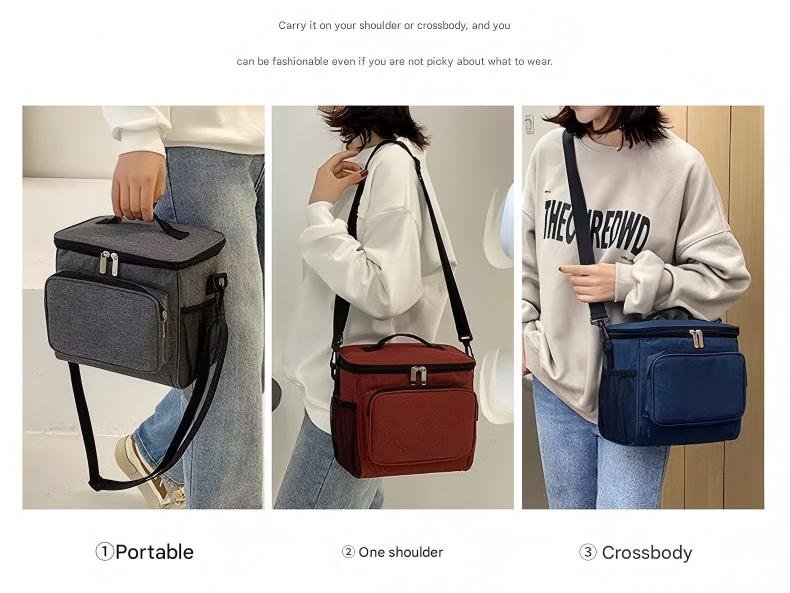
Most people judge a cooler bag in the harshest moment: a hot car, a sunny beach, a late delivery window, or that one picnic where the zipper gets opened every five minutes. When the ice melts fast, the conclusion is usually simple—“cooler bags don’t work.” But that’s not really what happened. What happened is that a specific cooler bag, with a specific build, was used in a specific real-world setup that made heat rush in faster than most expect. A cooler bag is not a magic refrigerator. It’s closer to a “slow-motion shield” against heat, and its performance is mainly decided by things you can actually control: insulation thickness, seam and zipper sealing, liner construction, how much cold mass (ice/ice packs) you load, and how often you open it. That’s also why two bags that look similar on a product page can behave totally differently in the field—one is a true cooler bag, the other is basically an insulated tote.
If you’re a brand, distributor, retailer, or food-service , “does it work?” is not a vibe question. It’s a spec question. You need to translate a use case into measurable targets like: “Hold ≤5°C for 6 hours at 30°C ambient,” or “Maintain ice for a day event with 30% opening frequency.” Once you do that, cooler bags become predictable products you can engineer, sample, test, and scale. In this article, we’ll break down why cooler bags succeed or fail, what “real” cold time looks like, how cooler bags vs insulated lunch bags differ, and how to write a clean RFQ for custom cooler bag manufacturing—without overpaying for features you don’t need.
Yes—cooler bags actually work, but they don’t create cold; they slow heat from entering. Real performance depends on insulation thickness and density, seam/zipper sealing, liner construction (welded vs sewn), ice-to-content ratio, and how often the bag is opened. Many “insulated lunch bags” use thinner foam and weaker sealing, so they feel disappointing in hot conditions. If you match the bag type and build to the use case and test samples consistently, results become reliable and repeatable.
What is a cooler bag, and do cooler bags actually work?
A cooler bag is an insulated container designed to reduce heat transfer into the interior so cold items warm up more slowly. Cooler bags work when they have enough closed-cell foam insulation, a leak-resistant liner, and tight closures to limit air exchange. They fail when insulation is thin, seams leak, the zipper isn’t sealing well, or the user loads warm items with too little ice in a hot environment.
Let’s define “work” in a way that makes sense for real . A cooler bag “works” if it maintains a safe or acceptable temperature band long enough for the job you bought it for. That job might be:
- keeping lunch below 5°C / 41°F through a commute
- keeping drinks cold through an outdoor event
- holding chilled groceries during a drive home
- supporting short-range delivery where temperature drift needs to be controlled
A cooler bag does not work like a powered cooler or a fridge. It can’t actively remove heat; it can only slow the heat that’s trying to get in. So if you put room-temperature items in a cooler bag and expect them to become cold, you’ll be disappointed every time. But if you load pre-chilled items with enough cold mass (ice packs, ice blocks, frozen bottles), you’ll usually see a meaningful difference—sometimes a dramatic one—especially compared with a basic tote or thin lunch bag.
Do cooler bags “make” things cold, or just slow warming?
They slow warming. The physics is simple: the inside is colder than the outside, so heat wants to travel inward. A better cooler bag is just a better obstacle course for that heat. That’s why “soft cooler” performance is driven more by construction details than by aesthetics. Two products can both say “insulated,” yet one performs far better because it has thicker foam, fewer leak paths, and a liner that resists seepage and air exchange.
Cooler bags vs insulated lunch bags: what’s the difference?
This is one of the most common confusion points in search results and buying behavior. Many websites describe cooler bags as having thicker foam insulation and better sealing, while lunch bags often focus on convenience, shape, and light insulation for shorter periods.
In practical procurement terms, the differences usually show up in four places:
- Insulation thickness and density A true cooler bag often uses thicker closed-cell foam. Thickness increases the distance heat has to travel. Density and structure affect how much air is trapped and how the foam resists compression.
- Liner construction (sewn vs welded/heat-sealed) Lunch bags commonly use sewn liners with stitching. Stitch holes become micro-leak points—fine for a sandwich and a small ice pack, not ideal for loose ice and day-use. Cooler bags more often use welded or heat-sealed liners to reduce leakage paths.
- Closure quality (standard zipper vs sealing zipper / roll-top) The closure is a major failure point because it’s where air exchange happens. Some premium cooler bags use more sealing-focused designs or roll-top constructions to reduce airflow and leakage.
- Intended use targets Lunch bag: commute, short storage, frequent opening. Cooler bag: outdoor heat, longer hold time, bigger cold mass, more demanding environments.
So yes—cooler bags work, but a thin lunch bag labeled “insulated” may not meet the same expectation. If your customers complain “it doesn’t work,” the first question is: were they using a cooler bag build or an insulated lunch bag build?
What results are realistic for day-to-day users?
“Realistic” depends on your environment and habits. Some guides cite multi-hour ranges for insulated bags under good conditions, but performance varies widely with ambient heat, pre-chilling, and how the bag is used. The takeaway for is not a single number. The takeaway is: performance needs to be specified and tested under a defined scenario.
If you’re developing a cooler bag program and want help translating your use case into a build spec, you can send your target scenario (capacity, hours, ambient temp, carrying method) to info@jundongfactory.com and we’ll suggest a practical structure and materials that match your budget without guessing.
Why do cooler bags keep things cold: what insulation is doing (and what it can’t do)
Cooler bags keep items cold by reducing heat transfer through closed-cell foam insulation, limiting air exchange with tight seams and closures, and sometimes reflecting radiant heat with barrier layers. They can’t stop warming forever; they only slow it. The biggest performance losses come from thin foam, stitched seams, leaky zippers, and frequent opening that replaces cold interior air with hot exterior air.
If you’ve ever wondered why ice lasts longer in one “soft cooler” than another, the answer is almost never a single feature. It’s a system. Insulation is the core of the system, but sealing and construction decide whether that insulation is allowed to do its job.
Heat transfer basics: conduction, convection, radiation (what the bag is fighting)
There are three main ways heat attacks your cold interior:
- Conduction: heat travels through materials (outer fabric → foam → liner). Thicker and better-performing foam slows conduction.
- Convection: warm air moves in, cold air moves out—especially through gaps, zipper teeth, seam pinholes, and when the bag is opened.
- Radiation: direct sun warms surfaces; reflective layers can help reduce radiant heat gain.
Most casual focus only on conduction (“it has insulation”), but for real-world performance, convection is often the silent killer. A bag with decent foam but a leaky zipper can lose cold faster than you’d expect.
What “good insulation” looks like in real products
Many cooler bags use closed-cell foam such as PE or XPE types because closed cells trap air and resist water absorption. Some recent materials writeups even list typical thermal conductivity values and explain the general rule: lower thermal conductivity = better insulation performance, with XPE often cited as better than standard PE foam in some constructions.
Here’s friendly way to think about insulation quality:
- Thickness: More thickness usually improves hold time (up to a point), but it increases bulk and cost.
- Compression resistance: If foam collapses under load, insulation performance drops because the trapped air structure changes.
- Edge continuity: Insulation must be continuous around the cavity—gaps around the zipper, corners, and base reduce effective performance.
- Moisture resistance: Water intrusion reduces performance and creates odor risk over time.
Why thin “insulated totes” underperform (air gaps, stitch holes, zipper leaks, weak liners)
Many “insulated totes” are designed for promotional use or light lunch duty. They often have:
- thinner foam layers
- sewn liners with stitching holes
- standard coil zippers without sealing properties
- minimal structure (the bag collapses, leaving empty air space)
That’s not automatically “bad,” but it’s a different product category. If your use case is beach, grocery cold chain, or day-event beverages, these features can make the bag feel like a failure. One industry explainer describes cooler bags as typically thicker and better sealed than basic insulated bags. Again, “work” depends on what you demanded from the bag.
A quick table: what features usually move the needle most
| Build Element | What It Affects | Common Failure Mode | What to Specify in an RFQ |
|---|---|---|---|
| Foam thickness & type | Core cold retention | Too thin → fast warming | target thickness range + foam type |
| Liner construction | Leak resistance + cleanability | stitched liner leaks/odors | welded/heat-sealed liner request |
| Closure system | Air exchange rate | zipper gaps, weak ends | sealing zipper / roll-top option |
| Seam treatment | Convection leakage | pinholes, seam separation | seam sealing, reinforcement points |
| Structure panels | Shape + air space | collapses, dead air pockets | base panel/EVA/PP board option |
This is why procurement teams should stop asking “Is it insulated?” and start asking “What’s the insulation system and sealing system?” That shift alone prevents a lot of post-launch complaints.
In custom manufacturing, we often see brands win by doing one simple thing early: define a realistic target. For example, “day-use: 6 hours cold hold in summer conditions” is a different build than “office: 3–4 hours with one ice pack.” If you share your target scenario and brand positioning, we can recommend a build that balances performance, weight, and price—email info@jundongfactory.com when you’re ready.
How long do cooler bags keep food cold: which factors change the hours the most?
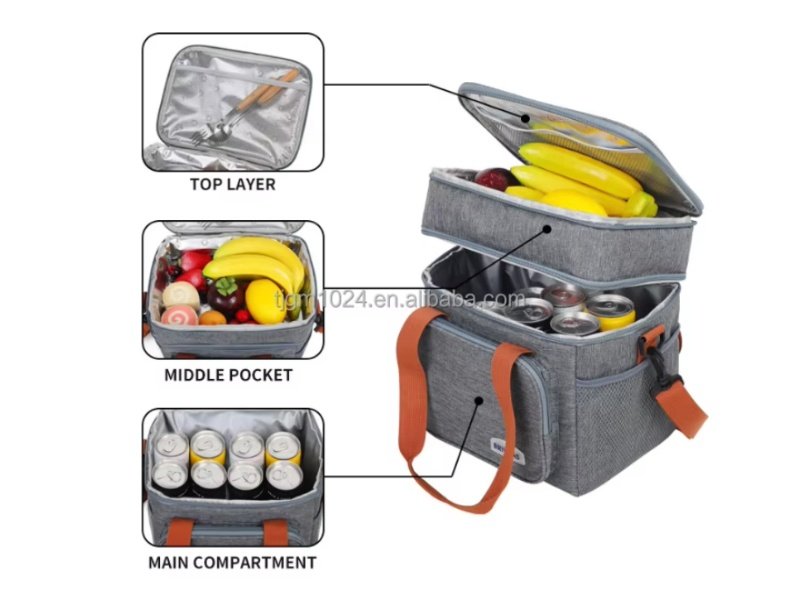
Most cooler bags can keep items cold for hours, but “how many” depends on the insulation system, seal quality, ice-to-content ratio, ambient temperature, sun exposure, and how often you open the bag. A well-built soft cooler loaded with pre-chilled items and enough ice packs can stay in a safe cold range much longer than a thin “insulated lunch bag.” The most reliable way to buy is to define a target like “X hours at Y°C ambient” and test samples consistently.
If you search “how long do cooler bags keep items cold,” you’ll see a lot of confident numbers—but the real answer is: it depends, and the dependency is predictable once you stop treating cooler bags like a single product category. Think of cooler bags like rain jackets: one is a light windbreaker, another is a fully taped waterproof shell. Both “work,” but not under the same storm.
How long do cooler bags keep items cold? (real-world results by scenario)
Instead of promising one headline hour number, it’s more useful to bucket real-world expectations by scenario. Here’s a practical, -friendly way:
- Lunch / commute (short hold, frequent opening)
- Typical user behavior: small ice pack, bag opened 2–5 times, indoor/outdoor mix.
- What matters most: seal at zipper, thin vs medium insulation, and how cold the contents started.
- Day-use outdoors (beach, picnic, events)
- Typical behavior: bag sits in shade or partial sun, opened often, drinks and snacks, mixed loads.
- What matters most: sun exposure, ice-to-product ratio, and how full the bag is (empty air warms faster).
- Hot car / travel day / road trip stops
- Typical behavior: high ambient temps, occasional opening, long duration.
- What matters most: insulation thickness, liner leakage control, and using ice blocks or frozen bottles instead of only small gel packs.
- Grocery / frozen items (short but high-stakes)
- Typical behavior: short time but large temperature sensitivity.
- What matters most: liner integrity, leakproof base, and whether the bag is shaped to reduce dead air space.
The point: “hours” is not one number; it’s a performance outcome that changes with the job.
Why do cooler bags fail or succeed? (key performance factors)
If you want to predict cold time without guessing, focus on the levers that dominate results:
- Ice-to-content ratio (cold mass vs warm mass) If you load one small gel pack with multiple warm items, the cold mass gets overwhelmed fast. For longer hold times, you need a meaningful portion of your load to be cold mass: ice blocks, multiple ice packs, or frozen water bottles.
- Starting temperature of contents A cooler bag can’t “fix” warm product. Putting room-temp drinks inside is like asking your ice packs to do double duty: chill the drinks and keep them cold. Pre-chilling contents is one of the highest ROI actions you can take.
- Opening frequency Every open replaces cold interior air with warm air. If your use case involves frequent access (kids’ snacks, events), build spec matters more: better seals, better insulation, better structure.
- Ambient temperature + direct sun A bag in shade behaves differently from a bag in direct sun, even if the air temperature is the same. Sun adds radiant heat to the outer fabric, which then drives more conduction inward. That’s why reflective barriers and light-colored outer fabrics can sometimes help in bright environments.
- Insulation thickness + seam leakage This is where manufacturing quality shows up. A bag can have decent foam but still underperform because of stitch holes, corner gaps, or a zipper that doesn’t close cleanly at the ends.
In short: cooler bags succeed when they minimize heat entry and maximize cold mass. They fail when the build leaks heat and the setup doesn’t provide enough cold energy.
A simple -friendly way to define targets: “X hours at Y°C ambient”
For B2B purchasing, this is the most important mindset shift: write performance as a testable condition.
Example targets that make sense:
- “Keep internal temperature ≤5°C for 6 hours at 30°C ambient, opened 3 times.”
- “Maintain ice presence for 8 hours at 32°C ambient, opening every 60 minutes.”
- “Hold chilled groceries ≤8°C for 3 hours at 28°C ambient, no opening.”
Once you define this, you can:
- compare multiple samples fairly
- align your product claims with reality
- prevent returns and negative reviews from unrealistic expectations
A practical “real-world” planning table (you can use in RFQs)
| Use Case | Typical Risk | Performance Target Example | Build Focus |
|---|---|---|---|
| Lunch / commute | frequent opening | ≤8°C for 4–5h @ 25–30°C | medium foam, decent zipper, easy-clean liner |
| Beach / picnic | sun + access | ≤5°C for 6h @ 30–35°C | thicker foam, strong seal, structured body |
| Travel day | hot car | ice presence 8–12h @ 32–40°C | thicker foam + minimized leakage + ice blocks |
| Grocery / frozen | leakage | ≤8°C for 2–3h @ 28–32°C | leakproof liner + reinforced base |
These targets also protect your internal decision-making. Instead of arguing “premium vs standard,” you’re deciding whether a bag meets a defined goal.
If you’re building a cooler bag line and want a factory to translate your target hours into a workable spec (foam, liner, zipper, structure, logo method), you can send your use case and target to info@jundongfactory.com. We’ll help you avoid under-building (complaints) and over-building (cost).
Which is better: cooler bags vs hard coolers (soft vs hard), and when should choose each?
Soft cooler bags are usually better for portability, branding space, daily convenience, and short-to-mid duration use, while hard coolers are better for maximum ice retention and rough outdoor handling over longer periods. For most retail, travel, and lifestyle programs, a well-specified soft cooler hits the best balance of cost, weight, and performance. Hard coolers make more sense for multi-day trips, extreme heat exposure, and minimal opening with large ice loads.
“Soft vs hard” is one of the most searched comparisons because often believe hard coolers automatically mean better. They can be better at ice retention, but that doesn’t mean they’re the right product for your customer or brand.
A smart purchase starts with the question: What problem are we solving? If your customer wants a portable cooler for commuting, beach days, sports events, grocery runs, or casual travel, the decision is not “Which holds ice the longest in a lab?” The decision is “Which delivers enough cold time with better comfort, better usability, and better carrying behavior?”
Soft vs hard cooler: what each is best at (portability vs multi-day ice retention)
Hard coolers typically win in these areas:
- multi-day ice retention (with large ice volume and limited opening)
- rugged handling, stacking, outdoor abuse
- structural insulation thickness around a rigid shell
But they lose in:
- weight and carry convenience
- packability and storage
- brandability (less surface flexibility for design)
- cost and shipping footprint
Soft cooler bags usually win in:
- portability (shoulder, hand carry, backpack options)
- store and travel friendliness (lighter, easier to fit into trunks and seats)
- design flexibility (colors, fabrics, prints, trims, pockets)
- lower logistics burden (pack flat, ship efficiently)
For many real customers, a soft cooler is not a compromise—it’s the intended solution.
Procurement decision guide: when a soft cooler bag is the smarter spec
Soft coolers are often the best choice when:
- the user will open it often (events, kids, tailgating)
- the user carries it over distance (beach walk, train, parking lot)
- the program needs brand identity (custom colors, patterns, logo placements)
- the target price point matters (retail margin structure)
- the use duration is “hours,” not “days”
And from a product strategy standpoint, soft coolers are easier to build into a collection: lunch cooler, tote cooler, backpack cooler, compact can cooler, delivery-style insulated bag. This creates upsell paths and a cleaner merchandising story.
Where hard coolers win (and how to avoid overspec’ing for who don’t need it)
Hard coolers win when:
- the trip is long (multi-day)
- ambient heat is extreme
- the bag stays closed most of the time
- the user wants rugged durability more than carry comfort
- there’s enough vehicle space and the user doesn’t mind the weight
But overspec happens when brands design to the most extreme scenario, then ask everyday users to pay for it. That’s how you get a product that is “impressive” but not purchased again because it’s heavy, bulky, and annoying.
A better approach is to segment your product line:
- Everyday soft cooler (day-use)
- Premium soft cooler (better seal + thicker insulation)
- Hard cooler (rugged, multi-day)
This matches real customer behaviors instead of forcing one product to be everything.
A procurement-friendly comparison table
| Factor | Soft Cooler Bag | Hard Cooler |
|---|---|---|
| Portability | High (shoulder/backpack) | Low–medium (heavy carry) |
| Ice retention | Medium–high (depends on build) | High (typically best) |
| Brand design options | Very high (fabrics/prints) | Medium (limited panels) |
| Shipping & storage | Efficient (often packable) | Bulky, higher cost |
| Best for | commute, beach, travel day, events | camping, fishing, long trips |
| Common regret | underbuilt sealing/foam | too heavy/bulky for daily use |
So “which is better” depends on who your customer is. If your customers are everyday users, a well-built soft cooler often delivers the best satisfaction-per-dollar.
If you’re developing a soft cooler bag line and want it to compete without chasing unrealistic claims, the key is to define the right use-case targets and build around them—then validate with consistent sample tests. When you’re ready, you can send a brief RFQ outline (type, capacity, target hours, target price, logo method, MOQ expectation) to info@jundongfactory.com and we’ll recommend a structure that matches your market position.
What type of cooler bag works best: lunch bag, tote cooler, backpack cooler, leakproof zipper cooler, delivery bag
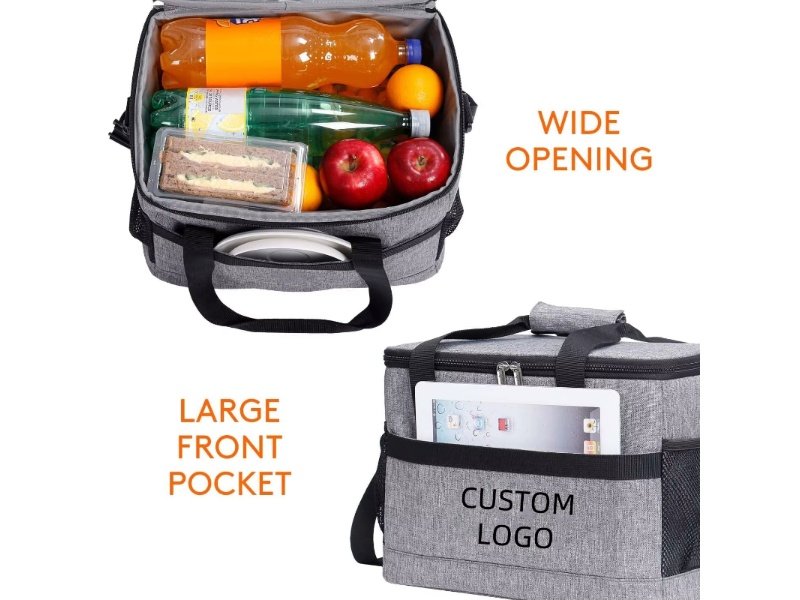
The best cooler bag type depends on how it will be used, not just how it looks. A lunch cooler is best for short daily use, a tote cooler fits casual shopping and beach trips, a backpack cooler improves carrying comfort over distance, a leakproof zipper cooler is better when spill control matters, and a delivery bag is built for capacity, structure, and repeated transport. The right choice balances capacity, comfort, cold-hold time, cleaning, and cost.
A common buying mistake is treating all cooler bags as one category. In reality, “cooler bag” is a family of products. The shape, closure, carry system, internal structure, and liner build all change the user experience. That means the “best” cooler bag is never universal. It depends on whether the customer is walking to the office, driving to the beach, shopping for groceries, carrying meals for a child, or managing last-mile food delivery.
Which cooler bag types work best for specific use cases? (quick matching guide)
The fastest way to choose the right style is to match the bag to the job.
1) Office lunch / school lunch
A compact lunch cooler is usually the right answer when the user needs short-duration cold hold, lighter weight, and simple daily handling. The priorities here are:
- easy-open structure
- compact footprint
- easy-to-clean liner
- enough insulation for several hours, not necessarily full-day outdoor heat
This category often overlaps with insulated lunch bags, which is why some products disappoint when customers expect “beach cooler” performance from a lunch build. If the use case is truly short-range and low heat exposure, a simpler lunch cooler is often the most cost-effective option.
2) Beach / picnic / family outing
A tote cooler or a larger structured soft cooler is often a better fit. Why? Because these use cases need:
- wider opening access
- room for drinks, snacks, fruit, meal boxes
- a shape that works when multiple people are reaching inside
- more internal volume for ice packs or frozen bottles
For lifestyle retail, tote coolers also have strong visual appeal. They present well, offer good branding space, and fit casual consumer behavior. But if you want them to perform well, the build must move beyond “fashion tote with foil lining.” The difference between a decorative insulated tote and a real tote cooler usually comes down to foam thickness, liner sealing, and base reinforcement.
3) Travel day / road trips / hands-free carry
A backpack cooler works best when the user will carry the load over distance. This is where ergonomics matter as much as insulation. A cooler that performs well but is uncomfortable becomes a bad product in real life.
Backpack coolers are strong when:
- walking distance is longer
- hands-free carry matters
- the load includes drinks plus personal items
- portability affects whether the user brings the bag at all
But backpack coolers need disciplined design. If the bag becomes too tall, too soft, or too loose internally, contents shift and cold performance becomes less stable. Good backpack cooler design often includes:
- padded straps
- reinforced base
- shape retention panels
- a leak-resistant interior that is still easy to wipe clean
4) Grocery / frozen items / spill-sensitive transport
A leakproof zipper cooler or a better-sealed structured cooler is a stronger choice when melted ice, condensation, or food liquids could become a problem. The value here is not just temperature retention. It is also containment.
This matters for:
- frozen meat and seafood
- meal prep transport
- car-seat or trunk protection
- premium consumers who expect cleaner handling
The tradeoff is usually cost. Better zippers, tighter sealing, and cleaner liner construction increase production cost and can make the bag feel stiffer. That’s acceptable if the user values confidence and cleanliness more than casual convenience.
5) Food delivery / bulk carry / repeated transport
A delivery-style insulated bag is not the same as a consumer cooler bag. It is built around:
- higher capacity
- repeated loading/unloading
- shape stability
- stacking behavior
- durability under frequent use
For delivery programs, the most important question is not “Which style looks best?” It is “Which structure protects order integrity under real handling?” That often means:
- thicker panels
- reinforced corners
- stronger handles
- a liner that resists odor buildup and repeated wiping
Backpack cooler vs tote cooler: comfort vs access vs capacity
This is one of the most useful comparisons because both styles can serve beach, travel, and event use.
Backpack cooler advantages
- better long-distance carry
- hands-free movement
- more balanced load distribution
- often preferred for parks, beaches, and festivals
Tote cooler advantages
- faster top access
- easier pack/unpack
- often wider opening
- stronger casual/lifestyle appearance
If your customers are mobile and active, backpack coolers often win. If they care more about easy access and a relaxed everyday look, tote coolers may perform better in the market—even if lab insulation numbers are similar.
Leakproof zipper vs roll-top: sealing logic, spill risk, and cost impact
These two closures often get compared in custom projects.
Leakproof zipper style
- cleaner look
- premium feel
- stronger spill control
- easier for mainstream retail acceptance
But it can increase cost and may require stricter alignment in manufacturing.
Roll-top style
- flexible capacity
- fewer rigid zipper failure points
- strong water/spill control when rolled properly
- often used in outdoor-oriented products
But some users find it slower or less convenient for frequent access.
This is why “best” is really a mix of:
- user habit
- price target
- opening frequency
- product positioning
What “works best” means: comfort, capacity, cold-hold time, cleaning, brandability
Many product teams focus too much on cold retention and forget the full buying logic. A cooler bag that keeps things cold but is awkward, hard to clean, or ugly for the target market will still underperform commercially.
A stronger selection method is to score each concept against five factors:
| Factor | Why It Matters | Best-Match Styles |
|---|---|---|
| Comfort | User will carry it longer | Backpack cooler |
| Access speed | Frequent opening | Tote cooler, lunch cooler |
| Cold-hold potential | Longer thermal demand | Structured soft cooler, leakproof zipper cooler |
| Cleaning ease | Repeat use, food contact | Leakproof zipper cooler, delivery bag |
| Brand visibility | Retail appearance, custom logo impact | Tote cooler, lunch cooler, premium soft cooler |
For custom development, the smartest path is to define the main use case first, then select the bag architecture. That avoids the common mistake of trying to make one bag do everything.
If you are planning a custom cooler bag line and want help choosing between lunch cooler, tote cooler, backpack cooler, or delivery-style construction, you can send your target market, size range, and price band to info@jundongfactory.com. We can recommend the most practical bag type before you spend money on the wrong sample direction.
What are cooler bags made of: which materials matter most (outer fabric, insulation, liner)
Cooler bag performance depends heavily on three material layers: the outer fabric, the insulation core, and the inner liner. The outer fabric affects durability and appearance, the insulation controls heat transfer, and the liner affects leak resistance, cleanability, and odor control. Most performance problems come from the wrong material pairing—such as thin foam, weak liners, or poor seam construction—not from the concept of the cooler bag itself.
When ask, “What is the best material for a cooler bag?” the most accurate answer is: there is no single best material. A cooler bag is not made from one material. It is a multi-layer system, and each layer has a different job. If one layer is weak, the whole product can feel disappointing even when the other layers are good.
That’s why serious sourcing decisions should evaluate the bag in three parts:
- the outer shell
- the insulation layer
- the inner liner
And beyond those three, you also need to assess seams, binding, zipper structure, and base reinforcement, because the best materials can still underperform if the construction is careless.
Outer fabric: 600D/900D polyester vs TPU-coated vs tarpaulin (use-case selection)
The outer layer is the first thing notice, but it does more than create appearance. It influences:
- abrasion resistance
- water resistance
- printability / branding
- shape retention
- perceived product quality
600D or 900D polyester
This is a common, practical choice for many mid-range cooler bags. It offers:
- stable cost
- good brandability
- decent durability
- broad color and trim flexibility
This makes it strong for lunch coolers, tote coolers, and many retail soft coolers. The limitation is that polyester alone is not a “performance solution.” Its thermal role is minor. It mainly supports structure, appearance, and handling.
TPU-coated fabrics
These are often used when the product needs a more premium, technical, or outdoor feel. Advantages include:
- improved water resistance
- smoother, more performance-oriented appearance
- potential for better wipe-clean handling depending on finish
This can help with premium cooler bags, outdoor-focused designs, and leak-sensitive use cases.
Tarpaulin-style outer materials
These are often chosen when ruggedness and wipeability matter more than softness or lifestyle appearance. Good for:
- delivery bags
- outdoor event coolers
- marine or utility-oriented products
The tradeoff is that some tarpaulin builds feel stiffer and less “friendly” in casual retail settings. So the best outer fabric depends on brand positioning, not just performance.
Insulation core: PE / XPE / EPE and why thickness + density affect performance
The insulation core is where thermal performance is mainly decided. In cooler bags, this is commonly a foam layer, often using closed-cell foam structures.
Why closed-cell foam matters:
- it traps air, slowing heat movement
- it resists water uptake better than more open structures
- it tends to hold performance more consistently in repeated use
The two biggest insulation decisions are:
1) Thickness
More thickness usually improves thermal resistance, but it also:
- increases bag bulk
- reduces usable internal space if outer dimensions stay fixed
- raises cost and shipping volume
2) Density / structure quality
A foam layer that compresses too easily can lose effectiveness in real use. That means the “same thickness on paper” does not always mean the same field performance.
This is why two samples that both claim “8mm foam” can behave differently. One may use better foam quality and cleaner edge continuity. The other may have weak corners, compressed seams, or inconsistent thickness.
Liner: PEVA vs TPU vs foil + weld seams (cleaning, leakage, odor risk)
The liner is often underestimated, but it strongly affects how the bag feels in daily life.
A good liner should do four things:
- resist leakage
- wipe clean easily
- reduce odor retention
- hold up under repeated folding and use
PEVA liners
- common in many cooler and insulated bags
- practical for easy cleaning
- cost-effective for many retail programs
TPU liners
- more premium-feel option in some builds
- can support a more technical product direction
- often paired with higher-end structures
Foil-style liners
- common in lighter promotional or lunch-use products
- can look “insulated” visually
- but if overall construction is basic, they may not deliver the durability or sealing needed for stronger cooler use
The liner material matters, but the liner construction method matters just as much. A good material with poor stitching can still leak. A practical liner with well-controlled welded seams often outperforms a more expensive liner installed badly.
Material-driven failure points (delamination, cracking, seam leakage, zipper breakdown)
Many cooler bag complaints are not really “temperature complaints.” They are construction complaints disguised as performance complaints.
Common material-related failures include:
- Outer fabric delamination: coating separates over time
- Liner cracking: repeated folding creates weak points
- Seam leakage: stitch holes or weak welds allow seepage
- Foam compression: bag loses structure and thermal consistency
- Zipper breakdown: closure stops sealing correctly, increasing air exchange
This is why material sourcing should never be done as a simple checklist. A better sourcing question is:
How do these materials behave together under the intended use cycle?
A practical material selection table
| Layer | Common Options | Best For | Common Risk if Underbuilt |
|---|---|---|---|
| Outer Fabric | 600D/900D polyester, TPU-coated, tarpaulin | branding, durability, handling | wear, poor water resistance, weak feel |
| Insulation Core | PE / XPE / EPE foam | thermal resistance | fast warming, compression loss |
| Inner Liner | PEVA, TPU, foil-type liners | leakage control, cleanability | odor, cracking, seepage |
| Construction Method | stitched, welded, reinforced seams | durability + performance consistency | leaks, edge failure, reduced cold hold |
For custom cooler bag development, the material decision should start with the use case:
- everyday lunch → balanced, cost-efficient build
- beach / day-use premium → stronger insulation + better liner + better shell
- delivery / repeated use → durability, wipeability, reinforced structure first
If you already know your target market and want help matching outer fabric, foam thickness, liner type, and closure system to the right cost range, send your project brief to info@jundongfactory.com. A good material stack can reduce complaints long before mass production starts.
How do you make a cooler bag work better: what packing and usage tips actually change results?
You can make a cooler bag perform much better by pre-chilling the bag, loading only cold or frozen contents, using enough ice or ice packs, filling empty space, keeping the bag out of direct sun, and reducing how often it is opened. Food safety guidance also matters: cold perishables should be kept at 40°F (4.4°C) or below, and once served, should not sit out too long in warm weather.
A lot of product complaints that sound like “this cooler bag doesn’t work” are actually usage failures, not manufacturing failures. That does not mean the bag is always good. It means even a well-built cooler bag can underperform if the user loads it the wrong way. For brands and , this is a big opportunity: better product education can reduce returns, improve reviews, and make a mid-range cooler bag perform closer to what customers hoped for.
The big levers that change cold time the most (pre-chill, fill space, block ice, sun control)
The first high-impact move is pre-chilling the bag itself. If a cooler has been stored in a warm room, garage, or car, the bag’s own materials start hot. Official packing guidance from YETI says your cooler begins at room temperature and will absorb cold from your ice, which makes the ice melt faster; they recommend pre-chilling before loading. Arctic Zone also recommends chilling the cooler before packing, using ice and cold water if needed.
The second lever is starting with cold contents. If you put room-temperature drinks or food into the bag, your ice packs must first cool those items down and then keep them cold. That is a losing setup. Arctic Zone’s guide recommends refrigerating what can be refrigerated before packing. In practical terms, pre-chilling contents often matters as much as upgrading the bag.
The third lever is filling empty space. YETI explicitly notes that “air is the enemy of ice retention” and recommends filling gaps with ice packs, frozen water bottles, or other fillers because more empty space speeds melting. This matters even more in soft coolers because loose internal air warms fast every time the bag is opened.
The fourth lever is using the right cold source. Small gel packs are convenient, but for longer use windows, larger cold mass performs better. Frozen water bottles and ice blocks usually melt more slowly than small cubes or thin packs because they have lower surface area relative to volume. While the exact result depends on the scenario, this is why travel-day and beach-use setups often perform better with a mix of block ice + smaller packs rather than only small gel packs. This is also consistent with common cooler packing advice from outdoor brands and reviewers focused on longer retention setups.
The fifth lever is sun and heat control. Direct sun adds heat load on top of air temperature. Even if the bag is well insulated, leaving it on hot sand, inside a parked car, or on dark pavement pushes outer-surface temperature up and speeds heat gain. Keeping the bag in shade, off hot surfaces, and zipped closed between access moments can meaningfully improve performance. This is basic but often ignored.
Packing methods for different contents (drinks vs meal boxes vs seafood)
Not all contents should be packed the same way.
Drinks
- Pack dense and upright if possible.
- Use larger frozen bottles or block-style ice for longer events.
- Put the most frequently accessed drinks near the top to reduce long rummaging.
Meal boxes / lunch
- Use flatter ice packs around the sides or top.
- Avoid crushing soft foods by overloading with loose ice.
- If the user opens often, faster-access layouts matter more than theoretical max retention.
Seafood / raw meat / frozen groceries
- Leak control becomes critical.
- Double containment helps: wrapped product + leak-resistant liner.
- Drain management matters when ice melts.
This is where bag design and use behavior intersect. A well-built leak-resistant liner helps, but a poor packing method can still create mess and rapid warming.
Common user mistakes that make a “good” cooler bag look bad
These are the most common avoidable mistakes:
- Loading warm items
- Using too little ice
- Leaving lots of empty space
- Opening the bag too often
- Leaving the bag in direct sun
- Assuming “insulated” means “safe all day” without checking temperature
That last point matters because food safety is not just about comfort or taste. USDA says cold food should be kept at or below 40°F. FDA also says cold perishable food should stay at 40°F or below until serving, and once served, it should not sit out for more than 2 hours, or 1 hour if the outdoor temperature is above 90°F.
A practical user-education table brands can include
| Usage Tip | Why It Works | What Happens If Ignored |
|---|---|---|
| Pre-chill the bag | reduces initial heat load | ice melts faster immediately |
| Load pre-cold items | preserves ice for holding, not chilling | rapid early temperature rise |
| Fill dead space | less warm air inside | faster ice melt, more temp swings |
| Use larger cold mass | slower melt over time | short cold window |
| Keep shaded / closed | reduces heat gain and air exchange | faster warming and weaker hold |
A cooler bag can only perform as well as the bag build + packing method + environment allow. That is why serious brands should not only spec the right product, but also teach customers how to use it correctly.
How to test a cooler bag properly: which method is fair for comparing manufacturers and samples?
To compare cooler bag samples fairly, test them under the same starting temperature, same ice weight, same load type, same ambient conditions, and the same opening schedule. Track internal temperature, remaining ice, leakage, and carry comfort over time. Industry-style “100% ice fill” tests are useful for comparison, but they do not reflect normal use, so should also run a realistic mixed-load test.
If you buy cooler bags by appearance, supplier promises, or vague wording like “premium insulation,” you are inviting disappointment. The cleanest way to choose a cooler bag supplier is to test samples in a way that is repeatable, comparable, and relevant to your real use case.
The biggest mistake make is comparing two samples under different conditions. If one sample starts colder, uses more ice, or sits in a cooler room, the result means almost nothing. A fair test removes as many uncontrolled variables as possible.
A repeatable test protocol procurement teams can use for samples
A simple internal test can be much more useful than marketing claims. Here is a practical framework:
Step 1: Standardize the starting condition
- Store all test samples in the same room before testing.
- Pre-chill them the same way, or do not pre-chill any of them.
- Use identical contents.
Step 2: Standardize the load
You have two useful test modes:
A. Comparison test (high control)
Fill each bag with the same measured amount of ice or ice packs. Arctic Zone says the cooler industry commonly uses a 100% ice fill protocol because it allows comparisons across products and brands. They also note that this is not how most people use coolers in real life. This makes it a decent benchmark test, but not a complete buying decision tool.
B. Realistic test (better for actual sourcing decisions)
Use a mixed load:
- pre-chilled drinks
- meal box or food containers
- a fixed weight of ice packs or ice blocks
This better reflects actual retail, travel, or delivery use.
Step 3: Standardize the environment
- Same room or outdoor setup
- Same sun/shade condition
- Same start time
- Same surface (do not place one on concrete and one on a table)
Step 4: Standardize access
Decide how often the bag will be opened. For example:
- open every 60 minutes for 30 seconds
- or keep closed throughout if testing max hold
Because opening frequency changes real performance dramatically, this must be controlled.
What “pass/fail” should look like (temperature curve, remaining ice %, leakage checks)
The best test is not just one end-point photo of “still cold.” It should track multiple outcomes:
- Internal temperature over time This is the most useful metric for food-use scenarios. If the goal is cold food safety, whether the interior stays near or below 40°F matters more than whether “some ice remains.” USDA and FDA both anchor cold food safety around 40°F.
- Remaining ice / cold source retention This helps compare insulation efficiency.
- Leakage Some of the best soft-cooler reviews explicitly include leak tests, such as upside-down shake tests and prolonged storage checks. Treeline Review reports running leak tests along with direct-sun ice-retention trials and portability checks in its soft-cooler testing.
- Carry comfort / usability A bag that performs thermally but is painful to carry may still be the wrong product. Serious Eats noted that multiple carry options and padded, secure handles improved user experience in soft-cooler testing.
This is why pass/fail should match the category:
- lunch bag → temp + convenience
- beach cooler → temp + leak + carry
- delivery bag → temp + shape retention + repeated handling
How to compare two manufacturers fairly (same ice weight, same ambient, same load-out)
When you compare suppliers, keep these constants fixed:
- total bag fill weight
- ice weight
- item types
- ambient temperature range
- opening schedule
- measurement intervals
Then evaluate:
- temp curve at 1h, 2h, 4h, 6h, etc.
- seam leakage
- zipper performance
- liner wipeability after melt
- distortion when carried full
Independent testers also use more instrumented approaches. OutdoorGearLab says it tracked internal temperature over time using a sealed sensor setup when ranking coolers. You do not need a lab-grade system to make good decisions, but even a simple digital probe thermometer and a standardized worksheet will give you better data than marketing claims.
Common misleading tests to avoid (short tests, cherry-picked temps, no load standardization)
Avoid these traps:
- testing one bag in shade and another in sun
- changing the ice quantity between samples
- using “all ice” in one test and mixed load in another
- checking only once at the end instead of tracking the curve
- relying on supplier claims without recreating the setup
Arctic Zone’s own product-testing page makes a useful point: 100% ice fill is helpful for brand-to-brand comparison, but it is not an accurate reflection of real-life usage because most people use food and drinks along with some ice. That single distinction explains why often get confused by bold marketing claims.
A sample comparison worksheet can use
| Metric | Sample A | Sample B | Why It Matters |
|---|---|---|---|
| Internal temp @ 2h | early performance | ||
| Internal temp @ 6h | practical use window | ||
| Remaining ice @ 6h | insulation efficiency | ||
| Leakage observed? | liner + seam quality | ||
| Carry comfort | real user acceptance | ||
| Cleaning after melt | repeat-use practicality |
A cooler bag is easier to buy when you stop asking “Which one feels premium?” and start asking “Which one passes the same test under the same conditions?” That is how you reduce sourcing risk.
Price vs performance: what drives cooler bag cost, and what specs change the quote most?
Cooler bag pricing is mainly driven by materials, insulation thickness, liner construction, closure type, structure, branding method, and order volume. A bag gets more expensive when you add thicker foam, leak-resistant zippers, welded liners, reinforced panels, premium fabrics, and complex printing. The smartest way to buy is not to chase the cheapest unit price, but to match the build to the real use case so you do not under-spec performance or overpay for features your customer will not use.
When compare cooler bag quotes, the mistake is usually not “I paid too much.” It is “I paid for the wrong things.” A cooler bag can look expensive because it uses premium materials that the end user does not need. Or it can look cheap because it cuts exactly the parts that matter most in actual use: insulation, liner, sealing, and structure.
That is why price only makes sense when tied to a performance target. If one factory quotes lower, you need to ask: lower than what build? A low quote on a lightly insulated, stitched-liner, standard-zipper tote is not directly comparable to a structured soft cooler with thicker foam, reinforced base, and leak-resistant construction.
What actually drives cost: insulation, zipper, liner welding, structure panels, accessories
The main cost drivers are usually these:
1) Insulation thickness and foam quality
This is one of the biggest thermal cost levers. More foam usually means:
- more raw material cost
- more bulk (which can increase shipping cost)
- more labor complexity at corners and edges
- less internal capacity if outer dimensions stay fixed
This is why a “just make it thicker” request has cost consequences beyond foam itself.
2) Liner material and construction method
A basic sewn liner is usually cheaper than a better-sealed welded liner. But cheaper on paper can become more expensive later if users complain about seepage, odor buildup, or difficult cleaning. If your use case involves loose ice, seafood, frozen groceries, or premium lifestyle positioning, the liner is not where you want to cut too hard.
3) Closure system
Standard zippers cost less than more performance-oriented sealing options. Roll-top builds can change both material usage and labor. If your customers open the bag frequently, the “best” closure may not be the most sealed one—it may be the one that creates the best balance between convenience and leakage control.
4) Structure and reinforcement
Adding:
- EVA or PP support panels
- reinforced base boards
- padded handles
- shoulder pads
- stiffer side walls
all improves the feel and sometimes improves performance consistency, but it also pushes cost up. This is especially relevant for backpack coolers and delivery bags where shape stability matters.
5) Outer fabric and trims
Standard polyester is generally more budget-friendly than coated technical shells. Premium pulls, labels, buckles, and accent trims also add up quickly, especially in lifestyle and retail programs.
6) Branding method
Large-area full-color printing, multiple logo placements, special patches, woven labels, embroidery, and retail-ready packaging all affect the quote. “Customization” is not one cost line. It is a stack of small decisions that can move the total price more than many expect.
Performance-per-dollar: how to avoid paying for features you won’t use
The strongest purchasing mindset is performance-per-dollar, not lowest price.
For example:
- If the use case is office lunch, you may not need thick premium foam, reinforced hard panels, or a leakproof premium zipper.
- If the use case is beach day or family outing, those upgrades may be justified because sun exposure, carry distance, and opening frequency are higher.
- If the use case is delivery, you may get better value by prioritizing wipeability, structure, and handle durability over “premium retail appearance.”
This is where many product teams go wrong: they design for the most extreme use case, then force that cost into a mass-market price band. The result is margin pressure, weak sell-through, or a product that looks impressive but feels too expensive for what customers think it is.
A better approach is to define three commercial tiers:
Good / Better / Best spec ladder (so can choose faster)
| Tier | Typical Build Logic | Best For | Main Risk |
|---|---|---|---|
| Good | lighter insulation, standard zipper, practical liner, basic branding | lunch, short trips, entry retail | weak expectations if marketed too aggressively |
| Better | medium-thick foam, improved liner, stronger structure, better trims | beach, picnic, travel day | can become “in-between” if not positioned clearly |
| Best | thicker foam, premium shell, stronger seal, reinforced panels, premium branding | premium outdoor, gift programs, higher-end retail | overbuilt for price-sensitive |
This ladder helps both internal teams and stop arguing in abstract terms like “premium” or “cheap.” Instead, you ask: Which level fits the use case, price target, and brand promise?
In real sourcing, MOQ and production timing also affect cost. Many bag factories publicly note that lead time and unit economics depend on complexity and quantity. For example, one OEM bag supplier states production commonly runs about 15–30 days after sample confirmation, depending on order quantity and complexity. Other cooler-bag manufacturers note that design complexity, material choice, and branding coverage can affect MOQ and timing, and that more intricate builds usually require higher volumes or longer schedules.
So the most accurate quote is never based on “What is your best price?” It is based on:
- target use case
- target performance
- target price band
- target order volume
- realistic packaging and branding requirements
That is the difference between price shopping and product planning.
Custom cooler bag manufacturing guide: how the factory sample process works (MOQ, lead time, QC checkpoints)
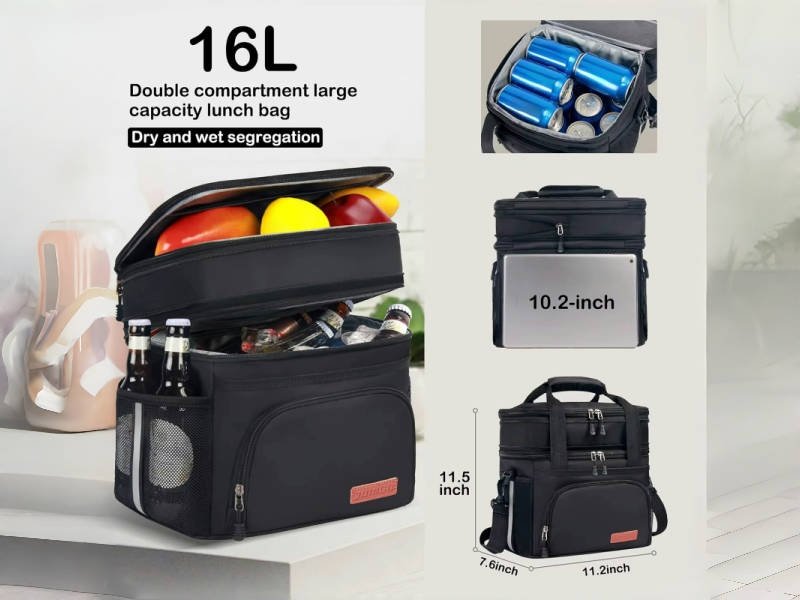
A strong custom cooler bag project starts with a clear brief: use case, size, target cold-hold time, material direction, price band, logo method, and MOQ target. The usual flow is quotation → prototype/sample → revisions → pre-production approval → bulk production. Lead times and MOQs vary by design complexity and quantity, and many manufacturers publicly note faster samples for simpler builds and longer schedules for more customized projects.
A lot of cooler bag projects go off track before the first sample is even made. Not because the factory is bad, but because the brief is vague. If the says only “I want a custom cooler bag,” the factory has to guess the intended performance, structure, and commercial position. That usually creates one of two bad outcomes:
- the sample is underbuilt and disappoints
- the sample is overbuilt and comes back too expensive
A better project starts with a clear, -led spec logic.
What info a manufacturer needs to quote accurately (use case, target hours, capacity, materials)
Before asking for a quote, define these six things:
1) Primary use case
Is this bag for:
- lunch
- beach/picnic
- grocery/frozen food
- travel
- delivery
- corporate gift / retail promotion
Use case drives nearly every other decision.
2) Capacity and dimensions
A “20-can cooler” is not the same as a slim lunch form. Capacity influences not only materials, but the amount of structure needed to stop the bag from sagging or collapsing.
3) Target performance
A useful phrasing is:
- “Hold chilled contents for 4–6 hours in summer day use”
- “Prioritize leak resistance for frozen groceries”
- “Designed for short-range food delivery with repeat wipe cleaning”
You do not need a lab-grade specification to get started, but you do need a real-world target.
4) Material direction
If you already know you want:
- standard polyester
- premium coated shell
- PEVA liner
- thicker foam
- roll-top vs zipper
say so early. It will save time.
5) Branding and packaging
Logo method changes cost and sometimes MOQ. So does whether you need:
- hangtags
- polybags
- barcode stickers
- retail boxes
- custom inserts
6) Budget range and MOQ target
Factories can often recommend a more practical construction if they know whether your target is value retail, mid-range, or premium positioning.
Sample process: prototype → fit sample → insulation/liner tuning → pre-production sample
A well-run custom project usually moves through these stages:
Stage 1: Initial quotation and design review
The factory reviews your size, use case, materials, and branding. If the brief is clear, this stage is fast. If not, multiple loops happen before sampling even starts.
Stage 2: First sample / prototype
This sample is about validating:
- proportions
- shape
- carry method
- pocket layout
- general construction direction
It should not be judged only on final aesthetics. It is a structural learning stage.
Stage 3: Fit and performance revisions
This is where smart refine:
- foam thickness
- liner type
- zipper choice
- reinforcement panels
- access opening size
- strap comfort
This is often the most important phase because small changes here affect real-world satisfaction far more than cosmetic details.
Stage 4: Pre-production sample (PPS)
This is the “lock it before bulk” stage. The goal is to confirm that:
- the approved materials are correct
- branding placement is final
- dimensions are stable
- construction details are fixed
- the bag still performs as intended
Many manufacturers also openly describe custom sample timing as faster for simple projects and longer for more customized builds. Published examples from bag and cooler-bag suppliers include custom sample windows around 5–7 days for some projects, while existing-stock samples can be even faster. Those are examples, not universal rules, but they reflect a common industry pattern: simplicity moves faster.
QC checkpoints that protect performance (foam thickness, seam sealing, zipper leakage, liner weld strength)
For cooler bags, the most important quality checkpoints are not always visible in product photos. They are often hidden inside the build.
Key QC points include:
- Foam thickness consistency A bag that is “nominally” 8 mm but inconsistent at corners or sidewalls may perform worse than expected.
- Seam sealing / stitch control Poor seam execution creates air and moisture leak paths.
- Liner weld strength or liner attachment quality Weak liner joins can fail after repeated folds or heavy loads.
- Zipper alignment and closure behavior A closure that binds, gaps, or fails to seat properly becomes a performance problem, not just a cosmetic one.
- Base reinforcement If the base deforms under load, the bag may pool meltwater poorly, carry awkwardly, and feel unstable.
How to prevent sample-to-bulk drift in insulation and sealing quality
This is where many sourcing problems happen. The approved sample is good, but mass production drifts.
To reduce that risk:
- lock the material specs clearly
- confirm thickness tolerances
- approve the liner construction method, not just the liner material
- define closure type and stitch/weld expectations
- inspect early bulk units, not only final packed cartons
This is the factory-control side of performance. A cooler bag does not stay “good” because the first sample was good. It stays good because the same build is controlled through production.
If you want to develop a cooler bag with fewer trial-and-error loops, the fastest path is to send a focused brief to info@jundongfactory.com with:
- bag type
- size/capacity
- use case
- target cold-hold expectation
- target price range
- branding method
- expected MOQ
A cleaner brief usually produces a better first sample.
FAQ 1 — How much ice or how many ice packs do you actually need for a cooler bag to work properly?
A cooler bag usually performs well only when the cold source is strong enough for the load inside, which means there must be a practical balance between the items you are trying to keep cold and the ice, ice packs, or frozen bottles doing the cooling. If the bag is under-loaded with cold mass, even a well-made cooler bag can feel disappointing.
This is one of the most common reasons think a cooler bag “doesn’t work.” The bag may be fine, but the setup is weak. A soft cooler bag is not a fridge. It does not generate cold. It only helps slow the loss of cold that is already inside. So if you load multiple room-temperature drinks, fresh food, or warm lunch boxes and then add only one small gel pack, the bag is being asked to do more than it realistically can.
A better rule is to think in terms of cold mass ratio. The more warm items you add, the more cooling power you need. In practical use, should treat ice packs, ice blocks, and frozen bottles as part of the bag’s working system—not as optional accessories. For short daily lunch use, flat ice packs placed near the food may be enough. For beach trips, long drives, grocery cold transport, or outdoor events, larger ice packs, block ice, or multiple frozen bottles work better because they melt more slowly and create a more stable cold environment.
Another overlooked detail is empty space. Too much empty air inside the cooler bag makes the inside warm up faster. If the bag is only half full, add more cold items or filler packs. That helps the interior stay colder and reduces temperature swings each time the bag is opened.
For custom , this also affects product development. A cooler bag designed for “one lunch + one ice pack” is a very different product from one designed for “family picnic + drinks + six hours outdoors.” That is why a factory should not quote based only on size. The intended use should define the insulation level, liner build, and structure.
If you are developing a private label cooler bag, it is smart to define the expected use case in the product brief:
- short lunch carry
- grocery cold transfer
- beach/day-trip use
- travel-day use
- delivery service
That single decision will tell you how much ice users are likely to need, and whether the bag’s structure actually supports that use.
FAQ 2 — Can cooler bags safely keep milk, meat, seafood, or other perishable foods cold enough?
Yes, a cooler bag can safely carry perishable foods, but only if the bag is built correctly, packed correctly, and used within a realistic time window. The real question is not “Can a cooler bag carry perishable food?” but “Can this specific cooler bag hold a safe temperature long enough for this specific use case?”
This is a serious buying question because customers are not only thinking about convenience. They are thinking about food safety, especially when transporting milk, yogurt, baby food, meal prep, seafood, frozen meat, deli items, or chilled groceries. A cooler bag can absolutely help with this, but it should never be treated like an unlimited cold-storage solution. A cooler bag slows warming. It does not actively refrigerate.
That means several factors matter at the same time:
- The bag build — thicker insulation, better liner construction, and better closure systems improve performance.
- The starting temperature of the food — food should go in already cold, not warm.
- The amount and type of cold source — multiple ice packs or larger frozen bottles generally work better than one small pack.
- The environment — a bag in an air-conditioned car behaves very differently from one left in direct sun.
- The time window — short grocery transfer is much easier than all-day outdoor carry.
This is why many customer complaints are not truly about the bag material. They are about a mismatch between the bag and the use case. A lightweight lunch-style insulated bag may be totally acceptable for carrying yogurt and fruit to the office, but it may not be a reliable choice for transporting seafood on a long summer drive. In that case, the should choose a more performance-oriented cooler bag with better sealing, stronger insulation, and a liner designed to manage condensation or leakage.
For B2B , the smartest way to position the product is to avoid vague promises like “Keeps food fresh all day.” That kind of wording creates unrealistic expectations. A stronger and more trustworthy claim is tied to a scenario, such as:
- for daily lunch use
- for short grocery transport
- for picnic/day-use with ice packs
- for chilled-food carry under controlled conditions
If your customers are likely to use the bag for cold groceries, frozen foods, seafood, or meal delivery, your product spec should prioritize liner integrity, seam control, easy cleaning, and practical cold-hold performance, not just appearance.
A reliable cooler bag can support safe transport of perishable items, but only when the product and the usage instructions are aligned. That is what separates a high-return item from a high-trust item.
FAQ 3 — What specifications should I ask for when ordering custom or private label cooler bags from a manufacturer?
When sourcing a custom cooler bag, the most important thing is to ask for specifications that match the real use case, not just the visual design. A cooler bag should be quoted and sampled based on how long it needs to hold cold, what it will carry, how it will be used, and what price level the final product must hit.
This is one of the most important procurement questions because many focus too early on logo size, colors, or exterior styling. Those details matter for branding, but they do not decide whether the product will perform well after launch. If the internal build is wrong, the product can look excellent in photos and still fail in actual customer hands.
At minimum, should confirm these points with the factory:
Core specification checklist
| Spec Item | Why It Matters |
|---|---|
| Bag type | Lunch cooler, tote cooler, backpack cooler, delivery bag, etc. |
| Target use case | Office lunch, grocery cold carry, beach, travel, delivery |
| Size / capacity | Changes insulation demand, structure, and carrying behavior |
| Insulation type & thickness | Directly affects cold retention |
| Liner material | Affects cleanability, leakage risk, and odor control |
| Closure type | Standard zipper, leak-resistant zipper, roll-top, hook-and-loop |
| Structure | Reinforced base, side panels, EVA/PP support, shape retention |
| Logo method | Print, embroidery, patch, woven label, rubber logo |
| Packaging | Polybag, hangtag, barcode, color box, retail insert |
| MOQ target | Helps the factory suggest a realistic construction level |
You should also ask the factory a few performance-driven questions, not just production questions:
- Is this bag suitable for ice packs only, or can it handle loose ice?
- Is the liner stitched or welded/heat-sealed?
- What is the intended use level: light daily use or more demanding day-use?
- What are the likely weak points if we reduce cost?
- Which parts of the construction most affect performance?
These questions quickly reveal whether the supplier understands cooler bags as functional products or only as general sewn bags.
A good RFQ should also describe the expected cold-hold scenario, even if it is not laboratory-level. For example:
- “Designed for office lunch use with 1–2 ice packs”
- “Designed for grocery cold transport up to several hours”
- “Designed for beach/day-use with repeated opening”
This helps the factory recommend the right insulation level instead of guessing.
If you want better samples and fewer revisions, do not ask only for a “custom cooler bag.” Ask for a cooler bag built for a specific problem. That is where better sourcing begins.
If you are planning a custom project and want a more accurate build recommendation, you can invite to contact your team with their target use case, size, and price range at info@jundongfactory.com.
FAQ 4 — Why did the sample cooler bag perform well, but the bulk order felt worse?
When a sample performs better than the final bulk order, the cause is usually spec drift, material inconsistency, or construction variation during production. In simple terms, the approved sample and the bulk goods were not made exactly the same way, even if they looked similar at first glance.
This is a real pain point for , especially those launching a new SKU under a private label program. The first sample may feel solid, hold temperature reasonably well, and leave a good impression. Then the bulk shipment arrives, and the product feels softer, less stable, less leak-resistant, or less reliable in daily use. That kind of gap damages trust fast.
In cooler bags, this problem often comes from details customers cannot easily see in photos:
Common reasons sample-to-bulk performance changes
- Foam thickness inconsistency The sample may use the correct insulation thickness, but bulk production may vary at corners, side walls, or base panels.
- Different liner construction quality A sample may be carefully assembled, while bulk production may have looser stitching, weaker attachment, or poorer seam finishing.
- Closure variation Even small differences in zipper alignment or top-edge finishing can change how much warm air enters the bag.
- Material substitution or tolerance drift Sometimes the material is “similar” but not truly the same in density, stiffness, coating, or finishing quality.
- Assembly pressure during scale-up Once production speed increases, weak process control can create inconsistency that was not visible during hand-checked sampling.
The key lesson for is this: approval of one sample is not enough. You also need a clear production control method. That means the factory should lock not just the visual appearance, but also:
- insulation thickness standard
- liner construction method
- zipper type and placement
- reinforcement structure
- allowable tolerances
A strong sourcing process usually includes a pre-production sample (PPS) that represents the actual production method before full bulk starts. This step is critical. It is where should confirm that the approved build is not just a nice prototype, but the real production version.
For higher-risk projects, it is also smart to check:
- early production pieces
- random in-line inspection
- final inspection against the approved sample
This is especially important for cooler bags because small structural changes can affect both performance and customer perception.
If your brand wants long-term repeat business, one of the best decisions you can make is choosing a factory partner that understands sample-to-bulk consistency, not just fast sampling. A cooler bag is only as good as its bulk repeatability.
FAQ 5 — Which closure is better for a cooler bag: standard zipper, leak-resistant zipper, or roll-top closure?
The best closure depends on the product’s use case, price target, and how often the user needs quick access. A standard zipper is cost-effective and convenient for lighter daily use. A leak-resistant zipper offers better spill control and a more premium feel. A roll-top closure can improve water and spill resistance in some designs, but it may feel slower or less convenient for frequent opening.
This is one of the most overlooked product decisions in cooler bag development. often focus on insulation and liner material, but the closure is one of the biggest real-world performance points because it affects:
- air exchange
- spill control
- ease of use
- user satisfaction
- perceived quality
A closure that is too weak can reduce the value of otherwise decent insulation. A closure that is too complicated can annoy users, even if it seals better on paper.
Option 1: Standard zipper
A standard zipper is often the most practical choice for:
- lunch coolers
- entry-level tote coolers
- everyday casual use
- price-sensitive retail lines
Its strengths:
- familiar to users
- fast to open and close
- lower cost
- easy to manufacture
Its limits:
- generally weaker in spill control
- more likely to allow air exchange than premium sealing systems
- less suitable for demanding “leakproof” product positioning
For many products, this is still the right choice—especially when the bag is used with ice packs instead of loose ice.
Option 2: Leak-resistant / higher-seal zipper
This is a stronger option when the product needs:
- cleaner handling
- better moisture control
- more premium positioning
- stronger confidence for grocery, seafood, or travel use
Its strengths:
- better containment
- more premium product feel
- often more trustworthy for higher-end customers
Its limits:
- higher cost
- may feel stiffer
- can require more precise production control
This type of closure is often worth it when the brand wants stronger perceived quality and fewer complaints around condensation or minor leakage.
Option 3: Roll-top closure
This is often used in more outdoor-style or utility-driven products.
Its strengths:
- good spill and splash control when designed properly
- fewer traditional zipper weak points
- flexible capacity in some designs
Its limits:
- slower access
- less familiar for some mainstream
- may feel less convenient for office lunch or family-use products
Quick comparison table
| Closure Type | Best For | Main Advantage | Main Tradeoff |
|---|---|---|---|
| Standard zipper | Lunch, casual retail | Fast, simple, affordable | Lower sealing performance |
| Leak-resistant zipper | Premium cooler bags | Better spill control, stronger perceived quality | Higher cost |
| Roll-top | Outdoor / utility styles | Strong closure logic, flexible feel | Slower access |
The smartest sourcing choice is to match the closure to the actual use behavior. If customers open the bag often, convenience matters more. If customers care about leak control and premium performance, stronger sealing becomes more valuable.
A good cooler bag closure is not the one with the highest marketing claim. It is the one that best fits the way the customer will really use the product.
Stronger Closing CTA
A cooler bag becomes much easier to buy, sell, and scale once you stop treating it like a generic sewn product and start treating it like a use-case-driven thermal product. The real winners in this category are not always the cheapest bags or the most overbuilt bags. They are the bags with the right structure, right insulation, right liner, and right closure for the customer’s actual daily habits.
If your goal is to develop a cooler bag that customers will actually trust—and reorder—start with a clear brief:
- target use case
- capacity
- expected cold-hold window
- price band
- logo method
- MOQ expectation
That gives your factory a real foundation to recommend the correct build instead of guessing.
If you want to reduce sampling mistakes and build a cooler bag line that is easier to position, easier to explain, and easier to convert, invite to send their custom project details to info@jundongfactory.com. A more precise brief usually leads to a better first sample, fewer revisions, and a more reliable bulk result.
FAQ 6 — Are leakproof cooler bags really leakproof, or is that mostly marketing?
Some leakproof cooler bags are genuinely leak-resistant in real use, but not every bag labeled “leakproof” performs the same way. The difference usually comes down to the liner construction, seam treatment, and closure system. Many soft cooler reviews still flag leakage or “not waterproof” zippers on some products, which is a reminder that the label alone is not enough.
This is one of the most important questions because “leakproof” sounds simple, but in the cooler bag world, it can mean very different things. Some products are designed to resist minor seepage and condensation during normal use. Others are built to handle melted ice, tipping, and longer transport with much better containment. Then there are bags that use the word “leakproof” loosely in product marketing, while the real structure is closer to “leak-resistant under light use.”
In practical terms, a cooler bag becomes more trustworthy when it combines three things:
- A better liner construction Heat-sealed or welded liners are commonly described by suppliers as a stronger way to reduce water escape than basic stitched liners, because stitch holes create more potential leak paths. Both older and newer supplier guides make this same point.
- A closure system that actually supports containment Not all zippers are equal. Some independent product tests still note that certain soft coolers have zippers that are not leakproof or not waterproof, even when the product performs reasonably well in other areas. That means the zipper can become the weak point if the bag is tipped, compressed, or used with loose ice.
- A realistic usage expectation Even a well-built soft cooler can underperform if the user overfills it, stores it on its side, leaves it in heat, or assumes “leakproof” means “submersible” or “zero leakage under every condition.” Most soft coolers are still sewn products with flexible bodies, so real-world leak performance depends on how the bag is loaded and handled.
For B2B , the better sourcing question is not:
“Is this leakproof?”
It is:
- Is the liner stitched or welded?
- Can it handle loose ice, or is it designed mainly for ice packs?
- What happens if the bag is tipped or carried unevenly?
- Is the zipper a standard zipper or a stronger sealing style?
- What is the intended use case: lunch, grocery carry, beach, or travel?
That level of questioning helps you avoid vague supplier language and move toward real performance.
Quick evaluation table
| Claim | What It May Mean in Practice | What Should Verify |
|---|---|---|
| Leak-resistant | handles light condensation or minor moisture | ask about liner type and seam method |
| Leakproof | stronger containment, but not always under every condition | ask if it supports loose ice and tipping tests |
| Waterproof zipper | zipper resists water better | ask whether the full bag system is also sealed |
So yes, some leakproof cooler bags are truly better built. But the category is full of overused language. The safest path is to source by construction details, not by marketing labels.
FAQ 7 — What is the real difference between welded liners and stitched liners in daily use?
Welded liners usually perform better when care about leakage control, easier cleaning, and stronger day-to-day reliability, while stitched liners are often more cost-effective for lighter-duty use. The biggest difference is simple: stitching creates holes, and holes create more possible paths for moisture, seepage, and long-term wear. Supplier guides consistently describe heat-sealed or welded PEVA-type liners as a stronger option for portable coolers than basic sewn liners.
This question matters because the liner is one of the most misunderstood parts of a cooler bag. Many focus on outer fabric, color, and logo, but the liner often decides how the bag feels after real use—especially after melted ice, spilled drinks, seafood moisture, or repeated wipe-clean cycles.
A stitched liner is usually simpler and cheaper to produce. It can be totally acceptable for:
- office lunch coolers
- low-cost retail programs
- light daily use with ice packs
- promotional insulated bags
In those cases, the bag may never face loose ice, heavy condensation, or strong moisture pressure. If the bag is used gently and emptied quickly, a stitched liner can perform well enough for the price.
But in more demanding use, the limits show up faster.
A welded or heat-sealed liner is usually stronger when the needs:
- better resistance to seepage
- easier wipe cleaning
- more confidence with frozen items
- less risk of moisture escaping through stitch zones
- more durable “cooler” positioning, instead of basic “insulated bag” positioning
Older promo-product guidance explains this clearly: basic PEVA liners often remain only leak-resistant because the stitching is still a weak point, while heat-sealed PEVA adds an extra process step specifically to reduce leaking. Recent supplier content says the same thing in newer language, noting that welded seams and heat-welded liners are used to help prevent water seepage.
In real customer use, this difference shows up in three places:
1) Leakage confidence
A stitched liner may be fine with flat ice packs. It becomes riskier if customers use loose ice or carry raw foods with moisture.
2) Cleaning experience
Welded liners usually feel easier to wipe because there are fewer stitched transitions and fewer small areas where liquid can settle.
3) Product positioning
If your brand is selling an item as a true cooler bag—especially for beach, travel, frozen grocery, or day-use— tend to expect a more robust liner system. A stitched liner may still work, but it can feel underbuilt for the claim.
Simple comparison
| Liner Type | Best For | Strength | Main Tradeoff |
|---|---|---|---|
| Stitched liner | lunch, entry retail, promo use | lower cost, simpler | more leak risk under harder use |
| Welded / heat-sealed liner | cooler bags, grocery, beach, travel | better containment, easier cleaning | higher cost |
So the real difference is not “good vs bad.” It is light-duty vs stronger-duty. If your customers only need a lunch bag, stitched may be fine. If your customers expect a real cooler bag, welded liners are usually the safer product decision.
FAQ 8 — How should brands test cooler bags before launch so they do not disappoint customers?
Brands should test cooler bags under the same conditions customers will actually use them, not just rely on supplier claims or one “all ice” marketing test. The best launch process combines a controlled comparison test with a realistic mixed-load test, while also checking for leakage, comfort, cleaning, and structure. Even major brands note that common “100% ice fill” testing is useful for comparison, but not a true reflection of normal real-life use.
This is one of the most valuable questions in product planning because a cooler bag can pass a basic sample review and still fail after launch if the testing method was too narrow. Many brands make one of two mistakes:
- they trust the supplier’s performance claim without recreating the conditions
- they run a test that looks impressive, but does not match how the customer will actually use the product
A smarter launch process uses two test layers.
Layer 1: Controlled comparison test
This is for comparing one sample against another.
You keep these things the same:
- same starting temperature
- same ice weight
- same bag fill level
- same environment
- same opening schedule
This gives you a clean side-by-side comparison. Arctic Zone explains that 100% ice fill is commonly used in the cooler industry because it gives a consistent comparison basis across products, but it also states that this method does not reflect how most people actually use coolers, since real users typically combine food, drinks, and some ice.
That means it is useful—but only as a benchmark.
Layer 2: Realistic use-case test
This is the test that matters more for launch decisions.
If your product is meant for:
- office lunch
- grocery cold transport
- beach use
- travel day
- food delivery
then the sample should be tested in that actual style of load.
For example:
- pre-chilled meal box + 2 ice packs
- six drinks + frozen bottle
- frozen groceries + drive-home timing
- delivery setup with repeated opening
This kind of test tells you whether the product will satisfy the customer, not just whether it performs in a lab-like setup.
You should also test more than temperature. The best soft-cooler reviewers often combine thermal testing with leak tests and carry/use comfort. Treeline Review explicitly notes that it ran leak tests and direct-sun trials, while Serious Eats highlighted carry comfort and handle design as meaningful parts of real user experience.
Launch checklist brands should use
| Test Area | Why It Matters |
|---|---|
| Temperature retention | proves the core use-case fit |
| Leakage / condensation control | reduces complaints and returns |
| Carry comfort | affects real user satisfaction |
| Cleaning after melt | matters for repeat use |
| Shape retention under load | affects quality perception |
The strongest brands do not test only for “can it keep ice?” They test for customer disappointment risk. That is the real purpose of pre-launch validation.
If you want fewer returns, fewer angry reviews, and stronger reorder rates, test the bag the way the customer will actually use it—not the way a product page wants it to look.
FAQ 9 — What MOQ is realistic for custom cooler bags, and what affects the minimum order quantity?
There is no one universal MOQ for custom cooler bags. In real sourcing, MOQ depends on the complexity of the design, material choices, branding method, and factory setup. Public manufacturer FAQs show that some bag factories quote general MOQs around a few hundred pieces for custom orders, while others position themselves as offering lower-MOQ OEM/ODM options depending on the project.
This is one of the first questions ask, and it makes sense. MOQ affects cash flow, launch risk, warehousing pressure, and how fast a new SKU can be tested in the market. But the wrong way to ask this question is:
“What is your MOQ?”
The better question is:
“What MOQ applies to this exact project, with this level of customization?”
That is because MOQ is usually shaped by four things:
1) Bag complexity
A simple lunch cooler in standard materials is easier to make at lower volumes than a fully customized cooler backpack with reinforced structure, special trims, and upgraded liners. More complexity usually means more setup work, more material coordination, and more production control.
2) Material selection
If you choose:
- custom shell materials
- thicker foam
- upgraded liner systems
- special closures
- custom trims
the MOQ may rise because the factory needs to buy or allocate those materials efficiently.
3) Branding method
A simple print logo may be easier to support at lower volume than:
- multiple logo placements
- embroidery
- rubber patches
- custom zipper pulls
- custom retail packaging
Every extra custom element adds another operational layer.
4) Factory model
Different factories run differently. For example, one public bag FAQ lists 300 pcs as MOQ with a stated lead-time range, while another manufacturer positions itself as supporting lower-MOQ OEM/ODM bag projects depending on the product. That is exactly why should compare factories by project fit, not by one single “MOQ rule.”
What should ask instead
Ask the factory:
- What is the MOQ for this exact bag type?
- Does MOQ change if I simplify the branding?
- Can I lower MOQ by using standard materials?
- Is the MOQ different for sample-approved repeat orders?
- What part of the customization is driving the minimum?
MOQ planning table
| Project Type | Typical MOQ Pressure | Why |
|---|---|---|
| Simple lunch cooler | lower | standard structure, easier materials |
| Custom tote cooler | medium | more branding and shape variation |
| Cooler backpack | medium to higher | more structure and hardware |
| Premium leak-resistant cooler | higher | upgraded liner, closure, materials |
So the realistic answer is: MOQ is not just about quantity—it is about complexity. who understands that usually negotiates better, plans better, and wastes less money on the wrong build.
FAQ 10 — Can a cooler bag be both lightweight and high-performance, or do always have to sacrifice one?
A cooler bag can be both reasonably lightweight and genuinely effective, but every design is still a tradeoff. The goal is usually not “maximum insulation at any cost.” It is finding the best balance between cold retention, carry comfort, structure, and price. This is why soft coolers remain popular: they are often chosen precisely because they offer better portability than hard coolers, even though hard coolers usually win on maximum ice retention.
This is a valuable question because many assume there are only two choices:
- light but weak
- strong but heavy
In reality, the market is more nuanced than that.
A cooler bag becomes heavy when several performance upgrades stack together:
- thicker insulation
- denser or more rigid structure
- reinforced base and walls
- heavier-duty closures
- more hardware and support materials
Those upgrades can improve performance, but they can also make the bag less pleasant to carry. That matters because a cooler bag that feels bulky, awkward, or tiring may still fail commercially—even if its cold retention is good.
This is exactly why soft coolers are such a strong category. choose them because they offer a more usable middle ground:
- easier to carry
- easier to store
- easier to ship
- better for daily habits
Independent testing categories for soft coolers consistently compare products by both insulation and carry practicality, because user comfort matters in real buying decisions just as much as thermal results.
For product development, the better question is not:
“Can we make this as light as possible?”
It is:
“What level of performance does the customer actually need, and how much structure is required to deliver that without making the bag annoying?”
For example:
- Lunch use: lighter construction often makes sense because the bag is carried daily and the hold-time demand is shorter.
- Beach / day-trip use: medium structure and medium insulation often create the best balance.
- Travel / grocery / premium day use: slightly more structure may be worth the extra weight if it improves confidence and stability.
Balanced design logic
| Goal | What to Optimize |
|---|---|
| Lighter carry | reduce overbuilt panels, simplify hardware |
| Better cold hold | improve insulation and sealing where it matters most |
| Better comfort | strap design, carry geometry, body shape |
| Better value | build only to the real use case, not beyond it |
The strongest commercial products are usually not the most extreme ones. They are the ones that feel “easy enough to carry” while still performing well enough for the promised use case.
That is the sweet spot should aim for when developing a private label cooler bag.
Stronger Closing CTA
A cooler bag becomes much easier to source well when you stop treating it like a generic accessory and start treating it like a use-case-driven product system. The real difference between an average cooler bag and a strong seller usually comes down to a few practical decisions:
- liner construction
- closure type
- insulation level
- structure
- the honesty of the product positioning
That is why the best private label cooler bags are not just “customized.” They are specified properly.
If your are comparing designs right now, the smartest next step is to define:
- the target use case
- the expected cold-hold window
- whether the bag should handle ice packs or loose ice
- the target price band
- the required MOQ
- the level of branding and packaging
Once those points are clear, product development gets faster, cleaner, and much easier to scale.
For custom cooler bag projects, can send their requirements to info@jundongfactory.com for a more practical recommendation based on use case, construction level, and budget range.
FAQ 11 — Do cooler bags stop condensation, or will they still “sweat” during real use?
A good cooler bag can reduce condensation, but it will not always eliminate it. In real use, some “sweating” can still happen when cold contents, melted ice, warm ambient air, and humidity interact. The real goal is not zero moisture in every condition. The goal is a bag with a better liner system, better seam control, and a more appropriate closure so moisture stays managed instead of turning into customer frustration.
This is one of those questions customers often ask in a very casual way—“Will it sweat?”—but it actually points to a serious product-quality issue. When a cooler bag creates too much visible condensation on the outside, users often assume the bag is low quality, even if the temperature retention is acceptable. From the customer’s point of view, visible moisture can mean:
- wet car seats
- damp office desks
- uncomfortable carrying experience
- concern that the bag is “leaking”
- reduced trust in the product
That is why brands should treat condensation control as part of the product experience, not just a minor side issue.
In practical terms, condensation becomes more likely when:
- the inside is very cold
- the outside air is warm and humid
- the bag contains loose ice or a lot of meltwater
- the insulation and seam system are not robust enough
- the closure allows warm humid air to enter frequently
A soft cooler bag is not a sealed machine. It is a flexible, sewn product. That means condensation is not only about insulation thickness. It is also about how the whole system manages heat and moisture. If warm humid air repeatedly enters the bag and meets cold internal surfaces, moisture will form. That is normal physics. The better the product is built, the more controlled that moisture becomes.
This is where liner construction and seam method matter a lot. Guides from cooler-bag suppliers consistently explain that heat-sealed or welded liners are used to reduce seepage and improve moisture control compared with basic stitched liners, where stitch holes create more possible escape paths for water. If the liner and seams are weak, customers may describe the issue as “sweating,” when in reality the bag is experiencing a mix of condensation and minor seepage.
A second factor is how the bag is packed. FDA guidance for outdoor cold food handling recommends keeping cold food at 40°F or below, using ice or frozen gel packs, and keeping the cooler closed as much as possible. It also notes that organizing contents to reduce repeated opening helps keep food colder longer. These same habits also help reduce internal moisture swings and excessive condensation.
What should understand
A cooler bag that never shows any moisture under any condition is not a realistic promise for most soft cooler products. A more honest and commercially safer positioning is:
- better moisture control
- reduced seepage risk
- easy-clean liner
- designed for ice packs or controlled cold carry
Quick comparison
| Situation | Likely Result | What Improves It |
|---|---|---|
| Ice packs + short lunch use | low visible moisture | balanced insulation + decent liner |
| Loose ice + hot humid weather | higher condensation risk | stronger liner, better seams, better closure |
| Frequent opening outdoors | more internal moisture cycling | better access design + fewer openings |
| Weak stitched liner build | more chance of seepage/sweat complaints | upgraded welded liner system |
So yes, cooler bags can still “sweat,” especially in hot and humid conditions. The real product goal is not fantasy-level “never any moisture.” It is building a bag that controls moisture well enough that customers feel the product is clean, dependable, and worth reusing.
FAQ 12 — What is the best cooler bag material for beach use, grocery runs, and travel?
There is no single “best” cooler bag material for every scenario. The best material depends on how the bag will be used. For beach use, often need stronger water resistance and easier wipe-clean surfaces. For grocery runs, the focus is usually leak control, cleanability, and practical insulation. For travel, the best material is often the one that balances durability, weight, and carrying comfort. Recent supplier material guides consistently describe cooler bags as a multi-layer system made up of an outer shell, insulation core, and liner—not one “magic” fabric.
This is a high-value buying question because many customers ask for the “best material” as if there is one final answer. In reality, a cooler bag is built from several material layers, and each layer solves a different problem:
- the outer shell affects durability, water resistance, and appearance
- the insulation layer affects cold retention
- the inner liner affects leakage control, cleanability, and odor management
That means the “best” material is always tied to the use case.
For beach use
Beach users usually care about:
- sunlight and heat exposure
- sand
- damp surfaces
- carrying distance
- easier cleaning after use
That often makes a more wipeable, more water-resistant shell more attractive than a purely lifestyle-style fabric. For example, suppliers often position TPU-coated shells and more utility-style exterior materials as stronger choices when a cooler bag needs to feel more rugged or easier to wipe down after messy outdoor use. The exact material can vary, but the logic is consistent: better surface cleanability and better moisture resistance matter more at the beach than in office lunch use.
For grocery runs
Grocery carry is a different use case. The time window is often shorter, but the temperature sensitivity can be higher because of:
- frozen foods
- raw meat
- dairy
- chilled prepared foods
FDA guidance says cold food should be stored at 40°F or below, and refrigerated items should be put away quickly after getting home. That means grocery cooler bags should prioritize:
- practical insulation
- a liner that is easy to wipe clean
- reduced seepage risk
- a stable base that supports heavier food loads
For this use case, often benefit more from a better liner and cleaner internal construction than from expensive outer-shell upgrades.
For travel
Travel use usually sits in the middle. The bag may need:
- better portability
- lower weight
- decent durability
- enough thermal performance for a long drive or day trip
That is why travel-focused cooler bags often need a balance. A very heavy-duty shell can become annoying if the bag is meant to be carried often. A lighter shell may feel better in use, as long as the insulation and liner are still appropriate for the expected cold-hold window.
Simple material matching table
| Use Case | Outer Material Priority | Interior Priority | Best Buying Logic |
|---|---|---|---|
| Beach | wipeable, water-resistant, durable | easy-clean liner | prioritize outdoor practicality |
| Grocery | stable and practical | leak control + quick cleaning | prioritize food carry reliability |
| Travel | lightweight + durable balance | enough insulation + comfort | prioritize usability over extreme build |
So the real answer is: the best cooler bag material is the material stack that fits the actual use case. If asks only for “the best material” without defining the scenario, the project usually becomes slower, more expensive, and less accurate.
FAQ 13 — How long should a custom cooler bag sample process take from idea to approved sample?
A custom cooler bag sample process can move quickly when the project brief is clear, but it usually takes longer when the design is complex, the materials are specialized, or the is still changing the core structure. Public supplier guidance commonly describes custom sampling for simpler cooler-bag projects as taking around several days to about a week, while more customized or multi-round projects naturally take longer.
This is one of the most practical procurement questions because sample timing affects:
- launch schedule
- marketing calendar
- sales commitments
- buying confidence
- cash flow planning
But many still underestimate how much the quality of the brief changes the sample timeline.
If the sends:
- a clear use case
- size or capacity target
- reference photos
- target price range
- logo method
- material direction
the factory can usually move faster and make smarter first decisions.
If the sends only:
- “I want a custom cooler bag”
- “Make it premium”
- “I’m not sure yet, send ideas”
then the sampling cycle often becomes slower because the factory must guess the product direction before it can even make a useful first sample.
Typical sample process stages
- Quote review and feasibility check The factory evaluates the use case, structure, and materials.
- First sample / prototype This is often the structural learning stage, not the final approval stage.
- Revision stage This is where adjust:
- insulation thickness
- liner choice
- closure type
- reinforcement
- dimensions
- strap comfort
- logo placement
- Pre-production sample (PPS) This is the sample that should reflect the real production method more closely.
This is why “sample time” can mean two very different things:
- time to get the first prototype
- time to get an actually approved sample
Those are not the same.
Public cooler-bag supplier content often states that simple custom sample timelines may fall around 5–7 days for some projects, while more specialized builds and multiple revisions take longer. That aligns with real sourcing logic: simple moves faster; uncertainty slows everything down.
What slows sampling down most
| Delay Factor | Why It Slows the Project |
|---|---|
| Vague brief | factory must guess structure and materials |
| Too many moving parts | shell, liner, zipper, logo, packaging all need coordination |
| No clear use case | performance level cannot be set properly |
| Late changes | changes to size or closure often affect the whole pattern |
| Unclear approval process | sample gets revised for avoidable reasons |
The fastest way to improve first-sample accuracy is to give the factory a specific problem to solve, not just a style idea. who do that usually spend less time correcting the wrong sample direction later.
If you want fewer sample rounds and a better chance of getting the structure right earlier, the project brief should say exactly what the bag must do—not just what it should look like.
FAQ 14 — What mistakes do make when comparing cooler bag factories?
The biggest mistake make is comparing cooler bag factories by price alone instead of by project fit, build logic, testing method, and repeatability. A low quote is not automatically a better quote if the bag structure, liner system, closure, or production consistency are weaker. The best factory for your project is usually the one that understands the real use case and can build the right product at the right level—not just the one with the lowest number on paper.
This is one of the most useful FAQ topics because many sourcing problems begin long before production. They begin during factory comparison.
A lot of think they are comparing “the same bag” across several suppliers. But in reality, each supplier may be quoting a slightly different product:
- one uses thinner insulation
- one assumes stitched liner
- one quotes standard zipper
- one excludes reinforced base
- one assumes a different packaging standard
So if the only compares the final unit price, the comparison is not truly fair.
Common mistakes
1) Comparing price without locking the same spec
This is the most common issue. If the construction is not locked, every quote may represent a different bag. That makes the price comparison almost meaningless.
2) Approving one good sample and assuming bulk will match automatically
For cooler bags, small changes in foam thickness, liner attachment, or zipper installation can affect performance and customer perception. should compare factories on repeatability, not only on one attractive sample.
3) Asking generic questions instead of performance questions
Weak question:
- “Can you make cooler bags?”
Better questions:
- Is the liner stitched or welded?
- Is this structure intended for ice packs only or loose ice?
- Where do you expect performance to drop if we lower cost?
- Which QC checkpoints protect the insulation and closure quality?
These questions reveal whether the supplier truly understands cooler bags as functional products.
4) Ignoring testing method
One supplier may show bold temperature claims, but unless the knows:
- starting condition
- ice quantity
- ambient temperature
- opening schedule
- mixed-load vs all-ice setup
those claims are hard to compare fairly. This is why should test samples under the same conditions instead of accepting unmatched supplier demonstrations.
5) Choosing the fastest factory without asking why
Fast sample response can be a good sign—but it can also mean the supplier is simplifying the product direction too early. Speed matters, but accurate first-direction thinking matters more.
Better factory comparison checklist
| What to Compare | Why It Matters |
|---|---|
| Same locked spec | ensures quote is truly comparable |
| Sample realism | shows whether the factory understood the use case |
| Bulk consistency logic | protects sample-to-bulk stability |
| Response quality | reveals whether the team thinks in product terms |
| QC focus | matters more than sales promises in cooler bags |
The strongest do not ask, “Which factory is cheapest?” They ask, “Which factory understands my product well enough to reduce mistakes?” That mindset usually leads to better sourcing outcomes.
FAQ 15 — Can cooler bags be designed for both food safety and strong retail appearance?
Yes—cooler bags can absolutely be designed for both food safety and strong retail appearance, but the project has to be planned as a balance, not as a one-sided style exercise. The best retail cooler bags do not choose between function and looks. They combine a clean, user-friendly structure with the right internal build so the bag is practical for cold food carry and still appealing enough to sell well.
This is a valuable question because many brands split into two extremes:
- one side wants the product to look beautiful on the shelf or online
- the other side wants the bag to feel highly functional
The best commercial products live in the middle.
A cooler bag can support food-related use more credibly when it includes:
- practical insulation
- a liner that is easier to clean
- controlled moisture or seepage risk
- a structure that supports real carrying behavior
At the same time, it can still look retail-ready through:
- stronger silhouette
- cleaner lines
- organized pockets
- attractive color blocking
- better logo placement
- more intentional trim choices
The key is to understand that food safety design does not always look “technical.” It often looks like good product thinking.
FDA guidance states that cold perishable food should be kept at 40°F or below, and that cold food should be packed with ice or frozen gel packs. It also recommends limiting how often the cooler is opened. For brands, that means a food-oriented cooler bag should be designed so that:
- contents are easy to organize
- high-frequency items are easy to access
- the liner is easy to wipe after spills
- the bag is intuitive enough that customers actually use it correctly
A bag can be stylish and still support these habits.
What makes a cooler bag both functional and retail-friendly?
- Shape that matches the use case A wide-mouth tote for family access, or a backpack cooler for long carry, can be both practical and visually strong.
- Liner and closure choices that are invisible but meaningful A better liner system improves confidence without changing the whole outer look.
- Clean branding, not cluttered branding A well-placed logo or patch often looks more premium than over-customizing every panel.
- Honest positioning Do not market a light lunch cooler like it is an expedition product. Good retail appearance works better when the claim matches the actual use level.
Balanced product logic
| Goal | What to Prioritize |
|---|---|
| Food confidence | cleanable liner, practical insulation, sensible access |
| Retail appeal | strong silhouette, attractive shell, clear branding |
| Repeat use | comfort, easy cleaning, intuitive opening |
| Lower complaint risk | realistic performance claims + good user instructions |
So yes, cooler bags can be built for both function and visual appeal. In fact, the strongest sellers often do exactly that. The difference is that the brand treats the product as a designed system, not just a printed bag.
If you want to develop a cooler bag that looks retail-ready and performs in a way customers trust, it helps to start with the real use case, then build the style around that—not the other way around.
Stronger Closing CTA
The cooler bag category becomes far easier to win in when you stop thinking only in terms of fabric + logo and start thinking in terms of use case + structure + real customer behavior.
At that point, the best questions become:
- Will customers use ice packs or loose ice?
- How often will they open the bag?
- Do they care more about easy carry, easy cleaning, or stronger moisture control?
- Is this a lunch product, a grocery product, a travel product, or a beach product?
- What level of performance is actually needed to avoid disappointment?
Those questions lead to better samples, more accurate pricing, stronger sell-through, and fewer complaints after launch.
If you want to develop a custom cooler bag that is easier to explain, easier to sell, and more likely to earn repeat orders, a clear brief makes the whole process smoother. can send their project details—bag type, use case, target price, branding level, and MOQ expectations—to info@jundongfactory.com for a more practical recommendation.