 Skip to content
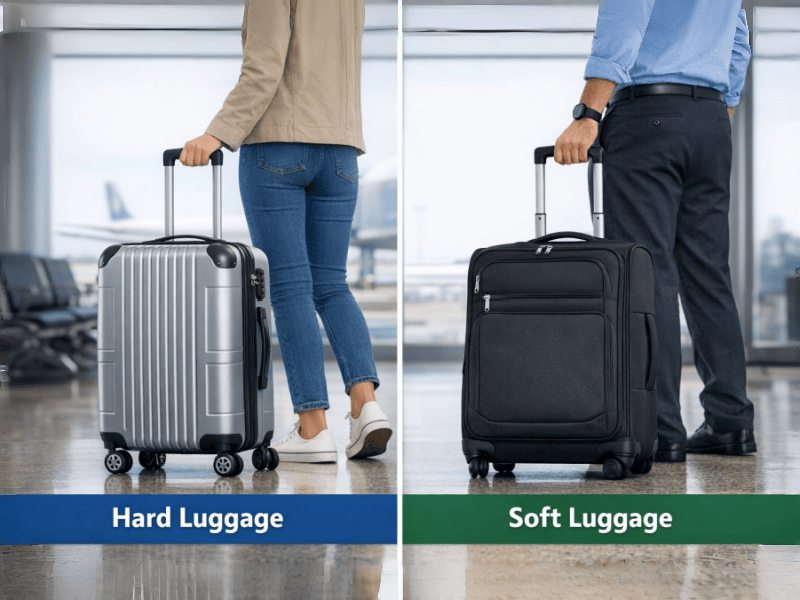
Many start with the wrong question. They ask whether airlines prefer hard luggage or soft luggage, as if airlines have a quiet bias toward one shell type and punish the other. That is not how the baggage system is built. Airlines are not product stylists. They are operators. They care about what keeps check-in moving, what fits in a cabin, what works with baggage systems, what stays within weight limits, and what does not slow down boarding or baggage handling. That is why the real issue is not shell preference. The real issue is operational compliance plus travel performance. A well-made soft-sided carry-on can be more airline-friendly than a badly sized hard-shell case. A well-built hard-shell checked bag can be more suitable than a loose, overstuffed soft bag. In other words, airlines usually care less about hard vs soft as a category and more about whether the bag behaves like standard luggage in a real airline environment.
That distinction matters a lot for brands, importers, wholesalers, and private label . If you are developing a luggage line, you are not just deciding between two looks. You are deciding how the product will perform in real travel use, how it will be positioned in the market, how much it will cost to build correctly, and how likely it is to create complaints after launch. A carry-on that misses common sizer limits by half an inch after wheels are added is a problem. A soft case with too many exterior pockets that bulges beyond cabin limits is a problem. A hard case with a weak shell material that photographs beautifully but cracks too easily is also a problem. The strongest collections are designed around real travel conditions, published airline limits, traveler behavior, and commercial positioning rather than assumptions.
Featured snippet answer: Airlines usually do not officially prefer hard or soft luggage. Major carriers such as Delta, American, and United publish baggage rules mainly around size, weight, and fit, not shell type. In practice, soft luggage often works well for carry-on convenience and frequent-access travel, while hard luggage often works well for structure, neat presentation, and better confidence for fragile contents. The best choice depends on the travel scenario, target user, and product goal, not on any universal airline preference.
From a B2B view, that is good news. It means there is no single “approved” luggage formula that every brand must copy. There is room to build different product lines for different users. Hard-side products can support premium shelf appeal, giftability, stronger visual identity, and shape retention. Soft-side products can support business travel, flexible packing, quick access, and practical daily use. The winning question is not “Which one do airlines prefer?” It is “Which one fits the trip, the , the price point, and the market channel better?” That question leads to better design briefs, better samples, and fewer product mistakes.
It also explains why product development matters so much in luggage. The shell type alone does not determine whether a bag succeeds. Materials, wheel systems, trolley structure, zipper quality, weight control, size control, internal layout, and packaging logic all matter. That is where a factory becomes more than a producer. The right supplier helps turn airline-use reality into product decisions. Jundong’s own factory profile positions it around custom development, fast sampling, low MOQ testing, mixed-order support, structured communication, and quality control, which are all useful when need to move from concept to sample to production with less risk.
What Do Airlines Actually Care About: Hard Shell, Soft Shell, or Baggage Size and Weight?
Airlines usually care more about dimensions, weight, cabin fit, and baggage-system compatibility than about whether luggage is hard-shell or soft-shell. Delta, American, and United all frame their standard carry-on rules around dimensions, while Delta and American also frame checked-bag rules around size and weight thresholds.
If you read airline baggage pages closely, the pattern is obvious. Delta states that carry-on baggage may not exceed 22 x 14 x 9 inches, including handles and wheels. American uses the same 22 x 14 x 9 inch standard for standard carry-on bags and says the bag must fit the airport sizer, again including handles and wheels. United publishes the same standard maximum size for most standard carry-ons and says the bag must fit in the overhead bin. For checked baggage, Delta states a common maximum of 62 linear inches and American highlights 50 pounds / 23 kg as the common checked-bag weight threshold for many standard tickets and routes, with oversize and overweight fees beyond that baseline. That language is all about fit, size, and handling practicality. None of these core rules says airlines prefer hard shells over soft shells.
Table 1. What Major Airlines Publicly Focus On
| Airline | Standard Carry-On Rule | What the Rule Emphasizes | Common Checked-Bag Baseline |
|---|---|---|---|
| Delta | 22 x 14 x 9 in | Fit in cabin, handles and wheels included | 62 linear inches max |
| American | 22 x 14 x 9 in | Fit in sizer, handles and wheels included | 50 lb / 23 kg and 62 in / 158 cm are key thresholds |
| United | 22 x 14 x 9 in | Must fit overhead bin, handles and wheels included | Standard checked policies focus on size and weight |
Why this table matters: It shows that airlines frame the issue as measurement and fit, not shell preference.
There are practical reasons for this. Airlines need baggage decisions that can be applied quickly at scale. Check-in agents cannot stop to debate whether a polycarbonate shell is preferable to nylon. Gate staff need to see if the bag fits. Baggage systems need luggage that moves through belts, scanners, carts, and storage areas without creating handling problems. That is why airlines care more about whether a bag is a standard, manageable piece of baggage than about how its outer shell is built. A sloppy, overstuffed soft bag can be a problem. A rigid but oversized hard shell can also be a problem.
This is also why airlines rarely publish an official preference. A blanket policy would not make much sense. Different aircraft, routes, traveler types, and use cases create different needs. A soft-sided carry-on may work better for a short business trip where the traveler needs quick access to devices and documents. A hard-sided case may work better for checked baggage when the traveler wants more shape retention and more confidence around fragile contents. One airline page even separately addresses soft-sided garment bags, which shows that airlines think in terms of baggage functions, not just two shell categories. American says a soft-sided garment bag can be up to 51 inches in total dimensions.
For B2B , the lesson is straightforward. If you are writing a product brief or planning a new collection, start with airline-use conditions, not with style assumptions. Ask what kind of trip the bag is built for, whether it is mainly checked or carried on, how much access the traveler needs during the trip, what weight target makes sense, and what cabin or baggage constraints the product must respect. Once you answer those questions, hard shell or soft shell becomes part of the solution instead of the starting point.
A second lesson is that dimension control is a design discipline. Many luggage problems are not caused by dramatic technical failures. They start earlier, when the shell, wheels, handle set, corner guards, or expansion panel quietly push the finished bag beyond the intended use range. That is why it helps to work with a development-oriented supplier that can review finished dimensions and weight at the sample stage instead of only quoting from a sketch.
Hard vs Soft Luggage: Which Type Performs Better for Airline Travel?

Neither type wins every travel job. Hard luggage usually performs better when shape retention, cleaner presentation, and confidence around fragile contents matter more. Soft luggage usually performs better when flexibility, organization, outside access, and practical carry-on use matter more. Material grade and build quality matter as much as shell category.
The hard-versus-soft debate gets unhelpful when it becomes too broad. “Which is better?” is not a good product question. Better for what? A bag goes through curbs, check-in counters, security lines, overhead bins, baggage carts, hotel floors, taxis, and storage areas. Good luggage is not just about surviving one drop. It is about how the whole system feels over repeated trips.
Hard luggage often wins on structure. That is one reason it is popular in premium-looking collections and gift-oriented lines. A rigid shell keeps a defined shape. It can support cleaner visual presentation. It can make packing feel more organized for travelers carrying presentation-sensitive clothing, fragile souvenirs, gifts, samples, or cosmetics. It also creates a strong shelf and photo presence. For brands selling through visually driven channels, that matters.
Soft luggage often wins on workflow. Frequent travelers often care less about how the bag looks standing still and more about how it behaves in motion. Outside pockets, quick-access panels, easier organization, and slightly more forgiving packing can make a big difference in real trips. Travelpro notes that soft-side luggage is often chosen for convenience and access, while Briggs & Riley emphasizes soft-side flexibility, organization, and packing utility.
Table 2. Hard Luggage vs Soft Luggage for Airline Use
| Performance Area | Hard Luggage | Soft Luggage | Usually Better For |
|---|---|---|---|
| Shape retention | Strong | Moderate | Fragile-item users, premium retail |
| Packing flexibility | Lower | Higher | Short trips, irregular packing |
| Exterior access | Usually limited | Usually better | Business travelers, frequent flyers |
| Visual presentation | Cleaner, more modern | More functional, more casual | Lifestyle vs utility positioning |
| Surface behavior | Can scratch visibly | Can wear through fabric aging | Depends on customer expectations |
| Wipe-clean ease | Usually better | Usually lower | Premium, spill-prone, family use |
| Cabin practicality | Good when compact | Often stronger in daily use | Frequent travelers |
Why this table matters: It helps compare the two categories by actual travel tasks, not marketing language.
A common sourcing mistake is assuming hard luggage is automatically stronger. That is not always true. Travelpro’s shell guide says polycarbonate is sturdier than polypropylene, and Samsonite’s luggage guide says polycarbonate is typically the strongest and most impact-resistant, while ABS follows and polypropylene is lighter and more cost-effective. That means hard-side performance depends heavily on which hard-side material is used and how it is engineered. A cheap hard shell is not the same as a well-built hard shell.
Soft luggage also gets oversimplified. People sometimes talk about it as if all soft-sided luggage is light and weak. That is not accurate either. A well-built soft case with stronger fabric, better reinforcement, and a good wheel-and-handle system can outperform a poorly built hard case in real customer satisfaction. That is especially true when the traveler values quick access, fast packing, and practical organization more than rigid form.
For brands, the better comparison is not hard vs soft in theory. It is hard-side SKU A with material X, wheel system Y, price target Z versus soft-side SKU B with fabric X, reinforcement Y, and price target Z. Once the comparison becomes specific, product decisions get much better.
This is also why sample review is so important. A drawing cannot tell you whether a handle feels too loose, whether the wheel housing looks too weak, whether a front pocket adds too much bulk, or whether the shell shows marks too fast. A physical sample does. who want fewer mistakes should insist on samples that reflect real production intent, not just visual approval pieces.
Why Do Some Airlines and Travelers Prefer Soft Luggage for Carry-On?
Soft luggage is often preferred for carry-on use because it supports quick access, practical organization, and slightly more forgiving real-world cabin use, while still needing to stay within airline size limits. Airlines do not usually publish a formal soft-side preference, but many frequent travelers and business travelers prefer it for convenience.
Soft-sided carry-ons remain strong for one simple reason: they match the rhythm of short and frequent travel. A carry-on is not just a box that fits in a bin. It is something the traveler interacts with constantly. They open it at security. They reach into it at the gate. They may need a laptop, charger, passport wallet, medication, or travel documents in seconds. In that kind of trip, outside pockets and fast-access layouts matter a lot.
There is also a cabin behavior advantage. A compliant soft carry-on can be a little more forgiving in real usage. That does not mean travelers can ignore the rule. Overstuffed soft luggage can easily become non-compliant. But within the rule, a soft-sided bag often feels easier to live with. It may settle into tight spaces better. It may be easier to place in a crowded overhead area. It may feel less rigid in the messy parts of real travel.
Frequent flyers and flight crews often prefer practical, function-first soft-sided luggage for exactly that reason. They are not buying luggage for showroom effect. They are buying a tool that reduces friction. They may be less interested in a polished molded shell and more interested in fast access, organization, reliable movement, and a structure that works for repeat trips.
That has direct product-development implications. A good soft carry-on should not try to win by piling on features. Too many exterior pockets add weight. Too much expansion invites overpacking. Too many internal layers can make the bag feel smaller than it should. Good soft-side carry-on design is about useful restraint.
For B2B , this category is ideal for targeted development. You can build around a specific use case: short business travel, crew-style functional carry-on, underseat-compatible travel companion, or flexible overnight roller. The more clearly the use case is defined, the easier it becomes to make good decisions about structure, pockets, reinforcement, and size.
This is where Jundong’s development model is especially relevant. Soft-sided travel products often need more refinement at the sample stage because layout, bulking behavior, and access details make such a big difference in user experience. A supplier that supports quick samples, product iteration, and structured communication can reduce the risk of launching a carry-on that looks fine on paper but feels wrong in actual use. Jundong Factory Introduction
Why Is Hard Luggage Often Chosen for Fragile or Premium Travel Use?
Hard luggage is often chosen for fragile or premium travel use because it offers better shape retention, cleaner visual presentation, easier-clean surfaces, and stronger perceived protection. Better-grade shells such as polycarbonate can also improve impact behavior compared with more basic hard-side materials.
Hard luggage has become the visual shorthand for modern travel in many markets. It stacks neatly. It photographs well. It feels more engineered and more finished. That visual signal has commercial value. For brands that need a hero SKU, a visually strong retail line, or a giftable collection, hard-shell products are often easier to position.
But the appeal is not only visual. Hard luggage gives the user a more defined packing space. That helps travelers who carry fragile items, gifts, beauty products, presentation materials, electronics, or anything that benefits from more structure. Even when internal packing technique still matters, the rigid shell gives the traveler more confidence.
Table 3. When Hard Luggage Usually Makes More Sense
| Travel or Product Goal | Why Hard Luggage Fits Better |
|---|---|
| Fragile contents | More defined shell boundary and shape retention |
| Premium visual positioning | Cleaner silhouette and stronger shelf appeal |
| Gift and lifestyle retail | Higher perceived value in many markets |
| Neat, structured packing | Better for travelers who want order and symmetry |
| Wipe-clean use cases | Easier surface cleaning in many situations |
Why this table matters: It helps see hard luggage as a role-based product choice, not just a style preference.
Material choice becomes critical here. Samsonite says polycarbonate is typically the strongest and most impact-resistant among common hard-side plastics, while Travelpro also places polycarbonate above polypropylene for sturdiness. That is useful because many B2B talk about “hard shell” as if it is one material. It is not. Material choice changes how a hard case flexes, marks, and ages.
This matters even more in premium lines. Hard-shell products are less forgiving of weak engineering because structure is their whole identity. If the shell feels too thin, if the trolley is unstable, or if the wheel base feels weak, the product loses credibility fast. That is why hard-side development should always include more than visual review. should check loaded feel, shell behavior under pressure, wheel-base stability, scratch visibility, and closure performance before approving production.
For brands, hard-side luggage works especially well as the hero, gift, premium, or protective part of an assortment. It does not have to carry the entire line. It can do one job very well. Then the rest of the range can be built around softer, more practical, or more access-oriented products.
Which Luggage Materials Matter Most: Polycarbonate, ABS, Polypropylene, Nylon, or Polyester?

For hard luggage, the most discussed materials are polycarbonate, ABS, and polypropylene. For soft luggage, the most common material families are nylon and polyester. The right material depends on target price, weight goals, appearance, expected abuse level, and market positioning.
Material selection is one of the most misunderstood parts of luggage buying. Customers often focus on color, shell type, or whether the bag rolls smoothly in a video. know better. Materials shape the product’s real cost, performance, feel, and complaint risk.
For hard-side luggage, three material names dominate most sourcing conversations. Polycarbonate is often used when brands want stronger impact resistance and a more premium performance story. ABS is common in more price-sensitive hard-shell lines. Polypropylene often appeals when weight and cost need to be controlled. Soft-side luggage is usually built around nylon or polyester, but that still leaves a lot unsaid because soft-side performance also depends on coating, weave, panel structure, reinforcement, and sewing execution.
Table 4. Key Luggage Materials and What Should Know
| Material | Typical Category | Main Strength | Main Trade-Off | Best Fit for |
|---|---|---|---|---|
| Polycarbonate (PC) | Hard-side | Strong impact resistance, premium feel | Usually higher cost | Mid-to-premium hard-shell lines |
| ABS | Hard-side | Cost-friendly and common | Lower impact performance than PC in many cases | Entry and value hard-side lines |
| Polypropylene (PP) | Hard-side | Lighter and cost-effective | Often less sturdy than PC | Weight-sensitive, value-focused hard-side lines |
| Nylon | Soft-side | Durable, flexible, function-friendly | Cost depends on grade and build | Business and frequent-travel soft lines |
| Polyester | Soft-side | Widely used and scalable | Performance depends heavily on construction | Broad-market soft luggage |
Why this table matters: It separates shell type from material logic, which is critical for real sourcing decisions.
Travelpro explicitly says polypropylene is lighter while polycarbonate is sturdier. Samsonite says polycarbonate is typically the strongest and most impact-resistant, ABS comes next, and polypropylene is lighter and more cost-effective. Those distinctions are commercially important because they affect both performance and complaint risk. A premium-looking hard-shell line built on the wrong shell logic can disappoint quickly.
For soft-side products, should avoid lazy questions like “Is nylon better than polyester?” That is often too simple to help. A better question is whether the finished bag behaves correctly at the intended price point. Fabric name alone does not decide that. A good supplier should help the think about the full system: fabric, backing, reinforcement, zipper path, support panels, wheel integration, and weight target.
This is also where hybrid thinking can help. Some travel products live between classic soft luggage and structured protective cases. Jundong’s broader capabilities include EVA-based cases, structured carrying solutions, and multiple material systems, which gives more room to develop travel products that do not fit neatly into a single soft-or-hard stereotype. Jundong Factory Introduction
How Long Does Luggage Last Under Airline Handling?
Luggage lifespan depends on travel frequency, handling intensity, material grade, wheel quality, trolley stability, zipper quality, and user behavior. The parts that most often fail first are usually wheels, handles, corners, shell edges, and zippers, not just the shell body itself.
A suitcase does not age in a lab. It ages through repeated trips, uneven surfaces, baggage carts, stacking pressure, security lines, hotel floors, and user habits. That is why one customer may say the bag lasted years and another may complain after a much shorter period. The bag is part of a usage system, not just an object.
Still, complaint patterns are predictable. Wheel systems are one of the most common frustration points because users feel wheel issues immediately. Handle systems are another. A loose telescopic handle can make a bag feel cheap even when nothing is broken. Zippers matter too, especially on soft-side or zippered hard-side luggage. Corners and edges take repeated impact. Surfaces age differently depending on the material.
Table 5. Where Luggage Problems Usually Start
| Component Area | Why It Fails Early | What Should Review During Sampling |
|---|---|---|
| Wheels | Repeated rolling stress, rough surfaces, impact | Roll feel, mount strength, wear behavior |
| Trolley handle | Extension cycles, twisting force, heavy pulls | Wobble, lock feel, extension stability |
| Zipper system | High tension and repeated opening | Teeth quality, puller feel, path smoothness |
| Corners / shell edges / fabric edges | Impact, abrasion, dragging | Reinforcement, wear pattern, structure |
| Body stability | Overpacking and compression | Shape retention and loaded behavior |
Why this table matters: It shifts the conversation from vague “durability” claims to the actual failure zones customers notice first.
There is also an emotional side to durability. Many returns are not caused by catastrophic failure. They are caused by premature disappointment. The bag still works, but the wheels feel rough, the shell shows too many marks, the front panel looks tired, or the trolley no longer feels solid. That is why brands should define durability in layers: mobility, closure, body structure, load bearing, and visual aging.
For B2B , this means the right factory discussion is not just “What material do you use?” It is also “Which parts of this design are most likely to create complaints, and how are they controlled?” That kind of conversation usually separates a supplier that understands travel goods from one that only knows how to quote them.
Jundong’s positioning around in-house QC, controlled production, sample-to-mass consistency, and export-oriented packaging is useful here because durability problems often come from small, repeated production inconsistencies rather than one dramatic design flaw. Jundong Factory Introduction
Who Should Buy Hard Luggage, and Who Should Buy Soft Luggage?

Soft luggage often fits frequent flyers, business travelers, and users who value quick access and practical carry-on behavior. Hard luggage often fits travelers who want cleaner structure, more premium presentation, or better confidence when packing fragile or shape-sensitive contents.
Not every traveler buys luggage for the same reason. That sounds basic, but many collections still behave as if they do. One of the fastest ways to improve assortment planning is to stop asking what the best suitcase is in general and start asking who the suitcase is for.
Frequent flyers and crew-style travelers often care about function first. They need organization, fast access, reliable mobility, and a bag that feels efficient in repeated short trips. That logic often points toward soft-side luggage. Gift , style-led shoppers, and premium retail users often respond more strongly to hard-side products because the value is easier to see immediately.
Family travel can go either way. Some family like hard side because it looks neat and wipes clean more easily. Others prefer soft side because it accepts last-minute extras and awkward soft goods more gracefully. Budget can also split across both categories depending on whether their decision is led by visual upgrade or practical value.
For brands, this means the shell decision should follow customer segmentation, not personal taste. Choose the user first. Choose the shell second. That reduces the chance of building a product that looks attractive but solves the wrong travel problem.
This is also where Jundong’s broad B2B positioning becomes relevant. The company presents itself as a supplier serving retailers, wholesalers, growing brands, OEM/ODM clients, and custom across multiple product types. That kind of exposure is useful when is not only choosing a product structure but also deciding which customer group the product is meant to win. Jundong Factory Introduction
When Should a Brand Develop Hard-Side Collections vs Soft-Side Collections?
A brand should develop hard-side luggage when it needs stronger visual identity, more premium shelf appeal, or better shape-retention positioning. It should develop soft-side luggage when it needs carry-on practicality, access-driven features, or function-led travel positioning. Many brands eventually benefit from both.
This is where consumer logic turns into portfolio strategy. A new luggage brand does not always need to launch with everything. The better question is which type best supports the brand’s first commercial objective.
If the goal is to create a strong visual hero product, giftable travel line, or premium-feeling first impression, hard-side collections often make sense. If the goal is to serve frequent travelers, business users, or utility-driven channels, soft-side collections often make more sense. Some brands start with one and add the other later once the first promise is proven.
Mixed development can work especially well when the supplier supports lower-risk testing. Jundong’s positioning around low MOQ, fast sampling, mixed orders, and multi-SKU development makes that kind of phased assortment strategy more realistic for growing . Instead of betting everything on one shell family, a brand can test and learn. Jundong Factory Introduction
A simple rollout strategy often works best:
- launch a hero category that matches the brand identity
- collect feedback on real user complaints and preferences
- add the complementary shell family later
That is usually stronger than launching both categories too broadly without clear product roles.
How Does the Custom Luggage Manufacturing Process Work?
Custom luggage development usually moves through briefing, material and structure review, sample development, revision, cost alignment, bulk planning, QC, and packing. The stronger the sample stage, the lower the risk in production. Jundong Factory Introduction
Many know what they want to sell but do not yet have a strong process for getting there. That is where development errors begin. Good luggage projects do not start with price. They start with a clear product brief: user type, trip type, shell direction, target size, intended retail price, brand style, and expected performance.
After that comes material and structure review. This is where the supplier should help convert the brief into something that can be built correctly. Then comes sampling, which is where the sees what the product really feels like. Is it too heavy? Too bulky? Too stiff? Too loose? Does the front panel make sense? Does the wheel system feel good enough for the price point?
The sample stage should not be rushed. It is almost always cheaper to fix those issues before production than after. A good supplier helps see not just whether the product can be made, but whether it should be made that way.
Jundong’s profile highlights fast sample development, production support, quality control, packaging, and structured communication, which are exactly the capabilities many OEM, ODM, and private label need when developing a new travel product with limited room for error. Jundong Factory Introduction Jundong Factory Introduction
If your team is planning a new luggage or travel-bag project and wants a supplier discussion grounded in use case, sample logic, cost structure, and production consistency, that is the right moment to open a conversation with Jundong at info@jundongfactory.com.
What Affects Luggage Price: Hard vs Soft, Material, Size, and Custom Options?
Luggage price is affected by shell or fabric material, wheel quality, trolley system, size, lock type, zipper grade, branding method, packaging, testing expectations, and order volume. Hard luggage is not always more expensive, but shell material and build path can raise costs quickly.
Price conversations often go wrong because compare two quotes that are not built on the same logic. A suitcase is a component-heavy product. Shell or fabric is only one part of the equation. Wheels, trolley tubes, locks, linings, zipper paths, reinforcement, packaging, and branding details all shape the final price.
Table 6. Main Luggage Cost Drivers
| Cost Driver | Why It Matters | How Strongly It Can Affect Price |
|---|---|---|
| Shell / fabric material | Sets performance and positioning baseline | High |
| Wheel system | Strong effect on durability and perceived value | High |
| Trolley system | Changes handling quality and complaint risk | High |
| Bag size | Changes material use and shipping logic | Medium to High |
| Zipper / lock / closure | Affects reliability and security feel | Medium |
| Branding details | Pullers, badges, linings, custom hardware | Medium |
| Packaging | Affects export safety and retail readiness | Medium |
| MOQ / order volume | Changes unit economics | High |
Why this table matters: It helps see why luggage pricing should be discussed as a system, not just as a shell category.
The smarter way to manage price is not to cut everything. It is to decide where the product must win. Better wheels may matter more than a fancier lining. Better shell material may matter more than decorative trim. Simpler packaging may make sense if the product itself needs more investment. Good do not just ask for the lowest price. They ask which changes affect the product most and which changes are safer to simplify.
Jundong’s emphasis on low MOQ, flexible development, and structured quoting support is useful in this stage because many need to test a commercial idea before moving into larger, more cost-efficient production.
What Should Ask a Luggage Manufacturer or Factory Before Ordering?
Before placing an order, should ask about MOQ, sample timing, final dimensions, weight control, material options, QC process, packaging, and experience with similar luggage or travel projects.
A surprising number of luggage problems begin not in the factory but in weak questioning. ask for price first and leave out the issues that actually decide whether the project will work. A stronger supplier discussion starts with product fit. Can the factory make this kind of product for this kind of customer at this kind of price point?
should also confirm whether the supplier can help manage the details that most affect results: size control, weight control, sample revisions, mixed orders, export packaging, and production consistency. Those are often more important than a small difference in quote.
Table 7. Checklist Before Ordering Custom Luggage
| Question to Ask | Why It Matters |
|---|---|
| Can you make both hard-side and soft-side products? | Confirms real category capability |
| What is your MOQ for this structure? | Defines launch risk |
| How long does sample development take? | Shapes timing and decision flow |
| How do you control final dimensions and weight? | Critical for airline-use products |
| What QC points do you inspect? | Reduces bulk-order surprises |
| Can you support revisions after first sample? | Improves final usability |
| How do you pack for export? | Helps prevent transit damage |
| Can you support future SKU expansion? | Useful for scaling after launch |
Why this table matters: It turns the supplier conversation into a decision tool, not just a quoting exercise.
Jundong’s factory introduction covers several of these concerns directly, including rapid development, low MOQ, quality inspection, mixed-order support, and customer communication, which is the kind of operational profile many overseas B2B look for in a long-term manufacturing partner.
What Is the Best Choice for Airline Travel: Hard or Soft Luggage?

The best choice depends on the travel job. Soft luggage is often better for frequent carry-on use, quick access, and practical business travel. Hard luggage is often better for shape retention, premium presentation, and fragile-content confidence. Airlines themselves usually care more about size, weight, and fit than about shell type.
That is the cleanest answer to the headline question. Airlines do not usually prefer hard or soft as a category. They prefer bags that fit the system. Travelers prefer bags that fit the trip. Brands should build products that fit both realities.
For B2B , the real lesson is not about choosing one permanent winner. It is about choosing the right product role. A smart collection often uses hard side where visual structure and protection matter most, soft side where access and practicality matter most, and hybrid thinking where the category demands it. Once the assortment is framed that way, the hard-versus-soft debate becomes productive instead of confusing.
If your team is planning a custom luggage, travel bag, or protective carry project, and you want support with OEM, ODM, private label development, fast sampling, low MOQ testing, and quality-focused execution, you can contact Jundong at info@jundongfactory.com
FAQ 1. Is hard luggage safer than soft luggage for airline travel?
Hard luggage is not automatically safer in every airline scenario. It is often better for shape retention, cleaner packing structure, and stronger confidence when carrying fragile or presentation-sensitive items, while soft luggage is often better for flexibility, quick-access use, and frequent carry-on travel. Airlines themselves usually focus more on dimensions, fit, and weight than on shell category.
When ask whether hard luggage is “safer,” they are usually mixing together several different ideas. They may mean safer for breakable contents, safer from rough baggage handling, safer from getting rejected at the airport, or safer in terms of long-term durability. Those are not the same question. A hard-shell suitcase can feel safer because it offers a more defined outer boundary and keeps the packed shape more stable. That is especially useful when the traveler is carrying gifts, cosmetics, structured garments, samples, souvenirs, or electronics packed with dividers. In those situations, the case can feel more controlled and more reassuring.
But that does not mean hard luggage always performs better. A weak hard shell can crack, mark, or disappoint faster than expected if the material grade is too low or the structure is poorly engineered. Travelpro’s material guidance and Samsonite’s category guidance both make clear that not all hard-side materials perform the same way, and that polycarbonate generally performs better in impact resistance than cheaper alternatives such as ABS in many product tiers. So if sees “hard shell” and assumes “premium and durable,” that can be misleading unless the material and structure are confirmed.
Soft luggage, on the other hand, can be safer in a different way. It can be safer for daily travel convenience, airport rhythm, and real-world adaptability. A frequent flyer who needs fast laptop access, passport access, and easier packing may actually experience fewer travel frustrations with a well-built soft-sided case. That is a real form of user safety too, especially for business travelers and repeat travelers who care more about how the bag behaves on every trip than how rigid it looks when new.
For B2B , the smarter question is not “Which is safer?” but “Safer for what kind of traveler, what kind of packed contents, and what kind of trip?” If you are building a premium giftable luggage line, hard-side may be the safer commercial choice because customers expect structure and a polished look. If you are building a frequent-travel carry-on line, soft-side may be the safer product decision because the market values practicality, lighter handling, and organization more.
A useful way to think about this is below:
| Travel Need | Often Safer Choice | Why |
|---|---|---|
| Fragile contents | Hard luggage | Better shape retention and shell boundary |
| Frequent cabin use | Soft luggage | Faster access and more practical daily use |
| Premium gifting | Hard luggage | Stronger visual structure and perceived value |
| Business travel workflow | Soft luggage | Easier access to essentials and tech |
The best answer for is simple: hard luggage is often safer for structure, while soft luggage is often safer for convenience and workflow. The right choice depends on the user, the use case, and the expected complaint risk. If you are building a custom line and want to avoid choosing based on guesswork, this is the stage where sample development matters most. Jundong’s development model, including custom sampling, low-MOQ testing, and OEM/ODM project support, is useful for who want to validate real performance before going into bulk production. Jundong Factory Introduction
FAQ 2. Which type of luggage is better for checked baggage on airlines: hard or soft?
For many travelers, hard luggage is often the stronger choice for checked baggage because it offers better shape retention and stronger confidence when handling fragile or structured contents. But soft luggage can still perform very well as checked baggage when the traveler values lighter handling, flexibility, and practical packing behavior. Airlines still care first about size and weight compliance, not shell type.
Checked baggage is where the hard-versus-soft question becomes more serious, because once a bag leaves the traveler’s hands, it goes through more aggressive handling conditions. It may move through conveyor systems, baggage carts, manual lifting, stacking, and unloading. So it is understandable that many travelers and instinctively feel more confident with hard-shell luggage for checked use.
That confidence is not irrational. A good hard-shell suitcase does provide a more rigid structure. It keeps the outer shape more stable and can help protect items that should not be compressed too much. This is one reason hard luggage is often chosen for long-haul travel, international trips, gifts, show samples, or more presentation-sensitive packing. It also tends to look neater after packing, which matters to users who care about order and visual control.
That said, hard luggage is not automatically the best checked-bag solution in every case. Soft-sided checked luggage still has real advantages. A well-designed soft case may offer better packing forgiveness, more usable external compartments, and easier flexibility for travelers who are not carrying fragile contents. Some travelers prefer it because it feels less rigid, easier to load in everyday life, and often more forgiving when packing awkward soft goods like jackets, shoes, travel layers, or family-related items.
There is also a complaint-risk angle. Hard luggage can create surface disappointment. Even when it performs structurally, it may show scuffs, marks, and handling wear faster. Briggs & Riley notes that polycarbonate shells naturally collect scratches and scuffs over time. Those marks may be cosmetic rather than structural, but for some users that still feels like poor value. Soft luggage ages differently. It may resist visible surface scratching better, but it can show fabric wear, edge abrasion, dirt pickup, or shape fatigue.
So the better answer is role-based:
- Choose hard checked luggage when the user values structure, visual order, shell-defined packing, and more confidence for fragile or shape-sensitive items.
- Choose soft checked luggage when the user values packing flexibility, easier daily handling, and function over rigid presentation.
For brands and , the bigger mistake is to treat “checked bag” as one simple category. In reality, there are at least three very different checked-luggage use cases:
- Premium personal travel
- Family or mixed-content travel
- Commercial or presentation-sensitive travel
Each one may require a different product approach.
If your customer profile is gift-oriented, design-led, or premium retail, hard-shell checked luggage often aligns better with what the customer expects to see and feel. If your customer profile is practical, repeat-travel, or function-led, soft-side checked luggage may offer stronger real-life satisfaction.
A good should also remember that the parts most likely to fail in checked baggage are often wheels, handles, zipper systems, corners, and edge structures, not just the shell body. That is why sample review and component selection matter just as much as shell choice. Jundong’s approach to product development, QC, and structured custom projects is relevant here because checked baggage products need more than a good outer idea. They need stable execution.
FAQ 3. Which luggage type fits airline carry-on rules better, hard or soft?
Neither hard luggage nor soft luggage automatically fits airline carry-on rules better. Airlines usually judge carry-ons by outer dimensions, fit in the sizer or overhead bin, and whether handles and wheels are included in the measurement. In real use, soft luggage may feel more forgiving, but hard luggage can also fit perfectly well when properly designed.
This is one of the most misunderstood questions in travel products. Many consumers assume soft luggage fits carry-on rules better because it can flex. Many others assume hard luggage fits better because its shape is more controlled. Both ideas contain part of the truth, but neither one is complete.
Airlines do not usually say “soft bags fit better” or “hard bags fit better.” They publish measurements. Delta, American, and United all frame standard carry-on rules around 22 x 14 x 9 inches, including handles and wheels. That means the real issue is not shell category. It is finished external size.
A soft carry-on can feel more forgiving because its edges may compress slightly and its shape may be easier to manage in crowded cabin situations. That is one reason many business travelers and repeat flyers like soft-sided carry-ons. They often find them easier to use in fast boarding situations, especially when quick-access organization matters. But that flexibility can also become a weakness if the bag is overpacked. A soft case that bulges too much may actually become more likely to fail a sizer check.
Hard luggage has the opposite pattern. It is more predictable in shape. If it is designed correctly, it can fit carry-on rules very cleanly. But if the outer shell is already close to the size limit, and then handles, wheels, bumpers, or other details push it outward, the bag can become non-compliant with no flexibility to save it. That is why hard carry-on development requires very careful dimension control.
For B2B , this is one of the most important lessons in the whole category: carry-on success depends on engineering discipline, not shell label. A good carry-on should be designed from the outside in. Start with the airline-compatible finished dimensions. Then calculate wheel height, top handle height, side handle allowance, shell or fabric body, and usable internal volume. Many poor carry-on products are developed in the opposite direction. They start with the desired visual shape or interior capacity, and only later try to squeeze into airline standards.
A simple way to compare is this:
| Carry-On Situation | Hard Luggage Advantage | Soft Luggage Advantage |
|---|---|---|
| Strict size compliance | More stable fixed shape | Can be risky if overpacked |
| Crowded boarding conditions | Clean silhouette | More forgiving in real handling |
| Quick access in transit | Usually weaker | Usually stronger |
| Overpacking risk | No flexibility if too large | Can feel manageable, but may bulge |
The most -friendly answer is this: soft luggage may feel easier in daily carry-on use, but hard luggage can fit airline rules equally well when designed correctly. The better fit comes from product discipline, not category preference.
That is why good factories add value early. They should help confirm true external dimensions after wheels, handles, and structure are finalized. Jundong’s development and sample support are useful here because carry-on products are one of the categories where small dimension mistakes can create big market problems.
FAQ 4. Why do frequent flyers and airline crews often choose soft luggage?
Frequent flyers and airline crews often choose soft luggage because it usually offers faster access, better organization, more practical daily use, and a less rigid travel workflow. In repeat-travel environments, those features can matter more than a hard shell’s cleaner appearance.
This is one of the clearest signals in the luggage market. People who travel a lot often buy differently from people who shop visually. A first-time or occasional traveler may choose luggage based on appearance, giftability, or the feeling of “stronger protection.” A frequent flyer often chooses based on speed, rhythm, convenience, and friction reduction.
That is where soft luggage has a real advantage. A good soft-sided bag usually gives the user quicker access to the things that matter in motion: passport, chargers, laptop, documents, toiletries, pens, boarding items, even a light jacket. That sounds small until you imagine doing it every week. Once someone travels often enough, they stop asking “Which suitcase looks more premium?” and start asking “Which suitcase makes the trip easier?”
Flight crews and frequent travelers also care about the way a bag behaves in real spaces. They may need to get through crowded terminals, crew areas, fast boarding situations, narrow storage areas, and hotel transitions without constantly reopening the main compartment. Soft-sided luggage, especially in carry-on or overnight travel formats, usually supports this better because the layout is built around function.
There is also a user psychology factor. Frequent travelers tend to trust products that feel efficient rather than dramatic. They are less likely to be impressed by novelty and more likely to notice when a bag wastes time. A rigid hard-shell case may still work very well for them, but many of them find soft luggage more useful because it behaves like a work tool instead of a display object.
For B2B , this is a big clue about segmentation. If your target market includes:
- business travelers
- consultants
- sales teams
- road-warrior users
- travel staff
- repeat short-trip users
then soft-side luggage is often worth taking very seriously. That does not mean it has to look boring. It means the value story should be built around efficiency, organization, and real travel behavior, not only around visual impact.
A strong soft-sided carry-on or travel bag for this segment should be judged on things like:
- front-access usefulness
- laptop and document logic
- wheel smoothness
- handle stability
- clean but not bulky organization
- shape control without over-rigidity
This is exactly the kind of product that benefits from multiple sample revisions. Because what makes it succeed is not one big feature. It is a set of small, well-judged decisions. Jundong’s ability to support custom bags, structured development, and repeated sample refinement is a strong fit for this type of category.
FAQ 5. What should a luggage brand consider before launching a hard-side or soft-side collection?
Before launching a hard-side or soft-side collection, a luggage brand should define target user, price band, sales channel, main trip type, likely complaint risk, and product role inside the full assortment. The shell category should follow the business strategy, not the other way around.
A lot of brands make the same early mistake. They fall in love with a luggage type before they understand the customer. They say, “We want to launch hard-shell luggage because it looks premium,” or “We want to launch soft luggage because it feels more practical.” Those statements are not wrong, but they are incomplete. A collection should never be built from shell type alone.
A smarter brand starts with six questions:
- Who is the target customer?
- What kind of trip is the product built for?
- Which sales channel will sell it?
- What price band must it live in?
- What type of complaints would hurt the brand most?
- What role does this SKU play in the product line?
Once those answers are clear, the shell decision becomes much easier.
For example, a DTC brand selling mostly through polished lifestyle visuals may find hard-side luggage easier to launch first because it offers a cleaner silhouette and stronger shelf appeal. A brand aimed at frequent travelers, work travel, and repeat-use users may find soft-side luggage more believable and more commercially aligned because the value story is based on function rather than visual drama.
This is why many successful brands eventually build both. Hard-side often works well for hero products, giftable items, and premium-looking launches. Soft-side often works well for practical travel, repeat use, and high-function carry-on lines. The mistake is not choosing one or the other. The mistake is trying to make one shell type solve every problem.
A brand should also think about development difficulty. Hard-side projects may require more careful thinking around shell material, finish, scuff behavior, wheel-base integration, and structural feel. Soft-side projects may require more careful thinking around fabric choice, bulking, panel reinforcement, zipper path, and organizational layout. Both categories require work. The difference is where the complexity sits.
That is why low-risk development matters. Jundong’s support for low MOQ, fast samples, mixed orders, and custom product development is relevant here because it gives room to test. A brand does not always need to guess right on day one if the factory relationship allows structured trial and iteration. Jundong Factory Introduction
If your brand is planning a luggage launch, one of the best strategic moves is to build the first line around the clearest promise you can make. Then expand. That often creates a stronger market position than trying to look broad too early.
FAQ 6. How can reduce risk when developing custom luggage with a factory?
can reduce risk by focusing on clear product briefs, realistic sampling, final dimension control, material alignment, component review, QC planning, and sample-to-bulk consistency. The best custom luggage projects are not the fastest-looking ones. They are the ones where the right problems are solved early.
Custom luggage development looks exciting from the outside. Brands imagine shell colors, logo plates, zipper pullers, fabrics, and packaging. That is the fun part. The risky part is that many projects move too quickly from concept to order without enough technical discipline in between.
If wants to reduce risk, the first step is to build a real product brief, not just an inspiration board. The brief should define:
- target user
- trip type
- carry-on or checked use
- shell direction
- target external dimensions
- target weight range
- target price band
- sales channel
- brand style
- must-win product features
Without this, a supplier may still make a sample, but the sample may not solve the correct problem.
The second step is to insist on realistic sampling. A sample should not just look good. It should reflect the true production direction. should evaluate whether the bag feels balanced, whether the structure feels appropriate, whether the wheel system feels right for the price point, and whether the size and weight are actually aligned with the intended airline-use scenario.
The third step is to check the hidden risk points:
- Are the external dimensions still compliant after wheels and handles?
- Does the bag look too bulky once filled?
- Does the front pocket ruin shape retention?
- Does the trolley feel loose?
- Does the zipper path create stress?
- Does the shell or fabric age in a way the target customer will dislike?
These are the questions that reduce real commercial risk.
QC planning matters too. should confirm inspection points before bulk production begins. They should also confirm packaging, because transit damage can destroy a good project after production is already correct. This is especially relevant for luggage, where corners, wheels, surfaces, and structure can all suffer from weak export packing.
A practical risk-reduction framework looks like this:
| Risk Area | What Should Do Early |
|---|---|
| Wrong market fit | Build a clear brief around user and channel |
| Bad sample direction | Evaluate function, not only appearance |
| Dimension problems | Confirm real external size after components |
| Complaint-prone components | Review wheels, handles, zippers, corners |
| Bulk inconsistency | Confirm QC logic and sample-to-bulk controls |
| Shipping damage | Review export packaging before production ends |
This is where an experienced supplier helps. Jundong’s factory positioning emphasizes fast sampling, structured communication, quality control, mixed-order support, and sample-to-mass production execution, which is exactly the kind of support many B2B need when developing new travel products under OEM, ODM, or private label terms. Jundong Factory Introduction Jundong Factory Introduction
If wants fewer surprises, the goal should not be “fastest sample.” The goal should be clearest development path. That is what usually creates better margins, fewer complaints, and more repeat orders.
FAQ 7. Is hard luggage more expensive than soft luggage, and why?
Hard luggage is not always more expensive than soft luggage, but it often becomes more expensive when choose better shell materials, more polished finishes, stronger wheel systems, and more premium presentation details. The real price difference usually comes from the full construction system, not from the shell category alone.
Many assume hard luggage costs more simply because it looks more premium. That idea is common, but it is too simplistic to guide real product decisions. In luggage manufacturing, price is rarely controlled by only one factor. A suitcase is a combination of material system, wheel system, trolley system, lining, zippers, locks, branding details, packaging, and production complexity. So when someone asks whether hard luggage is more expensive, the honest answer is: sometimes yes, sometimes no, and the reason is usually more technical than visual.
Hard-shell luggage can become more expensive for a few reasons. The first is shell material choice. A polycarbonate shell positioned toward mid or premium markets will usually cost more than a very basic hard-shell structure, especially when the wants better impact behavior, better finish quality, and a more refined look. Travelpro and Samsonite both separate common hard-side materials into different performance and value tiers. They point out that polycarbonate generally sits above more basic hard-side options in performance, while polypropylene often serves as a lighter, more cost-conscious option, and ABS is common in entry-level hard-side products. That already tells you something important: there is no single “hard luggage price.” There are many hard-luggage price paths.
The second reason hard luggage can cost more is surface expectation. Hard-side lines are often sold with a stronger visual promise. That means the may want cleaner textures, shinier or more refined finishes, custom shell patterns, matched color details, or premium-feeling branding. Those details do not always look dramatic on a BOM, but they can raise cost and raise rejection risk if the factory cannot control them consistently.
Soft luggage, however, should never be treated as the “cheap” category by default. A well-developed soft-side product can become expensive too. If the chooses stronger nylon, cleaner reinforcement, more structured panels, custom front-pocket organization, better wheel and handle systems, upgraded zippers, and refined internal compartments, the cost can climb fast. In many cases, a soft-sided business-travel product aimed at demanding repeat users may actually need more practical engineering detail than a visually simple hard-shell product.
There is another factor often miss: complexity cost. Soft luggage can become expensive when the design includes too many compartments, too many materials, too many sewing steps, or too many access features. Hard luggage can become expensive when the shell finish, wheel base, or closure system becomes too ambitious for the target price band. So the better pricing question is not “Which category is cheaper?” It is “Which build logic gives us the right market value at the right cost?”
A useful comparison is below:
| Cost Factor | Hard Luggage | Soft Luggage |
|---|---|---|
| Main cost trigger | Shell material and finish | Fabric system and construction complexity |
| Premium upgrade driver | Polycarbonate, shell finish, design detail | Better fabric, reinforcement, organization, components |
| Entry-level route | ABS / simplified shell design | Simpler polyester / fewer compartments |
| Common hidden cost | Scuff-sensitive finish expectations | Labor-heavy pocket and panel structure |
For B2B , this matters a lot. A luggage line should not be priced from category assumptions. It should be priced from target customer, target channel, and target complaint risk. If the market expects a premium-looking hard shell, it may be worth spending more on shell and wheel quality. If the market expects a high-function work-travel product, it may be smarter to invest in access design, wheels, handle feel, and zipper reliability instead.
That is also why a good factory should help the understand which three or four design choices affect the price most. Jundong’s support for custom development, flexible MOQ, sampling, and structured project communication can be valuable here because many do not need the cheapest product. They need the best cost-to-position fit.
FAQ 8. What materials are best for custom airline luggage projects?
The best materials for custom airline luggage projects depend on the travel use case, target price, weight goal, and brand positioning. For hard-side projects, polycarbonate, ABS, and polypropylene are the most common decision points. For soft-side projects, nylon and polyester are the main starting categories, but final performance depends heavily on construction details.
When ask for the “best” luggage material, they often want one clean answer. Real product development does not work that way. A material is only “best” if it supports the specific job the luggage needs to do. That means a material decision should never be made in isolation. It has to be reviewed together with shell type, bag size, weight target, wheel system, intended user, expected abuse level, and final retail or wholesale positioning.
For hard-side luggage, the most discussed materials are usually polycarbonate (PC), ABS, and polypropylene (PP). Travelpro’s shell guide says polycarbonate is sturdier than polypropylene, and Samsonite says polycarbonate is typically the strongest and most impact-resistant, with ABS following and polypropylene positioned as lighter and more cost-effective. These distinctions are useful because they help understand that “hard shell” is not one performance category. A polycarbonate carry-on aimed at premium customers should not be compared to a basic ABS shell aimed at value retail as if they are interchangeable.
For soft-side luggage, the conversation is usually framed around nylon and polyester, but should be careful here. The fabric name is only the beginning. Soft-side performance depends on the entire build system:
- fabric density and weave
- coating or backing
- support panels
- reinforcement placement
- zipper path
- wheel-housing integration
- stitching quality
That is why two polyester soft cases can behave very differently in real life. One may feel stable and premium enough for repeat use. Another may feel weak and low-value, even if both use “polyester” on a spec sheet.
A smart material strategy usually follows the product role:
| Project Type | Material Direction That Often Makes Sense | Why |
|---|---|---|
| Premium hard-side carry-on | Polycarbonate | Better performance story and stronger premium positioning |
| Entry-level hard-side luggage | ABS or cost-led hard shell route | Easier to control price |
| Lightweight value hard-side line | Polypropylene or similar cost-conscious route | Better weight and cost balance |
| Business soft-side carry-on | Nylon or upgraded soft structure | Better function-led positioning |
| Broad-market soft luggage | Polyester with disciplined construction | Scalable and flexible for price bands |
For airline projects, weight matters more than many think. A material that looks good in theory may become a problem once wheels, handles, locks, and lining are added. That is why material choice must always be tested against finished-product weight, not just raw-material cost.
There is also a commercial lesson here. should define what kind of aging is acceptable for their market. Some markets tolerate hard-shell scratches if the case still looks premium overall. Some do not. Some users tolerate soft-side fabric wear if the bag remains highly practical. Some do not. So “best material” is also a complaint-management decision.
That is why material selection should be discussed early with a factory that can translate market goals into real production choices. Jundong’s broader product-development capability across bags, structured cases, EVA items, and multi-material custom projects makes that conversation more useful, especially when the does not want a generic stock answer.
FAQ 9. What is the ideal MOQ for launching a private label luggage line?
There is no single ideal MOQ for every private label luggage launch. The right MOQ depends on your product complexity, target market, budget, number of SKUs, and how much risk you want to take before confirming demand. For many growing brands, a lower-risk test MOQ is often more useful than chasing the lowest unit price too early. Jundong Factory Introduction
A lot of ask for “the best MOQ,” but MOQ is not really a number that exists in a vacuum. It is a business decision disguised as a production question. If the MOQ is too high, the ties up too much money before the market is proven. If it is too low, the unit price may become harder to work with, and the brand may not have enough stock consistency to test the category properly. The ideal MOQ is the one that lets you test the product honestly without damaging the business model.
For new private label luggage brands, MOQ should be discussed in relation to four things:
- How many SKUs are being launched
- How much customization is involved
- How confident the is about demand
- How quickly the brand can reorder if the launch works
A simple hard-shell case with limited customization may allow a more straightforward MOQ conversation than a soft-side collection with complex pocketing, custom lining, branded hardware, and multiple sizes. The more complex the product, the more important it becomes to align MOQ with actual launch risk.
Many new make the same mistake. They chase the lowest possible unit price and accept a higher MOQ than the business can safely carry. That can create slow-moving inventory, delayed learning, and pressure to discount too early. In many cases, it is smarter to accept a slightly higher unit cost in exchange for a lower-risk first order that allows the brand to test:
- customer response
- return reasons
- complaint patterns
- sell-through speed
- best-performing color or size
- packaging feedback
That learning often becomes more valuable than the first order margin.
A more strategic view of MOQ looks like this:
| Launch Stage | Better MOQ Mindset | Why |
|---|---|---|
| First private label test | Lower-risk MOQ | Protects cash flow and supports learning |
| Second order after validation | Scale MOQ gradually | Improves cost structure with real data |
| Established best-seller | Larger MOQ can make sense | Better unit economics and planning stability |
| Multi-SKU uncertain launch | Keep MOQ disciplined | Prevents inventory from spreading too thin |
This is why factory flexibility matters. A supplier that supports lower MOQ development, staged growth, and mixed orders can be much more helpful to a growing brand than a supplier that only pushes volume from the start. Jundong’s positioning around low MOQ, custom sampling, mixed-order support, and scalable OEM/ODM cooperation fits that kind of private label rollout well.
FAQ 10. How long does custom luggage sampling and bulk production usually take?
Custom luggage timing depends on product complexity, material choice, revision rounds, and factory planning, but in general, should expect sampling and bulk production to move in stages rather than as one fixed fast promise. The more structured the development process, the fewer surprises later. Jundong Factory Introduction
Timing is one of the most common early questions in a luggage project, and for good reason. Brands want to plan launches, sales calendars, shipping windows, and marketing schedules. But many get into trouble by asking for a speed promise before they define what is actually being made. A simple product may move much faster than a complex one. A lightly customized hard-side item is not the same as a multi-pocket soft-side business collection. A one-round sample process is not the same as a project that needs several revisions.
That is why luggage timing should be understood in phases:
- Brief and feasibility review
- Sample development
- Sample feedback and revision
- Bulk production planning
- Production
- QC and packing
- Shipment preparation
should be cautious of any supplier who makes the process sound unrealistically instant without first understanding the structure, materials, and level of customization involved.
For example, a custom hard-shell project may move quickly if the shell route is relatively straightforward and the branding is simple. But if the wants a more demanding finish, refined color matching, shell texture control, new branding elements, and multiple sample improvements, the timeline naturally becomes longer. Soft-side luggage may require even more development time when the organization layout, panel structure, or front-access logic needs tuning.
This is why one of the smartest things can do is ask not just “How long will it take?” but:
- What could slow the project down?
- What information do you need from us early?
- How many sample rounds do you recommend for this product type?
- When do we need to lock materials and branding to keep the bulk timeline safe?
That kind of discussion gives a far more realistic schedule.
A useful timing mindset looks like this:
| Project Situation | Typical Timing Risk | How to Reduce Delay |
|---|---|---|
| Simple custom project | Brief gaps or approval delays | Lock specs early |
| Complex soft-side structure | More revisions needed | Review function carefully in first sample |
| Premium hard-side finish | Surface / color approval delays | Confirm expectations with physical references |
| Multi-SKU launch | Coordination and packaging delays | Plan rollout in stages |
Jundong’s value in this process comes from being organized around sampling, structured communication, project follow-through, and sample-to-mass execution. For , that is often more useful than being given an over-optimistic timeline that later falls apart.
FAQ 11. What should test before approving a luggage sample?
Before approving a luggage sample, should test real external dimensions, weight, wheel performance, handle stability, zipper behavior, structure under load, internal usability, and how the product matches its intended market position. A sample should be approved as a commercial tool, not just as a nice-looking object.
One of the biggest reasons luggage projects fail after launch is that the sample was approved too emotionally. It looked good. The color was nice. The logo looked clean. The was excited. But nobody checked the real things that shape long-term satisfaction and complaint risk.
A luggage sample should be reviewed in a practical way. First, confirm the true outer dimensions after wheels, handles, and all structural details are included. This is essential for carry-on products. A bag that looks compact in photos may be too large in real use once all external components are counted.
Second, check the weight. A product that already feels heavy before packing may become difficult to sell if airline-use practicality is part of the value story. This is especially true in carry-on categories.
Third, test the wheel and handle experience. Does the trolley feel stable? Do the wheels roll smoothly enough for the target price point? Does the case feel balanced when moving? These details shape customer trust immediately.
Fourth, check access and organization. If it is a soft-side carry-on, do the pockets actually help, or do they just add bulk? If it is a hard-side case, does the interior feel organized enough for the intended user? Does the opening layout make sense?
Fifth, test loaded behavior. A suitcase that looks fine empty may become awkward once partially filled. This is where shape control, shell stability, zipper path, and handle balance really show up.
A smart sample review checklist looks like this:
| Sample Review Point | Why It Matters |
|---|---|
| Final external dimensions | Critical for airline compatibility |
| Net product weight | Important for travel usability |
| Wheel performance | One of the fastest trust or complaint triggers |
| Handle stability | Affects perceived quality immediately |
| Zipper / closure smoothness | High complaint area if weak |
| Interior usability | Determines whether the bag feels useful or wasteful |
| Loaded behavior | Shows real performance, not showroom performance |
| Positioning match | Confirms whether the product feels right for its market |
A factory that helps the think through these points is far more valuable than a factory that only asks, “Do you like the sample?” Jundong’s development support and QC-oriented approach make this kind of structured sample review easier for who want to reduce mistakes before mass production.
FAQ 12. Can one factory develop both soft-side and hard-side travel products well?
Yes, one factory can develop both soft-side and hard-side travel products well, but only if it has the right development logic, material understanding, project management discipline, and quality control across different product structures. should confirm actual category capability, not just assume it from a broad product list.
A lot of would prefer to work with one supplier for both soft-side and hard-side travel products. That makes sense. It can simplify communication, branding consistency, project management, and future product-line expansion. But the key question is not whether a factory claims it can do both. It is whether the factory can do both well enough for your market.
Soft-side and hard-side development require different strengths. Soft-side luggage relies more on patterning, sewing discipline, reinforcement logic, functional layout, and bulking control. Hard-side luggage relies more on shell material understanding, structural behavior, surface control, hardware integration, and rigid product feel. A factory may have exposure to both, but the still needs to understand how deep that capability really goes.
That is why the best supplier question is not simply “Do you make hard luggage and soft luggage?” It is:
- What types of travel products in each category do you make best?
- Can you show similar development experience?
- How do you approach sampling differently for hard-side and soft-side items?
- What are the most common quality risks in each category, and how do you control them?
Those questions reveal much more.
A strong cross-category factory usually shows a few signs:
- It understands materials, not just product labels
- It can discuss use-case logic, not just style references
- It has a clear sample-to-bulk process
- It can support mixed orders or expanding assortments
- It communicates clearly when a design is feasible, risky, or needs adjustment
This is where Jundong’s broader factory profile is useful. The company positions itself around multi-category bag development, OEM/ODM support, low-MOQ testing, sample development, quality control, and broader structured product capability, which makes it more credible for brands that want to expand beyond one simple item type.
Still, should always validate through the right path: brief, sample, review, revision, and then production. The best way to know whether one factory can truly support both product families is not to trust a brochure blindly. It is to run a disciplined development process and see whether the supplier helps you make better decisions.