Skip to content
Custom School Event Drawstring Bags
Custom drawstring bags planned for school events, student use, mascot artwork, bulk sorting, quality checks, and fixed arrival dates.
- Develop polyester, nylon, cotton, canvas, RPET, mesh, non-woven, or clear drawstring bags around the planned activity and contents.
- Control drawcord feel, bottom-corner reinforcement, finished size, school colors, logo clarity, and artwork placement before bulk production.
- Organize versions by campus, grade, team, sponsor, or destination with defined packing lists, carton marks, and dispatch rules.
- Review project feasibility from sample development through packed-carton preparation before production release.
- Work with 20+ years of OEM/ODM experience, 600+ employees, an 18,000㎡ factory, and 80 QC inspectors.

When a Standard Logo Drawstring Bag Is Not Enough
Existing styles suit simple programs, but complex school events need deeper control over student use, artwork, versions, packing, and fixed delivery requirements.

Standard Logo Orders
A standard bag with one logo can work when size, material, color, packing, and use remain simple. The main task is selecting a suitable existing structure and confirming print position, quantity, and delivery. Even simple orders still need clear specifications because weak assumptions can create artwork or distribution errors.
- One standard size and regular material
- One school color or a limited color choice
- One simple logo with an approved print area
- Basic bulk or individual packing
- No complex campus, grade, team, or destination separation
- Short-term use with light event contents
Standardization reduces development work, but it should not replace sample review when appearance, fit, or a fixed activity date carries importance.
Controlled School Programs
A controlled program is needed when the bag must fit defined contents, support repeated student use, carry detailed mascot artwork, or arrive in several versions. Material weight, drawcord, reinforcement, size, logo method, packing sequence, and dispatch data should be reviewed together before bulk work.
- Water bottles, shirts, sportswear, books, or multi-item kits
- Custom school colors, mascot graphics, and several sponsor logos
- Different versions for campuses, grades, teams, or languages
- Name areas, front pockets, mesh panels, reflective details, or clear sections
- Class sorting, destination cartons, or pre-packed event materials
- A fixed arrival date linked to orientation, graduation, competition, or fundraising
Coordinated records help prevent weak corners, unclear artwork, mixed cartons, and late distribution.
School Event Drawstring Bags for Organized High-Volume Programs
School District Programs
Multi-school programs often involve several campuses, grade levels, colors, quantities, and delivery locations. Drawstring bags may carry welcome materials, activity shirts, notebooks, or sponsor items. Clear version codes, carton labels, and replenishment records help central teams distribute the correct bags without reopening every carton or rebuilding specifications next year.
University Campus Events
Universities use drawstring bags for orientation, clubs, conferences, sports days, alumni activities, and campus-store collections. Material feel, print quality, usable capacity, and brand consistency matter more when bags remain in use after the event. Program files should preserve university colors, artwork versions, packing details, and approved construction for future terms.
School Sports Programs
Sports days, tournaments, training camps, and team programs need more than a thin giveaway bag. Fabric durability, drawcord comfort, bottom-corner reinforcement, ventilation, capacity, and loaded use should match shoes, uniforms, towels, or water bottles. Team names, mascot graphics, player groups, and sponsor marks also require controlled artwork placement.
Event Agency Projects
Event agencies coordinate artwork approval, fixed dates, sponsor input, quantities, packing, and several decision-makers. A workable school-event bag program needs clear product specifications, sample sign-off, version control, and delivery milestones. Jundong can review bag construction, logo method, sorting rules, carton marks, and arrival planning as connected requirements.
Education Brand Campaigns
Education brands, charities, banks, and program sponsors often distribute bags across schools as part of reading, wellness, safety, fundraising, or community initiatives. Projects may require joint branding, printed information, several destinations, and repeat orders. Product quality, artwork hierarchy, labeling, and reliable distribution preparation protect both school and sponsor presentation.
Drawstring Bag Options for Different School Events and Student Uses
School activities differ in duration, contents, student age, artwork, and distribution method. The bag structure should follow the program rather than a generic promotional format.
Basic Polyester Event Bag

A lightweight polyester drawstring bag suits orientation, open days, fundraising runs, volunteer programs, and broad campus distribution. It can carry printed guides, a folded T-shirt, stationery, or small sponsor items. Development should confirm fabric weight, coating, school color, print coverage, drawcord movement, corner construction, packing quantity, and whether the bag is intended for one event or repeated use.
Cotton School Spirit Bag
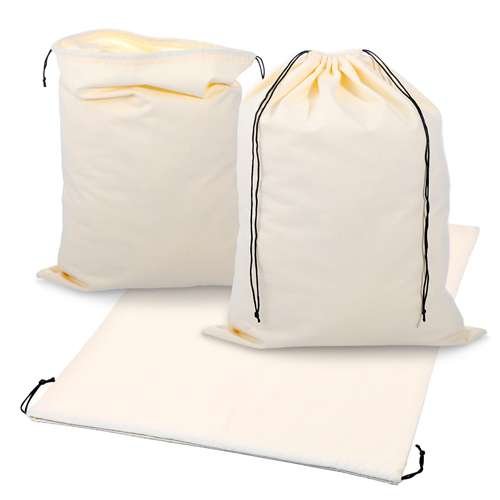
Cotton drawstring bags fit anniversaries, graduation programs, alumni activities, campus stores, and commemorative projects where natural texture matters. Fabric weight, weave, shrinkage, color, print penetration, seam appearance, and drawcord choice should be reviewed together. A soft fabric can look refined, but insufficient structure may affect print flatness, loaded shape, and repeat-order consistency across different dye or fabric batches.
RPET Education Program Bag
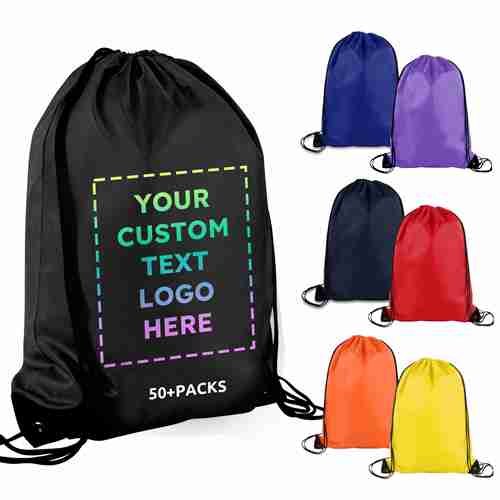
RPET drawstring bags may support education, community, reading, or wellness or sponsor programs when recycled-material documentation is required. Material claims should follow the applicable fabric records rather than a general environmental statement. Review fabric specification, color, hand feel, print method, drawcord, reinforcement, labels, and any requested supporting documents before the wording used on tags, cards, or program materials is approved.
Mesh Sports Gear Bag
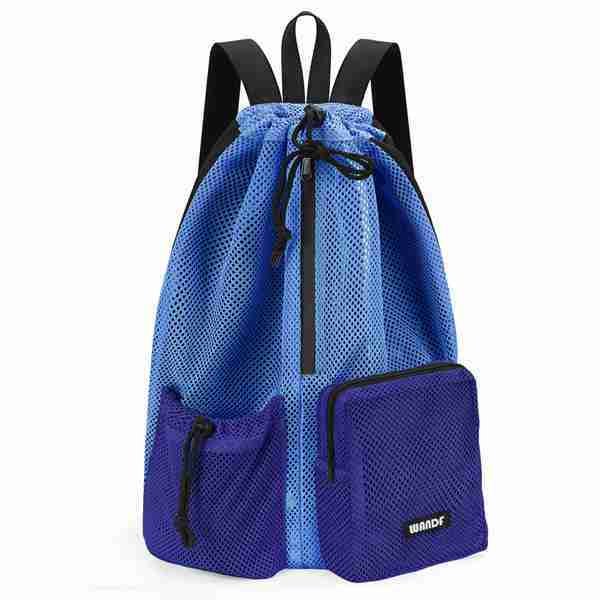
Mesh construction suits selected sports, swimming, camping, and equipment programs where airflow or visible contents are useful. Mesh density, opening size, binding, seam strength, solid reinforcement panels, and logo area need careful planning. The artwork usually requires a stable fabric panel or suitable label because open mesh may not support clear printing. Small items should also be checked to ensure they cannot pass through the openings.
Clear Venue Drawstring Bag

A clear drawstring bag may suit selected venues, tournaments, or controlled-entry activities that require quick visibility of contents. PVC or other transparent material should be reviewed for thickness, clarity, smell, scratching, cold-fold behavior, edge binding, seam method, and print adhesion. Venue rules vary, so the final dimensions and construction should be confirmed against the organizer’s current requirements rather than described as universally compliant.
Reinforced Sports Drawstring Bag

Sports days, tournaments, training camps, and team programs place greater stress on the drawcord channel and lower corners. A reinforced version can use stronger fabric, wider cords, added corner patches, secure eyelets or fabric loops, and selected pockets. The sample should be loaded with the planned shoes, uniform, towel, or bottle before strength, comfort, closure, and overall balance are approved.
Choose Materials by Event Use, Duration, and Brand PositionVC Bags
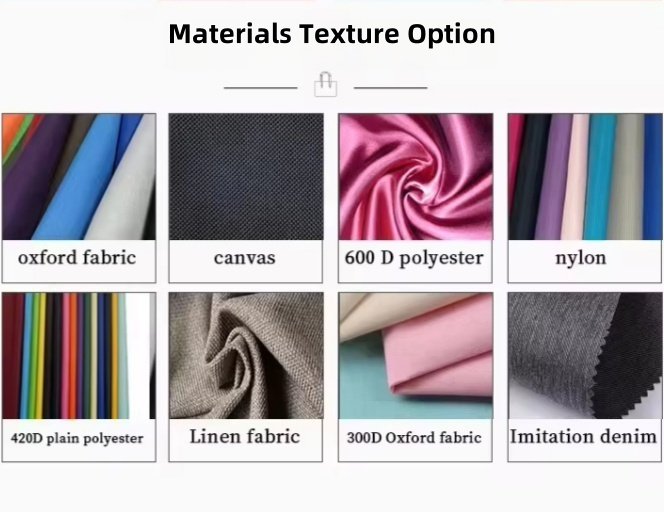
Material selection changes appearance, comfort, strength, printing, packing volume, and repeat-order consistency. Review fabric specification and construction together rather than choosing by color alone.
| Material Option | Suitable Programs | Appearance and Use | Compatible Branding | Main Development Controls |
|---|---|---|---|---|
| Polyester | Orientation, open days, fundraising, broad distribution, sports events, and recurring campus programs | Lightweight, broad color availability, and suitable for both simple and upgraded constructions. Coating and fabric weight affect feel, structure, and durability. | Screen printing, heat transfer, digital transfer, selected embroidery, labels, and patches | Confirm fabric weight, weave, coating, color, abrasion, folding marks, print adhesion, drawcord channel, reinforcement, and repeat-order material reference. Polyester should not be described as fully waterproof without verified construction and testing. |
| Nylon | Longer-use sports, club, travel, and higher-value school programs | Refined surface, favorable strength-to-weight balance, and a more technical appearance. Different nylon grades vary in hand feel, coating, density, and color availability. | Screen printing on suitable surfaces, heat transfer, embroidery, woven labels, patches, and selected reflective details | Review nylon grade, fabric weight, coating, stitch behavior, fraying control, color matching, heat sensitivity, print testing, drawcord selection, and stress-area reinforcement. |
| Cotton | School-spirit events, graduation, anniversaries, alumni activities, and commemorative programs | Natural texture and softer visual character. Fabric weight, weave, dye, and finishing influence structure, shrinkage, print appearance, and loaded shape. | Screen printing, heat transfer, embroidery on suitable weights, woven labels, and patches | Confirm fabric weight, weave, shrinkage, colorfastness requirements, print penetration, seam construction, drawcord material, washing expectations, and acceptable variation between fabric or dye batches. |
| Canvas | Campus stores, premium event kits, alumni collections, and programs requiring a firmer retail appearance | More structured than lightweight cotton and suitable for longer use. Greater thickness can improve body shape while increasing sewing difficulty, weight, and carton volume. | Screen printing, embroidery, woven labels, patches, metal details, and selected heat transfer | Review canvas weight, stiffness, shrinkage, needle and thread selection, seam thickness, corner construction, Logo penetration, drawcord channel, edge treatment, and loaded comfort. |
| Non-Woven | Large-volume, short-duration distributions with simple structures and limited load | Efficient for basic activity handouts and uniform visual presentation. Performance depends heavily on material weight, seam method, handle or cord attachment, and intended contents. | Screen printing, selected transfer methods, and simple labels | Confirm material weight, bonding or sewing method, seam strength, print coverage, color consistency, corner construction, planned contents, packing pressure, and expected use period. Avoid presenting it as suitable for heavy or long-term use without validation. |
| RPET | Education, community, wellness, reading, or sponsor programs requiring documented recycled-material direction | Similar visual possibilities to selected polyester constructions, depending on the chosen yarn, weave, coating, and finishing. Environmental wording must follow applicable material documentation. | Screen printing, heat transfer, digital transfer, embroidery, labels, and patches according to fabric specification | Confirm material records, recycled-content claim, fabric weight, color, coating, hand feel, print compatibility, reinforcement, labeling language, supporting documents, and repeat-order traceability. |
| Mesh | Sports, swim, camp, and equipment programs where ventilation or visible contents are useful | Open construction supports airflow and a clear sports character. Mesh density and opening size determine containment, structure, and visual coverage. | Logo printing on solid panels, woven labels, patches, embroidery on reinforced areas, and selected trims | Review mesh density, hole size, binding, seam strength, solid-panel size, Logo area, reinforcement, small-item containment, abrasion, and connection between mesh and solid fabric. |
| PVC or Clear Material | Selected venue, tournament, and controlled-entry programs requiring visible contents | Transparent appearance allows quick content visibility. Thickness, softness, smell, scratching, temperature response, and construction method strongly affect the finished product. | Screen printing, selected transparent-material printing, labels, patches, and colored binding | Confirm thickness, clarity, odor expectations, scratch protection, cold-fold behavior, seam or binding method, print adhesion, drawcord attachment, carton protection, and the organizer’s current size or entry requirements. |
Plan Bag Size Around Students, Contents, and Carrying Conditions
Useful capacity comes from the actual item list, opening width, usable height, bottom shape, loaded thickness, and student fit—not from flat dimensions alone.
Size Light Event Kits for Fast and Accurate Distribution

Light event kits may include an activity guide, name card, stationery, a folded T-shirt, wristband, or small sponsor item. A compact bag improves table organization and makes large-volume handout faster, but the opening still needs enough width for staff to load every item without forcing or folding printed materials.
Development records should include flat width, flat height, usable height below the drawcord channel, opening width, bottom construction, and the largest item placed inside. The sample should be packed with the exact planned item count and then opened, closed, carried, stacked, and removed from a carton. Such a check reveals whether the cord channel reduces access, whether printed artwork becomes distorted after filling, and whether corners remain flat or pull inward.
For younger students, overall proportion and cord length require additional attention. An oversized body may hang too low, while excessive cord length can create an awkward carrying position. The school or program team should confirm the intended age group, use environment, and any internal safety requirements before final approval. Name areas, instruction cards, or class labels should also be positioned where they remain visible after the bag is filled.
A smaller bag is not automatically more economical if loading becomes slow or materials are damaged during packing. Final dimensions should follow the complete event kit and the distribution method, not an assumed standard size.
Standard student event sets often combine a T-shirt, water bottle, notebook, activity guide, towel, lunch item, or several promotional pieces. The bag needs enough usable volume without becoming unnecessarily wide or long. Flat dimensions alone cannot describe performance because a bottle, folded garment, or boxed item creates thickness and changes how the side seams, lower corners, and drawcords carry load.
Review should record the largest item, total item count, loaded thickness, opening clearance, cord travel, and the position of artwork after packing. Where several rigid or heavy pieces are included, a bottom gusset, shaped base, stronger fabric, or reinforcement may improve balance. The decision should come from a packed sample rather than appearance on a flat table.
The bag should also be tested in the way it will be distributed. For pre-packed welcome kits, confirm how quickly staff can load, close, count, and carton the bags. For same-day activities, check whether students can open and close the bag repeatedly without cords binding in the channel. For continued use, examine seam stress, corner pull, cord comfort, and material recovery after the contents are removed.
Final specifications should state finished dimensions, construction, cord length, material code, planned contents, and approved packing orientation so later versions remain comparable.
Fit Standard Student Event Sets Without Oversizing the Bag

Build Sports and Multi-Item Capacity Around Real Equipment

Sports and multi-item programs may include shoes, uniforms, towels, bottles, protective equipment, or training materials. These contents create uneven weight, bulk, moisture, and repeated movement. A larger flat bag without structural planning can still feel unstable, press hard against the back, or fail early at the drawcord channel and lower attachment areas.
Capacity planning should begin with the real equipment list. Record the longest item, widest item, combined packed thickness, approximate packed set weight, and whether wet or ventilated storage is required. Mesh panels may improve airflow for selected uses; a solid front panel can preserve logo clarity; a bottom gusset or shaped base may improve the fit of shoes or folded garments. Separate pockets can isolate bottles, keys, or small accessories, but each added seam and component changes cost and stress distribution.
The loaded sample should be lifted repeatedly by both cords, carried for an agreed review period, opened and closed several times, and inspected at the channel, side seams, corner patches, eyelets or fabric loops, pocket joins, and printed area. Jundong should not publish one universal carrying-weight promise because performance depends on fabric, reinforcement, cord, seam construction, bag shape, and actual contents.
Approval should focus on intended use, not only maximum volume. Oversized capacity can increase material use, carton volume, and discomfort while allowing contents to move excessively.
Print School Logos, Mascots, and Sponsor Artwork with Clear Control
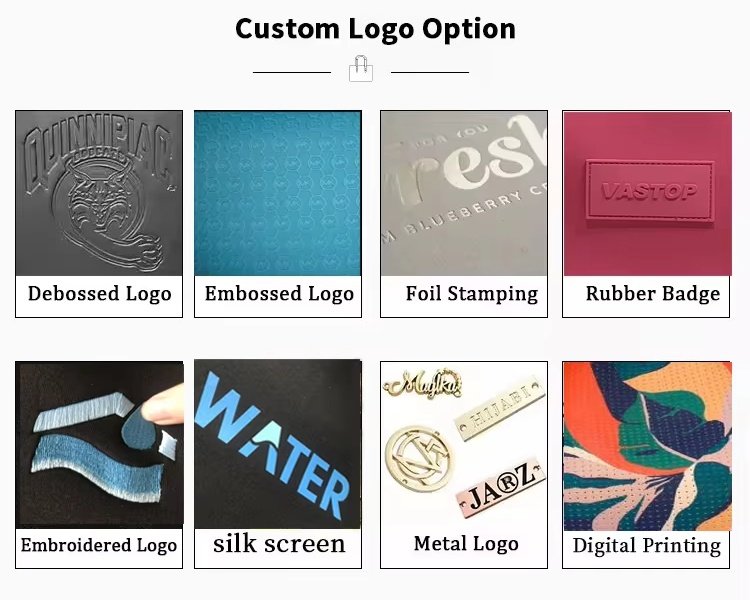
Artwork quality depends on material, graphic detail, base color, process, placement, and sample approval. Every version should remain readable after filling and closing the bag.
| Artwork Requirement | Suitable Method | Material and Product Fit | Approval and Production Controls |
|---|---|---|---|
| Simple School Name or Emblem | Screen printing | Suitable polyester, cotton, canvas, non-woven, and other compatible flat surfaces | Confirm ink color, coverage, print size, small-text readability, position, adhesion, curing, and appearance on the selected bag color. Deep-colored fabrics may need an underbase or adjusted ink preparation. |
| Detailed Mascot Illustration | Heat transfer or digital transfer on compatible surfaces | Selected polyester, nylon, cotton, canvas, and suitable coated fabrics after testing | Review fine lines, facial details, gradients, edge clarity, transfer temperature, surface reaction, flexibility, and appearance after the bag is filled. A physical sample is more reliable than a screen mock-up. |
| Full-Panel Color Graphic | Sublimation on suitable white or light polyester panels | Sports, tournament, race, camp, and event bags using compatible polyester construction | Confirm panel printing, color appearance, image scale, cutting position, seam interruption, side-to-side alignment, and artwork loss at folded or sewn areas. Sublimation should not be described as suitable for every fabric or dark material. |
| Premium School Crest | Embroidery on stable fabric areas | Canvas, selected polyester, nylon, and reinforced panels able to support stitch density | Confirm thread colors, stitch count, backing, outline clarity, small lettering, puckering, panel distortion, embroidery position, and loaded appearance. Lightweight fabric may require reinforcement or another method. |
| Woven Label or Patch | Woven label, embroidered patch, rubber patch, or selected fabric patch | Suitable for repeat-use bags, school-spirit collections, sports programs, and stable attachment areas | Approve patch size, border, texture, color, fixing method, stitch position, edge lifting, flexibility, and contact with the contents. Each patch material needs separate review. |
| Several Sponsor Logos | Screen printing, transfer, labels, or a coordinated combination | Depends on logo detail, number of colors, bag material, and available print area | Establish logo hierarchy, minimum readable size, spacing, alignment, approved sequence, and legal use. Avoid shrinking every sponsor mark until text or symbols become unclear. |
| Reflective or Specialty Detail | Selected reflective printing, reflective trim, or compatible specialty process | Outdoor activities, selected sports events, walking programs, and low-light projects after review | Confirm actual visibility requirement, material compatibility, placement, surface feel, adhesion, abrasion, folding, and required testing. Decorative reflective appearance should not be presented as certified visibility performance without applicable evidence. |
Control Drawcord Comfort and Reinforcement Before Production
Drawcord design, lower-corner construction, and age-appropriate use affect comfort, opening performance, durability, inspection, and distribution. Every detail should match the actual school program.
Match Drawcord Material and Length to Real Carrying Conditions

A drawcord is both the closure and the carrying system, so material, surface, thickness, length, color, and routing should be reviewed together. Soft round cord, braided cord, flat tape, or selected webbing can create different hand feel, opening resistance, and visual character. The correct choice depends on bag size, planned contents, use duration, and student age rather than appearance alone.
Development should record:
- Cord material, construction, color, and approved reference.
- Finished length on both sides after the bag is closed and opened.
- Cord-end treatment, knot position, heat sealing, cap, or other approved finish.
- Movement through the top channel without twisting, snagging, or excessive friction.
- Contact comfort when the bag is loaded with representative event items.
- Whether the cord stretches, transfers color, frays, or changes after repeated operation.
The sample should be opened and closed repeatedly, lifted by both cords, worn with the planned contents, and inspected where the cord enters the channel and lower attachment area. A visually thick cord is not automatically more comfortable; stiffness, surface texture, loaded angle, and carrying time also matter. Final approval should use the intended age group and activity conditions, not an empty bag displayed flat.
Recorded cord specifications also support clearer repeat orders when campus colors, sizes, or event versions return in later seasons.
Lower corners transfer carrying force from the cords into the bag body. Weak fabric, small reinforcement patches, poor stitch placement, sharp eyelet edges, or loose fabric loops can create early tearing even when the main material appears strong. Basic handout bags and repeated-use sports bags therefore need different reinforcement decisions.
Important construction checks include:
- Reinforcement-patch material, shape, size, layer count, and edge finish.
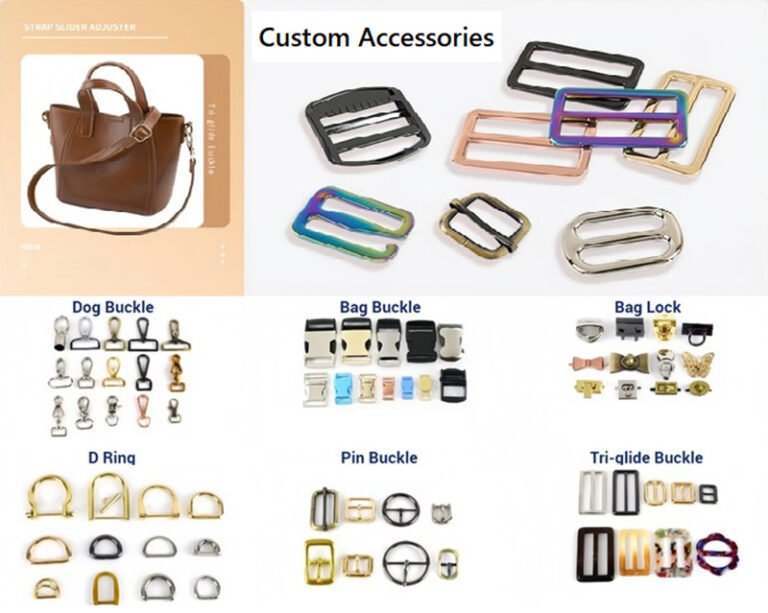
- Eyelet diameter, surface finish, backing, compression, and alignment where metal eyelets are selected.
- Fabric-loop width, fold direction, stitch pattern, and insertion depth where metal parts are avoided.
- Distance between the cord attachment and side or bottom seams.
- Stitch density, backtack position, thread choice, and visible loose ends.
- Loaded movement at both corners after repeated lifting and opening.
The corner should be inspected from the outside and inside because a clean exterior can hide incomplete stitching or insufficient backing. During sample review, the bag should be packed with representative items and lifted repeatedly by both cords. Any pulling, distortion, sharp contact, loose eyelet, separated patch, or seam opening should be recorded before approval.
Strength comes from the complete connection between fabric, reinforcement, cord, thread, and construction—not from one component alone. Approved close-up photographs and construction notes should remain available for sewing, in-line inspection, final review, and future repeat-order comparison.
Build Lower-Corner Reinforcement Around the Actual Stress Path

Review Age, Identification, and Program-Specific Use Requirements

School use can involve young students, teenagers, university groups, sports teams, volunteers, or adult event participants. One cord length, bag proportion, or accessory arrangement cannot be treated as suitable for every group. The intended age, environment, carrying period, and packed contents should be provided before final dimensions and details are released.
Program-specific review may include:
- Bag height and cord length in relation to the intended user group.
- Cord ends, knots, caps, or loose components that need internal review.
- Name panels, class labels, student identification, or emergency-contact areas.
- Reflective printing or trim when requested for selected outdoor or low-light activities.
- Mesh, ventilation, clear panels, or separate pockets for sports and equipment use.
- School, district, venue, or destination requirements that affect size, labeling, or testing.
- Needle-control, broken-needle management, or additional inspection arrangements when required.
No universal safety claim should replace project review. Requirements differ by age group, destination, construction, and intended use. A packed sample, approved dimensions, material records, artwork files, and inspection instructions create a clearer basis for evaluation.
Where a school or organization has its own product policy, the relevant document should be supplied before sampling so design decisions can be assessed early rather than changed after production preparation. Early documentation also helps agencies and education groups compare several age groups or destinations without applying one untested construction to every version.
What Jundong Reviews Before School Bag Development Starts in Detail
Event and Student Group
The same drawstring bag may perform differently at an elementary welcome day, university orientation, sports tournament, graduation program, or sponsor-led community event. Start by defining who will use the bag, where it will be carried, and how long it should remain useful.
- State the school level or approximate age group.
- Describe the event and use environment.
- Note indoor, outdoor, sports, travel, or venue conditions.
- Identify school, agency, sponsor, or distribution responsibilities.
- Provide any internal product or safety requirements.
Clear context prevents a basic giveaway construction from being used for a longer or more demanding program.
Bag Contents and Size
Bag dimensions should follow the complete item list rather than a catalog size alone. A folded shirt, bottle, notebook, shoes, towel, printed folder, and boxed sponsor item create different opening, thickness, and reinforcement needs.
- List every item placed inside one bag.
- Provide the longest, widest, or rigid item dimensions.
- State whether bags will be pre-packed before shipment.
- Indicate any front pocket, mesh panel, name area, or bottom gusset.
- Share a preferred size or an existing sample when available.
A loaded sample gives a stronger approval basis than flat measurements without real contents.
Material and Color
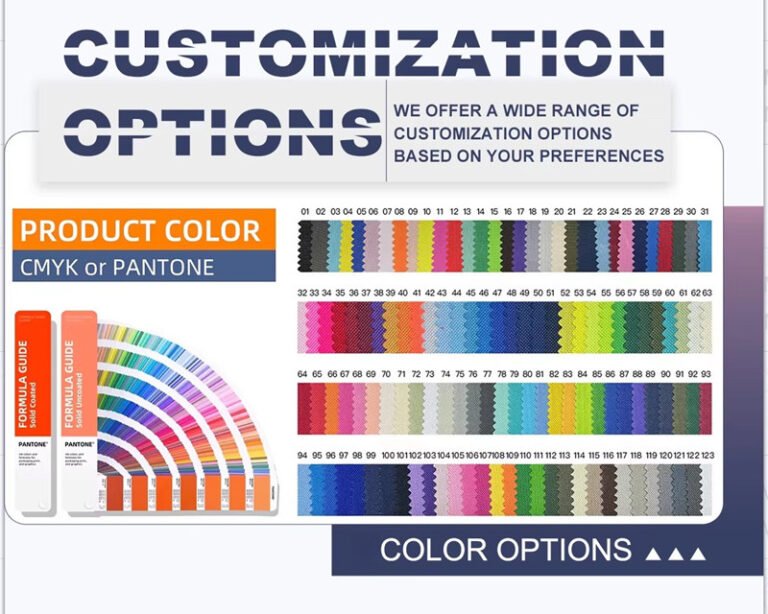
Material selection should describe the intended fabric, weight, surface, coating, hand feel, color, and use period. “Blue polyester” is not enough when school colors, print contrast, repeat orders, or sports use carry importance.
- Send Pantone references or approved physical color samples where required.
- State polyester, nylon, cotton, canvas, non-woven, RPET, mesh, or clear-material preference.
- Note water-resistance, ventilation, transparency, or recycled-material document needs.
- Identify drawcord color and reinforcement direction.
- Confirm whether several bag colors share one graphic.
Physical swatches may be needed when screens cannot represent the required color or texture accurately.
Logo and Mascot Artwork
School emblems, mascot illustrations, event dates, team names, and sponsor marks should be supplied in usable production files. Detailed graphics need a process review before size and placement are released.
- Send AI, PDF, EPS, SVG, or CDR artwork when available.
- Include Pantone colors and brand-use rules.
- Separate school, event, team, and sponsor files.
- Mark required print size, position, and bag side.
- Identify small text, fine lines, gradients, or full-panel graphics.
- Confirm legal ownership or authorized use.
Low-resolution images may require redrawing, and screen appearance should not be treated as final material approval.
Quantity and Versions
Quantity should be separated by design, bag color, campus, grade, team, language, sponsor version, and destination. A total order figure alone cannot show how many production and packing versions must be controlled.
- List quantity for every approved variation.
- Identify shared and unique artwork.
- Mark spare quantities or replacement stock.
- Provide expected repeat-order or annual-program needs.
- Use clear version codes before sample approval.
- Confirm whether several versions may share material or print setup.
Accurate version planning reduces mixed graphics, wrong quantities, unnecessary setup changes, and confusion during packing or replenishment.
Packing and Deadline
Packing and timing should be defined from the required arrival date, not only the event date. Class sorting, campus cartons, pre-packed kits, barcode labels, destination marks, inspection, international transport, and local distribution all need time.
- State bulk, individual, bundled, or pre-filled packing needs.
- Provide class, campus, team, or destination sorting rules.
- Share sample deadline and required arrival date.
- Identify the destination and preferred shipping arrangement.
- Note third-party inspection, testing, or document requirements.
- Flag split shipments and fixed event milestones early.
Early planning helps protect distribution accuracy without depending on late freight upgrades.
Approve School Drawstring Bags Under Real Event Use Before Production
Sample approval should verify the finished bag under planned school use, then convert every accepted detail into a clear production, inspection, packing, and version reference.
Confirm Size, Capacity, and Drawcord Performance With Actual Contents

A drawstring bag should be approved with the actual event kit inside, not only while empty and flat. Place the planned T-shirt, bottle, notebook, shoes, printed folder, towel, or sponsor item into the sample and confirm whether the opening, usable height, bottom shape, and drawcord still work as intended.
Record the finished width, height, usable space below the cord channel, cord length, corner construction, pocket dimensions, and loaded thickness. The review should also check whether rigid or heavy items pull the side seams, distort the lower corners, or make the bag hang too low for the intended age group.
Use the sample in the same way the school will distribute and carry it:
- Load every planned item in the correct quantity.
- Open and close the bag repeatedly.
- Lift it by both cords and inspect the stress path.
- Check shoulder contact, balance, and cord movement.
- Place packed bags into the proposed carton arrangement.
- Confirm the name area, class label, or event information remains visible.
A bag that looks suitable in a catalogue may become difficult to load or uncomfortable after filling. Approval should therefore capture real contents, use conditions, and packing orientation. Where several event kits differ, each important version
Approve School Logos and Mascot Artwork on Production Materials

School emblems, mascot illustrations, event dates, team names, and sponsor marks should be approved on the selected production material. Screen mock-ups help with layout, but they cannot fully show ink coverage, transfer edges, fabric texture, color reaction, embroidery distortion, or the way artwork changes when the bag closes.
The approval should record:
- Final vector artwork and version code.
- Print or embroidery size in millimeters.
- Exact distance from side seams, bottom edge, and cord channel.
- Pantone, thread, patch, or approved physical color references.
- Required underbase for dark fabric where applicable.
- Small-text readability and fine-line clarity at actual size.
- Artwork appearance after the bag is filled and drawn closed.
- Separate files for school, mascot, team, sponsor, date, and language versions.
Detailed mascot artwork may lose facial features or small outlines when reduced. Several sponsor logos can become unreadable when equal-sized marks are forced into a limited area. The layout should establish hierarchy and clear spacing before production.
A physical Logo sample on the chosen fabric provides a stronger reference than a digital rendering. Standard bag sampling usually takes about 5–7 days after essential details and available materials are confirmed; selected simple styles may take about 2–3 days. Complex artwork, full-panel printing, embroidery, patches, special materials, or revisions require additional review.
Lock the Pre-Production Reference for Every Bag Version

The approved bag should become a controlled pre-production reference, not an isolated sample stored without supporting data. Final material, color, size, drawcord, reinforcement, artwork, labels, packing, and carton marks need to be recorded so production and inspection teams can compare bulk goods with the same accepted version.
A complete reference pack should include:
- Front, back, open, closed, loaded, and detail photographs.
- Finished dimensions and permitted inspection tolerances.
- Fabric, coating, drawcord, thread, patch, eyelet, and accessory codes.
- Reinforcement shape, layer count, stitch pattern, and attachment position.
- Final artwork files, print method, colors, scale, and placement.
- Name panel, class label, barcode, SKU, or destination information.
- Individual packing, bundle quantity, pre-filled kit, and carton rules.
- Dated revision notes and a final approval code.
Multi-campus, multi-team, or sponsor-supported programs may require several reference versions. Shared construction can remain consistent, while artwork, colors, labels, and carton instructions are separated by code.
Late changes after approval can affect materials, printing setup, packing preparation, cost, and completion timing. Final comments should therefore identify what is approved, what is revised, and what remains open. Clear pre-production records reduce the risk of old artwork returning, similar colors being mixed, or class and campus versions being packed under the wrong instruction.
Move Approved School Bags Into Controlled Event-Ready Bulk Production
Event-ready bulk orders depend on approved records, coordinated materials, controlled artwork, reinforced sewing, staged inspection, accurate sorting, and clear dispatch planning before the required arrival date.
Release Final Specifications
Approved samples are converted into one working specification covering finished size, fabric, drawcord, reinforcement, artwork, labels, quantity by version, packing, carton marks, and required completion date. A released version code prevents earlier drawings or graphics from returning.
Key release items include:
- Final sample approval
- Version quantity list
- Production artwork
- Packing instructions
- Inspection references
Any open item should be resolved before materials, printing, or sewing are committed.
Prepare Fabric and Drawcords
Fabric rolls, drawcords, thread, corner patches, eyelets or fabric loops, mesh, binding, labels, and packing materials are checked against approved codes. Color, weight, coating, hand feel, component size, and visible finish should match the confirmed references.
Preparation controls include:
- Material identification
- Physical color comparison
- Drawcord specification
- Reinforcement components
- Packaging availability
Special school colors, RPET documentation, patches, or custom trims require earlier preparation.
Cut and Apply Artwork
Panels are cut to approved dimensions and direction before screen printing, transfer, sublimation, embroidery, or patch application. Artwork position is checked against seam allowance, cord channel, lower corners, pockets, and loaded shape.
Early process checks focus on:
- Cut-panel dimensions
- Artwork orientation
- Color and detail
- Print adhesion
- Panel-to-panel alignment
Process samples help identify placement, fine-detail, or material-reaction concerns before larger quantities move forward.
Sew Reinforced Bag Structures
Sewing follows the confirmed side seams, top channel, bottom, pockets, binding, and reinforcement construction. Lower corners, eyelets, fabric loops, cord-entry areas, and pocket joins require closer attention because they carry concentrated stress.
Workmanship controls include:
- Stitch position and density
- Reinforcement-layer alignment
- Loop insertion depth
- Eyelet installation
- Inside backing
- Loose-thread removal
Operators compare the construction with approved close-up references throughout sewing.
Check Production in Stages
Inspection takes place during production rather than being left until the final cartons are ready. Cut dimensions, artwork, sewing, cord movement, corner construction, appearance, and version accuracy are checked at suitable stages.
Staged checks help identify:
- Repeated artwork deviation
- Uneven seams
- Weak reinforcement
- Incorrect cords or labels
- Mixed colors or versions
Finished bags may also be reviewed under loaded-use and packing conditions when required by the program.
Sort, Pack, and Dispatch
Completed bags are cleaned, counted, and separated by campus, grade, team, color, sponsor, language, or destination code. Packing follows the approved individual, bundled, bulk, or pre-filled method before labels and carton marks are applied.
Dispatch preparation confirms:
- Correct version quantity
- Sets per carton
- Class or campus labels
- Carton sequence
- Destination information
Standard bulk production usually takes about 20–30 days after final approval. International transport is planned separately.
Quality Checks for School Event Drawstring Bag Orders
Multi-stage inspection checks bag materials, artwork, sewing, function, version accuracy, packing, and cartons against approved references before release for school-event distribution and final delivery planning.

| Inspection Stage | What Is Checked | Main Risk Reduced | Inspection Reference |
|---|---|---|---|
| Incoming Fabric and Components | Fabric type, weight, weave, coating, color, drawcord material, cord size, thread, mesh, binding, reinforcement patches, eyelets, fabric loops, labels, and packing materials | Wrong fabric, mixed colors, unsuitable cords, incorrect reinforcement, missing labels, or unapproved components entering production | Approved material swatches, material codes, color references, component list, drawcord sample, and purchase specification |
| Cut Panels and Artwork | Cut dimensions, fabric direction, print position, mascot detail, school colors, sponsor hierarchy, event date, transfer edges, embroidery, patch position, and panel alignment | Incorrect bag size, reversed panels, unclear mascot details, misplaced Logos, wrong event year, or repeated artwork deviation | Approved pattern, artwork file, placement guide, color reference, process sample, and final version code |
| Sewing and Reinforcement | Side seams, top channel, bottom seam, pocket joins, binding, stitch position, stitch density, corner patches, eyelets, fabric loops, backing, insertion depth, and loose threads | Open seams, uneven construction, weak lower corners, loose eyelets, incomplete reinforcement, or inconsistent appearance | Approved physical sample, construction photos, sewing instructions, reinforcement specification, and in-line record |
| Drawcord and Loaded Function | Opening and closing, cord movement, cord length, cord-end finish, shoulder contact, bag balance, lower-corner tension, pocket function, planned contents, and repeated handling | Cords binding in the channel, uncomfortable carrying, poor balance, corner distortion, difficult loading, or early stress damage | Loaded sample, planned item list, use-condition record, approved cord specification, and functional check instructions |
| Finished Bag and Version | Finished dimensions, shape, artwork, color, cleanliness, loose threads, name area, class label, SKU, campus, team, sponsor, language, and approved version quantity | Mixed colors, wrong graphics, incorrect labels, inconsistent finished size, missing identification, or wrong version distribution | Approved sample, dimension sheet, version list, inspection criteria, artwork record, and finished-goods checklist |
| Packing and Cartons | Individual or bulk packing, bundle quantity, pre-filled contents, bag count, inner protection, campus or class labels, barcode, carton marks, carton sequence, destination, and visible damage | Missing bags, mixed campuses, incorrect kit contents, unreadable carton marks, wrong destination, or damaged products during handling | Packing guide, set checklist, version quantity list, label file, carton-mark file, packing list, and destination rule |
| Pre-Shipment Review | Order quantity, carton quantity, gross and net weight, carton dimensions, inspection status, packing records, shipment information, visible carton condition, and release requirements | Quantity differences, incomplete inspection, incorrect freight data, unclear handover, or shipment release before required records are complete | Order information, inspection report, carton data, packing list, shipment plan, and agreed release requirement |
Prepare School Drawstring Bags for Classes, Campuses, Teams, and Trips
Accurate sorting turns finished bags into event-ready kits. Packing rules should connect each design, quantity, label, carton, and destination before final assembly begins.
Choose Packing Formats That Match Real On-Site Distribution Workflows
Packing should follow how the bags will be counted, stored, transported, opened, and handed out. A university orientation team distributing 2,000 empty bags needs a different arrangement from a school district receiving pre-filled kits for six campuses. Selecting the format early prevents unnecessary repacking after the goods arrive.
Available directions may include:
- Bulk packing: Suitable when one design and color will be distributed from a central location. The approved quantity per carton should remain easy to count and lift.
- Individual packing: Useful when surface cleanliness, printed inserts, retail presentation, or separate handling matters.
- Fixed bundles: Bags may be grouped in approved quantities for classrooms, teams, activity stations, or volunteer tables.
- Pre-filled kits: Shirts, notebooks, event guides, wristbands, sponsor items, or other confirmed materials can be arranged in a defined order when project conditions allow.
- Name or class labeling: Labels should remain readable and should not cover the mascot graphic, cord channel, or required event information.
- Spare quantities: Replacement stock should be separated from regular distribution cartons and marked clearly.
Trial packing should confirm how many finished bags fit each carton without excessive compression, print transfer, bent patches, or distorted corners. The outer carton must also remain manageable for the staff handling it at the school, warehouse, or event venue.
A packing instruction should record the bag version, pieces per inner group, pieces per carton, placement direction, protective materials, label position, and carton sequence. Clear preparation helps event teams begin distribution immediately instead of recounting several thousand mixed bags on arrival.
Build Version Codes Before Multiple Campuses Enter Final Packing
A total order quantity does not explain how many designs, colors, campuses, teams, or sponsor combinations need to be controlled. Each distinct version should receive a code before production artwork and packing instructions are released.
A useful version list can include:
- School or education-group code
- Campus or delivery-location code
- Grade, class, club, or team
- Bag color and material
- Mascot or event-artwork version
- Sponsor combination
- Language
- Quantity and spare quantity
- Individual-packing rule
- Carton sequence
For illustration, a 3,600-piece school campaign divided among six campuses, three bag colors, and two mascot versions should not be managed as one line reading “3,600 bags.” It should be divided into six controlled production and packing lines, each showing the correct campus, color, artwork file, quantity, label, and carton marks.
Similar versions deserve special attention. Navy and black may look close under poor lighting; event graphics for 2026 and 2027 may differ by only one number; sponsor arrangements may change without altering the main school emblem. Such differences can be missed when workers rely on memory or general descriptions.
Approved codes should appear on artwork sheets, sample references, production records, packing checklists, labels, and carton marks. Color coding can support identification, but it should not replace written information. A photograph of one completed bag and one correctly marked carton for every major version provides an additional comparison during final packing.
Clear version control protects brand presentation and reduces the risk of one campus receiving another campus’s bags shortly before a fixed event.
Prepare Destination Cartons and Shipment Records Before Cargo Release
Multi-campus and multi-destination orders require more than a correct total quantity. Each carton must tell the receiving team what is inside, where it belongs, and how it connects to the packing list without opening every box.
A clear carton mark may contain:
- Purchase-order or project code
- Drawstring-bag style
- Campus, class, team, or destination
- Bag color and artwork version
- Quantity inside the carton
- Carton sequence
- Gross and net weight
- Carton dimensions
- Handling or stacking information where needed
A practical carton reference could read:
Project SD-2601 | Campus B | Grade 8 | Navy | Artwork V3 | 100 pcs | Carton 07/36
The format should be approved before printing labels or sealing cartons. Barcodes, warehouse labels, shipping marks, and regional information should use final files rather than screenshots or handwritten copies.
For split deliveries, each destination needs its own quantity summary, carton sequence, packing list, and collection or delivery instruction. Sealed-carton photographs can record marks and condition before handover. Freight planning also needs the final carton count, dimensions, weight, destination, shipping method, and trade term; production time and international transit should remain separate parts of the schedule.
Jundong can assist with packing lists, carton details, shipment marks, product descriptions, weights, and shipment information according to the confirmed order. Final customs classification, clearance, and destination requirements may still need confirmation by the appointed import team, forwarder, or local authority.
Why Global School Programs Shortlist Jundong for Drawstring Bags
Large education programs need consistent materials, approved artwork, controlled versions, accurate packing, and dependable production records—not only a finished bag that looks correct.

20+ Years Bag Experience
More than two decades of OEM/ODM bag development help identify material, sizing, drawcord, reinforcement, artwork, and packing concerns before bulk work begins. Experience becomes especially valuable when one program includes detailed mascot graphics, several campus versions, sponsor approvals, pre-packed event kits, or a fixed arrival date.
600+ Employee Team
A team of more than 600 employees supports development, material preparation, cutting, artwork processing, sewing, inspection, packing, and shipment preparation. Large school programs may involve thousands of bags, several colors, multiple graphics, and different destinations. Organized responsibilities help keep specifications, quantities, labels, and production milestones aligned.
18,000㎡ Factory Area
An 18,000㎡ facility provides working space for sampling, material control, cutting, sewing, inspection, finished-goods handling, classified packing, and carton preparation. Multi-campus orders benefit from defined areas where colors, mascot versions, class bundles, and destination cartons can remain separated before final release.
80 QC Inspectors
Eighty QC inspectors support checks from incoming materials through artwork, sewing, drawcord movement, corner reinforcement, finished dimensions, version accuracy, packing, and cartons. Inspection follows approved samples, production specifications, artwork files, quantity lists, packing instructions, and agreed defect requirements rather than relying only on a final appearance check.
MOQ, Cost, and Timeline for School Event Drawstring Bag Programs
Order planning should reflect bag structure, material, artwork, version count, packing, inspection, and arrival requirements. Quantity alone cannot determine the final unit cost or schedule.
| Planning Area | Jundong Working Basis | Main Variables | Details Needed for Review |
|---|---|---|---|
| Standard Custom MOQ | Standard MOQ usually starts from 500 pcs per design. Quantity should be separated by material, bag color, artwork version, construction, and packing rule where these details differ. | Fabric availability, color count, mascot artwork, drawcord, reinforcement, pockets, labels, and version quantities | Bag reference, target size, material, color breakdown, artwork, quantity per version, packing, and destination |
| Selected Simple-Style Review | Selected simple constructions using regular materials and straightforward Logo work may be reviewed at 200–300 pcs case by case. This is not an automatic quantity for every style. | Available material, existing color, print setup, number of versions, construction, and packing simplicity | Clear reference, one design, material direction, Logo size, quantity, required date, and packing method |
| Basic Low-Unit-Price Bags | Some lightweight event bags, basic non-woven bags, simple promotional structures, or low-unit-price cotton drawstring bags may require 1,000 pcs or more. Higher quantity helps spread material, printing, cutting, sewing, packing, and QC setup. | Unit-price target, fabric type, print area, material minimums, color count, and packaging | Required use, total quantity, target specification, Logo, color, packing, and budget direction |
| Sample Development | Standard sampling usually takes about 5–7 days after essential details and available materials are confirmed. Selected simple styles may take about 2–3 days. Complex mascot graphics, full-panel printing, patches, special fabric, pockets, or several revisions need more time. | Pattern work, material sourcing, printing trials, embroidery, reinforcement, multiple versions, and feedback speed | Sample quantity, bag dimensions, material, drawcord, artwork files, planned contents, deadline, and destination |
| Sample Fee | Sample cost is reviewed from development work, material preparation, Logo setup, bag construction, special components, packing samples, and agreed revisions. Sample fees can be refunded or deducted when the bulk order reaches 2,000 pcs. | Number of samples, material availability, printing setup, embroidery, patches, custom components, revisions, and courier | Required sample versions, shipping destination, approval steps, artwork process, and delivery preference |
| Bulk Production | Standard bulk production usually takes about 20–30 days after sample approval and final production information are ready. The schedule is confirmed according to material, quantity, artwork, packing workload, inspection, and current capacity. | Fabric lead time, quantity, color count, printing method, reinforced construction, sorting complexity, inspection, and seasonal schedule | Approved sample, final version quantities, packing files, completion target, inspection requirements, and destination |
| Cost Formation | Unit cost comes from the complete bag specification. Material, size, drawcord, bottom construction, Logo process, print area, pockets, labels, number of versions, packing, testing, and deadline all affect the result. | Fabric weight, coating, reinforcement, artwork colors, full-panel printing, accessories, individual packing, and order scale | Complete specification, quantity per version, target cost when available, artwork, packing, testing, and arrival plan |
| Delivery Planning | Production and international transit are separate. Freight review requires final carton quantity, dimensions, weight, destination, shipping method, deadline, and trade terms. Express, air, sea, rail, or an appointed forwarder can be reviewed according to project conditions. | Carton volume, weight, destination, event date, booking space, inspection release, customs handling, and local delivery | Required arrival date, destination, transport preference, forwarder details, trade term, and split-delivery instructions |
Make a sample first ?
A successful school event drawstring bag project starts with more than just a logo. The bag should match the event theme, student needs, activity purpose, and distribution plan. A custom sample confirms the bag size, fabric, printing, colors, and overall look before bulk production, making the project easier to manage from design approval to final delivery.
Client Testimonials
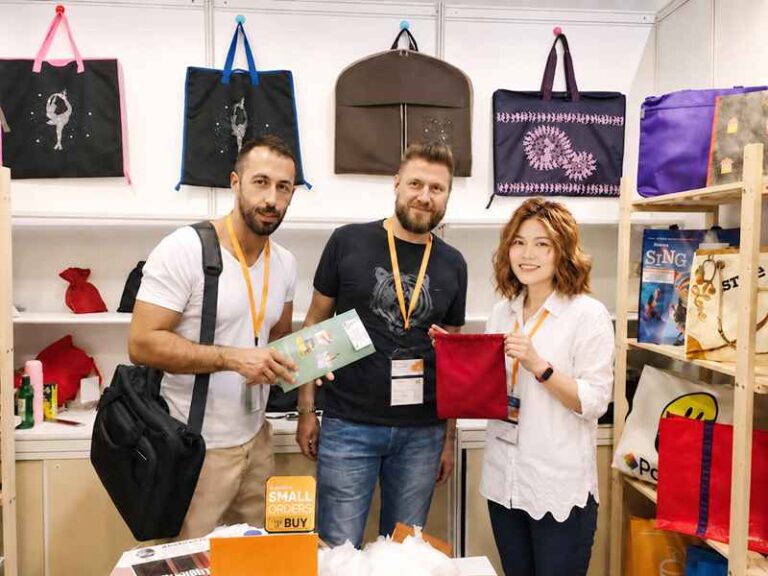
800+ brand Clients Trust Jundong


School Event Drawstring Bags: Frequently Asked Questions
These answers cover materials, size, mascot artwork, sponsor logos, reinforcement, MOQ, sampling, campus sorting, inspection, and the details needed before development begins.

Which material suits school event drawstring bags best?
Polyester suits many orientations, sports, fundraising, and broad-distribution programs. Nylon offers a more technical finish, while cotton and canvas create a natural appearance. RPET may support documented recycled-material requirements, mesh adds ventilation, and clear material suits selected venue uses. Final selection should follow contents, use period, artwork, packing, budget, and required documents.
How should the finished bag size be confirmed?
Start with every item placed inside one bag. Measure the longest or widest item, then review opening width, usable height below the cord channel, loaded thickness, bottom shape, and intended student group. A packed physical sample gives a stronger decision basis than selecting only from flat dimensions shown in a catalog.
Can detailed mascot artwork remain clear?
Certainly. Detailed artwork can be reviewed for screen printing, heat transfer, digital transfer, sublimation, embroidery, or patches according to the selected material. Fine facial features, small text, gradients, school colors, placement, and appearance after filling should be checked at actual size on the intended production fabric.
Can several sponsor logos share one bag?
Of course, provided the available area and selected process can keep every mark readable. The artwork layout should define hierarchy, minimum size, spacing, color, position, and authorized use. Forcing many sponsor marks into a small space can reduce clarity and weaken the main school or event identity.
How are drawcord comfort and corner strength checked?
The drawcord review covers material, width or diameter, length, surface, movement, cord ends, and shoulder contact after loading. Corner review covers reinforcement material, patch size, eyelets or fabric loops, internal backing, stitching, insertion depth, and repeated lifting with the planned contents. Finished strength depends on the full connection between these components.
What MOQ applies to each custom design?
Standard MOQ usually starts from 500 pcs per design. Selected simple constructions may be reviewed at 200–300 pcs case by case. Some lightweight, non-woven, low-unit-price, or basic promotional styles may require 1,000 pcs or more to allocate material, printing, cutting, sewing, packing, and QC preparation efficiently.
How long do sampling and bulk production take?
Standard samples usually take about 5–7 days after essential details and available materials are confirmed. Selected simple styles may take about 2–3 days. Standard bulk production usually takes about 20–30 days after approval. Complex graphics, special materials, several versions, inspection, packing, and international transit need separate schedule allowances.
Can bags be sorted by campus or class?
Yes. Sorting can follow campus, class, grade, team, color, artwork, sponsor, language, or destination codes. The program should define quantities, labels, bundle sizes, spare stock, pieces per carton, carton marks, packing lists, and delivery instructions before final packing begins.
Can testing and independent inspection be arranged?
Testing, material documentation, needle control, broken-needle management, and independent inspection can be reviewed according to the product, intended age group, destination, school policy, and appointed inspection requirements. Requested standards, sampling levels, defect rules, reports, test samples, and timing should be raised before production planning.
What information is required for quotation?
Send a reference bag or drawing, finished size, planned contents, material, drawcord, reinforcement, school emblem or mascot files, quantity per version, bag colors, packing method, sample deadline, required arrival date, destination, and any testing or inspection needs. Complete technical files are helpful but not required for the initial review.
Start Your Custom School Event Drawstring Bag Review
Complete technical files are helpful, but they are not required for an initial assessment. Start with a reference bag, sketch, school emblem, mascot file, event brief, or list of items placed inside. Clear information allows size, material, drawcords, reinforcement, artwork, packing, timing, and destination requirements to be reviewed before sampling.
Please include:
- School level, event type, and intended student group
- Items packed inside each bag
- Preferred dimensions, material, color, cord, pocket, or mesh details
- School emblem, mascot, event date, team name, and sponsor files
- Quantity for every color, campus, class, team, or graphic version
- Bulk, individual, bundled, or pre-filled packing requirements
- Sample deadline, required arrival date, and destination
- Testing, material-document, NDA, or independent-inspection needs
Files can be uploaded through the form or sent to info@jundongfactory.com. Missing specifications can be identified before sampling or quotation preparation. Final MOQ, cost, and timing are confirmed after construction, materials, graphics, quantities, packing, and approval requirements are clear.