 Skip to content
Custom Makeup Bags With Logo
Custom Makeup Bags With Logo for Beauty Kits, Gift Sets & Travel Lines
A makeup bag is not just for storage. In beauty kits, travel sets, holiday gifting, retail add-ons, and launch boxes, it often becomes the part people keep, reuse, photograph, and remember. The right shape, lining, zipper, and logo treatment decide whether it feels disposable or worth keeping.
People Keep the Bag Longest
In many beauty sets, the cosmetic bag does more than hold products. It often becomes the part people keep after the creams, serums, minis, or gift items are gone. That makes it a small item with unusually high brand exposure. A carton may be opened once. A pouch may be used for months in a handbag, suitcase, vanity drawer, or gym locker. Beauty-focused bag pages and pouch collections repeatedly position these bags around travel, gift sets, personal care, and daily organization, which shows how often they move from packaging into long-term use.
That shift matters when choosing specs. A bag meant to be kept should feel intentional in the hand. The zipper should open cleanly. The lining should make sense for makeup spills. The logo should still feel balanced when the bag is half full, not only when it is photographed empty. A good cosmetic bag is not just a container. It is often the most reusable part of the whole set, and that is exactly why its shape, fabric, and finish.
Keep-or-Discard View
| Bag role | What it should do |
|---|---|
| Gift set pouch | Feel worth keeping after unboxing |
| Travel pouch | Pack easily and clean up fast |
| Vanity bag | Sit well on a counter and open smoothly |
| Promo pouch | Stay useful after the event |





Bag Shape Changes Everything
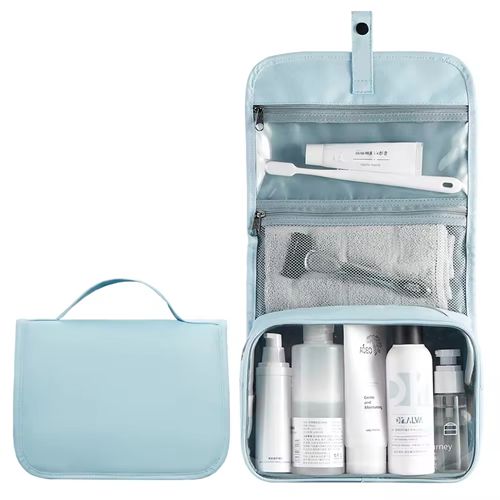
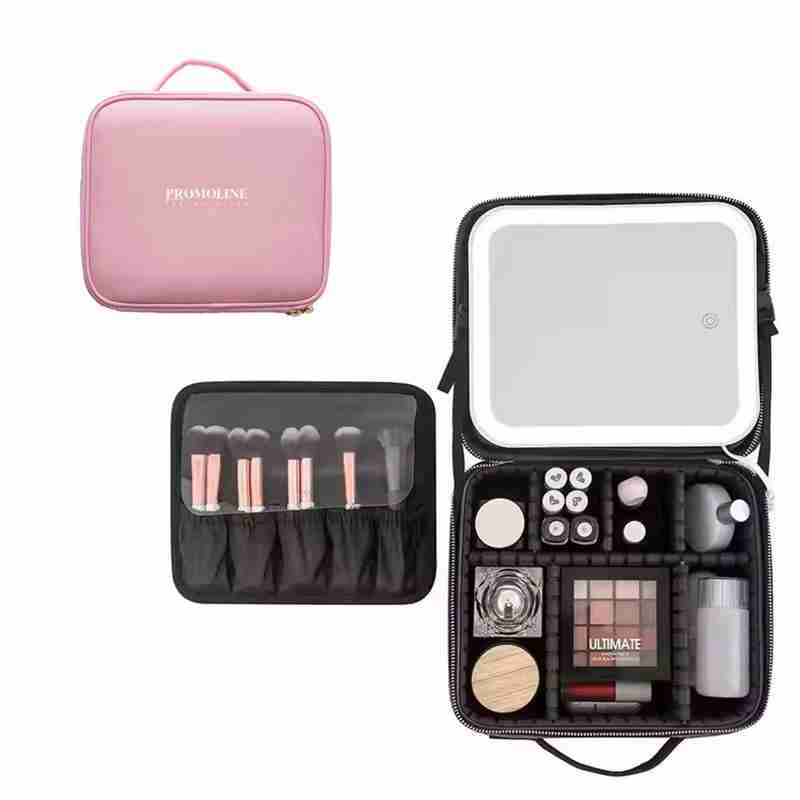
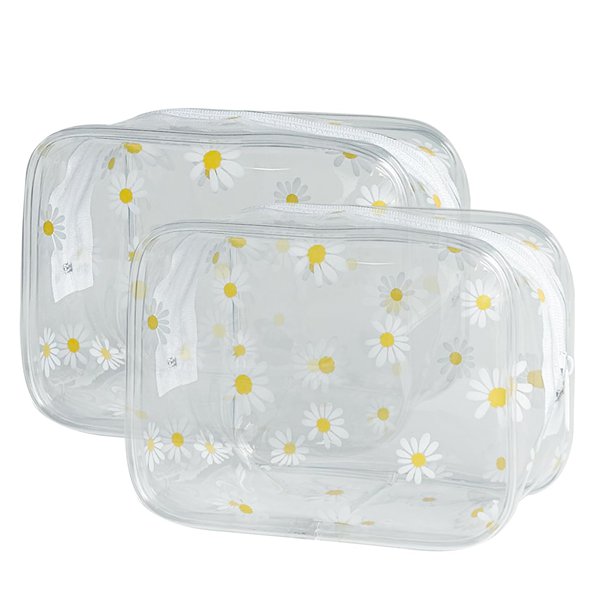
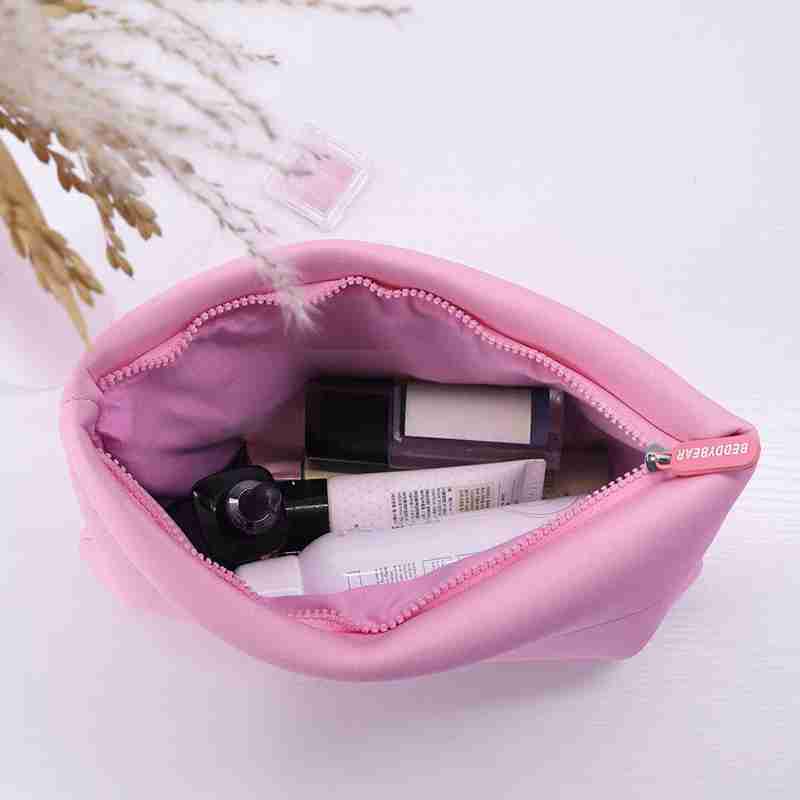
Public cosmetic pouch listings already show how much function is built into shape: flat zip pouches work for slim kits and light essentials; bottom-gusset pouches add capacity and improve standing behavior; clear PVC travel-size bags suit visibility and quick access; and more structured cosmetic cases are used when products need more separation or protection. Canvas pouches explicitly highlight a zippered closure, bottom gusset, and interior laminate lining, while clear vinyl cosmetic bags are designed for compact travel and easy visibility.
A useful way to choose a shape is to begin with the real packing task. Will the bag hold lip products and minis, a full skincare routine, brushes, bottles, amenity kits, or a gift-with-purchase set? A flat pouch may photograph neatly, but waste space in use. A boxy shape may feel better on a counter but cost more to ship. A brush bag may solve organization better than a larger pouch with no internal logic. The strongest choice is usually the one that fits the actual product mix, not the one that looks most familiar in a moodboard.
Shape Selection Table
| Shape | Better fit |
|---|---|
| Flat pouch | Minis, samples, slim gift sets |
| Boxy pouch | Skincare sets, better standing shape |
| Dome bag | Softer look with more top space |
| Brush bag | Brushes, pencils, narrow items |
| Clear case | Travel, quick visibility, easy sorting |
Start With the Use Scene
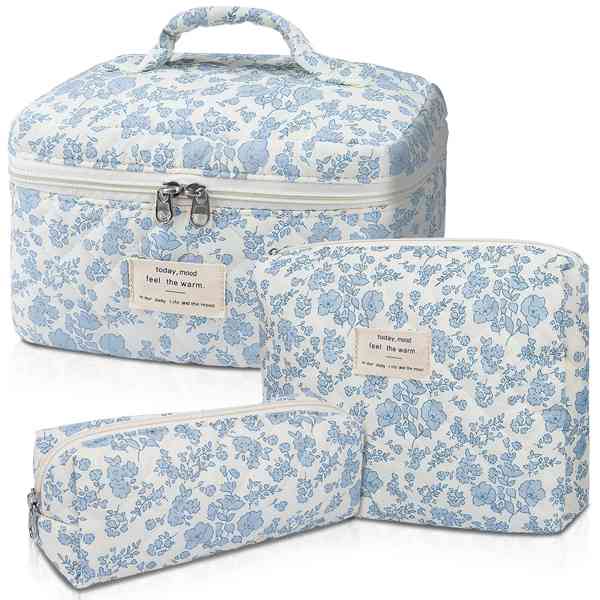
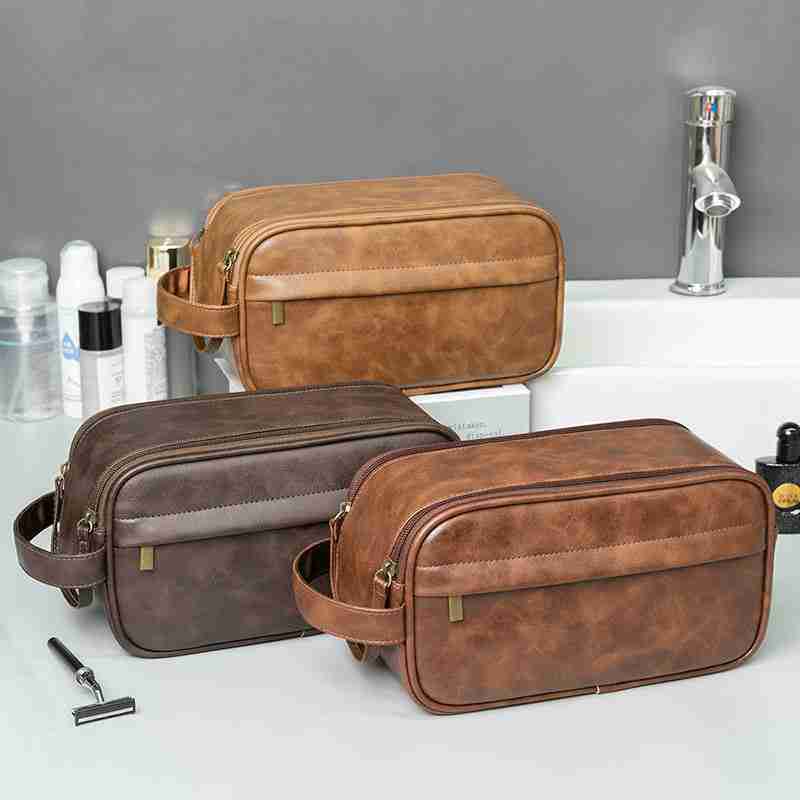
Material choice shapes the whole personality of a cosmetic bag. It changes handfeel, cleanability, structure, wipe-down behavior, print style, and perceived value. Public makeup bag pages and pouch listings repeatedly spread across a familiar material mix: canvas and cotton blends for a softer, giftable feel; nylon or polyester for lighter travel use; PU for a smoother, more polished finish; PVC for visibility and wipe-clean practicality; and recycled fabrics when the collection needs a stronger sustainability message.
Canvas can feel warm and gift-ready, but may not be ideal for frequent spill exposure unless the inside is planned well. Nylon packs lightly and works well in travel kits. PU can give a cleaner, more polished look. PVC gives immediate visibility and fast wipe-down use. Recycled fabric helps when the pouch is part of a wider eco-minded collection.
Material Match Table
| Material | Stronger fit |
|---|---|
| Canvas or cotton blend | Gift sets, soft-touch collections |
| Nylon or polyester | Travel kits, lighter everyday use |
| PU | Polished finish, beauty-counter feel |
| PVC | Clear visibility, wipe-clean use |
| Recycled fabric | Eco-minded sets and brand stories |





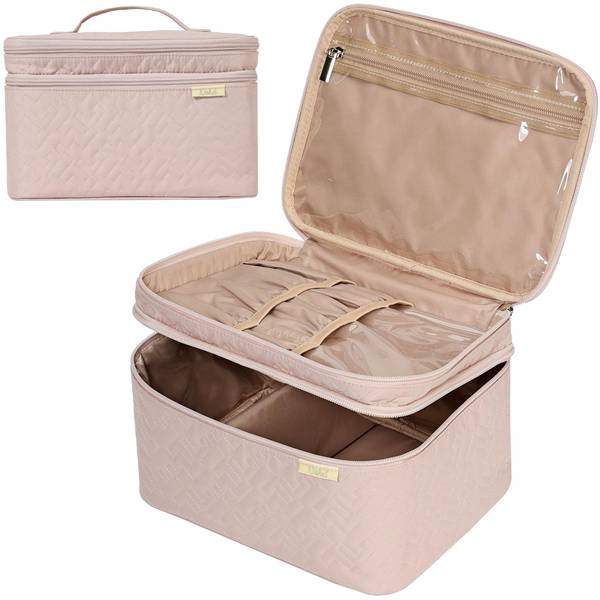


Lining and Spill Control Matter
A cosmetic bag is judged twice: once when it is opened for the first time, and again after real use. That second moment is where the lining starts to matter. Beauty-focused bags repeatedly emphasize water-resistant linings, easy-clean interiors, and materials that handle spills better, because creams, powders, oils, and travel-size liquids quickly expose weak construction. A good outer fabric can still feel disappointing if the inside absorbs stains, wrinkles badly, or makes cleanup frustrating.
The smarter way to plan the inside is to match it to the product mix. A pouch for dry makeup sticks may need only a neat, stable lining. A skincare or toiletry set usually benefits from a more wipe-clean interior. A travel pouch with minis and bottles should also consider seam finish, base shape, and whether small leaks will sit in a corner or spread across the whole bag.
Inside-Use Table
| Use scene | Better interior direction |
|---|---|
| Dry makeup set | Clean lining, tidy structure, low bulk |
| Skincare pouch | Wipe-clean inside, smoother seam finish |
| Travel minis | Spill-aware lining, easier corner cleanup |
| Gift pouch | Softer inside feel, cleaner opening impression |
Structure Shapes Daily Use
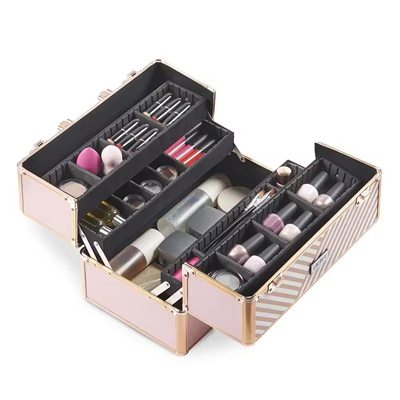
A cosmetic bag may look attractive when zipped shut, but daily experience begins when it is opened. Public cosmetic pouch listings repeatedly call out zippered closure, bottom gusset, compartments, and more durable zipper choices because these are the details that decide whether a bag feels smooth, stable, and easy to use. A gusseted canvas pouch can hold more and stand better. A dome shape gives more top room. A flat pouch slips into a suitcase more easily but may become messy once filled. Stronger zipper selection also matters more on beauty pouches than many teams expect, especially when they are opened and closed several times a day.
One useful test is simple: how does the bag behave on a vanity or bathroom counter? Does it collapse the moment it opens? Does the zipper catch at the corners? Does the base stay level when partly filled? Can someone find a brush, lip product, or bottle quickly without emptying the whole pouch? These are the details that turn a bag from “looks nice in a set” into “gets used every day.”
Daily-Use Structure Table
| Detail | What it changes |
|---|---|
| Zipper quality | Smooth opening, fewer frustration points |
| Bottom gusset | More capacity, better standing shape |
| Base stability | Cleaner counter use |
| Opening width | Faster access to small items |




Small Logos Need Discipline
On a cosmetic bag, the logo sits on a much smaller canvas than on a tote or duffel, which means proportion matters more. Public customization pages repeatedly emphasize logo, zipper, lining, packaging, and finishing as linked decisions, not separate add-ons, because small bags lose balance quickly when branding is oversized or scattered. A logo that feels clean on artwork can become awkward once the pouch is filled, curved, or partly folded in use. On some shapes, a smaller mark placed lower or off-center may feel more refined than a large centered print.
The better approach is to decide branding together with fabric texture, shape, zipper line, and use a scene. A gift-ready canvas pouch may suit a quieter woven label or a small print. A glossy PU bag may carry a cleaner embossed or metal detail. A clear PVC case often needs restraint so the contents, zipper, and brand mark do not compete at the same time.
Small-Bag Branding Table
| Branding direction | Better fit |
|---|---|
| Small front print | Clean daily-use pouches |
| Woven label | Softer, quieter branding |
| Embossed / debossed | More polished surface feel |
| Metal plate | Structured, gift-ready finish |
| Clear PVC restraint | Keep logo readable without clutter |
Programs Need Different Specs
A cosmetic bag can sit inside very different programs, and that is exactly why one generic spec rarely works well. A gift-with-purchase pouch usually needs fast visual appeal, a balanced logo, and a size that fits the hero products neatly. A retail set bag often needs a stronger finish, cleaner shape, and a more deliberate opening experience because it is judged as part of the sellable set. A travel kit pouch leans more on wipe-clean interiors, compact packing, and easy visibility. An amenity bag usually cares more about cost discipline, neat presentation, and efficient packing.
The smarter way to set specs is to ask what the pouch must do after it is received. Should it feel giftable, photograph well in a launch box, survive suitcase use, sit neatly on a vanity, or move quickly through large-scale distribution? Once that is clear, decisions around fabric, lining, zipper, base shape, print method, and packing become much easier.
Program-Spec Table
| Program type | Better spec direction |
|---|---|
| Gift with purchase | Strong first look, neat size match, balanced branding |
| Retail set | Cleaner finish, stronger shape, better shelf feel |
| Travel kit | Easy-clean interior, compact structure, quick access |
| Amenity pouch | Efficient spec, tidy presentation, pack-friendly layout |







Trials Need Cost Discipline
Most cosmetic bag sampling delays do not begin at the sewing table. They begin when the project starts with a loose brief. Public workflow guides describe a clear sequence: design definition, material selection, pattern development, sampling, revision, bulk planning, quality control, packaging, and shipment. That sequence works best when the front-end decisions are clear enough to stop one small change from triggering five more.
For cosmetic bags, the most useful items to lock early are usually finished size, intended contents, outer material, lining type, zipper direction, logo method, and packing plan. It also helps to confirm what should not change between sample and bulk: logo scale, print position, edge finish, gusset depth, lining color, and hangtag or barcode placement if the pouch is part of a retail or amenity program.
A useful sample is not just a pretty prototype. It is a decision tool. The more clearly it defines what the final pouch should feel like, hold like, open like, and pack like, the less time is lost later in avoidable correction rounds.
Pre-Sampling Lock List
| Lock before sample | Why it matters |
|---|---|
| Finished size | Controls capacity and proportion |
| Product mix inside | Prevents wrong shape choice |
| Material and lining | Protects feel and cleanability |
| Zipper style | Affects daily use and visual tone |
| Logo method | Keeps branding realistic on a small surface |
| Packing plan | Avoids late-stage disruption |
Keep Shape, Clean Finish
Many cosmetic bags look acceptable in one approved sample but lose their appeal in bulk because the finish is not controlled tightly enough. Public production guides repeatedly stress material inspection, pattern accuracy, in-line checks, zipper testing, visual inspection, and packaging verification because soft goods often drift in small ways before they fail in big ways. A pouch may still zip shut and technically “pass,” while already looking weaker than the approved sample because the shape has softened, the edge paint or binding looks uneven, the gusset is not symmetrical, or the print placement has shifted slightly.
For cosmetic bags, the most common quality loss is rarely dramatic. It is usually visual. The bag feels flatter than planned, the corners look dull, the zipper line curves unevenly, the PVC wrinkles badly, or the canvas edge finish looks dusty and rushed. That is why good bulk control must watch both function and appearance at the same time.
The best prevention is simple: hold the bulk output against one sealed reference sample, and inspect the places where cosmetic bags visually “give up” first — base shape, zipper line, edge finish, print balance, lining neatness, and packing cleanliness.
Finish-Risk Table
| Risk area | What to watch |
|---|---|
| Base shape | Collapse, asymmetry, weak standing behavior |
| Edge finish | Dirty binding, rough paint, rushed trimming |
| Zipper line | Waviness, uneven tension, poor opening feel |
| Logo position | Off-balance look on small surfaces |
| PVC / coated surface | Wrinkles, scratches, dull clarity |
| Packing cleanliness | Dust, crease marks, poor presentation |


Make A Sample First?
See your idea come to life before mass production.
At Jundong Factory, we offer free design mockups and custom samples to ensure every detail is perfect — from material and color to logo placement and stitching.
Start your project with confidence today: info@jundongfactory.com.
FAQs About Custom Makeup Bags With Logo
What Is a Practical Starting Quantity for Custom Cosmetic Bags?
A practical starting quantity is usually set by the program behind the pouch, not by the pouch alone. A gift-with-purchase run, a travel mini set, a beauty-counter add-on, a holiday box, and an amenity kit can all use cosmetic bags, but they do not follow the same quantity logic. Broader custom-bag guides tie quantity to artwork, material choice, and packaging complexity. That means the real issue is rarely “What is the absolute lowest number possible?” It is “What quantity gives this project enough room to look right, pack right, and land at the right cost level?”
A useful way to think about quantity is to separate it into three phases. The first is a test phase. This is where the pouch helps confirm handfeel, zipper action, logo clarity, and whether the chosen shape actually suits the product mix. The second is a launch phase, where the quantity must support a retail drop, event date, gift campaign, or travel-set rollout without turning the spec into something too stripped down. The third is a repeat phase, where quantity is no longer only about access. It becomes about stability: carton ratios, color repeatability, packing flow, and freight efficiency start to matter more.
Many teams make the same mistake at the beginning: they chase the smallest possible run before they know whether the pouch is expected to feel giftable, travel-friendly, retail-ready, or purely promotional. That can push the structure in the wrong direction. A pouch that exists only to hit a very low entry quantity may end up too thin, too soft, or too visually weak for the job it is supposed to do. In beauty, that is a real risk because the bag is often photographed, handled at close distance, or kept after the products are gone. The stronger starting quantity is the one that still leaves room for the right lining, usable zipper, realistic logo execution, and clean packing result.
Quantity planning table
| Project stage | Better quantity logic |
|---|---|
| Test run | Confirm look, feel, zipper, and logo |
| Launch run | Match event, retail, or gifting volume |
| Repeat run | Plan around packing ratios and consistency |
Which Material Works Best for a Cosmetic Bag Project?
The best material is the one that matches the real use scene, the product mix inside, and the finish the pouch is supposed to communicate. Public cosmetic bag pages consistently spread across a broad but practical material set: canvas, nylon, polyester, PU, PVC, and sometimes more specialized options like neoprene, coated fabrics, or recycled materials. Those materials do not appear repeatedly by accident. Each one solves a different problem. Canvas and coated canvas are often used when a softer, giftable, or lifestyle feel is needed. Nylon and polyester suit lighter travel use and easy handling. PU is often chosen for a cleaner, more polished counter feel. PVC and clear materials are used where visibility and wipe-clean practicality matter. Some guides also mention neoprene for softer protection and flexible travel use.
Material choice should be judged together with the inside story of the pouch. A bag carrying lip products and compact powders behaves differently from one carrying travel bottles, sheet masks, or skincare minis. A travel pouch often benefits from lighter weight, wipe-clean surfaces, and easy visibility. A gift set pouch may care more about touch, drape, and the way the material photographs in a box. A retail cosmetic bag usually needs a more deliberate finish that still feels good after repeated opening and closing.
The most common mistake is selecting material only from a trend moodboard. A fabric may look right in isolation but feel wrong once combined with lining, zipper, logo method, and actual contents. A soft canvas pouch may feel warm and elevated, but it needs the inside to be planned carefully if spill exposure is likely. A clear PVC pouch may solve visibility and travel sorting beautifully, yet look too utilitarian for a premium gift box if the finishing is not balanced well. A polished PU surface may feel more premium at first glance, but it still needs realistic testing around edge finish, wrinkle behavior, and zipper interaction. We usually choose material by asking four practical questions: What goes inside? Where will it be used? How should it be cleaned? What should it feel like six months later?
Material-fit table
| Material | Stronger fit |
|---|---|
| Canvas / coated canvas | Gift sets, lifestyle feel, softer hand |
| Nylon/polyester | Travel kits, lighter carry, easier handling |
| PU | Cleaner finish, polished look |
| PVC / clear material | Visibility, wipe-clean use, travel sorting |
| Neoprene | Soft protection, flexible travel use |
What Should Be Ready Before Sampling Starts?
The sample phase moves faster when the project starts with decisions, not guesses. Public workflow and sampling guides for cosmetic bags keep returning to the same pattern: define the concept clearly, choose the material direction, build the pattern, sample it, review it, revise it, and only then move toward bulk. Sampling-speed guidance published for makeup bags also notes that a reliable prototype is typically judged against material type, dimensions, structure, zipper placement, and functional accuracy, not only appearance. That is a useful reminder because many cosmetic bag delays are not caused by stitching alone. They start much earlier, when the brief is too loose.
A practical sample brief for a cosmetic bag usually needs six core items. The first is the finished size. The second is what goes inside: minis, bottles, brushes, masks, or a mixed routine. The third is outer material plus lining direction. The fourth is zipper path and opening behavior. The fifth is the logo method and placement. The sixth is packing intention: gift box, retail shelf, travel set, amenity program, or direct shipment.
The artwork does not need to be perfect on day one, but it should already be useful. A vector logo, preferred print area, zipper color direction, and at least one reference image can save days of back-and-forth. It also helps to be explicit about what the pouch should feel like in use. “Elegant,” “clean,” or “premium” are too open unless they are tied to real features such as wipe-clean lining, soft handfeel, polished surface, standing base, or compartment logic. A strong sample is not only a good-looking object. It is a way to remove uncertainty. The more clearly the first brief defines the target, the more each sample round can do real work instead of only narrowing down confusion.
Sample brief checklist
| Item | Why it matters |
|---|---|
| Finished size | Controls capacity and proportion |
| Contents inside | Prevents wrong shape decisions |
| Material + lining | Protects handfeel and cleanup logic |
| Zipper direction | Changes the daily use experience |
| Logo method | Keeps branding realistic on a small surface |
| Packing intention | Avoids late-stage disruption |
Which Logo Method Works Best on Cosmetic Bags?
The best logo method is the one that fits the bag surface, the scale of the pouch, and the role the bag plays in the set. Public cosmetic bag pages repeatedly connect customization with logo, material, zipper, lining, and packaging, which is a useful signal: branding on a small pouch cannot be planned in isolation. A front print that feels clean on canvas may look too loud on glossy PU. A clear PVC bag may need a far more restrained brand mark because the contents are already visible and visually active. Some beauty-bag guides also mention embroidery, embossing, or cleaner print methods depending on whether the pouch is travel-oriented, retail-facing, or gift-led.
Cosmetic bags are more sensitive to logo proportion than larger bags because the printable area is small and the surface often bends once filled. That is why “bigger” is rarely “better.” A large mark may dominate the pouch when empty and then distort visually when the bag is partly full. A woven label, smaller print, debossed logo, or discreet metal element may look calmer and more expensive depending on the material. Public logo-focused makeup bag content stresses placement and printing method precisely because the bag is handled at close distance. The logo is not read from across a room. It is read from the hand, the vanity, the gift box, or the travel kit.
The safest way to choose logo execution is to review it with the real material, real zipper, and real fill state in mind. On a gift pouch, quiet refinement often works better than aggressive branding. On a travel pouch, readability may matter more than decorative detail. On a retail cosmetic bag, the finish must still look deliberate after repeated use, not only in launch photography. The strongest outcome usually comes from evaluating four things together: surface texture, logo size, placement, and how the pouch behaves once filled. That turns logo choice from a style guess into a controlled design decision.
Logo method guide
| Method | Better fit |
|---|---|
| Small front print | Clean everyday-use pouches |
| Woven label | Softer, quieter brand presence |
| Emboss / deboss | Polished surface feel |
| Embroidery | Select gift or lifestyle styles |
| Restrained clear-bag logo | Keeps visibility without clutter |
How Long Do Sampling and Bulk Production Usually Take for Cosmetic Bags?
Most cosmetic bag timelines are driven more by clarity and complexity than by sewing alone. Public makeup-bag sampling guidance says a reliable prototype is often produced within 5–10 days when the brief is clear enough, while broader custom-bag sites usually present a wider production window once the project moves into bulk because quantity, finishing, and packaging begin to matter more. That matches the reality of cosmetic bags well: a simple flat travel pouch with one print moves very differently from a gusseted retail bag with lining, structured base, multiple trims, and branded packing.
Sampling time depends on what must be resolved before the first physical bag is made. If the size, outer material, lining, zipper, and logo approach are already clear, development usually moves faster. If the project still needs shape comparison, lining tests, zipper-color decisions, or more than one revision round, the schedule expands quickly.
A practical timeline should be split into four stages: sample preparation, sample review, bulk production, and packing/shipment. Many delays blamed on “production” are actually caused by late artwork changes, uncertain lining choices, hangtag revisions, or packaging instructions that arrive after the pouch is already approved. Cosmetic bags are especially sensitive to this because small details carry more visual weight: zipper color, gusset depth, edge finish, and logo balance are noticed quickly. The safest schedule is not the shortest one on paper. It is the one with the fewest unresolved decisions left hanging in the middle. When a launch date matters, the best time-saving move is usually to lock the spec earlier, not to squeeze the factory later.
Timing view
| Stage | What affects it most |
|---|---|
| Sampling | Brief clarity, material choice, zipper, and lining decisions |
| Review | Number of comments and revision rounds |
| Bulk | Quantity, structure, trim count, packing detail |
| Shipment | Labels, cartons, booking, route requirements |
Can You Match Pantone Colors and Keep Them Consistent Across Reorders?
Pantone matching can usually get very close, but repeatable color control depends on more than the color code itself. On cosmetic bags, the same code can look different once it moves across canvas, nylon, polyester, PU, PVC, coated fabric, or different lining surfaces. Surface texture, coating, gloss level, print method, and even edge finishing can slightly change how the color is perceived. That is why a color should never be approved by code alone. It should be reviewed on the actual material direction chosen for the pouch, with the intended logo method and finish already considered.
This matters even more on beauty-related items because people often see them at close distance. A color mismatch on a large shipping carton may be tolerated. A color mismatch on a cosmetic pouch sitting inside a gift box, on a vanity, or in a travel kit is far more noticeable. It affects not only brand consistency but also how refined the whole set feels. This is especially true when the pouch is paired with skincare packaging, beauty branding, or a private-label collection where the bag and the products need to look like they were designed together.
A safer color process usually follows four checkpoints. The first is material confirmation, because the fabric of the body decides how the color will sit. The second is color reference alignment, usually through a code, swatch, or approved sample target. The third is logo and finish confirmation, because printing, embossing, coating, and zipper/trim color all influence how the body color reads. The fourth is approved sampling before bulk, so the pouch becomes a real visual standard rather than a theoretical one.
For reorders, consistency becomes easier when one approved sample is sealed and kept as the comparison anchor for future runs. It also helps to lock what should not drift: body material, lining color, zipper tape, trim shade, print density, and finish level. The most common mistake in repeat orders is assuming that “same code” automatically means “same result,” even when a fabric batch, surface treatment, or print method has quietly changed.
Color stability table
| Control step | What it protects |
|---|---|
| Material confirmation | Prevents color shift across different surfaces |
| Color sample approval | Creates a real visual reference |
| Logo/finish confirmation | Keeps body color and branding aligned |
| Sealed reorder sample | Makes future comparison easier |
How Can We Keep the Sample and Bulk Output Consistent?
Sample-to-bulk consistency is usually protected by early detail locking and repeated checks, not by memory alone. Cosmetic bags may look simple, but they are highly sensitive to small deviations. A slightly softer body, a zipper line that curves differently, a lining that reflects light in another way, or a logo placed a little too high can make the bulk run feel weaker than the approved sample, even when the pouch is still technically usable. That is why the approved sample must function as a working standard, not just an attractive prototype.
A stronger consistency process begins before production starts. The sample stage should lock the details that are easy to overlook but hard to repair later: outer material, lining type, finished size, gusset depth, base behavior, zipper style, logo scale, logo position, edge finish, and packing direction. Once these are clear, the approved sample can be paired with a written specification sheet so the production team is not relying on visual guesswork. This is especially important on cosmetic bags because many of their strongest signals are visual and tactile rather than purely functional. If the pouch looks slightly flatter, feels cheaper at the zipper, or appears less clean around the edges, the difference is noticed immediately.
Our factory clearly includes Rapid Sampling, Sample Revision & Adjustment, Multi-Round Sampling Support, Material Sample Confirmation, Color Sample Confirmation, Logo Sample Approval, and Pre-Production Sample review. It also ties quality control to Incoming Material Inspection, In-Process Quality Control, and Final Product Inspection. That combination matters because consistency is rarely protected by one inspection at the end. It is protected by a chain of checks that catches drift before it spreads.
For repeat projects, the safest habit is to keep one sealed approved sample from the last accepted run and compare bulk output against it at key stages. If the order includes several colors, sizes, or pack configurations, consistency depends even more on clear records. A useful test is simple: can someone looking at the approved sample state exactly what must stay unchanged when this becomes 3,000 or 30,000 pieces?
Consistency control table
| Control tool | What it protects |
|---|---|
| Approved sample | Visual and handfeel reference |
| Specification sheet | Prevents hidden drift |
| In-process checks | Stops issues before they spread |
| PP sample review | Confirms bulk-readiness |
| Final inspection | Checks finished with consistency |
What Details Usually Cause Quality Problems in Cosmetic Bags?
Most quality issues in cosmetic bags start at stress points, finish lines, and cleanup-sensitive areas rather than in the basic silhouette. Cosmetic bags are judged closely, which means flaws that might be overlooked on a larger carry bag often become highly visible here. The most common risk areas are usually zipper path, base shape, gusset symmetry, lining attachment, edge finish, logo balance, and packing cleanliness. These are the places where a pouch first begins to look cheaper than intended, even before it fails functionally.
The zipper is one of the first places where problems show up. If the tape is uneven, the track is not set cleanly, or the curve at the corners is rushed, the bag may still close but feel rough every time it is opened. The base and gusset are the next common trouble spots. A cosmetic bag with a weak base may photograph well when empty, yet collapse awkwardly once filled with bottles or tubes. Asymmetrical gussets can make the pouch look twisted on a counter. Lining problems are also common: bunching at the corners, poor wipe-clean behavior, visible stitching irregularity, or a lining that floats too loosely inside the shell can all weaken the finished feel.
Our factory’s internal quality structure already targets the right zones because it includes Incoming Material Inspection, In-Process Quality Control, Final Product Inspection, Functional Testing, Durability Testing, and Inspection Report Preparation. Cosmetic bags benefit from this layered approach because their failures are often gradual rather than dramatic. The bag does not need to rip apart to disappoint. It can disappoint by looking tired, dirty-edged, uneven, or poorly packed.
A useful way to inspect cosmetic bags is to look where they visually “give up” first. Check whether the bag still stands as intended, whether the zipper line stays level, whether the logo still reads well when the pouch is filled, whether the lining stays neat after opening and closing, and whether the bag remains clean and presentable after packing. Those details decide whether the finished pouch still feels worth keeping.
Risk-area table
| Risk area | Typical issue |
|---|---|
| Zipper line | Rough opening, waviness, poor tension |
| Base/gusset | Collapse, twisting, weak standing shape |
| Lining | Bunching, stains, messy inside look |
| Edge finish | Dirty binding, rough paint, rushed trim |
| Logo balance | Off-center or awkward on filled bags |
| Packing cleanliness | Dust, crease marks, poor first impression |
Can One Order Include Multiple Colors, Sizes, or Packing Setups?
Yes, one order can include multiple colors, sizes, or packing setups, but once variables increase, order control becomes just as important as sewing quality. This is common in beauty projects. A travel set may need one small pouch and one larger case. A gifting campaign may want several body colors with the same logo. A retail collection may require separate packaging flows for online and store use. A hotel or amenity program may need one structure but different insert cards or language labels by destination. None of these is unusual. The real issue is whether the project is organized clearly enough to keep those differences under control.
A mixed order usually runs better when it is treated as one coordinated system instead of several loose ideas grouped. That means building a clear SKU sheet, color list, size chart, logo reference, pack ratio plan, and carton marking logic before bulk starts. If one color needs a woven label and another does not, that should live in the specification. If one pouch size is packed inside a gift box and another is packed individually, that should be locked before production, not decided while the goods are already moving.
Mixed orders often make a project smarter, not harder. They can reduce freight inefficiency, help a collection feel more coherent, and allow one campaign to cover several price points or product groups at once. But complexity should be introduced on purpose. Once too many differences are added without a matching control sheet, the risk of wrong colors, wrong labels, wrong inner packs, or wrong cartons rises quickly. The goal is not to avoid variety. It is to organize variety so that the order still flows cleanly from sampling to packing.
A good test is simple: if someone outside the original project team received the order sheet, could they still tell which pouch goes in which box, which color needs which logo treatment, and which cartons belong to which shipment? If not, the order is probably more complex than the paperwork can currently support.
Mixed-order control table
| Control item | What it prevents |
|---|---|
| SKU sheet | Size and style confusion |
| Color list | Wrong body-color assignment |
| Packing ratio | Mix-ups during packing |
| Carton marks | Shipment and warehouse errors |
| Reference sample set | Drift between variations |
What Packing Details Should Be Confirmed Before Bulk Production?
Packing should be confirmed before the bulk starts because a cosmetic bag is not truly finished until it is ready to move through the next system. For beauty-related pouches, the key packing decisions often include individual polybag or not, tissue or no tissue, insert card, barcode, hangtag, warning label, gift-box fit, inner pack quantity, carton quantity, carton marks, and route-specific labeling. These details may look secondary when a team is focused on materials and appearance, but they become critical the moment the pouch has to enter retail, gifting, travel fulfillment, amenity distribution, or export delivery.
The correct packing plan depends on what the pouch must do after production. A gift set bag may need clean folding, tissue, and a presentation-ready shape when it is opened. A retail cosmetic bag may need barcode accuracy, stable carton quantities, and shelf-friendly presentation. A travel-set pouch may need lighter, space-efficient packing that still protects the zipper and finish. An amenity pouch may care more about fast counting, clear labeling, and efficient large-volume handling. Once the end use is clear, packing becomes much easier to design correctly. Without that clarity, teams often finalize a nice pouch but delay the project because the bag is ready, while the delivery format is not.
Packing decisions also protect appearance. Cosmetic bags are easily affected by dust, pressure lines, zipper distortion, surface scratches, and crush marks during handling. That means “how it is packed” is part of “how it looks” when received. For some projects, one extra insert card or one small protective layer can make the difference between a pouch that arrives clean and one that arrives looking tired. For others, over-packing only creates cost and waste. The right packing plan is not the most elaborate one. It is the one that protects the pouch, fits the channel, and matches the real handling route.
A practical packing discussion should answer five simple questions before bulk begins: How is the pouch packed individually? How is it identified? How many go into each inner pack or carton? What must be visible to the receiving side? What route or platform requirements must already be met? When those answers are clear, production, counting, warehousing, and shipment usually become smoother at the same time.
Packing confirmation table
| Packing item | Why it should be locked early |
|---|---|
| Polybag/tissue / insert | Protects appearance and opening experience |
| Barcode/hangtag/warning label | Supports receiving and channel flow |
| Inner pack/carton quantity | Prevents count errors |
| Carton marks | Improves warehouse and shipment accuracy |
| Route-specific labels | Reduces delivery friction |
Everything You Need to Know Before Customizing Your Bags
A custom makeup bag with logo may look simple, but the decisions behind it are rarely simple. The bag needs to work across product mix, gifting use, travel packing, shelf presence, logo method, lining choice, zipper function, wipe-clean performance, and final pack-out at the same time. A pouch for beauty retail, gift-with-purchase, skincare sets, cosmetic kits, travel minis, or promotional launches should not all be built the same way.
The FAQs below focus on the details that usually decide whether a logo cosmetic bag feels worth keeping, samples smoothly, scales more cleanly, and arrives looking consistent.
