 Skip to content
Custom Luggage for Travel Brands and Retail Programs
Develop retail-ready luggage, carry-on suitcases, checked luggage, luggage sets, and travel accessories with Jundong.
- Built for travel brands, retail luggage programs, private label suitcase lines, hospitality travel gifts, and long-term travel product collections.
- Jundong supports luggage projects from shell and fabric review, wheel and trolley selection, logo details, sample development, bulk production, QC, packaging, labels, and delivery planning.
- 20+ years of OEM/ODM experience, 600+ employees, a 18,000㎡ production area, and 80 QC inspectors help support custom bag and luggage projects from sample to shipment.
- Send luggage type, size, material, wheel direction, trolley handle request, logo file, quantity, packaging needs, delivery date, and destination for review.

Custom Luggage Needs More Than A Logo
Custom luggage for travel brands and retail programs should be planned around real travel use, retail handling, and repeat production. A strong luggage project should review shell material, fabric, size, wheel system, trolley handle, lock, zipper, lining, inner divider, logo detail, packing, barcode, SKU rule, QC focus, and delivery timing before bulk production.

Luggage Carries Brand Trust
A suitcase is tested by real movement. It rolls through airports, hotel floors, sidewalks, elevators, car trunks, and warehouse handling. A good front view is not enough. Wheels should move smoothly. The trolley handle should feel stable. The shell or fabric should match the target travel use. The zipper, frame, lock, corner, top handle, side handle, and inner divider should all follow the approved standard.
For travel brands and retail programs, luggage also needs a clear product system. A carry-on suitcase, checked luggage, 20/24/28-inch luggage set, or travel accessory line should feel consistent in color, material, logo style, lining, packaging, and carton rules.
Retail Programs Need Extra Control
Retail luggage projects are sensitive to size, weight, SKU separation, box protection, and repeat consistency. A suitcase may pass visual review but still create trouble if the wheel noise is high, the trolley handle feels loose, the barcode label is wrong, the carton mark is unclear, or the nested set packing crushes the inner product.
Jundong helps connect the approved sample with material records, component records, logo files, packing files, QC focus, and shipment preparation. The goal is simple: make the luggage look right in retail, move well in real travel, and stay consistent across the full order.
Luggage Programs Need Different Development Paths
Travel Brands
Travel brands need luggage that can carry a clear product identity across multiple sizes and styles. A brand collection may include carry-on luggage, checked luggage, luggage sets, hardside cases, softside cases, packing cubes, luggage tags, toiletry bags, passport holders, and travel organizers. The goal is not only one suitcase, but a travel product system.
Jundong can review travel brand details before sampling:
- Size series such as 20-inch, 24-inch, and 28-inch
- ABS, PC, PC+ABS, PP, soft fabric, or mixed material direction
- Wheel, trolley handle, lock, zipper, frame, and inner divider selection
- Shell logo, metal plate, zipper puller, custom lining, or hangtag
- Color system, retail packing, SKU labels, and carton marks
- Sample records for future repeat orders
Retail Programs
Retail luggage programs need clean product presentation and warehouse-ready control. A retail team may need carry-on suitcases, checked luggage, luggage sets, private label spinner luggage, travel accessories, or seasonal luggage collections. Each product may involve several colors, sizes, SKUs, barcodes, hangtags, and carton rules.
Jundong can support retail planning through:
- SKU separation by size, color, style, or set
- Barcode label, hangtag, carton mark, and outer box planning
- Nested set packing, protective film, dust bag, or outer carton protection
- Wheel, handle, zipper, lock, lining, and shell inspection focus
- Bulk record for repeated production and replenishment
- Delivery planning by destination, warehouse, or retail schedule
Private Label Projects
Private label luggage projects often begin with a mature suitcase structure, then adjust material, color, logo, lining, components, packing, and retail details. This path can help brands build a luggage program without starting from a fully new mould every time. The key is to select a structure that already matches product position and then customize the right details.
Jundong can review private label luggage elements such as the following:
- Carry-on, checked luggage, luggage set, hard shell, or softside direction
- Shell color, fabric color, lining color, and trim color
- Logo method, metal plate, zipper puller, inner label, or custom lining
- Wheel type, trolley handle, TSA lock, zipper, frame, and corner detail
- Gift packing, retail labels, barcodes, SKUs, and carton marks
- Quantity, sample time, bulk schedule, and delivery route
Select Luggage Materials By Use And Channel
Luggage material affects weight, shell feel, impact direction, surface finish, logo method, cost, packing volume, and retail position. Material should be selected with size, structure, components, and delivery channel before sampling begins.


| Material Option | Best Fit | Key Benefit | Risk To Review |
|---|---|---|---|
| ABS | Cost-balanced hardside luggage, promotional travel sets, entry retail luggage | Good shape options, stable color choices, cost-friendly for volume programs | Impact resistance, scratch visibility, shell thickness, corner strength, and surface finish should be reviewed before approval. |
| PC | Mid-to-premium hardside luggage, travel brand collections, retail carry-on programs | Stronger flexible feel than basic ABS, cleaner premium look, good for refined travel lines | Higher material cost, surface marks, mould detail, shell thickness, and weight balance need review. |
| PC+ABS | Retail luggage sets, private label suitcase lines, cost-performance programs | Balances shell feel and cost, useful for 20/24/28-inch programs | Ratio direction, surface texture, impact performance, color consistency, and batch stability should be confirmed. |
| PP | Lightweight luggage, flexible shell direction, selected travel programs | Light feel, flexible structure potential, useful for certain modern designs | Mould structure, thickness, surface finish, color availability, and component matching need early review. |
| Aluminum Frame | Premium luggage, business travel, higher-value retail lines | Stronger structured look, firm closure, premium appearance | Weight, frame alignment, corner protection, lock position, cost, and packing protection require closer checking. |
| Polyester Oxford | Softside luggage, business travel bags, retail soft luggage, travel sets | Flexible, durable textile direction, useful for pockets and expandable sections | Denier, coating, abrasion, zipper strength, sewing reinforcement, and water resistance direction should be reviewed. |
| Nylon Oxford | Lightweight softside luggage, travel accessories, outdoor travel lines | Smoother hand feel, lighter structure, good for travel accessory matching | Fabric slip, sewing tension, color consistency, coating, logo adhesion, and lining support need checking. |
| RPET Fabric | Sustainability-themed travel programs, retail accessories, corporate travel gifts | Recycled material story, useful for fabric luggage and accessories | Source documents, claim wording, fabric strength, color availability, and logo result should match program needs. |
A material choice should never stand alone. A PC shell may look premium, but weak wheels or a loose trolley handle will still damage product value. A strong softside fabric still needs a good zipper, reinforcement, lining, and carton protection. Jundong reviews material direction together with structure, component choice, logo method, packing, and delivery plan.
Build Luggage Around The Travel Product Line
A travel luggage program should match the end use, retail channel, storage plan, and future reorder needs. Carry-on luggage, checked luggage, hard-shell cases, softside luggage, and travel accessories each need different material, structure, component, and packing decisions.
Checked Luggage

Checked luggage needs stronger attention to shell strength, wheelbase, handle support, corner protection, zipper or frame stability, and packing volume. It faces rougher handling than carry-on luggage because it may move through airports, conveyors, transport trucks, hotel storage, and long-distance shipping. A clean appearance is important, but durability details matter more.
- Common size direction: 24-inch and 28-inch checked luggage
- Key parts: shell, wheels, top handle, side handle, corner protection
- Best fit: retail luggage sets, travel brands, long-trip programs
- Review focus: shell resistance, wheel strength, handle support, carton protection
Luggage Sets

Luggage sets help travel brands and retail programs build a stronger product story. A 20/24/28-inch set gives a clear size ladder and supports family travel, retail bundles, and seasonal travel promotions. The challenge is consistency. Color, shell texture, wheel style, trolley handle, lining, logo, hangtag, barcode, and carton marks should stay aligned across all sizes.
- Common set direction: 20/24/28-inch
- Key parts: size grading, nested packing, color consistency, SKU separation
- Best fit: retail launches, travel collections, private label luggage lines
- Review focus: nested carton size, color record, set packing, warehouse label
Carry-On Luggage

Carry-on luggage is often the first style a travel brand develops because it is easy to position for business trips, weekend travel, airline programs, online retail, and corporate travel gifts. A strong carry-on should balance size, weight, wheel movement, trolley handle stability, inner layout, and retail presentation. The design should not only look compact; it should feel smooth when pulled, easy to lift, and clear inside.
- Common size direction: 20-inch carry-on
- Key parts: spinner wheels, trolley handle, TSA lock, zipper, inner divider
- Best fit: travel brands, retail luggage programs, employee travel gifts
- Review focus: weight, wheel movement, handle feel, packing space, label position
Hardside Luggage

Hardside luggage gives a modern retail look and supports strong visual branding. ABS, PC, PC+ABS, PP, and aluminum frame structures can all serve different price and performance levels. Hardside projects need material, shell thickness, mold shape, wheel base, zipper or frame structure, handle placement, logo method, and surface protection review.
- Material options: ABS, PC, PC+ABS, PP, aluminum frame
- Key parts: shell, frame, wheels, lock, corner shape, inner divider
- Best fit: retail suitcase programs, DTC travel brands, premium travel lines
- Review focus: shell surface, impact direction, weight, scratch control, logo detail
Travel Accessories
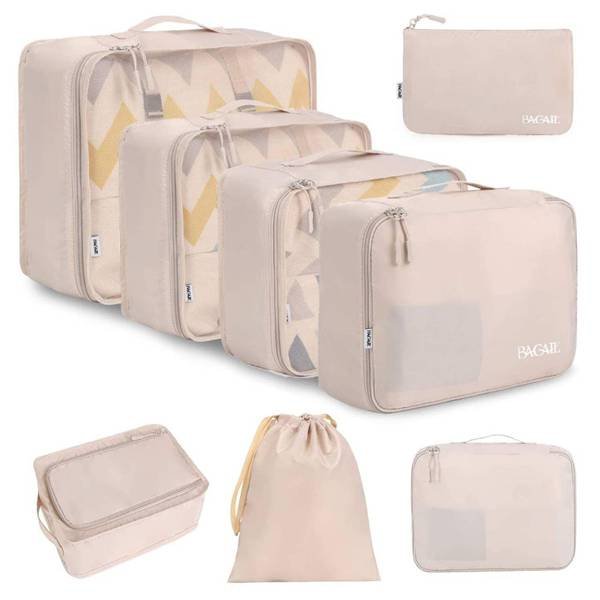
Travel accessories help complete a retail luggage program. Packing cubes, toiletry bags, luggage tags, passport holders, shoe bags, laundry pouches, tech pouches, and travel organizers can match the main luggage line in color, logo, material, and packaging. These products can strengthen retail display and increase gift set value.
- Common items: packing cubes, luggage tags, toiletry bags, passport holders
- Key details: fabric, zipper, label, packing, color match, barcode
- Best fit: travel brands, gift sets, hotel programs, retail bundles
- Review focus: matching material, size set, logo consistency, SKU rule
Softside Luggage

Softside luggage is useful when a brand needs outer pockets, lighter structure, expandable capacity, flexible storage, or textile branding. It can work well for business travel, travel retail, school travel, corporate travel programs, and travel accessory lines. The main review areas include fabric strength, coating, lining, zipper path, extension layer, sewing reinforcement, wheel base, and handle support.
- Material options: polyester, nylon Oxford, canvas blends, RPET fabric
- Key parts: outer pockets, zipper, lining, trolley handle, wheel base
- Best fit: business travel, flexible packing, retail soft luggage lines
- Review focus: fabric wear, zipper strength, seam reinforcement, pocket layout
Critical Parts Decide Luggage Use Experience
Spinner Wheels
Spinner wheels are one of the most important parts of modern luggage. They affect rolling comfort, noise level, turning direction, balance, and travel experience. For carry-on luggage, smooth movement matters because the case is pulled often through airports, hotels, trains, and offices. For checked luggage, wheelbase strength matters more because the case may face heavier loads and rougher handling.
- Best fit: carry-on luggage, checked luggage, retail spinner luggage
- Review focus: rolling smoothness, wheel noise, base strength, turning balance
- Key risk: weak wheel base, unstable rolling, uneven wheel height
Double Wheels
Double wheels can improve stability and rolling feel, especially for retail luggage sets and checked luggage. They usually give a broader contact area than single wheels and may help the case move more smoothly across flat floors. The design still needs careful matching with luggage size, body weight, wheel housing, and bottom support.
- Best fit: mid-to-premium spinner luggage, luggage sets, checked luggage
- Review focus: wheel housing, rotation, load direction, bottom balance
- Key risk: larger wheel base may affect packing volume and carton size
Telescopic Handle
A telescopic handle controls pulling comfort and brand perception. A loose, shaky, or rough handle can make a suitcase feel cheap even when the shell looks refined. Handle tube material, button feel, height positions, inner fixing, and movement smoothness should be checked early.
- Best fit: carry-on, checked luggage, business travel luggage
- Review focus: shaking level, height stop, button feel, tube movement
- Key risk: unstable pull feel, stuck button, poor fixing strength
Top And Side Handles
Top and side handles receive repeated lifting pressure. They are used when the case moves into cars, overhead bins, hotel rooms, stair areas, warehouse shelves, and retail displays. The handle should feel comfortable, stay fixed, and match the case design. For checked luggage, side handle strength is especially important.
- Best fit: carry-on luggage, checked luggage, luggage sets
- Review focus: grip comfort, fixing support, return movement, stress area
- Key risk: loose base, uncomfortable grip, weak attachment after loading
TSA Lock
TSA locks are often used on travel luggage for airport and retail channels. The lock should match the suitcase style, zipper or frame structure, logo direction, and destination requirements. Lock position, opening feel, dial movement, fixing strength, and instruction card placement should be reviewed before final sample approval.
- Best fit: travel retail, carry-on luggage, checked luggage, business travel cases
- Review focus: lock position, dial movement, zipper puller fit, instruction card
- Key risk: unclear use, loose fixing, wrong lock placement
Zipper Pullers
Zipper pullers are small but highly visible. They affect hand feel, opening comfort, and brand detail. A suitcase may use standard pullers, rubber pullers, metal pullers, branded pullers, or lock-compatible pullers. Puller size should match zipper gauge, lock opening, glove use, and visual style.
- Best fit: zipper luggage, soft-side luggage, travel accessories, private label cases
- Review focus: puller size, metal finish, logo detail, lock compatibility
- Key risk: weak puller, sharp edge, poor plating, hard-to-grip design
Luggage Structure Decides Real Travel Performance
A suitcase is not only a shell with wheels. Shell thickness, frame choice, zipper path, expansion layer, corners, handles, wheel base, lining support, and packing pressure all affect how the product performs in real travel and retail delivery.

Shell Thickness And Weight Balance
Shell thickness should match travel use, product level, size, component weight, and packing plan. A thicker shell may feel stronger, but it can increase weight and shipping cost. A lighter shell may improve handling, but it still needs enough support around corners, wheel base, lock area, and handle fixing points. The right decision depends on carry-on or checked luggage direction, shell material, and retail position.
For carry-on luggage, weight and smooth movement are important because travelers lift and pull the case frequently. For checked luggage, shell support and corner protection become more important because handling is rougher. For luggage sets, each size should keep a consistent visual feel while still matching different load needs.
Frame, Zipper, and Expansion Design
The closure system changes how luggage feels, opens, packs, and performs. Zipper luggage is common, flexible, and cost-balanced. Aluminum frame luggage offers a more structured look and firm closure, but it adds cost, weight, and alignment requirements. Expansion layers can increase packing capacity, but they also affect zipper path, thickness, and side stability.
A zipper suitcase should be reviewed for zipper gauge, puller size, corner movement, stitching, zipper tape color, and tension around curved areas. A frame suitcase should be reviewed for frame alignment, lock position, hinge stability, corner finish, and opening feel. An expandable suitcase should be reviewed with the extension open and closed, because the body shape changes under load.


Corners, Handles, and Protection
Corners and handles face repeated stress. The top handle, side handle, wheel corners, bottom support, and front shell corners are the areas most likely to receive impact, pulling, lifting, or pressure. If these details are weak, the suitcase may look fine during inspection but fail after travel handling.
Corner design should match the shell material and size. Checked luggage may need stronger corner protection than a carry-on. Softside luggage may need reinforcement around handle bases and zipper turns. Hardside luggage may need careful review around shell corners, wheel houses, and frame edges. Handles should feel comfortable, return smoothly when needed, and remain securely fixed.
Brand Details Should Match Luggage Material
Luggage branding should work with shell material, fabric surface, component position, retail packaging, and travel use. A good brand detail feels integrated, not added at the last moment.
Shell Logo
Shell logos are common on hardside luggage and can appear as printed logos, metal plates, embossed details, or shaped logo panels. The logo should match the shell surface, mould shape, rib pattern, corner distance, and retail front view. For carry-on luggage, logo size should stay balanced because the case is often viewed close up. For checked luggage, logo durability and scratch direction need more review.
- Best fit: hardside luggage, carry-on cases, retail suitcase lines
- Useful methods: print, metal plate, embossed detail, moulded area
- Review focus: size, position, surface reaction, scratch direction
UV Print
UV printing can support graphic luggage, brand campaigns, licensed-style artwork, travel capsules, and retail statement pieces. It works better when artwork, shell surface, color target, and production quantity are reviewed early. Full-panel artwork needs more control than a simple logo because alignment, edge area, color consistency, and surface protection all matter.
- Best fit: graphic luggage, travel collections, limited retail programs
- Useful surfaces: selected hardside shells and flat panels
- Review focus: artwork alignment, color, edge area, rubbing resistance
Metal Plate
Metal plates add a premium brand detail to hardside and softside luggage. They work well on retail suitcase lines, business travel cases, luggage sets, and private label programs. The plate should match shell color, zipper pullers, lock finish, trolley handle trim, and gift or retail packaging. Oversized or poorly fixed plates can hurt the product feel.
- Best fit: premium luggage, private label lines, retail sets
- Useful positions: front shell, softside panel, zipper area, handle zone
- Review focus: plating color, fixing method, plate weight, scratch protection
Custom Lining
Custom lining is a strong way to make luggage feel more like a branded product. It can carry logo patterns, color systems, inner labels, care messages, or travel graphics. Lining is especially useful for retail programs because the open suitcase view affects product photos, store display, and unboxing experience.
- Best fit: travel brands, retail luggage sets, private label programs
- Useful details: printed lining, woven label, care label, inner logo
- Review focus: lining color, wrinkle control, sewing match, logo direction
Zipper Pullers
Custom zipper pullers add brand identity while improving hand feel. They can be metal, rubber, fabric, PU, or shaped pullers. For luggage, pullers must work with the zipper gauge, TSA lock, corner movement, and daily pulling force. Branding should not make the puller hard to grip or too heavy.
- Best fit: zipper luggage, softside luggage, travel accessories
- Useful details: logo puller, color puller, molded puller, metal puller
- Review focus: grip comfort, lock fit, plating, edge smoothness
Softside Patches
Softside luggage can use woven labels, rubber patches, leather patches, embroidery, heat transfer, or reflective details. These methods suit fabric panels, outer pockets, travel accessories, and brand collections. The chosen patch should match fabric texture, pocket position, sewing area, and abrasion risk.
- Best fit: softside luggage, textile travel lines, outdoor travel programs
- Useful methods: woven label, rubber patch, leather patch, embroidery
- Review focus: stitch edge, adhesion, color match, rubbing area
Interior Design Should Match Real Packing
A suitcase interior decides packing comfort, product value, and retail experience. Divider panels, compression straps, mesh pockets, lining, wet pockets, shoe sections, zipper dividers, and capacity planning should support how travellers actually pack.

Divider And Compression
Interior divider design changes how the suitcase is packed and opened. A basic divider can separate clothing from accessories. A mesh divider improves visibility. A zipper divider keeps one side more secure. Compression straps help hold clothing in place during movement. For retail luggage, these details influence product photos, in-store demonstration, and perceived value.
A 20-inch carry-on may need a simple divider and elastic straps to control weight and space. A 24-inch checked bag may benefit from stronger straps, deeper packing sections, and larger mesh pockets. A 28-inch case needs interior support that can handle more load without looking loose or messy.
Pockets And Travel Use
Pockets make luggage easier to use, but too many pockets can create cost, weight, and production complexity. The right pocket plan depends on travel style. Business travellers may need a clean divider, shirt section, and document pocket. Family travel may need mesh pockets and laundry storage. Hotel or travel gift programs may need simple, easy-to-understand storage. Outdoor or long-trip lines may need wet pockets or shoe sections.
For softside luggage, outer pockets can be useful for tickets, laptops, chargers, documents, or quick-access items. These pockets should be balanced with zipper strength, fabric reinforcement, and body shape. For hard-side luggage, the inner layout becomes more important because outer pockets are usually limited.


Size And Capacity Planning
Luggage size planning should match the sales channel, travel use, and series structure. Common size directions include 20-inch carry-on, 24-inch checked luggage, and 28-inch large checked luggage. Some programs may need 18-inch kids’ luggage, underseat luggage, or expanded capacity cases. Airline size rules may vary by region and carrier, so any carry-on size should be reviewed with the target channel before approval.
Capacity is not only outside size. Wheel height, trolley system, shell depth, divider thickness, lining, and expansion layer all affect inner space. A case may look large outside but feel limited inside if the trolley structure takes too much room or the divider is too bulky. A lighter interior may improve capacity but must still look finished and durable.
Approve Luggage Samples With Use Checks
A luggage sample should be approved by structure, movement, packing, and retail readiness. Photos help, but travel products need real handling checks before bulk production starts.
| Approval Item | What To Check | Risk If Missed |
|---|---|---|
| Shell Or Fabric | Material type, shell thickness, fabric denier, surface texture, coating, color, scratch direction, and touch | A suitcase may look correct in photos but feel weak, heavy, too soft, or too easy to mark after real handling. |
| Size And Weight | 20-inch, 24-inch, 28-inch, carry-on, checked, expanded depth, wheel height, and inner packing space | Wrong size planning can affect retail naming, airline use direction, carton size, shipping volume, and customer explanation. |
| Wheel Movement | Rolling smoothness, wheel noise, wheel height, turning balance, wheel base, and bottom support | Poor wheels can create noise, unstable movement, dragging problems, and complaints after travel use. |
| Trolley Handle | Shaking condition, height stops, button feel, tube movement, fixing support, and pull comfort | A weak trolley handle can make a suitcase feel low value even when the shell looks strong. |
| Lock And Zipper | TSA lock position, dial movement, zipper gauge, puller fit, corner movement, frame alignment, and opening feel | Lock or zipper problems are felt immediately and may affect travel use, retail reviews, and return risk. |
| Handles And Corners | Top handle, side handle, corner protection, wheel corner, frame edge, and bottom support | Handles and corners face repeated lifting and impact. Weak support may cause use complaints after delivery. |
| Interior Layout | Divider, mesh pocket, compression strap, lining, wet pocket, document pocket, and inner label | A clean outside cannot make up for a poor interior. Packing comfort and retail display both depend on inner layout. |
| Logo And Trim | Shell logo, UV print, metal plate, zipper puller, custom lining, woven label, hangtag, and color match | Logo position or trim mismatch can make the full product line feel inconsistent across sizes and colors. |
| Packing Method | Protective film, dust bag, polybag, nested set packing, inner carton, outer carton, and pressure direction | Poor packing can create scratches, pressure marks, crushed boxes, or damage during transport and warehouse handling. |
| Retail Labels | Barcode, SKU label, hangtag, size tag, color code, carton mark, PO detail, and destination label | Label errors can delay warehouse receiving and retail release even when the luggage itself is correct. |
| Production Record | Final sample photos, material card, component list, logo file, pattern or mould version, packing file, and revision notes | Without records, repeat orders may drift in shell color, wheel type, handle feel, logo position, lining, or carton rules. |
A final luggage sample should be checked empty, loaded, opened, closed, pulled, lifted, packed, and boxed. For retail programs, the approved sample should include product, packaging, label files, and carton rules together.
Build Luggage Samples Around Real Travel Use
A luggage sample should verify shell strength, wheel movement, trolley handle feel, lock function, zipper or frame closure, inner layout, logo detail, size direction, packing method, and retail label needs. For travel brands and retail programs, the approved sample becomes the physical standard for bulk production.
Start With Project Inputs

Luggage sample work can begin with a complete tech pack, but it can also begin from a reference photo, existing suitcase, sketch, target size, shell material direction, wheel preference, trolley handle request, logo file, color plan, packaging need, and expected order quantity. The most useful starting detail is the product goal: carry-on luggage, checked luggage, a 20/24/28-inch set, a hardside suitcase, softside luggage, or a travel accessory collection.
For a carry-on project, early inputs should include target size, weight direction, wheel type, trolley handle level, lock type, and inner layout. For checked luggage, shell support, side handle strength, wheel base, corner protection, and outer carton protection should be reviewed earlier. For retail luggage sets, color consistency, nested packing, barcode labels, SKU separation, and carton marks should be planned before sample approval.
Build The First Sample
The first luggage sample should be checked as a travel product, not only as a display piece. A suitcase must move, open, close, lift, pack, and protect contents. Shell surface, wheel movement, trolley handle feel, lock function, zipper path, frame alignment, handle support, lining, divider, and packing method should be reviewed together.
During sample development, Jundong can check how the selected material behaves after forming, assembly, logo work, lining installation, and packing. A PC shell may need surface protection review. ABS may need corner and thickness review. Softside luggage may need fabric reinforcement, zipper path, and pocket structure review. Aluminum frame luggage may need closer alignment and lock position review.

Refine Before Bulk Production

Sample revision should be specific and measurable. Clear comments help protect schedule and reduce misunderstanding. Useful comments may include reducing trolley handle shaking, change wheel type, adjust lock position, move metal plate 10 mm higher, deepen inner divider pocket, change lining color, improve zipper corner movement, increase carton protection, or separate SKU labels by size.
For travel brands and retail programs, final approval should include both luggage and packing. A suitcase may look correct but still not be ready for retail if barcode labels, hangtags, carton marks, set packing, inner cartons, or outer box protection are not confirmed. For luggage sets, the nested packing method should be checked because pressure marks can appear when smaller cases are packed inside larger cases.
Luggage QC Should Follow Real Travel Pressure
Luggage inspection should focus on movement, load, closure, impact areas, packing pressure, and retail label accuracy. The check plan should match product structure, target channel, and project requirements.


| Test / Check Area | What It Reviews | Why It Matters |
|---|---|---|
| Wheel Rolling Check | Rolling smoothness, turning balance, wheel height, base fixing, and noise direction | Wheels shape the first travel experience. Poor movement can create complaints faster than many visual defects. |
| Trolley Handle Check | Height stops, tube movement, button function, shaking condition, and pull comfort | A stable trolley handle makes luggage feel controlled. A loose handle can reduce perceived quality quickly. |
| Handle Strength Check | Top handle, side handle, fixing area, lifting direction, and repeated load pressure | Handles are used during lifting, loading, warehouse handling, and retail display. Weak support raises use risk. |
| Zipper And Frame Check | Zipper path, puller movement, corner smoothness, lock fit, frame alignment, and opening feel | Closure problems affect daily use and travel reliability. They should be checked before packing. |
| Lock Function Check | TSA lock position, dial movement, zipper puller fit, fixing strength, and instruction card | Lock issues can cause confusion or use problems. The lock should fit the full opening system. |
| Shell Surface Check | Shell thickness, surface marks, scratch direction, colour consistency, corner condition, and logo area | Shell appearance affects retail display. Shell support affects travel confidence. Both need review. |
| Impact Area Review | Corners, wheel houses, bottom support, frame edge, handle base, and side panels | These areas receive repeated impact and pressure during travel and shipment. |
| Interior Check | Lining, divider, compression straps, mesh pocket, zipper pocket, stitching, and inner label | A clean interior supports retail photos, packing comfort, and product value. |
| Logo And Trim Check | Shell logo, UV print, metal plate, custom lining, zipper puller, woven label, and colour match | Brand details should stay consistent across sizes, colours, and repeat orders. |
| Packing Check | Protective film, dust bag, nested packing, carton size, carton strength, and packing pressure | Poor packing can damage luggage before it reaches a warehouse or retail shelf. |
| Label Check | Barcode, SKU, size tag, colour code, PO label, destination label, and carton mark | Label accuracy protects warehouse receiving, sorting, retail release, and future reorders. |
Jundong has 80 QC inspectors supporting material, logo, sewing, finished product, and packing checks across custom bag and luggage projects. For luggage programs, QC should not wait until the last carton. Material, component, assembly, function, packing, and label checks should happen while the order is still moving through production.
Keep Bulk Luggage Close To The Approved Sample
Once a luggage sample is approved, bulk work should follow the same material, shell, fabric, wheel, trolley, lock, lining, logo, packing, and label records. The goal is not only to finish production but also to keep each size, color, and SKU close to the approved standard.
Material Preparation

Bulk production starts with material and component preparation. For hardside luggage, the review may include ABS, PC, PC+ABS, PP, aluminum frame parts, shell color, surface texture, and protection film. For softside luggage, preparation may include polyester Oxford, nylon Oxford, RPET fabric, lining, coating, zippers, webbing, reinforcement pieces, and trim colors.
Key preparation details include:
- Shell or fabric material record
- Colour and texture reference
- Lining and divider material
- Wheel, trolley, lock, zipper, handle, and trim list
- Logo file, metal plate, custom lining, and puller record
- Packing file, carton mark, barcode, and SKU information
Shell Or Fabric Work

Hardside and softside luggage follow different production paths. Hardside projects focus on shell forming, surface finish, trimming, drilling or fitting areas, frame or zipper structure, inner layout preparation, and component assembly. Softside projects focus on fabric cutting, reinforcement, zipper path, pocket assembly, lining, sewing, wheel base support, and trolley structure integration.
Each stage should follow the approved sample:
- Shell shape and thickness direction
- Fabric cutting and panel alignment
- Zipper or frame position
- Wheelbase and trolley fixing area
- Handle position and corner structure
- Inner lining and divider assembly
Component Assembly

Component assembly decides whether the suitcase feels stable in hand. Wheels, trolley handles, locks, zipper pullers, top handles, side handles, corner parts, feet, inner dividers, mesh pockets, and compression straps should be fitted according to the approved sample and component list.
Assembly focus includes:
- Wheel height and base fitting
- Trolley handle movement and stop level
- Lock position and zipper puller fit
- Top and side handle fixing
- Inner divider and strap installation
- Corner and bottom support
Logo Process

Logo and brand details are usually applied at different stages depending on material and structure. Hardside luggage may use shell print, UV print, metal plate, moulded logo area, or custom lining. Softside luggage may use woven labels, rubber patches, embroidery, heat transfer, zipper pullers, lining print, or hangtags.
Logo process should confirm:
- Final logo size and position
- Shell or fabric reaction
- Metal plate colour and fixing method
- Zipper puller logo and plating
- Custom lining direction
- Hangtag, barcode, and retail label match
In-Line Checks

In-line checks help catch problems while production is still moving. Waiting until final inspection may be too late if many units already share the same wheel, lock, handle, lining, or label issue. Jundong’s QC team can review materials, components, assembly, logo, function, packing, and labels during production.
In-line review may include:
- Shell colour and surface marks
- Wheel rolling and base fitting
- Trolley handle movement
- Lock and zipper function
- Lining, divider, and pocket placement
- Logo position, puller, label, and trim details
Packing Preparation

Packing is part of production, not a final afterthought. Luggage may need protection film, dust bag, polybag, paper insert, hangtag, barcode label, size label, SKU label, inner carton, outer carton, and nested set packing. Checked luggage, aluminum frame cases, glossy shells, and printed shells need special attention to pressure and scratch protection.
Packing preparation should confirm:
- Protective layer and surface direction
- Nested packing for luggage sets
- Carton size and carton strength
- Barcode and SKU label position
- Carton mark and destination label
- Warehouse or retail receiving needs
Plan Luggage Quantity, Cost, and Timing Early
Luggage cost and timing are shaped by shell or fabric material, size, wheel system, trolley handle, lock, zipper or frame, lining, logo, packing, carton volume, quantity, and delivery route. Early planning helps control sample changes and the bulk schedule.
| Decision Area | Standard Direction | What Changes Cost Or Timing |
|---|---|---|
| MOQ | Standard custom luggage projects usually start from 500 pcs per design. Simple existing structures can be reviewed at 200–300 pcs case by case. Special shells, custom colours, complex components, luggage sets, or retail packing may need higher quantities. | Material purchase, shell colour, mould or structure work, wheel type, trolley handle, lock, zipper, lining, logo method, packing, and SKU separation. |
| Sample Time | Regular luggage samples usually take about 5–7 days after main details are confirmed. More complex cases may need extra review time. | New shell structure, aluminum frame, full artwork shell, custom lining, special wheels, metal plates, nested set packing, or repeated component testing. |
| Bulk Production Time | Standard bulk production commonly takes about 20–30 days after final sample approval and material confirmation. Larger multi-size programs need schedule review before launch. | Quantity, number of sizes, number of colours, material lead time, component purchase, logo process, packing method, QC plan, and carton preparation. |
| Sample Fee | Sample fee depends on structure, material, components, logo, and packing. For qualified bulk orders reaching 2,000 pcs, sample fee can usually be refunded or deducted from the order value. | Special components, custom shell colour, logo mould, metal plate, printed lining, gift box, carton sample, revised sample, and courier cost. |
| Material Cost | ABS, PC, PC+ABS, PP, aluminum frame, polyester Oxford, nylon Oxford, and RPET each serve different product levels. | Shell thickness, fabric denier, surface texture, coating, colour, recycled material document, lining, and material waste rate. |
| Component Cost | Wheels, trolley handle, TSA lock, zipper, frame, top handle, side handle, corner parts, and pullers affect the final level. | Double wheels, stronger trolley system, aluminum frame, upgraded lock, branded puller, reinforced handles, and colour-matched components. |
| Logo Cost | Shell print, UV print, metal plate, custom lining, zipper puller, woven label, rubber patch, embroidery, and hangtag each require different setup. | Logo size, artwork area, plate finish, print coverage, lining print, colour match, position, mould, and testing time. |
| Packing Cost | Protective film, dust bag, polybag, hangtag, barcode label, SKU label, nested packing, inner carton, and outer carton affect cost and handling. | Carton size, carton thickness, pressure protection, label count, multi-SKU sorting, destination grouping, and retail receiving rules. |
| Delivery Plan | Express, air, rail, sea, or appointed forwarder route can be reviewed according to quantity, carton volume, deadline, and destination. | Carton volume, weight, launch date, warehouse booking, shipping season, customs documents, and final inspection date. |
A clear project file helps Jundong review a more accurate direction. Send luggage type, size, target material, wheel and trolley direction, logo file, quantity, packaging plan, delivery date, and destination before sample work begins.
Retail Luggage Needs Packing And Label Control
Retail luggage programs need more than a good suitcase. Packing, labels, SKU separation, carton marks, and protection rules affect warehouse receiving, shelf presentation, online order handling, and repeat replenishment. These details should be planned before final approval.


Protective Packing
Protective packing helps reduce scratches, pressure marks, dust, and handling damage. Hardside luggage may need protective film, dust bag, corner protection, paper insert, or surface separator. Softside luggage may need shaping support, pocket protection, fabric cover, and zipper protection. Glossy shells, aluminum frame cases, UV printed shells, and metal plates need closer attention.
- Common items: protective film, dust bag, polybag, insert card, surface separator
- Best fit: hardside cases, checked luggage, glossy shells, printed shells
- Review focus: scratch direction, pressure area, carton movement, surface contact
Retail Hangtag
Hangtags help explain size, material, feature, logo story, lock use, care direction, or product series. A strong hangtag gives retail teams and end users faster product understanding. It can also carry a barcode, SKU, color code, or feature icons when needed.
- Common details: size, material, feature icons, care note, brand story
- Best fit: retail luggage, travel sets, softside luggage, travel accessories
- Review focus: hanging position, string strength, barcode area, visual match
Barcode Label
Barcode labels are critical for retail luggage programs. A correct suitcase with the wrong barcode can still create warehouse and sales delays. Barcode placement should match retail receiving, carton scanning, inner packing, and SKU rules. Labels should be clear, scannable, and protected from rubbing or peeling.
- Common uses: SKU control, warehouse scan, retail release, inventory record
- Best fit: luggage sets, multi-colour programs, department store projects
- Review focus: barcode file, label size, label position, scan direction
SKU Carton Mark
Carton marks help warehouse teams identify size, color, style, quantity, PO, destination, and carton count. For luggage sets, marks should also show whether products are nested, separated, or packed by size. Clear carton marks help reduce receiving confusion and wrong allocation.
- Common details: style code, size, colour, quantity, destination, carton number
- Best fit: retail programs, multi-size luggage sets, multi-destination orders
- Review focus: mark layout, print clarity, carton side position, SKU accuracy
Nested Set Packing
Nested packing is common for 20/24/28-inch luggage sets because it saves shipping volume. The risk is pressure. Smaller cases inside larger cases can create marks, dents, lining pressure, wheel pressure, or surface rub if separators and support are not reviewed.
- Common set: 20-inch inside 24-inch, 24-inch inside 28-inch
- Best fit: luggage sets, retail bundle programs, private label suitcase lines
- Review focus: separator, wheel position, pressure points, carton strength
Outer Carton Protection
Outer cartons carry the product through factory handling, trucking, export loading, warehouse receiving, and retail distribution. Carton strength, size, tape, corner pressure, carton mark, and stacking direction all matter. Luggage is bulky, so poor carton planning can raise damage risk and shipping inefficiency.
- Common details: carton size, carton thickness, tape direction, carton mark, pallet plan
- Best fit: checked luggage, luggage sets, aluminum frame cases, retail shipments
- Review focus: carton fit, stacking pressure, label position, destination rule
Luggage Projects Become Clearer Through Real Scenarios
Travel Brand Carry-On Program
A travel brand planned 800 pcs of 20-inch carry-on luggage for a new retail travel line. The project direction required a clean hardside shell, smooth spinner wheels, a stable telescopic handle, a TSA lock, custom lining, a metal logo plate, and retail-ready carton packing. The brand wanted a suitcase that looked premium but still stayed practical for business trips, weekend travel, and online product photos.
During sample review, the key checks focused on shell surface, wheel noise, trolley handle shaking, TSA lock position, zipper corner movement, inner divider shape, custom lining direction, metal plate placement, and outer carton protection. The first sample helped the brand team decide whether the product should stay with PC+ABS or move to a higher-level PC shell for the next revision.
Retail Luggage Set Program
A retail luggage program prepared 1,200 pcs of 20/24/28-inch luggage sets across three colour directions. The goal was to create a matched set for seasonal retail release, with consistent shell texture, wheel type, trolley handle, lining, logo, hangtag, barcode label, SKU carton mark, and nested packing.
The project review focused on size grading and packing pressure. A luggage set can save shipping volume when packed nested, but poor separation may create pressure marks or surface rubbing. Jundong reviewed the nested packing plan with actual samples, including protective film, carton strength, wheel position, inner support, and carton marks by size and colour.
Corporate Travel Program
A corporate travel program planned 600 pcs of branded carry-on luggage for executive travel gifts and partner packages. The project needed a refined look, controlled logo size, stable wheels, a comfortable trolley handle, a clean inner divider, and protective packing. The brand preferred subtle details over large decoration, so logo placement, trim colour, and lining finish became important approval items.
The sample review focused on travel gift presentation and usage feel. A gift suitcase should feel worth keeping, not only display a logo. The team checked wheel movement, top handle comfort, trolley handle height, lock instruction card, inner divider, dust bag, outer carton, and destination grouping. For gift release schedules, sample approval and packing confirmation needed to be locked early.
Make a sample first ?
A reliable custom luggage project should match more than a logo. It should match the travel scene, retail price level, shell material, wheel structure, handle strength, packing method, and long-term reorder plan. When these details are confirmed before sampling, the whole project becomes easier to quote, develop, inspect, ship, and repeat.
Client Testimonials
800+ brand Clients Trust Jundong


FAQ For Custom Luggage Projects
Custom luggage projects often look straightforward at first: choose a suitcase, add a logo, confirm color, and place an order. Real travel product development needs more care. Shell material, wheel movement, trolley handle feel, lock position, zipper path, lining, size system, packing pressure, barcode label, SKU mark, MOQ, sample timing, and QC plan all affect final delivery. These FAQs focus on the decisions travel brands and retail teams usually need to make before sampling and bulk production.

Can Jundong develop custom luggage for travel brands and retail programs?
Certainly. Jundong can develop custom luggage for travel brands, retail luggage programs, private label suitcase lines, corporate travel programs, and travel accessory collections. A project can start from a reference suitcase, drawing, product photo, tech pack, shell material idea, logo file, or size plan. Jundong can review carry-on luggage, checked luggage, 20/24/28-inch luggage sets, hardside cases, softside luggage, packing cubes, luggage tags, toiletry bags, and passport holders.
What makes luggage different from simple logo goods is the number of moving parts. Wheels, trolley handles, locks, zippers, handles, shell support, lining, labels, and cartons all need planning. Jundong’s 20+ years OEM/ODM experience, 600+ employees, 18,000㎡ production area, and 80 QC inspectors support project review from sample to shipment.
What luggage styles can be customized?
Absolutely. Common custom luggage styles include carry-on luggage, checked luggage, luggage sets, hardside suitcases, softside luggage, spinner luggage, aluminum frame luggage, and travel accessory sets. Each style needs a different review path. A carry-on should balance size, weight, wheel smoothness, trolley handle feel, and inner layout. Checked luggage needs stronger shell support, side handle strength, wheel base control, and carton protection. Luggage sets need colour consistency, nested packing, SKU labels, and carton marks.
Travel accessory sets can include packing cubes, toiletry bags, luggage tags, shoe bags, laundry pouches, passport holders, and organizers. These items help make a travel retail collection feel complete, especially when material, color, logo, and packaging match the main luggage line.
What is the MOQ for custom luggage projects?
Sure. Standard custom luggage projects usually start from 500 pcs per design, while simple existing structures can be reviewed at 200–300 pcs, case by case. More complex projects may need higher quantities, especially when custom shell colors, special components, aluminum frame structures, full artwork shells, custom lining, luggage sets, barcode labels, or retail packing are involved.
MOQ is not only about production willingness. It is linked to material purchase, shell color, component sourcing, trolley handle selection, wheel type, logo process, packing materials, carton size, and SKU separation. A simple existing carry-on structure is easier to plan than a multi-size luggage set with custom lining and retail labels. Sharing quantity early helps Jundong suggest more realistic material, structure, cost, and timeline direction.
Which material is better for hardside luggage: ABS, PC, PC+ABS, or PP?
The best hardside luggage material depends on product level, target weight, travel use, cost direction, and retail position. ABS is often used for cost-balanced luggage. PC offers a more premium, flexible feel and a cleaner, high-value look. PC+ABS can balance shell feel and cost for retail luggage sets. PP can support lightweight and flexible shell directions when structure and mold details match the product goal.
No material should be chosen alone. Shell thickness, corner design, wheel base, trolley handle, lock position, surface finish, and packing protection also affect final performance. A strong PC shell with weak wheels still feels wrong. A cost-balanced ABS suitcase with good wheels, handle, lock, lining, and packing can serve the right program well.
Can wheels, trolley handles, locks, zippers, and lining be customized?
Definitely. Wheels, trolley handles, TSA locks, zippers, zipper pullers, handles, lining, dividers, and inner pockets can be reviewed and customized based on the luggage structure. These details should be selected before sample approval because they affect use feel, cost, timeline, packing, and future repeat orders.
For travel brands, component quality is often more important than a large logo. Wheels should roll smoothly. The trolley handle should feel stable. The lock should match the opening system. The zipper should move well around corners. The lining should look clean after packing. Jundong can help compare standard and upgraded component options according to carry-on, checked luggage, retail set, or gift program direction.
How long does luggage sampling and bulk production usually take?
In most cases, regular luggage samples take about 5–7 days after main details are confirmed, and standard bulk production commonly takes about 20–30 days after final sample approval and material confirmation. Simple existing structures may move faster, while aluminum frame cases, new shell structures, full artwork shells, custom lining, special wheels, luggage sets, or multiple revisions may need more time.
Timeline planning should begin with the launch date, retail release date, event date, or warehouse delivery window. Luggage is bulky and component-heavy, so late changes can affect material preparation, shell work, wheel and trolley sourcing, packing, QC, and shipping. A clear approved sample and packing file help protect the production schedule.
What should be checked before approving a luggage sample?
A luggage sample should be checked empty, loaded, opened, closed, pulled, lifted, packed, and boxed before approval. Key review areas include shell or fabric feel, size, weight, wheel movement, trolley handle shaking, lock function, zipper or frame closure, handle strength, corner support, inner divider, lining, logo position, hangtag, barcode, SKU label, carton mark, and packing protection.
Photos are useful, but they cannot replace handling checks. A suitcase may look clean in front view but roll poorly, feel heavy, show loose trolley movement, or create pressure marks during nested packing. For retail luggage sets, sample approval should include the product, label files, carton rules, and packing the set together.
Can luggage be packed for retail programs with barcode labels and SKU carton marks?
Of course. Luggage can be packed with protective film, a dust bag, a polybag, a hangtag, a barcode label, an SKU sticker, a size label, a color code, an inner carton, an outer carton, a destination label, and a carton mark. For retail programs, these details are not minor. They affect warehouse receiving, scanning, sorting, shelf release, online order handling, and future replenishment.
Luggage sets need special attention because sizes may be nested or packed separately. Carton marks should show style, size, colour, quantity, PO detail, carton number, and destination when needed. Barcode files and SKU rules should be confirmed before bulk packing, not after cartons are sealed. Jundong can review packing layout, label position, carton strength, and set packing pressure before shipment.
How does Jundong control luggage quality during production?
Jundong controls luggage quality through material checks, component checks, assembly checks, function checks, finished product inspection, and packing checks. Luggage QC should follow real travel pressure. Wheels, trolley handles, locks, zippers, handles, shell corners, lining, dividers, logo details, labels, and cartons all need review during production.
With 80 QC inspectors supporting custom bag and luggage projects, Jundong does not wait until the last carton to find problems. In-line checks help catch shell colour issues, wheel base mismatch, trolley handle movement, lock position problems, zipper tightness, lining errors, label mistakes, and packing pressure before they spread across the order. For multi-size and multi-color luggage programs, records help keep repeat orders closer to the approved sample.
What details should we send for a custom luggage quotation?
To receive a useful custom luggage quotation, send luggage style, size, material direction, component needs, logo file, quantity, packing plan, delivery date, and destination. Helpful details include reference photos, existing sample, tech pack, shell material preference, wheel type, trolley handle level, lock type, zipper or frame direction, inner layout, Pantone color, barcode file, SKU rule, carton mark, and warehouse requirement.
For an early idea, one reference photo and target quantity can start the review. For a retail luggage program, more complete files will make the quotation more accurate. Jundong can then review material, shell structure, component system, logo method, sample timing, MOQ, packing, QC focus, and delivery planning before the next step.
Send Your Luggage Project For Review
A useful quote starts with useful project details. Your team does not need a perfect technical pack to begin, but clear information helps Jundong review material, structure, logo method, MOQ, cost, sampling time, packing, and delivery more accurately.
A strong luggage project starts with clear product direction. You do not need every technical file ready before speaking with Jundong. A reference photo, target size, material idea, logo file, quantity, and delivery date can already help our team review a possible sample path. For developed retail programs, more complete files will make the review faster and more accurate.
Travel brands can share collection goals, size system, material direction, component level, logo style, color plan, and future repeat needs. Retail programs can share SKU rules, barcode files, hangtag needs, carton marks, warehouse requirements, nested packing direction, and release schedule. Corporate travel programs can share gift level, logo tone, packaging style, destination grouping, and event date.
Please include the following details when available:
- Luggage type: carry-on, checked luggage, luggage set, hardside, softside, aluminum frame, or travel accessories
- Target size: 20-inch, 24-inch, 28-inch, underseat size, expanded capacity, or custom size
- Material direction: ABS, PC, PC+ABS, PP, aluminum frame, polyester Oxford, nylon Oxford, RPET, or mixed materials
- Component needs: spinner wheels, double wheels, trolley handle, TSA lock, zipper, frame, top handle, side handle, corner protection
- Interior layout: divider, compression straps, mesh pocket, wet pocket, shoe section, lining, inner label, or custom lining
- Logo and trim: shell logo, UV print, metal plate, zipper puller, woven label, rubber patch, embroidery, hangtag, or branded lining
- Quantity per size, colour, and style
- Retail packing: protective film, dust bag, barcode label, SKU sticker, size tag, colour code, inner carton, outer carton, carton mark
- Sample target, retail launch date, gift release date, warehouse delivery window, or final shipment deadline
- Destination, preferred shipping route, warehouse receiving rules, or appointed forwarder details
- Reference photo, existing sample, tech pack, Pantone colour, barcode file, or carton mark file

After receiving these details, Jundong can review material options, shell or fabric structure, component matching, logo feasibility, sample timing, MOQ, packing method, QC focus, and delivery planning. For direct review, send project files to info@jundongfactory.com.