Skip to content
Custom Fanny Packs for Events, Festivals, and Retail Programs
Develop branded fanny packs with material, logo, sample, bulk quality, packing and delivery support from Jundong.
Develop branded fanny packs with material, a logo, samples, bulk quality, and packing and delivery support from Jundong.
- For event teams, festival merch programs, retail groups, travel brands, and private label collections.
- Suitable for logo giveaways, concert merch, stadium-ready clear packs, travel belt bags, and retail belt bag lines.
- Review fabric, capacity, strap length, zipper, buckle, logo method, hangtag, barcode, carton mark, and delivery date before bulk production.
- Support starts from a reference photo, sample, sketch, logo file, or planned product line.

Match Fanny Packs To Program Use
Event Programs
Event fanny packs are often used for conferences, exhibitions, staff kits, sports runs, school activities, brand roadshows, and public campaigns. The pack should feel simple, clean, and easy to hand out. A common event size is around 20–32 cm wide, depending on phone fit, zipper opening, and logo area. Polyester or Oxford fabric can keep weight and cost under control, while screen printing or heat transfer often works well for visible event logos.
- Good for single-day or multi-day programs.
- Useful for phones, keys, cards, badges, and tickets.
- Bulk packing, carton marks, and delivery date should be reviewed early.
- Logo position should stay clear of zipper curves and heavy seams.
- Event date, quantity, and destination help set sample and shipping plans.
Festival Programs
Festival fanny packs need stronger wearing comfort because people carry them for hours. The style may be worn at the waist or across the chest, so strap length, buckle feel, and body angle matter. Nylon, polyester, clear PVC, RPET, or coated Oxford can be reviewed based on weather, venue rules, and brand mood. For concerts, stadiums, or crowded outdoor programs, clear panels, back zipper pockets, contrast zipper pulls, and bright color blocking can make the pack easier to use.
- Good for music festivals, concerts, stadium events, and tourism events.
- Phone, card, ticket, and cash spaces should be checked with real items.
- Clear PVC may fit venues with bag visibility rules.
- Water-resistant fabric helps outdoor programs but does not replace seam review.
- Strap adjustment should fit both waist-worn and crossbody-worn styles.
Retail Programs
Retail fanny packs need a more polished finish than a giveaway pack. Store-ready details include material hand feel, zipper smoothness, seam alignment, label placement, hangtag hole, barcode sticker, individual packing, and carton sorting. A retail program may start from 500 pcs per style, then move into repeat orders after launch. Private label projects should confirm fabric swatches, color plans, logo methods, linings, hardware, packaging files, and SKU rules before bulk production.
- Good for lifestyle brands, travel lines, store merch, and online listings.
- Nylon, PU, RPET, canvas, or premium polyester can be reviewed by product level.
- Woven labels, embroidery, rubber patches, or metal plates can improve shelf appeal.
- Hangtags, barcode stickers, and inner labels should be checked before packing.
- Approved sample records help keep repeat orders more consistent.
Fanny Packs Built For Different Programs
Custom fanny packs serve very different programs. Event teams need speed and logo visibility. Festival teams need comfort and hands-free use. Retail teams need better finishes, packing rules, and repeat order stability.
Event Giveaways

Event fanny packs work well for conferences, exhibitions, brand activations, school programs, sports events, charity runs, and staff kits. The key is not only adding a logo. A strong event pack should be easy to wear, simple to distribute, light in carton volume, and strong enough for a full event day.
Jundong can review size, fabric, logo position, strap length, packing method, carton mark, and delivery schedule before sampling, so the pack feels planned rather than rushed.
Festival Merchandise
Festival fanny packs need more than a bright color. People wear them for phones, cards, tickets, keys, cash, and small personal items while walking, dancing, or standing in crowded places.
Nylon, polyester, clear PVC, RPET, or water-resistant Oxford can be reviewed based on venue style, weather, color plan, and logo visibility. Details such as zipper opening, buckle strength, crossbody wearing angle, and strap adjustment matter because festival users move a lot and carry the pack for many hours.
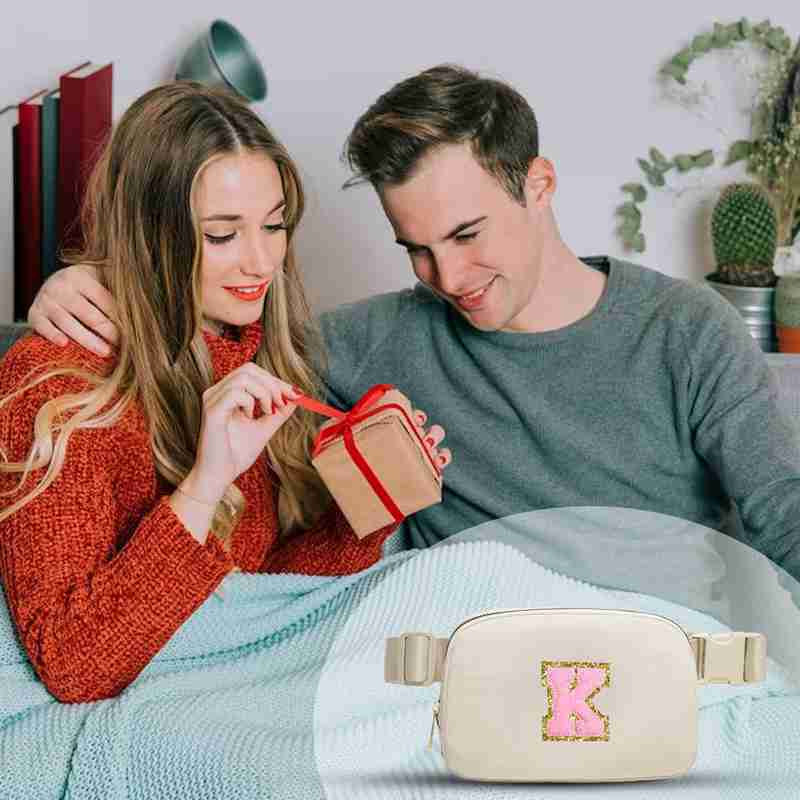
Retail Programs
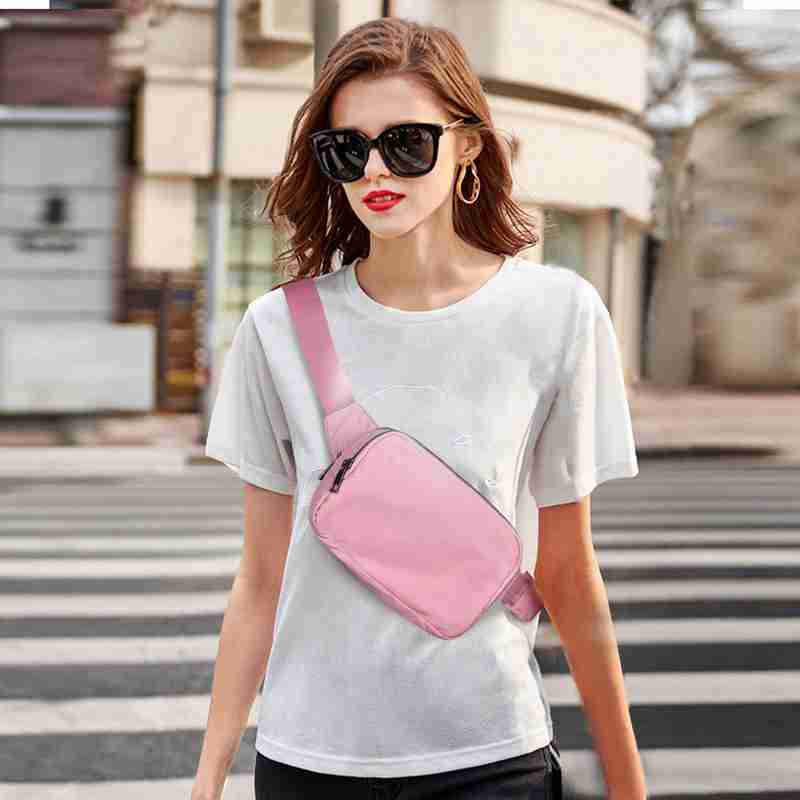
Retail belt bag programs need a stronger product feel than one-time giveaway items. Material hand feel, zipper smoothness, seam alignment, label placement, hangtag design, barcode position, single packing, and carton sorting all influence store display and repeat orders.
Jundong can help review product size, color series, material grade, logo method, packing structure, and SKU separation before bulk production so each style looks ready for shelf display, online photos, and follow-up replenishment.
Travel Brands
Travel fanny packs should feel compact but useful. Common details include passport space, a phone pocket, a card slot, a hidden zipper, an adjustable belt, soft backing, and smooth zipper access. For travel brands, the pack must look clean in retail photos and remain comfortable during airport, city walk, tour, and outdoor use.
Jundong can review lightweight fabrics, inner organization, buckle choice, logo placement, and packing size to help the pack fit travel sets, gift bundles, or standalone retail sales.
Sports Programs

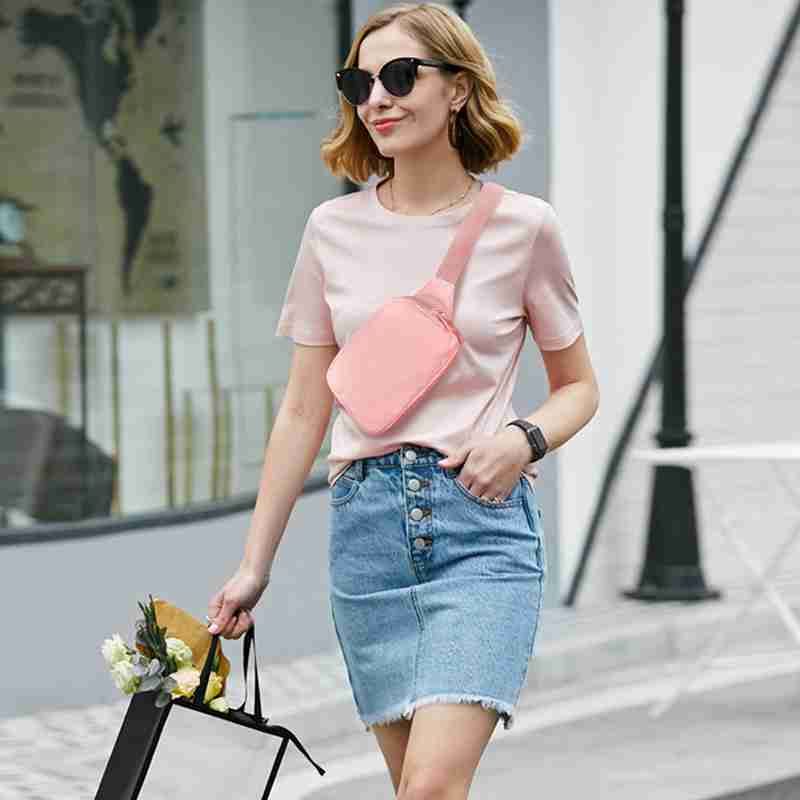
Sports waist bags need to be stable, lightweight, and simple to access. Running events, gym programs, cycling teams, and outdoor promotions often need a pack able to hold a phone, keys, energy gel, or card without bouncing too much.
Jundong can review elastic sections, buckle strength, strap length, reflective logo, breathable back panel, zipper puller, and sweat-resistant material options. For sports-related programs, comfort and movement control are often more important than adding extra pockets.
Private Label Lines
Private-label fanny pack lines usually need more planning at the beginning. A brand may need three colors, two fabrics, one shared logo system, and several packing formats for retail, e-commerce, or wholesale channels.
Jundong can review reference samples, fabric swatches, logo artwork, label files, packaging rules, carton marks, and repeat order records. A clear file set helps keep bulk production closer to the approved sample and makes later restock work much easier.
Risks To Fix Before Sampling
Weak Strap Setup
A fanny pack may look good in photos but fail during use if the strap, buckle, or stitch position is not reviewed early. Event and festival users wear the pack for long hours, often across the chest or waist. A weak strap makes the whole pack feel cheap, even when the main fabric looks acceptable.
- Check strap width and adjustment length before sampling.
- Review buckle size, buckle material, and side release feel.
- Confirm reinforced stitch areas near stress points.
- Test the wearing angle for waist and crossbody use.
- Match strap color with body fabric and logo style.
Poor Logo Result
Logo placement can change the whole feeling of a fanny pack. A logo may look too small on a curved front panel, too close to the zipper, or unclear on textured fabric. Screen print, heat transfer, embroidery, woven label, rubber patch, and metal plate each work better on different materials.
- Send logo artwork in vector format when possible.
- Confirm logo size, color, and position before sample setup.
- Match the logo method with polyester, nylon, canvas, PVC, or PU.
- Avoid placing large artwork on heavy curved seams.
- Review one-color, multi-color, and tone-on-tone options separately.
Wrong Capacity Choice
A fanny pack used for an event does not need the same capacity as a retail travel belt bag. Too small means phones may not fit. Too large means the pack becomes bulky and less attractive. Capacity should be reviewed with real items, not only overall dimensions.
- Check current phone sizes before setting the main pocket.
- Review space for keys, cards, tickets, cash, or a passport.
- Confirm whether an inner pocket or back zipper is needed.
- Keep festival packs light and easy to wear.
- Use mock-up measurements before moving to a paid sample.
Unclear Packing Rules
Packing is often ignored too early, and then becomes a problem near shipment. Event packing may need simple bulk cartons. Retail programs may need OPP bags, hangtags, barcode stickers, display cards, SKU labels, and carton marks. Clear packing rules save time during final checking.
- Decide single packing or bulk packing before quote review.
- Confirm hangtag, barcode, and inner label files early.
- Separate colors and styles by SKU when needed.
- Review the carton mark format before carton printing.
- Check packing volume for air, sea, or express shipment.
Sample-Bulk Gap
A good sample has limited value if bulk production does not follow the approved details. Fanny packs need clear records for fabric, zipper, buckle, lining, logo, strap length, color, and packing. Jundong can convert the approved sample into production notes and QC points before bulk cutting.
- Keep one approved sample as a reference.
- Record material, color, size, and logo position.
- Confirm zipper, buckle, and strap before production.
- Check the first bulk pieces before full line output.
- Use packing rules during final inspection.
Launch Date Pressure
Events, festivals, and retail launch dates cannot wait for unclear communication. Late artwork, late packing files, late color approval, or late destination details can affect sample time, bulk production, and shipment choice. A realistic schedule should be reviewed before a firm plan is made.
- Send the target launch or event date at the beginning.
- Confirm whether sample, pre-production sample, or photo approval is needed.
- Review express, air, or sea shipping based on deadline.
- Leave time for logo setup and packing approval.
- Avoid changing material or artwork after sample approval.
Custom Fanny Pack Styles To Consider
Different styles work for different programs. Shape, material, logo area, strap setup, pocket layout, and packing method should be reviewed together before sample development begins.
Promotional Packs
Promotional fanny packs are usually designed for events, staff kits, public campaigns, school programs, and company gifts. The style should be easy to quote, easy to brand, and simple to pack.
Polyester or Oxford fabric often works well because it supports many color options and keeps unit cost stable for bulk orders above 500 pcs. A clean front panel gives enough logo space for screen printing, heat transfer, or a woven label. Simple inner lining and one main zipper pocket usually make the design easier to control.

Festival Waist Bags
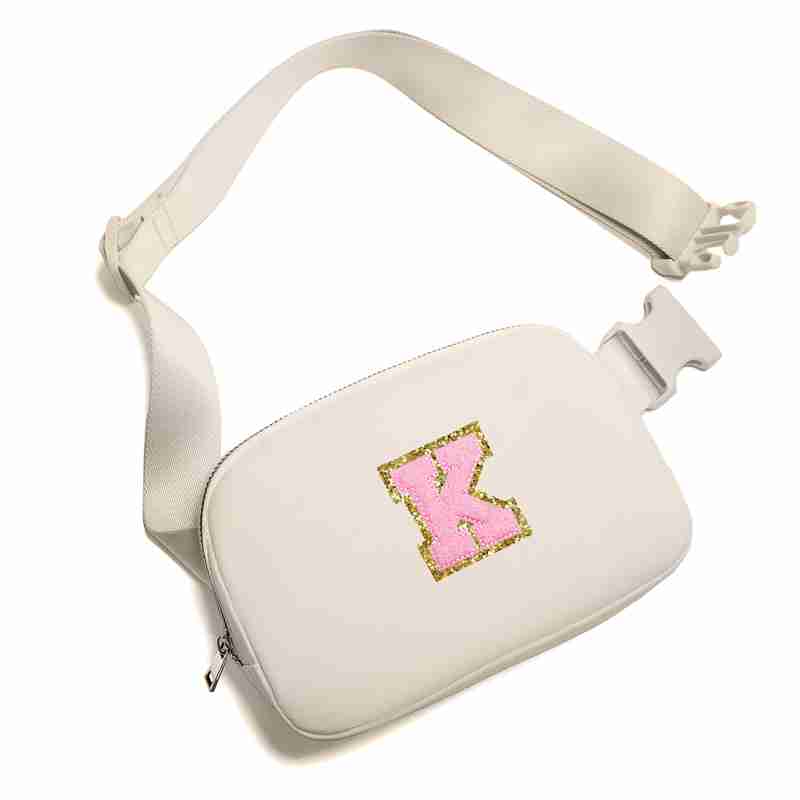
Festival waist bags focus on wearing comfort, color impact, and fast access. A festival pack can use nylon, polyester, clear PVC, RPET, or water-resistant Oxford, depending on outdoor use, venue rules, and brand style.
The strap should adjust smoothly for waist or crossbody wear, and the buckle should feel secure when users move through crowds. A front zipper pocket, back security pocket, or contrast zipper pull can improve real use. Bright color panels or all-over artwork may also help merch tables look stronger.
Clear PVC Packs
Clear PVC fanny packs are useful for concerts, stadium programs, sports events, venue entry programs, and transparent bag policy projects. PVC thickness, softness, edge binding, and zipper quality should be reviewed because clear material exposes every seam and detail.
Logo options may include screen print, patch, woven label, or printed trim, depending on visibility and MOQ. Clear PVC can look simple, but production accuracy matters because crooked seams, cloudy material, or weak binding become very noticeable on transparent panels.
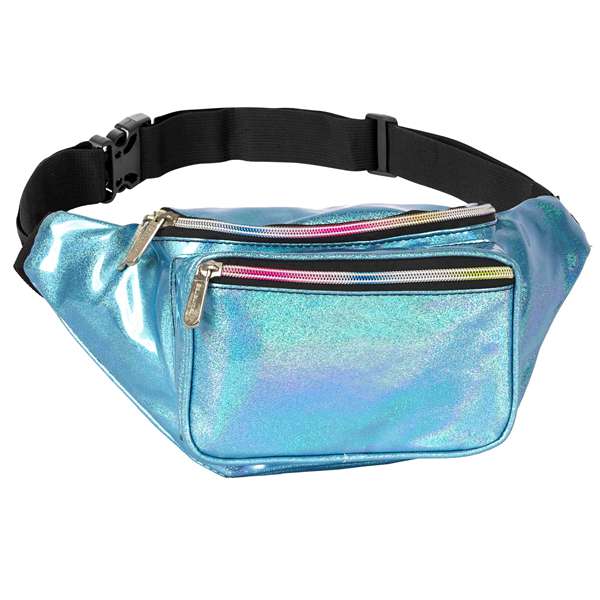
Running Waist Bags

Running waistbags should stay light, close to the body, and comfortable during movement. The size is usually smaller than retail belt bags, with space for a phone, key, card, or energy gel.
Elastic sections, soft backing, a reflective logo, a water-resistant zipper, or a slim body shape may be reviewed for sports programs. A running design should not become too bulky; bouncing and rubbing may affect use. Strap tension, buckle position, and zipper puller size need careful checking during sample approval.
Travel Belt Bags
Travel belt bags need better organization and a cleaner, more stylish look. Common details include passport space, a phone pocket, a card slot, a hidden back zipper, an inner divider, and an adjustable strap.
Nylon, premium polyester, RPET, or PU can fit travel retail programs, depending on product level and price plan. A travel pack often needs refined logo placement, smooth zipper pullers, and neat lining because it may be sold as part of a travel set. Packing size and carton volume also matter for international delivery.
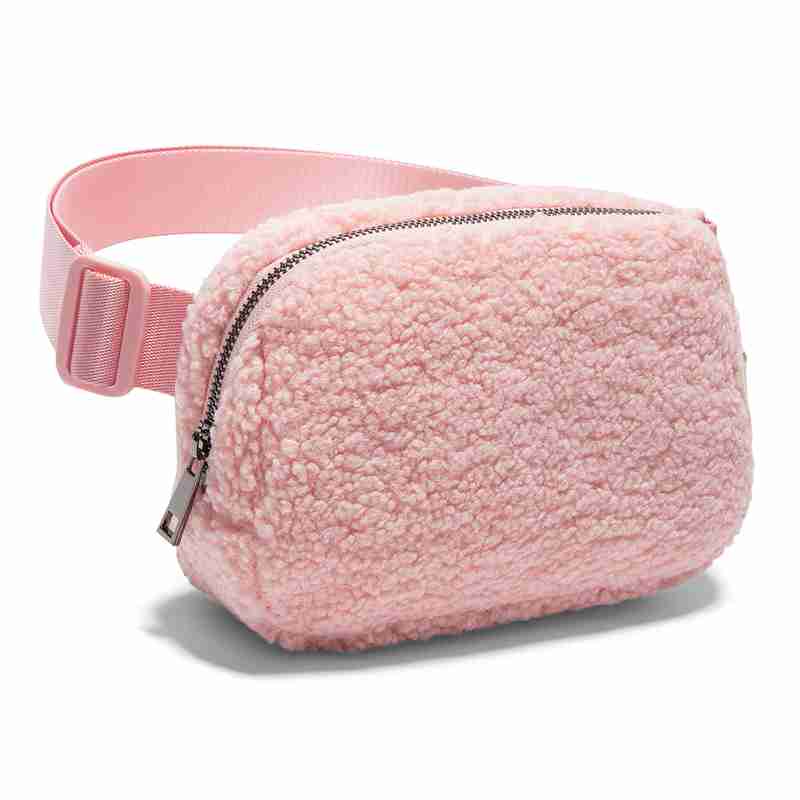
Crossbody Belt Bags

Crossbody belt bags are often worn across the chest rather than only around the waist. The body angle, strap length, buckle side, zipper opening, and logo direction should be reviewed with wearing photos before sampling.
A style may look correct on a table but feel awkward when worn across the body. Nylon, PU, polyester, or quilted fabric can create different looks for lifestyle, sports, or retail programs. Crossbody use often needs a longer strap and a more balanced front panel shape.
Retail Belt Bags
Retail belt bags need a stronger material feel, cleaner sewing, and better packaging than giveaway styles. Fabric selection, zipper grade, lining color, label position, patch quality, and hangtag style all affect shelf presentation.
A retail program may include several colors under one shared structure, so color consistency and SKU sorting should be planned early. Jundong can review packaging files, barcode labels, carton marks, and inner labels before bulk packing. Approved samples should be kept for future reorder comparison.

RPET Fanny Packs

RPET fanny packs are suitable for programs with recycled material messaging, outdoor campaigns, travel retail, or responsible merchandise lines. RPET fabric can be used for clean solid colors, simple logo positions, and lightweight daily use.
Material certificate needs and labeling wording should be discussed before quotation when sustainability claims are important. The final look still depends on fabric weight, color, zipper, lining, and logo method. RPET is not only a material choice; it also affects hangtag content and brand story.
Premium PU Bags
Premium PU belt bags fit fashion, lifestyle, travel, gift, and retail programs needing a more polished look. PU can support embossing, debossing, metal plates, woven labels, stitching details, or contrast lining.
The material surface, backing thickness, zipper tape, hardware color, and edge finish should be reviewed before sample approval. PU styles may cost more than basic polyester packs, but they can create a stronger retail impression. Packing should protect the surface from scratches during delivery and storage.

Choose Materials By Use And Finish
Fanny pack material should match use, logo method, hand feel, structure, packing, and cost plan. A fabric can look right in photos but perform differently when wearing, printing, sewing, or bulk-packed.
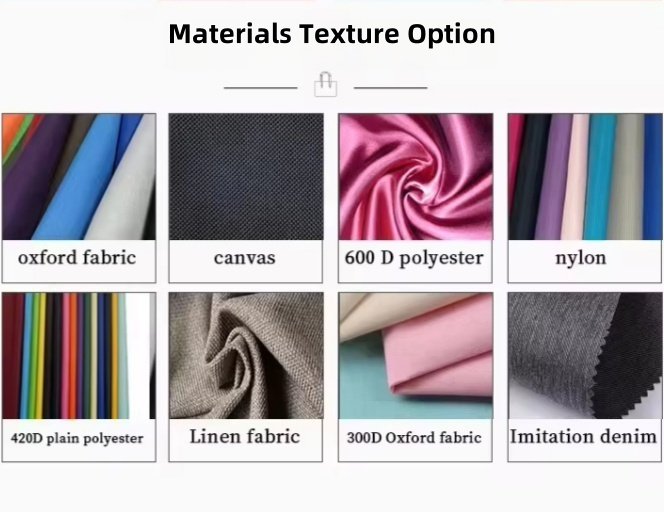
| Material | Best Fit | Hand Feel | Structure Level | Logo Fit | Confirm Before Sampling |
|---|---|---|---|---|---|
| Polyester | Events, giveaways, retail basics | Light, smooth, cost-stable | Soft to medium | Screen print, heat transfer, woven label | Denier, color, lining, zipper and logo size |
| Nylon | Travel, lifestyle, sports, retail | Smooth, stronger, cleaner look | Medium | Heat transfer, embroidery, woven label, rubber patch | Fabric weight, coating, color and buckle level |
| Oxford Fabric | Outdoor events, utility styles | Slightly textured, durable | Medium to firm | Screen print, patch, woven label | 300D/600D/900D/1000D options, coating and seam bulk |
| Canvas | Lifestyle, vintage, merch | Natural, textured, heavier | Soft to medium | Embroidery, woven label, screen print | Shrinkage, color, logo clarity and edge finish |
| Clear PVC | Stadium, concert, entry checks | Smooth, transparent, structured | Medium to firm | Screen print, patch, printed trim | Thickness, clarity, binding, zipper and venue size rules |
| RPET | Eco-minded merch, travel, retail | Similar to polyester | Soft to medium | Heat transfer, woven label, embroidery | Material proof needs, label wording and color availability |
| Neoprene | Sport, soft travel, active use | Soft, padded, flexible | Soft padded | Heat transfer, rubber patch, woven label | Thickness, stretch, smell control and edge binding |
| PU Leather | Premium retail, fashion, gifts | Smooth, polished, upscale | Medium to firm | Embossing, debossing, metal plate, woven label | Surface finish, backing, hardware color and packing protection |
A material review should include fabric weight, lining, zipper, buckle, strap, logo method, and packing. For event programs, cost and delivery speed often matter most. For festival programs, comfort, a water-resistant feel, and strap control are stronger priorities. For retail programs, hand feel, color, logo finish, hangtag, barcode, and repeat order records should be reviewed before bulk production.
Design Details That Affect Wearing
A fanny pack is small, but every structure choice changes comfort, storage, and brand feeling. Size, strap, zipper, pocket layout, buckle, and wearing angle should be reviewed before the first sample.
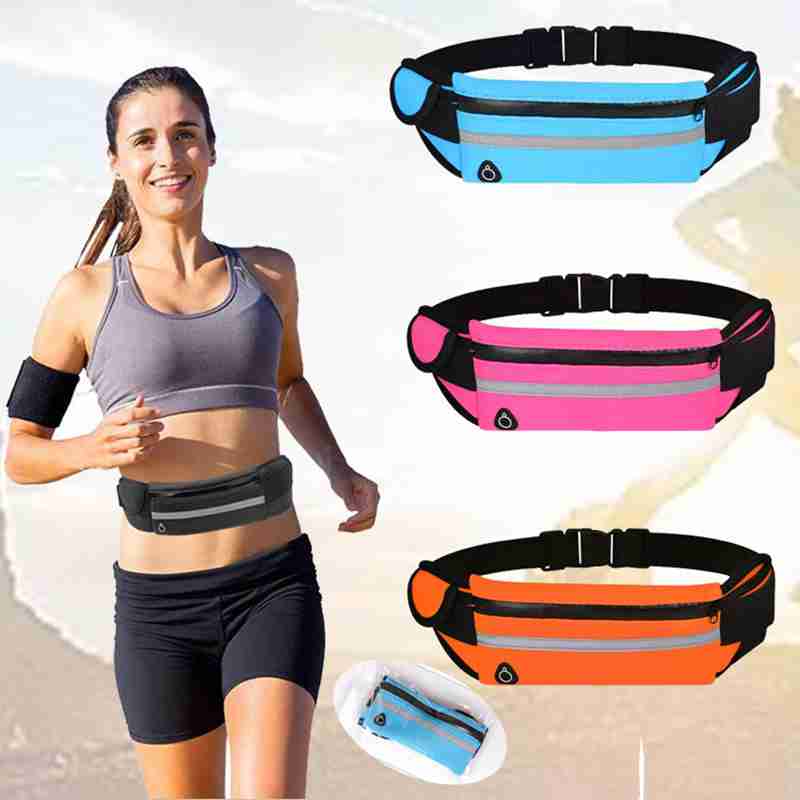

Capacity Planning
Capacity should be checked with real items, not only a flat size drawing. Event packs may only need space for a phone, badge, card, and key. Festival packs may need a ticket, cash, lip balm, power bank, or sunglasses.
Retail travel styles may need passport space, inner dividers, and a hidden back pocket. A common body width may sit around 20–32 cm, but the final size should follow use, logo area, and wearing comfort.
Strap Length
Strap length decides whether the pack feels useful for more people. A style planned only for waist wear may feel too short when worn across the chest. A longer adjustable strap can support waist, hip, and crossbody use, but it should not leave too much loose slack.
Strap width, webbing thickness, adjuster position, and color matching should be reviewed together. For retail lines, strap comfort can affect product reviews as much as the main bag body.
Buckle Strength
The buckle is a small part, but it carries daily stress. A weak buckle can make a good-looking pack feel unreliable during festivals, sports programs, or travel use. Plastic side-release buckles are common for light events.
Heavier styles may need stronger buckle material, a smoother release feel, or better color matching with the zipper and hardware. Buckle size should fit the strap width and body scale; the front panel may look unbalanced when worn.
Zipper Access
Zipper placement controls how quickly people can use the pack. A large front zipper gives easy access, while a hidden back zipper supports travel or festival use.
Curved zipper openings must be reviewed carefully because they affect sewing difficulty, logo position, and the final look. Zipper puller size also matters. A very small puller may look clean but feel hard to use during outdoor events, sports programs, or nighttime festivals.
Pocket Layout
The pocket layout should stay simple unless the program needs more separation. One main pocket works well for many event packs. A front pocket can help with fast access. A back pocket can help with travel and festival use.
Inner dividers can improve retail value, but too many pockets may increase sewing work, thickness, and cost. The best layout is the one that matches real storage needs without making the pack bulky or hard to check during quality inspection.
Crossbody Fit
Many fanny packs are now worn across the chest, not only around the waist. This changes the body angle, logo direction, zipper opening, and strap position. A pack that looks balanced on a table may twist when worn.
The crossbody fit should be reviewed with photos or a quick wearing test before final sample approval. For festival, travel, and lifestyle programs, this detail can strongly affect the first impression and daily comfort.
Match Logo Method With Material
The logo method should be chosen with fabric, panel shape, color plan, use scene, and budget together. A clear logo on the wrong material may still look weak after wearing, folding, packing, or repeated handling.
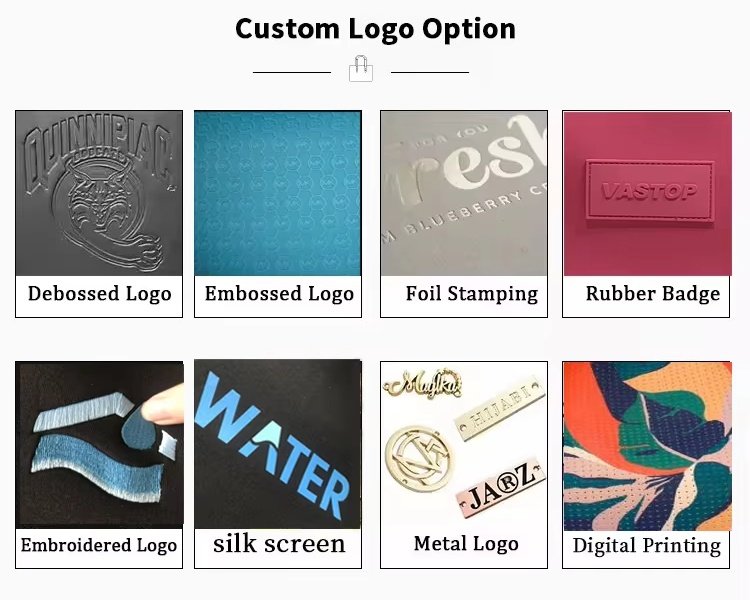
| Logo Method | Best Materials | Best Fit | Visual Effect | Check Before Sample |
|---|---|---|---|---|
| Screen Printing | Polyester, Oxford, canvas, PVC | Events, giveaways, simple logos | Clean, flat, cost-stable | Ink color, logo size, curved panel position |
| Heat Transfer | Polyester, nylon, RPET, neoprene | Multi-color artwork, sports style | Smooth, detailed, bright | Heat tolerance, fabric texture, edge adhesion |
| Embroidery | Canvas, nylon, polyester, PU panels | Retail, premium merch, travel | Raised, durable, textured | Stitch density, logo size, backing thickness |
| Woven Label | Most woven fabrics and PU styles | Retail lines, private label packs | Clean, controlled, brand-ready | Label size, fold type, sewing position |
| Rubber Patch | Nylon, polyester, Oxford, PU | Outdoor, festival, sports, lifestyle | Dimensional, modern, durable feel | Mold detail, color limit, stitch, or heat fixing |
| PVC Patch | Nylon, polyester, Oxford | Festival, outdoor, youth styles | Colorful, flexible, bold | Patch thickness, edge finish, attachment method |
| Metal Plate | PU, premium nylon, retail styles | Fashion, gift, travel retail | Polished, premium, structured | Plate size, plating color, screw or stitch method |
| Embossed Logo | PU, leather-like materials | Minimal retail, premium gift | Subtle, clean, tonal | Material surface, pressure depth, panel support |
For event programs, screen printing and heat transfer often keep the look clear and cost steady. For festival merch, rubber patches, PVC patches, woven labels, or bright heat-transfer artwork can enhance visual impact. For retail belt bags, embroidery, a woven label, a metal plate, an embossed logo, or a debossed logo may create a more refined finish. Logo placement should be reviewed with zipper curves, pocket seams, and crossbody wearing direction before sample setup.
From Reference Idea To Sample
A custom fanny pack can start from a design file, reference photo, physical sample, sketch, or product line plan. Jundong reviews material, structure, logo, packing, and order details before sample work begins.
Start With References

A complete tech pack is helpful, but not always required for the first review. A clear reference photo, target size, logo file, color idea, and planned quantity can already help Jundong understand the project direction. For events, the key details may be logo size, delivery date, and packing. For festival programs, strap comfort, PVC option, zipper access, and color blocking may matter more. For retail lines, material-level, label files, hangtag, barcode, and repeat-order records should be reviewed early.
- Send front, back, and side photos when possible.
- Mark target size, pocket needs, and strap direction.
- Provide logo artwork and preferred logo position.
- Share planned quantity and launch date.
- Add packing notes if retail display is needed.
Before sampling, the product team can review size, body shape, fabric, lining, zipper, buckle, webbing, pocket layout, logo method, and packing style. This step helps avoid paying for a sample that already has obvious problems. For example, a large logo may not fit a curved front pocket, a short strap may fail crossbody use, or a clear PVC panel may need stronger binding. Early review keeps the first sample closer to the intended direction.
- Check fabric with intended use and cost plan.
- Match zipper and buckle with product level.
- Review pocket layout with real storage items.
- Confirm whether waist and cross-body use are both needed.
- Keep sample comments specific and measurable.
Review Product Details

Prepare For Series

Retail and private label programs often grow from one style into several colors, materials, or related products. A series plan should record fabric codes, color standards, logo files, label files, packaging rules, SKU names, and carton marks. This makes repeat orders easier to manage and reduces confusion when new colors or updated versions are added. Jundong can support single-style development, multi-color programs, and long-term product line expansion through clearer records from the first approved sample.
- Plan color names and SKU names early.
- Keep approved sample and material records.
- Confirm shared logo system across styles.
- Decide whether packing changes by channel.
- Review repeat order notes after each bulk order.
Confirm The Sample Before Bulk Work
Project Review
Sample work should start with a clear project review. A reference photo, existing sample, sketch, logo file, target size, and planned quantity can help Jundong understand the intended direction. For an event pack, the review may focus on the logo area, cost control, and delivery date.
For a festival pack, strap comfort, PVC options, zipper access, and color blocking may need more attention. For a retail belt bag, the material grade, label files, hangtag, barcode, and SKU plan should be reviewed before the first sample.
Material Check
Material should be confirmed before sample cutting because fabric changes can affect cost, logo method, shape, weight, and wearing comfort. Polyester may suit event programs. Nylon may suit travel or lifestyle lines.
Clear PVC may suit stadium or concert entry programs. PU may suit a more polished retail style. RPET may suit programs with recycled material messaging. Jundong can review fabric weight, lining, coating, strap webbing, zipper tape, and buckle level before sample work starts.
Logo Setup
Logo setup should be confirmed before the sample is made, not after the bag body is finished. A logo may need a flat front panel, a specific print area, a woven label position, an embroidery backing, or a patch fixing area.
Large artwork may not work well near curved zippers or thick pocket seams. Jundong can review the logo method, logo size, logo color, placement, and artwork file before sample setup, so the first sample can better reflect the intended brand look.
Sample Making
Standard waist bag samples often need about 5–7 days after key details are confirmed. Special material, custom color, complex structure, molded patch, metal plate, clear PVC structure, or retail packaging may need extra review time.
During sample making, the team should follow the confirmed material, size, pocket layout, strap, zipper, and logo notes. A sample should be treated as a working check, not just a photo item, because it helps decide whether the style is ready for larger production.
Fit Review
A fanny pack must be worn and tested, not only photographed. The sample should be checked around the waist and across the chest if both wearing styles are required.
The team should review strap length, buckle position, zipper access, pocket depth, phone fit, and body angle. A pack that looks correct on a table may feel too short, too bulky, or too hard to open when worn. Fit review is especially important for festivals, sports, travel, and lifestyle retail styles.
Approval Records
A sample approval should leave clear records for bulk work. The approved sample should connect with material notes, size sheet, color confirmation, zipper and buckle details, logo file, packing rule, and carton requirement.
Without records, a good sample may be hard to repeat accurately. Jundong can convert approved sample details into production notes and QC points, so fabric cutting, logo work, sewing, final checking, and packing follow the same standard.
Control Bulk Quality By Process
Bulk fanny pack quality comes from each production step, not only final checking. Fabric, logo, sewing, zipper, buckle, strap, and packing should follow approved sample records.
Material Incoming
Material checking starts before cutting. Fabric color, fabric weight, coating, texture, lining, webbing, zipper tape, buckle color, and label materials should be compared with confirmed records. For clear PVC, transparency, thickness, and surface marks need more attention.
For retail programs, color consistency across several SKUs is important because the same style may sit together in store displays or online listings. Early material checking helps reduce cutting waste, color disputes, and production delays.


Cutting And Parts
Cutting accuracy affects shape, zipper alignment, pocket position, and sewing smoothness. Small bags can still become uneven if front panels, back panels, lining pieces, pocket pieces, or strap positions are not cut consistently.
For curved fanny pack bodies, cutting tolerance should be controlled before pieces move into sewing. If a program includes several colors, each color should follow the same cutting template to keep the shape consistent across the full order.
Logo Process
Logo work should be checked before all pieces move to assembly. Screen print, heat transfer, embroidery, woven label, rubber patch, PVC patch, and metal plate each need different control points.
The team should check the logo color, position, size, edge quality, stitch condition, and fixing strength before sewing. For retail lines, even a small shift in logo position can affect the full product feeling. For event programs, clear logo visibility is often the main reason the pack is ordered.

Sewing Details

Sewing gives the fanny pack its final shape. Stitch length, seam allowance, zipper curve, pocket opening, strap anchor, and buckle stress points should be checked during production, not only at the end.
Fanny packs may be small, but they include many tight curves and functional parts. If sewing is uneven, the pack can twist, the zipper can wave, or the pocket can lose its clean shape. In-process review helps correct issues while production is still moving.
Function Check
Function checking should include zipper movement, buckle release, strap adjustment, pocket access, logo surface, lining condition, and wearing comfort. A fanny pack used for events, festivals, or travel should not only look correct in a carton.
It should open smoothly, adjust easily, and hold normal daily items. For crossbody styles, strap direction and zipper access should be tested during inspection. Functional checks help reduce complaints caused by parts that look acceptable but feel weak during use.

Packing Check

Packing checks connect the finished product with the delivery plan. Event orders may need bulk packing with clear carton marks. Retail lines may need OPP bags, hangtags, barcode labels, inner labels, SKU stickers, and color separation.
Before shipment, the team should check quantity, color ratio, packing method, carton marks, and outer carton condition. Packing mistakes can create serious problems even when the bag itself is correct, especially for store distribution or warehouse receiving.
Plan Quantity, Cost, and Timing
Quantity, material, logo, structure, packing, and schedule affect the final fanny pack plan. A clear review helps avoid a quote that looks attractive but cannot support real production details.
| Review Item | Usual Planning Logic | What To Confirm Early |
|---|---|---|
| MOQ | Standard custom bag orders usually start from 500 pcs per design. Selected simple styles may be reviewed at 200–300 pcs case by case. Some low-unit-price basic styles may need 1000 pcs or more. | Style, fabric, color count, logo method, packing and expected unit cost |
| Sample Time | Regular fanny pack samples often need about 5–7 days after key details are confirmed. Simple styles may be faster. Complex materials, patches, metal plates or packing samples may need more time. | Reference photo, size, fabric, logo file, packing need and revision plan |
| Bulk Time | Regular bulk production often needs about 20–30 days after sample approval and material confirmation. Timing can change with order size, structure, logo, packing and peak season. | Final sample, quantity, colors, logo setup, label files and delivery date |
| Sample Fee | Sample fee is related to development work, material preparation, logo setup, sample making and revision. It can be refunded or deducted when the bulk order reaches 2000 pcs. | Sample quantity, material, logo method, mold needs, packing sample and courier |
| Cost Level | Higher quantity often helps unit cost because material, setup, sewing, packing and checking work can be spread across more pieces. Cost still has a floor based on fabric, labor and process. | Target quantity, target level, fabric grade, structure, logo and packing |
| SKU Count | More colors or more styles can improve retail selection, but they also affect material preparation, cutting, packing, label control and carton sorting. | Color names, SKU codes, quantity per color, barcode and carton rules |
A cost review should not start with price alone. For event packs, cost control and arrival date often matter most. For festival packs, material comfort, strap reliability, and color effect need more attention. For retail belt bags, finish, logo method, packing, barcode, and repeat order records can affect the full order value.
Jundong can review the order after receiving the style, target size, logo file, quantity, material preference, packing needs, and destination. A clearer file set helps the team suggest a more suitable material, logo method, MOQ level, sample path, and shipment plan.
Prepare Packing Before Shipment
Packing should be planned before bulk production is finished. Event, festival, retail, and e-commerce programs need different labels, cartons, and SKU rules to avoid sorting errors near delivery.

| Program Type | Packing Style | Label Needs | Key Details To Confirm |
|---|---|---|---|
| Event Programs | Bulk packing, simple OPP, color sorted cartons | Event logo sticker, carton mark, packing list | Quantity per carton, delivery date, destination, event name, color ratio |
| Festival Merchandise | Individual OPP, hangtag, display-ready grouping | Hangtag, size note if needed, barcode, SKU sticker | Color blocking, clear PVC protection, strap position, merch table sorting |
| Retail Programs | Individual OPP, hangtag, inner label, barcode | Woven label, barcode sticker, care label, carton mark | SKU name, color code, hangtag hole, retail photo needs, repeat order records |
| E-commerce Lines | Single packing, warehouse label, carton label | Barcode, SKU sticker, FBA or warehouse label if needed | Single unit weight, carton size, color separation, receiving label rules |
Packaging is not the last decoration step. It affects product presentation, warehouse receiving, store sorting, delivery cost, and follow-up orders. A simple event pack may only need bulk packing and carton marks. A festival merch pack may need clear individual packing and quick style separation. A retail belt bag may need a hangtag, barcode, inner label, OPP bag, and SKU sticker. An e-commerce line may need stricter carton labels and single-unit packing.
For mixed-color or multi-style programs, packing records should be fixed before final inspection. Color name, SKU code, carton mark, barcode file, hangtag artwork, and inner label position should be reviewed together. This keeps the packing team, sales team, and receiving warehouse aligned before shipment.
Send clear details for review
Product Reference
Reference photos or a physical sample make the first review much faster. Front, back, side, inside, and wearing photos help the team understand shape, zipper position, pocket layout, strap direction, and logo space.
If only a product idea is available, send similar styles and mark what should change. For event and festival styles, wearing photos is useful. For retail styles, close-up photos of the zipper, label, lining, and hardware are also helpful.
Size And Capacity
Target dimensions should include body width, height, depth, and strap length when available. Capacity should be explained with real items such as a phone, passport, card, key, ticket, power bank, or sunglasses.
If the pack must fit a specific phone or badge, share the item size. For crossbody use, strap adjustment length matters. For retail programs, size should also fit product photos, display needs, and carton planning.
Material Direction
Material preference helps narrow the first cost and sample path. Polyester, nylon, Oxford, clear PVC, RPET, canvas, neoprene, and PU can all create different effects.
If the material is not fixed, explain the use scene, expected hand feel, and target level. Jundong can review suitable options based on event use, festival wear, retail finish, outdoor exposure, logo method, and packing requirements.
Logo Artwork
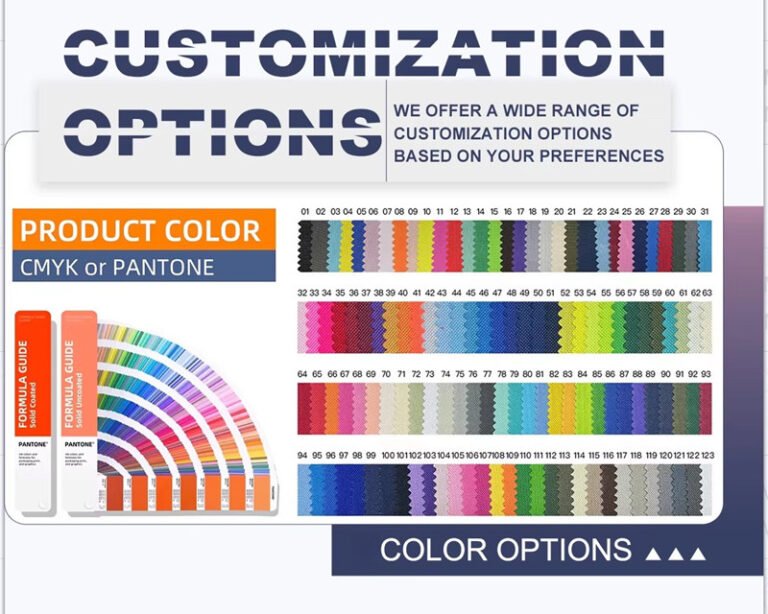
Logo files should include vector artwork when possible, plus Pantone color, logo size, and planned position. If the project needs embroidery, a woven label, a rubber patch, a PVC patch, a metal plate, a screen print, or a heat transfer, mention the preferred effect.
If the logo has several versions, mark which one should appear on the fanny pack. Tone-on-tone, contrast color, and multicolored logo options should be reviewed separately.
Quantity And Colors
Quantity should be shared by style and color, not only as one total number. For example, 3000 pcs across three colors is different from 3000 pcs in one color. Color split affects material purchasing, cutting, packing, SKU control, and carton marks.
If the order may repeat later, mention the possible restock plan. Retail programs should also provide SKU names, barcode files, and color code rules when available.
Packing And Delivery
Packing notes help avoid problems at the end of the order. Share whether the pack needs bulk packing, an individual OPP bag, a hangtag, a barcode sticker, an inner label, an SKU sticker, a display card, a carton mark, or a warehouse label.
A delivery review needs the destination, target arrival date, trade terms, appointed forwarder details, if any, and preferred shipping method. Without the carton size and weight, final freight cannot be fixed accurately.
Make a sample first ?
A useful custom fanny pack should match more than a logo. It should match the event scene, the people who will wear it, the items it will carry, the campaign budget, the retail channel it will serve, and the way it needs to be packed, shipped, distributed, and reordered. When size, fabric, pocket layout, zipper style, strap length, logo method, label details, barcode rules, and carton marks are clear from the beginning, the whole project becomes easier to quote, sample, produce, inspect, and deliver.
Client Testimonials
800+ brand Clients Trust Jundong


FAQS About Custom Fanny Packs
Before ordering custom fanny packs for events, festivals, or retail programs, most teams care about the same things: quantity, sample timing, logo result, material choice, packing rules, delivery schedule, and how closely bulk goods will match the approved sample. These FAQs are written for teams comparing branded waist bags, belt bags, clear PVC fanny packs, travel belt bags, and private label retail styles before moving into sample development or bulk production.

Can Jundong make custom fanny packs for events and festivals?
Certainly. Jundong can develop custom fanny packs for events, festivals, concerts, trade shows, sports runs, staff kits, tourism programs, and branded merchandise launches. For event use, the first review usually focuses on logo visibility, delivery date, packing method, and cost control. For festival use, strap comfort, phone space, zipper access, buckle strength, color blocking, and possible clear PVC structure become more important.
A project can start from a reference photo, sample, sketch, size idea, or logo file. For most custom bag projects, 500 pcs per design is a common starting level, while some simple existing structures can be reviewed case by case. The best first step is to send your style reference, logo artwork, quantity, arrival date, and destination so Jundong can check the most suitable fabric, logo method, sample path, and delivery plan.
What MOQ should we plan for custom fanny packs?
For standard custom fanny pack projects, 500 pcs per design is the most realistic planning level. Selected simple structures may be reviewed at 200–300 pcs case by case, while very low-unit-price basic styles, special fabric colors, custom hardware, molded patches, or multi-SKU retail programs may need a higher quantity. MOQ is not just a number; it is linked to fabric purchasing, logo setup, cutting, sewing, packing, and inspection work.
If your program includes several colors, please share the quantity by color. For example, 3,000 pcs in one color is easier to plan than 3,000 pcs split across six colors. Retail programs should also prepare SKU names, barcode needs, hangtag files, and packing rules early. This helps Jundong check whether the order should be planned as one shared style, a color series, or separate SKU production.
How long does sample development usually take?
Usually, a regular fanny pack sample takes about 5–7 days after key details are confirmed. These details include target size, fabric, logo artwork, logo method, zipper, buckle, strap length, pocket layout, and packing direction. If the project uses clear PVC, custom-colored fabric, a molded rubber patch, a metal plate, a special zipper puller, complex lining, or a retail packing sample, extra review time may be needed.
The fastest sample is not always the safest sample. For events and festivals, a rushed sample may miss strap comfort, zipper access, or logo position. For retail programs, sample approval should also check material hand feel, label placement, hangtag hole, barcode area, and single packing. A clean reference file can save several rounds of back-and-forth before sample work begins.
Which materials work best for event and festival fanny packs?
For event fanny packs, polyester and Oxford fabric are often good choices because they are lightweight, cost-effective, and easy to brand. For festival fanny packs, nylon, water-resistant Oxford, RPET, or clear PVC may be more suitable depending on venue rules, weather, color plan, and wearing time. Clear PVC is useful for stadium, concert, and venue-entry programs where bag visibility matters.
Material choice should not be based only on photos. A fabric should be checked with the logo method, zipper style, strap, lining, bulk packing, and wearing comfort. Polyester may work well for cost-controlled logo giveaways, while nylon or RPET can create a cleaner travel or lifestyle look. PU can lift the retail feeling, but it needs better surface protection during packing and shipment.
Which logo method is best for custom fanny packs?
The best logo method depends on fabric, logo size, color count, panel shape, and product level. For event giveaways, screen printing and heat transfer are often efficient because they keep the logo clear and cost-controlled. For festival merchandise, rubber patches, PVC patches, woven labels, or bright heat-transfer artwork can create a stronger visual impact. For retail belt bags, embroidery, woven labels, metal plates, embroidered logos, or debossed logos can make the product look more polished.
Logo placement matters as much as logo method. A large logo may not sit well near a curved zipper. Embroidery may need backing support. A metal plate may need a flatter panel. Before sampling, Jundong reviews logo artwork, size, color, position, fabric surface, and seam location to avoid a branded pack that looks good in artwork but weak in real use.
Can Jundong make clear PVC fanny packs for venues or stadiums?
Definitely. Jundong can review clear PVC fanny packs for stadium programs, concerts, festivals, venue entry events, and transparent bag policy projects. The main details include PVC thickness, transparency, softness, edge binding, zipper quality, size requirement, logo method, and strap comfort. Clear PVC looks simple, but it leaves less room to hide production mistakes because every seam, binding line, and edge detail is visible.
For venue-related programs, please send the required size rule if available. Some projects need a fully clear construction, while others can use a clear front panel, a clear window, or a semi-clear design. Logo options may include screen printing, a woven label, a rubber patch, or printed trim or tag branding. The final plan should balance entry-rule visibility, brand effect, durability, and packing protection.
Can one order include several colors or styles?
Of course. One order can include several colors or related styles when the quantity and material plan support it. The important part is to share the split clearly. A 5,000-piece order with two colors is very different from a 5,000-piece order with ten colors and five SKUs. More colors or styles can improve retail selection, but they also add material preparation, cutting separation, logo checking, packing control, and carton sorting work.
For retail programs, Jundong suggests fixing color names, SKU codes, barcode files, hangtag files, and carton mark rules before bulk packing begins. For event or festival orders, color blocking and logo contrast should be checked during sample approval. A clear color plan helps keep the whole order organized from material purchase to final shipment.
How do you keep bulk quality close to the approved sample?
Jundong uses the approved sample as the production reference, then checks material, cutting, logo process, sewing, function, and packing through different production stages. For fanny packs, important checks include fabric color, body shape, logo position, zipper smoothness, buckle release, strap adjustment, pocket depth, seam alignment, lining condition, label position, packing accuracy, and carton marks.
This matters because fanny packs are small but detail-heavy. A slight zipper curve problem can affect the whole front panel. A weak strap anchor can reduce wearing confidence. A shifted logo can make a retail product look less refined. Keeping production notes from sample approval helps reduce the gap between the sample, first bulk pieces, and final packed goods. It also helps later repeat orders follow the same standard.
Can Jundong support retail packing, barcodes, and SKU labels?
Absolutely. Jundong can support retail packing needs such as individual OPP bags, hangtags, woven labels, care labels, barcode stickers, SKU stickers, carton marks, and color-separated packing. For retail belt bags, packing is not a small ending step. It affects store receiving, warehouse sorting, product display, online listing preparation, and repeat order control.
The best time to confirm packing is before bulk production is finished. If barcode files, hangtag artwork, inner label content, or carton marks arrive too late, finished goods may wait in the packing area. For mixed-color retail programs, SKU names, color codes, and carton labels should be fixed before final inspection. Clear packing records help the receiving team know what is inside each carton without opening everything.
What information should we send for a quotation?
Please send reference photos, target size, material idea, logo artwork, logo position, order quantity, color split, packing needs, target arrival date, and destination. If the project is for an event or festival, send the event date first. If the project is for retail, send hangtag, barcode, label, and SKU needs when available. A complete tech pack is helpful, but not required for the first review.
A good quotation is built on real project details. Without material, logo, quantity, and packing information, any price can only be rough. Jundong can start with partial information and then ask for missing details. The clearer the first file set is, the easier it becomes to suggest the right fabric, logo method, sample plan, MOQ, production schedule, and delivery option.
Start Your Fanny Pack Project
Start your custom fanny pack project with the key details ready. Share your use scene, size idea, logo file, material direction, quantity, packing needs, and delivery timeline, so we can review the right style, structure, cost, and sample plan faster.
What To Send
A strong custom fanny pack project starts with clear details, not long back-and-forth messages. Send your reference style, size idea, material direction, logo file, planned quantity, packing needs, and target delivery date. Jundong can review whether the style is better suited for event giveaways, festival merchandise, travel use, sports use, retail display, stadium programs, or private label development.
For urgent event programs, the delivery date and destination should be shared first. For retail programs, the SKU plan, label files, hangtag needs, barcode rules, and packing method should be prepared early. For festival programs, strap comfort, phone space, zipper access, logo visibility, bright color options, and possible clear PVC requirements should be reviewed before sample work begins.
Useful details to send include:
- Reference photos or sample photos
- Target size and wearing method
- Material idea or expected hand feel
- Logo artwork and logo position
- Quantity by style and color
- Packing, label, and barcode needs
- Target arrival date and destination
- Retail, event, festival, or travel use notes
Your custom fanny pack project should be reviewed before cost, timing, and production details are finalized. Send reference photos, size idea, logo file, quantity, material direction, packing needs, destination, and delivery deadline for a practical review.
Email: info@jundongfactory.com