Skip to content

Custom Beauty Gift Set Bag Solutions
Develop reusable cosmetic pouches, vanity cases, and coordinated bag sets for beauty launches, GWP campaigns, holiday collections, and retail programs.
- Product-fit development based on bottle, jar, tube, brush, insert, and gift-box dimensions.
- Custom materials, silhouettes, linings, compartments, colors, logo treatments, labels, and branded hardware for a consistent brand presentation.
- Controlled sampling, approved specifications, inline inspection, final quality review, and packing checks before shipment across approved SKUs.
- Support for private-label sets, travel retail, seasonal promotions, influencer mailers, and multi-SKU launches with retail-ready packaging.
- 20+ years of bag development experience, 600+ employees, an 18,000 m² facility, and 80 quality inspectors.

What Are Custom Beauty Gift Set Bag Solutions?
Successful programs begin with the products inside, the desired presentation, the sales channel, and a controlled route from concept approval to packed bulk units.
A Reusable Bag Engineered Around Every Beauty Set

A custom beauty gift set bag is a reusable sewn component developed around the cosmetics, skincare products, tools, or fragrance items placed inside. Size, opening direction, internal layout, protection, branding, and retail packing are reviewed together. The finished piece should look intentional when opened, protect its contents during transport, and remain useful after the original products are consumed.
- Product fit: Outer dimensions should be calculated from actual bottle, jar, tube, palette, brush, or inner-box measurements. Allowance is added for lining thickness, seams, zipper clearance, product removal, dividers, and possible size variation. An oversized pouch wastes packaging volume, while an undersized opening can damage cartons or make products difficult to remove.
- Presentation: Shape, surface texture, color, lining, zipper, hardware, and logo treatment should support the value of the cosmetic set. A promotional pouch may prioritize efficient packing and visible branding. A premium skincare collection may require a structured silhouette, cleaner edge finishing, branded metalwork, and a softer interior.
- Program readiness: GWP campaigns, holiday collections, travel kits, subscription boxes, and PR mailers follow different quantity, presentation, packing, and deadline requirements. Development should consider the complete route from sample approval and material booking to bulk inspection, carton planning, and shipment preparation.
- Scope alignment: Jundong develops sewn bags and related private-label packing, including labels, sleeves, individual packaging, cartons, and approved pack-out rules. Filling cosmetic formulas, handling regulated liquids, or assembling a complete filled set requires a separate review of products, hygiene conditions, responsibilities, and destination requirements.
Who Uses Custom Beauty Gift Set Bags?
Different programs require different levels of design refinement, packing control, documentation, SKU coordination, and long-term production consistency.
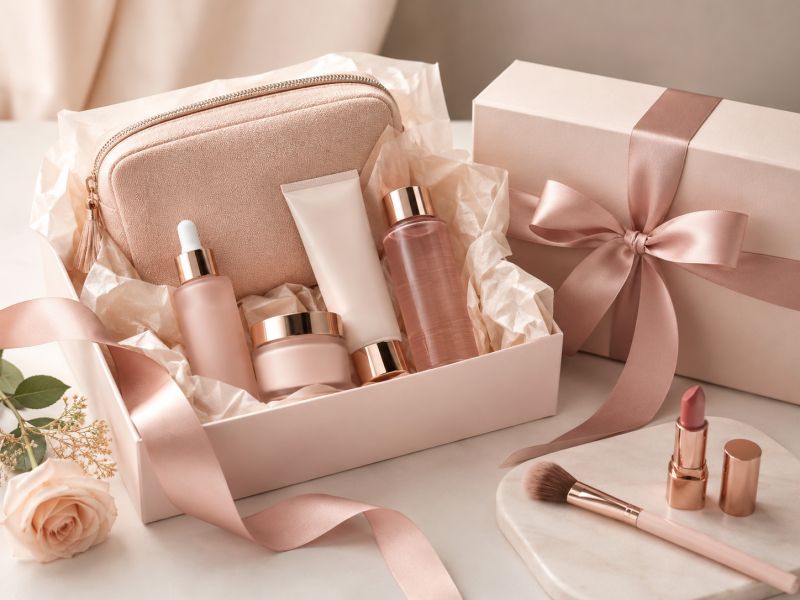
Global Beauty Brands
Established cosmetics, skincare, haircare, and fragrance companies often need distinctive bags for launches, seasonal collections, loyalty gifts, and coordinated product lines. Development normally requires controlled color matching, refined trims, repeatable workmanship, approved samples, documentation, and consistent results across several colors or destination regions without weakening the visual identity.
Retail and Private Label
Retail groups and private-label teams need styles that work on shelves, online, and inside boxed sets. Priorities include barcode and label accuracy, pack size, margin control, clear SKU separation, reliable replenishment, and a design language that can extend into matching pouches, travel organizers, or seasonal colorways.
GWP Campaign Teams
Gift-with-purchase programs are tied to launch dates, promotional budgets, product quantities, and distribution plans. A suitable design needs visible branding, efficient packing, stable bulk output, and enough perceived value to encourage purchase. Schedule reviews should include sample approval, material booking, production, inspection, packing, and freight time.
Travel and Gift Programs
Travel retail, hotel amenities, subscription boxes, influencer mailers, and curated gift programs often combine several small products in one compact format. The bag should protect bottles, open cleanly, photograph well, and fit outer packaging without wasted volume. Multi-destination packing and set-specific labels may also require early planning.
Which Beauty Programs Can Custom Gift Set Bags Support?
Gift With Purchase
Gift-with-purchase bags must balance visible branding, useful size, planned unit cost, and fast pack-out. Product quantity, opening width, logo area, individual packing, carton count, and launch deadline should be confirmed before sampling. A reusable shape adds perceived value without turning the accessory into oversized secondary packaging.
Holiday Gift Sets
Holiday collections often use richer textures, seasonal colors, metallic details, quilted surfaces, or structured silhouettes. Decorative choices should remain repeatable across the full quantity. Material booking, custom hardware, gift boxes, and multi-color schedules need earlier approval because late changes can affect production sequence and planned retail dates.
Skincare Discovery Kits
Discovery kits combine small bottles, jars, sachets, or tubes in one compact format. Wipe-clean lining, controlled movement, easy product removal, and correct opening clearance matter more than decorative volume. Sample review should use the actual assortment or verified dimensions, especially when caps, pumps, or cartons create different maximum widths.
Influencer PR Mailers
PR mailers must photograph well from the first opening while surviving courier handling. Internal layout, logo orientation, tissue or insert position, and outer-carton fit should be planned together. If several recipient groups receive different products, packing instructions and SKU identification need enough clarity to prevent set-mixing during final preparation.
Travel Retail Sets
Travel retail sets need compact dimensions, strong zippers, clean presentation, readable labels, and efficient carton use. Clear panels may improve product visibility, while structured cases can raise perceived value. Product volume, destination rules, barcode placement, hangtags, and replenishment consistency should be reviewed before a design becomes a repeat retail item.
Subscription Launch Kits
Subscription boxes and launch kits often change themes, colors, or contents between releases. A stable base construction can reduce repeated development while allowing new prints, trims, labels, or product arrangements. Outer dimensions should remain controlled so fulfillment teams can plan box size, packing time, shipping weight, and recurring inventory more accurately.unch Kits
How Should a Beauty Gift Set Bag Fit Its Products?
Build Dimensions From the Products, Not a Stock Pouch
A reliable size calculation starts with a product matrix rather than an estimated pouch measurement. Record the quantity, width, height, depth, diameter, cap or pump shape, retail carton size, and intended orientation of every item. Cylindrical bottles should be measured at the widest section, including pump collars or caps. Flexible tubes need enough space to avoid excessive pressure on sealed ends. Boxed cosmetics require allowance for carton corners, which can catch against narrow zipper openings or tight linings.
Internal usable space is smaller than the finished external dimensions. Seams, binding, lining, foam, reinforcement, piping, zipper tapes, and curved corners all consume space. Structured PU cases and padded pouches generally lose more internal volume than unlined flat styles. A dimension written on a product listing therefore cannot be transferred directly into a final pattern.
For example, a set containing four 30 ml tubes, each approximately 30 mm in diameter and 60 mm long, may begin with an arrangement close to 120 mm across. A preliminary bag size around 130 × 35 × 70 mm can provide basic seam and handling clearance for a simple side-by-side layout. The final dimensions still depend on tube caps, material thickness, lining, zipper construction, and whether the products have individual cartons.
Product arrangement also affects the silhouette. Items placed side by side create a long, slim pouch. Two stacked rows need greater depth and may require a wider opening. Upright bottles can create a compact base but need enough height and stability. Before a pattern is approved, the proposed layout should be checked against product removal, packing speed, outer-box dimensions, and intended shelf presentation.
Validate Opening, Movement, Removal, and Packed Presentation
A bag can match the calculated dimensions and still perform poorly during packing or daily use. Opening clearance should be checked with the largest product, not only the main body of the bottle. Double zipper tracks, end tabs, curved openings, and gussets can improve access, while reinforcement or piping may reduce the opening more than expected.
Movement inside the bag also needs control. Glass fragrance bottles should not knock against one another. Printed cartons may scuff when packed tightly beside metal caps or textured components. Pumps can activate under pressure if the internal height is insufficient. Elastic loops, soft dividers, padded walls, mesh pockets, or removable inserts can separate products, but every added component changes cost, packing time, and available capacity.
Removal order matters when the set is opened. A visually balanced arrangement may become frustrating if the first item blocks the zipper or if a narrow product drops below a divider. Brand teams should decide whether all products need immediate visibility, whether hero items sit in the center, and whether the final user removes products one by one or empties the entire pouch.
Packed presentation should be checked beyond the individual bag. A soft pouch may compress inside a paper box, while a structured case may need precise insert clearance. Handles, zipper pulls, bows, or padded surfaces can increase the packed height. Nested two-piece and three-piece sets can reduce carton volume, but protective layers may be needed to prevent hardware marks or color transfer.
The most reliable approval method uses real products or accurate dummy samples inside the physical prototype. Review the closed shape, zipper operation, product movement, removal sequence, appearance after reopening, and fit inside the outer packaging. Photos, measurements, packing instructions, and approved sample details should then become part of the production specification used for bulk inspection.
Which Beauty Gift Set Bag Styles Can You Develop?
Bag format should follow product dimensions, perceived value, handling needs, retail presentation, reuse expectations, packing volume, and the approved unit-cost direction.
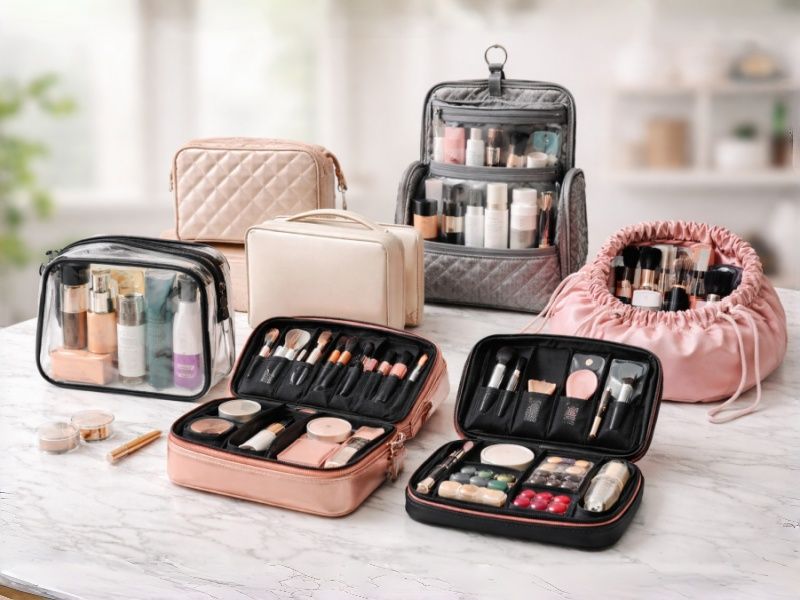
Flat Cosmetic Pouches

Flat zip pouches suit compact cosmetic assortments, GWP promotions, samples, and easy mailing. Low material consumption helps control cost, but zipper length, gusset depth, lining, corner shape, and product thickness still require review. A flat appearance in photography does not always reflect usable internal capacity after sewing.
PU Vanity Cases

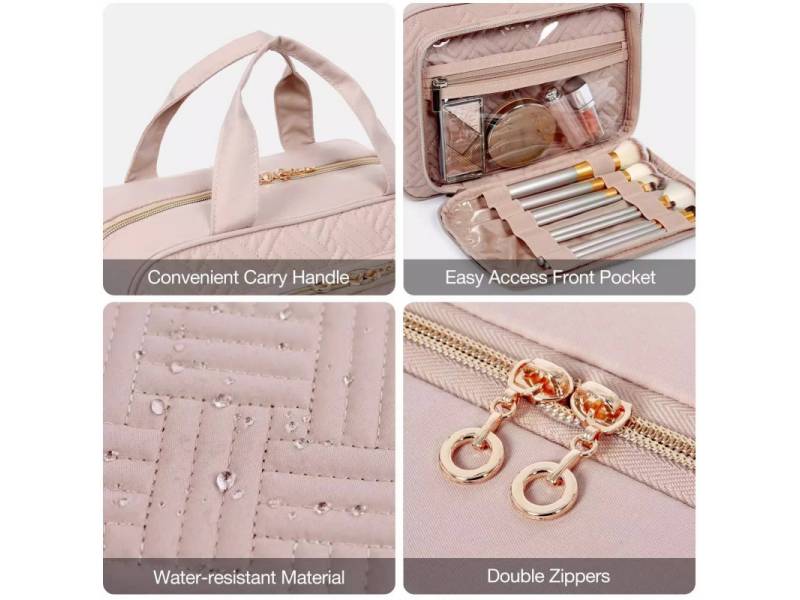
Quilted and padded pouches add texture, softness, and strong visual appeal for seasonal beauty collections. Quilt spacing, stitch alignment, filling thickness, panel shrinkage, and zipper installation influence the final shape. Padding also increases carton volume, so packed dimensions should be measured before freight planning.
Clear PVC or TPU Bags

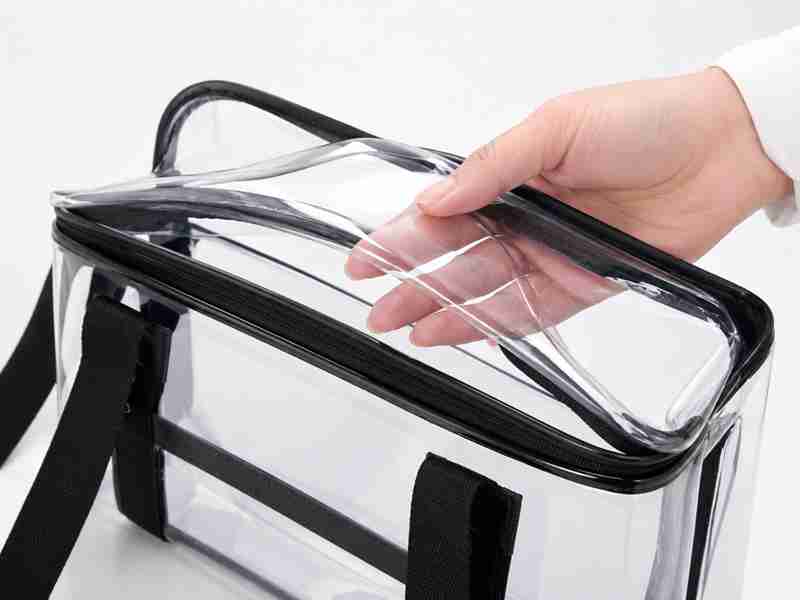
Transparent PVC or TPU bags display products without opening the pack and work well for skincare minis, travel kits, and retail bundles. Film thickness, softness, clarity, cold resistance, print adhesion, odor control, seam construction, and destination testing should be confirmed before selecting either material for bulk production.
Quilted Beauty Pouches

Quilted and padded pouches add texture, softness, and strong visual appeal for seasonal beauty collections. Quilt spacing, stitch alignment, filling thickness, panel shrinkage, and zipper installation influence the final shape. Padding also increases carton volume, so packed dimensions should be measured before freight planning.
Structured Cases

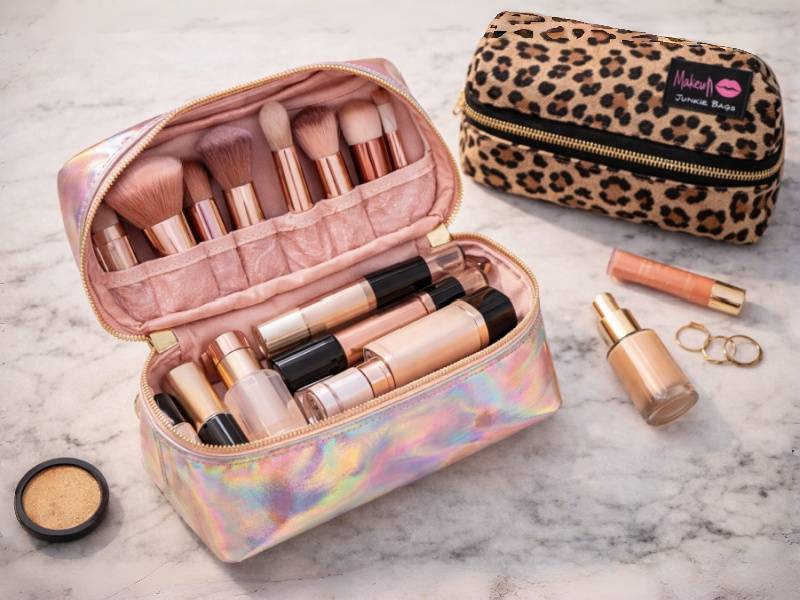
Structured organizer cases use reinforcement, foam, molded EVA, or layered panels to protect premium sets and maintain a defined silhouette. Compartments, brush slots, dividers, handles, and double zippers can be customized. Added structure improves protection but also affects tooling, sample time, unit cost, and shipping volume.
Travel Toiletry Bags

Travel toiletry bags accommodate bottles, brushes, skincare tools, and daily essentials through wider openings and organized interiors. Options include mesh pockets, elastic loops, removable pouches, hanging hooks, and wipe-clean linings. Capacity should be verified with the intended products rather than estimated only from external dimensions.
Drawstring Gift Pouches

Drawstring gift pouches offer a softer presentation for fragrance, skincare, spa, and limited-edition sets. Velvet, satin-look fabric, cotton, canvas, or recycled textiles create different visual results. Cord quality, channel construction, logo placement, lining, and closure tension determine whether the pouch feels polished rather than disposable.
Coordinated Bag Sets

Two-piece and three-piece sets support tiered product assortments, travel organization, holiday gifting, and coordinated retail collections. Sizes may nest to reduce packing volume or remain separate for display. Matching color, lining, zipper, logo, labels, and individual packing must stay consistent across every component and SKU.




Which Materials Work Best for Beauty Gift Set Bags?
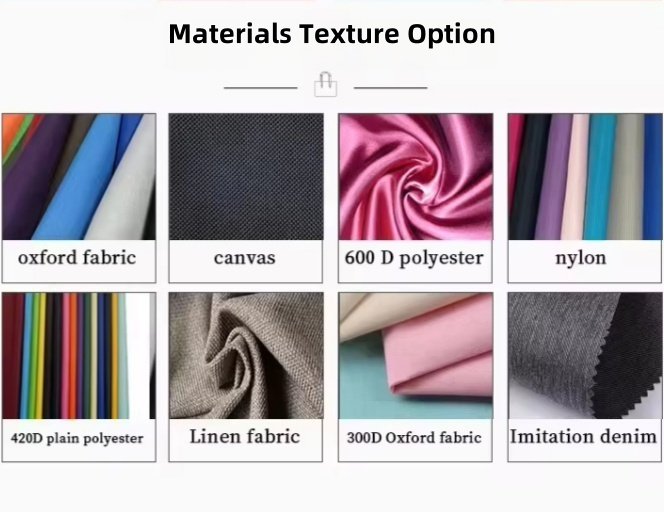
Material selection should reflect presentation level, cleaning needs, transparency, structure, decoration method, packed volume, target cost, and required supporting documents.
| Material | Suitable Applications | Main Advantages | Details to Confirm |
|---|---|---|---|
| Polyester And Nylon | GWP pouches, quilted bags, travel kits, organizers, and multi-pocket styles | Lightweight, durable, easy to sew, available in woven, satin-look, ripstop, coated, and padded finishes. Both materials support printing, embroidery, patches, and varied interior structures. | Fabric density, coating, hand feel, color fastness, wrinkle recovery, lining, and reinforcement should match the intended appearance. Similar-looking fabrics may perform differently after quilting, printing, or repeated zipper use. |
| Cotton And Canvas | Natural beauty collections, spa sets, wellness gifts, drawstring pouches, and reusable cosmetic bags | A soft or textured surface creates a warm, lifestyle-led presentation. Fabric weight, weave, washed finish, lining, and print method can be adjusted for different silhouettes. | Natural fibers may show slubs, shade variation, shrinkage, or creasing. Fabric weight should be confirmed through physical swatches because heavier canvas can increase stiffness, sewing difficulty, and packed weight. |
| RPET And Recycled Textiles | Sustainability-led gift sets, retail collections, travel pouches, and corporate beauty programs | Recycled polyester can provide a familiar woven appearance while supporting documented recycled-content goals. It can be quilted, printed, coated, or combined with conventional trims. | Recycled claims should match valid certificate scope and order records. Exterior fabric, lining, webbing, zipper tape, labels, and packaging may have different material sources, so claims must identify the components actually covered. |
| Clear PVC | Promotional sets, skincare minis, product-display pouches, travel kits, and transparent retail packs | High visibility allows products and printed cartons to remain visible without opening the bag. PVC can be sewn with binding or joined through suitable heat-based construction. | Film thickness, clarity, softness, odor, crease marks, cold conditions, print adhesion, edge finishing, and destination testing need review. A sewn clear pouch should not be described as fully leakproof unless the complete construction has been tested. |
| Clear Or Frosted TPU | Premium transparent pouches, travel sets, skincare launches, and softer-touch clear designs | TPU usually offers a softer hand and more refined flexibility than conventional clear vinyl. Frosted or tinted finishes can create a less promotional appearance while preserving product visibility. | Surface haze, scratch appearance, film consistency, print compatibility, seam method, low-temperature behavior, and cost should be compared through approved samples. TPU selection alone does not guarantee identical performance across every film specification. |
| PU And Vegan Leather | Premium vanity cases, fragrance gifts, structured pouches, and holiday collections | A refined surface supports embossing, debossing, foil details, metal plates, custom zipper pulls, and structured silhouettes. Color and texture can be developed around a brand palette. | Backing fabric, surface coating, rub resistance, hydrolysis performance, odor, edge finishing, reinforcement, and color transfer need evaluation. “Vegan leather” should be defined by its actual material composition rather than used only as a promotional term. |
| EVA And Reinforced Panels | Protective beauty cases, structured organizers, travel kits, brush cases, and premium presentation sets | Molded EVA, foam, board, and layered reinforcement help hold shape, protect contents, and create purpose-built compartments. Outer fabrics or PU surfaces can provide different finishes. | Molded structures may require tooling and generally involve higher starting quantities than simple sewn pouches. Mold depth, foam density, zipper path, lining adhesion, insert fit, tooling cost, and packed volume should be confirmed before development. |
| Linings And Internal Materials | Cosmetic pouches, toiletry bags, brush organizers, bottle sets, and wipe-clean interiors | Polyester, PEVA, coated fabrics, mesh, foam, elastic, and soft dividers help manage spills, organization, protection, and internal presentation. | A wipe-clean surface is not automatically waterproof. Stitch holes and bound seams can allow liquid migration. Lining color, coating, odor, seam construction, dye transfer, and compatibility with the packed products should be reviewed during sampling. |
Which Structural Details Improve Use and Presentation?
Structure determines how efficiently products are packed, how securely they travel, how cleanly the set opens, and whether the bag remains useful afterward.
Lining and Cleaning

Beauty products can leave powder, cream, oil, or liquid residue inside a bag. A light-colored lining improves visibility, while darker tones may hide marks more effectively. Coated polyester, PEVA, or suitable film-based linings can support easier cleaning, but seam construction still determines how moisture behaves around corners and binding.
- Match lining color to the exterior and brand palette.
- Review coating odor, surface feel, and dye transfer.
- Avoid unsupported waterproof or leakproof claims.
- Check wrinkles, bubbling, seam tension, and corner finish.
Opening and Access

Opening design affects both packing speed and daily use. A narrow top zipper may suit a flat pouch but can restrict boxed cosmetics or upright bottles. Wide gussets, double zippers, clamshell openings, and extended zipper ends create better access, although reinforcement and piping can reduce the usable opening.
- Check the largest cap, pump, carton, or palette.
- Allow enough space for hands during packing and removal.
- Prevent zipper ends from folding into the product area.
- Test access with the final lining and reinforcement installed.
Product Organization

Compartments should hold products without making packing slow or limiting future use. Elastic loops work for brushes and tubes, mesh pockets improve visibility, and padded dividers separate glass bottles. Too many fixed sections can become restrictive when product assortments change between seasonal releases or regional programs.
- Build pocket dimensions around real products.
- Leave clearance for labels, caps, and pump heads.
- Avoid elastic tension that deforms soft tubes.
- Use removable dividers when contents may change.
Closures and Hardware

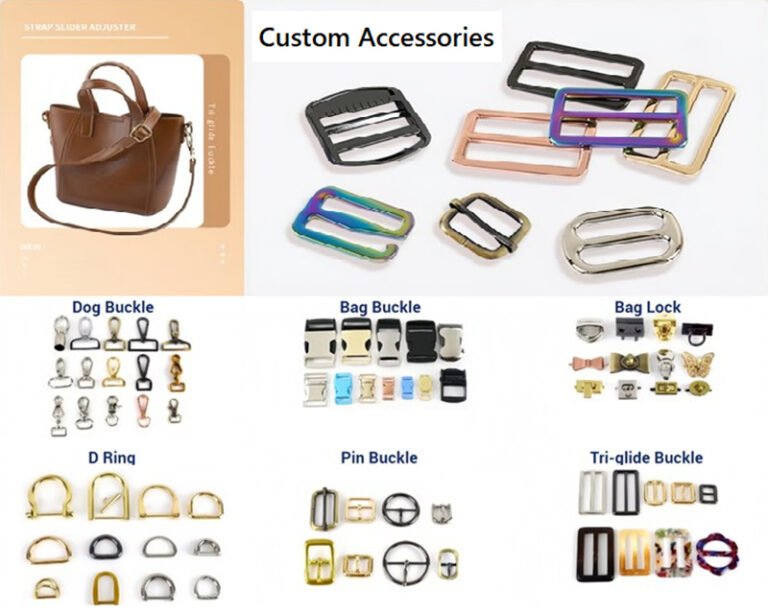
Zippers, pulls, handles, magnetic closures, snaps, and metal decorations influence appearance and long-term performance. Heavy hardware can distort a small pouch, while a weak zipper can reduce confidence in an otherwise refined design. Component size and finish should remain proportional to the bag and packed weight.
- Confirm zipper size, tape color, teeth finish, and pull direction.
- Reinforce handles according to the filled weight.
- Review plating color under consistent lighting.
- Protect metal parts from scratches during packing and transit.
How Can Every Branding Detail Be Customized?
Logo Application
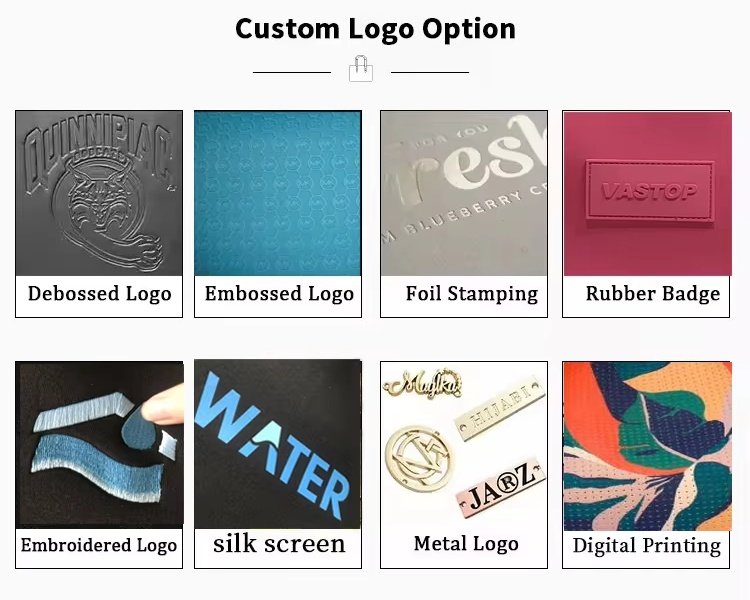
Screen printing, heat transfer, digital printing, embroidery, woven patches, debossing, foil stamping, rubber patches, and metal plates suit different surfaces. Artwork detail, color count, material texture, expected wear, and bag size should guide the method. A logo sample can confirm scale, clarity, position, and adhesion before full sampling.
Pantone Color Control
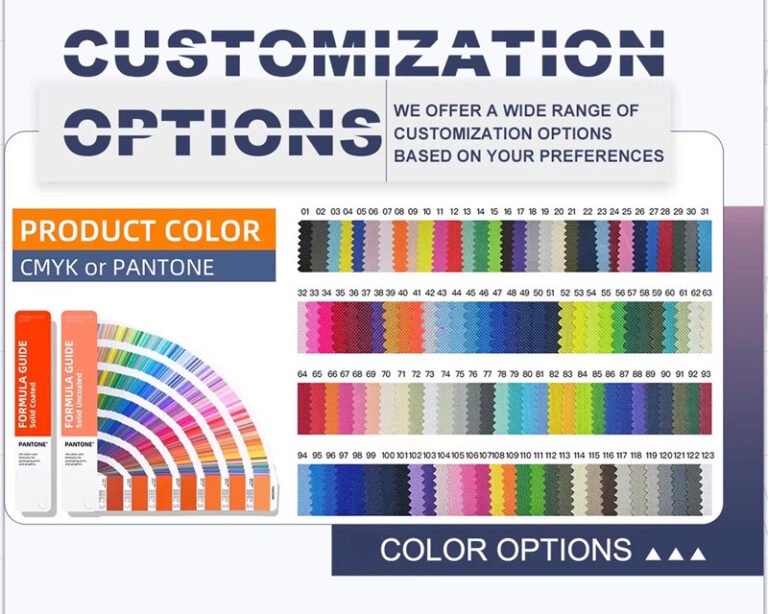
Color should be reviewed on the actual fabric, film, PU, lining, zipper tape, thread, and hardware finish. Identical Pantone references may appear different across matte, glossy, transparent, woven, and metallic surfaces. Approved swatches and consistent viewing conditions help align components before material cutting and assembly begin.
Custom Printed Linings
A printed lining creates a branded experience when the bag opens and can support monograms, patterns, product stories, or seasonal graphics. Repeat size, print direction, color transfer, abrasion, seam alignment, and minimum fabric quantity need review. Large motifs may become fragmented when cut across small panels and curved interiors.
Branded Zipper Pulls
Custom zipper pulls can use engraved, molded, enamel-filled, rubber, metal, or shaped designs. Pull size should remain comfortable without becoming heavy enough to distort the zipper line. Mold cost, finish, attachment method, logo legibility, minimum component quantity, and development time should be confirmed before the main sample begins.
Metal Trims And Details
Metal plates, rivets, corner pieces, rings, chain accents, and decorative emblems can raise perceived value when used with restraint. Plating tone, edge smoothness, attachment strength, weight, scratch resistance, and contact with soft materials require inspection. Protective wrapping may be needed to prevent marks during bulk packing and transport.
Labels And Retail Identity
Woven labels, satin labels, printed care labels, country-of-origin labels, hangtags, and barcode elements connect the bag with wider retail presentation. Label dimensions, fold type, sewing position, text accuracy, legal content, and scan direction should be approved early. Incorrect label placement can affect appearance even when the bag itself is well made.
How Are Bags Packed for Beauty Gift Set Programs?
Packing should protect appearance, separate approved SKUs, support efficient assembly, control carton volume, and arrive ready for the intended retail or distribution route.

Build the Pack-Out Around the Sales and Distribution Route
Packing begins with how the finished bag will be presented, stored, shipped, and distributed. A GWP pouch packed in bulk for counter staff follows different rules from a premium vanity case placed inside a printed gift box. Travel retail may require barcodes, compact carton dimensions, and display-ready labels, while influencer mailers may need individual protection and a precise opening sequence.
Individual protection: A simple fabric pouch may use a clear bag, tissue wrap, paper sleeve, or recyclable protective wrap. PU surfaces, metal plates, custom zipper pulls, quilted panels, and transparent films may need additional protection against scratches, pressure marks, dust, or color transfer. Protective materials should not distort the silhouette or leave residue.
Retail presentation: Gift boxes, paper sleeves, display cards, hangtags, inserts, barcode labels, care labels, and country-of-origin information should be checked together. Label position must remain visible and scannable without covering key design details. Printed components need approved artwork, dimensions, colors, finishes, and folding direction.
Carton planning: Individual pack size affects units per carton, gross weight, storage efficiency, and freight volume. A soft pouch may fold or nest, while a structured case usually needs more space. Carton quantity should be based on the approved packed sample rather than estimated from an empty prototype.
Pack-out instructions: Product orientation, zipper position, handle placement, tissue folding, protective film, label direction, carton layers, and carton marks should be recorded with photos. Clear instructions help maintain the intended presentation across repeated packing stations and different SKUs.
Define Kitting Boundaries Before Production and Final Packing
Beauty gift programs may involve an empty branded bag, a bag packed inside a paper box, or a complete set containing cosmetics, skincare, tools, inserts, printed materials, and protective packaging. Responsibilities should be defined before quotation and sampling because each version requires different handling, space, labor, inspection, and documentation.
Jundong can prepare sewn bags with approved labels, hangtags, sleeves, individual wraps, gift boxes, inserts, carton marks, and SKU-based packing instructions. Empty bags may be folded, shaped, stuffed, nested, or placed into retail packaging according to the confirmed pack-out sample. Printed components can be coordinated with the finished dimensions of the bag.
Packing beauty products into the bag requires additional information:
- Product status: Confirm whether items are empty samples, sealed retail products, glass bottles, pump bottles, powders, liquids, brushes, or tools.
- Delivery route: Confirm whether products arrive at Jundong, move to a separate assembly facility, or are packed after arrival at the destination.
- Handling conditions: Review cleanliness, storage temperature, breakage risk, leakage risk, traceability, batch separation, and liability.
- Set configuration: Provide a complete SKU matrix showing which products, printed materials, inserts, and bag colors belong together.
- Inspection responsibility: Define who checks cosmetic batch codes, seals, labels, quantities, product condition, and final set accuracy.
- Regulatory responsibility: Cosmetic filling, opening primary packaging, handling regulated formulas, or altering retail products requires separate facilities and responsibilities beyond ordinary bag production.
A signed packing sample or approved pack-out photo set should establish the final standard. The specification should include sequence, orientation, protective materials, label placement, carton quantity, and mixed-SKU rules. Scope clarity prevents a bag-only quotation from being mistaken for a complete filled-set assembly quotation.
Which Customization Route Fits Your Beauty Bag Project?
The right development route depends on originality, launch timing, product fit, visual control, investment level, expected quantity, and long-term exclusivity requirements.
| Development Route | Starting Point | Customization Scope | Best Fit | Main Decisions |
|---|---|---|---|---|
| Existing Style With Branding | A proven pouch or case construction already exists and can be reviewed through available samples or specifications. | Logo, selected stock colors, label, zipper pull, hangtag, sleeve, and individual packing may be adjusted within the limits of the original construction. | Time-sensitive promotions, straightforward gift programs, and projects where a proven format already fits the products. | Confirm available colors, material consistency, usable internal size, logo area, component availability, packing method, and whether the base style can remain available for replenishment. |
| Semi-Custom Modification | An existing construction provides the starting shape, but selected parts require controlled changes. | Size, color, fabric, lining, pocket layout, handle, zipper, reinforcement, logo method, labels, and packing can be modified without rebuilding every design element. | Seasonal collections, private-label programs, coordinated product launches, and projects requiring stronger distinction without a completely new structure. | Identify which elements remain unchanged, which need new patterns or components, how modifications affect sample time, and whether custom materials or hardware create separate quantity requirements. |
| Full OEM/ODM Development | Development begins with a design file, product assortment, reference sample, sketch, packaging concept, or functional brief. | Shape, dimensions, pattern, internal layout, materials, reinforcement, custom hardware, printed lining, branding, retail packing, and inspection specifications can be developed around the project. | Signature beauty accessories, proprietary product-fit solutions, premium gift sets, structured cases, and long-term collections requiring greater control. | Confirm product dimensions, technical feasibility, tooling, material availability, target cost, sample revisions, testing needs, intellectual property, production schedule, and ownership of custom molds or components. |
How Does the Custom Beauty Bag Development Process Work?
A controlled route connects the product assortment, structural decisions, approved materials, prototype results, production specifications, inspection, packing, and delivery preparation.
Project Brief Review
Development starts by identifying the commercial use, product assortment, sales channel, quantity, deadline, destination, and expected presentation. A design file is helpful but not essential for the first feasibility review. Reference photos, existing samples, product dimensions, or a clear concept can establish the starting direction.
- Submit the intended bag type and product list.
- Share artwork, target quantity, and color options.
- State packing, labeling, testing, and delivery needs.
- Identify the approved cost direction where available.
Product Fit Planning
Every bottle, jar, tube, palette, brush, carton, or tool should be listed with accurate dimensions and quantity. The proposed arrangement determines finished size, opening, depth, internal support, and outer packaging. Actual products or dimensionally accurate models provide a stronger fit review than visual estimates.
- Record maximum width, height, depth, and diameter.
- Confirm upright, flat, stacked, or divided placement.
- Allow for seams, lining, padding, and removal space.
- Check fit inside any paper box or shipping pack.
Material And Component Confirmation
Exterior fabric, lining, reinforcement, zipper, thread, elastic, mesh, hardware, labels, and decoration should be reviewed as one coordinated system. Material decisions affect appearance, structure, sewing method, available colors, cost, lead time, and supporting documents. Approved swatches help reduce interpretation differences.
- Confirm material code, color, texture, and thickness.
- Match zipper tape, thread, lining, and hardware.
- Review Logo compatibility before full sampling.
- Record approved alternatives for supply continuity.
Prototype Sample Development
Patterns are created or adjusted according to confirmed dimensions, construction, and component choices. The first prototype reveals issues that drawings cannot fully predict, including opening restriction, corner shape, lining tension, zipper movement, handle balance, product fit, and packed appearance.
- Compare the prototype with the approved brief.
- Test every intended product inside the bag.
- Photograph areas requiring adjustment.
- Separate necessary corrections from optional changes.
Pre-Production Approval
After revisions, the approved sample and written specification become the reference for bulk execution. Dimensions, tolerances, materials, colors, Logo position, stitching, hardware, labels, individual packing, carton quantity, and inspection requirements should be frozen before material cutting begins.
- Sign or clearly identify the approved sample.
- Approve packing and label placement.
- Confirm SKU and color breakdowns.
- Record final artwork and component versions.
Bulk Production And Packing
Materials are prepared against confirmed specifications before cutting, decoration, sewing, assembly, inspection, and packing begin. Early outputs are compared with the approved reference, while production records help control repeated details. Completed units then follow the confirmed individual packing and carton rules.
- Check incoming materials before cutting.
- Review early units before full output continues.
- Separate colors and SKUs during production.
- Complete final checks before carton sealing.
What Should Be Approved During Beauty Bag Sampling?
Sample approval should confirm product fit, construction, materials, color, branding, operation, workmanship, packing, and measurable specifications before bulk materials are cut.
Approve More Than Shape, Color, and Logo Placement

A beauty gift set bag may look attractive in photographs while still creating problems during packing, transport, or repeated use. Sample review should therefore involve the actual cosmetics, skincare products, tools, retail cartons, and outer packaging whenever available. A complete assessment checks how every component performs together rather than judging only the front appearance.
Simple sewn samples commonly require about 3–7 working days after materials, artwork, and specifications are confirmed. Complex structures may require 7–15 working days. Custom-dyed fabric, molded EVA, printed lining, newly developed metal hardware, special transparent film, or several rounds of adjustment can extend the schedule. Shipping time is calculated separately.
Dimensions and capacity: Measure finished width, height, depth, opening length, handles, pockets, and usable internal space. Load the complete product assortment and confirm whether bottles, cartons, tubes, brushes, or palettes can be inserted and removed without damage.
Construction: Check panel shape, symmetry, reinforcement, seams, binding, piping, edge finish, quilting, handles, dividers, elastic loops, pockets, and base stability. The bag should keep its intended form when empty and when filled according to the approved use.
Operation: Open and close every zipper, pull, snap, hook, magnetic closure, pocket, and removable divider. Review zipper movement around corners and check whether hardware weight distorts smaller pouches.
Brand execution: Compare colors with approved swatches. Check logo scale, position, clarity, surface adhesion, embroidery tension, debossing depth, printed lining direction, label position, and metal finish.
Packing result: Place the finished sample into its individual wrap, sleeve, insert, or gift box. Confirm folding, protective materials, barcode visibility, packed dimensions, and presentation after reopening.
Verbal approval or a few general photographs are not enough for a complex beauty bag. The approved sample should be linked to a written specification recording every feature that must remain consistent during production. If color, texture, opening clearance, or product fit is critical, a physical reference carries more value than screen-based approval alone.
A complete production standard should include:
- Finished dimensions and agreed tolerances.
- Product arrangement and usable internal capacity.
- Exterior, lining, reinforcement, and component references.
- Approved color swatches and material codes.
- Logo artwork, scale, position, and application method.
- Zipper, puller, hardware, thread, elastic, and mesh details.
- Stitching, binding, quilting, edge, and reinforcement requirements.
- Labels, hangtags, barcode placement, and country-of-origin information.
- Individual packing, carton quantity, carton marks, and SKU separation.
- Approved photographs showing front, back, sides, interior, base, details, and packed condition.
Revisions should be recorded by version rather than discussed through scattered messages. Each change needs a clear status: requested, completed, rejected, or approved. Old artwork, earlier dimensions, and replaced components should be removed from active production files to prevent accidental reuse.
A pre-production sample may be required when bulk materials differ from prototype materials, when a custom color or hardware component becomes available later, or when substantial revisions follow the first prototype. Bulk production should proceed only after the reference sample, specification, artwork, material direction, and packing rules are aligned.
Turn the Approved Sample Into a Production Standard

How Is Sample-to-Bulk Quality Controlled?
Quality control should follow materials, early production, sewing, function, appearance, final inspection, and packing rather than relying only on a pre-shipment check.
Incoming Material Inspection
Exterior fabric, lining, transparent film, PU, foam, reinforcement, zipper, thread, elastic, mesh, hardware, labels, and packaging are checked against approved references before cutting. Inspection focuses on material identity, color, texture, thickness, odor, visible defects, component size, and quantity. Unconfirmed substitutions should not enter production without review and approval.
First Unit Confirmation
Early completed units reveal whether production settings match the approved sample. Shape, dimensions, seam allowance, Logo position, lining, zipper path, pockets, reinforcement, labels, and packing direction are reviewed before output expands. Correcting a repeated issue at the first-unit stage reduces rework after hundreds or thousands of pieces have already been assembled.
Inline Workmanship Checks
Inspection continues during cutting, decoration, sewing, assembly, and finishing. Checks focus on panel alignment, stitch consistency, seam security, binding width, quilting position, loose threads, wrinkles, glue marks, edge finish, and component attachment. Repeated defects are reported to the responsible process so correction occurs during production rather than only after completion.
Measurement And Function Review
Finished dimensions are compared with the agreed specification and tolerances. Zippers, handles, snaps, hooks, magnetic closures, elastic loops, pockets, dividers, and removable parts are operated and reviewed. Product-fit tests may be repeated using approved items or dimensionally accurate models, especially where opening clearance and internal arrangement affect the set.
Logo And Appearance Inspection
Logo clarity, scale, position, color, adhesion, embroidery tension, debossing depth, metal finish, printed lining direction, and label placement are checked against approved references. Exterior panels are also reviewed for shade variation, scratches, pressure marks, distortion, stains, and symmetry. Lighting conditions should remain consistent when color differences are being evaluated.
Packing And Final Release
Final inspection can follow an agreed AQL plan or another approved inspection level based on order requirements. Packaging checks cover individual protection, labels, barcode direction, SKU separation, carton quantity, carton marks, and packed appearance. Goods should move to shipment preparation only after identified issues are recorded, corrected, or formally resolved.
Which Compliance and Material Documents May Be Needed?
Document requirements depend on the destination, sales channel, material claims, product construction, brand policy, and the exact components included in the order.
Factory And Social Audits
Factory-management and social-responsibility documents help procurement teams review whether production operates under recognized quality, environmental, labor, or ethical controls. Relevant records may include ISO 9001, ISO 14001, BSCI, SA8000, or an audit requested by the brand. Availability and validity should be checked against the exact production site.
- Confirm the legal company name and factory address.
- Review audit date, validity period, and covered facility.
- Check whether subcontracted processes require disclosure.
- Match the document scope with the actual production route.
Material And Chemical Tests
Chemical and material requirements should be selected according to the destination and product category rather than copied from unrelated programs. Requests may involve REACH, California Proposition 65, azo dyes, phthalates, heavy metals, color fastness, odor, or physical performance. RoHS is relevant only when applicable components or product categories require it.
- Define the destination country before testing.
- Identify which material or component needs evaluation.
- Use the final material specification whenever possible.
- Confirm the test method, limit, sample, and report holder.
Recycled Material Evidence
RPET, recycled nylon, recycled cotton, and other environmental claims need evidence linked to the relevant material and order. A general certificate image does not automatically prove that every exterior, lining, zipper, webbing, label, and packaging component contains recycled material. Claim wording should remain within the verified scope.
- Review certificate holder, material category, and validity.
- Confirm whether transaction documents are required.
- Separate certified components from conventional components.
- Avoid broad claims unsupported by the final bill of materials.
Third-Party Inspection
Independent inspection can be arranged when a brand, retailer, or project requires additional verification before shipment. The inspection company may review quantity, workmanship, measurements, function, Logo, labels, packing, cartons, or selected tests according to an agreed checklist and sampling level. Inspection access and timing should be planned before the goods are fully packed.
- Confirm inspection standard and acceptance level.
- Provide the approved sample and specification.
- Reserve time for corrective work if needed.
- Define who receives and approves the final report.
What Makes Jundong Ready for Large Beauty Brand Programs?
Large programs require more than production space; they depend on experienced development, coordinated teams, controlled processes, reliable capacity, and clear quality responsibility.


20+ Years OEM/ODM Experience
More than 20 years of custom bag development provides a working understanding of materials, patterns, sewing structures, branding methods, packaging, and export preparation. Experience becomes valuable when a concept needs adjustment for product fit, stable bulk execution, reasonable cost, or a fixed launch schedule rather than simple reproduction from a photograph.
600+ Skilled Employees
A team of more than 600 employees supports design review, pattern development, sample making, cutting, decoration, sewing, assembly, inspection, packing, export coordination, and commercial communication. Multiple functions working within one project route help reduce disconnected handovers when several colors, components, packing formats, or delivery destinations must be managed together.
18,000 m² Production Facility
An 18,000 m² facility provides space for material preparation, development, cutting, sewing, assembly, inspection, packing, and shipment staging. Adequate space is especially important for structured cases, transparent bags, quilted styles, mixed materials, gift boxes, and multi-SKU orders requiring separation before final packing and dispatch.
80 Quality Inspectors
A team of 80 quality inspectors supports checks across incoming materials, production, finished units, branding details, function, packaging, and shipment preparation. Inspection responsibility is distributed across the production route rather than concentrated only at the end. Standards are linked to approved samples, written specifications, tolerances, artwork, and pack-out instructions.
What Factory Evidence Can Procurement Teams Review?
Real process evidence helps procurement teams judge whether development, production, inspection, packing, and delivery controls exist beyond sales descriptions and polished product photographs.
Material And Component Control
Material evidence can include approved swatches, fabric rolls, transparent film, PU, lining, foam, zippers, thread, hardware, labels, and packing components prepared for an active project. Clear identification and comparison against approved references show how color, texture, thickness, component size, and material substitutions are controlled before cutting.
Pattern And Sample Room
A working sample room should show patterns, construction trials, prototype development, product-fit checks, Logo samples, material combinations, and recorded revisions. Evidence of adjustment is often more useful than a perfect display sample because it reveals how opening clearance, internal layout, shape, reinforcement, and packing issues are corrected before bulk production.
Cutting Preparation
Cutting evidence can show material spreading, pattern placement, panel identification, color separation, defect avoidance, and preparation for sewing. Accurate cutting influences symmetry, dimensions, printed-pattern direction, quilting alignment, and material use. Transparent films, PU, padded panels, and directional prints require different handling from ordinary woven fabric.
Sewing And Assembly
Production images should reveal seam construction, binding, piping, zipper installation, lining assembly, pocket placement, reinforcement, handle attachment, and workstation organization. Close views of actual operations provide stronger evidence than distant factory panoramas. Different bag structures may move through separate sewing and finishing sequences before final shape is achieved.
Quality Inspection
Inspection evidence should show measurements, zipper checks, product-fit review, Logo comparison, seam inspection, hardware checks, label verification, and packed-unit assessment. Useful images include the approved reference, specification, measuring tools, and the feature under review. A person holding a finished bag without performing a check provides little quality evidence.
Packing And Shipment Preparation
Packing evidence can show individual protection, tissue, sleeves, gift boxes, labels, barcode direction, SKU separation, carton quantities, carton marks, sealing, and shipment staging. Images should demonstrate how the approved pack-out is reproduced and how different colors or destinations remain separated before cartons leave the facility.
How Should Beauty Bag Factories Be Compared?
A meaningful comparison examines development depth, product-fit control, material evidence, sample approval, bulk consistency, packing capability, schedule ownership, and long-term repeatability.

| Decision Area | Evidence Worth Requesting | Warning Signs | Jundong Approach |
|---|---|---|---|
| Beauty Product Fit | Product dimension sheet, internal layout, physical fit test, opening review, and packed sample | Bag dimensions estimated only from a photograph; no allowance for caps, pumps, cartons, seams, or lining | Product lists and verified dimensions are reviewed before pattern confirmation; real products or accurate models can be used during sampling. |
| Development Capability | Pattern files, prototype stages, revision records, material options, and technical comments | Immediate quotation without reviewing structure, materials, branding, packing, or product use | Projects can begin from drawings, reference samples, photographs, product lists, or concepts, followed by feasibility and sample review. |
| Material Control | Approved swatches, material codes, component records, test reports, and substitution procedure | Unidentified materials, uncontrolled replacement, or environmental claims without scope evidence | Exterior, lining, reinforcement, zippers, hardware, labels, and packing components are recorded against approved references. |
| Sample Approval | Physical sample, measurements, product-fit results, Logo review, packing sample, and written specification | Approval based only on front-view photographs or verbal messages | Confirmed samples, artwork, dimensions, component details, pack-out instructions, and version records form the execution standard. |
| Bulk Quality Control | Incoming, first-unit, inline, functional, final, and packaging inspection records | Inspection mentioned only at shipment stage; no link to approved tolerances or samples | Quality checks follow materials, early output, sewing, function, appearance, packing, and final release requirements. |
| Brand Execution | Logo samples, Pantone references, printed lining direction, hardware finish, and label placement | Decoration selected without considering material texture, wear, adhesion, or scale | Logo process, color, lining, zipper pulls, metal details, labels, and packaging are reviewed as one coordinated identity. |
| Packaging And SKU Control | Pack-out sample, barcode placement, SKU matrix, carton quantity, carton marks, and destination separation | Packaging details delayed until production is nearly complete | Individual packing, labels, carton rules, SKU separation, and destination needs are reviewed before final packing begins. |
| Capacity And Schedule | Material timeline, production plan, inspection window, packing period, and freight route | One fixed delivery promise given before samples, materials, quantity, and packaging are confirmed | Scheduling is reviewed after structure, material, quantity, branding, packing, approvals, and required delivery date are understood. |
| Compliance And Inspection | Valid audit files, material reports, recycled-content evidence, inspection plan, and document scope | Certificate logos displayed without holder, facility, validity, component, or order relevance | Available documents and testing needs are matched to the production site, selected materials, destination, and project requirements. |
| Repeat Orders | Approved reference retention, component history, artwork versions, color records, and reorder review | No record of earlier specifications or material changes | Version records and confirmed references support repeat production, color extensions, coordinated styles, and multi-SKU programs. |
What Affects MOQ, Price, and Lead Time?
Order planning becomes clearer when quantity, materials, construction, branding, packing, testing, production time, and freight time are evaluated as connected decisions.
MOQ Logic
The standard MOQ for most custom sewn bag projects is 500 pieces per design. Color quantities may depend on fabric availability, custom dyeing, printing, hardware, zipper tape, and label requirements. Molded EVA cases usually start from 1,000 pieces because tooling, molding setup, and material preparation create a different cost structure.
- Confirm quantity by design, size, and color.
- Identify components with separate minimum quantities.
- Review whether colors can share materials and hardware.
- Avoid assuming multiple SKUs can always be combined freely.
- Final MOQ follows the approved specification and material route.
Cost Drivers
Unit cost is shaped by more than exterior material. Finished dimensions, panel count, lining, reinforcement, quilting, pockets, dividers, zippers, custom pulls, metalwork, Logo application, labels, individual packing, gift boxes, testing, quantity, and production schedule all contribute. A controlled target-cost direction can help prioritize features without weakening essential function.
- Simplify hidden construction before removing visible quality.
- Compare alternative materials through physical samples.
- Use shared components across coordinated styles where suitable.
- Measure packed volume before approving oversized structures.
- Request quotations from the same confirmed specification.
Timeline Planning
Conventional sewn bag production normally requires about 15–30 working days after sample approval, material confirmation, and production scheduling. Complex structures commonly require 25–45 working days. Air transport often takes about 7–12 days, while sea transport may require approximately 40–45 days, depending on destination, routing, customs, and seasonal conditions.
- Add artwork and sample approval before bulk production.
- Reserve time for custom-dyed materials, molds, or hardware.
- Include inspection, corrective work, packing, and booking.
- Separate factory completion from final arrival time.
- Plan holiday and fixed-date launches backward from delivery.
How Was a 1,500-Piece Beauty Set Bag Delivered?
A completed skincare gift program shows how product fit, material trials, artwork control, inspection, and pack-out convert a creative brief into repeatable bulk output.
Four Tubes, Three Artwork Versions, One Fit Standard

Anonymized Project Record — Brand name and artwork withheld
A skincare gift program required 1,500 custom beauty gift set bags using one construction and three coordinated artwork versions, with 500 pieces allocated to each version. Every pouch needed to present four 30 ml skincare tubes measuring approximately 30 mm in diameter and 60 mm in length.
Early development focused on product arrangement rather than exterior dimensions alone. The tubes needed enough clearance around their caps, sealed ends, and printed surfaces while remaining upright and visually balanced. After fit testing with product mock-ups, the body size was finalized at approximately 135 × 45 × 75 mm.
Frosted TPU was selected for the main body after comparing appearance, hand feel, fold recovery, and print visibility with clear PVC. Color-matched polyester binding and zipper tape created a cleaner connection with the skincare artwork. A one-color logo was placed above the lower seam so it remained visible after filling.
The first prototype revealed that the zipper opening restricted fast loading. Extending the opening and refining both zipper-end tabs allowed the four tubes to enter without excessive bending. The logo position was also raised slightly to prevent visual interference from the filled products.
A second sample confirmed capacity, zipper movement, standing balance, seam appearance, print position, and the proposed individual packing method. Final approval covered the physical sample, measurements, material specification, artwork files, color references, and packing instructions—not appearance alone.
Bulk Control Protected Every Artwork Version

Bulk production followed one approved construction file with separate artwork codes for all three versions. The specification identified bag dimensions, TPU thickness, trim color, zipper length, logo position, artwork revision, packing quantity, and carton marks. Each version received a distinct SKU reference to prevent artwork or packing mix-ups.
Incoming TPU, zipper tape, binding, and printed components were checked before cutting. First completed units from each artwork version were compared with the approved sample before full sewing continued. In-line inspection focused on film scratches, edge alignment, zipper movement, seam security, print adhesion, logo placement, and finished dimensions.
The agreed production plan allowed 28 working days after sample approval and material receipt. Finished bags were counted by SKU, individually protected, separated by artwork version, and packed in clearly marked export cartons. Carton quantities were reconciled with the packing list before shipment release.
Final inspection examined appearance, dimensions, workmanship, function, artwork accuracy, packing, and order quantity. The approved sample and specification remained the reference for release decisions.
The result was more than 1,500 matching pouches. The program established a controlled construction that could support future artwork updates and repeat orders without rebuilding the entire beauty bag specification. For procurement and brand teams, such documentation reduces ambiguity when seasonal graphics, product combinations, or destination requirements change.
How Are Multi-SKU and Repeat Orders Controlled?
Beauty collections often share one bag structure across several colors, artworks, gift sets, or destinations. Clear version control keeps every variation identifiable and repeatable.
One Approved Specification for Every SKU
Version accuracy begins with one approved specification for each SKU. Even when several beauty bags share the same construction, artwork, trim color, packing, or destination details may differ. Separate control records allow production and inspection teams to verify the correct version without relying on memory or visual guesswork.
- SKU code, finished dimensions, material, and component list
- Pantone references, logo method, position, and artwork revision
- Approved sample date, packing instructions, and carton identification
Shared Components Without Hidden Variation
Common materials can improve consistency across a coordinated beauty collection, but every shared component must remain traceable. A master component list identifies which zipper, lining, puller, binding, label, or reinforcement belongs to each style. Any unavailable or discontinued item is reported before replacement, with a new sample or visual approval arranged where appearance or performance may change.
- Shared-material matrix for coordinated styles
- Batch and color checks before component allocation
- Written approval before visible substitutions
Reorder Records That Prevent Version Drift
A repeat order should begin with the latest approved record, not an old email attachment or an unmarked sample. Archived specifications, artwork revisions, color references, inspection findings, and packing instructions are reviewed before materials are reserved. If a fabric finish, zipper color, printing process, or sales-region requirement has changed, the difference is identified before production starts.
- Latest revision confirmed before material ordering
- Reorder sample or first unit checked when needed
- Previous inspection findings carried into the new control plan
What Should You Send for an Accurate Project Review?
A complete brief allows faster evaluation of construction, material, decoration, sampling, packing, cost, and timing before a custom beauty bag moves into development.
Products and Intended Use
Describe what the bag will hold and how the finished set will be presented. Identify whether it is a skincare gift set, makeup kit, beauty GWP, holiday collection, PR mailer, travel set, retail pouch, or reusable cosmetic bag. Product names and intended use help define structure and handling needs.
Bag Size or Product Dimensions
Provide the required finished bag size whenever available. If dimensions have not been decided, send the length, width, height, diameter, and quantity of every bottle, tube, jar, brush, or accessory. Product arrangement can then be reviewed before a preliminary bag size is proposed.
Style References and Construction
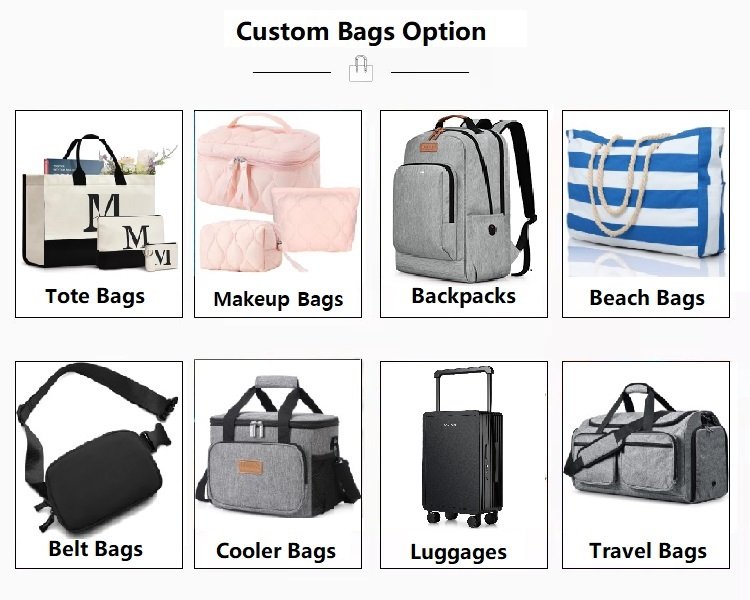
Share drawings, technical packs, photographs, physical samples, or links showing the preferred silhouette and opening method. Indicate whether the design needs a gusset, handle, divider, transparent window, internal pocket, structured base, molded EVA shell, drawstring, zipper, flap, or another functional feature.
Material and Performance Needs
State the desired appearance and expected conditions of use. Useful details include transparency, softness, structure, wipe-clean surfaces, recycled content, abrasion resistance, lining needs, or resistance to occasional cosmetic residue. Avoid relying on material names alone; the required performance often determines the correct construction.
Artwork, Colors, and Branding
Send editable logo and artwork files where possible, preferably in AI, EPS, PDF, or another vector format. Include Pantone references, print dimensions, placement instructions, label artwork, metal logo drawings, and packaging graphics. Reference photos can help communicate the intended finish but should not replace production-ready artwork.
Quantity and SKU Breakdown
List the total order quantity and show how it is divided by design, color, artwork, size, or destination. Most sewn custom bags begin at 500 pieces per design, while molded EVA programs generally require larger quantities. A clear breakdown prevents an unrealistic total from hiding several undersized variants.
Packing and Kitting Instructions
Explain how each bag should leave the facility: flat or shaped, individually protected, fitted with tissue or inserts, packed by SKU, labeled, barcoded, or placed into a display carton. If filled beauty items are involved, identify who supplies them and where assembly will occur so responsibilities can be reviewed accurately.
Timing, Destination, and Testing
Provide the desired delivery date, destination country, shipping location, planned launch schedule, and any retailer or product-testing requirements. Timing should include sampling, approval, material preparation, production, inspection, and transport. Early visibility allows potential schedule conflicts or testing lead times to be addressed before commitment.
Make A Beauty Gift Set Bag Sample First?
A well-designed custom beauty gift set bag should do more than look attractive. It should fit the exact products inside, from skincare bottles and makeup items to perfume, brushes, or promotional sets. Material, size, compartments, closures, logo decoration, and packing method should all be confirmed before production. Making a sample first helps verify product fit, appearance, protection, and packaging efficiency before moving into bulk orders.
Client Testimonials
800+ brand Clients Trust Jundong


Beauty Gift Set Bag FAQs
Clear answers to ten frequently asked procurement questions covering quantities, sampling, product fit, materials, branding, quality, compliance, production, packing, and quotation requirements.

What is the MOQ for custom beauty gift set bags?
For most sewn beauty pouches, the standard minimum is 500 pieces per design. Color, dimensions, logo, construction, and packing are reviewed together, so dividing one design into numerous small variants may change feasibility. Molded EVA beauty cases normally begin at 1,000 pieces because tooling, forming, and setup requirements are different. A 500-piece first order may be evaluated for selected EVA programs, but it should not be assumed. Send the proposed SKU breakdown early, and the workable quantity for each design, color, and artwork version will be confirmed before sampling.
How long does a custom beauty bag sample take?
A standard beauty bag sample normally requires 3–7 working days after materials, dimensions, artwork, and construction are confirmed. Complex structures involving molded EVA, custom metal parts, special printing, multiple internal compartments, or newly developed materials may require 7–15 working days. Timing for revisions depends on what must be changed and how quickly feedback is returned. Sample charges, printing screens, molds, or tooling requirements are quoted before work begins, allowing development cost and timing to be reviewed before approval.
Can the bag be fitted to exact bottles, tubes, and jars?
Definitely—bag dimensions can be developed around the actual beauty products rather than estimated from an exterior reference. Provide physical samples or accurate measurements for every bottle, tube, jar, brush, and accessory, including caps, pumps, nozzles, and any outer cartons. The arrangement is reviewed for loading clearance, movement, closure pressure, divider position, and presentation. A physical prototype remains essential because nominal dimensions do not always show material flexibility or how products interact when the bag is lifted, packed, or transported.
Which materials are best for beauty gift set bags?
The best material depends on presentation, structure, cleaning needs, product weight, and intended reuse. Polyester and nylon suit durable fabric pouches; cotton canvas offers a natural textile appearance; RPET supports selected recycled-material programs; PVC and TPU provide transparent or frosted presentation; PU creates a refined leather-like finish; EVA adds shape and impact protection. Cosmetic residue resistance also depends on coating, lining, seams, and closure construction. A material should never be described as leakproof or waterproof without a structure designed and tested for the required exposure.
Can you match brand colors and reproduce detailed logos?
Absolutely—brand colors and logos can be developed through controlled color references, artwork files, decoration methods, and physical sample approval. Pantone codes provide a starting reference, while the final result also depends on material texture, base color, transparency, coating, and printing process. Available decoration routes include screen printing, heat transfer, sublimation, embroidery, woven labels, patches, debossing, and metal badges. Fine lines, gradients, small lettering, metallic effects, and edge placement should be reviewed before sampling so the selected method supports both appearance and production stability.
How is sample-to-bulk quality consistency controlled?
Consistency comes from an approved physical sample supported by measurable specifications and staged inspection. Before production, dimensions, materials, colors, artwork, components, workmanship, and packing are documented. Incoming materials pass IQC checks before use; first units and in-line output are compared with the approved reference; final inspection reviews appearance, function, dimensions, quantity, and packing under the agreed AQL standard. If a visible material or component must change, production should pause until the replacement has been reviewed instead of allowing an unapproved substitution.
Which compliance documents can be provided for a beauty bag project?
Relevant compliance records can be reviewed according to the material, construction, destination, and retailer requirements. Factory-level certifications and management-system records may include ISO 9001, ISO 14001, BSCI, or SA8000 documentation where currently valid and applicable. Material or component reports may involve OEKO-TEX, REACH, RoHS, or California Proposition 65 requirements, depending on the selected item and test scope. No single certificate automatically covers every finished bag. Required documents and third-party testing should therefore be identified before material approval and order confirmation.
How long do bulk production and international delivery take?
Bulk production for most sewn beauty bags normally requires 15–30 working days after sample approval and material readiness. Complex constructions, newly developed components, molded parts, extensive handwork, or multi-SKU packing may require 25–45 working days. Air transport commonly takes about 7–12 days, while sea transport often requires approximately 40–45 days. Transit estimates vary with destination, route, booking availability, customs clearance, and seasonal congestion. A reliable schedule should separate sampling, production, inspection, and transport rather than presenting one combined date without clear assumptions.
Can multi-SKU orders and beauty-set packing be handled?
Sure—multi-SKU bag orders can be controlled through separate item codes, artwork revisions, quantity records, carton marks, and packing lists. Empty bags may be individually protected, separated by artwork or color, fitted with approved paper inserts, labeled, barcoded, or packed into designated cartons. Programs involving filled cosmetics require an additional review covering product ownership, leakage risk, handling rules, storage, regulatory responsibility, and final assembly location. Defining the division of work before quotation prevents missing costs and avoids confusion during final pack-out.
What information is needed for an accurate quotation?
An accurate quotation requires more than a bag photograph. Send the intended use, product list or bag dimensions, style reference, preferred material, logo files, Pantone colors, decoration method, quantity by SKU, packing instructions, destination, delivery target, and testing requirements. Physical product samples or detailed measurements are especially valuable when fit is critical. If some decisions remain open, identify them clearly; suitable alternatives can then be quoted separately. A structured brief produces a price connected to a defined construction, rather than an attractive figure based on missing specifications.
Build a Beauty Gift Set Bag Ready for Launch
A useful quote starts with useful project details. Your team does not need a perfect technical pack to begin, but clear information helps Jundong review material, structure, logo method, MOQ, cost, sampling time, packing, and delivery more accurately.
Turn your next skincare gift set, makeup kit, beauty GWP, holiday collection, PR mailer, or travel set into a well-resolved custom bag. Share the actual products, measurements, visual direction, planned quantity, destination, and required delivery date. The review will cover product fit, construction, materials, decoration, sampling, quality checkpoints, pack-out, timing, and visible risk items before a proposal is prepared.
For a focused evaluation, include:
- Product list, dimensions, or clear reference photographs
- Preferred bag style, material, colors, and branding method
- Quantity divided by design, color, artwork, or destination
- Individual packing, labeling, barcode, insert, and carton needs
- Delivery location, target date, testing, and document requirements
Complete information creates a quotation tied to a defined construction and a realistic production route. Files may be uploaded through the inquiry form. Technical packs, artwork, or larger supporting documents may also be sent naturally to info@jundongfactory.com.