 Skip to content
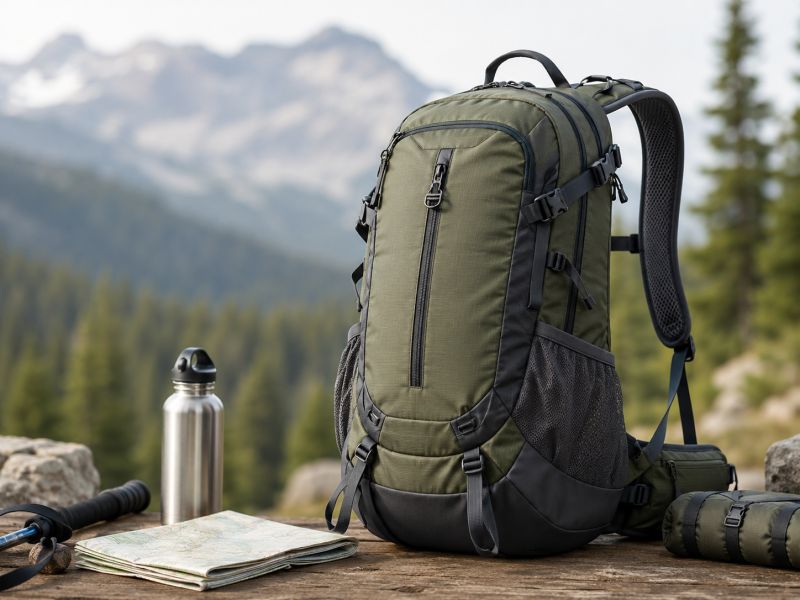
Outdoor Backpack: Functional Design For Custom Brand Projects
A good outdoor backpack rarely wins because of one dramatic feature. It wins because many quiet details work together when someone is tired, moving, carrying weight, reaching for water, packing wet gear, or trying to find a small item without emptying the whole bag. That is why outdoor backpack functional design should never begin with decoration. It should begin with use.
For brand teams, retail programs, travel groups, camping labels, tactical projects, and private label lines, the real challenge is not simply making a backpack look rugged. The challenge is building a product that feels right in the hand, sits well on the back, handles repeated use, fits the sales channel, and can be produced consistently after the sample is approved.
Outdoor backpack functional design is not about adding every possible pocket, strap, or outdoor detail. A strong design starts with the target use, capacity, load support, storage layout, material choice, weather protection, logo method, sampling review, and bulk quality control. The best outdoor backpack feels practical in real use, stays realistic in cost, and can move from approved sample to stable production without losing its core function.
Jundong works on custom backpack projects for global brands, retail teams, private label programs, and long-term product lines. From material review to sampling and production checks, the goal is simple: help a design become a backpack that can be used, sold, repeated, and trusted.
What Makes Outdoor Backpack Functional Design Different?
Outdoor backpack functional design is different because every feature must serve movement, carrying comfort, weather exposure, storage access, and long-term use. A casual backpack can focus on style and simple storage. An outdoor backpack needs a stronger link between the body, the load, the environment, and the way people reach, pack, walk, ride, hike, or travel.
Why Outdoor Backpacks Are More Than Storage Bags
A normal backpack carries things. An outdoor backpack carries weight under changing conditions.
That small difference changes almost everything. Shoulder straps must not cut into the neck. A back panel must keep shape without feeling like a hard board. Zippers need to move smoothly even when the bag is full. Side pockets must hold bottles firmly. Compression straps need to reduce shaking, not just decorate the side wall.
In outdoor use, the backpack becomes part of the body. If the design is poor, users feel it within minutes: shoulder pressure, back heat, unstable load, hard-to-reach pockets, weak buckles, or a main compartment that opens badly when the bag is packed tight.
For a custom project, this means the design team should not only ask, “How does it look?” A better starting line is “What will this bag carry, how far will it move, and what will the user need first?”
What Should Be Checked Before Design Starts?
Before sketching pocket shapes or logo placement, the core brief should be clear. The most useful details are target use, capacity, user type, material direction, preferred price level, logo method, sales channel, packing needs, and order quantity.
Here is a practical pre-design checklist:
| Item | Why It Matters |
|---|---|
| Target Use | Hiking, travel, cycling, camping, camera carry, school outdoor, or tactical use all need different structures. |
| Capacity | A 20L daypack and a 45L travel outdoor pack need different back support, zipper layout, and fabric strength. |
| Load Weight | The heavier the load, the more important shoulder straps, chest buckle, waist belt, and back panel become. |
| Material Direction | Polyester Oxford, nylon Oxford, ripstop fabric, mesh, webbing, and coated fabrics all affect weight, cost, and durability. |
| Logo Method | Embroidery, rubber patch, woven label, heat transfer, and screen print work differently on different materials. |
| Packing Needs | Retail, e-commerce, gift, and multi-SKU programs may need different labels, barcodes, carton marks, or inner packing. |
| Quantity | Quantity affects material purchasing, setup cost, unit cost, and production planning. |
How Functional Design Affects Real Outdoor Use
Real outdoor use is messy. Users bend, sweat, walk uphill, sit on buses, place bags on wet ground, open compartments with cold hands, and grab water without stopping. A feature that looks impressive in a flat product photo may be frustrating outside.
A side pocket that is too shallow looks clean but drops bottles. A waterproof zipper improves protection but may feel stiffer and cost more. A large front panel pocket creates storage space but can pull the weight outward. A thick back panel improves shape but may add heat and weight.
Good functional design is not “more.” It is “right enough.”
Who Needs Custom Outdoor Backpack Design?
Custom outdoor backpack design is useful for brands and programs that need a bag built around a specific user, activity, channel, or identity. Outdoor brands may need technical features. Retail lines may need stable cost and packaging. Private label teams may need logo placement and repeatable quality. Event programs may need useful design without overbuilding.
Outdoor Brands And Retail Chains
Outdoor brands and retail chains usually care about consistency. They need a product that looks aligned with the brand, feels reliable in hand, and can sit beside other products in a line. Functional design must support the price level. A premium outdoor backpack can use stronger buckles, better zippers, more shaped shoulder straps, and refined reinforcement. A mid-level product may need fewer but better-selected features.
For retail programs, shelf appeal still matters, but it cannot replace function. A backpack that looks strong but fails at strap comfort, bottle pocket hold, or zipper access will bring complaints after sale.
Travel, Camping, Cycling, And Event Programs
Outdoor backpack design changes with the project type.
A travel outdoor pack may need clamshell access, laptop storage, anti-theft pockets, bottle pockets, and a luggage sleeve. A camping backpack may need larger capacity, compression straps, a rain cover pocket, trekking pole loops, and stronger base fabric. A cycling or hydration backpack may focus on compact shape, breathable straps, water bladder compatibility, and reduced shaking. An event outdoor backpack may need a practical look, a clear logo area, controlled cost, and simple packing.
The same “outdoor” word can hide very different product needs.
Private Label And OEM Backpack Projects
Private label and OEM backpack projects often begin with a reference image, an existing sample, or a rough idea. That is normal. The important step is turning that reference into a production-ready specification.
A product photo may show the shape, but it does not always reveal fabric weight, lining, inner seams, back padding thickness, webbing width, buckle grade, zipper size, or reinforcement method. These details influence cost, comfort, and durability.
A clear custom brief should include size, capacity, material preference, logo artwork, quantity, packing style, delivery deadline, and destination. If the structure is still open, Jundong can review the idea and suggest a practical development direction. Project details can be sent to info@jundongfactory.com for review.
How Do I Design My Own Backpack for a Brand Project?
Designing your own backpack starts with a user story, not a pocket list.
Ask who will use it, what they will carry, how long they will carry it, where it will be sold, and what price level the product must meet. Then build the structure around that story.
A simple design path can look like this:
| Step | What To Define |
|---|---|
| 1 | Target user and activity |
| 2 | Capacity and main dimensions |
| 3 | Main compartment and access style |
| 4 | Shoulder strap, back panel, and load support |
| 5 | Outdoor details such as bottle pockets, hydration sleeve, loops, or compression straps |
| 6 | Fabric, lining, mesh, webbing, zippers, buckles, and reinforcement |
| 7 | Logo method and position |
| 8 | Packing, labels, barcode, carton marks, and shipping plan |
| 9 | Sample review and revision before production |
This approach keeps the design focused. It also prevents the common mistake of adding too many features before the main use is clear.
Which Backpack Type Fits Your Target Use?
The right outdoor backpack type depends on use, load, weather exposure, and sales channel. A light day-hiking pack, a travel outdoor pack, a cycling hydration pack, a camera outdoor pack, and a tactical utility pack may all look “outdoor,” but their structure, materials, comfort system, and cost logic are very different.
Day Hiking Backpacks
Day hiking backpacks are usually compact, light, and easy to access. Common sizes are around 15L to 25L, though the exact capacity depends on the project. Key features often include breathable shoulder straps, a simple back panel, bottle pockets, front storage, and light attachment loops.
For this type, weight control matters. Too many heavy details can make a small pack feel overbuilt. A clean layout, good zipper access, and comfortable straps may be more useful than adding every outdoor feature.
Travel Outdoor Backpacks
Travel outdoor backpacks sit between city travel and light adventure. They often need larger compartments, laptop or tablet storage, a luggage sleeve, side pockets, anti-theft pocket options, and stronger handles.
The challenge is balance. If the design becomes too technical, it may feel too rugged for travel retail. If it becomes too clean, it may lose outdoor credibility. The best travel outdoor packs usually combine organized storage with selected outdoor details such as water-resistant fabric, a reinforced base, compression straps, and strong zipper pulls.
Cycling And Hydration Backpacks
Cycling and hydration backpacks must stay close to the body. A loose or wide structure can move too much during riding. Important details include compact shape, sternum strap, hydration bladder sleeve, hose outlet, breathable back panel, lightweight fabric, and secure small pockets.
For these projects, every gram and every strap position matters more than in a general backpack. The product should feel stable, not bulky.
Camera Outdoor Backpacks
Camera outdoor backpacks need protection and access. Padded dividers, side access, top access, weather-resistant fabric, tripod straps, laptop storage, and reinforced bottom panels are common requirements.
The main risk is overcomplication. A bag with too many access may become harder to sew, heavier, and more expensive. The design should decide what matters most: fast side access, strong protection, travel comfort, or a clean retail appearance.
Tactical And Utility Outdoor Backpacks
Tactical and utility outdoor backpacks focus on durability, modular storage, webbing systems, strong handles, reinforced stress , and organized compartments. They may use heavier Oxford fabric, stronger webbing, larger buckles, and thicker padding than a light hiking pack.
This type should be designed carefully. Heavy-duty details can improve strength, but they can also increase weight, sewing time, and packing volume.
What Packs Do Navy SEALs Use, And What Can Brands Learn From Tactical Pack Design?
People often search this topic because they want to understand serious load-carrying gear. For commercial backpack development, the useful part is not copying military equipment. The useful part is learning from the design logic: modular attachment, reinforced seams, reliable buckles, balanced load, quick access, and clear compartment planning.
For brand projects, tactical inspiration should be adapted to the sales channel. A retail outdoor backpack may borrow MOLLE-style webbing, compression straps, reinforced handles, or utility pockets without becoming too heavy or too specialized.
How Should Capacity Be Planned?
Capacity should be planned around the user’s load, activity length, comfort level, and product price. A larger backpack is not automatically better. More capacity changes fabric use, back support, zipper length, webbing, carton volume, unit cost, and production difficulty. A well-planned size protects both user experience and project budget.
15L To 25L For Light Outdoor Use
This size span is common for day hikes, school outdoor programs, short travel, city-outdoor crossover products, and event packs. The structure can be clean, but the bag still needs real function.
Useful features may include:
- Main compartment with simple organizer
- Two side pockets
- Breathable shoulder straps
- Light back padding
- Front quick-access pocket
- Reflective detail for selected projects
- Water-resistant outer fabric
For smaller packs, comfort comes from proportion. If the straps are too narrow, the bag feels cheap. If the padding is too thick, the bag may look bulky. If the front pocket is too large, the pack may pull outward when filled.
30L To 45L For Travel And Hiking
This size works for weekend travel, outdoor retail lines, hiking programs, and travel-adventure crossover projects. At this level, structure becomes more important. A thin back panel may not support the load well. A weak handle may deform. Poor zipper layout may make packing frustrating.
Common design choices include:
- Better shoulder strap padding
- Chest buckle
- Optional waist belt
- Compression straps
- Larger main opening
- Separate wet or shoe pocket for selected designs
- Laptop sleeve for travel versions
- Reinforced bottom panel
A 35L backpack with smart access may feel more useful than a 45L backpack with poor structure. Capacity should be honest and practical.
50L+ For Heavy Load Projects
Larger outdoor backpacks need stronger planning. The product may require a more supportive back system, wider webbing, reinforced stress , larger buckles, and stronger base fabric. If the load is serious, the waist belt becomes more important because the shoulders should not carry everything.
For this type, it is risky to focus only on appearance. Load support, seam strength, balance, and sample testing become central.
What Is The 20% Rule For Backpacking?
The 20% rule is a common backpacking guideline suggesting that a loaded pack should not exceed about 20% of the user’s body weight. It is not a fixed law for every person or every trip, but it is a useful design reminder.
For product development, this rule matters because capacity and comfort are connected. If a pack is designed to carry more weight, it should have better shoulder straps, stronger back support, useful compression, and possibly a waist belt. A large bag with weak support invites discomfort.
For brand projects, the lesson is simple: do not sell capacity without designing for load.
Why Capacity Affects Cost, Structure, And MOQ
Capacity changes more than dimensions. It changes material usage, lining usage, zipper length, seam length, padding area, webbing length, carton size, and sometimes the production method.
A larger pack may need the following:
- Stronger main fabric
- More reinforcement
- Larger zippers
- Wider webbing
- Stronger buckles
- More sewing time
- Larger packaging
- Higher shipping volume
This is why two backpacks with similar appearances may have very different prices. Capacity is not only a selling feature. It is a cost and production factor.
What Functional Parts Matter Most?
The most important outdoor backpack parts are the ones users feel first: shoulder straps, back panel, chest buckle, waist belt, zipper access, side pockets, hydration storage, compression straps, and reinforcement. These parts decide whether the backpack feels useful after five minutes, not just whether it looks good in photos.
Shoulder Straps, Chest Buckles, And Waist Belts
Shoulder straps carry the first impression. Their width, curve, padding, mesh, binding, and stitching all affect comfort. A strap that looks thick but has poor shape may still feel uncomfortable.
A chest buckle helps stabilize the pack, especially during walking, riding, or climbing. A waist belt can shift part of the load away from the shoulders, especially on larger packs. For small daypacks, a simple removable waist strap may be enough. For heavy loads, a padded waist belt may be needed.
Back Panel, Ventilation, And Load Support
The back panel controls comfort, heat, and shape. A soft flat panel may work for light daypacks. For heavier packs, more structure helps distribute load. Mesh channels can improve airflow, but they also add material and sewing work.
A good back panel does not need to look complicated. It needs to match the load. Overbuilt back panels add weight and cost. Underbuilt panels make the product feel weak.
Side Pockets, Front Pockets, And Quick Access
Pockets should be designed around real behavior. Users want water bottles, phones, snacks, maps, gloves, power banks, sunglasses, or small tools within reach.
The pocket depth, elastic tension, zipper direction, and opening angle matter. A beautiful side pocket that cannot hold a bottle safely is not functional. A front pocket that looks large but has no inner organization may become a messy pouch.
Hydration Compartments And Outdoor Attachment
Hydration sleeves, hose exits, trekking pole loops, helmet holders, daisy chains, and gear loops are useful for selected outdoor designs. But they should not be added blindly.
A hydration compartment needs enough space and a clear hose route. Attachment loops need proper reinforcement. MOLLE-style webbing needs accurate spacing and strong sewing. These details are small, but they influence both usability and production quality.
Compression Straps, Trekking Pole Loops, And Rain Cover Pockets
Compression straps reduce bag volume and stabilize the load. Trekking pole loops support hiking use. Rain cover pockets help users prepare for changing weather.
These features are valuable when the target user needs them. For travel or event packs, they may be simplified. For hiking and utility packs, they may become key selling details.
Which Materials Work Best For Outdoor Backpacks?
Outdoor backpack materials should be selected by use, weight, durability, hand feel, weather protection, logo method, and target cost. Common choices include polyester Oxford, nylon Oxford, ripstop fabric, coated fabric, mesh, strong webbing, durable buckles, and suitable zippers. No single material is perfect for every outdoor backpack.
Polyester Oxford Vs. Nylon Oxford
Polyester Oxford is widely used because it offers stable costs, good printing compatibility, and broad availability. It works well for many daypacks, travel outdoor packs, school outdoor products, event packs, and mid-level retail lines.
Nylon Oxford often offers better strength-to-weight feel and a more premium hand, depending on specifications. It can be suitable for higher-end hiking, cycling, travel, or technical outdoor designs. However, nylon may cost more and needs proper review for color, coating, and logo method.
Common outdoor backpack fabric choices include 420D, 600D, 840D, 1000D, and 1680D options, depending on strength, weight, appearance, and budget.
Ripstop Fabric, TPU Coating, And Water Resistance
Ripstop fabric helps reduce tearing risk by using a reinforced grid structure. It is popular for lightweight outdoor designs, cycling packs, packable backpacks, and products that need a technical look.
TPU coating or laminated material can improve weather resistance and create a modern outdoor appearance. However, coating changes hand feel, sewing behavior, and cost. It may also affect logo choice.
Weather resistance should be described carefully. A backpack can use water-resistant fabric, coated fabric, a covered zipper, or a rain cover design, but full waterproof performance depends on fabric, seams, zipper type, construction, and testing needs.
Mesh, Webbing, Buckles, Zippers, And Reinforcement
Outdoor backpacks are not only made of shell fabric. The support materials matter just as much.
| Component | What To Review |
|---|---|
| Mesh | Breathability, softness, abrasion feel, and color matching |
| Webbing | Width, thickness, tensile feel, and edge smoothness |
| Buckles | Strength, click feel, size, and cold-weather handling for selected uses |
| Zippers | Size, smoothness, water resistance, puller design, and durability |
| Binding | Edge finish, sewing stability, and appearance |
| Reinforcement | Stress around straps, handle, bottom, and attachment loops |
A cheaper buckle or zipper may save costs at first, but it can weaken the whole backpack experience. In outdoor products, small hardware details often decide whether the bag feels reliable.
How Material Choice Changes Price And Durability
Material decisions affect unit cost more than many people expect. Fabric denier, coating, lining, padding, mesh, webbing, zipper grade, buckle grade, and reinforcement all change the final cost.
A smart design does not always choose the most expensive material. It chooses the right material for the product’s role. A light event outdoor pack may not need 1680D fabric. A tactical utility pack should not use weak webbing just to reduce cost. A travel outdoor backpack may need a better zipper more than a heavier shell.
If you are comparing material options for a custom backpack project, send the target use, expected quantity, logo plan, and price direction to info@jundongfactory.com. A practical material review can often save more cost than cutting quality in the wrong place.
How To Balance Function, Weight, And Cost?
The best outdoor backpack design balances function, weight, and cost instead of maximizing every feature. Too many features can make the bag heavy, expensive, slow to produce, and harder to keep consistent. The right design keeps the features users will actually notice and removes the ones that only look impressive on a spec sheet.
Why More Features Are Not Always Better
A backpack with ten pockets is not always better than one with five. More pockets mean more fabric panels, zippers, pullers, seams, lining, labels, and inspection work. More straps can improve function, but they can also create visual clutter and production complexity.
Outdoor design should be edited. The best products often feel simple after a lot of careful decisions.
A good test is this: if a feature disappeared, would the user miss it? If not, it may be a decoration wearing outdoor clothing.
Which Features Increase Production Cost Most
Some features have a larger cost impact because they add material, labor, setup, or inspection time.
| Feature | Cost Impact |
|---|---|
| Shaped padded shoulder straps | More foam, mesh, binding, and sewing work |
| Structured back panel | More padding, panel shaping, and assembly control |
| Waterproof zipper | Higher zipper cost and possible sewing difficulty |
| Multiple compartments | More panels, lining, zippers, and sewing steps |
| MOLLE-style webbing | More webbing, alignment work, and reinforcement |
| Rubber patch or metal logo | Mold/setup cost may apply |
| Reinforced bottom | Extra material and sewing work |
| Rain cover pocket | Additional pocket, cover fabric, and packing control |
The goal is not to remove all costly features. The goal is to spend cost where the user can feel it.
How A Factory Reviews Functional Feasibility
A practical factory review looks at whether the design can be made consistently, not only whether it can be sampled once.
The review should consider:
- Can the shape hold after filling?
- Are the straps positioned correctly?
- Is the zipper path smooth?
- Will the pocket be easy to sew?
- Does the fabric suit the curve or structure?
- Can the logo method work on the selected material?
- Are the stress reinforced?
- Will the packing method protect the product shape?
- Can the approved sample become stable production?
This is where experience matters. A sample can look good yet still be difficult to repeat if the structure is too complicated or the material is poorly matched.
How To Keep Outdoor Backpack Design Practical For Bulk Orders
Bulk production rewards clarity. Clear dimensions, clear fabric specifications, clear color standards, clear logo files, clear packing rules, and clear inspection requirements reduce mistakes.
For outdoor backpacks, the approved sample should become the reference for structure, material, color, logo, sewing, padding, zipper, buckle, webbing, labels, and packing. Without this standard, small changes can appear across production.
Good design is not finished when the first sample looks nice. It is finished when the design can be repeated.
How Does Sampling Prove the Design Works?
Sampling proves whether an outdoor backpack can move from drawing to real use. A sample should confirm size, capacity, strap comfort, pocket access, material feel, logo effect, zipper movement, reinforcement, packing shape, and production feasibility. For outdoor backpacks, a sample is not only a visual approval. It is the first real test before bulk work starts.
What To Check In An Outdoor Backpack Sample
A backpack sample should be reviewed like a working product, not like a display model.
Start with the body shape. Does it stand, collapse, or deform after filling? Does the back panel support the load? Are the straps comfortable enough for the intended use? Does the chest buckle sit in the right place? If there is a waist belt, does it help carry weight or only add decoration?
Then check the storage logic. Open every pocket. Put in the items users may carry. A bottle pocket should hold a real bottle. A laptop sleeve should match the target device size. A hydration sleeve should leave space for the bladder and hose route. A rain cover pocket should not fight with the main compartment.
Logo placement also needs review. A logo that looks good on a flat artwork file may look different after stitching, padding, coating, or curved panel assembly. This is especially true for embroidery, rubber patches, woven labels, reflective print, and heat transfer.
For custom outdoor backpack projects, the most useful sample review is detailed but practical. A good note is not “make it better.” A good note is “raise the side pocket by 2 cm,” “change zipper puller length,” “reduce foam thickness,” or “move the logo 1.5 cm higher.”
How Long Does Backpack Sampling Take?
For many custom backpack projects, sampling usually takes about 5–7 days after the main details are confirmed. Simple styles may be faster. More complex outdoor structures, special materials, molded parts, new patches, or repeated revisions can take longer.
Sampling speed depends on how clear the brief is. If the project starts with a photo, size, capacity, material direction, logo file, quantity, and packing idea, the sample room can move faster. If the project starts with only “make something similar,” the first stage will require more review before a sample can be made.
A quick sample is helpful, but a correct sample is more valuable. Outdoor backpacks often involve load, comfort, webbing, zippers, buckles, and reinforcement. Rushing without confirming these details may save a few days at the beginning and lose more time later.
When Should A Sample Be Revised Before Bulk Production?
A sample should be revised when the issue affects real use, brand appearance, cost control, or production stability.
Common reasons include:
- Shoulder straps feel too narrow or too stiff
- The bottle pocket is too shallow
- The main zipper does not open smoothly
- The back panel feels too soft for the target load
- The logo position looks unbalanced
- The front pocket pulls the bag forward when filled
- The waist belt does not sit correctly
- The fabric feels too thin or too heavy
- Packing makes the product deform
- Stitching at stress needs reinforcement
Not every small difference requires a full remake. Some changes can be adjusted through clear production comments. But if the structure, comfort, or main appearance is not right, the sample should be corrected before bulk work starts.
How Sampling Helps Confirm Custom Backpack Structure
Sampling turns guesswork into decisions. It helps confirm whether the sketch, material, size, pocket layout, and sewing method work together.
For example, a design may call for a large front compartment, two side pockets, a laptop sleeve, a hydration sleeve, and compression straps. On paper, it looks complete. In sample form, the front pocket may interfere with the compression strap. The hydration sleeve may reduce space for the laptop. The side pocket may become hard to sew because of the curved panel.
These are normal development findings. The value of sampling is that problems appear early, when they are still easier to fix.
Jundong supports custom backpack sampling based on project needs. When the bulk order reaches 2000 pcs, the sample fee can be refunded or deducted according to the project arrangement. For review, send your design photo, size, logo, material idea, quantity, and packing need to info@jundongfactory.com.
How Is Bulk Quality Controlled?
Bulk quality is controlled by turning the approved sample into clear production standards and checking each key stage. Outdoor backpacks need attention to material, cutting, sewing, logo, straps, buckles, zippers, padding, pocket function, labels, packing, and carton marks. Strong quality work is not a final glance before shipping. It is a staged process.
Sample-To-Bulk Consistency
Sample-to-bulk consistency means the final production should match the approved sample in appearance, structure, material, color, logo, function, and packing. This is one of the biggest concerns for serious brand projects.
A backpack sample may look excellent because one skilled sample worker made it carefully. Bulk production is different. It needs repeatable instructions, stable materials, trained workers, inline checks, and clear inspection criteria.
For outdoor backpacks, consistency should cover:
- Fabric color and coating feel
- Panel size and shape
- Strap width and padding thickness
- Webbing length and buckle position
- Pocket depth and opening size
- Zipper size, puller style, and smoothness
- Logo position and color
- Reinforcement at stress areas
- Packing method and carton information
Jundong has 80 QC inspectors and uses multi-stage checks to help control order consistency from materials to finished packing.
Stitching, Zipper, Buckle, And Strap Inspection
Outdoor backpacks have more stress than many simple bags. Shoulder strap roots, top handles, side compression straps, bottom corners, waist belt connections, and gear loops all need attention.
Stitching should be clean, secure, and suitable for the product’s use. Loose threads may look small, but on outdoor bags they can signal weak finishing. Reinforcement stitching should be placed where force is likely to gather.
Zippers should be checked for smooth movement, alignment, puller strength, and opening direction. Buckles should close properly and feel secure. Webbing should not twist badly or slip too easily through adjusters.
Straps deserve special care. A strap that is slightly misplaced can change how the backpack feels on the body. On larger packs, this can turn into real discomfort.
Logo, Packing, Carton Mark, And Multi-SKU Checks
For brand programs, quality control does not stop at the bag body. Logo accuracy, label placement, packing, and carton information are part of the product experience.
Logo checks may include color, size, position, stitching, edge finish, print clarity, patch attachment, and alignment. Packing checks may include polybag size, hangtag, barcode, SKU label, warning label when needed, inner carton sorting, and outer carton marks.
Multi-SKU projects need more discipline. Different colors, sizes, styles, or logo versions should not be mixed. Carton marks should help warehouse teams identify PO number, style, color, quantity, carton number, destination, and other shipping details.
For retail, e-commerce, and private label programs, these details reduce sorting mistakes and help the product enter the channel more smoothly.
How Outdoor Backpack QC Reduces Project Risk
Outdoor backpack QC reduces risk by catching problems before they become expensive. If a zipper issue is found during inline work, it can be corrected sooner. If carton labels are wrong after shipment, the problem may spread into warehouse delays or chargebacks.
Quality checks also protect trust. A strong sample wins confidence, but stable bulk delivery creates repeat orders.
This is why outdoor backpack projects should not treat QC as a single final step. It should be part of the workflow: incoming material check, cutting check, logo check, sewing check, functional check, finished product check, packing check, and pre-shipment review.
Factory Vs. Platform Seller: What Should Brand Teams Check?
For custom outdoor backpack projects, brand teams should check whether the partner can review structure, materials, sampling, bulk production, quality checks, packing, and delivery details. A platform seller may offer existing styles quickly. A real custom bag factory should help turn a design idea into a repeatable product.
Who Makes The Best Outdoor Backpacks For Custom Projects?
The best outdoor backpacks for custom projects are usually made by teams that understand both product design and production reality. A good partner does not simply say yes to every requested feature. It helps review which features support real use, which ones increase cost, and which ones may create problems in bulk work.
For a brand project, “best” does not mean the most expensive material or the longest feature list. It means the product fits the user, cost level, sales channel, quality expectation, and repeat-order plan.
Product Development Ability
Product development ability is the difference between copying a shape and building a workable product.
A capable team can review a reference photo, discuss the target use, suggest material options, adjust pocket structure, check logo method, and help turn early ideas into a sample. This is important when the project is not fully fixed yet.
For outdoor backpacks, development ability matters because the product has many connected parts. Changing the back panel may affect strap position. Changing fabric may affect shape. Changing the logo method may affect panel construction. Small changes can travel through the whole design.
Material And Structure Review
Material review should connect fabric to function. A strong-looking fabric is not always the right choice. A lightweight pack may need lower weight. A utility pack may need stronger abrasion resistance. A travel outdoor pack may need a better balance between shape, hand feel, and weather protection.
Structure review is just as important. Pocket position, zipper path, strap angle, bottom reinforcement, handle strength, and packing shape should be considered before bulk work.
A serious project should not rely on a product photo alone. It should turn that photo into real specifications.
QC Team And Production Scale
Production scale matters when a project moves beyond a few samples. Larger orders need stable material supply, production planning, line control, and inspection.
Jundong has 600+ employees, around 18,000 m² of production area, and 80 QC inspectors. This helps support custom bag projects that need sampling, bulk production, inspection, packing, and delivery coordination.
Scale alone is not enough, but scale plus process can reduce risk for long-term programs.
Communication For Long-Term Projects
Custom backpack work needs clear communication. The early stage should confirm product details. The sample stage should record changes. The production stage should follow the approved standard. The packing stage should match the sales channel. The shipping stage should consider destination, deadline, carton volume, and documents.
Long-term projects benefit from stable records. Once a style is approved, the product data, material reference, logo method, packing rule, and QC focus should be kept for repeat orders.
What Should You Send for a Custom Backpack Quote?
To get a practical custom backpack quote, send a product photo or sketch; size; capacity; target use; material preference; logo artwork; order quantity; packing needs; deadline; destination; and target price level, if available. The more complete the details, the more useful the quotation and development advice will be.
Product Photo Or Sketch
A photo, sketch, tech pack, or existing sample helps explain shape and structure. Even a rough image is useful at the first stage. If the project is still early, mark what you like and what you want to change.
Useful notes include:
- Keep the same shape but change material
- Add bottle pockets
- Remove laptop sleeve
- Add hydration system
- Change front pocket layout
- Use rubber patch instead of embroidery
- Make it lighter
- Make it more premium
- Prepare for retail packing
Clear comments save time.
Size, Capacity, And Target Use
Size and capacity should match target use. A small daypack, travel outdoor pack, cycling hydration pack, and tactical utility pack should not share the same structure.
Send dimensions if you have them. If not, send the target capacity and use. A factory can help suggest practical sizing based on similar product types.
Material, Logo, Quantity, And Packing Needs
Material and logo choices have a direct effect on cost and sample planning. Send fabric preference if known, such as polyester Oxford, nylon Oxford, ripstop fabric, coated fabric, mesh, or other options. For the logo, send AI, PDF, CDR, PSD, PNG, or JPG files when available and mark the desired logo position.
Quantity also matters. Jundong’s standard MOQ is usually 500 pcs per design. Simple styles may be reviewed at 200–300 pcs, depending on the project. Some low-cost basic styles may need higher quantities for better cost control.
Packing needs should be shared early. Retail, e-commerce, private label, gift, and multi-SKU orders may need different polybags, hangtags, barcodes, labels, carton marks, or inner packing.
Deadline, Destination, And Target Budget
Deadline and destination affect production planning and shipping choice. Express, air, sea, rail, or appointed forwarder options may be reviewed based on order size and schedule.
A target budget is also useful. It does not mean cutting quality blindly. It helps the development team recommend the right material, structure, logo method, and packing plan.
For a custom backpack quotation, send your main project details to info@jundongfactory.com. A practical first review can usually start from a photo, size, logo, quantity, packing request, and delivery deadline.
Outdoor Backpack Design Should Start With Real Use
The strongest outdoor backpack design begins with the person who will carry it. What will they pack? How far will they move? Will they need fast access, weather protection, hydration, laptop storage, camera protection, or tactical organization? How much weight should the pack support? Where will the product be sold?
Once those decisions are clear, the rest becomes easier. Capacity can be planned. Materials can be compared. Strap structure can be selected. Pocket layout can be tested. The logo method can be matched. Sample review can become meaningful. Bulk quality can be controlled with a clear standard.
A custom outdoor backpack should not be a pile of features. It should be a practical product with a clear job.
For brand projects, the best design is practical, testable, and production-ready. Start with function before decoration. Then let the sample prove the idea.
FAQs About Outdoor Backpack Functional Design
1. What Is The Most Important Part Of Outdoor Backpack Functional Design?
Certainly, the most important part is not one single feature but the match between use, capacity, comfort, and structure. A great outdoor backpack should first fit the activity: day hiking, travel, cycling, camping, camera carry, or tactical utility. After that, the shoulder straps, back panel, pocket layout, fabric strength, zipper access, and reinforcement must work together. A beautiful backpack that feels heavy, unstable, or hard to access will disappoint quickly. For custom projects, the smartest starting move is to define what users will carry, how long they will carry it, and which features they will touch most often.
2. How Do I Choose The Right Capacity For A Custom Outdoor Backpack?
Sure, capacity should be chosen by use time, load weight, and product role. A 15L–25L backpack works well for light outdoor use, school outdoor programs, short trips, and event packs. A 30L–45L pack is better for hiking, weekend travel, and outdoor retail lines. A 50L+ pack needs stronger shoulder straps, better back support, wider webbing, and more reinforcement. Larger capacity also increases fabric use, zipper length, carton volume, and shipping cost. So the right size is not “as large as possible.” It is the size that supports the real load without making the product too heavy or expensive.
| Capacity | Common Use | Design Focus |
|---|---|---|
| 15L–25L | Day trips, light hiking, events | Light weight, quick access, simple comfort |
| 30L–45L | Hiking, travel, camping | Better support, larger opening, compression |
| 50L+ | Heavy outdoor load | Load transfer, reinforcement, stronger structure |
3. What Is The 20% Rule For Backpacking, And Why Does It Matter In Design?
Of course, the 20% rule usually means a loaded pack should not exceed about 20% of the user’s body weight. It is not a strict law for every person, but it is useful for product planning. If a backpack is designed for heavier loads, it needs better shoulder strap shape, chest buckle stability, stronger back support, compression straps, and sometimes a padded waist belt. A large bag without load support may look impressive but feel painful in real use. For custom outdoor backpack development, this rule reminds teams to design carrying comfort together with capacity, not after it.
4. Which Materials Are Better For Outdoor Backpacks?
Definitely, the best material depends on target use, desired hand feel, weight, durability, and price level. Polyester Oxford is common because it offers stable cost, strong availability, and broad use for daypacks and outdoor travel packs. Nylon Oxford can feel lighter and more premium in many specifications, making it suitable for higher-end outdoor designs. Ripstop fabric is useful for lightweight packs, while TPU-coated or laminated fabric can improve weather resistance. Do not choose fabric only by thickness. A well-balanced backpack often combines the right shell fabric, mesh, webbing, zipper, buckle, lining, and reinforcement.
5. Is A Waterproof Outdoor Backpack Always Better Than A Water-Resistant One?
Not always. A fully waterproof direction may increase cost, stiffness, sewing difficulty, and testing requirements. Many outdoor backpack projects only need water-resistant fabric, coated material, covered zippers, a reinforced bottom, or a rain cover pocket. That is often enough for daily rain, travel, hiking, and retail outdoor use. Full waterproof performance depends on fabric, seams, zipper type, construction, and project testing. For most commercial outdoor backpack lines, the smarter choice is to match weather protection with the real use scene instead of using the strongest claim on the label.
6. How Can I Design My Own Outdoor Backpack For A Brand Project?
Absolutely, you can start from a photo, sketch, sample, or even a rough idea. The key is to turn the idea into clear product details. First define the target user, capacity, use scene, preferred material, logo style, pocket layout, comfort level, and packing method. Then review whether the structure can be sampled and produced consistently. A practical first file should include product reference, size, material direction, logo artwork, quantity, packing needs, deadline, and destination. This gives the development team enough detail to review cost, MOQ, sample plan, and production feasibility.
7. Which Functional Features Increase Outdoor Backpack Cost The Most?
In most cases, cost increases when a feature adds extra material, sewing time, setup work, or inspection steps. Shaped padded shoulder straps, structured back panels, waterproof zippers, MOLLE-style webbing, rubber patches, metal plates, multiple compartments, reinforced bottoms, and rain cover pockets can all raise costs. That does not mean they should be avoided. It means they should earn their place. Spend the budget on features users can feel: better strap comfort, stronger zippers, useful pockets, reliable buckles, and reinforced stress areas. A focused design often performs better than an overbuilt one.
| Feature | Why It Affects Cost |
|---|---|
| Padded straps | Foam, mesh, binding, sewing control |
| Structured back panel | More materials and assembly time |
| Waterproof zipper | Higher zipper cost and sewing care |
| MOLLE webbing | More alignment and reinforcement |
| Multiple compartments | More panels, lining, zippers, labor |
| Rubber patch | Mold or setup may apply |
8. What Should Be Checked In An Outdoor Backpack Sample?
A practical sample check should include appearance, size, capacity, comfort, pocket access, logo effect, zipper movement, strap position, material feel, reinforcement, and packing shape. Do not only place the sample on a table and look at it. Fill it. Wear it. Open every pocket. Put a bottle in the side pocket. Test the laptop sleeve or hydration sleeve if included. Pull the buckles. Check whether the back panel holds shape. Small changes at the sample stage can prevent bigger problems later. For custom outdoor backpacks, the sample is the first real test before bulk work starts.
9. How Do You Keep Bulk Outdoor Backpacks Consistent With The Approved Sample?
Yes, consistency starts by turning the approved sample into clear production standards. The team should lock fabric, color, lining, webbing width, zipper size, buckle position, logo placement, strap structure, pocket depth, packing method, and carton information. During production, checks should happen at several stages: incoming materials, cutting, logo work, sewing, function review, finished product inspection, packing, and pre-shipment review. Jundong has 80 QC inspectors and supports multi-stage checks, which helps reduce sample-to-bulk differences across custom backpack projects.
10. What Information Should I Send To Get A Custom Outdoor Backpack Quote?
A practical quote needs more than a product name. Please send a product photo or sketch; size; capacity; target use; material preference; logo artwork; quantity; packing needs; deadline; destination; and target price level if available. Jundong’s standard MOQ is usually 500 pcs per design. Selected simple styles may be reviewed at 200–300 pcs, while some low-unit-price basic styles may need 1000 pcs or more. Sampling usually takes 5–7 days after details are confirmed, and simple styles may be faster. Sample fees can be refunded or deducted when the bulk order reaches 2000 pcs. Project details can be sent to info@jundongfactory.com for review.
Let's work together
With over 10 years of OEM/ODM bag industry experience, I would be happy to share with you the valuable knowledge related to leather products from the perspective of a leading supplier in China.

Factory catalogue
Table of Contents
Latest blogs


Make A Sample First?
If you have your own artwork, logo design files, or just an idea, please provide details about your project requirements, including preferred fabric, color, and customization options, we’re excited to assist you in bringing your custom bag designs to life through our sample production process.