 Skip to content
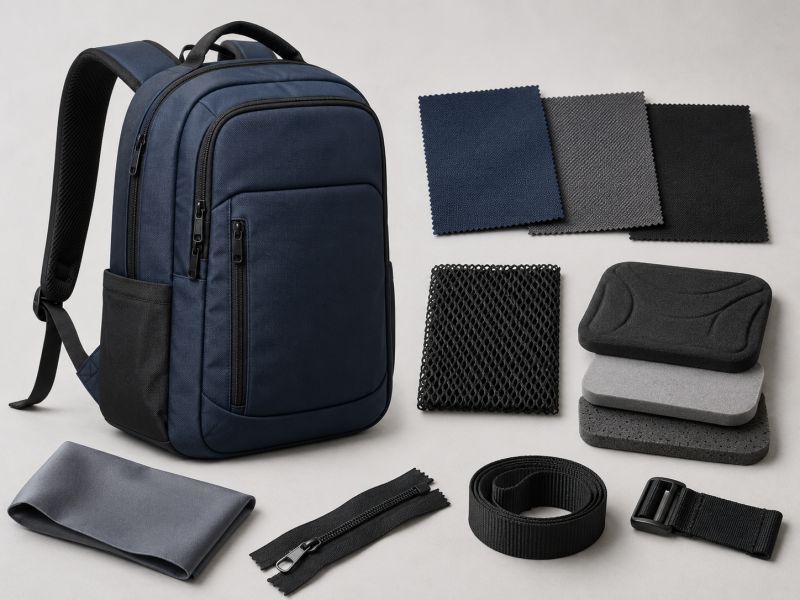
Backpack Fabric and Padding Guide for Custom Bag Projects
A backpack can look simple from the outside. One front panel, two shoulder straps, one zipper, maybe a laptop sleeve. Easy, right? Not really. The real quality of a backpack usually hides inside the fabric, coating, foam, lining, stitching, webbing, and back structure. Two backpacks may look almost the same in a photo, but after three months of use, one still holds its shape while the other starts to sag, wrinkle, or hurt the shoulders.
For brand teams, school programs, travel product lines, retail collections, and private label projects, fabric and padding are not small details. They decide how the backpack feels in hand, how much weight it can carry, how comfortable it is, how it protects a laptop, how it looks on the shelf, and how stable the cost will be when the order moves from sample to bulk production.
A good backpack fabric and padding plan should match the real use of the bag. Polyester, nylon, Oxford fabric, canvas, ripstop, coated fabric, EVA foam, PE foam, sponge, air mesh, and lining should not be selected in isolation. They should work together with the backpack size, expected load, laptop compartment, shoulder strap width, back panel shape, logo method, packing plan, and target price. When these details are confirmed before sampling, the project moves faster, sample revisions become fewer, and bulk production is easier to control.
Jundong works with custom backpack projects for school, travel, outdoor, work, retail, private label, and promotional programs. Our team reviews the material direction, structure, padding, lining, logo position, packing details, and production feasibility before the sample stage, so the backpack is not only good-looking, but also practical for real use.
What Fabric Is Best for Custom Backpacks?
The best backpack fabric depends on how the bag will be used. Daily and school backpacks often work well with 600D or 900D polyester. Travel and outdoor backpacks may need nylon, ripstop, or stronger Oxford fabric. Lifestyle and retail backpacks may use canvas, RPET, or textured polyester for a better hand feel. There is no single fabric that fits every backpack. The right choice should balance durability, weight, cost, appearance, water resistance, and production stability.
A strong backpack starts with the right material match. A school backpack does not need the same fabric as a hiking pack. A laptop backpack does not need the same structure as a drawstring-style event backpack. A retail backpack needs a fabric that looks good in photos, feels right in hand, and keeps color stable across repeat orders.
Polyester is one of the most common choices for custom backpacks because it is cost-friendly, easy to color, and suitable for many daily-use designs. It works well for school backpacks, promotional backpacks, gym backpacks, and mid-level retail styles. 600D polyester is often used when the project needs a balance between cost and durability. 900D polyester gives a stronger hand feel and better structure for heavier daily use.
Nylon is often selected when the backpack needs a lighter but stronger feel. It is common in travel, outdoor, sports, and higher-grade daily backpacks. It usually costs more than standard polyester, but it can help improve the product feel and long-term performance.
Oxford fabric is a practical choice for structured backpacks. It has a woven surface, good abrasion resistance, and a reliable look for school, work, travel, and tool-style backpacks. Canvas gives a more natural and lifestyle-driven look. It is often selected for casual retail collections, fashion accessories, and brand merchandise.
The mistake many teams make is asking for “the strongest fabric” before defining the backpack’s use. A better starting idea is simple: Who will carry this bag? What will they put inside? How often will they use it? Where will it be sold or distributed? Once those details are clear, fabric selection becomes much easier.
Polyester vs Nylon vs Oxford vs Canvas: Which One Fits Your Backpack Project?
Polyester is practical for cost control and color stability. Nylon is better for lightweight strength and premium travel or outdoor use. Oxford fabric gives structure and abrasion resistance for school, work, and daily backpacks. Canvas gives a natural texture for lifestyle and retail designs. The right fabric should match the bag’s function, price level, target user, and brand image instead of simply following a material name.
Here is a practical comparison for project planning:
| Fabric Type | Common Use | Main Advantage | Watch Before Choosing |
|---|---|---|---|
| 600D Polyester | School, daily, event, promo backpack | Good cost and stable color | May need coating for better water resistance |
| 900D Polyester | Work, travel, stronger daily backpack | Stronger hand feel and structure | Higher cost and slightly heavier |
| Nylon | Travel, outdoor, sports backpack | Lightweight strength | Usually higher cost |
| Oxford Fabric | School, work, laptop, tool backpack | Durable surface and structure | Quality varies by yarn and coating |
| Canvas | Lifestyle, retail, casual backpack | Natural look and soft brand feel | Heavier and less water resistant unless treated |
| Ripstop | Outdoor, lightweight travel backpack | Helps reduce tear spreading | Needs proper coating and sewing |
| RPET Fabric | Retail, brand campaign, eco-positioned lines | Recycled material story | Color and texture must be confirmed early |
Polyester is often the safe choice when the backpack needs to be practical, colorful, and cost controlled. For large school projects, event programs, staff backpacks, and online private label lines, polyester is usually easier to manage in bulk.
Nylon feels more performance-driven. It works well when the backpack is expected to carry more, travel more, or look more technical. It can be a strong fit for outdoor brands, travel gear, cycling bags, hiking backpacks, and premium commuter designs.
Oxford fabric is popular because it feels steady and reliable. It can support cleaner shapes and a stronger body structure. Many laptop backpacks, school backpacks, and work backpacks use Oxford fabric because it gives a practical mix of strength, hand feel, and visual order.
Canvas is different. It is not only about strength. It is about style. A canvas backpack may not be the lightest or most water resistant, but it can give a warm, natural, lifestyle look that polyester cannot easily copy. For retail brands, museum shops, campus merchandise, and fashion accessories, that texture can be part of the product value.
A good factory should not force one material on every project. The smarter path is to compare the project goal, sample budget, expected retail position, logo method, packaging, and carrying load before selecting fabric.
What Do 600D, 900D, and 1680D Mean in Backpack Fabric?
600D, 900D, and 1680D refer to denier, a yarn thickness measurement used in many synthetic fabrics. A higher number usually means a thicker yarn and stronger hand feel within the same material family. But denier alone does not decide backpack quality. A 600D polyester and a 600D nylon are not automatically equal. Coating, weave, lining, reinforcement, sewing, and structure also affect real performance.
Denier is useful, but it can also mislead people. Many project teams look at a fabric card and assume a higher number means a better backpack. That is only partly true.
Within the same material type, 900D polyester usually feels heavier and stronger than 600D polyester. 1680D Oxford may feel more rigid and heavy-duty than standard 600D fabric. But once different fibers are compared, the number becomes less direct. A lower-denier nylon can sometimes perform better than a higher-denier polyester because the base fiber behaves differently.
The coating also changes performance. A 600D polyester with PU backing may resist light rain better than an uncoated heavier fabric. A well-woven Oxford fabric with proper backing, lining, and bar tack reinforcement can perform better than a thicker fabric used in the wrong structure.
For custom backpack projects, denier should be discussed together with these details:
| Detail | Why It Matters |
|---|---|
| Base Fiber | Polyester, nylon, canvas, RPET, or blended fabric affect strength and feel |
| Denier | Influences thickness, weight, and hand feel |
| Coating | Improves water resistance and body stiffness |
| Weave | Affects surface texture, tear behavior, and abrasion |
| Lining | Supports shape and protects inner contents |
| Foam Padding | Adds comfort, structure, and protection |
| Reinforcement | Strengthens stress areas |
| Sewing Method | Affects real durability more than fabric alone |
For example, a school backpack may not need 1680D fabric all over the body. It may work better with 600D or 900D polyester, plus reinforced bottom panels, wider straps, and stronger stitching at load-bearing areas. That keeps cost reasonable while improving real performance.
Are Backpack Fabrics Waterproof or Water-Resistant?
Most backpack fabrics are water-resistant, not fully waterproof. Polyester and nylon can be treated with PU, PVC, TPU, or other coatings to resist light rain and splashes. But zippers, seams, needle holes, and openings can still let water in. A fully waterproof backpack needs a different structure, such as sealed seams, waterproof zippers, welded panels, or roll-top construction.
This is one of the most common misunderstandings in backpack development. A brand team may ask for a waterproof backpack, but what they really need is a backpack that can handle light rain during school, commuting, travel, or daily outdoor use. That is usually a water-resistant backpack.
Water resistance starts with the fabric but does not stop there. Coating matters. PU coating is common and cost-friendly. PVC coating gives a stronger waterproof feel but may change hand feel and weight. TPU laminated fabric can improve performance but may increase cost. For some outdoor or dry bag styles, welded or sealed structures are needed.
The zipper is another weak spot. A normal zipper is not waterproof. A water-resistant zipper can help, but it still depends on the full structure. The seams also matter because needle holes are created during sewing. If a backpack is sewn like a regular backpack, water can enter through stitching lines under heavy rain.
For most school, laptop, commuter, and promotional backpacks, water-resistant fabric is enough. For outdoor, cycling, boating, or wet travel use, the project should be reviewed more carefully. If your project needs a clear water-resistance direction, send the intended use, fabric idea, zipper preference, and target price to info@jundongfactory.com. Jundong can help review whether a normal coated fabric is enough or if the structure needs to be upgraded.
What Type of Padding Is Used in Backpack Shoulder Straps?
Backpack shoulder straps often use EVA foam, PE foam, sponge foam, air mesh, or sandwich mesh. EVA and PE give firmer support. Sponge feels softer but may compress faster. Air mesh and sandwich mesh are often used on the surface to improve breathability and comfort. A good shoulder strap should match the backpack size, expected load, foam thickness, strap width, curve, and sewing strength.
Shoulder straps carry more responsibility than many people think. They are not just two strips attached to the bag. They are the main contact area between the backpack and the user’s body. If the strap is too narrow, it creates pressure. If the foam is too soft, it may flatten quickly. If it is too thick, the backpack may look bulky and cost more to pack and ship.
For light daily backpacks, a softer foam can feel comfortable enough. For school backpacks, wider straps and medium padding help spread pressure across the shoulder. For laptop backpacks, firmer padding is often better because the bag may carry electronics, books, chargers, and daily items. For travel backpacks, the strap may need better shape, stronger webbing, and a breathable surface.
The strap curve also matters. A straight strap may be cheaper, but it may not sit well on the shoulder when the backpack is loaded. A shaped strap can improve fit, but it needs better pattern work and more careful sewing. This is where product development experience becomes valuable.
Good strap design usually includes:
| Strap Detail | Practical Role |
|---|---|
| Strap Width | Helps spread weight |
| Foam Thickness | Adds comfort and support |
| Foam Density | Decides soft or firm feel |
| Air Mesh Surface | Helps reduce heat and sweat |
| Webbing Strength | Supports adjustment and load |
| Edge Binding | Keeps the strap clean and durable |
| Bar Tack Stitching | Strengthens stress areas |
The smartest choice is not always the thickest strap. It is the strap that matches the backpack’s real carrying load and product level.
How Should Back Panel Padding Be Designed?
Back panel padding should support comfort, shape, airflow, and load distribution. A flat padded back panel works for simple daily backpacks. Air mesh improves breathability. Channel back panels create airflow space. EVA molded panels add structure and support. Multi-panel back designs are useful for travel, outdoor, work, and laptop backpacks that carry more weight.
A backpack sits against the back for long periods. That means the back panel has two jobs: it should feel comfortable, and it should stop hard inner items from pressing into the body. If the bag carries a laptop, books, tools, sports gear, or travel items, the back panel becomes even more valuable.
A basic padded back panel is often enough for casual daily bags. It gives softness and keeps the rear panel from feeling too flat. For school backpacks and commuter backpacks, adding air mesh can improve comfort. For outdoor and travel designs, a channel structure can help create space between the back and the bag, improving airflow.
A molded EVA back panel gives a stronger and more technical look. It can help maintain shape and improve the perceived value of the product. But it also adds cost, mold or shaping considerations, and packing volume. That is why molded back panels are better for mid-to-premium designs, not every project.
Back panel design should also consider internal structure. If the laptop sleeve is placed directly against the back panel, the foam and lining need to protect both the user and the device. If the backpack carries heavier items, shoulder straps alone are not enough. The back panel, bottom reinforcement, and internal divider must work together.
How to Protect a Laptop Compartment in a Custom Backpack?
A laptop compartment should protect the device from pressure, scratches, drops, and movement inside the bag. Good protection often includes padded walls, a suspended bottom, side foam, soft lining, and a fixing strap. For 13-inch, 14-inch, 15.6-inch, and 16-inch laptop backpacks, the sleeve size and bottom protection should be confirmed before sampling.
A laptop sleeve is not just a pocket. It is a protection system. Many low-cost backpacks add one thin foam layer and call it a laptop compartment. That may look fine in a product photo, but it may not protect the device well in daily use.
The suspended bottom is one detail worth discussing. When the laptop pocket is slightly raised from the bottom of the backpack, the device is less likely to hit the ground directly when the bag is placed down. This is especially useful for work backpacks, school laptop backpacks, and travel backpacks.
Side protection also matters. A laptop can move inside the sleeve if the size is too loose. A hook-and-loop strap or elastic fixing band can help keep it in place. Soft lining, such as brushed fabric or smooth polyester lining, can reduce scratches. Bottom foam can reduce impact. A thicker rear panel can protect both the laptop and the user’s back.
Before making a sample, it helps to confirm the device size. A 13-inch laptop sleeve is very different from a 16-inch laptop sleeve. If the project needs to fit multiple device sizes, the sleeve should be planned with a more flexible structure.
For brands planning laptop backpacks, tech bags, office backpacks, or school computer bags, this is one area where early detail saves time. A small change in sleeve height, foam thickness, or bottom suspension can improve the final product more than a visible decoration.
Which Fabric and Padding Combination Fits Each Backpack Type?
Different backpack types need different material and padding combinations. A school backpack may need 600D or 900D polyester with wide padded straps. A laptop backpack needs structured fabric, back padding, and device protection. A travel backpack may need nylon or Oxford fabric with stronger straps. Outdoor backpacks often need ripstop, coated fabric, and better back support.
A practical material plan should start from the backpack type:
| Backpack Type | Fabric Direction | Padding Direction | Main Focus |
|---|---|---|---|
| School Backpack | 600D or 900D polyester | Wide straps, soft-to-medium back padding | Daily durability and comfort |
| Laptop Backpack | Polyester, nylon, or Oxford | Laptop sleeve, back panel, firmer straps | Device protection |
| Travel Backpack | Nylon, Oxford, ripstop | Strong straps, breathable back panel | Carrying comfort |
| Outdoor Backpack | Ripstop, coated nylon, strong Oxford | Shaped straps, channel back panel | Tear control and load support |
| Promotional Backpack | 210D, 420D, or 600D polyester | Basic padding or no padding | Cost and delivery time |
| Work Backpack | 900D polyester, Oxford, or reinforced panels | Strong straps and back support | Load and structure |
| Retail Backpack | Polyester, canvas, RPET, nylon | Balanced comfort and shelf appeal | Appearance and repeat orders |
| Kids Backpack | Lightweight polyester | Soft straps and light foam | Low weight and comfort |
A promotional backpack does not need the same structure as a laptop backpack. A hiking backpack should not use the same design logic as a simple school bag. A retail backpack may need more attention to texture, zipper feel, logo proportion, and color consistency.
For large programs, there may be more than one backpack level. A brand may need an entry model, a mid-level model, and a premium model. In that case, the material and padding can be planned as a series. The entry model may use basic polyester and simple foam. The premium model may use stronger fabric, better mesh, a raised laptop sleeve, and cleaner finishing.
This is also useful for repeat orders. Once the material system is clear, new colors, new sizes, and new style updates become easier to manage.
How Do Fabric and Padding Choices Affect Backpack Price?
Backpack price is affected by fabric type, denier, coating, lining, foam type, foam thickness, back panel structure, laptop sleeve, zipper, webbing, reinforcement, logo method, order quantity, packing, and delivery plan. A backpack with the same shape can have very different costs if the fabric, padding, and internal structure are changed.
Many teams compare backpack prices by looking at photos only. That rarely works. A backpack may look simple but contain expensive parts: stronger nylon, custom lining, shaped foam, water-resistant zippers, reinforced webbing, molded back panels, and multi-layer laptop protection.
Here are some common cost drivers:
| Cost Factor | Why It Changes Price |
|---|---|
| Fabric Type | Nylon, RPET, coated fabrics, and canvas differ in price |
| Denier | Heavier fabrics usually cost more and add weight |
| Coating | PU, PVC, TPU, and special treatments affect cost |
| Lining | Inner fabric quality changes hand feel and durability |
| Foam | EVA, PE, sponge, and thickness affect comfort and structure |
| Back Panel | Molded or channel structures cost more than flat panels |
| Laptop Sleeve | Added foam, lining, suspension, and fixing details increase cost |
| Zipper | Standard, reverse, waterproof, or branded zippers vary widely |
| Webbing | Better webbing improves strength but raises cost |
| Logo Method | Printing, woven label, rubber patch, metal plate, and embroidery differ |
| Packing | Polybag, hangtag, insert card, carton mark, or retail box affects total cost |
Cost control does not always mean choosing cheaper materials. A smarter method is to spend money where users notice it most. For example, a school backpack may not need premium nylon, but it should have strong strap stitching and reliable zipper quality. A laptop backpack may not need a complex front shape, but it should protect the device well. A travel backpack may need stronger straps and back support more than a decorative pocket.
Jundong usually reviews fabric, padding, structure, logo method, and packing together. This helps the project stay closer to the target cost without damaging the final user experience.
How Long Does Backpack Sampling and Bulk Production Take?
Backpack sampling usually includes design review, material selection, pattern making, first sample, sample adjustment, and pre-production confirmation. The time depends on structure, fabric availability, logo method, and detail level. For Jundong projects, sample time is usually 5–7 days, and some simple styles can be faster. Bulk production is usually around 20–30 days after details are confirmed.
Sampling is where a backpack project becomes real. A drawing may look balanced, but the first sample shows the truth: fabric stiffness, strap comfort, pocket size, zipper direction, logo position, back panel shape, and overall weight.
A simple backpack with available fabric and a standard logo method can move quickly. A complex laptop backpack, outdoor backpack, or travel backpack may need more time because there are more parts to confirm. Custom colors, special coatings, molded back panels, shaped shoulder straps, or multiple logo placements may also extend the process.
A practical process usually looks like this:
| Stage | What Happens |
|---|---|
| Project Review | Use, size, load, material, logo, quantity, and packing are checked |
| Material Selection | Fabric, lining, padding, zipper, webbing, and accessories are matched |
| Pattern Making | The structure is turned into workable panels |
| First Sample | A sample is made for fit, look, and function review |
| Sample Adjustment | Size, padding, pocket, logo, or comfort details are improved |
| Pre-Production Sample | Final details are confirmed before bulk production |
| Bulk Production | Cutting, sewing, assembly, checking, packing, and shipment preparation |
| Final Inspection | Appearance, function, stitching, packing, and carton details are checked |
The more complete the starting information, the faster the first sample can be improved. If a project team only sends a photo and asks for a price, the result may be vague. If they send size, material idea, load requirement, laptop size, logo file, quantity, packing style, and delivery country, the review becomes much more useful.
What Should Be Confirmed Before Making a Backpack Sample?
Before making a backpack sample, confirm the backpack type, size, capacity, carrying weight, outer fabric, lining, padding, laptop size, shoulder strap width, back panel structure, logo file, color, quantity, packing method, and delivery country. These details help the factory prepare a sample closer to the final production version and reduce repeated revisions.
A sample is not just a preview. It is a decision tool. It helps the brand team, designer, project manager, and factory align on what the final backpack should become. The better the sample brief, the better the sample result.
Here is a simple checklist:
| Detail to Confirm | Why It Helps |
|---|---|
| Backpack Type | School, laptop, travel, outdoor, work, retail, or promo |
| Reference Photo | Shows shape, style, and visual direction |
| Size | Controls capacity and user fit |
| Carrying Weight | Guides fabric, strap, and back panel choices |
| Outer Fabric | Decides durability, look, and cost |
| Lining | Affects interior feel and protection |
| Padding | Controls comfort and structure |
| Laptop Size | Helps sleeve and bottom protection planning |
| Logo File | Supports correct logo size and placement |
| Color Options | Helps material and dye planning |
| Quantity | Affects material purchase and price level |
| Packing Method | Impacts carton size, labels, and delivery |
| Delivery Country | Helps prepare export packing and labels |
For an early project, the starting details do not need to be perfect. A reference photo, target use, rough size, expected quantity, and logo file are enough for the first review. The project can then move into material selection, structure adjustment, and sample planning.
Project details can be sent to info@jundongfactory.com for review.
Why Work With a Backpack Factory Instead of a Promotional Catalog?
A promotional catalog is useful when the project needs a ready-made backpack with a logo. A backpack factory is better when the project needs material selection, structural changes, padding review, laptop protection, custom size, private label details, multi-style planning, or stable repeat production. Factory support gives more control over function, cost, appearance, and long-term consistency.
Catalog products are fast and simple. They are good for urgent, low-detail projects. But they usually come with fixed fabrics, fixed sizes, fixed padding, fixed colors, and limited structure changes. That may be enough for a short event, but it may not be enough for a brand that needs a stronger product identity.
A factory project can start from the real use of the backpack. Should the bag carry books, a laptop, clothes, tools, samples, sports gear, or travel items? Should the shoulder straps feel soft or supportive? Should the back panel be simple or breathable? Should the fabric feel matte, shiny, natural, technical, or heavy-duty? Should the logo be printed, woven, patched, embossed, or added as a metal plate?
This kind of review creates a better product path. It helps avoid the common problem of ordering a backpack that looks fine in a catalog but does not fit the actual use.
Jundong supports custom backpack projects with material consultation, product development, in-house sampling, padding and lining selection, logo placement review, production control, inspection, packing, and export delivery. With a Guangdong-based team, 600+ employees, about 18,000 square meters of factory space, and 80 quality inspectors, Jundong is built for projects that need more than a quick logo order.
For growing brands, school programs, travel companies, outdoor teams, corporate programs, and private label lines, a factory path can make the backpack more useful, more consistent, and easier to repeat.
How to Choose a Practical Backpack Fabric and Padding Plan
A practical backpack plan should start with use, load, comfort, protection, and cost. Choose fabric based on durability, weight, hand feel, and water resistance. Choose padding based on shoulder pressure, back support, laptop protection, and product level. Then confirm lining, zipper, webbing, reinforcement, logo method, sample timing, and packing before bulk production.
The best backpack is not always the most expensive one. It is the one that fits the project correctly.
A school backpack should be tough enough for daily books and active use, but not so heavy that children dislike carrying it. A laptop backpack should protect electronics without looking bulky. A travel backpack should carry more without hurting the shoulders. A promotional backpack should control cost while still giving the brand a clean, useful product. A retail backpack should look good, feel good, and stay consistent across repeat orders.
That is why fabric and padding should be planned together. The outer fabric gives the backpack its surface, strength, and first impression. The padding gives comfort, shape, and protection. The lining, zipper, webbing, and reinforcement complete the structure. None of these details should be selected alone.
Before starting a backpack project, ask these practical:
What will the backpack carry?
Who will use it?
How long will it be worn each day?
Does it need to protect a laptop or tablet?
Will it be used indoors, outdoors, for travel, for school, or for work?
Should the backpack feel lightweight, heavy-duty, soft, structured, sporty, or premium?
What is the expected quantity?
What packing style is needed?
What delivery schedule must be met?
Once these details are clear, the material plan becomes much easier. A good sample will not happen by accident. It comes from clear decisions before cutting the first panel.
FAQs About Backpack Fabric and Padding for Custom Projects
1. What is the best fabric for a custom backpack project?
Certainly. The best backpack fabric is the one that matches the real use of the bag, not simply the thickest or most expensive material. For school backpacks, daily backpacks, and promotional programs, 600D polyester is often a practical choice because it offers a good balance of cost, color stability, and everyday durability. For stronger daily use, 900D polyester or Oxford fabric can give the backpack a firmer hand feel and better structure. For travel, outdoor, cycling, sports, and premium commuter styles, nylon or ripstop fabric may be a better direction because they can feel lighter while still giving strong performance.
A good material choice should also consider coating, lining, zipper type, webbing, reinforcement, logo method, and packing method. For example, a simple 600D backpack with good stitching, reinforced stress areas, and proper lining may perform better than a thicker fabric used without structure planning. If the backpack needs to carry a laptop, books, tools, or travel items, fabric alone is not enough. Shoulder padding, back panel support, bottom strength, and zipper quality must also be reviewed together.
For brand teams planning custom backpacks, the smarter method is to share the backpack use, target size, expected carrying weight, quantity, and logo file before sampling. Then the fabric can be matched to function, price, and product level instead of being chosen only by material name.
2. Is 600D polyester strong enough for backpacks?
Definitely. 600D polyester can be strong enough for many custom backpack projects, especially school backpacks, event backpacks, daily-use backpacks, gym backpacks, and standard private label styles. It is one of the most common backpack fabrics because it is practical, cost-friendly, easy to color, and stable for repeat orders. When combined with proper lining, PU backing, reinforced stitching, strong zippers, and well-planned shoulder straps, 600D polyester can support many daily-use programs very well.
The key is not to judge 600D fabric alone. A backpack fails more often because of weak shoulder strap stitching, poor zipper quality, thin lining, loose binding, or lack of reinforcement at stress areas. For example, the top handle, shoulder strap connection, bottom corners, zipper ends, and side seams usually need more attention than the middle fabric panel.
If the project is for heavy tools, long-distance travel, outdoor use, or high-load work conditions, 900D polyester, stronger Oxford fabric, nylon, or reinforced panels may be better. But for many school, retail, staff, and giveaway backpack projects, 600D polyester is often a smart starting material. It keeps the product practical without pushing the cost too high. The final decision should depend on use scene, load weight, product position, and target price.
3. Which is better for backpacks, polyester or nylon?
Of course. Polyester and nylon can both be good backpack materials, but they serve different project goals. Polyester is often better for cost control, color stability, daily use, school programs, staff backpacks, and large-quantity projects. It is easier to manage when the project needs several colors, simple structure, clean logo placement, and repeat production. Nylon is often better for travel, outdoor, sports, lightweight commuter, and higher-grade backpack designs because it can offer a stronger and more technical feel.
That said, “better” depends on the full backpack plan. A well-designed polyester backpack can be more useful than a poorly structured nylon backpack. If the shoulder straps are weak, the zipper is cheap, the lining is thin, or the laptop sleeve has no bottom protection, the fabric choice alone cannot save the product.
Here is a simple way to compare them:
| Project Need | Better Direction |
|---|---|
| Cost control | Polyester |
| Color variety | Polyester |
| School and daily use | Polyester or Oxford |
| Lightweight strength | Nylon |
| Outdoor or travel use | Nylon or ripstop |
| Premium hand feel | Nylon or high-density Oxford |
| Large repeat orders | Polyester or Oxford |
For a practical project, many teams start with polyester or Oxford for standard models and use nylon or ripstop for premium or outdoor models. This keeps the product line clear and easier to price.
4. What padding should be used for backpack shoulder straps?
Absolutely. Shoulder strap padding should be selected based on carrying weight, backpack size, user group, and product level. EVA foam, PE foam, sponge foam, air mesh, and sandwich mesh are common choices. EVA and PE foam feel firmer and give better support, so they are often used for laptop backpacks, travel backpacks, work backpacks, and heavier school bags. Sponge foam feels softer and is often used for light daily backpacks or simpler designs. Air mesh and sandwich mesh are usually added on the surface to improve comfort and breathability.
The most common mistake is asking for “thicker straps” without defining the load. A very thick strap may look comfortable, but it can make the backpack bulky, increase packing volume, and raise cost. A very soft strap may feel good at first touch, but it may flatten after use. A narrow strap may cut into the shoulder even if the foam is thick.
A good shoulder strap plan should confirm strap width, foam thickness, foam density, strap curve, webbing strength, edge binding, and bar tack stitching. For children’s backpacks, lighter padding and wider straps may be better. For laptop backpacks, firmer foam and stronger stitching are safer. For travel backpacks, shaped straps with breathable mesh can improve long-wear comfort.
5. How thick should backpack padding be?
Sure. Backpack padding thickness should match the backpack’s load and function. For light daily backpacks, thin to medium foam may be enough. For school backpacks, shoulder straps often need medium padding with good width, so the weight is spread more evenly. For laptop backpacks, thicker or firmer foam is usually needed in the laptop sleeve, back panel, and shoulder straps. For travel and outdoor backpacks, padding should not only be thick; it should also be shaped, breathable, and placed in the right areas.
Thickness alone does not decide comfort. Foam density, strap width, surface mesh, sewing shape, and pressure distribution matter just as much. A 5 mm firm foam can sometimes support better than a 10 mm soft foam that collapses quickly. In laptop compartments, bottom padding and side padding may be more useful than simply adding a thick back wall. In shoulder straps, a wider strap with balanced foam can feel better than a narrow strap with excessive thickness.
A practical review should look like this:
| Backpack Area | Padding Goal |
|---|---|
| Shoulder straps | Reduce shoulder pressure |
| Back panel | Add comfort and support |
| Laptop sleeve | Protect the device |
| Bottom panel | Reduce impact |
| Handle | Improve grip comfort |
| Side panels | Add protection and shape |
The best plan is to define what the backpack will carry first. Then the padding can be placed where it truly improves the product.
6. How can a custom backpack protect a laptop better?
Certainly. A custom laptop backpack protects a device better when the laptop compartment is planned as a full protection structure, not just a pocket with foam. Good laptop protection usually includes padded front and back walls, side foam, soft lining, a fixing strap, and a suspended bottom. The suspended bottom is especially useful because it keeps the laptop slightly above the backpack base, reducing direct impact when the bag is placed on the floor.
The laptop size should be confirmed before sampling. A 13-inch sleeve, a 14-inch sleeve, a 15.6-inch sleeve, and a 16-inch sleeve are not the same. If the compartment is too small, the device will not fit. If it is too loose, the laptop may move inside the bag. For office, school, travel, and tech backpacks, this detail matters a lot.
Soft lining can reduce scratches. A hook-and-loop strap can hold the laptop in place. Bottom foam can reduce impact. Side padding can protect corners. A firmer back panel can protect both the laptop and the user’s back. If the backpack will also carry chargers, tablets, cables, books, or documents, the internal layout should be reviewed at the same time.
For laptop backpack projects, Jundong can help review sleeve size, padding placement, lining choice, back panel structure, and sample details before production.
7. Are waterproof backpack fabrics really waterproof?
Not always. Many backpack fabrics called “waterproof” in casual discussion are actually water-resistant. Polyester, nylon, and Oxford fabric can be treated with PU coating, PVC coating, TPU film, or water-repellent finishing to resist light rain and splashes. But a sewn backpack still has zipper openings, needle holes, seams, binding edges, and pocket gaps. Water can enter through those areas under heavy rain.
A fully waterproof backpack requires more than coated fabric. It may need welded seams, sealed stitching, waterproof zippers, roll-top closure, laminated material, or a dry-bag style structure. That usually changes the cost, hand feel, weight, appearance, and production process. For most school backpacks, laptop backpacks, commuter backpacks, and promotional backpacks, water-resistant fabric is more practical and cost-friendly.
The better way to define the need is by use scene:
| Use Scene | Practical Direction |
|---|---|
| School or daily commute | Water-resistant fabric |
| Light travel rain | Coated polyester or nylon |
| Outdoor hiking | Stronger coated fabric and better zipper protection |
| Cycling in rain | Water-resistant structure upgrade |
| Boating or wet sports | Waterproof structure review |
If the backpack only needs to handle light rain, water-resistant fabric is usually enough. If the bag will be used in heavy rain, water sports, or wet outdoor conditions, the full structure should be reviewed before sampling.
8. How do fabric and padding choices affect backpack price?
Absolutely. Fabric and padding choices can change backpack price more than many teams expect. A backpack with the same outer shape can have a very different cost if the fabric, coating, foam, lining, zipper, webbing, laptop sleeve, back panel, and packing method are changed. For example, standard 600D polyester is usually more cost-friendly than nylon, ripstop, RPET, high-density Oxford, or laminated fabrics. EVA foam, molded back panels, breathable mesh, water-resistant zippers, and suspended laptop sleeves can also add cost.
But a higher cost is not always bad. The key is to spend money where users can feel the value. For a school backpack, strong strap stitching, reliable zippers, and a comfortable back panel may matter more than premium nylon. For a laptop backpack, device protection should not be reduced too much. For travel backpacks, shoulder comfort and back support can make the product feel much better.
Here are common price drivers:
| Cost Driver | Why It Matters |
|---|---|
| Outer fabric | Decides strength, look, and base cost |
| Coating | Affects water resistance and hand feel |
| Foam type | Changes comfort and structure |
| Laptop compartment | Adds protection and sewing steps |
| Zipper and webbing | Affects durability |
| Logo method | Changes visual result and cost |
| Packing | Impacts labor, carton size, and shipping |
A good cost plan is not “use the cheapest material.” It is “put the budget in the right places.”
9. How long does it take to make a custom backpack sample?
Of course. A custom backpack sample usually takes about 5–7 days when the fabric, structure, logo method, and details are clear. Some simple styles can move faster, while complex laptop backpacks, travel backpacks, outdoor backpacks, custom-molded back panels, special colors, or multi-logo designs may need more time. The more complete the project information is at the start, the smoother the sample process becomes.
Sampling is where the real backpack starts to show its character. A drawing can look clean, but the sample reveals whether the fabric is stiff enough, whether the straps feel comfortable, whether the laptop sleeve fits, whether the zipper direction works, and whether the logo size looks balanced.
A practical sample process usually includes style review, material selection, pattern making, cutting, sewing, logo application, checking, and adjustment. If changes are needed, such as shoulder strap width, pocket size, foam thickness, or logo placement, the sample may need revision.
For Jundong projects, standard sample time is usually 5–7 days, and some simple styles may be arranged faster. Bulk production is usually around 20–30 days after final details are confirmed, depending on quantity, material, structure, and production schedule. To speed up the sample review, project teams should send a reference photo, target size, expected load, material idea, logo file, quantity, packing request, and delivery country.
10. What details should be sent before asking for a custom backpack quote?
Definitely. The most useful quote starts with clear project details. Before asking for a custom backpack quote, prepare the backpack type, reference photo, target size, capacity, use scene, expected carrying weight, preferred fabric, padding request, laptop size if needed, logo artwork, color options, quantity, packing method, destination country, and target delivery date. These details help the factory review feasibility, cost direction, sampling plan, and production schedule more accurately.
If the project is still early, a full technical file is not required. A reference photo, rough size, use scene, target quantity, and logo file are enough to start the first review. The factory can then suggest fabric, lining, foam, zipper, webbing, reinforcement, and packing options.
Here is a practical checklist:
| Information to Send | Why It Helps |
|---|---|
| Backpack type | Defines structure direction |
| Reference photo | Shows shape and style |
| Size and capacity | Controls pattern and function |
| Carrying weight | Guides fabric and padding |
| Fabric preference | Helps cost and sourcing review |
| Logo file | Confirms branding method |
| Quantity | Affects material planning and unit cost |
| Packing method | Affects carton size and delivery |
| Delivery country | Helps export packing review |
Project details can be sent to info@jundongfactory.com. Clear starting information helps Jundong review the right backpack fabric, padding structure, sample path, and production plan with less back-and-forth.
Let's work together
With over 10 years of OEM/ODM bag industry experience, I would be happy to share with you the valuable knowledge related to leather products from the perspective of a leading supplier in China.

Factory catalogue
Table of Contents
Latest blogs


Make A Sample First?
If you have your own artwork, logo design files, or just an idea, please provide details about your project requirements, including preferred fabric, color, and customization options, we’re excited to assist you in bringing your custom bag designs to life through our sample production process.