Skip to content
Choose a Better Bag Factory in China
For brands, importers, retailers, and sourcing teams that need stronger product development, clearer quality control, practical MOQ planning, and a steadier path from sample to repeat orders.
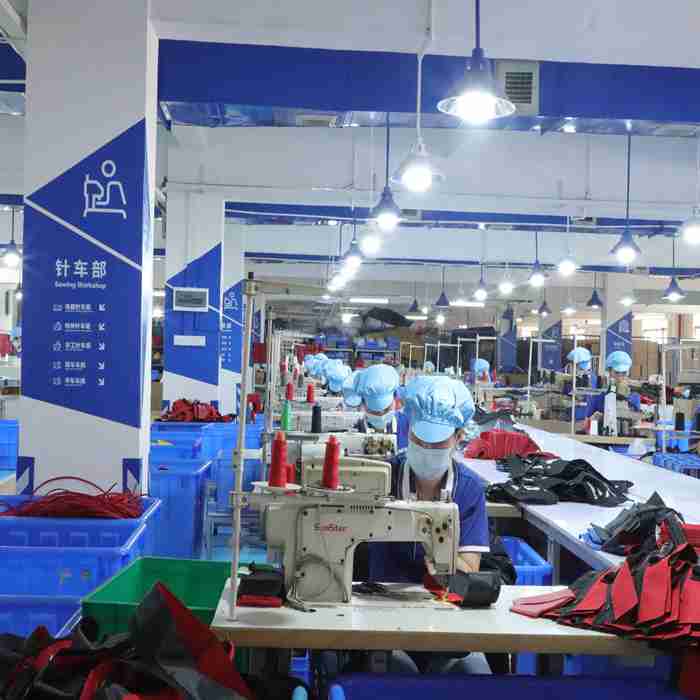
Looking for the best bag manufacturer in China for OEM, ODM, private label, fast sampling, low MOQ, and reliable bulk production? Jundong supports backpacks, tote bags, cosmetic bags, cooler bags, travel bags, and more with in-house development, strict quality control, flexible project handling, and smoother repeat-order support.
What Makes the Best Bag Manufacturer
The best bag factory in China is not simply the one with the lowest quote, the fastest reply, or the longest product list. A stronger definition is much more practical: it should be a team that can turn a concept into a repeatable product with fewer avoidable mistakes.
For serious bag programs, the real standard usually includes five things: development strength, material understanding, production control, quality discipline, and repeat-order consistency. If one of these is weak, the project may still move at the beginning, but problems often appear later in sample revisions, bulk approval, packaging, shipping, or repeat runs.
This matters because bag projects rarely succeed on appearance alone. A product may look good in a sample photo and still fail in real use, real packing, or real replenishment. The better factory is the one that helps reduce that gap early.
They look for whether the team can support sample refinement, trim coordination, logo execution, workmanship stability, and follow-up continuity without making each new order feel like a fresh restart.
| What a Strong Factory Should Deliver | Why It Matters |
|---|---|
| Clear development support | Reduces sample-stage confusion |
| Material matching ability | Improves product fit and cost control |
| Stable execution | Protects bulk consistency |
| Quality checkpoints | Prevents avoidable defects |
| Repeat-order continuity | Makes growth easier after the first run |

Why the Right Factory Costs More
The lowest quote can look attractive at the beginning, but a bag project is rarely decided by unit price alone. Many problems that become expensive later do not appear in the first quotation sheet. They appear in sample delays, weak trim selection, unstable stitching, unclear packing, inconsistent branding, and slower repeat handling.
This is why experienced teams often think in total project cost, not just initial piece price. A lower opening quote may lose its advantage quickly if it leads to extra revision rounds, material mismatch, avoidable defects, repacking, or missed delivery windows.

A stronger factory usually helps protect value in less obvious ways. It may guide the material path more realistically, simplify structure without damaging the product, flag risky details early, and keep the approved version clearer from sample to bulk.
Comparison Table
| Lower Quote Looks Good When | Stronger Partner Becomes Better When |
|---|---|
| Specs are very simple | Product details matter more |
| No revisions are expected | Development still needs adjustment |
| Packing is basic | Retail or shipping details matter |
| One-time project only | Repeat orders are likely |
How to Assess Bag Partners
Serious sourcing teams usually check more than product photos and a quotation. Before choosing a China bag partner, they want to know whether the team can actually support the project through development, approval, production, packing, and follow-up runs without losing control.
sample capability, material range, logo execution options, QC structure, communication clarity, MOQ flexibility, packing readiness, and repeat-order handling. These checks matter because a bag project rarely stays static. Styles are revised, details are upgraded, launch timing shifts, and replenishment needs change. A factory that only performs well when everything is already fixed may not be the right long-term fit.
Another useful check is whether the team can speak clearly about process. Reliable teams usually explain how they move from reference to sample, from sample to approval, and from approval to bulk. Weak teams often stay vague until problems appear.
Buyer Review Checklist
| What to Check | What It Tells You |
|---|---|
| Sample handling | Whether product development is practical |
| Material options | Whether the project can be matched properly |
| QC setup | Whether quality is controlled or reactive |
| MOQ logic | Whether the team can support your stage |
| Packing support | Whether shipment readiness is taken seriously |
| Repeat process | Whether long-term cooperation will be easier |

Why Development Matters More First
A bag project rarely becomes workable because someone replied quickly. It becomes workable when the team can translate a rough idea into a sample that is closer to real production, not just closer to a nice photo.
This is where development strength matters. A strong team should be able to read a sketch, reference image, old sample, or product brief and turn it into something that makes practical decisions visible early: shape, size balance, material direction, trim logic, logo method, reinforcement, and likely cost impact. Without that ability, the sample stage often becomes slow, repetitive, and expensive.

For sourcing teams, the real test is simple: when the idea is still incomplete, does the factory help make it clearer, or does it only wait for finished instructions? The better partner usually does more than receive files. It helps reduce uncertainty before uncertainty becomes revision cost.
Development Check Table
| What Strong Development Support Looks Like | Why It Helps |
|---|---|
| Reads references accurately | Reduces sample-stage misunderstanding |
| Suggests workable structures | Avoids unrealistic designs |
| Flags risky details early | Prevents late rework |
| Supports sample revisions | Improves first-run readiness |
| Connects sample to bulk logic | Protects continuity later |
Bag Types a Strong Factory Handles
A strong China bag factory should not rely on one hero product only. It should be able to support a broad but controlled range of categories while still understanding the different logic behind each one.
That matters because bag sourcing is rarely limited to one single style forever. A team may begin with tote bags or cosmetic bags, then expand into backpacks, cooler bags, travel bags, tool bags, laptop bags, organizer pouches, gifting bags, or private label collections. If the factory can only handle one narrow category well, the relationship becomes harder to scale.
The more reliable sign is not how long the product list looks. It is whether the factory understands that different categories require different priorities. A travel bag may need better load balance. A cosmetic bag may need cleaner lining execution. A cooler bag may depend more on insulation structure. A backpack may need more attention on shoulder construction, zipper path, and reinforcement points.
Category Breadth Table
| Category Group | What Good Handling Usually Requires |
|---|---|
| Tote / pouch / cosmetic | Clean shape and branding finish |
| Backpack / laptop / work bag | Structure, reinforcement, comfort |
| Cooler / lunch bag | Insulation and functional layering |
| Travel / organizer | Packing efficiency and compartment logic |
| Tool / utility / fireproof | Stronger materials and durability focus |

Why Fabric Knowledge Shapes Bags
Many bag projects look similar on a screen but behave very differently in real life because the material choice changes everything. Fabric knowledge affects shape, weight, hand feel, print result, stitch behavior, durability, cleaning ease, and cost structure.
That is why material depth matters so much when choosing a China bag partner. A team that truly understands fabric will not recommend the same solution for every product. It will usually match the material to the use case. A cotton canvas tote, a lightweight nylon backpack, a polyester travel organizer, a neoprene sleeve, or a PU cosmetic bag each need a different logic.

Material knowledge also affects whether the first sample becomes useful. If the fabric is too soft, the shape may collapse. If the coating is wrong, the print may not read well. If the lining is poorly chosen, the inside feel may weaken the whole product. These are not surface issues. They directly affect whether the final bag feels correct.
Material Fit Table
| Material Direction | Where It Usually Works Well |
|---|---|
| Canvas / cotton | Totes, gifting, casual everyday use |
| Nylon / polyester / Oxford | Backpacks, travel, lightweight daily use |
| PU / coated fabric | Cosmetic, wipe-clean utility, structured fashion use |
| Neoprene | Sleeves, protective pouches, soft utility |
| EVA / specialty structures | Protective and shaped functional cases |
OEM, ODM, or Private Label?
Choosing the right cooperation path often affects the whole bag program more than people expect. The issue is not which model sounds better. The real issue is which model matches your stage, speed, control needs, and product clarity.
A practical way to read the difference is simple. OEM usually fits projects that already have clear specifications, measurements, materials, branding rules, and a finished direction. ODM is more useful when the team wants a faster start from an existing base structure that can still be adjusted. Private label is often the best fit when the main target is to build recognizable branding around a workable product base without rebuilding everything from zero.
Many teams make the mistake of choosing a path that is too heavy for their current stage. A new collection with unclear construction details may not need a fully custom route on day one. A proven product with stable repeat demand may not need to stay in a semi-developed stage for too long. The better decision usually comes from asking: Do we need full originality, faster execution, or brand control first?
Path Selection Table
| Project Situation | Better Starting Path |
|---|---|
| Specs already fully locked | OEM |
| Need faster launch from a workable base | ODM |
| Need branded product identity first | Private label |
| Still comparing structure directions | ODM or staged private label |
| Already proven style, ready to scale | OEM or private label expansion |

Low MOQ Works With Control
The same outer format can behave very differently depending on the real use scene. Travel cases usually need compact dimensions, controlled weight, and easy open-close behavior. Field work cases need faster access, repeated handling tolerance, and stronger organization logic. Retail or presentation sets need cleaner symmetry, better visual spacing, and an opening experience that feels complete on first view. Technical kits often need cable management, part separation, and better protection for surfaces, corners, or sensitive accessories. Protective case and organizer systems on Pelican’s side also split solutions by use mode rather than forcing one interior concept across every load type.
The case outline may look fine, but the structure logic is already mismatched to the real task. A retail gift set with field-service access logic will feel too utilitarian.

A technician kit designed like a gift box may look tidy, but perform badly after repeated use. A travel case built without attention to carry scale and packed thickness may become more annoying than protective. Jundong can help define the structure route from the intended use scene first, then match the shell, insert, pocketing, closure path, and branding level to that purpose. That is often what separates a case that merely holds items from one that actually supports the way the set is used.
| Use scene | Construction priority | Interior priority |
|---|---|---|
| Travel set | Compact, light, easy to carry | Neat layout with low bulk |
| Field work kit | Fast access, repeated handling strength | Clear placement and quick return |
| Retail/presentation set | Controlled opening and visual order | Symmetry and display value |
| Technical kit | Protective shell + practical access | Part separation and cable control |
Quality Starts Before Shipment
A bag project becomes more reliable when quality is built into the process early, not left until the final inspection table. End-stage checking is still important, but it cannot fully fix a project that already moved forward with unclear specs, weak material control, unstable workmanship references, or missing packing standards.
The stronger approach is to build quality in layers. It usually starts with approved sample reference, confirmed material set, trim matching, logo placement control, construction standards, reinforcement review, and packing instructions. Once those parts are clear, inspection becomes more meaningful because the team is checking against something stable rather than reacting to confusion.
This is especially important in bag production because many problems are created gradually. A shape issue may begin with fabric choice. A zipper problem may begin with trim mismatch. A packing mistake may begin with missing label rules. By the time the finished unit reaches final inspection, some of the root cause is already behind it.
Quality Build Table
| Quality Should Be Built At | Why It Matters |
|---|---|
| Sample approval stage | Locks the visual and structural base |
| Material confirmation stage | Prevents mismatch later |
| Production process stage | Catches workmanship drift early |
| Packing setup stage | Protects shipment readiness |
| Final inspection stage | Verifies overall consistency |

Packaging, Labeling, and Delivery Essentials
A bag project can look correct at sample stage and still create trouble later if the packing and delivery details are not planned clearly enough. Many sourcing teams focus heavily on the product body, but real problems often appear in hangtags, barcode labels, polybag method, warning labels, carton quantity, carton marks, insert cards, and shipment readiness.
These details matter because they affect more than appearance. They influence warehouse receiving, shelf setup, e-commerce handling, retail presentation, shipping accuracy, and internal sorting efficiency. When these parts are unclear, the project feels unstable even if the bags themselves are acceptable.

That is why strong execution should include packing logic as early as possible, not only at the end. A useful process normally defines unit packing method, label placement, barcode rules, carton count, master carton marking, and any special retail or distribution requirement before bulk is finished. This reduces last-minute confusion and helps protect the delivery window.
| Detail Area | Why It Should Be Confirmed Early |
|---|---|
| Unit packing method | Protects finish and consistency |
| Barcode and labels | Supports receiving and sales systems |
| Hangtag / insert setup | Improves presentation accuracy |
| Carton quantity | Affects shipping and warehouse flow |
| Carton marks | Reduces sorting and routing mistakes |
| Delivery mode | Helps timing and cost planning |
How Repeat Orders Stay Stable
The real value of a bag partner often becomes visible after the first order, not during it. Many teams can complete one run. Far fewer can make the second and third runs feel faster, cleaner, and less stressful.
Repeat orders become easier when the first run leaves behind a usable system: approved sample reference, locked spec version, confirmed material set, stable logo method, workable packing format, and clearer notes on what should stay unchanged. If these parts are not organized well, every reorder begins to feel like a restart instead of a continuation.
This matters because growth rarely comes from one order alone. A style that performs well may need replenishment, seasonal color updates, retail expansion, or multiple follow-up shipments. A factory that can protect continuity while still adapting to practical changes usually creates much more long-term value than one that only performs during the first approval stage.
Repeat-Order Stability
| What Helps Reorders Go Better | Why It Matters |
|---|---|
| Approved final spec | Reduces version confusion |
| Confirmed material set | Improves consistency |
| Recorded logo details | Protects brand appearance |
| Proven packing format | Speeds fulfillment |
| Update communication | Reduces avoidable surprises |
| SKU coordination | Supports line extension more smoothly |

Why Brands Choose Jundong
Some bag projects move in a straight line. Many do not. They begin with one style, then split into color options. They start with one sample, then add a packaging change. They launch with one SKU, then expand into a coordinated range. These projects need more than production capacity. They need a team that can stay organized while the project is still evolving.
This matters because flexibility only becomes useful when it is paired with structure. A team that accepts every change but does not manage them clearly often creates more risk, not less. A stronger working model is simpler: keep the project flexible where it still needs movement, but protect the approved parts from drifting.

That balance is especially useful for launch collections, retailer trials, multi-SKU introductions, seasonal lines, private label development, and early-stage growth programs. For teams already comparing options, a short note to info@jundongfactory.com can help turn references, quantity ideas, and timing targets into a clearer first brief.
Working Style Table
| What Evolving Projects Need | What Helps Most |
|---|---|
| Sample changes | Clear version handling |
| Color or SKU expansion | Organized coordination |
| Brand detail updates | Protected approved specs |
| Mixed order planning | Structured communication |
| Next-run preparation | Sample-to-reorder continuity |
Make A Sample First?
See your idea come to life before mass production.
At Jundong Factory, we offer free design mockups and custom samples to ensure every detail is perfect — from material and color to logo placement and stitching.
Start your project with confidence today: info@jundongfactory.com.
Custom structured carrying case FAQ
How do I judge whether a bag factory in China is actually right for my project?
The lowest quote is not usually the best option when the project still depends on development, quality stability, packaging accuracy, and repeat-order continuity.
Price matters in every bag program, but the first quotation rarely shows the full cost of cooperation. A lower opening price can look attractive, yet still lead to a more expensive overall project if it creates extra revision rounds, material mismatch, weak trim choices, inconsistent workmanship, delayed packing decisions, or unstable follow-up runs.
This is one of the most common sourcing mistakes. Teams compare piece price but do not compare hidden cost. A quote that looks lower at the beginning may lose that advantage very quickly if the project later needs rework, repacking, quality sorting, missed launch timing, or repeated clarification during follow-up orders.
A better comparison usually looks at total project value. That includes whether the team can suggest more realistic materials, simplify structure without weakening the bag, keep approved versions clear, and reduce avoidable confusion between sample and bulk. These actions do not always produce the cheapest first number, but they often protect budget much better across the full project cycle.
This does not mean higher price is always better. It means the more useful question is usually not “Who is cheapest?” but “Who is less likely to create avoidable cost later?”
Real Cost Comparison Table
| Lower Price May Look Good When | Stronger Value Matters More When |
|---|---|
| The style is very simple | The style still needs development |
| Packing is basic | Retail or logistics details matter |
| It is a one-time run | Repeat orders are likely |
| Specs are already locked | Specs still need clarification |
Is the lowest quote from China usually the best option for a bag project?
The right interior method depends less on which option looks more advanced, and more on how fixed, how delicate, and how frequently handled the contents will be. For structured carrying cases, the interior is often the part that decides whether the set still feels tidy after repeated use. Pelican’s organization systems clearly separate foam, padded divider, lid organizer, and TrekPak-style panel systems because each solves a different holding problem. TrekPak is presented as a thin rigid divider system that forms a “360-degree cocoon” with bottom and lid foam, while Pelican’s lid organizers focus on mesh pockets and accessory storage rather than close-fit retention. Royal Case’s foam guidance, meanwhile, frames custom foam as a precision-fit solution for specific equipment dimensions.
A foam insert is usually the best choice when the item shape is fixed, the surface needs protection, or movement must be tightly controlled. It works especially well for electronics, tools, instruments, and shaped accessories. A divider system is better when the contents may change over time or when different pieces do not need exact cavities. A molded tray often suits presentation-oriented sets because it creates cleaner spacing and a more deliberate opening impression. A pocket layout, including mesh pockets or lid organizers, is useful for flat accessories, cables, manuals, and light secondary parts, but it should not be treated as the main restraint method for valuable or fragile items.
The easiest way to decide is to check three things.
Will the contents always stay the same? If yes, foam or molded tray usually works best.
Will the kit change or expand later? If yes, dividers and pockets are more flexible.
Does first-open presentation matter as much as protection? If yes, a molded tray or hybrid layout often gives a cleaner result than foam alone.
In many strong projects, the best answer is not one method by itself, but a combination such as base foam + lid pocket, or main tray + side elastic holders. Jundong can help balance retention, access speed, and visual order so the inside performs well after the first use rather than only on day one.
Interior Selection Table
| Interior option | Best for | Limitation |
|---|---|---|
| Foam insert | Fixed-shape gear and strong protection | Less flexible for changing kits |
| Divider system | Mixed items and adjustable layouts | Less precise retention |
| Molded tray | Presentation sets and clean spacing | Less adaptable after approval |
| Pocket layout | Flat accessories and light secondary parts | Not ideal as primary protection |
What should I prepare before contacting a bag factory in China?
The most useful first contact usually starts with a clear style reference, estimated quantity, material direction, logo plan, and timing goal.
Many factory conversations slow down because the starting brief is too vague. A team may know they want a backpack, tote bag, cosmetic bag, cooler bag, or travel bag, but if the size direction, product use, branding method, material preference, and launch timing are still unclear, the discussion stays broad and less useful.
For a practical first discussion, it helps to prepare these items if possible:
reference photos or sketches, approximate dimensions, product use scenario, material preference, logo file or logo method preference, estimated quantity, target timing, and any packing requirement already known. This does not mean you need a perfect technical pack before reaching out. It simply means the clearer the first input is, the more meaningful the early feedback becomes.
This matters because a good factory discussion is not only about getting a price. It is also about seeing whether the project is being read correctly. The more clearly the starting information is prepared, the easier it becomes to identify whether the team understands the product and can move it forward.
First Contact Checklist
| What to Prepare | Why It Helps |
|---|---|
| Reference image or sketch | Clarifies style direction |
| Approximate dimensions | Helps estimate structure and material |
| Use scenario | Guides material and feature planning |
| Logo plan | Affects branding method and cost |
| Estimated quantity | Helps judge workable path |
| Timing goal | Helps map the next step |
| Packing notes | Improves delivery planning early |
How important is sample quality when choosing a bag factory in China?
Sample quality is extremely important because it reveals not only appearance, but also how the team understands structure, material, branding, and future bulk readiness.
A sample should never be judged only by whether it looks attractive in photos. A more useful sample review checks whether the factory has translated the concept correctly into shape, size balance, material behavior, stitching control, logo placement, trim matching, reinforcement, and practical usability. These are the parts that usually predict whether bulk production will stay stable later.
This is why the sample stage matters so much in factory selection. A strong sample often shows that the team can read references well, make workable decisions, and reduce uncertainty before larger quantity begins. A weak sample can reveal the opposite: unclear interpretation, poor material judgment, unstable details, or a tendency to wait passively for instructions rather than solve problems early.
Sample quality is also one of the best ways to judge whether the factory can support your real project type. A gift tote, retail cosmetic bag, technical backpack, cooler bag, or utility pouch each reveal different strengths and weaknesses in the sample stage.
The better question is not simply “Does the sample look good?” It is “Does this sample prove that the team can handle the product correctly later?”
Sample Review Table
| What to Review in a Sample | What It Tells You |
|---|---|
| Shape and proportion | Whether the structure is understood |
| Material feel and behavior | Whether the product is matched properly |
| Logo execution | Whether brand details can be controlled |
| Stitching and finishing | Whether workmanship is stable |
| Usability and function | Whether the product is practical |
How can I judge whether a China bag factory has a reliable quality system?
A reliable quality system is usually visible before final inspection because it shows up in material checks, process control, approved references, and packing discipline—not only in the last step of production.
Many teams ask whether a factory has QC, but almost every factory says yes. The more useful question is how quality is actually built into the workflow. A stronger system usually includes incoming material inspection, approved sample reference, in-process checking, workmanship standards, trim control, reinforcement review, packing checks, and final inspection. These layers matter because many defects are easier to prevent early than fix later.
For bag projects, quality problems often begin long before the finished unit appears. A shape issue may start from the wrong fabric choice. A zipper problem may come from poor trim matching. A packing error may result from unclear label rules. If quality is only treated as a final-stage activity, the team is often trying to catch problems after the cost of correction has already increased.
That is why quality should be judged as a working system, not a department name. The real sign of a reliable team is whether it can reduce drift from sample to bulk, from one unit to the next, and from the first order to the repeat order.
Quality System Table
| Quality Layer | Why It Matters |
|---|---|
| Material inspection | Prevents mismatch from the start |
| Approved sample reference | Keeps visual and structural consistency |
| In-process QC | Catches workmanship drift early |
| Packing checks | Protects shipment readiness |
| Final inspection | Verifies overall completion |
Can one factory handle both development and bulk production well?
Yes, one factory can handle both development and bulk production well, but only if it has a real internal link between sample work, technical clarification, material coordination, and production control.
This is one of the most important issues in factory selection because many projects do not fail at the sample stage or the bulk stage alone. They fail in the transition between the two. A sample may look right, but if the team cannot carry the approved version clearly into material preparation, line setup, workmanship control, and packing instructions, the bulk order may drift away from what was approved.
That is why sourcing teams should not only ask, “Can you make a sample?” or “Can you produce volume?” The better question is: Can you connect the sample logic to the production logic without losing key details? A strong team should be able to keep the path clear from reference to sample, from sample to approval, and from approval to execution. This usually requires more than one capable salesperson. It requires a working internal structure.
The signs of that structure are practical. The team should be able to explain sample revisions clearly, confirm spec changes cleanly, match materials realistically, carry branding details forward, and reduce confusion between departments. When those parts work together, development and bulk are no longer separate strengths. They become one connected system.
Development-to-Bulk Table
| What to Check | Why It Matters |
|---|---|
| Sample revision handling | Shows whether changes are managed clearly |
| Spec confirmation process | Reduces drift before production |
| Material carry-over | Protects product consistency |
| QC before and during production | Supports execution stability |
| Packing and shipment readiness | Keeps the approved version complete |
What bag categories should a strong China factory be able to support?
A strong China bag factory should be able to support multiple bag categories well, while still understanding that each category has a different technical priority.
This matters because many projects do not stay in one category forever. A team may begin with a tote, pouch, or cosmetic bag, then expand into backpacks, cooler bags, travel bags, work bags, organizer lines, or a broader private label collection. If the factory only performs well in one narrow type, the cooperation becomes harder to extend.
A more useful way to judge category strength is not to count how many product names appear on a website. It is to ask whether the team understands the different control logic behind different categories. A tote bag usually depends more on shape cleanliness, handle balance, and print execution. A backpack needs more attention on panel structure, shoulder comfort, zipper path, and reinforcement. A cooler bag depends more on insulation layering and wipe-clean practicality. A cosmetic bag may reveal more about lining quality and finishing detail.
The stronger signal is breadth with judgment. A mature team does not only say it can handle many bag types. It usually knows what matters most in each one.
Category Capability Table
| Category | What Good Handling Usually Requires |
|---|---|
| Tote / pouch / cosmetic | Shape control, finish, logo cleanliness |
| Backpack / laptop / work bag | Structure, reinforcement, comfort logic |
| Cooler / lunch bag | Functional layering, lining practicality |
| Travel / organizer | Compartment logic, packing efficiency |
| Utility / fireproof / EVA | Material strength, protection focus |
How important are packaging and shipping details when selecting a bag factory?
Packaging and shipping details are extremely important because they often determine whether a finished bag project is easy to receive, sort, display, store, and sell—not just whether the bag itself looks correct.
Many teams focus heavily on product development and bulk quality, but later discover that the project still feels incomplete because the delivery side was not handled carefully enough. Problems often appear in hangtag placement, barcode labels, insert cards, warning labels, unit packing method, carton quantity, carton marks, assortment rules, and shipment coordination.
These details should not be treated as afterthoughts. They affect warehouse flow, store setup, e-commerce preparation, international shipping accuracy, and internal handling efficiency. A bag may be made well and still create avoidable downstream trouble if the packaging logic is unclear or the shipment setup is inconsistent.
That is why a strong factory should be able to discuss delivery readiness in practical terms, not just say “packing is okay.” It should be able to confirm how each unit is packed, how cartons are marked, how labels are positioned, and what shipping structure fits the project. This is especially important for retail launches, mixed-SKU orders, and distribution programs where details outside the bag body still affect the full result.
Packing and Shipping Table
| Detail | Why It Matters |
|---|---|
| Unit packing | Protects finish and consistency |
| Barcode / label rules | Supports receiving and system use |
| Hangtags / inserts | Improves presentation accuracy |
| Carton quantity | Affects warehouse and shipping flow |
| Carton marks | Reduces routing and sorting mistakes |
| Delivery mode | Improves timing and cost control |
Why do repeat orders often reveal the real strength of a bag factory?
Repeat orders often reveal the real strength of a bag factory because the first order can be completed with effort, but long-term consistency requires a working system.
Many factories can push through one initial order. The real difference appears later, when the project needs the second run, a seasonal update, a color expansion, a quantity change, or a follow-up shipment under tighter timing. That is where teams either show continuity or start from confusion again.
A strong repeat-order system usually depends on what was left behind after the first run: approved final spec, confirmed material set, stable logo method, packaging record, version clarity, and a usable follow-up process. If these are not organized well, each reorder begins to feel like a partial restart. That increases risk, slows response, and creates more opportunities for drift.
This is why repeat orders are such a revealing test. They show whether the factory can protect what was already approved while still adapting to practical changes. They also reveal whether communication becomes easier after cooperation begins, or whether it remains fragmented and repetitive.
Repeat-Order Test Table
| What Reorders Reveal | Why It Matters |
|---|---|
| Version control | Shows whether details are protected |
| Material continuity | Supports consistency |
| Update handling | Reduces avoidable confusion |
| Packing continuity | Speeds fulfillment |
| Follow-up coordination | Makes growth easier |
When should I choose OEM, ODM, or private label for my bag project?
OEM, ODM, and private label should be chosen based on your project clarity, speed target, and branding priority—not by trend or terminology alone.
A clear way to think about it is this. OEM usually works best when your specifications are already locked: dimensions, construction, materials, branding, and product direction are all relatively clear. ODM is often better when you need a faster start from a workable existing base that can still be adjusted. Private label usually fits projects that want to build a recognizable branded collection without needing every structural detail to begin from zero.
The mistake many teams make is choosing a path that is too heavy or too light for their real stage. A new line with many open structural decisions may not need a fully original route immediately. A proven style with stable follow-up potential may not need to stay in a semi-developed stage for too long. The better decision usually comes from asking: What matters most right now—speed, originality, or branded control?
Another useful approach is to think in stages rather than one permanent model. Some projects begin closer to ODM or private label, then move toward a more locked OEM-style process once the product has proven itself. That kind of staged path is often more practical than trying to force the entire project into a single label too early.
Path Selection Table
| Project Need | Better Starting Path |
|---|---|
| Specs already fully clear | OEM |
| Faster start from an existing base | ODM |
| Brand identity first | Private label |
| Still shaping the product direction | ODM or staged private label |
| Proven style ready for scaling | OEM or expanded private label |
Everything You Need to Know Before Customizing Your Bags
Choosing a bag factory in China is rarely just about finding someone who can make the product. The more serious decision is whether the team can support the project through development, sample refinement, material matching, quality control, packing readiness, delivery coordination, and repeat-order continuity without creating unnecessary friction.
That is why the most useful FAQ section should do more than provide short replies. It should help clarify the issues that usually shape long-term cooperation: how to judge factory fit, how to compare real cost instead of only quote price, how to read sample quality, how to understand quality systems, and how to decide between OEM, ODM, and private label paths.
The questions are the ones many sourcing teams ask when they are trying to choose not just a factory, but a more workable long-term bag partner.