 Skip to content
Anti-Static Bag Manufacturer
A reliable Anti-Static Bag Manufacturer does more than make “ESD-looking” bags. It helps you match bag structure, material system, shielding level, and production consistency to the real risk of your electronics, components, tools, or assemblies. At Jundong, we support custom anti-static bag projects with low MOQ, rapid sampling, OEM/ODM development, and quality-focused production workflows—so your packaging is not just compliant on paper, but practical in shipping, storage, and daily handling.
Anti-Static Bag Manufacturer: Why It Matters
Why? Because ESD packaging failure usually does not happen in a lab demo. It happens in the real world: during packing, warehouse transfer, export shipment, unpacking, rework, or field service. A bag that “looks metallic” or has an ESD symbol printed on it may still be the wrong choice if the material type, structure, sealing method, or handling process does not match the actual use case.
(1) What they often misunderstand
Many partners use the term anti-static bag to describe multiple product types:
- low-charging bags
- static dissipative bags
- shielding bags
- moisture barrier bags (MBB)
- ESD-safe pouches with foam inserts
- anti-static soft carrying bags for tools or instruments
These are not automatically interchangeable. A purchasing team may request “anti-static bags” while the engineering team actually needs shielding performance, and the production team may also need puncture resistance or heat-seal compatibility. If the supplier only quotes by bag size and thickness, the project can fail later.
(2) Why does a manufacturer matter more than a reseller in custom projects
For custom anti-static bag development, manufacturers usually offer stronger control in these areas:
| Procurement Need | Reseller-Only Risk | Manufacturer Advantage |
|---|---|---|
| Custom size & tolerance | Limited stock dimensions | Size control based on the converting process |
| Material match | May sell generic film without use-case review | Can recommend film structures by application |
| Printing & labeling | Outsourced and inconsistent | In-line or managed production workflow |
| Sampling speed | Depends on the upstream factory queue | Faster internal coordination |
| Batch consistency | Multi-source variation | Better lot control and QC checkpoints |
| Problem solving | Slow root-cause response | Direct access to process and materials |
This is especially relevant when your product is not a standard IC shipping bag, but a brand-specific, application-specific ESD package (for example, larger accessories, repair kits, replacement modules, precision instruments, or mixed-SKU protective packs).
(3) Standards context partner should know
Serious ESD packaging decisions are usually tied to broader ESD control programs and packaging standards—not only “seller claims.” The IEC description for IEC 61340-5-3:2022 states that it defines the packaging properties required to protect ESD-sensitive devices throughout production, rework, transport, and storage, and references test methods and performance limits.
Similarly, the ANSI blog summary of ANSI or ESD S541 explains that the standard covers packaging materials used to store, transport, and protect ESD-sensitive items and notes that it does not address EMI, RFI, or EMP protection.
That means a professional supplier should be able to speak clearly about:
- what function the bag is meant to perform
- What test or report language is relevant
- what the bag does not claim to do
- how the partner should use, store, and handle it
(4) What Jundong-style partners usually need
In sourcing, they are not only buying a bag. They are buying:
- risk reduction
- process stability
- repeat-order consistency
- clear communication
- faster sampling
- scalable production
This matches the kind of factory positioning Jundong has been building across product, material, and solution-oriented pages (including anti-static bag manufacturer, in-house QC, rapid sampling, low MOQ, and consistent quality directions).
(5) What does a strong anti-static bag manufacturer help you define:
- Product type (PCB, module, cable set, spare parts, tool, instrument, kit)
- ESD sensitivity level/handling environment
- Bag function (low charging, dissipative, shielding, moisture, and ESD)
- Bag structure (flat, zip, gusset, vacuum sealable, with insert)
- Seal method (heat seal, zipper, fold-over, tape closure)
- Labeling requirements (ESD caution, part code, lot traceability, barcode)
- Quantity plan (pilot run vs rolling forecast)
- Storage and transport conditions
That is the difference between “selling a bag” and manufacturing an anti-static packaging solution.


Choose: Anti-Static, Shielding, Barrier Bags
If your purchasing team wants better outcomes, the first step is simple: stop treating all ESD bags as the same product.
(1) The practical difference partners need to be understood
In day-to-day sourcing conversations, these terms are often mixed up:
- Anti-static (often used broadly; can mean low charging)
- Static dissipative
- Static shielding
- Moisture barrier bag (MBB) with ESD protection
A bag may be suitable for one stage of handling, but not for shipping or long-term storage outside an ESD-protected area.
A practical way to think about it:
| Bag Type | Main Purpose | Typical Use Case | Common Mistake |
|---|---|---|---|
| “Anti-static bag” (generic) | Reduce charge generation/handling risk | Internal handling, non-critical packing, accessory segregation | Assuming it provides shielding |
| Static dissipative bag | Bleed charge in a controlled way | Controlled handling environments | Using it for high-risk external transport without shielding |
| Static shielding bag | Protect from ESD events/electric field effects | Shipping/storing ESDS items outside protected areas | Choosing only by color/appearance |
| MBB (ESD and moisture focus) | Moisture and ESD protection together | Moisture-sensitive electronics / SMT-related logistics | Treating all MBBs as identical regardless of sealing/process |
(2) Why “appearance-based buying” causes problems
Some partners still select bags by visual cues:
- pink means anti-static
- silver means shielding
- Thicker means safer
- shiny means premium quality
These assumptions are risky. The correct choice depends on:
- what you are packing
- how sensitive it is
- where the bag will be used
- how long it will be stored
- whether moisture control is required
- how it will be opened, resealed, or handled later
This is why a professional supplier should ask process questions before quoting.
(3) Where standards language helps procurement clarity
IEC’s public description of IEC 61340-5-3:2022 makes it clear that ESD protective packaging requirements are about protecting ESDS devices through production, rework, maintenance, transport, and storage, with referenced test methods and performance limits.
That wording is useful for procurement teams because it shifts the discussion from “bag type names” to “required protection function across the actual process route.”
The ANSI summary on ANSI, ESD S541, also reinforces that packaging selection is about materials and application requirements for storing, transporting, and protecting ESDS items.


(4) When clients should consider MBB (moisture and ESD)
If your products are moisture-sensitive electronic devices, ESD protection alone may not be enough. In many electronics supply chains, MBB and desiccant and HIC (humidity indicator card) are standard dry-pack practices. Texas Instruments’ handling guidance explicitly notes that moisture-sensitive components are sealed in an MBB together with desiccant and an HIC, and references IPC, JEDEC J-STD-020, and J-STD-033 practices.
This matters for the client because a project may start as “ESD bag sourcing” but later become a dry-pack integrity discussion. If the supplier cannot support sealing logic, bag material compatibility, or pack-out workflow, the partner ends up coordinating multiple vendors and raising failure risk.
(5) A decision shortcut
Use this as a screening guide:
Choose a basic anti-static or dissipative solution first when:
- parts are lower-risk accessories
- packaging is for internal WIP segregation
- handling stays mostly inside controlled conditions
- no long export transit or moisture-sensitive requirement
Choose shielding-focused packaging when:
- packing ESD-sensitive electronics
- shipping outside an ESD-protected area
- multiple handling points are involved (warehouse, logistics, service center)
- unpacking conditions are hard to control
Choose MBB and dry-pack workflow when:
- Moisture sensitivity is part of the risk
- parts are SMT-related or moisture-sensitive
- storage duration and seal integrity matter
- end-user packaging requirements specify dry-pack details
(6) What to ask your anti-static bag manufacturer before ordering
- What bag function is this material designed for?
- Is this suitable for the external transport of ESDS items?
- If moisture-sensitive, do you support MBB-compatible structures and sealing recommendations?
- What custom printing or labeling can be added (ESD, lot, barcode, caution)?
- Can you provide sample options for comparison (A or B material route)?
If your team wants help mapping these choices to a custom project, share product photos, dimensions, use environment, and pack-out method. For faster evaluation, you can contact info@jundongfactory.com with your target application and estimated quantity.


Anti-Static Bags: Industry Needs & Priorities
Anti-Static Bag Applications by Industry
A stronger anti-static bag guide should explain how packaging needs change across different use cases. Different products, workflows, and handling conditions often require different ESD bag structures, labeling methods, and packing logic.
1. Electronics Assembly and PCB Modules
This is one of the most common applications. Typical concerns include:
ESD protection
correct bag size for boards or modules
sealing or reclosable options
barcode or lot label placement
stable repeat orders
2. Component Distribution and Spare Parts Packing
This group often handles:
multiple SKUs
frequent picking and repacking
variable quantities
labeling-heavy operations
In these cases, packaging is not only about anti-static protection. It also needs to improve packing efficiency, shelf use, and batch consistency.
3. Repair and Field Service Use
Repair kits and service parts often need packaging that supports:
Repeated opening and closing
easy part identification
practical use in transport kits
quick visual recognition
Reclosable anti-static bags are often more suitable for this type of handling.
4. Industrial Automation and Instrument Accessories
This use case may include:
sensor modules
control accessories
test probes
mixed electronic parts
These projects may require stronger puncture resistance, larger bag sizes, internal separation, warning labels, and part ID systems.
5. Medical Electronics and Diagnostic Accessories
Some projects require closer control over:
labeling
packaging cleanliness
lot traceability
documentation consistency
In this category, it is better to define the bag function clearly and avoid overstating compliance claims.
6. Private Label ESD Packaging
Some brands need custom anti-static bags with:
logo printing
multilingual warnings
branded appearance
flexible MOQ
stable repeat supply for growing SKU lines
When a page explains these application differences clearly, inquiries also become more specific, faster to review, and easier to quote.

Material Choice: Performance, Cost, Success
For procurement teams, the material conversation should move from “What is your cheapest anti-static bag?” to “What material system fits our product risk and process?”
(1) Think in systems, not just film names
A professional anti-static bag is usually a material system decision, not just a single-material decision. They should evaluate combinations of:
- outer layer behavior (strength, printability, appearance)
- middle functional layer (if applicable)
- inner layer behavior (contact surface, sealing, handling feel)
- total thickness and tolerance
- closure or seal compatibility
- environmental or storage exposure
That matters because two bags can look similar but perform very differently in real use.
(2) The five material questions they should be asked early
Before approving a sample, ask your supplier:
What is the target ESD function of this material route?
(low charging, dissipative, shielding, or moisture and ESD packaging)
Is the bag optimized for shipping, storage, or internal handling?
These are not always the same.
What are the trade-offs?
Example: cost vs puncture resistance, transparency vs barrier structure, stiffness vs packing speed.
How stable is the material supply across repeat orders?
Especially important for ongoing private label or multi-SKU projects.
How should the material be stored and handled before use?
Storage conditions can affect bag usability and reliability. Practical shelf-life and storage discipline matter in real inventory management; Desco’s guidance stresses avoiding heat, sunlight, moisture extremes, using FIFO, and periodically evaluating bags for suitability.
(3) Material choice affects more than ESD performance
Partner often underestimates these commercial impacts:
Packing efficiency
A bag that is too soft, too slippery, or too rigid can slow down packing operators. This becomes expensive in volume runs.
Label adhesion or print quality
If your workflow depends on barcode labels or printed warnings, surface compatibility matters. Poor printability or ink adhesion creates traceability problems later.
Seal integrity
Heat-seal behavior affects:
- seal strength consistency
- throughput speed
- rework rate
- leakage risk (especially for dry-pack style applications)
Damage during transit
If a bag tears or gets punctured too easily, ESD function may become irrelevant because the package is physically compromised.
(4) The material route should match the handling route
A smart manufacturer will ask about your handling route, not just dimensions:
- packed in a clean line or a general warehouse?
- domestic or export shipment?
- single touch or repeated handling?
- carton-packed tightly or loose-packed?
- long storage duration?
- humidity-sensitive components involved?
This is aligned with the broader ESD packaging concept in IEC 61340-5-3, which covers protection through production, rework, transport, and storage—not only one stage.
(5) comparison table
| Decision Factor: Lower-Cost | t Route (Typical) | Balanced Route (Common) | Higher-Protection / Process-Specific Route |
|---|---|---|---|
| Initial unit price | Lower | Medium | Higher |
| ESD function confidence | Basic (application dependent) | Better fit when specified correctly | Best when matched to the exact use case |
| Puncture/handling durability | Lower to medium | Medium | Medium to high (depends on structure) |
| Printing/labeling compatibility | Varies | Better controlled | Can be optimized per workflow |
| Seal process stability | Varies | Good | Can be engineered for the process |
| Repeat-order consistency | Supplier dependent | Better with a stable manufacturer | Best with locked spec + QC plan |
(6) Why material standard talk should stay practical
They do not always need deep lab terminology at the first stage. What they need is a supplier that can convert technical requirements into practical decisions:
- What bag type to sample first
- what A/B version to compare
- what failure risks to watch
- What QC checkpoints matter in bulkthe
That is exactly the kind of conversation that improves both quotation quality and project speed.
If you are evaluating a new project, sending these five items can dramatically improve the material recommendation: product photo, dimensions, use environment, closure preference, and forecast quantity.


Anti-Static Bag Structure Options
Anti-Static Bag Structures: How to Choose the Right Format
The right anti-static bag structure affects more than ESD protection. It also influences packing speed, product fit, sealing convenience, label visibility, carton efficiency, and shipping consistency. A poor match may lead to slow packing, wrong SKU insertion, puncture risk, difficult sealing, wasted space, or complaints such as too loose or hard to open.
1. Flat Anti-Static Bags
Suitable for: PCB boards, electronic modules, and small components with regular shapes.
Flat bags are a practical option for high-volume packing and heat-seal use. They are simple, cost-efficient, and easy to stack into cartons.
Advantages
simple structure
lower cost
efficient for standard packing lines
suitable for heat sealing
Points to consider
Not ideal for repeated opening
less suitable for bulky or irregular parts
Too many similar sizes can complicate replenishment
2. Reclosable Anti-Static Bags
Suitable for: spare parts, repair kits, service sets, and repeated-access use.
These bags work well when contents need to be opened and closed more than once. They are more convenient for maintenance handling and small-part grouping.
Advantages
reusable
faster access
No extra tape for basic closure
Points to consider
Higher cost than flat bags
Size planning should match the actual fill volume
Not every zip format suits every ESD or moisture-barrier need
3. Gusseted Anti-Static Bags
Suitable for: cable kits, thicker assemblies, mixed sets, and accessory bundles.
A gusseted structure offers more usable volume and helps reduce stress caused by overfilling.
Advantages
better for thicker contents
more flexible for mixed items
can improve packing fit
Points to consider
more complex structure
closer tolerance control may be needed
carton loading should be checked before sampling
4. Organized or Case-Style Packaging
For fragile kits, precision parts, or reusable service sets, foam inserts, dividers, or soft ESD-safe carrying cases can improve part separation, internal protection, and presentation.


ESD Risk Map: Sensitivity, Route, Storage
Start Risk Mapping from the Product Itself
Not every electronic item needs the same packaging route. A PCB, assembled module, sensor, cable set, spare part, tool, or mixed kit can face very different handling risks. The first step is to identify what the product really is and what kind of protection it needs.
Key questions include:
- Is the item ESD-sensitive, moisture-sensitive, fragile, or a mix of these?
- Does it have sharp pins, connectors, or edges that may damage the bag?
- Should the item stay fixed, or can it move inside the pack?
These details help define whether the project needs:
- a simple anti-static bag
- stronger shielding
- moisture + ESD protection
- inserts or dividers
- a heavier-duty bag structure
Check the Full Handling Route
Many mistakes happen because only the first packing step is reviewed. A better method is to map the full handling route from bagging to final use.
Typical stages may include:
- packing line
- internal warehouse transfer
- carton packing and pallet loading
- domestic or export shipment
- distributor storage
- end-user receiving
- service stock or field use
- repack, returns, or rework
Each stage may add new risks such as:
- repeated handling
- carton compression
- relabeling
- temperature or humidity exposure
- contact with non-ESD-controlled areas
Storage Time Also Changes the Packaging Choice
A bag that works for short shipping cycles may not work as well for long storage. It helps to confirm:
- how long the item will stay packed
- whether stock turns quickly or may sit for months
- whether storage is climate-controlled
- whether cartons face heat, sunlight, or resealing
Define the Real Cost of Failure
A stronger packaging review should also ask what happens if the pack fails:
- cosmetic issue only
- line delay
- product damage
- complaint or return
- service investigation
- added logistics cost
The clearer the risk map is, the easier it becomes to choose a packaging route that fits real use, storage, and transport conditions.
When Failure Cost Is Higher, Packaging Decisions Change
When the failure cost is high, teams are usually more willing to accept:
- better material matching
- stronger QC checks
- clearer labeling rules
- more realistic sampling validation
- cleaner process documentation
That shift is practical. If packaging failure can lead to line stoppage, product damage, return cost, service delay, or field issues, then a low-cost bag choice may create a much higher downstream loss.
Practical ESD Packaging Risk Map
A simple risk map helps turn product conditions into packaging decisions.
| Risk Question | Example Input | Packaging Effect |
|---|---|---|
| What product is packed? | PCB module with exposed connector pins | size fit and puncture protection matter |
| ESD sensitivity? | high / ESDS item | shielding protection may be needed |
| Moisture-sensitive? | yes, long storage before SMT | MBB and dry-pack route may be required |
| Handling steps? | 6+ steps, including export | stronger bag structure and labels help |
| Storage duration? | 3–6 months | material and storage practice should match |
| Reopen / reseal needed? | yes | reclosable structure may work better |
| Failure impact? | return and downtime risk | stronger QC and validation make sense |
Why These Questions Matter Before Sampling
If a factory only asks for:
- dimensions
- thickness
- quantity
the quote may be fast, but the solution may still be weak.
A more capable packaging partner will also ask about:
- product type
- handling route
- storage duration
- closure method
- labeling flow
- failure concerns
That usually leads to better sampling and fewer revisions.
Better Internal Alignment
This kind of risk map also helps internal coordination across:
- engineering
- quality
- warehouse and logistics
- service teams
- end-user requirements
A clearer review path often shortens approval time and makes the packaging quote easier to trust.


Anti-Static Bag Process: RFQ to Mass
Choosing the Right Anti-Static Bag Structure
The right anti-static bag structure affects more than product protection. It also influences packing speed, sealing ease, label visibility, carton use, shipping consistency, and the user experience after delivery.
A poor structure choice may lead to:
slow packing
wrong SKU insertion
puncture risk
difficult sealing
wasted carton space
complaints such as “too loose” or “hard to open.”
1. Flat Anti-Static Bags
Suitable for: simple products, standard packing, and high-volume operations.
Flat bags are often used for PCB boards, modules, and small electronic components. They are simple, efficient, and cost-friendly when the item shape is regular, and the bag is used only once.
Advantages
simple structure and lower cost
easy to stack and carton-pack
suitable for heat sealing
works well for large-volume packing
Points to consider
Not ideal for repeated opening
no internal organization
less suitable for bulky or irregular items
2. Reclosable Anti-Static Bags
Suitable for: repair kits, spare parts, maintenance use, and repeated access.
These bags are practical when users need to open and close the package more than once.
Advantages
reusable and convenient
faster access during service work
No extra tape needed for closure
Points to consider
usually higher cost than flat bags
Size planning must match the actual fill volume
Not every structure fits every ESD or moisture-barrier need
3. Gusseted Anti-Static Bags
Suitable for: thicker parts, cable kits, mixed sets, and bulkier contents.
Gusseted bags offer more usable volume and reduce stress caused by overfilling.
Advantages
better for larger or mixed contents
more flexible during packing
Points to consider
more complex structure
requires clearer sampling and size confirmation
may affect carton efficiency if not planned well
(5) Step 5 — Approval Locking Before Mass Production
This is one of the most important steps and often under-managed.
Before mass production, lock:
- approved material route
- bag dimensions and tolerance
- structure details (flat, zip, gusset, etc.)
- printing artwork and location
- label requirements or barcode format
- packing method (inner or outer carton)
- QC checkpoints and acceptance criteria
- version control date or revision number
Without approval locking, teams can accidentally produce from mixed information.
(6) Step 6 — Production Planning and Coordination
Mass production success depends on coordination across:
- raw material planning
- converting line schedule
- printing or labeling sequence
- accessory or inserts (if any)
- packaging materials
- inspection timing
- shipment window
For multi-SKU or mixed-order projects, this coordination becomes even more important. Jundong’s broader positioning around mixed-order support and manufacturing coordination can be a strong trust signal here.
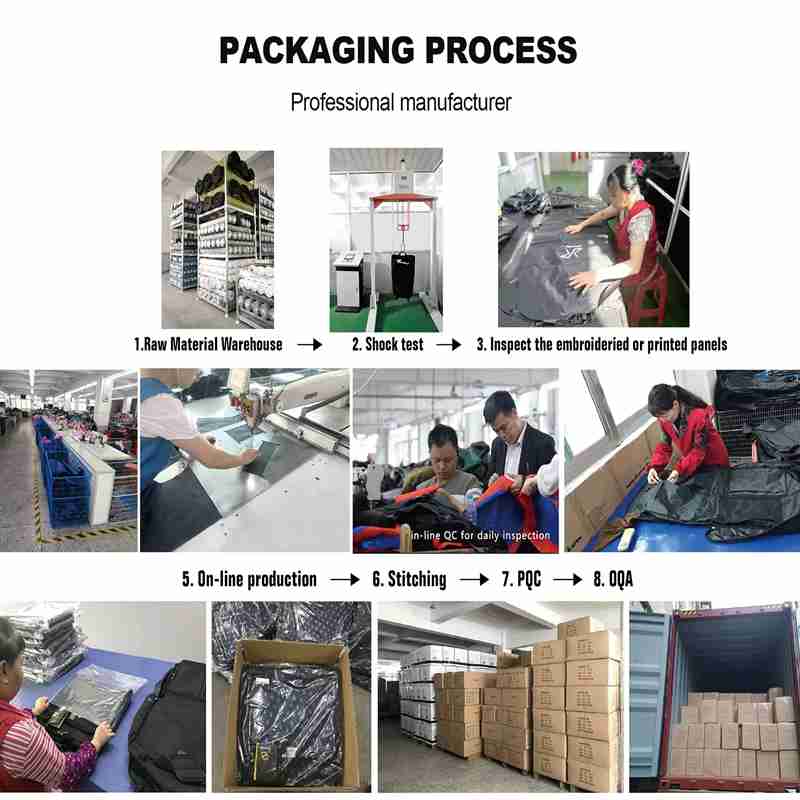
(7) Step 7 — In-Process QC, Final QC, and Shipment Readiness
Production should not rely on final inspection only. Better results come from:
- pre-production alignment
- in-process checks
- final inspection
- shipment verification (SKU, label, carton accuracy)
This reduces rework and helps shipments stay on schedule.
(8) Why does this process convert well
This module does two things at once:
- It shows your factory is organized and credible
- It helps the partner prepare a better RFQ
That improves inquiry quality and shortens quotation cycles.
If a partner is ready to start, a simple first email with product photos, dimensions, target quantity, and use scenario is enough to begin a structured review.


Anti-Static Bag QC: IQC to OQC
(1) IQC — Incoming Quality Control
Purpose: Verify that incoming materials match the approved route before production begins.
For anti-static bag projects, IQC may include checks on:
- material type or specification confirmation
- thickness or thickness range (per agreed method)
- visual appearance consistency
- print substrate suitability (if printed project)
- accessory components (zipper parts, inserts, labels, cartons, etc., if applicable)
(2) IPQC — In-Process Quality Control
Purpose: Control variation during bag converting, printing, and sealing processes.
This is one of the most important layers because many issues appear during production, not only at the end.
Common IPQC checkpoints for custom anti-static bags:
- bag dimensions (length or width tolerance)
- seal width or seal consistency (for heat-seal structures)
- closure function (for zip or reclosable types)
- printing position and readability
- lot code or label placement
- edge finish or cutting quality
- structure consistency (flat vs gusset format)
- insert fit or assembly sequence (if kit-type packaging)
(3) OQC — Outgoing Quality Control
Purpose: Verify finished goods meet approved specifications before shipment.
OQC should not be a vague “random look check.” It should reflect the project’s real risks and approved standards, including:
- appearance
- dimensions
- seal or closure function
- printing clarity
- label or SKU correctness
- packaging method
- carton marking accuracy
- quantity verification
For projects with private label printing, OQC should also check:
- artwork correctness
- logo orientation
- warning symbols
- barcode scan readability (if required)
(4) Shipment Accuracy Checks
For multi-SKU or mixed-order anti-static bag projects, shipping accuracy is part of quality.
A strong shipment check should verify:
- correct SKU to carton mapping
- correct labels on inner or outer packaging
- count accuracy
- packing list consistency
- version or revision alignment
- client-specific marks or shipping labels
This is especially critical when one order includes:
- multiple sizes
- multiple printed versions
- multiple material routes
- kit combinations
(5) QC Alignment Should Start at Sample Approval
One of the biggest procurement mistakes is discussing QC only after the PO is placed. The better path is:
- define key checkpoints during sampling
- identify must-match items (critical to partner satisfaction)
- agree on labeling and carton rules
- Confirm inspection focus before mass production


Anti-Static Bag Testing & Standards
Documentation That Supports Real Approval
In custom anti-static bag and ESD packaging projects, documentation should help teams make decisions, not create extra reading. Many partners mention standards, but the practical question is simpler: does the packaging route match the real product, and can the supporting records be used during sampling, production, inspection, and shipment?
(1) Focus on project-level documentation
What most teams really need to confirm is:
- What material route is being used
- What function the bag is expected to provide
- What sample checks should be completed
- What records will be kept during production
This is usually more useful than a long standard explanation without project detail.
(2) Common documents requested in anti-static bag projects
Typical document groups include:
Material and product documents
- material description or specification sheet
- bag size and thickness details
- structure notes, such as flat bag, zip bag, gusset bag, or insert-based design
- print artwork and labeling layout
- use notes or handling limits when needed
Sample-stage documents
- sample confirmation sheet
- comparison notes if more than one bag route is tested
- revision record showing what changed before approval
- test comments when available
Production and quality documents
- QC checklist or inspection plan
- in-process check records when required
- final inspection record
- packing list and carton label records
- lot or batch traceability, depending on the project
Shipment and labeling support
- carton mark confirmation
- SKU label format
- barcode placement record
- version matching for multi-version programs
(3) What good documentation should look like
Good documentation is:
- clear
- version-controlled
- project-specific
- aligned with the approved sample
- usable by procurement, warehouse, and quality teams
Poor documentation is often:
- copied from another item
- too generic
- missing revision dates
- different from the actual sample or print artwork
- difficult for non-technical teams to follow
A better documentation set makes sample approval, production control, packing checks, and shipment handling much easier to manage.
Keep Testing and Documentation Practical
For custom anti-static bags, ESD shielding bags, and other electronic packaging projects, testing works best when it matches the real use case. A common problem is asking for “all tests” without deciding which risks matter most. That usually slows the project and makes the sample review less clear.
(1) Start with the checks that matter most
A more useful testing plan often begins with:
size consistency
closure or seal behavior
print clarity and label readability
fit with the actual product
compatibility with the packing workflow
Carton packing and shipment accuracy
any project-defined ESD packaging requirements
This keeps validation tied to real handling, storage, and shipment conditions.
(2) Use layered validation
Testing can be organized in three levels:
Level 1: sample fit and workflow confirmation
Level 2: function-focused checks for key risk areas
Level 3: ongoing production consistency checks
This structure helps teams avoid over-testing in the early stage while still protecting the main packaging risks.
(3) Use documentation that supports real control
A practical document set often includes:
material or product specification sheet
sample confirmation sheet
artwork and label layout record
QC checklist or inspection plan
final inspection record
packing list and carton mark record
traceability record for bulk and repeat orders
These records are most useful when they are:
clear
project-specific
version-controlled
aligned with the approved sample
easy for warehouse, quality, and sourcing teams to use
(4) How can Jundong support this process
Jundong can support:
project-relevant documentation
alignment between sample approval, printing, QC, and shipment records
clearer control from specification to bulk execution
document depth matched to project complexity, from standard SKUs to custom multi-SKU packaging programs
A cleaner testing and documentation path usually makes sample approval, bulk production, and shipment handling much easier to control.


ESD Printing, Labels, Traceability
Printing, Labeling, and Traceability in Custom Anti-Static Bag Projects
In custom anti-static bag projects, printing and labeling should not be treated as one simple task. In practice, there are four separate control layers:
1. Brand Identity
This includes:
logo
brand color
style consistency
product line appearance
2. Functional Labeling
This covers:
part number or SKU
size
quantity
usage notes
handling instructions
3. Warning and Compliance Marks
This may include:
ESD warning symbols
caution text
language or regional versions
4. Traceability Codes
This usually includes:
lot code
date code
barcode or QR code
revision mark
When these layers are mixed into one uncontrolled print file, errors become much more likely.
Common problems in multi-SKU anti-static bag orders include:
wrong SKU on the correct bag size
wrong language version
barcode placed where it wrinkles or scans poorly
missing or unclear ESD warning mark
carton label not matching inner bag version
mixed revisions in one shipment
A better approval process should include these steps:
define which information is fixed and which is variable
confirm print layout, barcode size, position, and orientation visually
test barcode readability after the bag is filled
lock file naming and revision rules before production
Basic traceability control is useful even for smaller programs. Clear lot coding, revision tracking, and carton mapping can improve repeat-order consistency, shipment accuracy, warehouse control, and problem checking later.
Good labeling control is not about adding more paperwork. It is about making barcode scanning, SKU identification, version control, and shipment execution more reliable.


ESD Bag Quotes: MOQ & Drivers
(1) The Main Price Drivers in Custom Anti-Static Bag Projects
They should understand that anti-static bag pricing is usually influenced by a combination of factors:
Material Route
Different material systems (and their intended function) can significantly affect price.
- basic anti-static or dissipative routes
- shielding-focused routes
- moisture and ESD packaging routes
- specialized structures or application-specific materials
Bag Structure Complexity
A flat bag is usually simpler than:
- reclosable zip bag
- gusset bag
- insert-based kit packaging
- case-style reusable solution
More structure usually means more converting complexity, more process control, and sometimes more sampling time.
Size and Thickness
Larger size and different thickness specifications affect material usage, packing efficiency, and carton planning.
Printing or Labeling Complexity
Price may change with:
- number of print zones
- color/graphic complexity
- variable labeling requirements
- SKU-specific versions
- barcode or traceability needs
Order Quantity and SKU Split
A total order of 20,000 pcs is not the same if it is:
1 SKU × 20,000 pcs vs 10 SKUs × 2,000 pcs vs 20 SKUs mixed with different prints and labels
Mixed-order complexity affects setup, handling, inspection, and shipping accuracy control.
Packaging and Shipment Requirements
Bulk carton packing, set packing, partner-specific carton marks, label standards, and export packing rules can all influence the total quote.
(2) MOQ: What It Really Means in Practice
MOQ is often misunderstood. They hear one MOQ number and assume it applies to everything.
In reality, MOQ may vary by:
- material route
- bag structure
- printed vs unprinted
- number of SKUs
- custom labeling or variable data
- insert or assembly complexity
That is why a reliable manufacturer should explain the MOQ at different levels, such as:
- project MOQ (to start)
- per SKU MOQ
- per print version MOQ
- sample MOQ or sample feasibility
- repeat-order flexibility after first run
(3) Sampling Cost and “Why Sampling Is Not Just a Fee.”
Some clients try to skip the sampling cost discussion and ask for only the final bulk pricing. This can backfire.
Sampling cost (if applicable) often covers:
- engineering review or setup time
- material preparation
- small-batch processing
- print or label trial setup
- structure debugging
- insert fitting (if needed)
- communication and revision cycles
A better way to position sampling is:
- as a risk-reduction step
- as a way to improve bulk pricing accuracy
- as a way to avoid expensive bulk mistakes
For complex or branding-heavy projects, sampling is often where the real value is created.

ESD Bag Lead Time Planning
(1) Lead Time Has Stages
For custom anti-static bag projects, lead time typically includes:
- RFQ clarification or requirement review
- Material and structure proposal
- Sampling
- Sample testing and partner feedback
- Revision (if needed)
- Final approval lock
- Mass production scheduling
- Production and QC
- Packing and shipment preparation
- Dispatch or logistics handoff (supplier scope may vary)
If a supplier gives only one total number without asking for project details, the quote may be fast but unrealistic.
(2) Why Sampling and Approval Often Cause More Delay Than Production
In many projects, factory production time is not the biggest source of delay. Common delay causes are:
- incomplete RFQ information
- unclear bag function target
- missing print content or logo files
- repeated artwork revisions
- tests the sample too late
- multiple stakeholders approve at different times
- version confusion between sample and PO
This is good news for your page strategy because it allows Jundong to position itself as a factory that helps they prevent delays before production starts.
(3) Lead Time Planning by Project Type
Standard or Low-Complexity Customization
Examples:
- standard flat anti-static bag
- limited printing
- single or few SKUs
- simple carton packing
Main lead time risks:
- RFQ incompleteness
- late artwork approval
- quantity changes after quote
Medium Complexity
Examples:
- multiple sizes
- custom printing and labeling
- moderate SKU split
- mixed carton marking requirements
Main lead time risks:
- version control mistakes
- labeling confirmation delays
- sorting or packing plan changes
- internal client approvals
Higher Complexity or Program-Based Projects
Examples:
- multi-SKU branded anti-static packaging programs
- insert or divider systems
- mixed structure routes
- region-specific labels or revisions
- repeated order planning
Main lead time risks:
- coordination across teams
- revision management
- scheduling across multiple production steps
- shipment accuracy verification
OEM vs ODM: Anti-Static Bags
OEM and ODM in Anti-Static Bag Projects
In custom anti-static bag and ESD packaging projects, OEMs and ODMs usually describe how much of the packaging route is already defined before sampling starts.
(1) What does OEM usually mean
In an OEM anti-static bag project, the typically provides the main packaging requirements, and the factory produces according to those instructions.
Common OEM elements include:
-
custom bag size based on product dimensions
-
custom printing, logo, warning marks, or anti-static symbols
-
defined label and barcode rules
-
fixed carton mark format
-
approved sample followed by stable bulk repetition
-
repeat ordering under the same controlled specification
OEM is often a better fit when:
-
packaging rules are already clear
-
internal engineering or quality teams are involved
-
branding and labeling are already fixed
-
Repeat-order consistency matters strongly
-
The main need is accurate execution, not packaging concept support
(2) What ODM usually means
In an ODM anti-static bag project, the factory usually supports more of the development route before the final specification is locked.
This may include:
-
structure recommendation
-
material and bag-format suggestions
-
labeling and print layout guidance
-
workflow improvement for packing and storage
-
bag style adjustment to fit the real use case
-
A/B sample route planning for comparison
ODM is often helpful when the team still needs support choosing the right anti-static bag structure, shielding route, closure type, print logic, or workflow direction.
(3) Which route is better
A simple way to decide:
-
Choose OEM when the package standard is already defined
-
Choose ODM when the product route still needs development support
For many electronic packaging projects, the best result comes from choosing the route that matches the current stage of the project, not just the fastest quote.
Choosing OEM or ODM for Anti-Static Bag Projects
For custom anti-static bags, ESD shielding bags, and related electronic packaging programs, ODM is often the better fit when the product is already defined, but the packaging route is not fully locked.
(1) When ODM is a practical choice
ODM usually works well when:
The product is clear, but the packaging specification is still open
The team is new to ESD packaging sourcing
Faster development support is needed
More than one bag structure or closure route needs comparison
Internal packaging engineering support is limited
In these cases, the factory can help with material selection, bag format, print layout, closure method, label direction, and sample route comparison.
(2) OEM and ODM are not opposites
For many projects, the most practical route is a hybrid one:
development stage: ODM-style support with structure and material proposals
approval stage: sample, artwork, labels, and QC focus are locked
repeat production stage: OEM-style execution under controlled specification
This often works better than forcing the whole project into one label too early.
(3) How to choose the right route
A practical decision usually depends on four areas:Internal capability
are the packaging specs already approved?
is there a technical or packaging-focused reviewer?
can the team define labels, barcodes, and carton marks clearly?
Speed versus control
is faster launch support more important?
or is strict compliance with an existing packaging standard the main goal?
Project complexity
single SKU or multi-SKU?
simple print or traceability-heavy?
insert, divider, or special structure needed?
region-specific labels required?
Repeat-order plan
one-time order
pilot run
long-term replenishment program
The best route is usually the one that fits the project stage, not the one with the simpler label.

Make A Sample First?
See your idea come to life before mass production.
At Jundong Factory, we offer free design mockups and custom samples to ensure every detail is perfect — from material and color to logo placement and stitching.
Start your project with confidence today: info@jundongfactory.com.
Anti-Static Bag Manufacturer — FAQs
How Do I Choose the Right Anti-Static Bag Type for My Product and Workflow?
The right anti-static bag should be selected based on product sensitivity, handling method, storage conditions, and packing workflow, not only by unit price or bag name. A bag that works well for one application may not work well for another.
A better selection process starts with the real use case:
- what product will be packed
- whether the product size is stable
- whether the bag is used for shipping, storage, service use, or resale packaging
- whether it needs one-time sealing or repeated opening
- whether packing is manual or semi-automated
- whether labels and barcodes will be used on the bag
These points directly affect the right bag structure. For example, a flat anti-static bag may be suitable for simple and efficient packing, while a reclosable anti-static bag may work better when repeated access is needed. If the product is thick or irregular, a bag that looks correct on paper may still become difficult to seal, stack, or carton-pack in actual use.
It is also risky to choose packaging based only on empty-bag dimensions. In many projects, fit problems appear only after the product is inserted. That is why sample testing with the actual product is strongly recommended. Even a basic packing trial can reveal issues such as:
- poor fit
- difficult closure
- weak label readability
- barcode scan problems
- low carton packing efficiency
The real goal is not only to purchase a bag, but to confirm a repeatable ESD packaging solution that supports smooth packing, shipping accuracy, and stable repeat orders.
If the best route is still unclear, the fastest way to move forward is to provide product dimensions, photos, use scenario, and expected quantity, then compare one or two packaging options before bulk production is confirmed.
Full-grain vs top-grain vs split leather: which is best for my brand program?
Choose full-grain when your partners value natural character and patina, choose top-grain when you need the most stable bulk consistency, and consider split leather only when your price band and finish expectations are aligned—and written clearly in the spec.
This decision is not about “which is objectively best.” It’s about channel fit and reorder stability.
Full-grain leather keeps the top surface intact. It often delivers the strongest premium cues: visible grain character and a natural aging story. The tradeoff is higher natural variation across hides. If your brand can communicate that a slight variation is authentic, full-grain can be a powerful differentiator—especially for boutique retail or premium DTC.
Top-grain leather is lightly corrected and finished. It is often the best choice for established brands that need consistent look across multiple batches and warehouses. Because the surface is more uniform, deboss clarity and color matching are easier to control. Many “quiet luxury” lines choose top-grain for this reason.
Split leather (often coated) can be cost-effective and visually uniform, but hand-feel and long-term aging depend on the coating system. If you use split leather, you should be honest with product positioning and lock the coating/finish expectations tightly to avoid “feels plasticky” complaints.
Procurement tip: align this choice with your branding method. Deboss works well on many top-grain leathers; foil stamping may fail on oily/waxed finishes; suede needs different care and packaging.
If you want a fast recommendation, tell us your channel (retail, corporate gifting, DTC), target price band, and whether you prioritize “natural character” or “uniform look.” We’ll propose the safest option set with a spec template you can copy into the PO.
Why Are Anti-Static Bag Quotes Different Between Suppliers Even When the Size and Quantity Look Similar?
Anti-static bag quotes differ because suppliers may be pricing different scopes, not just different margins. Even when size and quantity look the same, differences in material route, structure assumptions, printing/labeling scope, MOQ logic, QC depth, and packing requirements can change the quote significantly.
This is one of the most important procurement questions, because many partners compare quotations line by line without checking whether the assumptions behind the quotes are the same.
Two suppliers can both quote “10,000 pcs anti-static bags, same size,” but the real scope may differ in several ways:
- Supplier A assumes unprinted bags; Supplier B includes custom warning marks
- Supplier A assumes 1 SKU; Supplier B prices for multiple SKU versions
- Supplier A assumes basic packing; Supplier B includes custom carton labels and sorting
- Supplier A assumes simple structure; Supplier B assumes reclosable format
- Supplier A gives a price with minimal documentation/QC detail; Supplier B includes more process controls
- Supplier A quotes based on incomplete RFQ and may revise later; Supplier B quotes after clarifying more variables
This is why “cheapest quote wins” can backfire, especially for projects involving multiple SKUs, printing, barcodes, or strict warehouse handling.
A better comparison method is to compare total project fit, not just unit price. They should ask each supplier to clarify:
- What material/structure route is included?
- Is the quote for printed or unprinted bags?
- How many SKUs and print versions are assumed?
- Does the quote include labels/barcodes/variable data support?
- What is the MOQ logic (per project, per SKU, per print version)?
- What sample cost is included, and what does it cover?
- How are packing and carton labels handled?
- What lead time assumptions are included?
- What could change the quote later?
When suppliers answer these clearly, they can make better procurement decisions. In many cases, the “higher” quote may actually be the lower-risk option if it includes better labeling control, fewer revision risks, and better repeat-order stability.
For internal decision-making, it helps to use a quote comparison table with scoring (for example: price, scope clarity, sample process, label control, lead time realism, repeat-order control). This prevents a common mistake: selecting the lowest unit cost while ignoring execution risk.
A professional supplier comparison process does not mean choosing the most expensive quote. It means choosing the quote that matches your real project needs with the fewest hidden costs.
What Affects MOQ for Custom Anti-Static Bags, and Why Is MOQ Not Always One Fixed Number?
MOQ for custom anti-static bags is not always one fixed number. In most projects, it depends on material type, bag structure, printing content, label complexity, SKU count, and production setup. That is why a practical quotation often shows different MOQ levels instead of one simple answer.
Two projects may have the same total quantity but very different MOQ realities. For example:
- one size, one SKU, plain anti-static bag
- multiple SKUs with different labels, warning marks, or barcode versions
Even with the same total volume, the second project usually needs more setup, sorting, artwork control, and inspection.
Main Factors That Affect MOQ
- material route: different anti-static materials may have different setup requirements
- bag structure: flat bags, reclosable bags, and gusseted bags may not share the same MOQ logic
- printing and labeling: logo print, ESD warning marks, barcode, or variable data can increase setup complexity
- SKU count: multi-SKU orders often need MOQ by version, not only by total project quantity
- sample strategy: first runs and repeat orders may have different practical MOQ levels
- packing method: custom carton sorting or label mapping can also affect the minimum workable quantity
A Clear MOQ Discussion Should Include
- project MOQ: minimum quantity to start the custom order
- per-SKU MOQ: minimum quantity for each size or version
- per-print-version MOQ: if artwork or label changes affect setup
- sample feasibility: what can be done before bulk production
- repeat-order flexibility: what may become easier after the first run
If MOQ is a concern, it is often better to ask for workable options. In many cases, the project can be made more practical by reducing versions, simplifying print content, or standardizing some label elements for the first run.
How Can I Reduce the Risk of Sample-to-Bulk Differences in Custom Anti-Static Bag Production?
The best way to reduce sample-to-bulk differences is to lock the approved version before mass production. For custom anti-static bag projects, this usually means confirming dimensions, structure, closure type, artwork, label version, and QC checkpoints with clear records instead of verbal approval only.
This is a common issue in custom packaging. A sample may work well, but the bulk order can still show small differences that create real problems, such as:
- tighter or looser fit
- print differences
- label position changes
- closure performance changes
- barcode scan problems
- version mismatch in production
Common causes include:
- sample approved without clear dimension records
- artwork or label version not locked
- tolerance expectations not discussed
- real-use testing not completed
- production started while revisions were still changing
- QC checks too general for the project risk
A stronger control method includes these steps:
1. Use a Sample Confirmation Record
The approved sample should clearly record:
- dimensions
- bag structure
- closure type
- print content
- warning marks
- label format and placement
- revision date or version
- special notes for fit, scan area, or packing method
2. Test the Sample in Real Use
Do not approve only by visual review. Test:
- actual product insertion
- closure after filling
- barcode readability
- handling during packing
- carton fit or set packing route
3. Separate Critical and Adjustable Items
Define which points must match exactly, such as:
- critical dimensions
- barcode area
- warning marks
- closure function
Minor visual spacing can be treated separately if acceptable.
4. Link QC to the Approved Sample
QC should check the same control points approved in the sample, especially size, print clarity, label placement, closure function, and SKU packing accuracy.
Clear records and version control are the most effective ways to keep bulk production aligned with the approved sample.
What QC Checkpoints Matter Most for Custom Anti-Static Bag Orders?
The most useful QC checkpoints are the ones linked to the real risks of the project. For most custom anti-static bag orders, the main control points are usually dimensions and fit, closure performance, print and label accuracy, SKU sorting, packing accuracy, and version consistency. A general statement like “strict quality control” is not enough if the checks do not match actual order requirements.
In many projects, problems do not come only from the material itself. Costly issues often come from execution errors, such as:
- wrong labels
- mixed SKUs
- incorrect print versions
- size changes from the approved sample
- carton marking mistakes
A practical QC process usually includes several stages.
1. Pre-Production Review
Before bulk production starts, confirm that the material, size, structure, print content, and label route match the approved version.
2. In-Process QC
This is where many issues should be found early, including:
- dimension consistency
- seal or closure behavior
- print clarity and placement
- label position and readability
- version control for multi-version jobs
3. Final QC
Before shipment, check:
- finished appearance within agreed scope
- quantity accuracy
- barcode presence and readability
- packing method
- carton labels and shipment sorting
4. Shipment Accuracy Check
For multi-SKU anti-static bag orders, shipment accuracy is as important as product quality. Even correctly labeled bags can still create serious problems if cartons are mixed or labeled incorrectly.
A stronger QC discussion should focus on:
- what the critical control items are
- how they are checked
- when they are checked
- how approved sample requirements are transferred into production control
Good QC is not only about checking finished goods. It is about preventing errors before they spread into packing and shipment.
How Do I Prevent Labeling, Barcode, and ESD Warning Mark Errors in Multi-SKU Orders?
In multi-SKU anti-static bag orders, labeling errors can cause warehouse confusion, shipment mistakes, and after-sales problems even when the bag itself is physically correct. If the wrong SKU text, barcode, warning mark, or carton label is used, the project can still fail in actual operation.
Common causes include:
mixed information in one uncontrolled artwork file
unclear ownership of label data updates
multiple revisions used at the same time
barcode position approved only on flat artwork
no clear link between inner bag labels and outer carton labels
last-minute wording or language changes
A better method is to control labeling as a complete system.
1. Separate Information by Type
Keep these categories independent during approval:
branding: logo and visual identity
functional data: SKU, size, quantity notes
warning marks: ESD caution marks or required notices
traceability data: barcode, QR code, lot, date, revision
2. Define Ownership Clearly
Before production, confirm:
Who controls the SKU text?
Who approves the barcode format?
Who confirms the warning wording and language versions?
Who releases the final approved revision
3. Approve Layout Visually
Use a visual layout to confirm:
print area
label area
barcode size and position
orientation
spacing
warning mark visibility
4. Test Barcode Readability
Do not approve barcode placement from a file only. Test scanning after the bag is filled, because wrinkles or surface shape may affect scan performance.
5. Lock Version Rules and Carton Mapping
For multi-SKU orders, define:
file naming rules
revision logic
SKU-to-carton packing matrix
inner and outer label matching
final pre-shipment verification steps
Clear structure, clear ownership, and stable version control are the most effective ways to reduce labeling risk.
What Documents Should a Reliable Anti-Static Bag Manufacturer Be Able to Support for Custom Projects?
A reliable anti-static bag project should have documentation that matches the actual scope of the job. The goal is not to collect more paperwork, but to make approval, production, repeat orders, and issue checking more controllable.
The right document set usually depends on factors such as:
- simple or complex structure
- single SKU or multi-SKU
- printed or unprinted bags
- one-time order or repeat program
- strict or flexible approval flow
1. Product Specification Records
These define what is being ordered and approved, such as:
- bag size and thickness
- structure type
- print content and warning marks
- barcode or label requirements
- special notes for use or packing
This helps reduce misunderstanding before sampling and bulk production.
2. Sample Approval Records
For custom projects, this is one of the most useful parts of the file set. It may include:
- sample confirmation sheet
- approved artwork or label layout
- version or date reference
- revision notes and comments
These records help connect sample approval with final production.
3. Quality Control Records
For projects with tighter control, useful records may include:
- QC checklist
- inspection notes
- final inspection summary
- key defect control items
This supports clearer execution instead of relying only on verbal confirmation.
4. Packing and Labeling Records
Especially helpful for multi-SKU anti-static bag orders, these may include:
- carton mark confirmation
- packing matrix
- outer carton label details
- shipment sorting notes
This reduces warehouse and receiving mistakes.
5. Version and Traceability Records
For repeat orders, it is useful to keep:
- lot or date coding logic
- revision tracking
- scope change history
Good documentation is not about looking formal. It helps make the project easier to approve, easier to repeat, and easier to check when questions come up later.
How Can I Plan Lead Time Better for Anti-Static Bag Projects and Avoid Delays?
A better way to plan anti-static bag lead time is to break the project into stages instead of asking only for one total number. For custom packaging, delays often come not only from production, but also from RFQ clarification, artwork approval, revisions, version control, packing details, and shipment preparation.
Common delay sources include:
- incomplete RFQ information
- slow label or artwork approval
- repeated revisions
- unclear version control
- multiple internal approvers
- late changes after production scheduling
- carton or shipping mark confirmation given too late
A clearer lead time plan usually includes these stages:
- RFQ clarification
- structure and material review
- sampling
- testing and feedback
- revision if needed
- final approval
- mass production
- QC inspection
- packing and shipment preparation
Once these steps are clear, project timing becomes easier to control.
What Helps Shorten Delays
Some of the biggest time-saving actions happen before production starts:
- Send a complete RFQ early
- provide logo, label, and artwork files early
- define which changes are necessary and which are optional
- assign one person to manage final version approval
- Confirm carton labels and packing rules before the pre-shipment stage
These actions often save more time than repeated urgent follow-up messages.
What Should Be Confirmed Clearly
A reliable schedule should explain:
- what the quoted lead time includes
- whether it covers samples, revisions, or bulk only
- which steps may affect timing
- how changes in scope may affect delivery
- which stage is the critical path for the project
Do I Need Samples Before Mass Production, and What Should I Test in an Anti-Static Bag Sample?
For most custom anti-static bag projects, sampling is highly recommended before bulk production. A sample is not only used to check appearance. It is also an effective way to confirm size fit, structure usability, label position, sealing performance, and packing workflow.
In some repeat orders with fully confirmed specifications, sampling may be skipped. But for new bag sizes, new printing layouts, new structures, or multi-SKU packaging, skipping this step often increases the risk of rework, delays, and approval problems.
A proper sample review should check more than how the bag looks. It should also confirm:
- actual fit with the real product
- closure performance after filling
- packing convenience for operators
- barcode and label readability
- warning mark visibility
- carton packing efficiency
- version accuracy for different SKUs or print layouts
It is also helpful to define the purpose of the sample in advance. Common checkpoints include:
- structure feasibility
- size and product fit
- artwork placement
- label logic
- packing method
This helps avoid situations where both sides say the sample is approved, but are reviewing different things.
For more complex packaging projects, A/B samples can be useful. For example, testing two bag structures or two print layouts side by side often makes decisions faster and clearer.
When timing is tight, sampling can still move quickly if product details are clear and feedback is given promptly. It may seem faster to skip sample validation at the beginning, but in many cases that creates more delays later in production.
Everything You Need to Know Before Customizing Your Bags
Anti-static bag sourcing decisions are rarely based on appearance alone. For procurement teams, a reliable evaluation depends on clear answers around MOQ versus bulk pricing, lead time, ESD performance targets, material selection (anti-static vs shielding vs moisture barrier), sealing/closure method, printing and labeling accuracy, packing logic, and repeat-order consistency. This FAQ section is designed to address these operational questions upfront, helping you assess supplier fit quickly while reducing unnecessary internal back-and-forth.
We recommend structuring FAQs around real procurement triggers: what information is required to start RFQ and sampling (product size, use environment, handling route, and storage duration), how to prevent sample-to-bulk drift in film thickness, surface resistivity, and print clarity, how to match packaging structure to real handling risks, and which QC checkpoints protect long-term performance and shipment accuracy (incoming film checks, in-process seal checks, final inspection, and barcode or carton mark verification). When written clearly, these FAQs also support long-tail search intent, such as “custom anti-static bags MOQ,” “ESD bag manufacturer,” “static shielding bags supplier,” or “anti-static packaging wholesale.”
For a quick evaluation, you can share your bag type (flat, zip, gusset, shielding, moisture barrier), target size, required standards or testing needs, printing or label requirements, and packing requirements by email. Our team will review your inputs and provide material and structure recommendations, documentation options, and a realistic development route to support your anti-static packaging program from sampling to stable mass production and repeat orders.
