 Skip to content
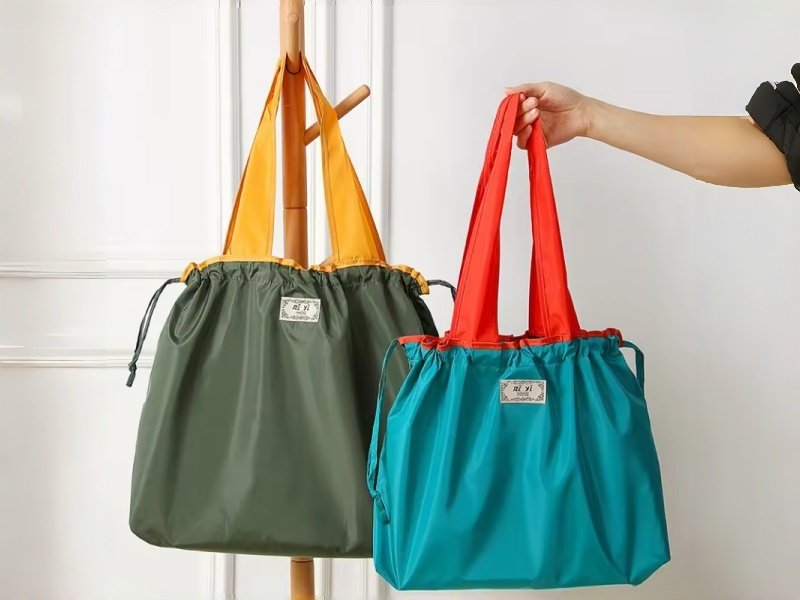
The phrase “nylon bag” sounds simple until a project reaches sampling. A lightweight fashion tote, technical backpack, travel duffel and heavy-duty tool bag may all use nylon, yet the correct fabric for each can be completely different. Denier, yarn type, weave, coating, surface finish, backing and reinforcement all influence weight, abrasion resistance, tear behavior, structure, appearance and price.
For custom bags, there is no single “best nylon.” Lightweight 210D or 420D fabrics work well where low weight and flexibility matter; 500D–600D constructions often provide a useful balance for backpacks and travel goods; 1000D and ballistic constructions are better suited to high-wear or heavy-load applications. The right choice depends on use, load, hand feel, waterproofing, appearance, quantity and target cost.
That distinction matters commercially. A development team once asking only for “strong black nylon” can easily end up comparing three samples that look similar in photographs but behave completely differently in the hand. One feels soft and premium. One stands almost by itself. One survives abrasion better but makes the finished bag unnecessarily heavy. Material selection is where many bag projects quietly succeed—or become expensive before the first production order begins.
What Types of Nylon Fabric Are Used for Bags?
Nylon used in bags is not one single fabric. It is a large family of textiles that can differ in polymer type, yarn thickness, yarn strength, weave construction, fabric density, coating, surface finish and final hand feel. A soft nylon shoulder bag, a lightweight packable tote and a heavy-duty equipment backpack may all be described as “nylon,” yet their actual fabrics can behave very differently.
For custom bag development, the most useful way to identify nylon is through several specifications together: fiber type + denier + weave + fabric weight + coating + finish.
For example, “600D nylon” still leaves important information unknown. A 600D plain weave, 600D ripstop and 600D Oxford construction may differ in texture, tear behavior, stiffness and appearance. Adding PU backing can change water resistance and hand feel again. Two fabrics carrying the same denier description can therefore produce noticeably different finished bags.
The main nylon constructions used for bags include lightweight plain nylon, Oxford nylon, ripstop nylon, high-tenacity nylon, ballistic nylon, branded performance fabrics such as CORDURA®, coated nylon and recycled nylon. The right choice depends on the expected load, abrasion level, desired weight, visual character, water resistance, sewing construction and target cost.
| Nylon Type | Common Denier | Typical Character | Often Used For |
|---|---|---|---|
| Lightweight Plain Nylon | 70D–210D | Soft, thin, foldable | Linings, packable bags, pouches |
| Ripstop Nylon | 210D–500D+ | Grid reinforcement, light for its strength | Outdoor bags, daypacks, travel accessories |
| Oxford Nylon | 210D–1000D+ | Practical woven texture, versatile | Backpacks, duffels, utility bags |
| High-Tenacity Nylon | 420D–1000D | Strong yarn, good abrasion performance | Premium backpacks, travel bags |
| Ballistic Nylon | 840D–1680D+ | Dense, heavy, structured | Equipment bags, luggage, work bags |
| Recycled Nylon | 210D–1000D+ | Recycled-content alternative | Lifestyle, travel and outdoor collections |
These figures are practical selection references rather than fixed industry limits. A fabric should always be judged by its full specification and physical performance, not by the denier number printed on a swatch card.
What Is Nylon Fabric for Bags?
Nylon is a synthetic polyamide textile valued for its combination of strength, flexibility and relatively low weight. The two commonly discussed polymer families are nylon 6 and nylon 6,6. Both can be made into durable bag fabrics, while high-tenacity nylon 6,6 is especially well known in technical textiles where abrasion and strength matter.
The fiber alone does not determine how a bag will perform.
Nylon yarn can be woven into plain, Oxford, ripstop or basket constructions. It can then be finished with PU, TPU, DWR treatments or other backing systems. The same basic nylon fiber can therefore become a very soft fashion textile or a dense material used for rugged equipment.
In practical development, a complete material description may look like:
420D nylon ripstop, PU backed, matte black
rather than simply:
nylon fabric
That extra information matters because the coating, weave and yarn structure influence how the fabric cuts, sews, folds, prints and performs after repeated use.
What Is the History of Nylon Bag Fabric?
Nylon was developed in the 1930s and became commercially important during the following decades because it offered strong synthetic fibers at significantly lower weight than many traditional materials.
Early applications included stockings, parachutes, ropes and military equipment. Its strength-to-weight characteristics later made it useful for luggage, backpacks, outdoor equipment and technical soft goods.
As bag design became more specialized, nylon fabrics also became more specialized.
Basic woven nylon was followed by stronger high-tenacity yarns, ripstop grids, dense ballistic constructions and coated fabrics. Outdoor equipment pushed development toward lighter textiles with controlled tear behavior, while luggage and professional equipment favored dense abrasion-resistant materials.
Modern nylon bags now cover both ends of the design spectrum. A fashion shoulder bag may use a smooth, soft, fine-denier nylon, while an equipment case may use thick ballistic material with heavy webbing and reinforcement.
This history explains why “nylon” no longer describes one performance level. The fiber family is only the beginning of the specification.
Which Denier Is Best: 210D vs 420D vs 600D vs 1000D?
Denier describes yarn linear density. One denier equals one gram per 9,000 meters of yarn. Higher numbers generally indicate thicker yarns, but they do not directly measure total fabric strength.
For bags, each denier level tends to suit a different use.
210D nylon is light and flexible. It is commonly considered for linings, internal pockets, foldable products, lightweight drawstring bags and travel organizers.
420D nylon provides more body while remaining relatively light. It is a useful option for daypacks, sports bags, lightweight travel bags and outdoor accessories.
600D nylon sits in a practical middle area for many backpacks, duffels and utility products when more abrasion resistance and structure are wanted without moving into very heavy material.
1000D nylon is significantly more substantial and is often selected for work bags, technical backpacks, equipment carriers and high-wear panels.
| Denier | Relative Weight | Structure | Practical Direction |
|---|---|---|---|
| 210D | Low | Soft | Lining, foldable, light-duty |
| 420D | Low–Medium | Flexible | Daypacks, travel, outdoor |
| 600D | Medium | Moderate | Backpacks, duffels, utility |
| 1000D | High | Firm | Work, technical, heavy-use |
Higher denier is not automatically the better choice. A 1000D commuter backpack can become unnecessarily heavy, while a well-designed 420D technical fabric may already provide enough strength.
The smarter decision is to match denier to actual wear conditions.
Ripstop vs Ballistic Nylon: What Is the Difference?
Ripstop and ballistic nylon solve different durability problems.
Ripstop uses thicker reinforcement yarns woven into the base fabric at regular intervals. These yarns create the familiar square or diamond grid visible on many outdoor textiles. If a small tear begins, the stronger grid helps slow its spread.
This construction makes ripstop attractive for products where low weight and tear control are both important, such as hiking bags, lightweight backpacks, stuff sacks, outdoor organizers and packable travel products.
Ballistic nylon uses a much denser construction, traditionally based on strong nylon yarn arranged in a basket-style weave. It usually feels thicker, heavier and more structured.
Ballistic fabric is particularly useful where repeated abrasion is a bigger concern than minimum weight. Luggage bases, equipment bags, professional work bags and high-wear backpack panels are common examples.
The practical difference can be simplified like this:
Ripstop = weight efficiency + tear control
Ballistic = abrasion resistance + dense structure
A hiking accessory does not automatically become better by replacing ripstop with ballistic nylon. The added weight may create more disadvantages than benefits.
Ballistic vs Standard Nylon: How Do They Compare?
Standard woven nylon is generally lighter and more flexible than ballistic nylon. It can be produced in many deniers and surface finishes, making it suitable for everyday backpacks, fashion bags, totes and travel accessories.
Ballistic nylon is built for more demanding wear conditions. Its dense weave increases body and resistance to surface abrasion but also adds weight and bulk.
Consider a 35-liter travel backpack.
Using ballistic material across every panel may provide strong abrasion performance, but it can also make the empty bag noticeably heavier. A more efficient design might use a lighter high-tenacity nylon for the main body and ballistic material only on the bottom and high-contact panels.
This mixed-material approach is common in thoughtful product development because abrasion rarely occurs equally across the entire bag.
Another important issue is terminology. “1680D” and “ballistic” are not automatically the same thing. A high denier describes yarn size, while ballistic refers to a particular dense construction.
When evaluating fabrics, ask for:
fiber composition, denier, weave construction, fabric weight, coating and physical swatch.
That gives a much clearer picture than a single marketing name.
Cordura-Type vs Oxford Nylon: Which Is Better?
Oxford and CORDURA® should not be treated as two directly equivalent categories.
Oxford describes a woven fabric construction. It may be produced using nylon or polyester and can appear in many weights, deniers and coatings. It is widely used for backpacks, sports bags, travel bags, work bags and utility products because it is versatile and easy to adapt to different cost and performance levels.
CORDURA® is a registered performance-fabric brand. Its fabric families include products made with high-tenacity nylon and other specialized textile technologies. When a project specifically requires genuine CORDURA®, material identity and sourcing documentation should be confirmed.
Generic “Cordura-type” fabric usually refers to a textile designed to deliver a similar rugged appearance or performance direction without being presented as genuine branded CORDURA®.
The choice depends on what the product actually needs.
For a practical everyday backpack, a well-selected Oxford nylon may provide sufficient durability at a more controlled cost.
For premium outdoor equipment or technical products where recognized performance materials form part of the product value, verified branded fabric may be more appropriate.
The name alone should never decide the material. Test hand feel, abrasion needs, weight, coating and sewing behavior before approval.
Can You Use Recycled Nylon for Custom Bags?
Recycled nylon can be used for backpacks, totes, travel bags, accessories and outdoor products when the selected textile meets the required appearance and performance.
It should be evaluated with the same discipline as virgin nylon.
Important details include:
fiber source, denier, yarn strength, weave, fabric weight, coating, colorfastness, abrasion resistance and hand feel.
Recycled content does not automatically make a textile lighter, softer or weaker. Performance depends on how the yarn and fabric are engineered.
Documentation is especially important when environmental claims will appear on product packaging or retail communication.
If a project intends to state that the bag contains recycled nylon, the exact fabric source and applicable supporting documents should be confirmed before those claims are printed.
Recycled nylon can also be combined with conventional materials within one product. For example, the main shell may use recycled nylon while zippers, webbing, lining or reinforcement use different materials.
This means the environmental description should accurately reflect the actual construction rather than implying that every component is recycled.
For a brand collection, material traceability is just as important as the sustainability message itself.
Nylon vs Polyester: Which Is Better for Bags?
Nylon and polyester are both widely used synthetic textiles, but they offer different advantages.
Nylon is often selected when abrasion resistance, flexibility and a technical hand feel are important. Premium nylon can also create a smoother or more refined surface that works well for high-end backpacks and lifestyle products.
Polyester is widely used because it offers strong dimensional stability, good color performance and broad availability across many price levels. It is especially common in promotional, sports, school and utility bags.
| Feature | Nylon | Polyester |
|---|---|---|
| Abrasion Performance | Often strong in high-tenacity grades | Good with suitable construction |
| Hand Feel | Can feel smooth and technical | Very broad variety |
| Weight Efficiency | Often good | Good |
| Color Stability | Depends on dye and finish | Often very stable |
| Technical Applications | Very common | Very common |
| Cost | Can be higher in premium grades | Often easier to control |
A meaningful comparison should use equivalent specifications.
Comparing 420D nylon with 600D polyester does not reveal whether one fiber is inherently better because denier, weave and weight are already different.
A fair comparison might examine fabrics with similar finished weight, weave density and coating.
For a premium urban backpack, nylon may provide the preferred hand feel and abrasion performance. For a large promotional duffel, polyester may achieve the required function more economically.
The strongest material decision is therefore not “nylon is better” or “polyester is better.” It is choosing the textile whose weight, durability, appearance, coating and cost match the intended product.
One final detail is especially important when reviewing nylon swatches: never judge a fabric only while it is lying flat on a table.
Fold it. Scrunch it. Rub the face. Bend the coated side. Hold it against light. Place it beside the intended zipper and webbing. Sew a small test seam if necessary.
A fabric that looks excellent as a 10 × 10 cm swatch may behave very differently once it becomes a backpack with curved seams, padding, pockets and stress areas.
That is why the most useful nylon specification combines measurable data with a physical sample. Denier tells you about yarn size. Weave explains how the yarns are organized. Coating affects protection and feel. Fabric weight shows how much textile is actually present. The finished prototype then proves whether all of those decisions work together in a real bag.
Which Nylon Fabric Is Best for Different Bags?

The best nylon depends on how the finished bag will be carried, loaded, folded, stored and exposed to wear. Lightweight 210D–420D fabrics suit packable and soft products, 420D–600D constructions work well for many everyday backpacks and travel bags, while 1000D and ballistic nylon are better suited to repeated abrasion and heavy equipment. Denier matters, but weave, coating, fabric weight and reinforcement matter just as much.
Choosing the strongest available textile is rarely the smartest approach. A nylon shoulder bag can become too stiff if the fabric is over-specified. A commuter backpack can become unnecessarily heavy. At the other extreme, a work bag made from material that is too light may wear through at the bottom or distort around the handles long before the rest of the product looks old.
A useful starting principle is:
Choose enough material for the real use condition, then strengthen the areas where wear and load are concentrated.
This usually creates a better result than increasing the denier of every panel.
| Bag Type | Practical Nylon Direction | Main Priority |
|---|---|---|
| Packable tote | 210D–420D plain or ripstop | Low weight, compact folding |
| Everyday tote | 420D–600D nylon | Shape, appearance, repeated use |
| Commuter backpack | 420D–600D dense nylon | Weight, abrasion, clean surface |
| Travel backpack | 500D–1000D | Repeated handling, structure |
| Fashion shoulder bag | Fine-denier soft nylon | Drape, hand feel, visual finish |
| Outdoor daypack | 210D–500D ripstop | Weight, tear control |
| Tool bag | 600D–1000D+ | Load, abrasion, reinforcement |
| Tactical-style bag | 600D–1000D / ballistic | Webbing support, heavy use |
| Luggage wear panel | Ballistic / high-tenacity nylon | Maximum abrasion resistance |
These are starting directions rather than fixed specifications. A dense 420D high-tenacity nylon can outperform a basic heavier fabric in some conditions, while a 1000D fabric may still fail if the seam, webbing or handle attachment is poorly designed.
The bag should therefore be treated as a complete structure rather than a piece of fabric with zippers attached to it.
Which Nylon Is Best for Backpacks?
For everyday backpacks, 420D–600D nylon is often one of the most balanced areas to explore. It can provide enough body and abrasion resistance for daily use without creating the weight and stiffness associated with heavier technical fabrics.
A small commuter backpack carrying a laptop, charger and personal items may work well in 420D or 500D nylon. A larger backpack carrying shoes, clothing and electronics may benefit from 600D or a stronger high-tenacity construction.
The most effective backpack does not necessarily use one textile throughout.
A useful construction might be:
420D–500D main body + heavier bottom + reinforced strap attachment
This concentrates durability where it is actually needed.
Backpack wear usually occurs first around:
- the bottom;
- lower corners;
- shoulder-strap attachment;
- top handle;
- zipper ends;
- side pockets.
These areas can be reinforced with heavier nylon, additional layers, webbing or bartacks instead of increasing the entire shell weight.
Fabric surface also matters. A smooth dense nylon can give an urban backpack a cleaner appearance, while visible ripstop grids create a more technical outdoor character.
When comparing backpack materials, always look at finished weight as well as durability. A strong bag should not feel unnecessarily heavy before anything is placed inside it.
Which Denier Is Best for Heavy-Duty Backpacks?
Heavy-duty backpacks commonly move toward 600D, 840D, 1000D or ballistic constructions, especially when they carry tools, professional equipment or dense contents.
1000D nylon is useful where the shell experiences frequent abrasion. It is also more suitable for products that need a firm body or must support extensive webbing and reinforcement.
However, covering a large 40–50 liter backpack entirely in 1000D fabric can add substantial empty weight.
Consider three possible constructions:
| Construction | Main Advantage | Trade-Off |
|---|---|---|
| 600D throughout | Balanced weight | Less abrasion protection |
| 1000D throughout | Maximum shell durability | Heavier and stiffer |
| 600D body + 1000D wear zones | Good balance | More material coordination |
For many heavy-use designs, the third approach is the most efficient.
If a backpack is expected to carry 15–20 kg, the shell textile is only one part of the load system. Shoulder straps, handle anchors, side seams and base construction need to carry the forces created by that weight.
A 1000D outer layer cannot correct:
- narrow webbing;
- shallow handle attachment;
- insufficient seam allowance;
- weak thread;
- missing reinforcement.
This is why heavy-duty performance should be reviewed as a combination of textile, webbing, sewing and structural support.
Which Nylon Is Best for Tote Bags?
Nylon totes usually perform best with light to medium-weight fabric, because flexibility and carrying comfort are often more important than maximum shell strength.
A foldable shopping tote may work well in 210D or 420D nylon. A more structured retail tote can move toward 420D–600D, especially when it includes a lining, zipper, pocket or reinforced handles.
For totes, handle construction is often more important than simply increasing fabric weight.
Imagine a large tote designed to carry books.
The stress concentrates where the handles meet the body. Increasing the shell from 420D to 600D may help, but deeper handle attachment and stronger stitching can have a greater effect on real carrying performance.
Useful details include:
wide handles + deeper attachment + reinforced top hem + box-and-cross stitching
Fashion-oriented nylon totes may require an entirely different approach.
A soft matte nylon with gentle drape can create a more refined appearance than a rigid heavy fabric. If the product is intended to collapse naturally when empty, too much coating or denier can make the silhouette look wrong.
For foldable totes, packing volume also matters. Thick backing and heavy reinforcement can make the product difficult to fold into a compact pouch.
Tote development should therefore balance:
load + handle strength + hand feel + foldability + visual structure.
Which Nylon Is Best for Travel Bags?
Travel bags face more repeated contact than most daily handbags. They are placed on floors, pushed under seats, packed into trunks and lifted repeatedly while full.
For that reason, 420D–1000D nylon is a practical area to consider, depending on size and use.
A 25–30 liter weekend duffel can often use 420D–600D nylon with reinforcement underneath. A large travel backpack or equipment-style duffel may justify 840D, 1000D or ballistic material at high-wear areas.
The highest-abrasion zones are usually:
- base panel;
- bottom corners;
- handle attachment;
- shoulder-strap anchor;
- external pocket edges.
Those zones can use stronger material while the main body remains lighter.
This matters because travel products are carried before and after they are packed. Every gram added to the empty bag becomes part of the weight allowance.
Water protection is another important consideration.
A PU-backed nylon can be suitable for everyday rain and spills. If the product is expected to handle frequent wet conditions, stronger coatings, protected zippers and seam construction may be required.
The word “water-resistant” should describe the complete bag rather than only the face fabric.
A coated body with an exposed zipper and untreated seams can still allow water inside.
Which Nylon Is Best for Fashion Bags?
Fashion nylon should be selected by surface, drape and hand feel first, then checked for durability.
A crescent bag, padded shoulder bag or soft crossbody does not need the same textile character as luggage or outdoor gear.
Finer, smooth nylon can create:
- soft drape;
- subtle sheen;
- matte texture;
- lightweight structure;
- clean quilting.
The visual direction is often more important than the highest possible abrasion figure.
For example, a dense 1000D textile may survive harsh wear, but it can make a small shoulder bag feel industrial rather than refined.
A softer fabric combined with lining and padding may produce a much stronger commercial result.
Fashion nylon should be reviewed together with:
| Element | Effect on the Finished Bag |
|---|---|
| Outer nylon | Texture and drape |
| Lining | Interior finish and body |
| Foam | Softness and volume |
| Quilting | Shape and visual depth |
| Hardware | Perceived quality |
| Zipper tape | Color coordination |
Color must also be approved on the actual textile.
Black nylon can appear deep matte, blue-black, gray-black or glossy depending on yarn and surface finish. Dark navy and olive can change significantly under different lighting.
Physical swatches are therefore especially important for fashion development.
Which Nylon Is Best for Outdoor Bags?
Outdoor bags often benefit from ripstop or high-tenacity nylon because weight and tear resistance must be considered together.
Lightweight outdoor pouches and packable products may use 210D–420D ripstop. General daypacks commonly move into 420D–500D constructions. Larger packs can combine a lighter body with heavier material on the bottom and lower sides.
The strongest outdoor product is not necessarily the one with the thickest shell.
Every extra gram has to be carried.
A useful outdoor design therefore places strength according to exposure.
| Exposure | Practical Material Direction |
|---|---|
| Branches / tearing | Ripstop |
| Ground abrasion | Dense plain or heavier nylon |
| Rain | Coated nylon |
| High load | Reinforcement + strong webbing |
| Repeated folding | Flexible lightweight nylon |
Ripstop is especially valuable when a small puncture or cut could spread across a large panel.
However, ripstop does not automatically mean superior abrasion performance. A lightweight ripstop can control a tear very effectively but still wear faster than dense 600D or 1000D fabric when rubbed repeatedly on rough ground.
Outdoor products therefore benefit from mixed-material placement.
A backpack might use:
420D ripstop body + 600D lower panels + reinforced base
rather than one heavy fabric everywhere.
Which Nylon Is Best for Tool and Tactical Bags?
Tool and tactical-style bags usually need dense, abrasion-resistant nylon or Oxford constructions, because hard objects create stress from both inside and outside the bag.
600D, 900D, 1000D and 1680D constructions are often considered depending on load and expected service conditions.
Jundong’s established functional bag material scope, for example, includes 600D, 900D, 1000D and 1680D Oxford together with nylon, coated fabrics, foam, webbing and metal components for tool-oriented products.
A tool bag carrying pliers, drills or metal parts needs more than a thick shell.
Useful construction elements include:
- reinforced base;
- internal PE board or EVA support;
- heavy webbing;
- strong zipper;
- bartack reinforcement;
- protected pocket edges;
- strong metal or molded hardware.
The same principle applies to tactical-style products.
If the design includes extensive MOLLE webbing, loops and attachment areas, the outer textile must provide enough support so that these features do not distort the bag when loaded.
However, extremely stiff fabric can reduce comfort in a wearable pack.
The correct specification therefore depends on whether the product is primarily:
carried, worn, dragged, stacked or loaded with hard equipment.
A tool tote used on a worksite and a tactical waist pack may both use 1000D nylon, but their structural requirements are completely different.
When Is Lightweight Ripstop Nylon Better?
Lightweight ripstop is often the better choice when the product needs to be compact, light and resistant to tear propagation.
Its reinforcing grid allows a relatively light base textile to gain additional control against spreading tears.
It is especially useful for:
- packable totes;
- travel organizers;
- stuff sacks;
- shoe bags;
- lightweight backpacks;
- rain covers;
- outdoor pouches.
A 210D or 420D ripstop product can fold into a much smaller volume than a heavy ballistic construction.
This makes it valuable for travel products where the bag may need to disappear into luggage when not in use.
But ripstop is not the automatic choice for every lightweight bag.
If the product rubs constantly against rough surfaces, a denser plain weave can perform better even without a visible reinforcement grid.
Think about the likely failure mode:
Tearing risk → ripstop
Abrasion risk → denser fabric
Heavy load → structural reinforcement
Soft appearance → finer nylon
Wet use → suitable coating and seam design
This simple distinction prevents many material mistakes.
For larger collections, it is often worth comparing three physical material directions before committing to the sample.
For example:
| Option | Material | Likely Result |
|---|---|---|
| A | 420D ripstop | Lightest, technical appearance |
| B | 600D nylon | Balanced structure and durability |
| C | 1000D nylon | Heavier, firmer, stronger wear resistance |
Handle each textile rather than comparing specifications only on paper.
Fold it several times.
Rub the surface.
Check the backing.
Hold it next to the selected zipper and webbing.
Bend it around a curved seam.
If possible, sew a small sample.
A fabric that looks excellent as a flat swatch can behave very differently once it wraps around foam, turns through a seam or is pulled by a loaded shoulder strap.
Material weight also becomes meaningful at volume.
Suppose one textile makes the finished backpack approximately 120 g heavier than another.
Across 10,000 bags, that represents about:
120 g × 10,000 = 1,200 kg
of additional product weight before individual packing and export cartons are added.
That difference can affect freight as well as carrying comfort.
This does not mean the lighter fabric is always better. If the heavier option extends the product’s useful life or is necessary for the intended load, the additional weight can be justified.
The purpose of the comparison is to understand what is being gained in exchange for that extra material.
The most effective nylon bags rarely use one specification to solve every problem.
A strong design may use a lighter textile on broad body panels, a tougher material at the bottom, reinforcement behind handles, webbing at load paths, foam where protection is needed and lining where the interior requires a cleaner finish.
That approach creates durability through engineering rather than simply through thickness.
When evaluating material options, start with five practical details: what the bag carries, where it experiences wear, how often it is used, how it should feel in the hand and how much empty weight is acceptable.
Once those are clear, selecting between 210D, 420D, 600D, 1000D, ripstop or ballistic nylon becomes far more precise.
How Do Denier, Weave and Coating Affect Performance?
Denier, weave and coating work together to determine how nylon behaves once it becomes a finished bag. Denier indicates yarn size, weave controls how those yarns share load and resist damage, while coating changes water resistance, stiffness, surface feel and weight. Two fabrics both labeled “600D nylon” can therefore perform very differently if one is tightly woven and PU-backed while the other uses a looser construction with a heavier coating.
This is why nylon should never be selected by denier alone.
A useful material specification normally combines:
fiber type + denier + weave + fabric weight + coating + finish + intended use
For example:
420D nylon ripstop, PU-backed, matte finish
tells far more than:
420D nylon
The first description starts to explain how the material may feel, fold, resist tearing and handle moisture. The second only describes yarn linear density.
A practical comparison looks like this:
| Variable | What It Mainly Influences |
|---|---|
| Denier | Yarn thickness and potential fabric body |
| Fabric weight | Actual amount of material per area |
| Weave | Tear behavior, abrasion resistance, texture |
| Yarn quality | Strength and long-term wear |
| Coating | Water resistance, stiffness, weight |
| Surface finish | Hand feel, appearance, print behavior |
| Construction | How the material performs in the finished bag |
The most reliable material decisions come from understanding how these variables interact rather than trying to maximize each one separately.
What Does Denier Mean in Nylon Fabric?
Denier is a measurement of yarn linear density. One denier means that 9,000 meters of yarn weighs one gram.
A 210D yarn is therefore much finer than a 1000D yarn.
In bag textiles, higher denier usually creates a thicker, more substantial yarn and often contributes to a heavier, firmer textile. However, denier does not directly tell you the finished fabric weight, strength or abrasion life.
That distinction is important.
Two 600D nylon fabrics can have:
different weave density, different yarn quality, different coating thickness and different finished grams per square meter.
As a result, one may feel firm and dense while the other feels relatively light and flexible.
Denier should therefore be read as one line in the specification rather than a complete quality grade.
A useful physical comparison between common categories is:
| Denier | General Feel | Common Direction |
|---|---|---|
| 210D | Light, flexible | Linings, organizers, packable items |
| 420D | Light-medium | Daypacks, totes, outdoor accessories |
| 600D | Medium | Backpacks, duffels, utility bags |
| 1000D | Heavy, firm | Work bags, equipment bags |
| 1680D | Very substantial | High-wear panels, luggage, heavy-duty use |
These are practical tendencies rather than fixed rules.
Is Higher Denier Always More Durable?
No. A higher denier can increase material mass and abrasion potential, but durability depends on much more than yarn thickness.
Real-world performance also depends on:
yarn strength, weave density, coating adhesion, seam design, reinforcement and the kind of damage the bag receives.
Consider a travel backpack.
A 1000D shell may tolerate rough surface contact better than a lightweight 420D fabric, but using 1000D across the entire bag can add unnecessary weight.
A more efficient construction may use:
500D or 600D main body + 1000D bottom panel + reinforced shoulder-strap anchors
That design places heavier material where abrasion and load are concentrated.
The same principle applies to handles.
A heavy fabric does not compensate for weak handle attachment.
If a bag carries 15 kg, the load travels through the handle or shoulder strap into a small area of the shell. Without enough seam allowance, reinforcement or bartacking, failure can occur even though the body material itself is strong.
Higher denier is therefore useful when it solves a real wear problem.
It becomes inefficient when it only adds weight.
How Does Weave Affect Abrasion and Tear Strength?
Weave describes how warp and weft yarns cross each other. That pattern influences surface texture, flexibility, tear behavior and abrasion resistance.
Plain weave is stable and widely used. It provides an even surface and can work well for everyday backpacks, totes and travel products.
Ripstop adds stronger reinforcement yarns at regular intervals, creating a visible grid. When a cut or puncture begins, that grid helps slow further tearing.
Ballistic constructions are typically denser and often use basket-style weaving. The resulting textile usually feels thicker and more substantial and is well suited to repeated abrasion.
These structures solve different problems.
| Damage Type | Fabric Direction Often Considered |
|---|---|
| Small cuts and tear propagation | Ripstop |
| Repeated rubbing | Dense plain weave |
| Heavy abrasion | Ballistic-style construction |
| Lightweight use | Fine plain or ripstop |
| Strong structure | Dense woven nylon |
A lightweight ripstop can resist tear propagation very well yet still wear faster than a heavy dense fabric when dragged repeatedly across concrete.
Conversely, ballistic nylon may resist abrasion extremely well but be unnecessarily heavy for a packable outdoor accessory.
Weave should therefore match the expected damage mechanism.
PU vs PVC vs TPU Coatings: What Are the Differences?
PU, PVC and TPU are commonly discussed when nylon needs additional water resistance or surface control, but they do not create the same result.
PU coating is widely used because it can improve water resistance while keeping the textile relatively flexible and light.
PVC coating generally creates a heavier and firmer layer. It can work well for rugged or cost-sensitive applications where weight is less critical.
TPU lamination or coating is often selected where flexibility, stronger waterproof performance and repeated bending are important.
A simplified comparison is:
| Feature | PU | PVC | TPU |
|---|---|---|---|
| Weight | Usually lighter | Usually heavier | Moderate |
| Flexibility | Good | Moderate | Very good |
| Hand feel | Soft to firm | Firmer | Flexible |
| Water resistance | Good when properly applied | Strong | Strong |
| Folding performance | Good | Can feel stiff | Very good |
| Common direction | Backpacks, everyday bags | Work and utility uses | Technical and waterproof uses |
Coating thickness matters as much as coating type.
A light PU backing can preserve drape.
A heavy PU layer can make the same nylon noticeably stiffer.
For this reason, “PU-coated nylon” is still not a complete description.
Coating weight, application quality and adhesion should be checked on the actual textile.
Is Nylon Waterproof or Water-Resistant?
Nylon should not automatically be described as waterproof.
An untreated woven nylon may resist a few drops because synthetic fibers do not absorb water in the same way as some natural fibers, but water can still pass through gaps in the weave.
Coating improves resistance, but finished-bag construction matters just as much.
Water can enter through:
seams, needle holes, zipper openings, binding and panel joints.
This creates an important difference between:
water-resistant fabric
and:
waterproof bag
A backpack made from coated nylon can be suitable for ordinary rain while still allowing moisture through stitched seams.
A true waterproof product requires stronger control of:
fabric, seams, closure design and often seam sealing or welding.
Before selecting the fabric, define the actual exposure:
light splash, short rain, prolonged rain, wet-ground contact or water containment.
Each level demands a different construction.
Saying “waterproof nylon” without defining the intended condition often creates unrealistic expectations.
How Do You Test Nylon Fabric for Waterproof Performance?
Water performance should be tested according to the claim the finished product needs to support.
A simple early-stage check may involve spraying or wetting a swatch to see whether water beads, darkens the face fabric or penetrates quickly.
That is useful for comparison, but it is not a substitute for controlled testing when measurable performance is required.
Hydrostatic-pressure testing evaluates how much water pressure the fabric can resist before penetration occurs.
A typical test gradually increases water pressure against the textile and records the level at which leakage is observed.
Surface wetting tests, by contrast, focus more on how water behaves on the face of the fabric.
These tests measure different things.
| Requirement | Useful Evaluation Direction |
|---|---|
| Rain beading | Surface wetting |
| Coating resistance | Hydrostatic pressure |
| Seam leakage | Finished seam exposure |
| Waterproof bag | Complete product evaluation |
A fabric can achieve a strong hydrostatic result but still produce a leaking backpack if the seams are untreated.
This is why a meaningful test plan should include the finished product when water protection is an important selling feature.
How Does Coating Affect Hand Feel and Weight?
Coating changes far more than water performance.
It can change how the textile:
bends, folds, sounds, recovers and drapes.
A lightly coated nylon may remain soft enough for a fashion shoulder bag.
The same base textile with a heavier coating can feel much firmer and may hold shape better in a backpack.
This has direct consequences for the finished design.
If the coating is too heavy:
the bag can feel stiff, noisy or plastic-like.
If it is too light:
the material may not provide enough structure or moisture protection.
Coating also adds mass.
Suppose two materials use the same base nylon but one has an additional coating that adds 40 g/m².
If a backpack consumes roughly 1.2 m² of outer fabric, that coating adds:
40 g/m² × 1.2 m² = 48 g
per bag before any other components are counted.
Across 10,000 units, that becomes approximately:
480 kg
of additional finished product weight.
This does not mean heavier coating is bad. It means the extra weight should provide a real functional benefit.
What Makes Nylon Soft, Crisp or Structured?
The character of nylon is created by several variables working together.
A soft textile may use finer yarn, lower fabric density and limited backing.
A crisp textile may combine denser weaving with finishing or coating.
A structured bag may use medium-weight nylon together with foam and lining rather than relying on very heavy outer cloth.
The main contributors include:
yarn fineness, weave density, coating, calendaring, surface treatment, backing, lining and internal support.
This is why two bags using “420D nylon” can feel completely different.
One may collapse when placed on a table.
Another may stand almost upright.
The difference may come not only from the nylon but also from:
foam, EVA, EPE, PE board or other reinforcement.
For a fashion bag, soft drape may be desirable.
For a commuter backpack, moderate body can help the product maintain a clean silhouette.
For a tool bag, stronger structural support may be essential.
The desired hand feel should therefore be defined before the textile is approved.
Words such as:
soft, silky, crisp, firm, structured, matte, smooth
are useful only when they are supported by physical swatches.
How Do You Balance Weight, Durability and Price?
The most effective specification does not maximize durability everywhere. It places enough strength where the bag actually needs it.
Consider three ways to build the same travel backpack:
| Construction | Durability | Empty Weight | Cost Direction |
|---|---|---|---|
| 420D throughout | Moderate | Low | Lower |
| 1000D throughout | High | High | Higher |
| 500D body + 1000D base | High where needed | Medium | Balanced |
The third option often delivers the strongest overall trade-off.
It protects high-wear areas without making every panel unnecessarily heavy.
The same logic applies to coating.
A lightly coated daily commuter bag may provide enough protection for occasional rain.
A heavier waterproof construction would add cost and weight without creating meaningful value if the product is never used in prolonged wet conditions.
Before increasing any specification, ask what problem the increase solves.
If moving from 420D to 1000D adds 150 g to the finished bag, that weight should deliver a durability benefit that the intended use actually requires.
At 20,000 units:
150 g × 20,000 = 3,000 kg
of additional product weight.
That can influence carrying comfort, packing density and transport.
Material efficiency matters just as much in small fashion products.
A mini shoulder bag does not become more premium simply because the textile is thicker.
In some cases, a smoother finer nylon with better finish and well-selected hardware creates a stronger product impression than a heavy technical material.
The best material decision therefore begins with real use conditions.
Define:
expected load, abrasion areas, desired empty weight, exposure to water, hand feel and expected life.
Then choose the denier.
After that, select the weave.
Then decide whether coating is necessary and how much.
Finally, test the complete construction rather than judging the textile in isolation.
A strong nylon bag is rarely the result of choosing the highest denier, densest weave and heaviest coating at the same time. It is the result of using the right amount of material, strength and protection in the right places.
How Does the Custom Nylon Bag Process Work?
A custom nylon bag moves through a sequence of decisions that turns an idea into a repeatable product: define the use, select the fabric, confirm the structure, build a sample, test the details, approve the final specification, prepare materials, produce the order, inspect the goods, and complete packing for shipment. The strongest process removes uncertainty early, because changes made after cutting or sewing usually cost more time and create more waste.
The process does not have to begin with a complete technical pack. A reference photo, sketch, existing sample, design file, logo, target size, material idea, quantity and packing direction can be enough to start. What matters is turning those references into measurable requirements before bulk production.
A practical development sequence looks like this:
| Stage | Main Decision |
|---|---|
| Project review | Use, size, quantity, target cost, deadline |
| Material review | Nylon type, denier, weave, coating, color |
| Structure review | Compartments, lining, padding, straps, reinforcement |
| Branding review | Logo method, size, position, color |
| Sample development | Shape, function, sewing, hardware, packing |
| Sample approval | Final dimensions, materials and visual details |
| Production preparation | Material quantities, artwork, labels, packing rules |
| Bulk production | Cutting, branding, sewing, assembly |
| Quality control | Material, size, logo, function, packing |
| Shipment preparation | Cartons, labels, quantities, documents |
The most expensive problems are often not dramatic design failures. They are small details confirmed too late: the wrong zipper tape color, a handle two centimeters too short, a coating that makes the fabric too stiff, a barcode placed on the wrong bag, or a logo that looks good on a screen but disappears into a textured ripstop surface.
A useful rule is to separate decisions into three groups. Product decisions include dimensions, fabric, structure and function. Visual decisions include color, logo, hardware finish and labels. Delivery decisions include packing, carton marks, SKU rules and destination requirements. All three groups should be sufficiently stable before bulk work begins. A bag can be technically correct and still create receiving problems if the wrong barcode is applied or several colors are mixed into the wrong cartons.
For more developed programs, it also helps to define what is allowed to vary. Fabric shade, finished dimensions and logo placement may each need an agreed tolerance. Without this, one team may consider a small difference acceptable while another sees it as a defect.
How Does a Factory Select Nylon Fabric?
Nylon selection should begin with the intended use rather than with a familiar denier number.
A useful review starts with six practical details: expected load, abrasion exposure, desired empty weight, water protection, hand feel and target cost. From there, denier, weave and coating can be narrowed down.
For example, a lightweight commuter backpack may start with 420D–600D nylon, while a tool backpack may need denser 600D–1000D material plus stronger webbing and reinforced base panels. A soft fashion shoulder bag may use a finer nylon because drape and surface appearance matter more than maximum abrasion resistance.
The textile should also be checked with the rest of the construction. Zippers, lining, foam, webbing, buckles and hardware need to suit the weight and structure of the body fabric.
Before cutting, material control should include more than the fabric name. Color, thickness, texture, coating condition, hand feel, zipper specification, webbing width and hardware finish all influence the final result.
What Information Is Needed Before a Sample?
The first sample becomes much more useful when the basic commercial and functional direction is clear.
The most helpful starting information includes the product reference, finished dimensions, intended use, material preference, color, logo artwork, quantity, packing method, destination and required delivery date.
If the exact nylon is unknown, describe the performance instead.
“Lightweight, matte, suitable for daily commuting and normal rain” gives more useful direction than simply requesting “600D nylon.”
A target price can also help narrow unnecessary complexity. It can guide choices such as fabric weight, pocket count, hardware and packing without automatically reducing the essential durability of the bag.
Before sampling, unresolved details should be identified clearly. A sample made while size, fabric and logo position are still changing is more likely to require several rounds of revision.
The goal of the first sample is not perfection. It is to turn the design into something that can be measured, carried, filled, opened, folded and reviewed.
For a multi-color or multi-size program, decide early whether one representative sample is enough or whether several variations need physical approval. A black sample may confirm construction, but it may not reveal how a pale fabric affects logo visibility or whether a second color has a different coating feel. The same applies to hardware finishes and lining colors. The more variation a program contains, the more carefully approval references need to be organized.
Which Printing Methods Work Best on 600D Ripstop?
600D ripstop has a visible reinforcement grid, so logo execution needs to account for surface texture.
Screen printing can work well for simple solid-color artwork when the ink is compatible with the textile and coating. Large, bold shapes generally tolerate the ripstop texture better than very fine lines or small lettering.
Heat transfer can be suitable for more detailed or multi-color graphics, but temperature and pressure need to be checked because coated nylon may react differently under heat.
Embroidery is another option for backpacks and travel products, especially when a more dimensional result is wanted. Woven labels, rubber patches and reflective printing can also work well depending on the style.
A logo should be tested on the actual selected nylon rather than approved only from a digital mockup.
The same artwork can look noticeably different on smooth plain nylon, coarse Oxford and ripstop. Surface texture, fabric color, coating and logo position all influence clarity.
How Are Custom Colors and Logos Developed?
Color should be approved on physical material whenever appearance is important.
The same nominal black, navy or olive can look different depending on yarn, weave and finish. Matte nylon absorbs light differently from glossy fabric, while a coated backing can alter stiffness and sometimes the perceived depth of color.
For a custom color, the reference may begin with a Pantone target, but final approval should be based on the actual textile or sample rather than a monitor.
Logo development should follow the same logic.
The artwork file defines the shape, but the sample confirms real scale, position, clarity and interaction with the fabric. Logo size should be reviewed relative to seams, pockets, curves and zipper lines.
Before production, the approved logo should have clear references for method, dimensions, colors and placement.
During production, checks should cover misalignment, color variation, peeling, blurring, embroidery distortion, patch placement and attachment.
How Are Zippers, Webbing and Hardware Matched?
A strong nylon bag can still fail early if the supporting components are under-specified.
Zippers, webbing, D-rings, buckles, hooks, handles and pullers should be selected according to load, frequency of use and visual direction.
A 1000D equipment bag paired with light webbing and small plastic hardware creates a mismatch. A soft fashion bag can have the opposite problem if oversized industrial components overwhelm the product.
Webbing width and thickness should match the load path. Shoulder-strap anchors and top handles often carry much more concentrated force than the broad body panels.
Color coordination matters as well. On premium products, zipper tape, webbing, stitching and hardware finish can make a large visual difference even when the construction is technically correct.
Before sample approval, operate the zippers repeatedly, load the handles, adjust the straps and check whether hardware twists or pulls the surrounding fabric out of shape.
How Does the Sample Process Work?
Sampling is where the specification becomes a physical product.
A useful sample should confirm appearance, dimensions, fabric, coating, structure, logo, accessories, function and packing direction. It should also reveal whether the design is practical to reproduce consistently.
The sample process normally includes pattern preparation, material cutting, logo application, sewing, assembly, inspection and review.
Once the sample is finished, evaluate it in the way it will actually be used.
Fill a backpack with realistic contents. Carry a travel bag by both handles and shoulder strap. Fold a packable tote into its pouch. Place equipment into a tool bag and see whether the pockets remain accessible.
A sample review can use a simple checklist:
| Area | What to Confirm |
|---|---|
| Dimensions | Width, height, depth, pocket size |
| Material | Denier, weave, color, coating, hand feel |
| Structure | Shape, lining, padding, reinforcement |
| Carrying | Handle length, strap comfort, anchors |
| Branding | Method, size, color, placement |
| Hardware | Zipper, buckle, hook, D-ring function |
| Packing | Fold, polybag, label, presentation |
If changes are needed, revisions may involve size, material, structure, logo, accessories, packing or cost optimization.
Comments are most useful when they are measurable. “Make the strap slightly longer” can be interpreted differently; “increase finished strap length from 70 cm to 78 cm” is much safer. The same applies to logo position, pocket depth and foam thickness. Marking revisions directly on photos or drawings also reduces ambiguity.
For larger, private-label or multi-SKU programs, a pre-production sample may be useful after final materials and details are locked. Its purpose is to align the last approved standard before the production line begins, especially when the first development sample used substitute materials or provisional trims.
How Long Does Sampling Take?
For Jundong custom bag projects, regular sampling usually takes about 5–7 days, while some simpler styles may be completed in approximately 2–3 days.
That period refers to sample making after the important details are sufficiently clear. Total development time can be longer if the project requires custom-dyed material, uncommon hardware, special coating, new tooling or several revisions.
Approval speed also matters.
A five-day sample followed by two weeks of internal review is not a five-day development cycle.
For launch-sensitive projects, the schedule should include time for sample delivery, physical evaluation, comments and possible revision.
It is useful to separate three dates:
sample completion, sample approval and bulk-production start.
Treating them as one date often creates unrealistic delivery expectations.
What Is the MOQ for Custom Nylon Bags?
Jundong’s standard MOQ is usually 500 pieces per design. Selected simple styles may be reviewed at approximately 200–300 pieces, while some low-unit-price basic products may require 1,000 pieces or more.
MOQ is connected to the complete production flow, not only to sewing time.
Material purchasing, color preparation, cutting setup, logo work, sewing instructions, packing, inspection and production scheduling all require effort even when the quantity is small.
Custom material can create another minimum. A stock black nylon may be available in relatively flexible quantities, while a specially dyed color or uncommon coating may require a larger material order.
Packaging can have its own minimum as well.
The number of colors and designs matters too. Five hundred pieces in one color are operationally different from five colors at one hundred pieces each. Separate fabric colors, printing setups, SKU identification and packing can increase complexity even when the total quantity is identical. This is why MOQ should be reviewed per design and color structure rather than only by total piece count.
Sample fee and MOQ are separate issues. The sample fee covers development work, while MOQ concerns bulk production quantity. For Jundong projects, sample fees can be refunded or deducted when the bulk order reaches 2,000 pieces.
How Long Does Bulk Production Take?
Normal Jundong bulk production usually takes about 20–30 days after key details are confirmed and the order is ready for production.
Bulk production includes more than sewing. It involves order confirmation, material preparation, cutting, logo work, sewing, assembly, inspection, packing and shipment preparation.
The schedule can change according to fabric availability, quantity, structure, number of colors, logo process, packaging and production workload.
A useful planning sequence is:
material ready → cutting → logo process → sewing → assembly → inspection → packing → shipment
Production time and transport time should be planned separately.
If a launch date is fixed, work backward from the required arrival date rather than from the desired factory completion date.
Late changes to fabric, artwork, barcode data or packing instructions can affect the schedule even when the bags themselves are already partly produced.
Packing should therefore be planned before the sewing stage is finished. Retail orders may need hangtags, care labels, woven labels, barcodes, individual polybags, boxes or inserts. Multi-SKU orders may also require style numbers, color codes, carton marks and destination labels. These items influence packing labor, carton configuration and shipment accuracy, not just presentation.
How Is Sample-to-Bulk Consistency Controlled?
An approved sample is important, but it is not enough by itself.
The final sample should be converted into clear production references covering materials, dimensions, logo files, accessories, packing rules and critical inspection items.
Incoming materials should be checked before cutting. For nylon, this may include color, thickness, texture, coating condition and hand feel. Zippers, webbing, hardware, labels and packing materials should also be checked.
Cut pieces should then be reviewed for size, direction, color difference, scratches, stains, coating defects and symmetry before sewing.
During assembly, attention moves to stitching, alignment, reinforcement, logo placement, zipper function and product shape.
This staged approach catches problems when they are still easier to correct.
A material shade difference discovered before cutting may affect only one fabric lot. The same issue discovered after thousands of bags are packed becomes a much larger problem.
What Testing Is Needed for Nylon Bags?
Testing should match the actual use and any claims made about the finished product.
Possible evaluations include abrasion resistance, tear strength, colorfastness, water resistance, seam strength, zipper durability, handle or strap strength and load-bearing performance.
Not every nylon bag needs every test.
A promotional drawstring bag has different use conditions from a heavy-duty tool backpack. A water-resistant commuter pack requires a different review from a waterproof equipment bag.
The most useful test plan starts by identifying the expected failure mode.
If abrasion is the concern, focus on surface wear. If heavy load is the concern, examine handles, shoulder straps, seams and reinforcement. If water protection matters, evaluate both the textile and the completed construction because seams and zippers can become entry paths.
Testing or third-party inspection requirements should be confirmed for the specific project rather than assumed to be included automatically.
Clear performance expectations before sampling make testing far more meaningful.
A custom nylon bag is therefore not developed in one jump from artwork to production. Each stage removes a different type of uncertainty. Material review confirms whether the textile fits the use. Sampling proves the structure. Approval turns visual decisions into measurable standards. Incoming inspection protects the material reference. In-process checks control repetition. Packing rules protect the correct product after sewing is complete.
The process works best when the details that seem small—webbing width, coating feel, logo placement, zipper tape, barcode, carton quantity—are treated as part of the product from the beginning. That is what turns an attractive sample into a repeatable commercial order.
How Do You Choose the Best Nylon Bag Manufacturer?
The best nylon bag manufacturer is not simply the one offering the lowest unit price or the fastest sample. The stronger choice is the factory that can translate a material specification, product structure, branding details, performance requirements and packing instructions into repeatable bulk production. For nylon bags, this requires knowledge of denier, weave, coating, lining, reinforcement, hardware, logo application and quality control—not just sewing capacity.
A strong evaluation usually begins with one simple test: ask several factories to review the same nylon bag specification and compare the quality of their responses.
If one factory replies only with a price while another notices that the proposed fabric is too heavy for the intended use, recommends a different coating, identifies weak handle anchors and asks about packing requirements, the second response reveals much more about its development capability.
Price still matters, but it should be compared only after the technical scope is aligned.
| Area to Review | What Strong Capability Looks Like |
|---|---|
| Nylon knowledge | Can explain denier, weave, coating and use |
| Development | Can turn sketches or references into workable samples |
| Structure | Reviews straps, pockets, lining and reinforcement |
| Branding | Matches logo method to fabric surface |
| Material control | Checks color, coating, hand feel and batch consistency |
| Bulk control | Uses approved references during production |
| Packing | Handles labels, barcodes, SKU and carton requirements |
| Communication | Identifies risks before production starts |
The most valuable partner is usually the one that reduces uncertainty before the order becomes expensive to change.
Factory vs Trading Company: Which Is Better?
A direct factory can be useful when the product requires repeated sampling, material changes, structural adjustments or close production control. Technical feedback can move directly between development, sample making, cutting, sewing and inspection.
A trading company may be useful when a project contains several unrelated products or needs sourcing across different production locations.
Neither business model guarantees better quality.
The more important issue is production visibility.
Ask:
Where will the bags actually be made?
Who makes the sample?
Who approves the nylon?
Who checks the bulk order?
Who handles corrective action if something does not match the approved sample?
A strong production partner should be able to discuss specific details rather than giving only broad assurances.
For example, “600D nylon is durable” provides little useful information.
A better discussion would consider whether the 600D fabric is plain or ripstop, how stiff the coating is, whether it suits embroidery or printing, and whether a heavier base panel is needed.
That level of detail usually tells you more than the company type printed on a business card.
What Should a Nylon Bag Manufacturer Be Able to Customize?
Custom development should go much further than changing the color and adding a logo.
A well-developed nylon bag can involve dozens of connected decisions:
| Component | Typical Custom Decisions |
|---|---|
| Outer fabric | Nylon type, denier, weave, coating, color |
| Lining | Weight, color, water resistance |
| Structure | Size, gusset, pockets, compartments |
| Padding | Foam type and thickness |
| Handles | Length, width, reinforcement |
| Shoulder straps | Shape, padding, adjustment |
| Zippers | Size, tape color, puller |
| Hardware | Buckles, hooks, D-rings, finish |
| Branding | Print, embroidery, patch, woven label |
| Packing | Polybag, hangtag, barcode, box, carton |
The important skill is not having the longest option list. It is knowing which options should be combined.
A lightweight nylon backpack does not need oversized metal hardware merely because it looks premium in isolation.
A 1000D tool bag should not rely on narrow decorative webbing at a load-bearing handle.
A soft fashion bag may require lighter reinforcement so the silhouette keeps its intended drape.
Customization is strongest when each decision supports the same use, weight, appearance and cost target.
How Do You Compare Two Nylon Bag Factories?
Compare them using exactly the same specification.
Without this step, unit prices can be misleading.
Imagine two quotations for a 600D nylon backpack:
| Specification | Factory A | Factory B |
|---|---|---|
| Main fabric | 600D nylon | 600D nylon |
| Coating | PU | Not stated |
| Lining | Included | Included |
| Laptop padding | 5 mm | Not stated |
| Zipper | Defined specification | Generic |
| Logo | 1-color print | 1-color print |
| Woven label | Included | Extra |
| Packing | Individual polybag | Bulk packing |
| Trade term | FOB | EXW |
The headline price cannot be compared fairly because the scope is different.
Normalize the details first.
Then evaluate the sample, technical communication, quality-control method, lead time and packing capability.
If one quote is significantly cheaper, identify why.
There can be perfectly reasonable explanations: better material purchasing, simpler production flow or greater efficiency.
There can also be hidden differences:
lighter fabric, thinner foam, cheaper hardware, fewer reinforcement pieces, smaller logo area or excluded packing.
A lower figure is useful only when the product remains equivalent.
What Affects Custom Nylon Bag Price?
Nylon is only one part of the total cost.
The final price can change with:
material grade, denier, coating, size, construction, number of pockets, lining, padding, hardware, zipper specification, logo process, packing and quantity.
Consider two bags that both use 600D nylon.
Bag A has one main compartment, a simple zipper, two webbing handles and one printed logo.
Bag B has a padded laptop section, three exterior pockets, molded buckles, reinforced shoulder straps, custom zipper pullers, a woven label and individual retail packing.
The outer fabric may be similar, but the total labor and component cost are very different.
A useful costing view separates four groups:
| Cost Area | Examples |
|---|---|
| Material | Nylon, lining, foam, webbing |
| Components | Zippers, buckles, hooks, hardware |
| Labor | Cutting, logo work, sewing, assembly |
| Delivery preparation | Labels, packing, cartons |
Quantity matters because fixed setup work is divided across more pieces at higher volumes.
A 500-piece order and a 10,000-piece order can use the same fabric and pattern but have different unit economics.
Cost control is therefore more effective when unnecessary features are removed before essential durability is reduced.
How Should You Compare Nylon Fabric Quotes?
Compare fabric using a complete description rather than a single denier number.
“600D black nylon” leaves many variables open.
A stronger comparison includes:
composition, denier, weave, finished weight, width, coating, color and finish.
The following two fabrics could both be offered as 600D nylon:
| Detail | Fabric A | Fabric B |
|---|---|---|
| Denier | 600D | 600D |
| Weave | Plain | Ripstop |
| Weight | 280 g/m² | 340 g/m² |
| Backing | Light PU | Heavier PU |
| Feel | Flexible | Firm |
| Appearance | Smooth | Technical grid |
Even before laboratory testing, these fabrics are clearly not equivalent.
Physical swatches are extremely useful.
Fold them repeatedly.
Rub the surface.
Compare stiffness.
Examine the backing.
Hold them under different lighting.
Place them next to the planned webbing and zipper.
If the project depends on water resistance, abrasion resistance or colorfastness, define the required test level for the actual selected material rather than relying on generic data from a different fabric.
What Should Be Included in a Factory Quote?
A useful quotation should describe the product clearly enough that another person could understand what is being priced.
At minimum, it should make the main assumptions visible.
A practical nylon bag quotation may include:
| Item | What Should Be Clear |
|---|---|
| Product | Backpack, tote, duffel, pouch |
| Size | Finished dimensions |
| Main fabric | Nylon type and denier |
| Lining | Type and color |
| Structure | Key pockets and compartments |
| Logo | Method, colors, positions |
| Quantity | Pieces per design/color |
| Packing | Individual or bulk |
| Sample | Cost and timing |
| Lead time | Production period |
| Trade term | EXW, FOB or other agreed term |
Testing, custom boxes, special labels and freight should also be identified when relevant.
A quote that states only “nylon bag, 500 pcs, $X each” leaves too much room for later disagreement.
Clear assumptions protect both sides.
They also make future repeat orders easier because the original commercial specification can be reviewed rather than rebuilt from memory.
What Should You Check Before Approving a Sample?
Sample approval should be treated as a technical decision, not just a visual one.
Start with dimensions.
Check width, height, depth, pocket size, handle length and shoulder-strap adjustment.
Then review the fabric:
Is the denier correct?
Does the coating feel right?
Is the color acceptable under normal lighting?
Does the bag feel too stiff or too soft?
Next, use the product.
Load it with realistic contents.
Carry it.
Open and close the zippers repeatedly.
Adjust the straps.
Check whether the bottom deforms.
Inspect where handles pull against the body.
Branding should also be reviewed physically.
Make sure the logo size and position work with seams, pockets and curves.
For multi-color collections, one sample may not confirm every visual combination. A dark fabric and a pale fabric can interact very differently with the same print or embroidery.
Approval comments should be measurable.
“Move the logo slightly upward” is vague.
“Move the logo center 15 mm upward” is clear.
Precise comments reduce interpretation during revision and bulk production.
Why Does Quality Control Matter for Bulk Orders?
One excellent sample proves that one excellent bag can be made.
Bulk production tests whether that result can be repeated hundreds or thousands of times.
Nylon bags can vary during production in ways that are not obvious at first glance:
fabric shade, coating feel, logo position, zipper operation, handle attachment, stitch consistency and finished dimensions.
Good quality control therefore begins before sewing.
Incoming materials should be checked for:
color, texture, coating, thickness and batch consistency.
Cut panels should be checked before assembly.
During sewing, attention should move to alignment, reinforcement, strap anchors, zippers and logo placement.
Finished bags should then be reviewed for function, appearance and packing.
The benefit of in-process inspection is timing.
A logo error found after twenty pieces is manageable.
The same error discovered after five thousand pieces creates a much larger correction problem.
Bulk consistency comes from controlling the process at several stages rather than depending entirely on a final inspection.
How Do Multi-SKU Orders Affect Production and Packing?
Complexity increases quickly when one product becomes several colors, logos or destinations.
Consider:
4 colors × 3 logo versions × 2 destinations = 24 combinations
before any size variations are added.
The sewing may be identical, but material separation, labeling and carton control become much more demanding.
Multi-SKU work should define:
style number, color code, barcode, quantity, packing method and carton destination.
A simple control table can prevent expensive mistakes:
| SKU | Color | Logo | Qty | Destination |
|---|---|---|---|---|
| NB-01-BK | Black | Logo A | 2,000 | USA |
| NB-01-NV | Navy | Logo A | 1,500 | USA |
| NB-01-BK-EU | Black | Logo B | 1,000 | EU |
Packing accuracy matters because an incorrectly labeled product can create warehouse, retail or fulfillment problems even when the bag itself is perfect.
For large programs, carton marks, barcode data and packing quantities should be confirmed before the packing stage begins.
Do not wait until finished goods are sitting beside the packing line.
What Should You Send for a Custom Nylon Bag Quote?
The fastest way to receive a meaningful quotation is to provide enough information to define the intended product.
Useful starting information includes:
reference photo or drawing, finished size, intended use, nylon preference, logo artwork, quantity, packing method, destination and required delivery date.
If the exact material is uncertain, describe the result you need.
For example:
“We are developing a 28-liter commuter backpack. It should feel lightweight and premium, carry a 16-inch laptop, handle normal rain and have a matte black finish.”
That description is far more useful than:
“Please quote a nylon backpack.”
A product reference and target quantity help establish the starting structure.
A target retail position or cost can help determine whether the design should use 420D, 600D, high-tenacity nylon or a heavier construction.
If testing, special packaging or multi-destination shipment is required, include those details early as well.
The strongest long-term production relationships usually begin this way: the product is defined carefully before the unit price becomes the only subject of discussion.
A good nylon bag factory should be able to explain not only what it can make, but why a particular material, reinforcement, logo process or construction is appropriate for the intended use. It should also be able to identify when a specification is unnecessarily heavy, structurally weak or likely to create problems in bulk production.
For a custom nylon bag program, Jundong can review the product concept, material direction, structure, logo, sampling requirements and packing details together before bulk production. Starting with a clear reference, quantity and intended use makes it easier to develop a product that is practical to produce, easier to inspect and more consistent when the order moves beyond the sample stage.