
Custom PU Wallet Cost Control Solutions
Control material, structure, branding, packaging, and production cost while protecting retail appearance, durability, and repeat-order consistency for established brands.
- Review PU grade, backing, thickness, texture, lining, card layout, edge finish, hardware, logo method, packing, and quantity before quotation.
- Develop cost-balanced options from approved commercial requirements, not from blind material downgrades or hidden specification changes.
- Verify folding thickness, card-slot fit, surface finish, stitching, logo clarity, and packing protection through sampling before bulk production.
- Support OEM, ODM, private-label, multi-color, and repeat-order programs through controlled development, production, inspection, labeling, and delivery coordination, with clear records for approved materials and production specifications.
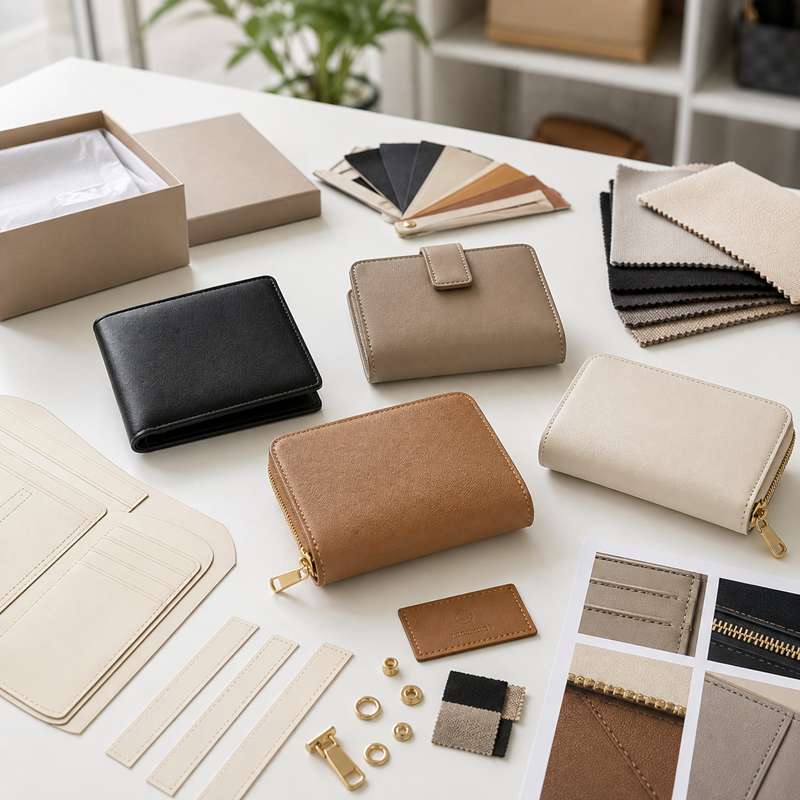
What Does PU Wallet Cost Control Really Protect?
Effective cost control protects margin, appearance, daily-use performance, production stability, and repeat-order consistency instead of chasing the lowest material price across retail programs.

Balance Visible Value With Hidden Production Cost Across Specifications
PU wallet cost control starts by separating visible brand value from hidden production cost. A wallet may look simple, yet the final quotation can change materially when card-slot layers, lining coverage, edge paint, folded edges, zipper pockets, metal fittings, logo setup, retail packaging, and color splits are added.
Material decisions: PU should be reviewed by surface texture, backing cloth, thickness, softness, folding behavior, odor requirements, color consistency, and compatibility with debossing, foil, print, or metal branding. Replacing a confirmed material with a lower grade can reduce the quotation while creating cracking, peeling, weak edge adhesion, or a visibly flatter finish.
Structure decisions: Every card slot adds cutting, skiving or thinning, alignment, stitching, and thickness. A zip coin pocket adds zipper tape, a slider, inner pocket material, reinforcement, and assembly time. Double bill compartments, ID windows, RFID layers, and hidden pockets should remain only when they support the planned use.
Commercial decisions: Quantity by color, packaging format, testing needs, arrival date, and destination also affect cost. A 500-piece order in one color is easier to organize than the same quantity divided across five colors, separate logos, and different packing rules.
A sound review keeps the features shoppers notice, simplifies low-value complexity, confirms the chosen direction through a sample, and records approved materials and construction before bulk production. Cost reduction without specification control often reappears later as rework, claims, delayed packing, or unstable repeat orders.
Cost Control Must Protect Three Commercial Results
Cost decisions should preserve commercial margin, visible brand value, and repeat-order control instead of moving hidden risk into production, packing, or replenishment for established product lines.
Margin Discipline
A workable wallet specification must leave room for freight, duty, channel fees, packaging, promotion, warehousing, and planned retail margin. Unit price alone cannot show whether a program remains commercially healthy. Cost review should begin with the target landed cost and protect the features supporting the planned selling price.
- Confirm target ex-factory and landed-cost limits.
- Separate essential functions from decorative complexity.
- Compare material, structure, logo, and packing alternatives.
- Record every approved change before sampling.
Brand Presentation
Shoppers judge a PU wallet through surface texture, color depth, edge cleanliness, stitching, hardware finish, logo execution, and opening feel. Removing low-value internal complexity can reduce cost, but weakening the visible finish may move the product into a lower price tier. Cost decisions should protect the details seen and touched first.
- Keep the main exterior surface visually consistent.
- Protect logo clarity and placement.
- Maintain clean edge and stitch alignment.
- Match unit packing to the intended sales channel.
Repeat-Order Stability
A cost-balanced sample has limited value when later production uses a different PU backing, color tone, edge material, zipper, or packing rule. Repeat programs need approved specifications that can be reviewed again before replenishment. Stable records also reduce repeated development work across related colors or coordinated wallet styles.
- Retain material references and approved color standards.
- Lock paper patterns, card-slot dimensions, and logo position.
- Record hardware, lining, and packing components.
- Review substitutions before material purchase or production.
What Determines Cost Across a Custom PU Wallet Specification?
A reliable quotation separates material, construction, branding, packing, and order variables so each saving can be weighed against appearance, function, and production control.

| Cost Area | Main Cost Drivers | Typical Influence | Cost-Control Direction | Risk When Over-Reduced |
|---|---|---|---|---|
| Outer PU | Grade, backing cloth, thickness, grain, sheen, stock or custom color | High | Select the lowest construction that still meets fold, surface, logo, and repeat-order requirements. | Over-reduction may create weak backing, flat appearance, peeling, cracking, or unstable color. |
| Wallet Size | Open size, closed size, fold allowance, corner shape, pattern yield | Medium-High | Set dimensions around bill, card, and pocket function; remove unused excess rather than shrinking critical areas. | Incorrect sizing can affect bill fit, card access, closing, and packing. |
| Card Layout | Slot count, layer count, staggered height, hidden compartments, ID window | High | Remove duplicated storage and keep the most-used positions. Review stacked thickness before approval. | Too many layers increase bulk; excessive simplification weakens utility. |
| Coin Pocket | Zipper, slider, puller, pocket lining, reinforcement, assembly | Medium-High | Use only when required by the planned use; consider a non-zip section when security needs allow. | Weak zippers or poorly reinforced ends can create early functional claims. |
| Lining And Support | Lining coverage, stiffener, reinforcement, adhesive, internal finish | Medium | Place support where shape and wear require it instead of applying full coverage without purpose. | Insufficient support may cause distortion, bubbling, or uneven card sections. |
| Edge Construction | Folded edge, painted edge, binding, number of applications, drying and finishing | Medium-High | Choose one edge system suited to the PU, wallet position, finish level, and production volume. | Cutting application time too far may lead to rough edges, overflow, cracking, or weak adhesion. |
| Hardware | Snap, zipper, puller, metal badge, plating, custom mold, protective film | Medium-High | Use standard sizes and finishes where brand identity does not require exclusive tooling. | Low-grade fittings can affect opening, plating consistency, surface protection, and packing. |
| Logo Execution | Debossing, foil, print, metal plate, artwork detail, size, position, setup | Low-High | Prioritize one strong branding position and match the method to the chosen PU surface. | An unsuitable method may produce shallow impressions, weak adhesion, blurred detail, or packing marks. |
| Color And SKU Split | Quantity per color, shared materials, separate logos, separate packing rules | High | Consolidate common PU, lining, hardware, and packaging components across coordinated styles where feasible. | Excessive splitting increases setup, material control, sorting, and replenishment complexity. |
| Unit Packing | OPP bag, tissue, paper sleeve, barcode, hangtag, box, insert, carton quantity | Variable | Match protection and presentation to retail, e-commerce, gift, or distribution requirements. | Under-packing risks scratches and deformation; over-packing raises unit cost and freight volume. |
Which Programs Need Structured PU Wallet Cost Planning?
Retail Brand Programs
Retail collections need a wallet that fits the planned price tier while preserving texture, color, edge finish, stitching, logo position, and shelf presentation. Cost review should include barcode labels, hangtags, paper sleeves, gift boxes, carton quantities, and replenishment records. A lower unit quotation has limited value when packaging errors, inconsistent colors, or unstable repeat production disrupt store launches.
Private Label Lines
Private-label teams often develop several colors or related styles under one visual identity. Cost planning should compare shared materials, common hardware, standard logo sizes, repeatable paper patterns, and packaging components across the line. Early coordination reduces unnecessary setup, prevents each SKU from becoming a separate development exercise, and keeps approved details easier to reproduce during future replenishment orders.
Import And Distribution
Import and distribution programs usually compare landed cost, carton efficiency, order volume, color allocation, and delivery timing across several sales accounts. Wallet specifications should remain clear enough for repeat quotation and inspection. Material, lining, hardware, logo, unit packing, carton marks, and quantity by SKU need separate confirmation before pricing, especially when one shipment contains several versions or destinations.
Corporate Gift Programs
Gift programs require strong logo visibility, controlled presentation, a fixed event date, and a budget that includes unit packing and distribution. Structure can often be simplified, but visible surfaces, logo clarity, opening function, and gift-box fit still need approval. Production planning should work backward from the required arrival date, allowing time for sampling, revisions, packing checks, and transport.
Choose PU By Use, not material price alone
PU selection should match the wallet’s use, selling position, folding structure, logo method, packing format, and required documents—not only the quoted material price.
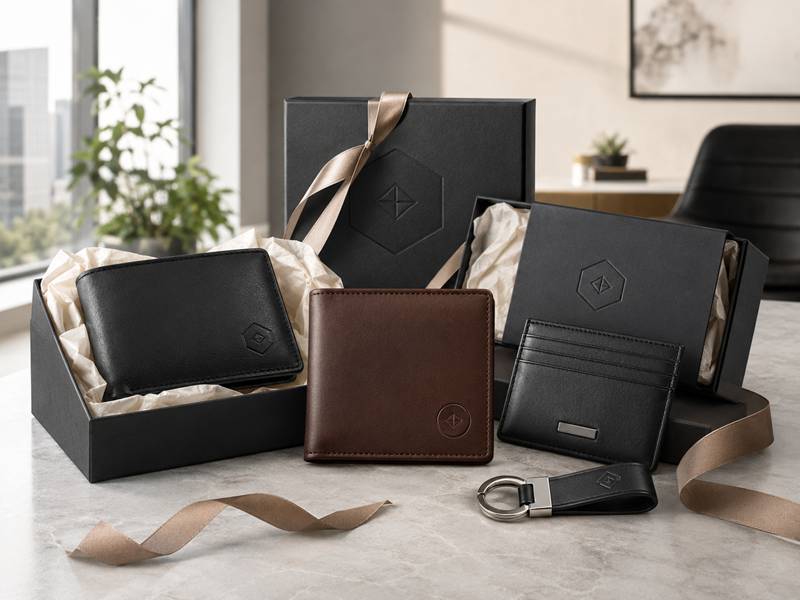
Volume Gift Programs
Large corporate and promotional programs often need controlled appearance, dependable logo reproduction, and efficient unit packing across 500 pieces or more. A standard textured PU can be reviewed when the design uses a simple fold, limited internal layers, standard hardware, and one primary branding position. Material approval should still cover surface consistency, backing strength, odor, fold behavior, and packing protection.
- Favor proven textures and available colors.
- Keep structure and hardware disciplined.
- Confirm logo adhesion or impression.
- Sample the completely packed wallet.
Core Retail Collections
Everyday retail wallets need a stronger balance between hand feel, surface recovery, folding performance, edge compatibility, and repeat color control. A lower quotation may come from thinner or weaker-backed PU, yet the saving can be lost when card-slot edges distort or fold areas age poorly. The selected material should be checked on the real wallet pattern, not only as a flat swatch.
- Review thickness with stacked card layers.
- Check skiving and folded edges.
- Compare edge-paint adhesion.
- Confirm color under normal retail lighting.
Premium Private Label
Premium private-label programs often place greater weight on refined grain, clean embossing, soft hand feel, controlled sheen, metal fittings, and presentation packing. Microfiber-backed PU or another upgraded construction can be evaluated when ordinary PU cannot deliver the required finish. Material cost should be reviewed together with edge work, stitching density, hardware, logo depth, and box fit because each detail contributes to perceived value.
- Compare grain definition and backing.
- Test debossing or foil on the chosen surface.
- Approve edge and stitch samples.
- Protect finished surfaces during packing.
Special Requirement Projects
Projects involving recycled claims, restricted-substance documents, low-odor expectations, unusual colors, special coatings, or destination-specific testing require early material review. No PU construction should be treated as automatically compliant or suitable for every use. Required documents, test methods, label wording, and color references should be confirmed before sampling or bulk material purchase.
- State the destination country and sales channel.
- Provide required testing standards or retailer protocols.
- Confirm document and labeling needs.
- Allow time for material approval and third-party testing when required.
Simplify The Right Details, Not The Product Value
Cost reduction works best when low-value complexity is removed while high-contact construction, visible finishing, and brand-defining details remain protected through sampling and written specifications.
Remove Complexity Shoppers Rarely Notice
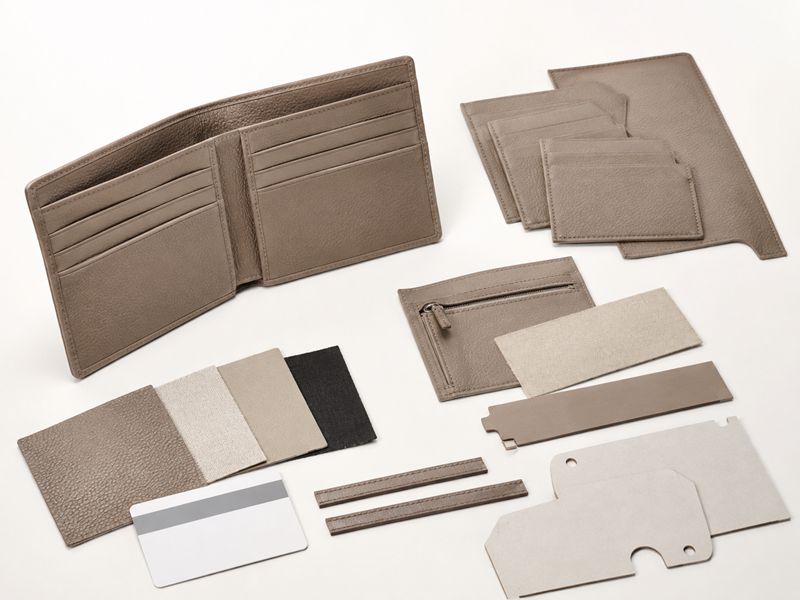
A wallet can accumulate cost through internal features that look useful on a specification sheet but add little value during normal use. Repeated hidden pockets, duplicated card positions, decorative internal panels, unnecessary color blocking, extra zipper pulls, and multiple logo locations increase cutting, alignment, sewing, assembly, and inspection. Simplification should begin with the intended carrying habits, sales position, and main reason for choosing the style.
Storage priorities: List the exact items the wallet must hold. A card wallet designed for essential cards does not need the same internal layout as a travel organizer. Keep the primary card positions, note space, identification area, or coin storage that is required for the planned use. Remove compartments that repeat the same function.
Shared components: Coordinated colors or related styles can often use the same lining, thread, zipper size, snap specification, logo dimension, and packing format. Shared components reduce separate setup and sorting without changing the visual identity of the collection.
Decorative construction: Extra panels, narrow contrast strips, hidden piping, and internal ornaments can create more seams than visible value. Retain details that define the exterior silhouette or brand language; simplify details that remain hidden after the wallet is closed.
Approval discipline: Every deletion or replacement should be shown in a revised drawing, specification, or sample. Verbal cost changes can create misunderstandings when one side expects a simpler construction and the other expects the original appearance.
The fold, card-slot openings, zipper ends, snap positions, corners, and edges receive repeated contact during normal use. Cost pressure applied to these areas can create early distortion, rough access, loose fittings, or visible wear. Strong control does not require adding reinforcement everywhere; it requires placing suitable material and workmanship where movement and stress occur.
Main fold: The PU, backing, lining, adhesive, and internal layers must bend together without creating excessive stiffness or a raised ridge. Skiving or controlled thinning may be needed around layered sections. The final sample should be checked both empty and filled because cards and notes change the closing shape.
Card openings: Slot width, staggered height, seam position, and edge treatment influence access. Openings that are too tight can strain stitching and surface layers; openings that are too loose reduce security. Each position should be checked with the intended card thickness during sampling.
Zipper ends and snaps: Zipper tape requires clean end control and enough support around the opening. Snap or metal fitting positions need suitable backing so the hardware does not pull through the PU or leave uneven surface pressure. Standard fittings can control cost, but reinforcement cannot be removed solely to save one operation.
Corners and edges: Small wallets expose workmanship because the viewing distance is close. Seam allowance, folded edges, edge paint, corner radius, and stitch turning need enough space for clean execution. Reducing edge applications or drying time too aggressively may create overflow, roughness, cracking, or weak adhesion.
Protect High-Contact Construction And Opening Areas
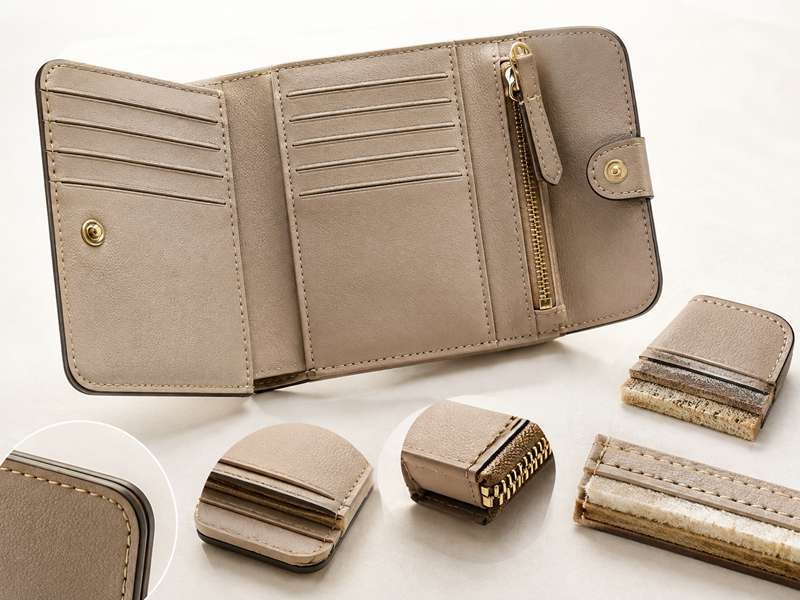
Keep Visible Details Worth The Planned Price
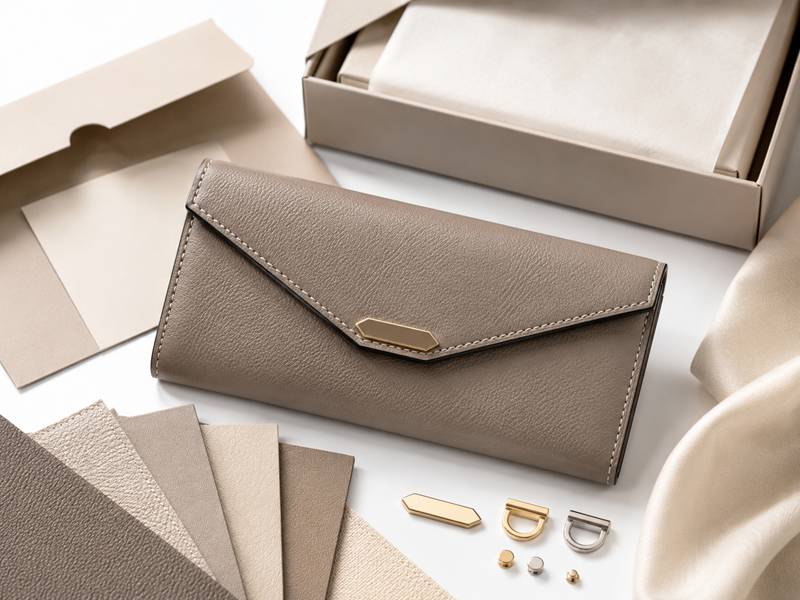
The exterior material, grain, color, logo, stitch line, edge finish, hardware surface, and presentation packing shape the first impression. A technically functional wallet can still look unsuitable for its intended price tier when visible details appear flat, uneven, or poorly coordinated. Cost planning should protect the elements most likely to be seen in product photography, retail display, gifting, and daily handling.
Outer PU: Select texture, sheen, softness, thickness, and backing together. A lower-cost surface may be acceptable for a promotion, while a retail collection may require clearer grain, cleaner fold recovery, or a more controlled hand feel. Material should be approved on the formed wallet because flat swatches do not reveal edge and fold behaviors.
Logo execution: One well-placed debossed, foil, printed, or metal logo often creates stronger recognition than several small marks. Logo size, depth, color, and position should match the PU surface and remain clear after folding and packing.
Stitching and edges: Consistent thread color, stitch spacing, straight lines, clean starts and stops, and controlled edges contribute strongly to perceived value. Simplifying internal storage may be safer than weakening the visible seam or edge standard.
Hardware and packing: Standard hardware can still look refined when plating, size, shape, and placement are coordinated. Unit packing should prevent surface rubbing, metal impressions, corner pressure, and color transfer. Gift boxes, sleeves, tissue, labels, and inserts should be added only when the sales channel requires them.
How Wallet Structure Changes Cost And Daily Performance
Every pocket, fold, closure, and internal layer changes material use, sewing time, thickness, packing volume, and the way a finished wallet performs.
Coin Pocket Design
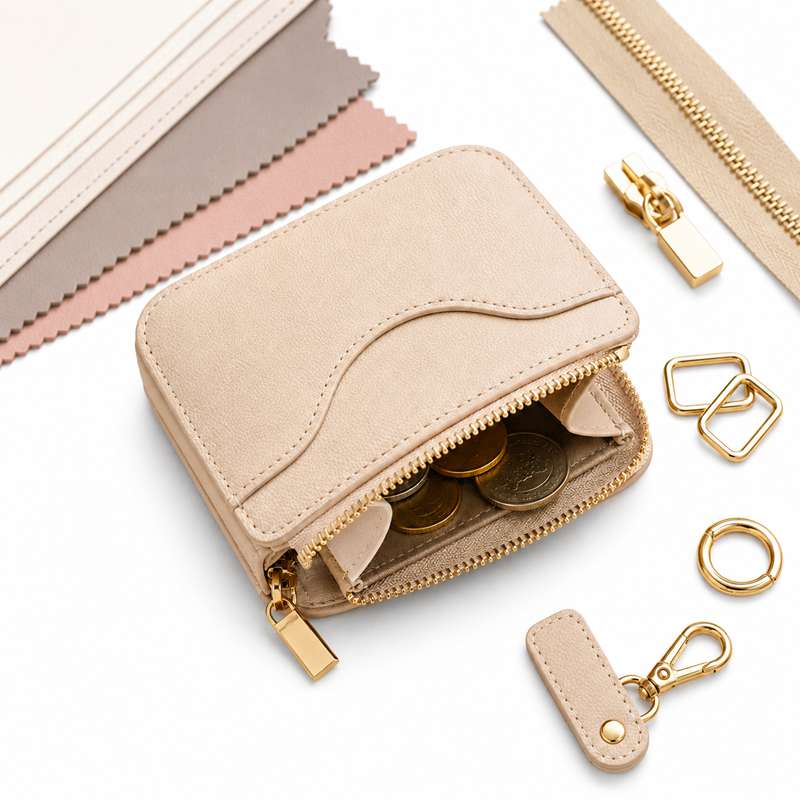
A coin pocket adds more than one visible zipper. The structure may include zipper tape, slider, puller, pocket lining, end reinforcement, seam allowance, and added assembly. A gusseted coin section creates more capacity but also more pieces and edge work. When coins are not central to the planned use, a flat slip pocket or separate card section may preserve utility with fewer operations.
- Define the items stored inside.
- Compare flat and gusseted options.
- Protect both zipper ends.
- Check opening access during sampling.
Card Slot Count
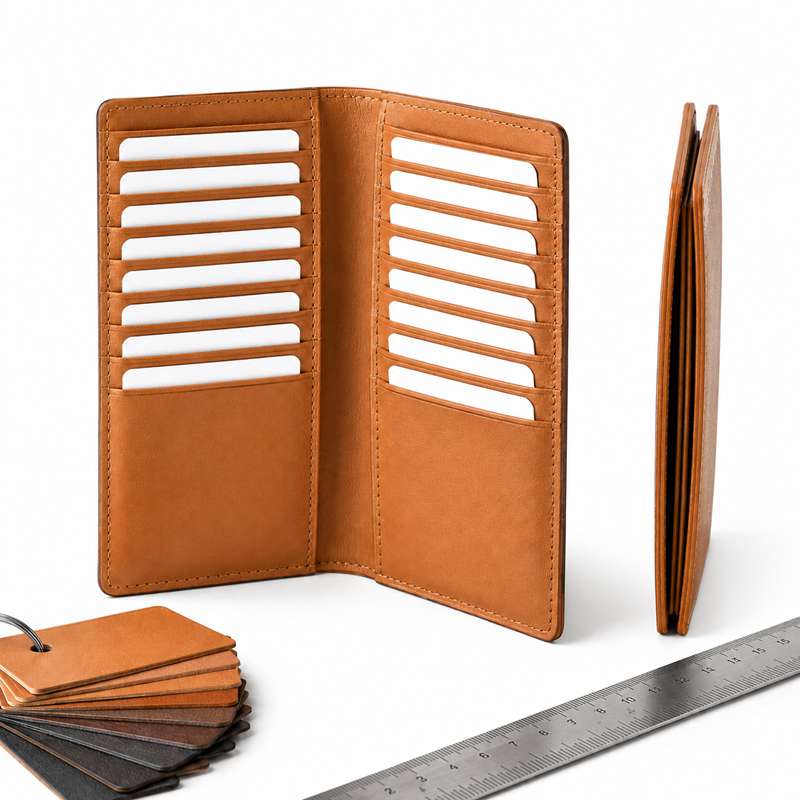
Card-slot quantity changes more than storage capacity. Four slots, six slots, and eight slots require different cutting pieces, staggered heights, overlapping layers, thinning work, alignment, and sewing control. Excessive tiers can make the closed wallet bulky even when the outer size remains unchanged. Cost review should start with the cards people actually carry, then remove repeated positions that add thickness without improving use.
- Confirm the required card quantity.
- Check slot width and access.
- Review stacked thickness when filled.
- Keep left and right layouts balanced.
Internal Support Layers
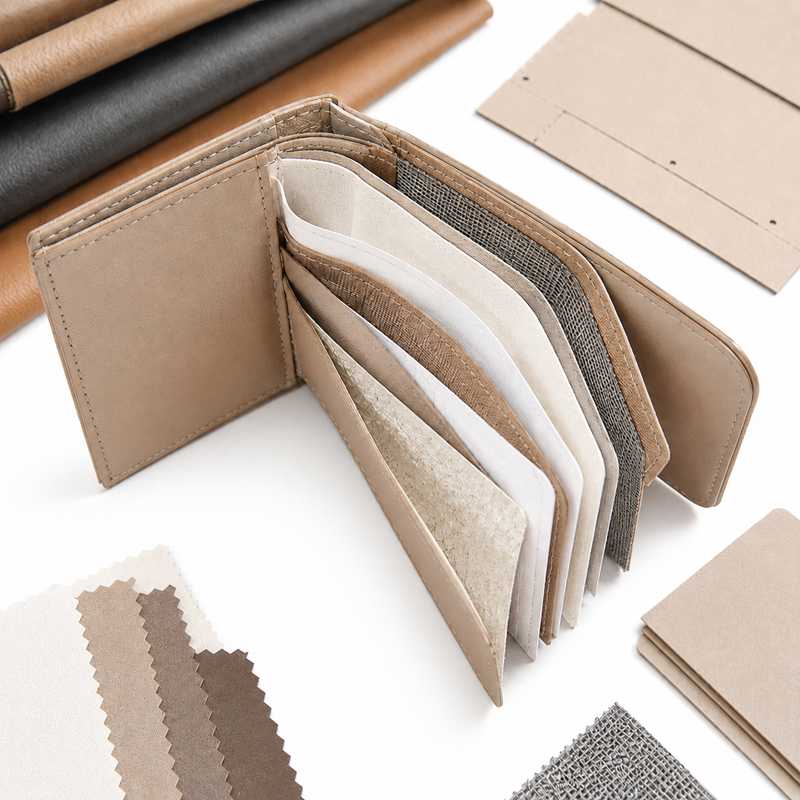
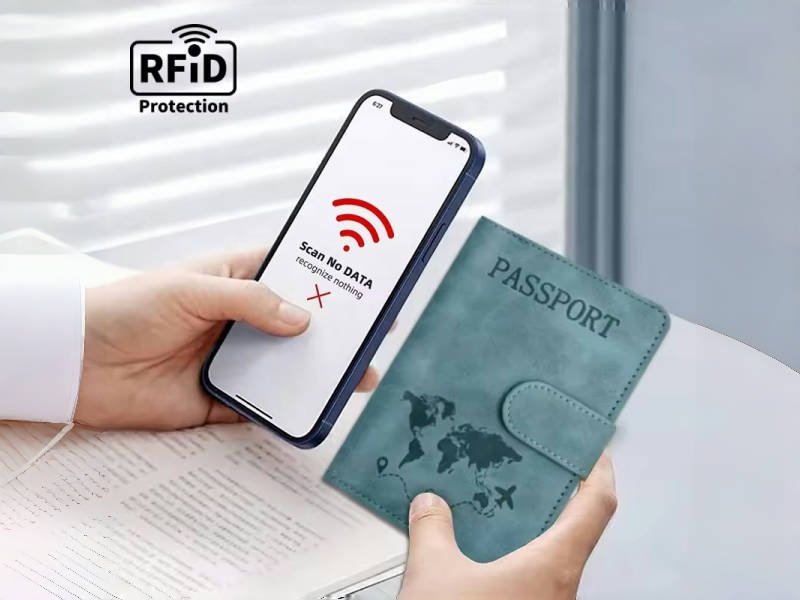
Lining, stiffener, adhesive, RFID material, clear ID windows, and local reinforcement influence shape, feel, and thickness. Full internal coverage is not always necessary; support can be placed around folds, closures, card openings, and high-stress seams. RFID material should only be included when required and must be evaluated within the complete structure. Poorly matched support can cause bubbling, stiffness, or uneven surfaces.
- Use support only where needed.
- Match adhesive to PU and lining.
- Review RFID requirements early.
- Check flatness after assembly.
Closure System
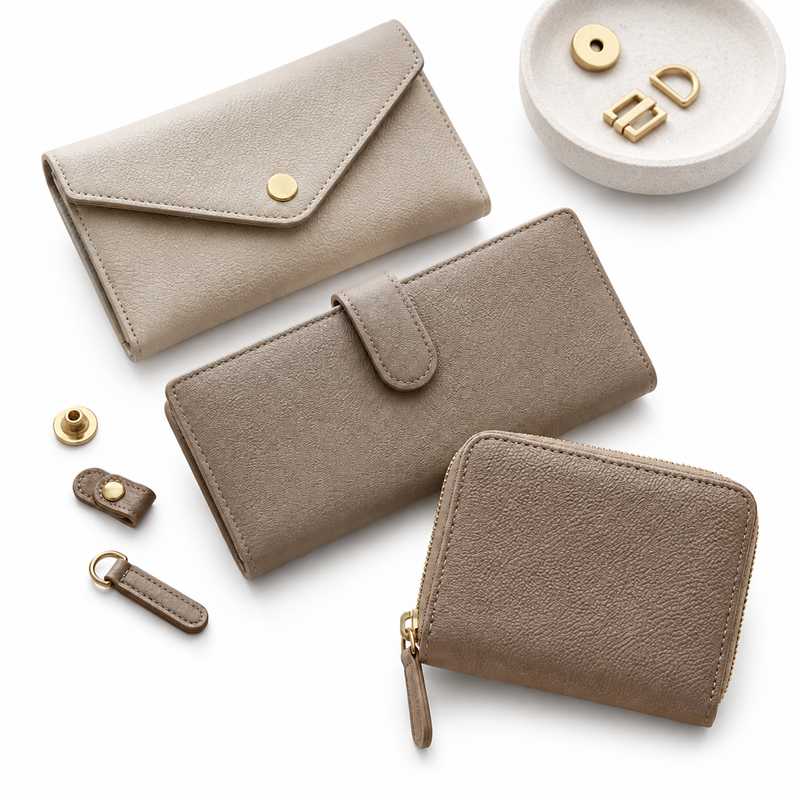
Open-fold wallets, snaps, zippers, magnetic closures, and wrap straps carry different cost and performance requirements. A standard snap may offer controlled pricing, while custom metal fittings can require tooling, plating approval, protective film, and careful packing. Closure position also affects reinforcement and alignment. The chosen system should support the wallet style without creating pressure marks, uneven closing, or unnecessary hardware weight.
- Select closure by actual use.
- Confirm reinforcement behind fittings.
- Check opening force and alignment.
- Protect plated parts during packing.
Bill Compartment Layout
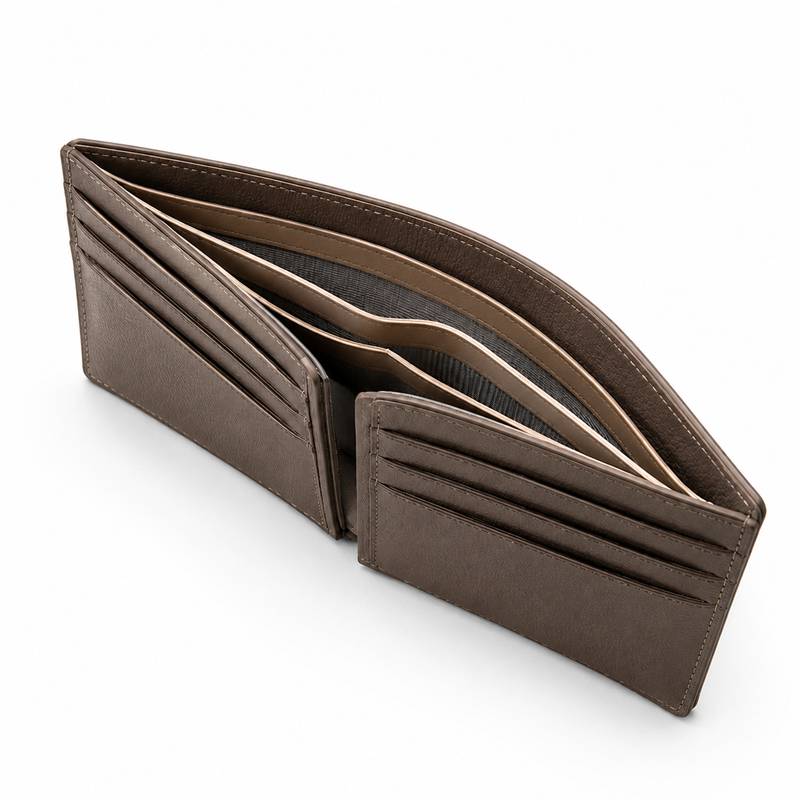
Single and double bill compartments create different material consumption, folding thickness, and sewing sequences. A hidden divider can improve organization, yet it also adds lining, support material, and another long seam. The compartment should fit the intended currency without excessive height or unused depth. Dimensions must be reviewed in both open and closed positions so the wallet closes cleanly after cards and notes are inserted.
- Confirm intended currency size.
- Choose single or divided storage.
- Avoid unused internal depth.
- Test the filled closing shape.
Overall Wallet Size
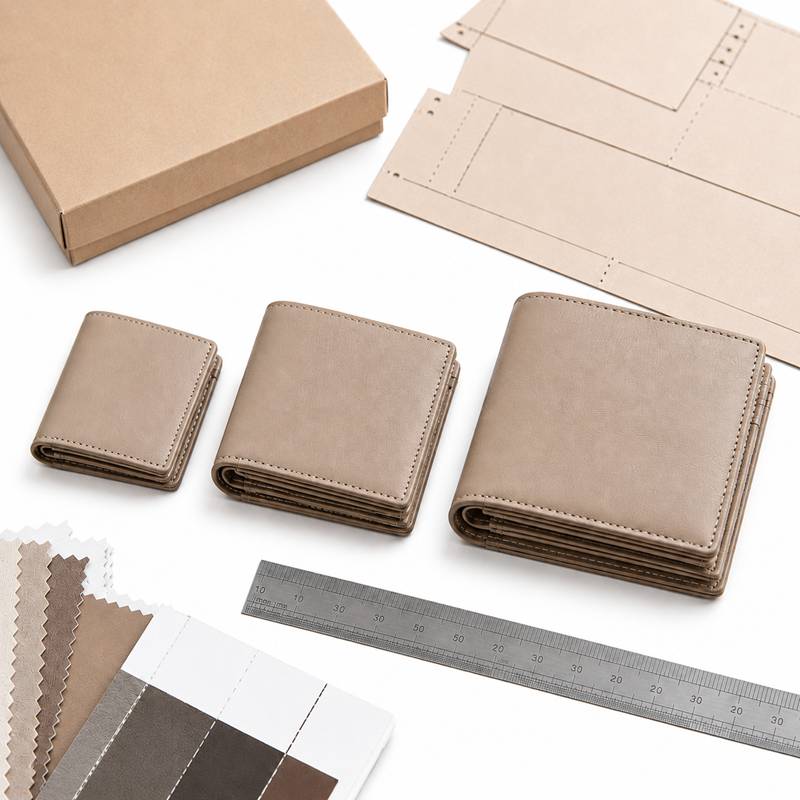
Open size, closed size, corner radius, fold allowance, and pattern yield affect both material usage and packing efficiency. Reducing dimensions may lower consumption, but shrinking card openings, note space, seam allowance, or edge-turning areas can damage usability and workmanship. A sound size review removes excess around low-value areas while protecting clearance for cards, notes, zippers, stitching, and clean folding.
- Record open and closed dimensions.
- Keep functional clearance.
- Review carton and gift-box fit.
- Confirm scale through a physical sample.
Match the logo method to PU surface and budget
Logo cost depends on artwork detail, material texture, size, position, color, setup, attachment, and packing protection—not simply the chosen branding method.
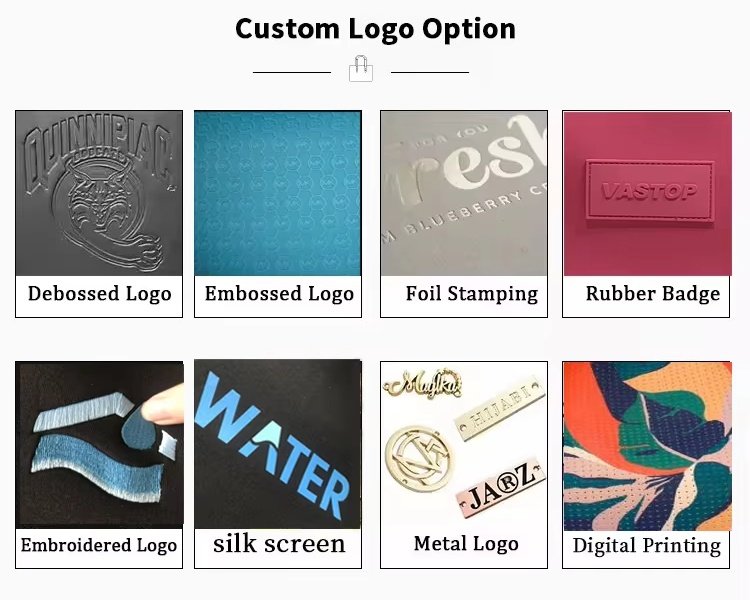
Debossed Logo
Debossing creates a restrained mark without adding ink or a separate badge. Result quality depends on PU grain, coating, backing, pressure, temperature, artwork detail, and die construction. Fine text may close up on heavily textured surfaces, while shallow pressure may disappear visually. A cost review should include die setup and confirm one approved depth, size, and position through the wallet sample.
Foil Stamping
Foil stamping adds contrast and a polished retail appearance through metallic or solid-color foil. Surface coating, grain depth, foil type, heat, pressure, and artwork width affect transfer quality. Large filled areas and very fine lines may behave differently on textured PU. The sample should confirm adhesion, edge sharpness, color, fold clearance, and resistance to rubbing from tissue, sleeves, or boxes.
Printed Logo
Screen, transfer, or another suitable printing method can support colored logos and artwork that cannot be expressed through debossing alone. Method selection depends on PU coating, surface texture, artwork colors, print size, bending location, and abrasion exposure. Printing near folds or high-contact edges requires careful review. A physical sample should confirm color appearance, registration, adhesion, and packing contact before approval.
Metal Logo Plate
A metal plate creates strong visual recognition but adds badge production, plating, attachment, reinforcement, alignment, protective film, and packing control. Custom shapes may require tooling, while standard plates can reduce development work. Plate weight and fastening method must suit the wallet thickness. Placement should avoid fold pressure and card areas, and unit packing should prevent metal impressions or scratches on adjacent surfaces.
Packaging Must Match Each PU Wallet Sales Channel
Packing should protect PU surfaces, support stock handling, and match the intended presentation without adding unnecessary materials, carton volume, labeling work, or freight cost.

Basic Unit Packing
Basic unit packing suits wholesale distribution, internal kits, product bundles, or programs where final presentation is completed after arrival. A clear OPP bag, suitable protective tissue, and an identification label may be enough when surface rubbing, metal impressions, and corner pressure are properly controlled. The wallet should not move freely inside an oversized bag, and printed materials should not transfer color onto light PU surfaces.
- Match bag size to the closed wallet.
- Protect metal fittings and foil logos.
- Add tissue only where contact requires it.
- Confirm carton quantity before approval.
Retail Shelf Packing
Retail packing must combine product protection with barcode accuracy, brand presentation, shelf handling, and replenishment control. Common elements may include a paper sleeve, hangtag, barcode label, care card, branded insert, or compact folding carton. Every added piece affects artwork preparation, material purchasing, packing labor, carton capacity, and final inspection. Packaging should be designed around the store environment instead of adding decorative components without a clear selling function.
- Confirm barcode location and scanning access.
- Keep important wallet details visible.
- Match sleeve or carton dimensions closely.
- Record packaging by SKU and color.
E-Commerce Fulfillment
Online fulfillment requires clear SKU identification, surface protection, efficient warehouse handling, and controlled outer-carton information. Packing may need a scannable unit label, a suffocation warning where applicable, protective tissue, a sealed bag, a warehouse code, and accurate carton marks. Oversized gift boxes can increase storage and freight volume without improving the online selling experience. Compact packing should still protect corners, edges, foil, prints, and metal plates during parcel movement.
- Separate each SKU with accurate labels.
- Keep barcodes flat and readable.
- Review unit weight and packed dimensions.
- Test protection inside the shipping carton.
Gift Presentation
Corporate, loyalty, event, and premium presentation programs may require a rigid box, folding box, paper sleeve, molded insert, tissue, ribbon, message card, or branded outer cover. Presentation value must be balanced against tooling, setup, packing time, carton volume, and required arrival date. The wallet and box should be developed together because metal logos, thick closures, and raised fittings can affect insert depth and lid clearance.
- Confirm the complete presentation set early.
- Check wallet and insert dimensions together.
- Protect visible surfaces from pressure.
- Approve the packed sample before production.
How Quantity And Color Split Change PU Wallet Cost
Jundong’s standard MOQ usually starts from 500 pieces per design, while final production feasibility depends on material, color allocation, logo, hardware, packing, and scheduling requirements.
| Order Structure | Production Effect | Cost-Control Opportunity | Details Requiring Confirmation |
|---|---|---|---|
| 500 pcs, one design, one color | Material, cutting, logo setup, sewing, packing, and inspection are concentrated into one version. | A disciplined structure, available PU color, standard hardware, and one packing rule help keep setup controlled. | PU availability, logo method, card layout, unit packing, carton quantity, and required date. |
| 500 pcs, one design, two to four colors | Each color becomes a smaller production lot even though total quantity remains unchanged. Separate color approval, cutting control, sorting, and packing identification are required. | Shared lining, thread, hardware, logo size, and packaging can reduce unnecessary variation. | Quantity per color, material minimums, color standards, label differences, and carton separation. |
| 1,000 pcs, one design, one or two colors | Fixed preparation work is spread across more units, while the production sequence remains relatively concentrated. | Better material purchasing, repeated sewing operations, and stable packing can support stronger unit-cost control. | Color ratio, logo version, packaging artwork, inspection plan, and shipment arrangement. |
| 3,000 pcs, several coordinated SKUs | Multiple styles can share PU, lining, thread, hardware, logo specifications, or packaging components when designs are planned as one collection. | Common materials and components reduce separate purchasing and development work without removing visible identity. | Quantity by style and color, shared components, SKU labels, carton rules, and production sequence. |
| 5,000 pcs or more, multi-color program | Material reservation, line allocation, inspection capacity, packing space, and delivery planning become more important than a single quoted unit price. | Volume can improve purchasing and operation efficiency when specifications remain stable and color splitting is controlled. | Forecast, approved samples, material booking, phased delivery, inspection level, and destination plan. |
| Repeat order using an approved specification | Paper patterns, dimensions, logo placement, hardware, and packing records can shorten repeated development work. Materials may still require renewed color and surface approval. | Stable records support quicker review and more consistent replenishment planning. | PU batch, color reference, hardware finish, packaging artwork, quantity, and required delivery date. |
| Custom PU color or exclusive texture | Material preparation may require a separate minimum quantity, color development, surface trial, and longer approval process. | Exclusive material should be reserved for programs where visual differentiation supports the selling position and forecast. | Material minimum, color tolerance, lead time, test requirements, remaining material, and repeat-order plan. |
| Custom box or special insert | Packaging components may follow an MOQ or setup rule independent from the wallet quantity. Small packaging lots often carry higher unit cost. | Standard box sizes, shared artwork structures, and compact inserts can control development and freight volume. | Box structure, artwork, finish, insert, barcode, quantity, packed dimensions, and carton capacity. |
For most custom PU wallet programs, 500 pieces per design provides the normal starting basis for material purchasing, sample-to-production transfer, cutting, logo application, sewing, packing, and quality checks. The final MOQ may change when an order uses exclusive PU, numerous colors, separate logo versions, custom hardware, or special packaging.
Quantity should be reviewed by design, color, material, logo, and packing rule, not only by the total number written on the purchase plan. An order for 3,000 pieces divided across six styles, five colors, and three packaging versions operates very differently from 3,000 identical wallets packed under one rule.
A larger volume can help distribute setup and production work more efficiently, but no fixed discount formula applies to every specification. Cost should be recalculated after confirming the final structure, color allocation, material source, logo, packing, delivery schedule, and destination.
How Jundong Reviews A Target PU Wallet Price
A target price becomes workable only after essential functions, visible brand details, material construction, order structure, packing, and delivery requirements are clearly separated.
Confirm What Must Remain

A cost review begins by identifying the specifications that support use, appearance, and sales positioning. Without a clear priority list, every component appears equally important, and cost reduction becomes a series of disconnected changes.
The starting file does not need to be perfect. A reference wallet, product photo, drawing, physical sample, or existing specification can establish the direction. The review then confirms the open and closed size, intended currency, card quantity, bill compartment, coin storage, ID window, closure, PU texture, color, lining, logo, hardware, packing, quantity by color, required arrival date, and destination.
Details should be separated into three groups:
- Must remain: Features defining function, visual identity, or agreed retail presentation.
- Flexible: Materials, internal layouts, standard fittings, or packaging details that may be adjusted after comparison.
- Remove if needed: Duplicated pockets, decorative internal panels, repeated logo positions, or packaging pieces with limited commercial value.
A six-card retail wallet may need to retain exterior grain, logo position, card access, clean edges, and a paper sleeve, while an internal hidden pocket or second logo can remain flexible. A corporate gift wallet may protect logo visibility and presentation timing while using fewer card layers and standard hardware.
The target should be stated as an ex-factory cost goal whenever possible. Destination, freight method, import charges, and required arrival date should be supplied separately so product cost is not confused with the total landed amount. Jundong then evaluates whether the requested figure can support the required specification or whether a controlled revision is needed.
After priorities are confirmed, the wallet is broken into measurable materials, components, and operations. A reliable review does not estimate cost from the exterior photo alone. It examines how many pattern pieces, material layers, fittings, branding operations, edge applications, packing components, and separate versions are required.
The cost map normally reviews the following:
- Outer PU area, usable material width, grain direction, backing, thickness, and expected cutting yield.
- Card-slot pieces, hidden backing layers, lining coverage, support materials, adhesives, and fold allowances.
- Zippers, sliders, snaps, magnets, metal badges, clear windows, RFID layers, and local reinforcement.
- Cutting, thinning or skiving, folding, edge work, logo application, sewing, assembly, trimming, inspection, and packing.
- Quantity by color, shared components, separate artwork, packaging versions, carton rules, and delivery schedule.
A six-slot bifold normally requires six visible card-slot pieces plus hidden backing or support parts according to the chosen pattern. Adding a zippered coin pocket also introduces zipper tape, a slider, lining, reinforcement, and extra assembly. A metal badge requires production or tooling, plating, attachment, backing support, alignment, protection, and packing control. A rigid gift box adds its own material, artwork, finishing, insert, assembly, and carton-volume effect.
Fixed preparation work and unit-level work must be considered separately. Logo dies, printing screens, custom molds, color development, sample preparation, and packaging setup do not behave like PU consumption or sewing time. They become harder to distribute when one design is divided into many small colors or packaging versions.
Build a cost map

Prepare Controlled Options

Jundong can prepare several directions from one approved brief instead of returning only a single unexplained quotation. Each direction should state exactly what remains, what changes, and which visual or functional result needs to be verified.
Original Specification Direction
The original design, materials, card layout, hardware, branding, and packaging remain unchanged. The quotation establishes the cost of producing the requested specification without cost-led revision. It provides a clear baseline for later comparison.
Cost-Balanced Direction
Visible exterior quality, core storage, logo recognition, high-contact construction, and required packing remain protected. Savings may come from using an available PU texture, consolidating colors, reducing duplicated internal layers, selecting stable standard hardware, using one main logo position, or replacing an oversized box with a fitted sleeve or compact carton.
Value-Focused Direction
The product is redesigned around essential use and brand recognition. Card slots, pocket layers, closures, metal fittings, decorative stitching, internal color blocking, and packaging pieces may be reduced more firmly. Exterior appearance, card security, folding, clean workmanship, and agreed logo execution still require sample approval.
Each alternative should remain traceable. A lower quotation must not rely on an unrecorded PU substitution, thinner support, reduced edge treatment, different hardware plating, or simplified packing discovered only during production. Material references, revised drawings, component specifications, and packaging requirements should be updated before sampling.
The brand team can then compare cost against visible finish, storage capacity, presentation, operational complexity, and replenishment needs. A change worth accepting should deliver a meaningful production saving without creating a larger risk in photography, retail handling, daily use, packing, inspection, or repeat orders.
The selected direction should move into a physical sample before bulk confirmation. For a standard PU wallet with available materials and clear artwork, normal sample development is approximately 5–7 working days after specifications are complete. Complex structures, custom colors, exclusive hardware, special packaging, or required testing may need additional time.
The sample should be checked as a complete product rather than as separate attractive details. Approval normally covers:
- Open and closed dimensions.
- Wallet thickness when empty and filled.
- Card-slot width, depth, access, and holding security.
- Bill compartment size and fold clearance.
- PU texture, hand feel, color, backing, and fold behavior.
- Lining, support, adhesive result, and internal flatness.
- Stitch alignment, stitch spacing, seam allowance, and corner turning.
- Folded edge, painted edge, binding, or other selected edge construction.
- Logo size, position, depth, color, adhesion, and visibility.
- Zipper movement, snap force, magnet alignment, and metal fitting stability.
- Barcode, sleeve, bag, box, insert, label, and final packed appearance.
Comments should be written against the sample, drawing, or specification instead of being left as general messages. Revised dimensions, material changes, logo adjustments, hardware updates, and packing corrections need clear approval before the final sample becomes the production reference.
The approved record should include material references, color standard, pattern version, measurements, card layout, lining, hardware, logo artwork, branding position, edge method, thread, unit packing, labels, carton quantity, and inspection requirements. Later production checks can then compare real work against an agreed standard rather than relying on memory.
Sample And Record The Direction

What Must A PU Wallet Sample Confirm?
Standard sampling usually takes 5–7 working days after complete specifications are received, allowing material, construction, branding, function, and packed presentation to be checked.
PU Surface And Color
A flat swatch cannot fully show how PU behaves after folding, edge turning, gluing, and stitching. The sample should confirm grain definition, sheen, hand feel, backing, thickness, color, odor expectation, and recovery around the main fold. Review the finished wallet under normal retail lighting and compare it with the approved material or color reference.
- Check visible surface consistency.
- Compare open and folded areas.
- Confirm light and dark color behavior.
- Record the approved material reference.
Folding And Thickness
Wallet thickness changes after card layers, lining, reinforcement, adhesive, zipper parts, and notes are combined. The sample should be checked empty and filled with the planned number of cards. A clean fold should close without excessive resistance, raised ridges, twisted corners, or heavy pressure from internal layers.
- Measure open and closed thickness.
- Fill every planned card position.
- Check fold alignment and recovery.
- Review closure pressure when loaded.
Card Slot Fit
Card openings need enough clearance for access without allowing cards to slide out during handling. Slot width, depth, staggered height, seam position, edge treatment, and hidden support should be checked with the intended card thickness. Every position matters because lower layers may become tighter after several stacked pieces are sewn together.
- Test insertion and removal.
- Check holding security.
- Compare left and right alignment.
- Confirm no surface pulling occurs.
Edge And Stitching
Small leather goods are viewed at close distance, making uneven stitches, rough corners, overflowing edge paint, exposed backing, and loose thread ends easy to notice. The sample should confirm stitch spacing, thread color, seam allowance, turning at corners, folded edges, painted edges, and drying quality before the same workmanship direction enters bulk production.
- Inspect straight and curved seams.
- Review edge adhesion and coverage.
- Check corner shape and symmetry.
- Confirm clean starts and stops.
Logo And Hardware
Debossing, foil, print, metal plates, snaps, zippers, and magnetic fittings should be approved on the selected PU construction. The sample must confirm logo size, position, depth, color, adhesion, alignment, opening force, plating appearance, and reinforcement. Raised metal parts also need a packing check to prevent pressure marks or scratches.
- Compare artwork with the finished mark.
- Test all opening functions.
- Check backing and attachment.
- Review protection during packing.
Packed Presentation
Approval should cover the wallet as it will arrive, not only the unpacked product. Tissue, sleeves, OPP bags, labels, barcodes, boxes, inserts, and carton arrangement can change surface pressure, shape, scanning access, and freight volume. A fully packed sample helps reveal tight inserts, oversized boxes, color transfer, metal impressions, and missing identification details.
- Confirm unit-pack dimensions.
- Scan barcodes when required.
- Check surface contact and pressure.
- Approve the labels and presentation together.
Protect Approved Details Through Bulk Production
Approved samples become reliable production references only when material, pattern, logo, workmanship, packing, and inspection requirements are translated into controlled records and checkpoints.
Convert Sample Approval Into A Production Specification

A visually approved wallet is only one part of the production reference. Bulk work needs a clear specification that explains what created the approved appearance and function. Material references should identify the PU surface, backing, thickness direction, color standard, lining, reinforcement, adhesive, edge material, thread, zipper, snap, metal plate, and packing components. Pattern information should record the approved version, open and closed dimensions, card-slot widths, staggered heights, fold allowance, seam allowance, corner radius, and hardware position.
Brand details require the same control. Logo artwork, size, depth, color, placement, tooling, and application method should be linked to the approved sample. Packing records should include unit-pack order, tissue placement, sleeve or box dimensions, barcode position, label content, carton quantity, assortment, and carton marks. Photos can help identify visible features, but measurements and material references prevent interpretation from changing between departments.
Final approval should also state which details carry tolerance and which require an exact reference. A slight internal measurement adjustment may be acceptable when function remains stable, while a shifted main logo, incorrect exterior color, weak card fit, or different metal finish may not be acceptable. Clear priorities help production and inspection teams focus on the features carrying the greatest commercial risk.
A pre-production sample can be used for large, multi-color, retail, private-label, or structurally complex programs. Once accepted, the approved version should be linked to the bill of materials, pattern file, production instructions, packing rules, and inspection checklist before material cutting begins.
Material control starts before cutting. Incoming PU should be compared with the approved reference for color, grain, sheen, backing, thickness direction, hand feel, surface marks, coating condition, and odor requirement. Lining, support materials, adhesive, thread, zipper tape, sliders, snaps, metal fittings, logo pieces, labels, sleeves, boxes, and cartons also need verification. A correct material name alone is not enough because separate batches can differ in tone, surface, stiffness, or finish.
Cutting preparation should confirm grain direction, pattern placement, visible defects, fold allowances, paired pieces, and color grouping. Small PU wallet parts can look similar, so clear bundle identification helps prevent mixed card-slot layers, reversed pieces, or wrong color combinations. First cut pieces should be compared with the approved pattern before large quantities are prepared.
Logo and workmanship trials should follow. Initial debossing, foil, printing, or metal-plate placement needs approval for position, clarity, depth, adhesion, and surface effect. First sewing sections should check card-slot alignment, stitch spacing, seam allowance, fold thickness, corner turning, edge treatment, zipper ends, snap backing, and overall symmetry. Problems found at the first-piece stage are easier to correct than the same issue repeated across hundreds or thousands of units.
Normal bulk production usually takes about 20–30 days after final material, quantity, logo, packing, and production details are confirmed. Actual timing depends on structure, order size, material preparation, color allocation, branding, packing, inspection requirements, and production scheduling. Changes introduced after material purchase or line preparation may affect both cost and timing.
Check Materials And First Work Before Full Production

Control Changes, Packing, And Shipment Preparation

Bulk work should be checked while production is active rather than waiting for finished cartons. Inline inspection can compare PU surface, color grouping, card layout, logo position, sewing, folds, edges, closures, and hardware against the approved reference. Repeated issues should be separated from isolated workmanship defects because the correction method differs. A repeated misaligned slot may require a guide or pattern adjustment, while a single loose thread requires local rework.
Any proposed substitution needs review before use. Replacing PU backing, lining, thread, edge material, zipper, snap, plating, adhesive, label stock, or box structure can change appearance, function, packing, or replenishment consistency. The revised item should be documented and, where necessary, confirmed through a material sample, component sample, or updated pre-production piece. Unrecorded substitutions can create a lower quotation while weakening repeat-order control.
A finished wallet inspection should cover dimensions, card access, bill space, folding, closure, logo, hardware, surface, stitching, edges, cleanliness, and packed appearance. Packing inspection then checks SKU separation, color assortment, barcode and label accuracy, tissue placement, bag or sleeve sealing, box fit, carton quantity, carton marks, and protective arrangement. Packaging is part of delivery quality because a correct wallet placed under the wrong label or mixed into the wrong carton can still disrupt receiving and distribution.
Shipment preparation should confirm order quantity, packed carton count, destination information, required documents, and agreed inspection status. Jundong’s multi-stage QC process covers incoming materials, cut pieces, logos, sewing, function, finished goods, packing, and pre-shipment checks. Inspection reduces risk and supports sample-to-bulk consistency, but it depends on approved specifications and should not be described as an absolute zero-defect guarantee.
PU Wallet Quality Checks Before Shipment
Supported by 80 QC inspectors, Jundong checks materials, production, finished wallets, packing, and shipment preparation against approved samples and recorded project requirements.
| Inspection Area | What To Verify | Main Risk Controlled | Approval Reference |
|---|---|---|---|
| Incoming PU | Grain, color, sheen, backing, thickness direction, hand feel, surface marks, coating, and odor requirement. | Material mismatch, unstable appearance, weak folding behavior, or inconsistent replenishment. | Approved PU swatch, color reference, and sample. |
| Lining And Support | Lining color, thickness, reinforcement, adhesive compatibility, clear windows, and RFID material when specified. | Bubbling, stiffness, distortion, uneven card sections, or unsupported hardware areas. | Bill of materials and approved internal construction. |
| Cut Components | Pattern version, grain direction, dimensions, paired pieces, visible defects, color grouping, and bundle identification. | Wrong size, reversed pieces, mixed colors, poor yield, or misaligned assembly. | Approved pattern, measurement sheet, and cutting instructions. |
| Logo Application | Artwork, size, position, depth, color, adhesion, clarity, tooling, and distance from folds or edges. | Shifted marks, weak foil or print, shallow embossing, blurred detail, or packing damage. | Approved artwork, Logo sample, and placement guide. |
| Card Slot Assembly | Slot count, width, depth, staggered height, symmetry, seam position, access, and holding security. | Cards fitting too tightly, slipping out, uneven layers, or excessive closed thickness. | Approved sample and slot measurements. |
| Folding And Dimensions | Open size, closed size, center fold, corner shape, alignment, empty thickness, and filled closing behavior. | Twisted shape, poor closure, raised ridges, incorrect bill fit, or distorted corners. | Measurement sheet and filled-sample check. |
| Stitching Quality | Thread color, stitch spacing, straightness, seam allowance, backstitching, skipped stitches, loose threads, and corner turns. | Weak seams, uneven appearance, premature opening, or visible workmanship inconsistency. | Approved stitch sample and workmanship standard. |
| Edge Finish | Folded edge, edge paint, binding, coverage, adhesion, drying, overflow, roughness, cracking, and exposed backing. | Early edge wear, untidy finish, color inconsistency, or surface contamination. | Approved edge method and finished sample. |
| Hardware Function | Zipper movement, slider, snap force, magnet alignment, metal-plate attachment, reinforcement, plating, scratches, and protective film. | Failed opening, loose fittings, pull-through, plating mismatch, or surface marks. | Approved component card and functional sample. |
| Surface And Cleanliness | Wrinkles, pressure marks, glue, scratches, stains, color transfer, thread residue, and overall presentation. | Retail rejection, poor photography, visible damage, or inconsistent shelf appearance. | Approved sample and appearance criteria. |
| Unit Packing | Tissue placement, sleeve or bag size, sealing, barcode, label, care card, box, insert, SKU, color, and surface protection. | Wrong identification, scanning failure, abrasion, deformation, metal impressions, or missing inserts. | Approved packed sample and packing instructions. |
| Carton And Quantity | Carton quantity, assortment, inner packing, carton marks, destination, carton condition, count, and shipment documents. | Mixed SKUs, receiving delays, quantity differences, incorrect routing, or transport damage. | Purchase details, carton plan, and shipment requirements. |
Inspection records should match the agreed inspection level, product specification, packing rules, and destination requirements. Testing or compliance documents are reviewed separately according to the material, intended use, destination, and project requirements.
Why Established Brands Review Jundong For PU Wallet Programs
Jundong combines wallet development, organized bulk capacity, multi-stage inspection, and packaging coordination for established brands requiring controlled cost and repeatable production results.

Development Before Quotation
A reliable PU wallet program starts before a unit price is calculated. With 20+ years of OEM/ODM experience, the development team reviews dimensions, card layout, PU construction, lining, fold thickness, edge method, logo, hardware, packing, and quantity allocation. Reference photos, drawings, existing samples, or partial specifications can support an initial review. Clear recommendations help separate brand-defining details from low-value complexity before time and cost are committed to sampling.
- Review the complete wallet, not only the exterior.
- Separate fixed requirements from adjustable details.
- Link target cost to material and structure choices.
- Confirm the selected direction through sampling.
Organized Bulk Capacity
More than 600 employees and an 18,000㎡ factory area support product development, material handling, cutting, logo application, sewing, assembly, inspection, packing, and order movement. Scale matters when one program contains several colors, coordinated SKUs, retail labels, or phased deliveries. Capacity alone does not secure a stable result, so approved patterns, material references, production instructions, packing rules, and timing requirements are linked before bulk work begins.
- Support multi-color and coordinated-SKU planning.
- Organize material, production, QC, and packing flow.
- Keep approved specifications linked across teams.
- Review phased delivery needs before scheduling.
Multi-Stage Quality Control
A team of 80 QC inspectors supports checks from incoming materials and cut components to branding, stitching, finished wallets, unit packing, and shipment preparation. Inspection follows approved samples and recorded requirements rather than relying on a final visual check alone. PU grain, color, card-slot fit, fold behavior, edge finish, logo position, hardware function, SKU labels, carton quantities, and surface protection can be reviewed at the relevant production stage.
- Check materials before cutting.
- Approve first logo and sewing work.
- Inspect visible and functional wallet details.
- Verify labels, packing, quantities, and cartons.
Complete Program Coordination
Cost control remains effective only when development, production, packing, and delivery information stay connected. Jundong can coordinate PU selection, wallet construction, logo trials, samples, bulk instructions, barcode or label requirements, carton rules, inspection details, and shipment handover. Established retail, private-label, import, and corporate programs gain one organized specification path from early review through replenishment, while testing documents and shipping terms remain subject to destination and project requirements.
- Connect design decisions with production records.
- Coordinate retail, gift, and distribution packing.
- Review destination documents case by case.
- Preserve approved details for later replenishment.
What To Send For A Reliable Cost Review
Clear product, quantity, packing, timing, and destination information helps turn a target figure into a measurable PU wallet specification and sampling direction.
Share Product, Material, Structure, And Branding Details
A complete technical pack helps, but it is not required for an initial review. A clear reference photo, drawing, existing wallet, or marked-up sketch can establish the basic direction. Include the open and closed dimensions whenever available, because exterior proportions alone do not show bill space, fold allowance, card access, seam allowance, or packed size.
Describe the planned internal layout: number of card slots, bill compartments, coin pocket, identification window, hidden sections, RFID layer, closure, and any required reinforcement. State which features must remain and which areas can be adjusted to reach the target cost.
Material information should cover the preferred PU texture, color, hand feel, thickness direction, backing expectation, lining, edge construction, thread, zipper, snap, magnet, or metal badge. A material swatch, Pantone reference, approved sample, or close-up texture image improves comparison. When no material has been chosen, explain the intended use, selling position, desired appearance, and handling expectations so suitable directions can be reviewed.
Provide the logo artwork in a clear vector format when possible. Mark the required size, color, position, and preferred method—debossing, foil, print, or metal plate. Include ownership or authorization for protected artwork. Photos of an existing logo application can help explain depth, sheen, plating, or placement, but final execution still needs confirmation on the selected PU and wallet construction.
Add Quantity, Packing, Timing, And Destination Requirements
Cost review becomes more accurate when commercial and delivery requirements are supplied with the product brief. State the planned quantity by design and color rather than giving only one combined total. Separate logo versions, packaging versions, or destination groups should also be identified because each variation changes material preparation, sorting, labeling, and production organization.
Share the target ex-factory cost when an internal ceiling already exists. Freight, duty, local charges, and landed-cost targets should be listed separately to avoid mixing product cost with logistics. The target figure helps compare an original specification, a cost-balanced direction, and a value-focused direction without relying on unrecorded material or workmanship reductions.
Packing information should explain the sales channel and required presentation: basic OPP packing, tissue, paper sleeve, barcode, hangtag, care card, retail carton, gift box, insert, warehouse label, carton assortment, or carton marks. Attach existing packaging artwork, SKU lists, barcode files, or retailer instructions where available.
Include the required arrival date, destination country, delivery address or port, preferred transport method, and any phased shipment plan. Check state testing, restricted-substance, labeling, or retailer protocol requirements before sampling. Jundong can then review product feasibility, material direction, sample development, MOQ, bulk timing, packing, and delivery coordination against one clear project brief.
How Can You Control Custom PU Wallet Costs?
A cost-effective custom PU wallet is not simply the one with the lowest unit price. Material grade, PU thickness, lining, card-slot construction, edge finishing, hardware, logo method, packaging, and order quantity all affect the final cost. By confirming these details before sampling, brands can simplify unnecessary features, reduce material waste, improve production efficiency, and keep the wallet’s appearance and durability aligned with the intended retail positioning.
Client Testimonials
800+ brand Clients Trust Jundong



FAQs About Custom PU Wallet Costs
Review the main decisions around pricing, MOQ, sampling, materials, structure, packing, bulk control, and project preparation before sending a PU wallet brief.

What affects a custom PU wallet quotation?
The price depends on open and closed size, PU construction, lining, card-slot layers, coin-pocket design, edge method, logo, hardware, packing, quantity by color, testing needs, and delivery requirements. Two wallets with a similar exterior can require different material use and operations. A reliable quotation therefore needs more than one reference photo.
Can Jundong review a target ex-factory cost?
Yes. Share the target figure together with the required appearance, storage, logo, quantity, and packing. Jundong can compare the original specification with cost-balanced alternatives such as an available PU texture, fewer duplicated layers, stable standard hardware, one primary logo position, or more compact packing. Every accepted change should be recorded and verified through sampling.
What is the standard MOQ for PU wallets?
The standard MOQ usually starts from 500 pieces per design. Final feasibility depends on PU availability, quantity per color, logo versions, hardware, packaging, and production scheduling. Exclusive colors, custom textures, special fittings, or custom boxes may carry separate material or component minimums. Quantity should be reviewed by design, color, logo, and packing rule rather than total units alone.
How long does sampling take, and is the fee refundable?
Standard PU wallet sampling usually takes about 5–7 working days after complete specifications and available materials are confirmed. Complex structures, custom colors, exclusive hardware, special boxes, or testing may require more time. Sample fees can be refunded or deducted when the bulk order reaches 2,000 pieces, subject to the confirmed order arrangement.
What should be approved on the wallet sample?
Approval should cover PU texture and color, open and closed dimensions, filled thickness, card-slot fit, bill space, fold behavior, lining, support, stitching, edge finish, logo, hardware function, labels, and packed presentation. Comments should be marked against the sample, drawing, or specification so the final approved version can become a controlled production reference.
Can an existing wallet structure be simplified?
Yes, provided the required use and visible value remain protected. Duplicated hidden pockets, repeated card positions, extra internal panels, unnecessary fittings, multiple logo locations, or oversized packing may be reviewed. High-contact areas such as card openings, folds, zipper ends, snaps, corners, and visible edges should not be weakened solely to lower the quotation.
Which PU construction should be selected?
Selection should follow intended use, selling position, fold design, logo method, edge construction, packing, and required documents. Review grain, backing, thickness, softness, color consistency, odor expectation, folding behavior, and surface compatibility. No single PU construction is automatically suitable for every program, and a flat swatch should be confirmed again on the formed wallet.
Can retail packaging be developed with the wallet?
Yes. Paper sleeves, barcodes, hangtags, care cards, cartons, gift boxes, inserts, tissue, and unit labels can be reviewed with the product. Early coordination is important because packaging affects artwork, MOQ, packing labor, carton capacity, freight volume, surface protection, and delivery timing. A complete packed sample should be approved before bulk packing begins.
How is sample-to-bulk consistency controlled?
Approved materials, pattern version, dimensions, card layout, logo position, hardware, edge method, thread, packing, and inspection requirements are recorded before production. Checks can cover incoming materials, cut pieces, first logo trials, initial sewing, inline work, finished wallets, unit packing, and cartons. Proposed substitutions should be reviewed and documented before use.
What information starts a cost review?
Send a reference photo or drawing; open and closed sizes; card and pocket layout; PU preference; lining; logo artwork; quantity by color; target ex-factory cost; packing; destination; required arrival date; and testing needs. A complete technical pack is helpful but
Send Your PU Wallet Cost Target
A useful review can begin with a reference photo, sample, sketch, or existing specification. Share enough information to show how the wallet should look, function, sell, and arrive. Jundong will review the submitted details across PU construction, internal layout, logo, hardware, packing, quantity, sample development, bulk timing, and inspection requirements before preparing the next step.
Please include:
- Open and closed size, or a reference wallet for measurement
- Card slots, bill space, coin pocket, closure, and required internal features
- Preferred PU texture, color, lining, edge method, and hardware
- Logo artwork, size, position, color, and preferred application
- Quantity by design and color, with separate SKU or packing versions
- Target ex-factory cost, sales channel, and intended product position
- Unit packing, barcode, label, gift-box, insert, and carton requirements
- Required arrival date, destination, testing needs, and available files
A complete technical pack is helpful but not required for initial review. Final quotation, MOQ, sample timing, bulk schedule, testing, and delivery arrangement are confirmed after the main specifications are reviewed.