 Skip to content
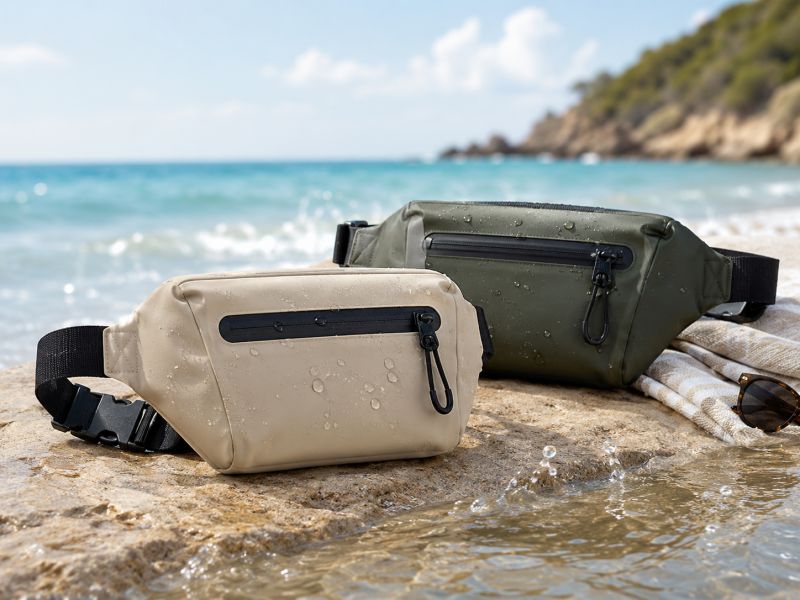
A waterproof waist bag looks small, but the risk inside it can be expensive. On a beach day, it may hold a phone, car key, hotel card, passport copy, cash, lip balm, and earphones. During a kayak trip, it may sit against splashing water for two hours. During swimming, it may be pushed, twisted, squeezed, and pulled by body movement. The bag itself is not the only concern. The real concern is whether every weak area—zipper, seam, seal, logo area, belt joint, and opening—can survive the scene it is sold for.
For outdoor and beach use, IPX4–IPX6 is usually enough for splash, rain, and wet hands. IPX7 is safer when the bag may fall into water for a short time. IPX8 is the better direction for swimming, floating, or repeated submersion. The right level depends on water exposure, closure design, material, seam method, contents, and how users actually close the bag.
The smarter choice is not always the highest rating. A strong sealed pouch may protect well but feel stiff, bulky, and slow to open. A softer coated fabric waist bag may look better for travel and retail shelves, but it should not be promoted for swimming. A waterproof waist bag needs to match the real day of use. A resort gift, a surf shop accessory, a running waist pack, and a paddleboard pouch should not be built with the same structure.
Think about a traveler walking from a hotel to the beach. The sky looks clear. The phone goes into the front pocket. A few minutes later, waves splash the waist area, sand sticks to the zipper, and wet hands open the bag again and again. This is where many designs fail—not in a clean test tank, but in messy daily use. That is why the waterproof level should be planned together with material, closure, comfort, logo, packaging, and clear use wording.
What Does “Waterproof” Really Mean For Waist Bags?
Waterproof does not mean “water will never enter in any situation.” For waist bags, it means the bag has been built to resist water under a clear use condition, such as splash, rain, short immersion, or swimming-level exposure. The real protection comes from the full structure, not only the outer fabric. Material, closure, seams, zipper ends, belt joints, logo position, and user handling all affect the result.
A waterproof waist bag sits in a difficult position on the body. It bends when people walk, presses against clothing, twists when sitting down, and gets pulled by the waist belt during movement. At the beach, it may meet saltwater, sand, sunscreen, heat, and wet hands at the same time. On a kayak or paddleboard, it may face repeated splash and short immersion. During swimming, it may be squeezed by water pressure and body motion. These scenes are very different, so the same “waterproof” claim cannot fit every product.
The first thing to understand is that waterproof fabric and a waterproof bag are not the same. A coated nylon panel may stop water from passing through the fabric surface, but water can still enter from zipper teeth, needle holes, seam edges, puller gaps, and belt connection . A transparent film pouch may block water well, but if the seal is dirty with sand or the phone pushes against the opening, leakage risk rises. A roll-top closure may work strongly when folded correctly, but it becomes weaker if the user folds it too few times.
For product planning, “waterproof” should always be connected to a real activity. A beach walking waist bag may only need splash and rain protection. A hiking waist bag needs rain resistance, sweat resistance, and comfort. A kayak waist bag needs stronger splash control and short immersion safety. A swimming pouch needs a sealed structure that can handle full water contact. Once the activity is clear, material, closure, logo, packaging words, and inspection steps become much easier to decide.
Are Waterproof Bags Really Waterproof?
Some waterproof bags are truly made for immersion, but many products with this label are only suitable for rain or splash. This is why the word should never stand alone. A better product description should say what kind of water exposure the bag is designed for: splash, rain, strong spray, short drop into water, or swimming.
Most leakage problems come from one weak area, not from the whole bag body. A bag can use strong coated fabric and still leak through a normal zipper. A pouch can use waterproof film and still leak if the seal is not fully pressed. A welded edge can protect well, but a stitched belt loop may create a hidden water path. For small waist bags, the weak areas are close together, so one design mistake can affect the whole product.
In real use, people do not treat waterproof bags like laboratory samples. They open them with wet hands. They put in phones with thick cases. They add keys with sharp corners. They close the bag while standing in sand. They wear it tightly around the waist, then sit, bend, and move. A product that only works when perfectly closed on a clean table may not work well in daily beach or outdoor use.
A more reliable waterproof waist bag should pass three practical checks:
The bag should match the promised water scene.
The closure should be easy to close correctly.
The structure should protect weak areas during movement.
If a waist bag is only intended for light beach splash, it should not be described as a swimming bag. If it is intended for swimming, the closure, pouch size, seal, belt, and instructions should all support that use. This honest match between promise and structure is what keeps the product believable.
Waterproof vs Water-Resistant
Water-resistant means the bag can slow down water entry under light exposure, such as drizzle, wet hands, or small splash. Waterproof means the bag is built for stronger water exposure under defined conditions. The difference is important because many waist bags look similar from the outside, but their internal structure is very different.
A water-resistant waist bag often uses coated polyester, coated nylon, a zipper flap, and reinforced stitching. It can be comfortable, stylish, lightweight, and easy to open. This type works well for travel, festivals, beach walking, hiking, running, outdoor retail collections, and resort programs. It gives practical protection without making the product stiff or bulky.
A waterproof waist bag usually needs stronger structure. It may use TPU, PVC-coated fabric, clear waterproof film, sealed zipper, zip-lock closure, roll-top opening, welded seams, or taped seams. This structure can protect better against heavy spray or immersion, but it may feel thicker, more technical, and slower to open. It may also limit decoration choices because some logo methods can damage or weaken waterproof areas.
A simple comparison helps:
| Feature | Water-Resistant Waist Bag | Waterproof Waist Bag |
|---|---|---|
| Main use | Drizzle, splash, travel, light outdoor use | Heavy splash, short immersion, swimming, water sports |
| Common material | Coated polyester, coated nylon | TPU, PVC-coated fabric, clear waterproof film |
| Closure | Normal zipper, covered zipper, water-resistant zipper | Zip-lock, roll-top, sealed zipper, welded opening |
| Comfort | Usually softer and easier to wear | Can feel thicker or more technical |
| Opening speed | Fast | Slower, depending on seal type |
| Logo options | More flexible | Needs careful placement |
| Best scene | Beach walking, hiking, travel, events | Kayaking, paddleboarding, water park, swimming |
| Main risk | Overclaiming waterproof level | Poor closure use or bulk inconsistency |
Neither option is automatically better. A water-resistant waist bag may be the smarter choice for a stylish beach accessory. A waterproof sealed pouch may be necessary for swimming. The right decision depends on the expected activity, the items inside, and how the product will be explained to end users.
What Is IPX4, IPX6, IPX7, And IPX8?
IPX ratings describe water protection under test conditions. The number after “IPX” shows the water exposure level. In simple product language, IPX4 relates to splash, IPX6 relates to strong water spray, IPX7 relates to short immersion, and IPX8 relates to deeper or longer immersion under stated conditions.
For waist bags, the rating should be read carefully. IPX4 does not mean safe for swimming. IPX7 does not mean unlimited underwater use. IPX8 does not mean every depth, every time, and every activity. The actual depth, time, closure method, and tested product structure still matter.
| Rating | Practical Meaning | Better For | Main Limit |
|---|---|---|---|
| IPX4 | Resists splashing water from different directions | Beach walking, wet hands, poolside splash | Not for falling into water |
| IPX5 | Resists water jets | Rain, outdoor travel, light boat spray | Not designed for submersion |
| IPX6 | Resists stronger water jets | Heavy rain, boat deck, strong spray | Still not the same as underwater use |
| IPX7 | Resists short immersion under defined depth and time | Accidental drop, kayak risk, shallow water | Not for long swimming unless stated |
| IPX8 | Resists deeper or longer immersion under stated conditions | Swimming, floating, repeated water contact | Conditions must be clearly defined |
For product development, IPX level should be connected to the final structure. If the sample uses one seal type but bulk production changes to another, the result may change. If the pouch size is enlarged, the opening may receive more stress. If the logo is moved closer to a welded edge, the sealed area may behave differently. A rating is meaningful only when the finished construction matches the tested construction.
A useful way to think about it:
IPX4 is enough when the bag only needs to handle splash.
IPX5 or IPX6 is safer when strong rain or boat spray is expected.
IPX7 is useful when accidental short immersion may happen.
IPX8 is the stronger direction when swimming or repeated submersion is part of the real use.
The higher the level, the more carefully the design must control closure, seam, material thickness, and user instructions.
Is IP67 Better Than IPX8?
IP67 and IPX8 are not the same kind of claim. IP67 includes dust protection and short immersion protection. IPX8 focuses on water immersion beyond IPX7 conditions, but it does not show dust protection because the dust digit is replaced with “X.” For beach waist bags, this difference matters because sand can be as damaging as water.
A beach product does not face clean water only. It faces fine sand, salt, sunscreen, sweat, heat, and repeated opening. Sand can sit in a zipper track, press seal, or roll-top fold. Saltwater may affect metal parts, zipper pullers, buckles, and plating. Sunscreen can leave oil on film or coating. These problems may not sound dramatic, but they often create daily-use complaints.
IP67 may be attractive for products where sand, dust, and short immersion are both concerns. IPX8 may be more suitable when the product is made for swimming, water parks, floating, or repeated underwater contact. One is not always better than the other. The better choice depends on the main risk.
| Use Scene | More Important Protection | Why |
|---|---|---|
| Beach walking | Splash and sand control | Sand can damage closures and make seals fail |
| Poolside use | Splash and wet handling | Frequent opening with wet hands |
| Kayaking | Strong splash and short immersion | Falling into water is possible |
| Swimming | Full water sealing | The whole bag may stay underwater |
| Travel rain | Rain-shedding structure | Comfort and easy access matter more |
| Water park | Seal strength and simple operation | Users open and close the bag many times |
If the product will be worn in the sea, pool, or lake, the water rating deserves more attention. If it will sit on sand, move around the beach, and open frequently, sand resistance and closure cleanliness become just as important. A strong waterproof claim is weak if the seal cannot stay clean or the zipper jams after a few beach uses.
Why Test Details Matter
Test details matter because waterproof performance changes when the bag is filled, bent, pulled, squeezed, or closed by ordinary users. A waist bag tested empty may perform differently when it holds a large phone, keys, cards, and small accessories. A seal closed carefully in a clean test may behave differently when sand, sunscreen, or wet fingers are involved.
For waist bags, realistic checking should look at more than water alone. It should review the full product under likely use conditions:
Closure should be checked after repeated opening and closing.
The bag should be checked with common contents inside.
Belt joints should be checked under pulling force.
Corners should be checked because they receive pressure.
Logo areas should be checked after wet rubbing or bending.
Transparent film should be checked for scratches, marks, and stiffness.
Zipper ends should be checked because water often enters there.
Packaging instructions should be checked for clarity.
The more serious the water claim, the more detailed the check should be. A splash-resistant beach bag may need fabric coating review, zipper flap check, seam neatness, and wet surface testing. A short-immersion pouch needs closure sealing, edge control, and internal water check after exposure. A swimming pouch should be reviewed with realistic contents, full closure, body movement risk, and clear use instructions.
A practical inspection table can guide the process:
| Area To Check | What Can Go Wrong | Better Control |
|---|---|---|
| Fabric or film | Thin coating, pinholes, scratches, weak surface | Check thickness, surface, coating, flexibility |
| Zipper | Water enters through teeth or zipper end | Use flap, sealed zipper, or move zipper away from direct exposure |
| Seal | Not fully closed, sand inside seal | Make closure simple and include clear instructions |
| Seam | Needle holes or weak welding | Use seam tape, welding, or protected seam method where needed |
| Corners | Stress concentration, cracking, leakage | Use rounded corners or reinforced edges |
| Belt joint | Pulling opens stitch holes or distorts pouch | Reinforce stress area and test pulling strength |
| Logo | Peeling, cracking, stitch holes, weakened seal | Match logo process to material and keep away from sealing zones |
| Packing | Wrong wording, missing closure guide | Add use limit and closure instruction clearly |
The goal is not only to make one good sample. The goal is to keep the same performance across bulk production. Waterproof waist bags need stable material, accurate cutting, consistent sealing, correct logo placement, clean closure, and careful packing. A small variation in seal width, welding temperature, zipper quality, or film thickness can change the result.
For a safer product launch, the waterproof promise should be written only after the structure is confirmed. If the bag is built for splash, say splash. If it is built for rain, say rain. If it is built for short immersion, define the condition. If it is built for swimming, the closure and instructions must support that use. Clear product language protects both the user and the product reputation.
Which Waterproof Level Fits Each Use?

The right waterproof level depends on how the waist bag meets water. Light beach splash, heavy rain, boat spray, short immersion, and swimming all create different pressure on the bag. For beach walking, splash protection may be enough. For kayaking or paddleboarding, short immersion protection is safer. For swimming, a sealed pouch with clear immersion limits is the better choice.
A waterproof waist bag should not be selected only by the highest rating printed on a tag. The real decision starts with the activity. A bag used beside a pool is opened often, touched by wet hands, and exposed to sunscreen. A bag used during hiking needs rain protection, sweat resistance, and comfort for hours. A bag used on a kayak may sit above water most of the time but still needs to survive a sudden fall into shallow water. A bag worn while swimming needs stronger sealing because water surrounds the full structure.
The content inside also changes the required protection. If the bag carries a towel card, coins, or a room key, light splash protection may be acceptable. If it carries a smartphone, passport, car key, bank card, or medical device, the risk becomes much higher. In that case, a stronger closure, better seam control, and clearer use instructions become necessary.
Waterproof level should also match how people use the bag. Many users open the bag repeatedly. Some close it too quickly. Some overload it with a large phone and keys. Some leave sand inside the seal. Some wear it tightly, then sit down, bend, and twist. A strong rating on paper does not help if the closure is hard to operate or the pouch becomes distorted when filled.
A practical selection table can make the decision clearer:
| Use Scene | Main Water Contact | Suggested Direction | Better Structure | What To Watch |
|---|---|---|---|---|
| Beach walking | Splash, wet hands, sand | IPX4-style splash protection | Coated fabric, zipper flap | Do not claim swimming use |
| Poolside | Splash, wet towel, sunscreen | Splash to rain-resistant | Coated fabric or sealed pocket | Oil marks and wet handling |
| Rain travel | Rain, sweat, damp clothing | IPX5-style direction | Coated nylon, covered zipper | Zipper ends and seam holes |
| Hiking | Rain, sweat, rubbing | Water-resistant outdoor structure | Coated fabric, stable belt | Comfort and abrasion |
| Boat deck | Heavy spray, saltwater | IPX5/IPX6-style direction | TPU/PVC-coated fabric, protected opening | Saltwater and hardware |
| Kayaking | Splash, short drop risk | IPX7-style direction | Roll-top or sealed pouch | Belt security and closure |
| Paddleboarding | Fall into water possible | Short immersion or stronger | Roll-top, welded pouch, sealed opening | Movement and floating feel |
| Swimming | Full water contact | IPX8-style direction | Sealed pouch, zip-lock, roll-top | Depth, time, body movement |
| Water park | Frequent wet handling | Sealed pouch with simple closure | Transparent pouch or roll-top | Easy instructions |
The table does not mean every product must carry a formal lab rating. It means the structure should match the real water level. If a product is planned for splash, design it well for splash and say so clearly. If it is planned for swimming, the design must support full water contact, not only a coated surface.
How To Choose A Waterproof Bag?
Choose a waterproof bag by starting with the activity, then checking what goes inside, how the bag closes, how it feels when worn, and how the water claim will be explained. A good waterproof waist bag should protect the contents without becoming too stiff, hard to close, or uncomfortable for the intended use.
A simple selection path works well:
First, define the main activity. Is it beach walking, hiking, boating, paddleboarding, or swimming? This decides how close the bag gets to water.
Second, define the contents. A phone, car key, passport, and bank card need stronger protection than coins or a hotel card. Sharp keys also need extra attention because they can press against film or damage an inner layer.
Third, choose the closure. For splash and rain, a covered zipper or water-resistant zipper may be practical. For short immersion, a roll-top, sealed pouch, or stronger zip-lock design is safer. For swimming, a normal zipper should usually be avoided unless the full zipper system is made for that purpose.
Fourth, check comfort. A waist bag is worn against the body. If it is too stiff, too wide, too narrow, or too bulky, people may stop using it. The belt width, buckle, back panel, and pouch thickness matter as much as the waterproof claim.
Fifth, check whether the use limit is easy to explain. A product that needs many closing steps should have a clear insert card or hangtag. If users do not close the bag correctly, leakage may happen even with good materials.
| Decision Factor | Practical Check | Better Choice |
|---|---|---|
| Main activity | Will it touch water or stay near water? | Match splash, rain, immersion, or swimming level |
| Contents | Phone, keys, cards, cash, documents? | Leave enough space around closure |
| Closure | Can it be closed correctly in seconds? | Avoid complicated sealing for casual use |
| Material | Soft, clear, rugged, textile-like? | Match feel with protection level |
| Belt | Stable when wet and loaded? | Use secure webbing and buckle |
| Logo | Will it affect waterproof area? | Keep away from seals and high-flex zones |
| Packing | Does it explain use limit? | Add simple closure and care notes |
The safest approach is to design for the most realistic high-risk scene, not the most extreme scene imaginable. If the product is for beach walking, making it a heavy swimming pouch may reduce comfort and style. If the product is for swimming, choosing a soft fashion zipper bag creates leakage risk. The correct design sits between protection, appearance, cost, and daily use.
Which Level Is Enough For Beach Use?
For normal beach use, splash to strong splash protection is often enough. This means the bag should handle wet hands, light waves, poolside splash, damp towels, and light rain. If users may swim with the bag, leave it near breaking waves, or carry expensive electronics, a sealed pouch or short-immersion direction is safer.
Beach use creates a mix of water, sand, salt, heat, and sunscreen. It is less controlled than a clean water test. Fine sand can sit in zippers and seals. Sunscreen can leave oil on coatings and film. Saltwater can affect metal pullers or plated hardware. Heat can make some materials feel softer or more sticky. Light-colored fabric may show marks more easily.
For casual beach walking, a coated polyester or coated nylon waist bag can work well. It can feel light, look attractive, and support colors, trims, and logo decoration more easily. A zipper flap helps reduce splash entry. A water-resistant zipper can improve protection while keeping a clean look. This type should be described as suitable for splash, wet hands, and light rain—not swimming.
For stronger beach use, such as boat tours, surf shops, water sports rental, or beach travel sets, TPU or PVC-coated fabric can be better. A roll-top or sealed opening adds safety when the bag may touch heavy spray or fall into shallow water. The tradeoff is a more technical look and slower access.
| Beach Product Type | Suggested Protection | Material Direction | Closure Direction | Better Use |
|---|---|---|---|---|
| Casual beach waist bag | Splash-resistant | Coated polyester | Covered zipper | Resort walk, travel, light use |
| Premium beach belt bag | Splash to rain-resistant | Coated nylon or soft coated fabric | Water-resistant zipper | Beachwear, travel, poolside |
| Beach phone pouch | Strong splash or short immersion | Transparent film or TPU | Zip-lock seal | Phone, card, key |
| Surf shop pouch | Strong splash | TPU/PVC-coated fabric | Roll-top or sealed zipper | Water-side activity |
| Boat tour waist pack | Strong spray protection | PVC-coated fabric or TPU | Roll-top or sealed opening | Spray and wet deck |
| Swimming beach pouch | Immersion direction | Clear film or TPU | Multi-seal or roll-top | Pool, sea, water park |
For beach use, “enough” should be judged by likely misuse. If a product might be seen as a swimming pouch because of its appearance, packaging must be very clear. If the bag has a transparent body and is shown near water, people may assume stronger protection. A clean instruction card can prevent wrong expectations.
A practical beach waist bag should include:
A closure that can be cleaned easily when sand sticks to it.
A belt that does not slip when wet.
No unnecessary metal parts if saltwater exposure is expected.
Logo placement away from sealing and high-friction areas.
Enough inner space so the phone does not push against the opening.
Packing words that clearly separate splash use from swimming use.
When these details are handled well, a beach waist bag feels reliable without becoming overbuilt.
Which Level Works For Rain And Hiking?
For rain and hiking, water-resistant to strong splash protection is usually practical. The bag should shed rain, resist sweat, handle rubbing against clothing, and stay comfortable during movement. A coated nylon or coated polyester body with protected zipper, stable belt, and reinforced stress areas often works better than a bulky swimming pouch.
Rain and hiking create a different kind of water stress from swimming. Water usually comes from above, from wet vegetation, or from clothing. It does not surround the bag with underwater pressure. Because of this, a full submersion structure may be unnecessary for most hiking waist bags. Comfort, weight, abrasion resistance, and quick access are often more important.
A hiking waist bag may be worn for several hours. It must sit close to the body without bouncing. The back panel should not feel sharp or sticky. The belt should not twist. The buckle should stay secure. The zipper should open smoothly with one hand. If the product is too technical and stiff, it may protect well but feel unpleasant in daily outdoor use.
Important features for rain and hiking include:
| Detail | Why It Matters |
|---|---|
| Coated nylon or polyester | Helps shed rain while keeping textile feel |
| Covered zipper | Reduces water entry from above |
| Raised zipper position | Keeps opening away from direct water flow |
| Reinforced corners | Helps resist rubbing and load stress |
| Stable waist belt | Reduces bounce during walking |
| Sweat-resistant back side | Improves comfort against the body |
| Inner divider | Keeps phone away from keys |
| Reflective trim | Useful for low-light outdoor use |
| Lightweight structure | Helps long-wear comfort |
For hiking, the inner layout should stay simple. Too many pockets add seams and weight. A main compartment for phone and essentials, a smaller internal divider, and a hidden card pocket may be enough. If the bag is meant for trail running, bounce control becomes more important than large capacity.
A rain-ready waist bag should also avoid exaggerated claims. If the design has stitched seams and a covered zipper, it may perform very well in rain, but that does not make it a swimming pouch. Clear wording helps people use it correctly.
For outdoor travel, a good level is usually strong rain protection, not full immersion. This keeps the product light, wearable, and useful beyond one trip.
What Is The Best Waterproof Bag For Swimming?
The best waterproof bag for swimming is a sealed pouch-style waist bag that can handle full water contact, body movement, and repeated closure. It should have enough space for the intended contents, a reliable seal, a stable belt, rounded corners, and simple instructions. A normal zipper waist bag is not the right structure for swimming.
Swimming is one of the hardest scenes for a waist bag. The bag may twist around the waist. Water pressure touches all sides. A phone may press against the film. Keys may create sharp pressure. The belt may pull the pouch shape during movement. The user may open and close the bag with wet hands near sand or pool water.
A swimming pouch should be designed around the seal first. If the seal is too narrow, too tight, or too hard to press, users may not close it fully. If the pouch is too small, a phone case can push against the opening and weaken the closure. If the film is too thin, puncture risk increases. If the material is too stiff, the bag feels uncomfortable when swimming.
Useful design details for swimming include:
| Feature | Better Direction |
|---|---|
| Opening width | Wider than the largest intended phone |
| Seal area | Keep clean, flat, and easy to press |
| Closure type | Multi-seal, roll-top, or immersion-focused sealed structure |
| Film thickness | Strong enough to resist puncture, still flexible |
| Corners | Rounded to reduce stress |
| Belt | Adjustable, stable, not too slippery when wet |
| Inner layout | Simple, no sharp internal pressure |
| Instructions | Clear closing steps in simple language |
| Air space | Avoid overfilling; leave room near the seal |
For swimming, the product should also be tested with realistic contents. A pouch tested empty may pass, while the same pouch filled with a large phone and key may be harder to close. Testing should include the actual phone size or a similar object, belt tension, and repeated closure.
The best swimming waterproof waist bag is not always the biggest or thickest one. It is the one that closes reliably, holds contents without stress, stays comfortable, and explains its use clearly. Overly complex closures can reduce real protection because people may skip steps. A simple seal that users can close correctly often performs better in daily use.
When Is IPX8 Really Needed?
IPX8 is needed when the waist bag is intended for swimming, repeated submersion, floating, water parks, or stronger water contact beyond a short accidental drop. It is also useful when the bag will carry phones, keys, documents, or other items that cannot get wet. For beach walking, rain travel, and hiking, IPX8 may be more than necessary.
The most important thing about IPX8 is that it must be tied to stated conditions. It is not a universal promise for every depth, time, or activity. A product may be tested under one depth and time, but real swimming adds body movement, bending, belt pull, and user closure variation. For this reason, IPX8 should be used carefully and supported by the final product structure.
IPX8-style design makes sense when:
The bag will be worn in a pool, sea, lake, or water park.
The product is promoted for swimming or floating.
The content is likely to include a smartphone or car key.
The closure is easy to close correctly every time.
The material and seam method can support immersion.
The instructions clearly explain how to close and use the bag.
It may be unnecessary when:
The bag is a casual beach fashion accessory.
The main use is walking near water, not entering water.
The product needs to be soft, slim, and fast to open.
The main concern is rain or splash, not full submersion.
The target design depends on stitched pockets, fabric texture, or decorative patches.
The cost plan does not support sealed structure and water-related checks.
A higher rating can make the product sound stronger, but it can also create more pressure. If the bag is promoted for immersion, people will trust it with expensive items. If leakage happens, the damage is not only a wet lining. It may be a broken phone, lost travel document, or unusable car key. That is why the use claim must match the product structure.
A practical decision table:
| Main Use | Enough Level Direction | Why |
|---|---|---|
| Beach walk | IPX4-style splash protection | Handles light water without overbuilding |
| Rain travel | IPX5-style rain and spray protection | Keeps product light and easy to use |
| Hiking | Water-resistant outdoor structure | Comfort and abrasion matter |
| Boat spray | IPX5/IPX6-style direction | Strong splash without full swimming claim |
| Kayaking | IPX7-style short immersion direction | Covers drop risk |
| Paddleboarding | IPX7 or stronger depending on use | Falling into water is common |
| Swimming | IPX8-style direction | Full water contact expected |
| Water park | IPX8-style pouch may be safer | Frequent wet handling and immersion risk |
For many outdoor and beach waist bags, the smartest design is not the strongest possible level. It is the level that fits the activity, protects the contents, stays comfortable, supports the desired look, and can be repeated consistently in bulk. That is what makes the product feel reliable after real use, not only during the first impression.
Which Type Of Waterproof Waist Bag Works Best?
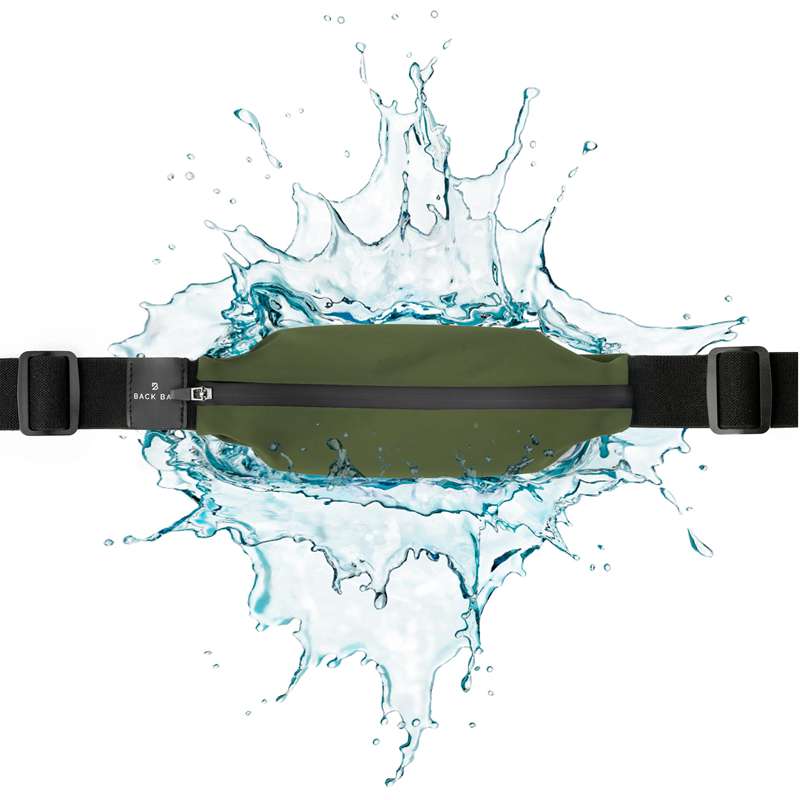
The right waterproof waist bag type depends on four things: how much water contact it will face, how often it needs to open, what items it carries, and how comfortable it must feel when worn. A sealed pouch is safer for swimming. A roll-top mini dry bag works well for kayaking and paddleboarding. A coated fabric waist bag is better for beach walking, travel, hiking, and daily outdoor use.
A waterproof waist bag is not just a smaller version of a dry bag. It sits close to the waist, bends with body movement, gets pulled by the belt, and may be opened many times during one trip. That makes structure selection more sensitive than it looks. A closure that works well on a flat pouch may feel awkward when wrapped around the waist. A stiff waterproof film may protect well but may not feel comfortable during walking. A soft fabric waist bag may look clean and wearable, but it should not be used for swimming unless the opening and seams support that scene.
The product type should match real behavior. People often put in more than one item: a phone, room card, car key, cash, lip balm, small sunscreen, and earphones. These objects press against corners and seals. If the bag is too slim, the phone may push the closure open. If the pouch is too large, it may bounce when walking. If the belt is too narrow, it may twist when wet. If the surface is too smooth, the bag may slide around the waist.
A useful selection comparison:
| Type | Water Protection | Wearing Feel | Opening Speed | Better Use |
|---|---|---|---|---|
| Coated fabric zipper waist bag | Light to medium | Soft and comfortable | Fast | Beach walking, travel, hiking |
| Covered zipper outdoor waist bag | Medium | Comfortable | Fast | Rain, boat spray, outdoor use |
| Sealed transparent pouch | Strong | Medium | Medium | Swimming, water parks, beach retail |
| Roll-top mini waist dry bag | Strong | Medium | Slower | Kayaking, paddleboarding, fishing |
| Welded TPU belt bag | Strong | Medium to premium | Medium | Water sports, outdoor lifestyle |
| PVC-coated pouch | Strong | More structured | Medium | Boating, beach, rugged wet use |
The strongest type is not always the right one. A swimming pouch may feel too technical for a beachwear collection. A fashion-style coated waist bag may look attractive, but it is risky for full water contact. A roll-top pouch may protect well, yet it can feel bulky if the top is not sized properly. A better product choice comes from matching activity, structure, comfort, and use wording.
What Is The Best Waterproof Fanny Pack?
The best waterproof fanny pack is the one that protects the items inside without making the product uncomfortable or difficult to use. For beach walking, a coated fabric waist bag with a protected zipper may be the better choice. For swimming, a sealed pouch is safer. For kayaking or paddleboarding, a roll-top or welded waterproof structure is usually more reliable.
A strong waterproof fanny pack should solve these practical needs:
It should fit a large phone without stretching the opening.
It should leave extra space around the seal, not press contents against it.
It should close correctly in a few seconds.
It should remain stable when the belt gets wet.
It should not swing heavily during walking or paddling.
It should resist sand, sunscreen, saltwater, and repeated handling.
It should keep the logo visible without damaging waterproof zones.
It should explain the water limit clearly through hangtag, insert card, or packing text.
For a beach resort product, the best style may be a light coated waist bag with a clean front panel, soft color, smooth zipper, and splash protection. For a water park product, a transparent pouch with a multi-seal closure and simple instruction card may perform better. For a paddleboard accessory, a compact roll-top design with reinforced belt joints may be more suitable.
A common mistake is trying to create one style for every wet scene. The result can be too bulky for casual wear and still not strong enough for serious water use. A cleaner approach is to separate the line by activity:
| Main Activity | Better Type | Why It Works |
|---|---|---|
| Beach walking | Coated fabric waist bag | Comfortable, stylish, light |
| Rain travel | Covered zipper outdoor bag | Fast access with rain protection |
| Poolside use | Splash-resistant or sealed pocket design | Handles wet hands and light splash |
| Water park | Transparent sealed pouch | Clear use, strong water protection |
| Kayaking | Roll-top mini waist dry bag | Safer for short immersion |
| Paddleboarding | Welded pouch or roll-top | Stable and water-ready |
| Swimming | Sealed pouch | Better for full water contact |
The best waterproof fanny pack should not only pass a water-related check. It should also feel natural on the waist, carry real items, close easily, and match the intended activity.
Zipper Waist Bag vs Sealed Pouch
A zipper waist bag is easier to use, softer to wear, and more suitable for travel, beach walking, hiking, events, and daily outdoor activity. A sealed pouch provides stronger water protection and is more suitable for swimming, kayaking, water parks, and short immersion. The choice depends on whether the product mainly faces splash or full water contact.
A zipper waist bag can still be designed for wet scenes. It may use coated polyester, coated nylon, a zipper flap, water-resistant zipper tape, raised zipper placement, and inner lining. This structure can handle drizzle, splash, wet hands, and light outdoor use while keeping the product comfortable. It also gives more freedom for color, pocket layout, logo process, and retail styling.
A sealed pouch works differently. It protects through zip-lock strips, roll-top folds, welded edges, sealed zipper systems, or waterproof film. It can handle stronger water exposure, but the user must close it correctly. If sand enters the seal or the pouch is overfilled, leakage risk increases. The closure is stronger, but it also demands more care.
| Detail | Zipper Waist Bag | Sealed Pouch |
|---|---|---|
| Main strength | Comfort and fast access | Stronger water protection |
| Better scene | Travel, beach walking, hiking | Swimming, water parks, kayaking |
| Opening speed | Fast | Medium to slow |
| Wearing comfort | Usually better | Depends on film softness and size |
| Logo freedom | More flexible | Needs careful placement |
| Inner pocket options | Easier to add | More limited |
| Waterproof limit | Splash and rain direction | Short immersion or swimming direction |
| Common risk | Overstated water claim | Incorrect closure by user |
A zipper design should not be positioned as a swimming bag unless the zipper system is truly built for that use. A sealed pouch should not be made too tight around the contents. Both structures can work well when used for the right scene.
For beach walking and travel, the zipper waist bag often wins because people open the bag often. They need to reach a phone, room card, or cash quickly. For swimming, a zipper bag is usually not enough because water surrounds the full bag and presses against the opening. For kayaking, paddleboarding, and boating, a sealed pouch or roll-top structure gives more confidence if the bag drops into water.
Roll-Top Bag vs Zip-Lock Bag
A roll-top waist bag seals by folding the opening several times and securing it with a buckle or clip. A zip-lock bag seals by pressing one or more locking strips together. Roll-top styles are strong for outdoor use and water sports. Zip-lock styles are practical for flat phone pouches, swimming, poolside use, and tourist beach products.
Roll-top construction is widely used because it is simple and dependable when folded correctly. It does not rely on zipper teeth. It can be made with TPU, PVC-coated fabric, or other waterproof materials. For waist bags, the roll section needs careful size control. If the bag is too short, the roll eats too much storage space. If the material is too thick, the top becomes bulky against the waist. If users fold it fewer times than required, protection drops.
Zip-lock pouch construction is popular because it stays flat, light, and phone-friendly. It often works well with clear film, allowing users to see their phone, room card, or cash inside. A double or triple press seal can improve safety. However, the seal must stay clean. Sand, hair, fabric lint, sunscreen, or uneven pressure can stop it from closing fully.
| Structure | Strength | Weakness | Better Use |
|---|---|---|---|
| Roll-top | Strong seal when folded correctly | Bulkier top | Kayaking, fishing, boating |
| Zip-lock | Flat, easy to understand, phone-friendly | Seal can be affected by sand | Swimming, beach, water parks |
| Roll-top with buckle | Secure and rugged | More technical look | Paddleboarding, outdoor activity |
| Multi-seal zip-lock | Stronger than single seal | Needs careful pressing | Swimming pouch |
| Sealed zipper | Cleaner appearance | Higher cost and stricter control | Premium outdoor waist bag |
The closure should match how often the product is opened. A roll-top is not ideal if users need to check the phone every few minutes. A zip-lock pouch may be better for quick access, but only if users can press the seal correctly. For serious outdoor use, roll-top designs often feel more secure. For poolside and swimming, a transparent zip-lock pouch may be easier to understand.
Product size also matters. A roll-top waist bag needs enough height above the main storage area. A zip-lock pouch needs enough width and depth so the phone and keys do not push against the seal. For both types, the bag should be tested with real contents, not empty.
TPU vs PVC-Coated Fabric
TPU is often used when the product needs a softer, more premium, flexible waterproof feel. PVC-coated fabric is often used when the product needs a tougher, more structured, dry-bag style. Both can work for waterproof waist bags, but they create different hand feel, cost, appearance, and production requirements.
TPU can feel smoother and more flexible. It is often suitable for welded structures, clear pouches, and premium outdoor products. It can create a clean technical look and may feel less rigid against the waist compared with heavier PVC-coated fabric. For products that need a softer touch or more refined finish, TPU is often a strong direction.
PVC-coated fabric can feel more rugged and structured. It is commonly used for dry bags, boating bags, and outdoor waterproof gear. It can offer strong surface durability and bold color options. It may be more suitable for roll-top waist packs, rugged beach products, and boat-use accessories. The tradeoff is that it may feel more plastic-like or stiff depending on thickness and finish.
Coated nylon and coated polyester should also be considered when full immersion is not required. These materials can offer better textile feel, lighter weight, more color choices, and easier styling. They are often suitable for rain and splash protection, but not for swimming unless the full structure has been upgraded.
| Material | Feel | Protection Direction | Better Product Style | Watch Area |
|---|---|---|---|---|
| TPU film | Soft, flexible, smooth | Strong with sealing or welding | Premium waterproof pouch | Thickness, scratch marks, seal strength |
| TPU-coated fabric | Technical, flexible | Strong water protection | Outdoor lifestyle waist bag | Welding and logo compatibility |
| PVC-coated fabric | Rugged, structured | Strong with roll-top or welding | Dry-bag waist pack | Stiffness, weight, cold feel |
| Coated nylon | Textile-like, durable | Rain and splash | Outdoor travel waist bag | Zipper and seam control |
| Coated polyester | Light, cost-controlled | Light splash and rain | Resort, event, casual beach | Coating strength and abrasion |
| Clear waterproof film | Transparent, simple | Strong if sealed well | Swimming phone pouch | Scratches, yellowing, phone pressure |
Material thickness affects everything. Thicker film may protect better against puncture but can feel stiff. Thinner film may feel softer but may crease, stretch, or wear faster. A fabric with strong coating may shed water well but still need zipper and seam protection. The final decision should consider use scene, wearing comfort, product look, and closure structure together.
Logo process must also match material. Heat transfer, silk screen, rubber patch, woven label, reflective print, and embossed patches behave differently on coated surfaces. A stitched patch may create needle holes. A large print on flexible film may crack after repeated bending. A rubber patch may look premium but needs careful bonding or placement. The logo should support the design, not weaken the water barrier.
Transparent Pouch vs Fabric Belt Bag
A transparent pouch is better when visibility and water protection are the main needs. It suits swimming, water parks, beach tourism, poolside products, and phone protection. A fabric belt bag is better when comfort, daily wear, color, texture, and lifestyle appearance matter more. It suits travel, beach walking, hiking, events, and outdoor retail collections.
Transparent pouches are easy to understand at first sight. People can see the phone, card, or cash inside. This makes them practical for swimming pools, resorts, cruises, water parks, and beach shops. Some designs also allow limited phone touch through the film, although this depends on film thickness, water condition, phone model, and screen sensitivity.
The weakness is long-term appearance. Clear film can show scratches, fingerprints, sand marks, folding lines, and possible yellowing depending on material and storage conditions. It can also look less premium if the product line is focused on fashion or outdoor lifestyle. If the pouch is very tight, a large phone can press against the seal and raise leakage risk.
Fabric belt bags have a broader everyday appeal. They can use coated nylon, coated polyester, woven texture, zipper trims, custom pullers, inner lining, webbing color, and logo patches. They look more like a wearable accessory and can be used beyond the beach. The limitation is that most fabric zipper bags should stay within splash or rain use unless the structure is specially upgraded.
| Product Goal | Better Direction | Reason |
|---|---|---|
| Phone protection during swimming | Transparent sealed pouch | Easy visibility and stronger seal direction |
| Premium beachwear accessory | Coated fabric belt bag | Better texture and styling |
| Resort gift | Lightweight splash-resistant waist bag | Comfortable and cost-efficient |
| Water park retail | Clear pouch with strong seal | Easy to explain and use |
| Paddleboard accessory | Roll-top or welded waterproof waist pack | Stronger water readiness |
| Outdoor travel | Fabric waist bag with rain protection | Better comfort and daily use |
| Cruise accessory | Transparent pouch or coated belt bag | Depends on swim or walking use |
| Hiking product | Coated nylon belt bag | Light, wearable, practical |
A transparent pouch should have a smooth seal, enough phone space, rounded corners, and a belt that does not slip when wet. A fabric belt bag should have a protected zipper, reinforced seams, stable belt, and clear use wording. Both types can be strong products, but they should not make the same water promise.
For a wider product line, it can be smart to create two matching styles: one fabric waist bag for beach walking and travel, and one sealed pouch for swimming and water parks. They can share color, logo style, hangtag design, and packing direction while serving different wet scenes. This avoids forcing one structure to do everything and gives end users a clearer choice.
How Should Brands Customize Waterproof Waist Bags?

A custom waterproof waist bag should start from real use, not from appearance alone. The right plan connects size, material, closure, belt, logo, packaging, and water protection level into one product. A beach walking waist bag, a swimming pouch, and a kayak waist pack should not share the same structure. Good customization makes the product useful, clear, comfortable, and easier to repeat in bulk.
Waterproof waist bags are more sensitive than normal belt bags because every design choice can affect protection. A logo stitch may create needle holes. A zipper may become the easiest water path. A belt joint may pull the pouch out of shape. A transparent film may protect well but show scratches quickly. A roll-top may seal well but feel bulky if the height is too short. A small pouch may look slim but may force a phone to press against the seal.
A practical custom plan should solve four problems at the same time:
The bag must protect the items people actually carry.
The bag must feel comfortable when wet, loaded, and moving.
The closure must match the water scene and be easy to close correctly.
The final product message must not promise more than the structure can support.
The safest process is to confirm the activity first. Is the waist bag for beach walking, poolside use, rain travel, kayaking, paddleboarding, water parks, or swimming? After that, the structure becomes much clearer. A beach walking design can focus on comfort, color, light splash protection, and attractive logo placement. A swimming pouch must focus on sealed closure, pouch size, film strength, and clear closing steps. A kayak waist pack needs short immersion protection, stable belt structure, and stronger stress.
A good custom waterproof waist bag should be reviewed through these core areas:
| Custom Area | What To Decide | Why It Matters |
|---|---|---|
| Use scene | Beach, rain, boat, kayak, swim, water park | Decides protection level and structure |
| Size | Phone fit, key space, card pocket, closure clearance | Prevents seal stress and poor usability |
| Material | TPU, PVC-coated fabric, coated nylon, clear film | Affects feel, cost, water resistance, appearance |
| Closure | Covered zipper, sealed zipper, zip-lock, roll-top | Main water entry control |
| Belt | Webbing width, buckle, adjuster, reinforcement | Affects comfort and active-use security |
| Logo | Print, patch, heat transfer, reflective mark, label | Must not weaken protected areas |
| Inner layout | Flat pouch, divider, hidden pocket, key area | Protects contents and improves daily use |
| Packaging | OPP bag, hangtag, insert card, header card, box | Explains use limit and closing method |
| Checking | Size, closure, seam, pull, water-related review | Helps keep bulk goods closer to the approved sample |
The best design is usually not the most complicated one. For waterproof waist bags, extra pockets, decorative stitching, metal trims, and large logo patches can increase risk if they are placed in the wrong area. A cleaner structure often gives better protection and more stable production.
What Size And Capacity Are Practical?
A practical waterproof waist bag should fit the intended items without forcing the closure. For beach and outdoor use, the bag often needs space for a large phone, car key, card, cash, hotel room key, small lip balm, and sometimes a passport copy or mini sunscreen. If the pouch is too tight, the contents press against the seal and increase leakage risk.
Many compact waist bags look attractive in photos but fail in real use because the opening is too narrow. A modern smartphone with a protective case is thicker than a bare phone. A car key can create sharp pressure. A card holder may bend the pouch. Wet fingers also need more room to insert and remove items quickly. If users must push and squeeze contents into the bag, the design is already too tight.
For water-resistant fabric waist bags, capacity can be shaped through pockets and depth. For sealed waterproof pouches, capacity must be planned more carefully because every seam, divider, and opening affects protection. A swimming pouch should leave clear space above the contents so the seal can close flat. A roll-top bag needs extra height for folding, so the total height must be higher than the usable storage area.
| Item To Carry | Size Impact | Design Note |
|---|---|---|
| Large phone with case | Needs wider opening and enough seal clearance | Do not place seal too close to phone top |
| Car key | Needs puncture awareness | Add small inner sleeve or avoid thin film |
| Cards and cash | Needs flat storage | Inner divider helps keep shape |
| Hotel card or cruise card | Needs quick access | Can use small internal pocket |
| Earphones | Needs soft separation | Avoid pressing against phone screen |
| Passport copy | Needs wider panel | Works better in flat pouch design |
| Mini sunscreen | Needs depth | Not ideal for ultra-slim swim pouches |
A good sizing method is to define the largest item first, then add space for closing and movement. For phone pouches, leave enough room around the phone so the seal stays flat. For outdoor waist bags, control bulk so the bag does not bounce. For resort or retail programs, make the size useful but not oversized; a bag that feels too big may look less premium and become uncomfortable.
Practical capacity planning can follow this direction:
Small pouch: phone, card, cash, room key.
Medium waist bag: phone, keys, cards, cash, lip balm, earphones.
Outdoor waist pack: phone, small tools, snack, cards, keys, compact accessories.
Swimming pouch: phone, card, cash, small key, with enough seal clearance.
The key rule is simple: waterproof space should never be filled to its limit. A little empty space near the closure is part of the protection design.
Which Belt Structure Feels Secure?
A waterproof waist bag needs a belt that stays stable when dry, wet, loaded, and moving. A secure belt should not twist, loosen, slide, or pull the pouch out of shape. For beach walking, a lighter belt may work. For swimming, kayaking, or paddleboarding, stronger webbing, better buckle grip, and reinforced side joints are much more important.
The waist belt is not just a carrying strap. It directly affects waterproof performance. When the belt pulls too hard on the pouch, it can distort the opening, stretch the side panels, or stress the seam area. During swimming, the pouch may move with body rotation. During paddleboarding, a fall into water can pull the bag suddenly. During hiking, repeated walking can make a weak belt loosen over time.
A good belt structure should be tested with real movement, not only checked on a table. The bag should be worn with contents inside. It should be tightened, loosened, twisted, and pulled. The buckle should remain secure when wet. The webbing should not slip through the adjuster too easily. The strap tail should be controlled with an elastic keeper or loop.
| Belt Detail | Better Direction | Why It Matters |
|---|---|---|
| Webbing width | Wider for active water use | Reduces twisting and pressure |
| Webbing texture | Slight grip, not too slippery | Helps prevent loosening when wet |
| Buckle | Secure plastic buckle for beach and water use | Avoids corrosion issues from metal |
| Adjuster | Firm hold after wet movement | Prevents strap slipping |
| Strap keeper | Elastic or webbing loop | Controls loose strap tail |
| Side joint | Reinforced stitching or welded support | Reduces tearing and distortion |
| Back contact | Smooth surface or soft backing | Improves comfort during long wear |
| Load balance | Centered pouch weight | Reduces bounce and rotation |
For swimming pouches, avoid bulky belt hardware that presses into the body. For hiking waist bags, comfort can matter as much as water protection. For beach products, corrosion resistance matters because saltwater can damage some metal parts. Plastic buckles are often practical for wet scenes, but quality still matters because weak buckles make the whole product feel unreliable.
Belt length should also be planned around the real wearing scene. A bag worn over swimwear needs a different fit from one worn over jackets or outdoor clothing. An adjustable belt should cover the expected waist sizes without leaving an excessively long strap tail. A clean strap finish improves appearance and daily use.
How Should Closures Be Chosen?
Closure should be chosen according to water exposure. For beach splash and rain, a covered zipper or water-resistant zipper may be enough. For kayaking and paddleboarding, roll-top or sealed pouch construction is safer. For swimming, a normal zipper is usually not suitable; the opening should use a sealed structure that can handle full water contact.
The closure is usually the highest-risk area. Water rarely enters evenly through the middle of a coated panel. It enters through gaps, zipper ends, seals, stitched openings, and poorly folded areas. The stronger the water scene, the more the closure matters.
A good closure should also be easy to use. A closure that protects well only when operated perfectly may fail in daily life. People use waterproof waist bags with wet fingers, sunscreen on hands, sand nearby, and limited attention. A simple, visible, and easy-to-confirm closure can perform better than a complicated one that users often close incorrectly.
| Closure Type | Better Use | Strength | Watch Area |
|---|---|---|---|
| Normal zipper | Dry or light daily use | Fast and low cost | Not suitable for waterproof claims |
| Covered zipper | Beach splash, rain travel | Better splash control | Still not for immersion |
| Water-resistant zipper | Outdoor waist bags | Cleaner look and stronger rain protection | Zipper ends still need care |
| Sealed zipper | Premium waterproof designs | Better water control | Higher cost and stricter checking |
| Zip-lock seal | Swimming pouch, water park | Flat and phone-friendly | Sand can affect sealing |
| Roll-top | Kayaking, boating, fishing | Strong when folded correctly | Needs enough height and user discipline |
| Roll-top with buckle | Water sports, rugged use | Secure and simple | More technical appearance |
| Hybrid seal | Stronger wet-use design | Added protection | More steps can confuse users |
For a fabric waist bag, zipper placement can improve protection. A raised zipper position, zipper flap, reverse coil zipper, or protected zipper end can reduce direct water entry. For sealed pouches, the opening should remain flat after filling. If the phone or key pushes the seal into a curve, leakage risk rises.
Closure instructions should be part of the product, not an afterthought. If the product needs three folds, say it clearly. If a press seal must be fully closed across the full width, show it with a simple insert card. If the bag is not designed for immersion, the packaging should not visually suggest swimming use.
Good closure design is a balance between protection and habit. If users open the bag every few minutes, a roll-top may become frustrating. If the bag is for swimming, fast access matters less than sealing reliability. The right closure is the one people can use correctly in the scene where the product will be used.
Where Should The Logo Be Placed?
Logo placement should protect both the appearance and the waterproof structure. On coated fabric waist bags, logos can be placed more freely. On sealed pouches, welded panels, roll-top folds, zip-lock areas, and high-flex corners need extra care. A logo should be visible, durable, and placed away from areas that control water protection.
Logo work can affect performance more than many people expect. Embroidery directly through a protected panel creates needle holes. A stitched patch near a water path can weaken the structure. A large heat-transfer logo on a flexible film may crack if the pouch bends often. A rubber patch may look premium, but bonding or stitching must be matched with the water level.
Common logo methods include:
| Logo Method | Better For | Watch Area |
|---|---|---|
| Silk screen | Flat coated panels, simple logos | Wet rub and adhesion |
| Heat transfer | Smooth fabric or coated areas | Bending and peeling |
| Rubber patch | Outdoor and sporty style | Attachment method and placement |
| Woven label | Fabric waist bags | Stitching holes |
| Reflective print | Running and outdoor use | Material compatibility |
| Embroidery patch | Lifestyle waist bags | Not ideal on sealed waterproof zones |
| Debossed patch | Premium casual style | Adds thickness and stitching concern |
| Printed insert card | Transparent pouch packaging | Keeps pouch body clean |
Safe logo placement often includes the center front panel, outer flap, upper band away from the seal, belt label, zipper puller, hangtag, insert card, or non-critical side area. Avoid placing logos across welded edges, press seals, roll-top fold lines, zipper ends, or high-stress corners.
For transparent pouches, keep the viewing window clean. A small logo at the top band or on the packaging insert often looks better than a large print across the clear area. For outdoor fabric waist bags, a rubber patch or reflective logo can add value, but placement should avoid areas exposed to repeated bending.
Logo size also matters. A large logo can dominate the product but may reduce flexibility. A small logo can feel premium but may be less visible on retail display. For beach and outdoor use, logo durability should be checked under wet rubbing, folding, and friction from clothing.
A well-placed logo should do three things:
Stay visible during real use.
Match the product style.
Avoid weakening seams, seals, and coated areas.
What Packing Fits Retail And Beach Programs?
Packaging for waterproof waist bags should protect the product, explain the use condition, and make the closure easy to understand. A simple OPP bag may be enough for basic bulk packing, but beach, water park, outdoor, and retail products often need hangtags, insert cards, barcode labels, header cards, or color boxes.
Waterproof bags need clearer instructions than normal waist bags. If a pouch has a press seal, users need to know how to close it. If a roll-top must be folded three times, that should be visible. If a fabric waist bag is splash-resistant but not suitable for swimming, the wording should be clear. Good packaging reduces misuse and helps the product feel more trustworthy.
Packaging should match the sales scene:
| Packing Type | Better For | Practical Value |
|---|---|---|
| OPP bag | Basic packing and shipment | Cost-controlled protection |
| Hangtag | Retail, resort shops, outdoor stores | Shows material, use, care, logo story |
| Insert card | Waterproof pouches | Explains closure steps and use limit |
| Header card | Beach shops and tourist retail | Strong hanging display |
| Barcode label | Retail and warehouse control | Helps SKU sorting |
| Color sticker | Multi-color or size programs | Easy identification |
| Color box | Gift sets and premium e-commerce | Better presentation but higher volume |
| Drawstring storage pouch | Travel sets and premium programs | Adds reuse value |
| Carton mark | Bulk shipment and multi-SKU orders | Prevents sorting mistakes |
For beach programs, packaging should handle moisture and display needs. A header card or hangtag can make a small pouch easier to present. For e-commerce, packaging may need barcode, product name, color code, inner protection, and outer carton labeling. For resort gifts, a cleaner presentation with a card and simple instruction can feel more polished.
The wording should be practical and specific. Instead of only saying “waterproof,” packaging can say:
Designed for beach splash and wet hands.
Close all seals before water contact.
Not intended for long underwater use.
Fold top three times before use.
Keep sand away from the seal before closing.
Rinse after saltwater contact and dry before storage.
Packaging also affects cost and shipping volume. A color box looks premium but increases carton space and freight cost. A simple polybag saves space but may not explain the closure. An insert card adds small cost but can reduce misuse. For waterproof waist bags, the right packaging often pays for itself by helping people use the product correctly.
For a custom project, packing details should be confirmed before final pricing because they affect material cost, labor time, carton size, weight, and delivery planning. A complete plan includes product structure and packing structure together, so the final item looks clean, ships safely, and gives users the right expectations from the first moment.
How Do Price, Sample, And Factory Process Change?
Price and sample work change quickly when a waist bag moves from “water-resistant” to “waterproof.” A splash-resistant fabric waist bag may only need coated material, zipper protection, and clean stitching. A swimming pouch may need TPU or PVC film, sealed edges, press-lock closure, welding, water-related checks, and clearer packing instructions. Higher protection usually means more structure, more control, and more cost.
A small waterproof waist bag can be more complex than it looks. The fabric area is not large, but the risk areas are concentrated: opening, seal, zipper end, corners, belt joint, logo position, and film thickness. A low-cost waist bag may look similar in photos, yet the difference appears when the bag is filled, closed, bent, pulled by the belt, and exposed to water.
The cost also changes with the promised use. A bag for beach walking does not need the same structure as a pouch worn while swimming. If the product only needs to resist wet hands and light splash, a coated polyester or nylon body with a protected zipper can keep the product comfortable and cost-controlled. If the product must handle kayaking or short immersion, stronger materials and closure work become necessary. If it is intended for swimming, the seal, pouch size, and instructions become central.
For reference, many custom bag projects follow a standard MOQ of around 500 pcs per design. Simple styles may be reviewed at 200–300 pcs depending on structure and materials. Sampling often takes 5–7 days, while simple styles may take 2–3 days. Bulk production commonly takes 20–30 days after sample approval and confirmed details. Sample fees may be refunded or deducted when the order reaches 2000 pcs.
A practical overview:
| Product Direction | Material Direction | Closure Direction | Cost Level | Main Reason |
|---|---|---|---|---|
| Beach splash waist bag | Coated polyester | Covered zipper | Lower to medium | Simple structure, easy sewing |
| Outdoor rain waist bag | Coated nylon | Water-resistant zipper or flap | Medium | Better fabric, stronger zipper area |
| Boat spray waist bag | TPU or PVC-coated fabric | Protected or sealed opening | Medium to higher | Stronger water exposure |
| Kayak waist pouch | TPU/PVC-coated fabric | Roll-top or sealed pouch | Higher | Short immersion risk |
| Swimming pouch | Clear TPU/PVC film | Zip-lock, multi-seal, roll-top | Higher | Full water contact and seal control |
| Premium outdoor belt bag | TPU-coated fabric | Sealed zipper or welded structure | Higher | Material, closure, and inspection precision |
The goal is not to make every product as expensive as possible. The goal is to put money into the parts that reduce real failure risk. For beach walking, comfort and protected zipper design may matter more than a heavy sealed structure. For swimming, saving cost on closure or film thickness can create much larger after-sale risk later.
What Affects Waterproof Waist Bag Price?
Waterproof waist bag price is mainly shaped by material, closure, seam method, belt structure, logo process, quantity, packing, and checking needs. Material quantity is only one part of the cost. In many waterproof styles, the opening, seal, welding, zipper, and inspection time create the biggest difference.
Material choice changes both cost and product feel. Coated polyester is often practical for beach gifts, events, and light splash use. Coated nylon feels stronger for rain travel and outdoor waist bags. TPU film or TPU-coated fabric can create a softer and more premium waterproof feel. PVC-coated fabric often suits rugged dry-bag styles, boating use, and roll-top waist packs. Clear waterproof film works well for swimming pouches, but thickness, clarity, softness, and scratch resistance need review.
Closure choice can change the cost more than the body fabric. A normal zipper is easy to source and sew, but it should not be used for strong water claims. A covered zipper adds splash protection. A water-resistant zipper improves rain performance. A sealed zipper, roll-top, or zip-lock system needs more careful sampling and checking. The stronger the closure, the more attention is needed in production.
Seam method also matters. Regular stitching is efficient, but needle holes can become water paths. Seam tape, welding, folded edges, or protected seam construction may be needed for stronger waterproof needs. These methods can add material, labor, equipment settings, and inspection time.
Logo work can also affect price. A simple silk screen logo on a flat coated panel is different from a rubber patch on a curved waterproof surface. Heat transfer on coated fabric needs adhesion review. Embroidery may be suitable for lifestyle fabric areas but not for sealed waterproof panels. Reflective logo, woven label, puller logo, and packaging card all change cost and presentation.
| Cost Factor | Lower-Cost Direction | Higher-Cost Direction | Why It Changes |
|---|---|---|---|
| Material | Coated polyester | TPU, TPU-coated fabric, clear film | Feel, strength, coating, sealing |
| Closure | Normal or covered zipper | Sealed zipper, roll-top, zip-lock | Main water-entry control |
| Seam | Standard stitching | Welding, seam tape, folded waterproof edge | Adds control and labor |
| Belt | Basic webbing | Wider webbing, stronger buckle, reinforced joint | Improves active-use stability |
| Logo | Simple print | Rubber patch, reflective mark, custom puller | More setup and testing |
| Inner layout | One main pocket | Dividers, key sleeve, hidden pocket | More sewing and structure |
| Packing | OPP bag | Insert card, hangtag, header card, color box | More material and labor |
| Checking | Visual and size check | Closure, pull, seam, water-related review | More time before shipment |
A good cost plan does not remove the parts that protect the product promise. If the product is for swimming, the seal and film strength should not be weakened only to reduce unit cost. If the product is for casual beach walking, it may be unnecessary to pay for a heavy roll-top structure. The best cost control usually comes from simplifying the shape, reducing extra pockets, choosing one clear logo method, keeping packaging useful but not oversized, and matching the water level to the real activity.
How Is The Sample Made?
A waterproof waist bag sample should prove more than shape and color. It should show whether the product can hold the intended items, close correctly, feel comfortable, keep the logo in a safe area, and match the planned water exposure. A good sample becomes the reference for bulk goods, packing, checking notes, and product wording.
The sample work should begin with use scene and contents. A waist pouch for swimming with a phone and card needs a very different sample from a rain-resistant hiking waist bag. If the sample is made before the activity is clear, the first version often needs avoidable revisions.
A practical sample process usually includes:
| Step | What Happens | Why It Matters |
|---|---|---|
| Use review | Confirm beach, rain, kayak, swimming, or water park use | Decides structure direction |
| Size planning | Check phone size, key space, card area, closure clearance | Prevents overfilling and seal stress |
| Material selection | Review coated fabric, TPU, PVC, clear film, lining | Controls feel, protection, and cost |
| Pattern work | Build shape, pocket, belt, opening, and seam position | Affects comfort and water risk |
| Closure trial | Test zipper, roll-top, zip-lock, or sealed opening | Main protection area |
| Logo trial | Confirm position, color, method, and adhesion | Prevents damage to protected zones |
| Belt fitting | Check webbing width, buckle, adjuster, side joint | Affects stability when worn |
| Sample checking | Review size, appearance, function, closure, finish | Confirms before revision |
| Revision | Adjust material, size, logo, belt, or closure | Moves sample closer to bulk-ready |
The first sample often reveals practical issues that drawings do not show. The phone may fit, but the seal may not close flat. The roll-top may protect well, but the folded top may look too bulky. The belt may feel fine when empty but twist when loaded. The logo may look good but sit too close to a welded edge. These details should be corrected before the product moves forward.
For waterproof waist bags, sampling should use real or close-to-real materials when possible. A mock-up in easier fabric may help confirm shape, but it cannot fully prove sealing, stiffness, hand feel, film clarity, or closure behavior. If the final product uses TPU, PVC-coated fabric, clear film, sealed zipper, or welding, the sample should reflect those choices as early as possible.
Useful sample notes to prepare before starting:
| Information Needed | Example |
|---|---|
| Target use | Beach walking, kayaking, swimming, water park |
| Size | Outside size or phone size to fit |
| Contents | Phone, key, cards, cash, small sunscreen |
| Material preference | Coated nylon, TPU, PVC-coated fabric, clear film |
| Closure style | Covered zipper, roll-top, zip-lock, sealed zipper |
| Logo file | Vector file, color, size, position |
| Packing idea | OPP bag, hangtag, insert card, header card |
| Quantity | Quantity per design and color |
| Timeline | Sample date and bulk delivery target |
| Destination | Country, warehouse, port, or forwarder details |
The more complete the starting information, the fewer sample rounds are usually needed. This saves time and keeps the product closer to the planned cost.
How Long Does Sampling Take?
Sampling time depends on structure, material availability, logo process, and how clear the starting details are. Many custom bag samples take about 5–7 days. Simple styles may take 2–3 days. Waterproof waist bags can take longer when they involve special materials, welded seams, sealed zippers, transparent film, roll-top closures, repeated sealing adjustments, or water-related checks.
A splash-resistant fabric waist bag can usually move faster because the construction is closer to a normal belt bag. A swimming pouch takes more care because the opening, film thickness, seal alignment, and closure instructions must be checked together. A roll-top kayak pouch may need extra adjustment because the usable capacity changes after folding.
A sample timeline may look like this:
| Stage | Time Direction | Main Work |
|---|---|---|
| Detail review | 0.5–1 day | Confirm use, size, material, logo, quantity, packing |
| Pattern and structure | 1–2 days | Build shape, pockets, opening, belt position |
| Material and trim prep | 1–2 days | Prepare fabric, film, zipper, buckle, webbing |
| Assembly | 1–3 days | Sewing, welding, sealing, belt connection |
| Logo trial | 0.5–1 day | Print, transfer, patch, or label test |
| Sample check | 0.5–1 day | Size, closure, comfort, appearance, function |
| Revision if needed | Varies | Adjust weak areas after feedback |
The fastest way to shorten sampling is not to rush every step. It is to remove uncertainty before starting. Confirm one target size, one main material, one logo position, one closure style, and one packing direction. Multiple colorways, unclear logo files, changing waterproof levels, and late packaging changes can all slow the sample.
Common reasons sampling takes longer:
Unclear water use: splash, rain, short immersion, or swimming not decided.
Phone size not confirmed.
Logo artwork is not in a usable file format.
Material color is not confirmed.
Closure changes after the sample starts.
Transparent film thickness needs testing.
Packaging instruction card is added late.
The product needs a water-related check before approval.
A good sample should not be judged only by speed. A rushed sample with the wrong closure or poor fit can create more delay later. The best sample is one that can become a stable production reference.
How Is Waterproof Quality Checked?
Waterproof quality should be checked from material to finished packing. The most important areas are fabric or film, closure, seam, zipper ends, belt joints, corners, logo area, and instructions. The checking standard should match the intended use: splash, rain, short immersion, or swimming. A visual check alone is not enough for waterproof waist bags.
A waterproof waist bag can look clean but still fail in use. Leakage may come from a tiny gap at the zipper end, uneven welding, a seal contaminated by dust, a stitch hole near the belt joint, or a logo process that weakens the surface. For this reason, checking should happen at several stages, not only after packing.
A practical checking plan:
| Stage | Check Item | Risk Controlled |
|---|---|---|
| Material arrival | Coating, film thickness, surface marks, color | Weak material or inconsistent finish |
| Cutting | Size accuracy, clean edges, panel direction | Poor fit and uneven sealing |
| Closure preparation | Zipper quality, seal alignment, roll-top width | Water entry at opening |
| Sewing or welding | Seam width, stitch holes, weld line, corner finish | Leakage or weak edge |
| Logo step | Position, adhesion, wet rub, bending | Peeling, cracking, water-path risk |
| Belt attachment | Pull strength, stitch density, reinforcement | Tearing or shape distortion |
| Finished product | Size, capacity, closure, comfort, appearance | Sample-to-bulk mismatch |
| Water-related check | According to agreed water scene | Overclaiming and hidden leakage |
| Packing check | Insert card, barcode, hangtag, carton mark | Wrong use instruction or SKU mix |
For splash-resistant styles, the check may focus on fabric coating, zipper cover, stitch quality, and overall workmanship. For rain-ready outdoor waist bags, zipper ends, seam direction, and flap coverage become more important. For roll-top and sealed pouches, the opening, fold area, weld line, and internal dryness after exposure need more attention.
The belt joint deserves special attention. A waist bag is pulled while worn. If the belt connection distorts the pouch, the opening may not sit flat. If the joint is stitched through a protected panel, needle holes may create a weak area. If the reinforcement is too stiff, comfort may suffer. Active-use products should be checked with tension, not just appearance.
Logo checking also matters. A logo may look perfect when dry but peel after wet rubbing. A large print may crack after repeated bending. A sewn patch may create water paths if placed on a protected panel. The logo process should be checked on the actual material, not only approved from artwork.
Bulk consistency depends on clear reference details. Once the sample is approved, the production notes should record material, color, size, closure method, logo position, seam method, belt details, packing, and checking requirements. This helps each batch stay closer to the approved sample.
What Should Brands Send For A Custom Quote?
A useful quote request should include product type, size, use scene, waterproof level target, material direction, closure type, logo artwork, quantity, packing need, timeline, and destination. For waterproof waist bags, the use scene is especially important because “waterproof” can mean splash, rain, short immersion, or swimming.
A request that only says “waterproof waist bag” leaves too many open choices. It could mean a coated fabric beach belt bag, a clear swimming pouch, a roll-top kayak waist bag, or a sealed TPU outdoor belt bag. These products use different materials, closures, machines, labor steps, packing, and checks. A more complete request leads to a more useful plan.
A strong request can follow this table:
| Information To Send | Helpful Detail |
|---|---|
| Product type | Fabric waist bag, clear pouch, roll-top waist bag, sealed zipper belt bag |
| Use scene | Beach walking, hiking, kayaking, swimming, water park, resort retail |
| Size | Outside size or phone model to fit |
| Contents | Phone, key, card, cash, passport copy, sunscreen |
| Waterproof target | Splash, rain, short immersion, swimming |
| Material | TPU, PVC-coated fabric, coated nylon, coated polyester, clear film |
| Closure | Covered zipper, roll-top, zip-lock, sealed zipper |
| Logo | File, size, color, position, process preference |
| Quantity | Quantity per design and per color |
| Packing | OPP bag, hangtag, insert card, header card, box, barcode |
| Timeline | Sample date and bulk delivery date |
| Destination | Country, warehouse, port, or forwarder |
| Extra needs | Retail label, SKU, color card, special test, instruction card |
The most important detail is real use. If the product is only for splash and beach walking, cost can often be controlled through coated fabric, a smart zipper flap, and clean packing. If the product is for swimming, the structure should move toward sealed film, roll-top, or zip-lock closure from the beginning. If the product is for kayaking, belt stability and short immersion protection must be reviewed together.
A clear request also helps prevent wrong assumptions. For example:
A large phone with case needs more opening width than a slim phone.
A car key may require puncture awareness inside a film pouch.
A stitched logo may not suit a sealed waterproof panel.
A color box may increase carton volume and delivery cost.
A water park item may need a simple instruction insert.
A paddleboard product may need stronger belt joints than a casual beach pouch.
For new waterproof waist bag projects, the best starting package is simple: reference photo, target size, intended activity, logo file, quantity, packing idea, deadline, and destination. Once those details are clear, material, closure, sample, quality check, and price can be reviewed with fewer revisions.
Waterproof waist bags succeed when cost, sample, and production steps are planned around real use. Splash-resistant bags should be comfortable and clearly presented. Rain-ready bags should protect without becoming bulky. Kayak and paddleboard bags should handle short water risk and stay secure on the waist. Swimming pouches should close easily, leave room for contents, and support the water promise with structure and instructions. When these details work together, the product becomes easier to launch, easier to explain, and easier to reorder.