 Skip to content
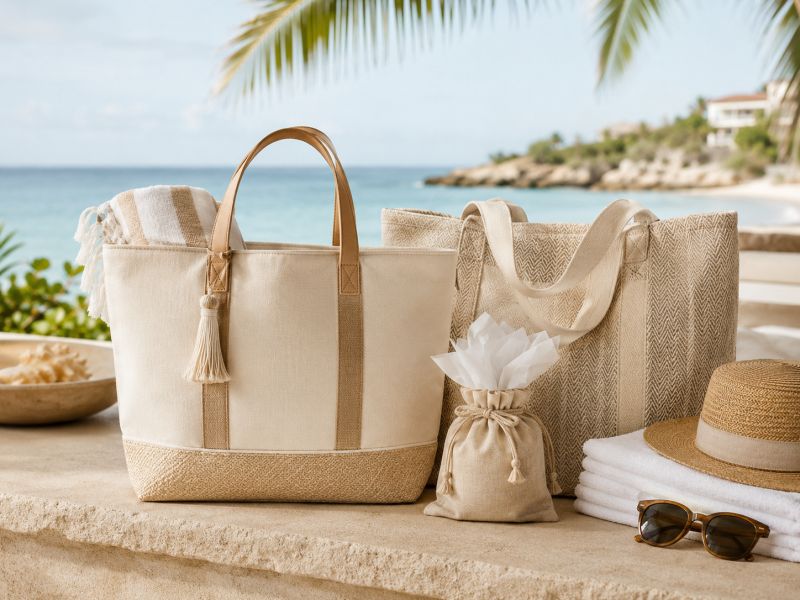
A resort beach bag is not only a container for sunscreen, towels, and room gifts. It is one of the first physical items guests touch when they enter a beach resort, villa, cruise room, spa suite, pool club, or destination event. A weak bag feels like a giveaway. A well-built bag feels like something from a resort boutique. That difference is created by material, handle comfort, size, pocket layout, logo placement, labels, color tone, and how the whole gift is presented.
A custom beach bag feels retail-ready when it looks attractive in a welcome setup, carries real beach essentials, keeps small items organized, matches the resort atmosphere, and remains useful after the trip. Canvas, mesh, PVC, EVA, neoprene, cooler, foldable, and mixed-material styles can all work when the structure, trims, logo, and packing match the guest experience.
The best resort beach bags are quiet but memorable. They do not need oversized logos or complicated decoration. They need the right size for a towel and bottle, handles that feel secure, stitching that looks clean, pockets that make sense, and a finish that guests are happy to carry in public. When a bag can move from the guest room to the pool, from the pool to the beach, and from the beach to the flight home, it stops being simple packaging. It becomes part of the stay.
What Are Custom Beach Bags For Resorts?
Custom beach bags for resorts are made for guest welcome gifts, beach amenity sets, poolside programs, spa packages, destination weddings, travel groups, resort boutiques, and summer events. A strong resort beach bag should carry towels and daily essentials, match the property style, show identity tastefully, and feel useful enough for guests to keep after the trip.
A resort beach bag is not just a tote with a logo. It needs to work in several real scenes: placed on a bed before arrival, displayed at reception, carried to the pool, taken to the beach, used during a boat day, brought to a spa, and packed into luggage after checkout. If the bag looks good only when empty, it may fail once a towel, bottle, sunscreen, slippers, and personal items go inside.
The best custom resort beach bags usually combine four things:
A material that fits the destination: canvas, mesh, PVC, Oxford, jute, neoprene, EVA, cooler lining, or mixed materials.
A structure that fits real use: wide opening, comfortable handles, stable base, useful pocket, zipper or open-top design.
A visual style that feels polished: controlled color, clean stitching, tasteful logo, woven label, patch, hangtag, or trim detail.
A packing method that protects presentation: individual packing, carton sorting, hangtags, SKU labels, or room-ready preparation.
For resort settings, the bag is often part of the stay, not only part of the gift. A guest may receive it in the room, use it for three beach days, carry it through the lobby, and then take it home. That means the design should avoid a temporary promotional feel. The size should be practical. The handle should feel secure. The logo should not look oversized. The material should feel right for sun, sand, pool, and travel.
A resort-ready beach bag should be planned around real contents. A towel changes the volume. A water bottle changes the weight. Sunscreen may leak or mark the lining. Wet swimwear may need a coated pocket or breathable mesh. A welcome card may need a clean front pocket or inner sleeve. Small items such as keys and room cards need a safe pocket. These details decide whether the bag feels considered or generic.
| Resort Gift Detail | What It Should Achieve | Better Design Direction |
|---|---|---|
| Main capacity | Hold towel, bottle, sunscreen, slippers, and small items | Medium-to-large tote with enough bottom depth |
| Handle drop | Allow comfortable shoulder carry | Around shoulder-friendly length, tested with filled weight |
| Inner pocket | Protect room card, key, phone, lip balm, or cash | One secure zipper pocket often adds strong value |
| Opening | Allow easy towel loading | Wide top opening or smooth zipper access |
| Bottom | Support bulky resort items | Gusseted or box bottom for better shape |
| Material | Match beach, pool, spa, or boutique use | Canvas, mesh, PVC, Oxford, jute, neoprene, cooler, or mixed material |
| Logo | Add identity without dominating the bag | Embroidery, woven label, rubber patch, screen print, or hangtag |
| Packing | Keep bags clean and presentation-ready | Individual packing, carton marks, hangtags, sorted cartons |
A custom resort beach bag becomes stronger when it is designed from the guest’s day. What will the guest carry? Where will the bag appear first? Will it be used near water? Should it look good in photos? Will it be kept after the trip? Once these details are clear, material, size, handle, pocket, logo, and packing choices become easier to control.
What Makes A Good Beach Bag?
A good beach bag has enough room for a towel and essentials, strong handles, easy access, clean finishing, and a material that suits sand, sun, water, and travel. For resort gifts, it should also look polished enough to carry through the lobby, pool deck, beach club, spa, and airport without feeling like a temporary giveaway.
A practical beach bag should work when filled, not only when flat. The most common contents include a folded towel, 500 ml water bottle, sunscreen, sunglasses case, phone, room card, wallet, book, slippers, and a small pouch. These items create both bulk and weight. If the bag is too shallow, items fall out. If the bottom is too narrow, towels bulge. If the handles are too thin, shoulder comfort suffers. If there is no inner pocket, small items disappear.
A strong beach bag usually needs:
A wide opening for quick towel loading.
A base wide enough for bulky items.
Shoulder-friendly handles.
Reinforced handle joints.
Clean stitching along side seams and bottom corners.
At least one secure pocket.
A material that can handle light moisture or sand exposure.
A logo area that does not weaken the overall look.
A color combination that fits the resort setting.
For higher-value resort gifts, comfort is just as important as appearance. Guests may carry the bag while wearing light clothing, swimwear, or sunscreen. Rough handles, sharp edges, heavy fabric, and stiff seams can quickly become annoying. A comfortable handle and smooth inner finish make the bag feel much more usable.
A good beach bag should also feel easy to clean or shake out. Mesh releases sand well. PVC and coated fabrics wipe more easily. Canvas feels natural but may need lining or darker trim in areas that touch sand or damp surfaces. Cooler lining supports drinks or food but changes the bag weight and folding style.
A simple field test is useful: place a towel, bottle, sunscreen, sunglasses case, and small pouch inside. Carry it for a few minutes. Put it on a chair, bed, and floor. Check whether it stands, sags, scratches, twists, or feels uncomfortable. If the bag still looks neat and carries well, the structure is closer to a keepable beach item.
What Makes A Resort Beach Bag Different?
A resort beach bag is different because it must feel suitable for a destination experience. It needs to look refined in a guest room, work by the pool or beach, support welcome contents, match the resort mood, and remain useful after checkout. A normal beach bag may only focus on carrying capacity. A resort beach bag also carries the feeling of the stay.
The setting creates higher expectations. The bag may sit on a white bedspread, beside a welcome letter, with towels and sunscreen inside. It may be photographed by guests. It may appear around the pool, beach bar, spa, lobby, yacht transfer, or resort boutique. If the material feels thin or the logo feels too loud, the bag can weaken the whole gift presentation.
A resort beach bag also needs stronger consistency across many pieces. If 300, 800, or 2,000 bags are prepared for rooms or events, color, logo placement, handle length, stitching, trim, pocket size, and packing should look stable across the full lot. One attractive sample is not enough. The full run should feel controlled.
A resort bag usually differs from a standard beach tote in these areas:
It often carries prepared gift contents.
It needs cleaner presentation before use.
It may need custom tags, labels, or packaging.
It should match a property color system or event theme.
It may need room-ready packing or carton sorting.
It often needs stronger handle and bottom checks.
It may need a more subtle logo style.
It should feel worth keeping beyond the stay.
For example, a canvas tote for a boutique island resort may use natural canvas, navy webbing handles, one inner zipper pocket, and small embroidery. A beach club version may use waterproof-feel fabric, contrast trim, and a rubber patch. A family resort version may use mesh, side bottle pockets, and reinforced stitching. A destination wedding version may use cotton canvas, soft colors, hangtags, and a weekend card.
The strongest resort beach bag does not look overdesigned. It feels appropriate. Every material, pocket, tag, and logo choice should support the setting.
Who Uses Resort Guest Gift Bags?
Resort guest gift bags are used by beach hotels, island resorts, spa retreats, villa properties, pool clubs, cruise programs, yacht events, destination weddings, travel groups, water sports centers, beach clubs, summer campaigns, swimwear labels, and resort shops. Each setting has different needs, so the bag should be shaped around the real guest experience.
A luxury resort may need a calm canvas tote with soft handles, subtle embroidery, and a clean hangtag. A water sports center may need mesh panels, quick-dry fabric, and stronger seams. A spa retreat may prefer muted colors, cotton canvas, inner pocket, and gentle branding. A family beach resort may need large capacity, easy cleaning, and durable handles. A resort boutique may need care labels, barcode labels, hangtags, and neat folding.
Common use scenes include:
Guest room welcome gifts.
VIP suite amenities.
Beach club member gifts.
Poolside towel and sunscreen kits.
Destination wedding welcome totes.
Spa package carriers.
Family beach activity kits.
Corporate retreat beach packs.
Resort boutique items.
Cruise or yacht day bags.
Swimwear or beachwear launch gifts.
Adult beach goodie bags.
Each use scene changes the design priority. A wedding welcome tote may focus on personal feel and pretty room presentation. A resort boutique tote may focus on retail finishing and hangtag detail. A poolside gift may focus on easy-clean material and moisture-friendly use. A travel group may need foldability and carton efficiency.
The contents inside also influence the bag. A beach towel requires volume. A bottle requires handle strength. Sunscreen may require wipeable lining. Local snacks may need clean separation. A welcome note may need a pocket or card slot. If the bag is used for several guest tiers, different tags or carton marks may be needed to keep sets organized.
A resort gift bag works best when it feels designed for the place, the guest, and the moment. A generic tote may hold items, but a well-planned beach bag helps make the welcome feel intentional.
What Beach Bags Are Trending?
Beach bags are trending toward reusable, practical, relaxed, and destination-inspired styles. Current resort-friendly directions include canvas totes, striped beach bags, mesh totes, jute-look bags, waterproof-feel PVC or TPU bags, foldable travel totes, cooler beach bags, terry-texture pouches, and mixed-material designs with quieter branding.
The strongest trend is usefulness. Guests are more likely to keep a beach bag when it can be used beyond the first welcome setup. A tote that works for the beach, grocery run, gym, kids’ swim class, pool day, or travel packing has better long-term value. This is why stronger handles, practical pockets, and cleaner styling matter more than overly decorative print.
Popular resort-friendly styles include:
Natural canvas tote with small embroidery.
Striped canvas tote with coastal colors.
Mesh beach bag with solid logo panel.
Jute-look tote with cotton handles.
PVC or TPU clear tote for poolside use.
Foldable nylon or polyester tote for travel groups.
Oversized beach carryall for towels and family items.
Cooler tote for picnic, yacht, or food programs.
Terry or towel-texture pouch for spa and pool sets.
Canvas-and-mesh mixed bag for structure plus breathability.
Branding is also becoming quieter in refined resort settings. Instead of a huge front print, many polished styles use woven labels, side tags, embroidery, leather-style patches, rubber patches, tone-on-tone prints, rope handles, or color-matched trims. This makes the bag feel closer to a retail product.
Color trends often follow the destination:
Sand, cream, and navy for classic coastal resorts.
Sage, beige, and warm gray for spa properties.
Coral, turquoise, and palm green for tropical themes.
Black, white, and navy for beach clubs.
Natural jute and cotton for island settings.
Muted pastels for weddings and wellness retreats.
Still, trends should not override function. A jute-look bag may photograph beautifully but may not be ideal for wet towels. A clear PVC tote may look modern but needs scratch and odor checks. A mesh tote may be practical but may need a solid branding panel. A trend is useful only when it fits the stay.
Why Do Hotels Use Custom Beach Bags?
Hotels use custom beach bags because they make welcome gifts more useful, organized, and memorable. A beach bag can carry amenities, support pool and beach use, create a polished room setup, show property identity, and remain useful after checkout. It turns several small items into one complete guest experience.
A beach bag is one of the few welcome gifts that can be used immediately. A snack may be finished in minutes. A welcome card may be read once. Sunscreen may be used during the stay. But a good beach bag can travel with the guest through the whole vacation. It can go from room to pool, pool to beach, beach to boat, and then home.
Hotels also use custom beach bags to organize gift contents. Instead of placing sunscreen, water, slippers, snacks, maps, and notes separately in the room, the bag gathers everything into a neat set. This makes the welcome feel more complete and helps staff prepare rooms or event tables more efficiently.
Custom beach bags can serve many hotel needs:
Welcome gifts for new arrivals.
VIP suite amenity bags.
Beach towel carriers.
Spa package totes.
Pool club gifts.
Wedding group welcome bags.
Adult beach goodie bags.
Resort boutique products.
Seasonal summer campaigns.
Corporate retreat packs.
A well-made beach bag also creates natural visibility. Guests may carry it around the property, to the beach, into town, or through the airport. This only works when the bag feels attractive enough to use in public. If it looks like a loud promotional item, guests may leave it behind. If it feels like a boutique tote, they are more likely to keep it.
Logo control matters here. A resort does not always need a large front mark. A smaller embroidery, woven side label, tonal print, or tasteful patch can feel more elegant. Combined with good material, handle strength, clean stitching, and thoughtful contents, the bag can feel like a real travel accessory rather than a simple giveaway.
Hotels use custom beach bags because they combine practical function, guest memory, and place identity. When designed well, the bag continues to represent the resort long after the guest leaves.
Which Materials Feel Retail-Ready?

A resort beach bag feels retail-ready when the material matches the destination, supports real beach use, and still looks good after handling. Canvas brings a natural boutique feel. Mesh feels light and sand-friendly. PVC, TPU, coated polyester, and Oxford support poolside or wet-use needs. Jute adds tropical texture. Neoprene, EVA, and cooler linings fit more functional resort programs.
Material is usually the first detail guests notice. Before they check the pocket or zipper, they touch the surface, feel the weight, and read the texture visually. A thin fabric can make a gift feel temporary. A stronger canvas, cleaner mesh, better webbing, smoother lining, or refined patch can make the same beach bag feel like something from a resort shop.
The right material should be chosen from three real-use factors:
Where the bag will be used: guest room, pool, beach, spa, boat, boutique, or event table.
What it will carry: towel, sunscreen, bottle, slippers, swimwear, snack, gift card, or retail item.
How long it should last: one stay, several beach days, travel reuse, or retail resale.
For example, a natural canvas tote works well for a calm boutique resort because it feels warm, relaxed, and easy to style. A mesh beach bag works better for family beach programs, water sports, snorkeling kits, or sandy activity scenes because it releases sand and dries faster. PVC or TPU feels more suitable near pools or wet areas. A jute-look tote gives tropical texture, but it needs care around damp towels and rough handling. A cooler beach bag can be ideal when drinks, fruit, snacks, or picnic sets are part of the gift.
A material should not be selected only because it looks attractive in a photo. It should be tested with the real gift contents. A thick towel can change the bag shape. A bottle can pull the handle down. Sunscreen may leave marks. Wet swimwear may create odor if the bag cannot breathe. Sand can collect in seams. These small things decide whether the bag feels useful after the first day.
| Material | Best Resort Use | Guest Feeling | Practical Watch Item |
|---|---|---|---|
| Canvas | Boutique resorts, spa gifts, wedding totes, resort shops | Natural, sturdy, relaxed | Weight, shrinkage, stain visibility |
| Cotton | Soft welcome totes, light guest gifts | Warm, casual, gentle | Less suitable for wet use without lining |
| Mesh | Beach clubs, family resorts, water sports, kids’ kits | Light, breathable, sand-friendly | Logo area and seam strength |
| PVC | Poolside bags, clear beach totes, easy-clean gifts | Modern, water-friendly, visible | Odor, scratches, stiffness |
| TPU | Softer clear or water-friendly styles | Flexible, upgraded, smooth | Cost and material availability |
| Oxford / Polyester | Travel groups, event packs, active beach programs | Durable, practical, color-rich | Hand feel varies by grade |
| Jute | Island resorts, tropical gifts, natural themes | Textured, rustic, vacation-like | Shedding, stiffness, moisture limits |
| Neoprene | Bottle holders, swim pouches, soft beach accessories | Soft, cushioned, sporty | Heat, color, and odor checks |
| EVA | Structured beach bags, molded styles, special shapes | Firm, protective, distinctive | Less soft, more specific look |
| Cooler Lining | Yacht, picnic, drink, and snack sets | Practical, outdoor-ready | Seam quality and insulation fit |
A retail-ready material also needs matching trims. A good canvas body can lose value with weak webbing handles. A mesh tote can look unfinished without a solid logo panel. A PVC bag can feel too sharp if the edge binding is rough. A jute tote can look more refined with cotton handles and a clean woven label. The body material and trim details should feel like one product, not separate parts added together.
Canvas Vs Mesh Beach Bags
Canvas beach bags feel more structured, natural, and refined. Mesh beach bags feel lighter, more breathable, and more suitable for sand and wet items. Canvas is stronger for boutique welcome gifts and resort shop totes. Mesh works better for water activities, family beach programs, kids’ kits, and quick-dry beach use.
Canvas is often chosen when the beach bag needs a softer lifestyle tone. It looks good in room setups, spa gifts, wedding welcome sets, boutique displays, and swimwear collaborations. A heavier canvas can carry embroidery, screen print, woven labels, leather-style patches, or color-matched webbing. It can also hold a more stable tote shape, especially when the bottom has enough width.
Mesh has a different strength. It is lighter and more practical near sand and water. Guests can shake sand out more easily, and damp towels or swimwear can breathe better than inside a fully closed fabric tote. For snorkeling, pool toys, children’s beach items, and water sports programs, mesh often feels more useful than canvas.
Canvas works better when:
The gift should feel calm, polished, and keepable.
The bag will appear in a room welcome setup.
Embroidery, patch, or clean print is needed.
The bag may be sold in a resort shop.
Natural texture matches the destination style.
Mesh works better when:
The bag will hold sandy or damp items.
Lightweight carry is important.
Quick drying matters.
The resort has water sports, family activities, or beach toys.
A solid fabric panel can be added for logo clarity.
A mixed design can solve both needs. Canvas with mesh side panels gives structure and breathability. Mesh with canvas handles and a front pocket gives lighter weight while keeping a better logo area. Canvas with a coated inner lining can keep a boutique look while improving cleaning. For many resort projects, the best direction is not canvas or mesh alone, but the right combination of body, trim, pocket, and lining.
Which Waterproof Material Works Best?
The best waterproof-feel material depends on the real exposure level. PVC, TPU, coated Oxford, coated polyester, EVA, PEVA lining, and cooler lining can all support different wet-use needs. For most beach bags, the practical goal is not full waterproof sealing, but better resistance to splashes, damp towels, sunscreen marks, and poolside handling.
PVC works well when the beach bag needs a clear, glossy, or easy-clean surface. It feels suitable for poolside gifts, clear beach totes, and wet-look resort packs. TPU can be considered when a softer transparent feel is preferred. Coated Oxford and coated polyester keep more of a fabric-like appearance while adding light moisture resistance. EVA gives more structure and shape. Cooler lining is better when the bag carries drinks, fruit, snacks, or picnic items.
The material should match the contents:
Towels and swimwear need breathability or a separate wet area.
Sunscreen and toiletries benefit from wipeable lining.
Bottles and drinks may need stronger bottom support.
Snacks and picnic items may need cooler lining.
Poolside gifts may use PVC, TPU, or coated fabric.
Boutique welcome totes may use canvas with an inner lining.
It is important to be realistic with water performance. A tote made with water-resistant fabric is not automatically waterproof. Open tops, sewing holes, zipper gaps, and unsealed seams can still allow water in. If the bag needs to protect electronics or clothing from heavy rain or direct water exposure, the structure must be designed differently. For most resort beach bags, splash resistance and easy cleaning are more practical than sealed waterproof construction.
A wet-use material review should include:
Can sunscreen residue be wiped off?
Does the fabric stain after contact with lotion or oil?
Will damp towels create odor?
Will the bottom weaken when wet?
Can sand collect in seams?
Does the material dry fast enough?
Does the lining crack or peel after folding?
Will the bag still look clean after several beach days?
A good waterproof-feel beach bag should not overpromise. It should match the guest’s real routine: walking to the pool, placing the bag on a beach chair, carrying sunscreen, holding damp items for a short time, or wiping off sand before returning to the room.
Is Jute Good For Resort Gifts?
Jute can be a strong choice for resort gifts when the project needs a tropical, natural, rustic, or island-inspired look. It works well for boutique resorts, destination weddings, beach welcome totes, spa gift sets, and summer retail displays. It gives texture quickly and can make a simple bag feel warm and vacation-ready.
Jute is attractive because it creates a clear natural mood. A jute tote with cotton handles, woven label, and soft inner lining can look relaxed and premium. It pairs well with neutral colors, rope details, shell-inspired tags, linen cards, tropical prints, and local gift items. For resorts with a calm island or eco-inspired atmosphere, jute can feel more connected to the place than synthetic-looking materials.
However, jute has limits. It can feel rougher than cotton canvas. It may shed fibers. It can be stiff. It is not ideal for heavy wet use. It may not suit damp towels, sunscreen leaks, or repeated poolside exposure unless the structure and lining are carefully planned. If the bag needs to carry wet swimwear or be washed often, mesh, coated fabric, PVC, or mixed materials may work better.
Jute works well when:
The gift should look natural and destination-inspired.
The bag will carry dry welcome items.
The design uses soft handles for comfort.
The logo can be applied through patch, woven label, or print panel.
A lining is added for a cleaner inside.
The presentation is for room setup, wedding welcome, boutique display, or spa gift.
Jute needs caution when:
The bag will hold damp towels.
The resort needs easy cleaning.
The contents include lotions or oils.
The guest will use it heavily for several beach days.
The design needs sharp detailed printing directly on rough texture.
A jute resort bag can feel very retail-ready when balanced with better handles, lining, clean labels, and controlled logo placement. The key is to use it for the right scene. It is excellent for natural presentation, but not always the best for active wet beach use.
What Is The Best Lining?
The best lining depends on what the bag carries. Cotton lining feels soft and clean for boutique totes. Polyester lining is light, practical, and easy to color-match. PEVA or coated lining helps with sunscreen, toiletries, and light moisture. Cooler lining supports drinks and snacks. Mesh lining adds breathability. A good lining should protect the bag interior without adding unnecessary bulk.
A lining changes how the bag feels when guests open it. An unlined canvas tote can feel relaxed and simple, but the inside may show raw seams or collect sand. A lined tote can feel more finished and retail-ready. For resort gifts, lining also helps protect the bag from the contents inside: sunscreen bottles, wet pouches, local snacks, towels, and small accessories.
Common lining choices include:
Cotton lining for soft boutique or spa-style bags.
Polyester lining for practical resort totes.
Coated polyester for light moisture protection.
PEVA lining for wipeable toiletry or poolside use.
Aluminum foil lining for cooler beach bags.
Mesh lining for breathability and drainage.
No lining for simple canvas or mesh bags when the material itself is the design.
A lining should be chosen with pocket design. An inner zipper pocket needs enough strength to hold keys, cards, or a phone. A side pocket for a bottle should have stronger stitching. A wet pocket should not leak into the rest of the bag too easily. A cooler lining should be checked for seam quality and cleaning convenience.
Lining can also affect cost, weight, and folding. A fully lined tote feels more complete, but it may be heavier and take more space in cartons. A simple unlined canvas tote may be lighter and more natural. The best lining is the one guests can feel as useful, not just decorative.
A good lining should pass these checks:
Does it feel clean when the bag is opened?
Does it match the outer fabric color?
Does it support the pocket structure?
Can it handle sunscreen or light moisture?
Does it add too much weight?
Does it wrinkle or sag inside the bag?
Is it easy to inspect during production?
A resort beach bag with the right lining feels more intentional. It turns the inside of the bag into part of the experience, not an unfinished area.
How Do Materials Affect Price?
Materials affect price through fabric weight, material type, thickness, lining, trim, cutting loss, sewing difficulty, logo compatibility, packing volume, and inspection needs. A simple cotton tote costs differently from a heavy canvas bag, mesh tote, PVC beach bag, lined resort tote, neoprene pouch, or cooler beach bag with insulation.
The visible fabric is only one part of the cost. Handles, webbing, zipper tape, lining, bottom support, pocket fabric, label, hangtag, patch, and packing method all add to the final structure. A beach bag with a zipper, inner pocket, lining, reinforced bottom, and embroidery requires more work than an open tote with one print.
Material-related cost drivers include:
Fabric weight and thickness.
Material availability and color choice.
Shrinkage or color control needs.
Lining type and pocket structure.
Water-resistant coating or special surface treatment.
Handle material and width.
Zipper, snap, drawstring, or cooler lining.
Logo process suitable for the material.
Cutting efficiency and material waste.
Carton volume after packing.
Inspection difficulty.
Canvas may cost more when heavier weight, dyed colors, lining, embroidery, or leather-style patches are added. Mesh can be cost-controlled, but reinforced seams and solid logo panels add work. PVC needs attention to surface protection, odor, and scratches. Jute can look premium, but lining and better handles may be needed. Cooler materials add lining, insulation, and more complex stitching.
A practical way to control material cost without weakening the bag:
Choose one main material and one strong trim detail.
Avoid oversized dimensions that waste fabric.
Use standard material colors where suitable.
Select logo methods that match the surface.
Add one useful pocket instead of several weak ones.
Use lining only where it improves real use.
Keep the handle strong but not overbuilt.
Confirm packing method early to avoid damage.
The best material choice is not the lowest-cost option. It is the one that gives the bag the right feel, function, and durability for the intended resort scene. A well-chosen material can make a simple structure feel valuable. A poorly chosen material can make an expensive design feel disappointing.
What Structure Makes Guests Keep The Bag?

A beach bag becomes worth keeping when it works beyond the welcome moment. Guests keep it when it carries towels comfortably, keeps small belongings easy to find, handles sand or damp items, sits well beside a pool chair, and still looks good after several days of use. Size, pocket placement, zipper choice, handle strength, bottom shape, and opening width decide whether the bag becomes part of the trip or gets left behind.
Structure is where many resort beach bags succeed or fail. A bag may look beautiful on a bed with a folded towel inside, but once guests add sunscreen, a water bottle, sunglasses, a book, sandals, wet swimwear, and room keys, weak structure becomes obvious. The sides collapse. The bottom sags. The handles twist. Small items disappear. The bag no longer feels like a thoughtful gift.
A keepable resort beach bag should solve real vacation problems:
It should hold one beach towel without forcing the shape.
It should carry a 500 ml bottle without pulling the bag out of balance.
It should have one secure place for a room card, key, phone, or cash.
It should be comfortable over the shoulder, not only in the hand.
It should stay neat when placed on a chair, floor, luggage rack, or poolside table.
It should be easy to shake, wipe, air out, or fold depending on material.
It should still look acceptable when guests carry it outside the resort.
The strongest structure is not always the most complex one. A clean open canvas tote with strong handles and one inner zipper pocket may feel better than a bag with five weak pockets. A mesh tote with a reinforced bottom may work better for wet towels than a heavy lined canvas tote. A zipper beach bag may feel safer for travel, but an open tote may work better when towels are loaded many times a day.
A useful way to judge structure is to test the bag with real contents, not empty measurements. Fill it with a folded beach towel, sunscreen, sunglasses case, 500 ml bottle, room card pouch, paperback book, and a small snack. Carry it over the shoulder. Place it beside a pool chair. Open and close it several times. Remove the towel and put it back in. This simple test reveals more than a flat design drawing.
| Structure Detail | What Guests Feel | Better Direction |
|---|---|---|
| Capacity | Whether the bag feels useful or decorative | Fit towel plus essentials without overstuffing |
| Opening | Whether towels are easy to load | Wide top opening for beach and pool use |
| Pocket layout | Whether small items are easy to find | One secure pocket plus optional quick pocket |
| Closure | Whether items feel safe during movement | Use zipper, snap, drawstring, or open top by scene |
| Handle drop | Whether shoulder carry feels natural | Test with filled weight and light clothing |
| Bottom shape | Whether the bag sits well and holds volume | Use gusset or reinforced base for towel sets |
| Edge finish | Whether the bag feels polished | Clean seams and binding improve touch |
| Packing shape | Whether the bag arrives neat | Avoid heavy compression if structure matters |
For resort projects, a beach bag should be planned around the full day. It starts in the guest room, moves to the pool, goes to the beach, sits in the sun, returns with damp items, and may travel home in luggage. The structure must support that journey.
Which Size Fits Towels And Essentials?
A resort beach bag should be large enough to hold one beach towel, sunscreen, a 500 ml water bottle, sunglasses case, phone, room card, small wallet, book or tablet, and a lightweight pouch. For family resorts, water sports programs, or all-day beach use, a larger capacity may be needed. For spa or boutique welcome gifts, a smaller refined tote can work when the contents are lighter.
Size should be decided by the contents first. A towel is the largest volume driver. A thick folded towel may need more bottom depth than expected. A rolled towel may need more height. A bottle adds weight and changes balance. Sandals, snacks, or a pouch can create odd corners if the bag is too flat.
A practical beach tote should usually have three useful areas:
Main body for towel and larger items.
Small secure pocket for card, key, phone, or cash.
Easy-access area for sunscreen, lip balm, sunglasses, or room note.
A bag that is too small becomes frustrating. Guests may be forced to carry towel and bottle separately, which weakens the gift experience. A bag that is too large can look empty in a guest room and awkward on the shoulder. The best size looks full with the planned welcome items and still leaves room for personal essentials.
Useful size checks include:
Can one folded beach towel fit without stretching the opening?
Can a 500 ml bottle sit without pulling the bag to one side?
Can the bag still close if a zipper is added?
Does the logo remain visible after the bag is filled?
Does the bag look balanced when placed on a bed or chair?
Can it fold or pack into luggage after use?
For many resort beach bags, bottom depth is more important than extra height. A deep base helps towels, bottles, slippers, and pouches sit more naturally. A tall but flat bag may look large, yet still feel difficult to use once bulky items go inside.
A good test is to prepare the planned gift set and add three extra personal items. If the bag still carries comfortably and looks neat, the size is practical.
How Many Pockets Are Enough?
One well-placed secure pocket can be more valuable than several small pockets that guests barely use. For resort beach bags, pocket design should focus on real items: room card, key, phone, sunglasses, lip balm, sunscreen stick, small cash, or a travel-size bottle. Too many pockets can add cost, weight, and visual clutter without improving daily use.
A beach bag has a different pocket logic from a work bag. Guests usually need quick access and simple separation, not a complicated organizer wall. A towel and bottle take up most of the main space. Small valuables need one safer place. Sunscreen and sunglasses may need quick access. Wet swimwear may need separation if the bag is designed for that purpose.
Practical pocket options include:
Inner zipper pocket for room card, key, cash, and phone.
Open inner slip pocket for lip balm, sunglasses, or sunscreen stick.
Side bottle pocket for water or spray sunscreen.
Front pocket for a welcome card, map, or activity schedule.
Mesh pocket for damp or sandy small items.
Detachable small pouch for valuables or cosmetics.
Pocket placement matters as much as pocket count. A pocket placed too low may become blocked by the towel. A pocket that is too shallow may let items fall out. A zipper pocket that is too narrow may not fit a phone. A bottle pocket without enough reinforcement may sag after use.
For most resort beach bags, a strong setup is:
One inner zipper pocket.
One open slip pocket or side pocket.
Optional detachable pouch for higher-value gift sets.
This keeps the bag simple but useful. If the bag is for family beach days, extra side pockets can help. If the bag is for a spa resort, fewer pockets may look cleaner. If the bag is for water sports, mesh pockets or wet pockets may add more value.
Pocket quality should be checked with real objects. Put in a phone, room key, lip balm, sunscreen, and card. Fill the bag with a towel. Then check whether the pockets are still reachable. If not, the pocket position needs adjustment.
Do Zippers Improve Guest Use?
Zippers improve guest use when the bag needs security, travel value, or better content control. A zipper helps protect phones, room cards, wallets, sunscreen, snacks, and small personal items when guests walk to the beach, join a boat trip, travel from pool to room, or carry the bag after checkout. But a full zipper is not always needed.
Open-top beach totes feel relaxed and easy. They are convenient when guests load towels many times a day. They also allow a fuller, casual resort look. However, open bags offer less protection. Items may fall out in a car, golf cart, boat, airport, or luggage area.
Zipper styles can be planned in several ways:
Full top zipper for stronger security.
Partial top zipper for a balance of access and protection.
Inner zipper pocket only, while main tote stays open.
Detachable zipper pouch included inside the tote.
Drawstring inner cover for a softer casual style.
Snap closure for simple light security.
A full zipper works well for travel beach bags, city-and-beach totes, yacht gifts, family resort packs, and bags that may be reused after checkout. It can make the bag feel more finished, especially if the zipper runs smoothly and the tape color matches the trims.
Still, there are trade-offs. A zipper adds cost, weight, and sewing steps. It can make towel loading less convenient if the opening is too narrow. It may also distort the top edge if the bag is soft or overfilled. For very large beach totes, an inner zipper pocket may be more practical than a full top zipper.
A zipper should be tested with the bag fully loaded. Check:
Does the zipper close smoothly with towel and bottle inside?
Does the top edge bend or wave?
Does the slider catch lining or fabric?
Is the opening still wide enough for a towel?
Does the zipper feel strong after repeated opening?
Does the zipper tape color match the design?
For a retail-ready resort bag, zipper quality is easy to feel. A smooth zipper makes the bag feel like a finished travel item. A rough zipper can make even a good material feel less refined.
Why Does Handle Strength Matter?
Handle strength matters because beach bags carry bulky and uneven loads. Towels, bottles, sunscreen, books, sandals, wet clothing, snacks, and personal items create both weight and movement. If the handles feel weak, twist under load, cut into the shoulder, or pull the top edge out of shape, the bag immediately feels less valuable.
Handles are one of the highest-stress areas on a resort beach bag. They connect guest comfort, durability, and visual presentation. A bag may look attractive on a bed, but after being filled and carried for 20 minutes, poor handle design becomes obvious.
Strong handle design should consider:
Handle material: cotton webbing, polyester webbing, nylon, rope, canvas, PVC, leather-like trim, or mixed handles.
Handle width: wider handles usually feel more comfortable with towels and bottles.
Handle drop: shoulder-carry length is important for beach walks.
Attachment method: stitching, box stitch, cross stitch, rivet, reinforcement patch, or folded seam.
Stress area: top seam and side panel should not distort after lifting.
Touch comfort: the handle should not feel sharp, rough, or too narrow.
A shoulder-friendly handle drop often works better for resort beach bags than short hand-carry handles. Guests may carry towels, wear sunscreen, and walk between locations. A short handle forces hand carry and may feel inconvenient.
Handle testing should be simple and physical:
Fill the bag with the planned items.
Lift it repeatedly 20–30 times.
Carry it on the shoulder for several minutes.
Check whether the handle twists.
Check stitching near the handle base.
Check whether the front panel pulls or wrinkles.
Check whether the handle feels comfortable on bare skin or light clothing.
For canvas totes, reinforced webbing handles often work well. For mesh bags, the handle attachment area needs extra support because mesh can stretch. For PVC bags, handle stress may create visible marks. For jute bags, soft cotton handles improve comfort.
A strong handle should not call attention to itself. It should make the bag feel effortless.
How Should The Bottom Be Built?
The bottom should match the bag’s contents and display needs. A flat bottom works for light totes. A gusseted or box bottom works better for towels, bottles, slippers, and bulkier welcome gifts. A reinforced bottom helps heavier resort kits. A coated or PVC bottom can improve contact with damp poolside surfaces.
The bottom decides how the bag behaves when filled. A narrow flat tote may look neat when empty, but once a towel and bottle go inside, it may bulge and lean. A wider bottom gives the contents more natural space. A reinforced base helps the bag sit better on beds, shelves, chairs, and poolside tables.
Common bottom structures include:
Flat bottom for lightweight cotton or canvas totes.
Bottom gusset for more towel and bottle capacity.
Box bottom for stronger shape and room display.
Reinforced fabric bottom for heavier welcome kits.
Coated bottom panel for easier cleaning.
Foldable bottom board for better shape with storage flexibility.
No fixed bottom for soft foldable travel totes.
A wider bottom can make the bag feel more useful, but it also increases fabric use, carton volume, and packed size. A stiff base improves display but may reduce foldability. A soft base packs more easily but may sag under weight. The best bottom should match the intended contents and storage method.
Bottom checks should include:
Does the bag sit naturally when filled?
Do bottles tip over easily?
Does the bottom seam pull at the corners?
Does the front logo remain smooth?
Does the bag fit planned cartons?
Does the bottom collect sand or water?
Can it be folded if travel packing matters?
For resort welcome gifts, the bottom also affects presentation. A bag that sits nicely on a bed or room bench looks more refined. A bag that collapses, twists, or tips over may make the gift setup look careless.
A good bottom structure supports the whole bag quietly. Guests may not notice the construction, but they notice that the bag stands, carries, and feels right.
How To Make A Beach Bag Look Retail-Ready?

A beach bag looks retail-ready when it feels like a complete product, not a simple carrier filled with items. The material should feel right for the resort setting, the structure should carry real beach essentials, the logo should look intentional, the labels should add finish, and the packed presentation should feel ready for a guest room, boutique shelf, pool cabana, or event welcome table.
A strong resort beach bag does not need loud decoration. In many cases, a quieter design feels more polished: clean canvas, balanced trim color, strong handles, neat stitching, one useful pocket, a small embroidered logo, a woven side label, and a simple hangtag. These details make the bag feel considered without turning it into a promotional item.
Retail-ready feeling is created through a chain of small choices. If one part is weak, the whole gift can lose value. A good fabric with poor handles feels unfinished. A nice logo with messy packing looks careless. A useful tote with no label, no pocket, and rough seams feels too plain. A beautiful bag filled with random items feels confusing. Every visible detail should support the same impression: useful, clean, coordinated, and worth keeping.
A resort beach bag should look good in three situations:
When placed in a guest room before use.
When carried around the property.
When kept after the trip.
If the bag only looks good on arrival but fails at the beach, guests will not keep it. If it works well but looks too plain, it may not feel like a special gift. The strongest design balances both.
| Detail | Basic Gift Feeling | Retail-Ready Feeling |
|---|---|---|
| Material | Thin, limp, rough, generic | Strong, clean, suited to resort use |
| Logo | Oversized print on front only | Embroidery, woven label, patch, or refined print |
| Handle | Narrow, short, weak | Comfortable, reinforced, matched to filled weight |
| None, or poorly placed | One useful inner pocket or secure pouch | |
| Color | Random stock shade | Matched to resort mood, season, or room style |
| Contents | Random small items | Useful beach essentials arranged cleanly |
| Labels | No tag or plain sticker | Hangtag, care label, inner label, or gift card |
| Packing | Loose and compressed | Protected, sorted, clean, and presentation-ready |
| Finish | Loose threads, uneven seams | Clean edges, aligned stitching, neat corners |
Retail-ready does not always mean expensive. A simple canvas tote can feel polished if the size is right, the handles are strong, the logo is subtle, and the contents are arranged well. A complex bag can still feel weak if the material, color, trims, or packing do not work together.
What To Put In A Beach Bag Gift?
A beach bag gift should include items guests can use during the stay: towel, sunscreen, lip balm, water bottle, room card holder, sunglasses pouch, local snack, welcome note, wet pouch, slippers, map, after-sun lotion, travel-size skincare, or a small zip pouch. The contents should feel useful, clean, and connected to the resort experience.
A good gift set is not about adding as many items as possible. It is about making the bag feel prepared for a real beach day. A set with 5 carefully chosen items can feel stronger than a crowded bag with 12 unrelated fillers. The best contents are easy to understand, easy to use, and easy to arrange inside the bag.
A practical beach gift can be planned in three layers:
Immediate-use items: towel, sunscreen, lip balm, bottled water.
Experience items: resort map, activity card, drink voucher, local snack, welcome note.
Keepable items: reusable bottle, sunglasses pouch, wet bag, travel pouch, room card holder.
Different resort styles need different contents. A luxury villa may use a soft towel, mineral sunscreen, glass or stainless bottle, and elegant welcome card. A family beach resort may include sunscreen, water bottle, kids’ snack, wet pouch, and small beach toy. A spa resort may use after-sun lotion, face mist, slippers, and a calming note. A wedding weekend tote may include itinerary card, local treat, mini sunscreen, and custom tag.
Useful beach bag gift combinations include:
Canvas tote + towel + sunscreen + water bottle + welcome card.
Mesh bag + wet pouch + swim item + bottle + family snack.
PVC tote + sunscreen + waterproof phone pouch + sunglasses case.
Spa tote + slippers + body lotion + face mist + soft towel.
Destination wedding tote + itinerary card + local snack + mini sun care.
A good beach bag gift should also be physically balanced. Heavy items should not all sit on one side. Bottles should not crush cards. Lotion should be capped and separated from fabric. Small items should not sink to the bottom. A pocket, inner pouch, or insert card can help keep everything neat.
The gift should feel complete at first glance. When guests open the bag, they should understand the purpose immediately: this is for a beach day, pool day, spa stay, boat trip, or weekend welcome.
What Goes In Adult Beach Goodie Bags?
Adult beach goodie bags should feel useful, tasteful, and easy to enjoy during a resort stay. Good options include sunscreen, after-sun gel, lip balm, reusable water bottle, towel, waterproof phone pouch, sunglasses case, room card holder, local snack, drink token, mini skincare, travel pouch, wet bag, or small fan.
For adults, the gift should avoid looking childish or random. The contents should match the atmosphere of the property. A high-end beach resort may use fewer, better items with quiet packaging. A beach club may use brighter colors, drink cards, sun care, and a stylish pouch. A wellness retreat may choose calming skincare, herbal snacks, face mist, and soft textiles. A corporate retreat may need a clean set that feels useful without being too personal.
Adult beach goodie bags work well when the contents follow a clear theme:
Sun-care set: sunscreen, lip balm, after-sun lotion, face mist.
Pool-day set: towel, bottle, waterproof pouch, room card holder.
Beach-walk set: sunglasses case, sunscreen stick, map, snack.
Boat-day set: cap, wet pouch, bottle, sunscreen, towel.
Spa-resort set: slippers, body lotion, soft pouch, calming card.
Lounge-day set: drink token, snack, towel, sunscreen, fan.
The bag should not be overloaded. Too many items can make the tote sag, wrinkle, or feel cluttered. A resort gift often looks more refined when the items have breathing room. A folded towel can create volume and structure. A card can add color and context. A small pouch can group tiny items together.
Useful details for adult goodie bags:
Use one main item to create volume, such as a towel or pouch.
Use one or two sun-care items.
Add one local or experience-related item.
Include one keepable item beyond the trip.
Keep printed logos restrained across the full set.
If every item has a large mark, the set can feel too promotional. A better approach is to let the tote carry the main identity, while small items use subtle labels, color matching, or a simple insert card. The final set should feel curated, not assembled from leftover giveaways.
What Logo Method Looks Premium?
A logo looks premium when it suits the material, stays in proportion, and does not overpower the beach bag. Embroidery, woven labels, leather-style patches, rubber patches, PVC patches, screen printing, heat transfer, and hangtags can all work when matched to the bag material and resort style.
For canvas beach bags, embroidery gives a textured and lasting look. It works well for small to medium logos, initials, resort names, and simple icons. Screen printing works well for larger artwork, summer graphics, and bold color blocks. A woven label feels subtle and product-like. A leather-style patch can add a stronger boutique tone when the material and setting fit.
For mesh bags, a logo usually needs a solid surface. A front fabric panel, pocket, woven label, rubber patch, or PVC patch can make the logo clear. Printing directly on open mesh is not always the cleanest route. For PVC or coated beach bags, screen print, heat transfer, rubber patch, or PVC patch can work after checking surface behavior.
Logo methods by material:
Canvas: embroidery, screen print, woven label, leather-style patch.
Mesh: woven label, rubber patch, front fabric panel, PVC patch.
PVC / TPU: screen print, heat transfer, rubber patch, PVC patch.
Oxford / polyester: screen print, heat transfer, woven label, rubber patch.
Jute: patch, woven label, print on fabric panel.
Neoprene: heat transfer, rubber patch, woven label.
Cooler bag: screen print, heat transfer, woven label, rubber patch.
A premium logo is often smaller than expected. A 6–10 cm logo on a front pocket can feel more refined than a huge center print. A side woven label can feel more retail than a large flat graphic. A tone-on-tone embroidery can feel more elegant than high-contrast print.
Logo approval should check:
Is the logo readable from normal carrying distance?
Does it match the fabric texture?
Does the color work with trim and body material?
Does it stay clear after stitching, pressing, or printing?
Does it look balanced when the bag is filled?
Does it feel suitable for photos and public use?
Does the same logo method work across color versions?
The logo should support the bag, not dominate it. The more refined the resort setting, the more important restraint becomes.
Which Colors Match Resort Style?
Beach bag colors should match the resort’s mood, setting, room style, season, and guest profile. Natural canvas, ivory, sand, navy, sage, terracotta, palm green, sea blue, coral, black, white, beige, and striped combinations are common directions. The strongest colors feel connected to the destination without becoming too loud.
Color changes the whole gift mood. Natural canvas with navy handles feels classic and coastal. Ivory with sand trim feels calm and premium. Sage and beige feel softer for spa and wellness. Coral and turquoise feel bright and tropical. Black and white can work for modern beach clubs. Jute with cream handles creates a natural island feeling.
A clean color plan usually uses:
One main body color.
One trim or handle color.
One logo color.
One card or tag accent color.
Too many colors can make the bag feel busy. If the bag will also hold towels, bottles, cards, snacks, or pouches, those colors should be considered together. The full set matters more than the tote alone.
Color directions by resort scene:
Luxury coastal resort: ivory, sand, navy, warm gray, soft gold.
Spa retreat: sage, cream, beige, soft green, stone gray.
Tropical island: coral, turquoise, palm green, natural jute, sun yellow.
Destination wedding: white, blush, dusty blue, champagne, soft neutral.
Family beach resort: bright blue, yellow, orange, green, playful stripe.
Beach club: black, white, navy, red, strong stripe, contrast trim.
Yacht or marina program: navy, white, tan, silver gray.
Color should also be practical. Very light bags can stain more easily. Dark bags may show salt marks or lint depending on fabric. Bright colors may fade differently by material. Natural fabrics may have shade variation. Webbing, zipper tape, patches, labels, and print ink should be checked together.
A retail-ready color plan should feel intentional across every visible part:
Body fabric.
Handles.
Binding.
Zipper tape.
Pockets.
Logo.
Hangtag.
Inner lining.
Gift items inside.
The goal is not perfect sameness, but visual harmony. A bag can feel premium when all parts look like they belong together.
How Do Labels And Tags Add Value?
Labels and tags make a beach bag feel more complete. A woven label, inner label, care label, hangtag, gift card, barcode label, size card, or material note can turn a plain tote into a finished product. These details help explain the gift, support retail display, and make the bag feel more intentional.
A beach bag without any label may still be useful, but it can feel unfinished. A small woven side label adds a product feel. An inner care label makes the bag feel considered. A hangtag can introduce the resort story, gift contents, material, or care notes. A barcode label may be needed for boutique or retail display. A gift card can connect the bag to the guest experience.
Useful label and tag options include:
Woven side label for subtle identity.
Inner label with resort name or material detail.
Care label with cleaning guidance.
Hangtag with gift message or collection name.
Paper sleeve for folded tote presentation.
Barcode label for boutique display.
Gift card explaining beach essentials inside.
Sticker seal for room-ready packing.
Carton label for style, color, quantity, and destination sorting.
Labels should be useful and tasteful. Too many tags can make the bag look cluttered. One outer hangtag and one inner label may be enough for a welcome gift. A boutique version may need hangtag, barcode, and care label. A multi-location resort program may need carton labels and SKU marks for internal sorting.
Labels and tags also help with organization. If different room categories receive different gifts, tags can help staff identify sets quickly. If several colors or styles are packed in one shipment, carton labels reduce confusion. If the bag is sold in a resort shop, barcode and care information become more important.
A label should match the bag quality. A rough paper tag on a refined canvas tote can feel wrong. A clean kraft hangtag may suit jute or natural canvas. A coated tag may suit PVC or poolside gifts. A woven label may suit canvas, mesh, or Oxford. A rubber patch may suit sporty or water-friendly bags.
A retail-ready beach bag is not created by one large feature. It comes from many small details working together: material, handle, pocket, logo, color, tag, packing, and contents. When these details feel aligned, the bag becomes something guests want to use, keep, and carry beyond the resort.
How Does A Factory Develop Custom Resort Bags?

A custom resort beach bag is developed by reviewing the use scene, contents, size, material, handle strength, logo method, pocket layout, packing style, quantity, and delivery schedule before sampling. The goal is to make the bag look polished in a resort setting, carry real beach items comfortably, and stay consistent from approved sample to bulk production.
A good development process starts with real use, not decoration. A resort bag may look simple at first, but many details affect the final result. A canvas tote may need stronger handles if it holds towels and bottles. A mesh bag may need a solid logo panel. A PVC beach bag may need odor and scratch checks. A cooler beach bag may need lining and seam review. A foldable travel tote may need better crease control and compact packing.
The first step is to define the guest scene clearly:
Will the bag sit inside a guest room?
Will it be handed out at check-in?
Will it be displayed in a resort boutique?
Will it carry a beach towel?
Will it include sunscreen, bottle, slippers, snacks, or spa items?
Will it be used near water?
Will it need a zipper for travel?
Will it be packed empty or filled as a welcome set?
After the scene is clear, the bag can be reviewed by structure and material. Canvas, mesh, PVC, Oxford, jute, neoprene, EVA, cooler lining, or mixed materials each bring different strengths. The chosen material should match the resort tone and the guest’s real use. A bag for a luxury villa should not feel flimsy. A bag for a water sports program should not hold sand and water too easily. A boutique tote should not look like a temporary giveaway.
Development should also consider repeat consistency. If one approved sample looks beautiful but bulk pieces vary in color, stitching, logo placement, or handle length, the final program will feel uneven. This is why size charts, material references, artwork files, logo position, sewing details, pocket measurements, packing rules, and carton labels should be confirmed before production.
A clear development path usually includes:
Design review.
Material and trim suggestion.
Size and structure confirmation.
Logo process testing.
Sample making.
Filled-use review.
Sample adjustment.
Pre-production confirmation.
Bulk production.
Quality checks.
Packing and carton marking.
Delivery arrangement.
| Development Item | What To Confirm | Why It Matters |
|---|---|---|
| Use scene | Room gift, beach use, boutique display, event handout | Defines material, size, and packing |
| Contents | Towel, bottle, sunscreen, slippers, card, snacks | Controls capacity and handle strength |
| Material | Canvas, mesh, PVC, Oxford, jute, cooler, neoprene | Sets style, durability, and touch |
| Structure | Tote, drawstring, zipper, mesh, cooler, foldable | Controls real use and guest convenience |
| Logo | Embroidery, print, woven label, patch, hangtag | Affects perceived value and style |
| Pocket layout | Inner zipper pocket, side pocket, wet pocket | Adds practical value |
| Sample | Empty and filled review | Prevents size and function mistakes |
| QC | Handle, seam, logo, size, material, packing | Keeps bulk pieces aligned |
| Packing | Empty bags or filled gift sets | Protects shape and presentation |
| Timing | Sample, approval, production, shipping | Keeps launch or arrival schedule realistic |
A resort beach bag should feel complete before it reaches the guest. That means the work is not only about making the bag. It is about making sure the bag can carry the planned contents, match the setting, and arrive looking ready for presentation.
What Should Be Reviewed First?
The first review should focus on the real use scene, the items going inside, and the expected guest experience. Before selecting fabric or logo style, confirm whether the bag is for a room welcome gift, beach amenity kit, boutique item, wedding tote, pool club gift, spa package, travel pack, or event handout.
The most useful starting details are:
Reference photo or sketch.
Target bag type.
Intended contents.
Product dimensions and filled weight.
Preferred material direction.
Logo file and logo position.
Quantity per design.
Color preference.
Packing style.
Delivery destination and timing.
The content list is especially important. A towel, bottle, and slippers need a different bag from a flat welcome card and small skincare set. A resort gift with drinks may need a cooler structure. A wet-use pool set may need PVC, mesh, coated fabric, or separate pouching. A boutique tote may need better labels, hangtags, and folding.
The bag should also be reviewed from two views: empty and filled. Empty appearance matters for retail display and room setup. Filled appearance matters for actual use. A design that looks elegant when empty may sag after loading. A bag that carries well may still look too plain if the logo and trim are not refined.
The first review should avoid vague decisions such as “make it premium” or “make it big enough.” Better review language is specific:
Fit one folded beach towel and one 500 ml bottle.
Shoulder carry with 25–30 cm handle drop.
One inner zipper pocket for room card and phone.
Natural canvas body with navy webbing handle.
Small woven label on front pocket.
Individual poly packing with hangtag.
These details make the first sample much closer to the intended result.
How Long Does Sampling Take?
Sampling time depends on material availability, bag structure, logo process, trim selection, and revision needs. Simple tote styles can move faster, while zipper bags, cooler structures, mesh combinations, custom pockets, special handles, embroidery, patches, or multi-material designs usually need more review time.
For custom bag projects, a sample should do more than show the shape. It should prove that the bag works with the planned contents. A resort beach bag sample should be filled with a towel, bottle, sunscreen, and other intended items to check capacity, handle comfort, pocket access, bottom shape, and logo position.
A practical sample review should include:
Material hand feel and thickness.
Bag size and filled capacity.
Handle drop and comfort.
Handle joint strength.
Pocket size and placement.
Zipper or closure movement.
Bottom shape after filling.
Logo size, color, and position.
Stitching and edge finishing.
Overall room-ready appearance.
Packing method and carton fit.
Simple styles may need only one adjustment if the material, size, and logo are already clear. More detailed resort bags may need one round of revision. Common sample adjustments include changing handle length, widening the bottom, moving the logo, strengthening a pocket, adding lining, improving the zipper opening, or changing trim color.
Sampling should start early for resort launches, holiday programs, destination weddings, and event schedules. The bag may need approval from several teams: design, operations, retail, hospitality, event planning, or gifting. Extra time helps avoid rushed decisions.
A strong sample is not just attractive. It should answer practical use concerns before bulk work begins. If the filled sample carries comfortably, looks aligned with the resort atmosphere, and packs cleanly, the project is ready to move forward with more confidence.
What Affects MOQ And Price?
MOQ and price are affected by material, size, structure, logo process, trim choice, pocket layout, packing style, quantity, and delivery timing. A simple canvas tote with one-color print has a different cost structure from a lined beach bag with zipper, inner pocket, embroidery, custom handle, hangtag, and individual packing.
Several factors have the strongest effect:
Material type and weight.
Bag size and bottom depth.
Number of pockets.
Zipper, snap, drawstring, or open-top structure.
Handle material and reinforcement.
Logo process and color count.
Lining or waterproof-feel inner material.
Cooler insulation or special inner layer.
Labels, hangtags, barcode, and packing.
Quantity per color or per design.
A larger beach bag does not only use more fabric. It may also need stronger handles, reinforced seams, larger cartons, and more space in shipping. A small change in bottom width can affect material use and carton volume. Adding a zipper can improve value but also adds cost and production steps. Embroidery can feel premium, but stitch count and logo size affect cost.
MOQ also depends on how custom the bag is. Standard material colors and common trims are easier to arrange. Special dye colors, custom webbing, unusual zipper tape, unique patches, or multi-color styles may require more quantity because material and setup need to be prepared.
For planning, many custom bag projects are reviewed around 500 pcs per design. Simple styles can sometimes be reviewed at 200–300 pcs depending on the project. Lower-cost basic styles may require higher quantities to keep production practical. Sample fees may be refunded or deducted when order volume reaches the required level.
A practical cost review should not chase the lowest number alone. It should look at whether the finished bag still feels strong, clean, and worth keeping. A beach bag that is slightly cheaper but has weak handles, poor stitching, rough logo, or thin material may reduce the guest gift value more than it saves.
A useful way to control cost without weakening the bag:
Keep the main structure simple.
Use one strong material instead of too many panels.
Choose one refined logo method.
Limit unnecessary pockets.
Use standard trim colors where suitable.
Keep size accurate, not oversized.
Use hangtags or labels for added value without overcomplicating the bag.
Review packing needs early.
Good cost planning protects the final experience while keeping the project realistic.
Which QC Checks Matter Most?
The most important checks for resort beach bags are material quality, size accuracy, handle strength, seam strength, pocket placement, logo position, zipper function, bottom structure, color consistency, inner lining, surface cleanliness, and packing condition. Beach bags carry bulky items, so stress-area checks matter more than they may appear.
Quality should be checked in stages, not only at the end. Material needs to be checked before cutting. Logo samples need to be checked before full production. Handles and seams need checking during sewing. Finished bags need filling tests and packing checks before shipment.
For resort beach bags, these checks are especially important:
Handle pull and attachment strength.
Stitching around top edge, side seams, and bottom corners.
Logo alignment and color.
Material stains, holes, scratches, or uneven texture.
Mesh tearing or loose edges.
Canvas shrinkage or color variation.
PVC odor, scratches, or pressure marks.
Zipper smoothness and slider strength.
Inner pocket size and placement.
Bottom shape under filled weight.
Carton packing and shape protection.
A filled-use test is valuable. Put the intended contents inside the bag and check whether the handle holds, the bottom sags, the seams stretch, and the pocket remains accessible. For bags intended for beach or pool use, check how the material handles light moisture, sand, sunscreen residue, and basic wiping.
| QC Area | What To Check | Why It Matters |
|---|---|---|
| Material | Color, weight, texture, stains | Sets the first impression |
| Size | Width, height, bottom, handle drop | Controls fit and comfort |
| Logo | Position, color, clarity, durability | Affects visual value |
| Handles | Pull strength, stitching, comfort | Supports real use |
| Seams | Side, bottom, pocket, top edge | Prevents failure under weight |
| Pockets | Placement, opening, size, zipper | Makes the bag practical |
| Closure | Zipper, snap, drawstring | Affects security and use |
| Bottom | Shape, support, reinforcement | Helps carry towels and bottles |
| Packing | Folding, labels, carton count | Protects presentation |
A guest may never inspect the stitching closely, but they feel the difference when the bag carries well and keeps shape. Quality is not only a production issue. It directly affects whether the resort gift feels worth keeping.
What Details Should You Send For A Quote?
A clear quote needs practical project details. The most helpful information includes the bag style, size, material preference, logo artwork, quantity, color direction, intended contents, packing needs, delivery schedule, and destination. A reference photo is useful, but real product details make the review much more accurate.
Useful details include:
Bag type: tote, mesh bag, zipper tote, cooler bag, foldable bag, drawstring bag, or pouch.
Target size: width, height, bottom depth, handle length.
Material direction: canvas, cotton, mesh, PVC, Oxford, jute, neoprene, cooler lining, or mixed material.
Logo file: AI, PDF, SVG, or high-resolution artwork.
Logo method: embroidery, screen print, heat transfer, woven label, patch, or hangtag.
Quantity per design and per color.
Gift contents and filled weight.
Pocket, zipper, lining, or bottom support needs.
Packing style: flat packed, individual poly bag, hangtag, barcode, carton marks, room-ready set.
Delivery destination and target date.
Special requirements such as testing, retail label, or third-party inspection.
The more complete the information, the fewer assumptions are needed. For example, asking for “a beach bag with logo” leaves many open details. Asking for “a natural canvas tote, 42 × 36 × 15 cm, 28 cm handle drop, one inner zipper pocket, navy embroidery, 1,000 pcs, packed individually with hangtag, for resort welcome towels and sunscreen” makes review much more precise.
For resort gift projects, the intended contents are especially helpful. If the bag will hold a towel, bottle, slippers, sunscreen, and welcome card, size and handle strength can be reviewed correctly. If the bag will be sold in a boutique, hangtag, barcode, folding, and label details should be included.
A good request does not need to be perfect. A sketch, reference photo, item list, and target quantity are enough to start a practical review.
Start A Custom Resort Beach Bag Project
A retail-ready resort beach bag begins with the guest experience. It should look good when first seen, carry real beach essentials during the stay, and remain useful after checkout. The strongest results come from aligning material, size, pocket layout, handle strength, logo detail, packing, and gift contents before the sample is made.
For a resort, hotel, beach club, wedding, travel group, or summer gift program, the bag should feel connected to the place. Canvas can feel relaxed and boutique. Mesh can feel light and activity-ready. PVC or coated fabric can feel pool-friendly. Jute can bring a tropical texture. Cooler structures can support food and drink experiences. Each choice should support the use scene rather than follow trend alone.
Before starting a new resort beach bag, prepare these details:
Reference photo or design direction.
Target bag type.
Bag size.
Material preference.
Logo artwork and decoration method.
Quantity.
Contents placed inside the gift bag.
Pocket, zipper, handle, or lining needs.
Packing and label requirements.
Delivery date and destination.
Jundong can review custom resort beach bag projects from material, size, structure, logo, sample, packing, and bulk quality control. For a practical review, send your reference image, size, logo, quantity, contents, and delivery needs to info@jundongfactory.com.
The full Blog content has now been completely delivered.