 Skip to content
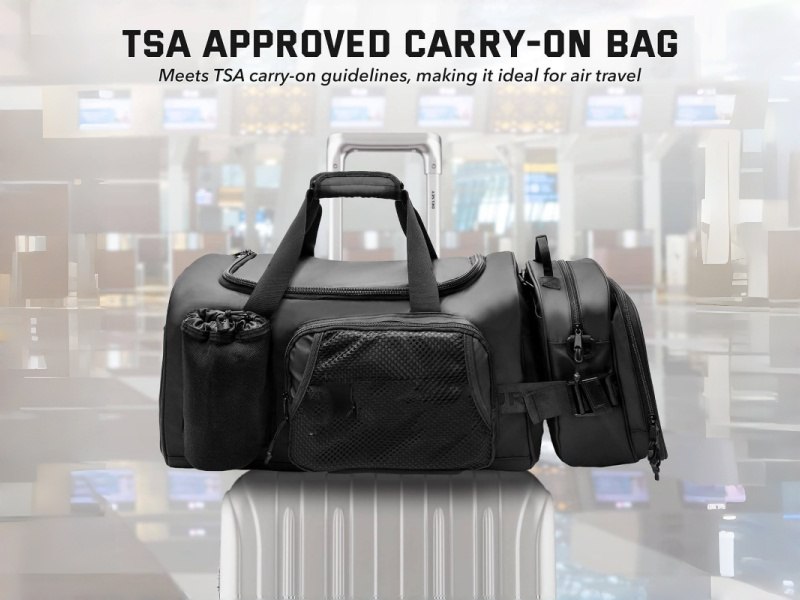
When you’re rushing through the airport, juggling your boarding pass, and trying to squeeze your suitcase into the overhead bin, one question might suddenly feel more important than anything else: what size is a carry-on bag, really?
The answer can be surprisingly confusing — because every airline seems to play by different rules. One airline lets you bring a 22-inch roller bag, while another insists on 21 inches. Some even count the wheels and handles, others don’t. For travelers and luggage brands alike, getting this right is more than just a matter of convenience — it’s about compliance, efficiency, and avoiding unexpected costs.
A standard carry-on bag usually measures 22 x 14 x 9 inches (56 x 36 x 23 cm) including wheels and handles. However, size limits can vary slightly by airline and region. Most carriers allow one carry-on bag and one personal item, but low-cost airlines often enforce smaller dimensions and stricter weight limits. Checking your airline’s policy before travel helps avoid last-minute gate fees.
And here’s the twist — the perfect carry-on size isn’t just about flying. For buyers, retailers, and OEM manufacturers, it’s a design benchmark that affects sales, customer satisfaction, and brand reputation. Let’s break down everything you need to know — from airline size rules to how Jundong designs custom carry-ons that meet global standards.
What Are the Standard Carry-On Dimensions Across Airlines?

Most airlines follow the 22 x 14 x 9 inches rule (56 x 36 x 23 cm). However, European and Asian carriers often allow smaller bags. Typical carry-on weight limits range from 7–10 kg (15–22 lbs). Always verify with your airline, as low-cost carriers tend to be stricter than premium ones.
Airlines define “carry-on” in subtly different ways — and that small variation can lead to a lot of frustration at the gate.
Here’s a look at common airline size standards:
| Airline | Carry-On Size (inches) | Weight Limit (kg) | Region |
|---|---|---|---|
| American Airlines | 22 x 14 x 9 | No official limit | North America |
| Delta | 22 x 14 x 9 | No official limit | North America |
| Ryanair | 21.6 x 15.7 x 7.8 | 10 | Europe |
| Lufthansa | 21.6 x 15.7 x 9 | 8 | Europe |
| AirAsia | 21.5 x 15.5 x 9 | 7 | Asia |
| Emirates | 22 x 15 x 8 | 7 | Middle East |
Even though these measurements look close, the extra half-inch can determine whether your bag fits into the overhead bin or gets checked in.
Why Some Airlines Enforce Stricter Size Rules
Low-cost airlines like Ryanair or AirAsia rely heavily on baggage fees to boost profit margins. This means gate staff measure more aggressively — often including handles and wheels. On the other hand, premium carriers like Emirates or Delta tend to be more lenient if your bag “visually fits.”
How Strict Are Airlines in Enforcing Carry-On Size?
Most full-service airlines use a “visual fit” policy — if your bag looks small enough, they won’t measure it. Budget airlines, however, use sizer boxes at boarding gates. Bags that don’t fit perfectly may incur an additional $50–$100 charge or be gate-checked.
Pro Tip:
Manufacturers designing global-standard carry-ons, like Jundong, often target 21.5 inches in height — this ensures compliance across almost all major airlines, minimizing size rejection risk for buyers selling internationally.
Which Carry-On Size Fits International and Domestic Flights?

Domestic flights in the U.S. typically allow 22-inch carry-ons, while international and budget airlines often limit to 21 or 20 inches. Choosing a universal 21.5-inch bag ensures it fits both types.
The biggest difference between domestic and international flights is space. Smaller aircraft cabins on international and budget routes limit bin dimensions, forcing tighter restrictions.
US Airlines vs. European & Asian Airlines — Key Variations
U.S. airlines focus on cubic inches (volume) and rarely enforce weight.
European/Asian airlines emphasize weight — a 22-inch bag may pass visually but get flagged if it exceeds 7 kg.
| Region | Typical Size Limit (inches) | Weight Limit |
|---|---|---|
| U.S. Domestic | 22 x 14 x 9 | None or 10 kg |
| Europe | 21.6 x 15.7 x 9 | 8–10 kg |
| Asia | 21 x 14 x 9 | 7 kg |
How to Choose One Carry-On That Meets Multiple Airline Rules
For global buyers, the “one-size-fits-most” approach matters.
Jundong recommends the 21.5 x 14 x 9 inch format, which:
Passes both U.S. and international standards
Keeps total linear dimensions under 45 inches (115 cm)
Balances storage volume (~35L) with compliance
Which Carry-On Sizes Are Best for Private Label / Global Buyers?
Private label clients often target a hybrid size range between 20–22 inches, offering versatility across airline categories. For example:
20-inch models: Best for Asian or budget airlines
21.5-inch models: Universal export size
22-inch models: U.S. and premium route focus
Jundong’s OEM data (2024) shows that 65% of global buyers now request 21–21.5-inch molds for cross-market flexibility — especially for Amazon, Walmart, and EU distributors.
How to Measure Your Carry-On Bag Correctly?
Measure your bag from edge to edge, including wheels, handles, and side pockets. Total size must not exceed the airline’s stated limits, usually 22 x 14 x 9 inches (56 x 36 x 23 cm).
Travelers often assume the “body” of the bag defines its size — but airlines measure total external dimensions.
Tools and Techniques to Measure Luggage Dimensions Accurately
- Place the bag upright against a wall.
- Measure height from the floor to the top of the handle (if fixed).
- Measure width and depth at the widest points, including wheels.
- Add all sides for total linear inches (height + width + depth).
How to Avoid Oversize Fees or Gate Rejections
Buy a portable luggage scale and tape measure.
Check if your bag expands — avoid overpacking when flying budget carriers.
Remember: some airlines use metal sizer frames, not soft bins.
Real Airline Measurement Practices and Traveler Mistakes
A 2023 travel survey showed that 1 in 4 passengers were forced to check their carry-on because it exceeded size or weight limits. The most common issue? Forgetting to include wheels or side pockets.
Manufacturers like Jundong take this into account by designing carry-ons with low-profile wheels and integrated handles, maximizing usable volume while staying under airline limits.
What Is the Ideal Carry-On Bag Size for Different Travelers?

The ideal carry-on size depends on trip type.
20–21 inches for short trips
21–22 inches for business and international travel
Under-seat bags for day or weekend trips
Travel isn’t one-size-fits-all. The “perfect” carry-on varies depending on travel habits and destination.
Recommended Carry-On Sizes by Travel Duration and Purpose
| Trip Type | Recommended Size | Best For |
|---|---|---|
| Overnight | 18–20 inches | Quick business or weekend trips |
| 3–5 Days | 21 inches | Most travelers |
| 7+ Days | 22 inches | Long-haul flights or frequent fliers |
How Do Carry-On Bags Differ by Style and Use Case?
Business carry-ons: Sleek, hard-shell, compartmentalized for suits/laptops
Leisure carry-ons: Soft, flexible nylon or canvas with expansion zippers
Adventure travel: Rugged materials, waterproof linings, compression straps
How Lightweight Materials Affect Usable Carry-On Capacity
Materials like EVA, polycarbonate, and 600D Oxford nylon reduce weight while increasing interior space. Jundong’s hybrid designs weigh 25–30% less than traditional ABS suitcases, allowing travelers to pack more within airline limits.
What Are the Key Design and Manufacturing Considerations?

Designing an OEM carry-on requires balancing weight, durability, material quality, and size compliance. Factors include zippers, wheels, handles, stitching, and branding elements.
What Design & Manufacturing Considerations for OEM Carry-Ons?
At Jundong, engineering precision starts at the mold. Each carry-on is tested for handle endurance (≥ 500 cycles) and wheel rotation (5 km track test). Key design focuses include:
Zipper strength (YKK/SBS)
Shell resilience under 25kg load
Custom colorway integration using Pantone matching
Logo techniques: printing, embossing, or metal plating
How Carry-On Size Impacts Product Engineering and Durability
Smaller bags demand smarter internal layouts — divider panels, laptop sleeves, or compression straps must fit within height limits. Designers adjust mold curvature to ensure maximum packing efficiency without exceeding dimensions.
A soft EVA carry-on, for instance, can expand capacity by 10–15% through flexible compression — perfect for buyers targeting mixed airline compliance.
How to Customize Carry-On Bags for Your Brand?
Custom carry-on manufacturing allows logo placement, color choices, and branded design. Jundong offers OEM/ODM service with low MOQ, free design, and fast sampling.
OEM/ODM Carry-On Solutions for Retailers and Travel Brands
With over 20 years of factory experience, Jundong provides:
Free design support
Low MOQ from 100 pcs
Material sourcing (PC, EVA, Nylon, PU leather)
Sampling within 7 days
Custom packaging for retail and eCommerce
Advantages of Partnering with Jundong Factory
Global export experience (North America, Europe, Asia-Pacific)
Strict quality control (ISO & BSCI certified)
Short delivery lead times (15–25 days)
Multi-language support for B2B buyers
Customizing Size and Material Options for Market Positioning
Private label clients can choose:
Exact carry-on dimensions to match target markets
Branded zippers and tags for recognition
Reinforced or lightweight builds depending on price tier
By blending branding with engineering precision, Jundong helps buyers build carry-on collections that comply globally yet stand out locally.
FAQ Section
Q1: What’s the maximum size for a carry-on on international flights?
Usually 21 x 14 x 9 inches, including wheels and handles. Always verify specific airline policies.
Q2: Do wheels count in carry-on measurements?
Yes, almost all airlines include wheels and handles in their measurements.
Q3: What’s the best material for lightweight carry-ons?
Polycarbonate and EVA offer excellent strength-to-weight ratios.
Q4: Can I bring two carry-ons on a flight?
No, airlines typically allow one carry-on plus one smaller personal item.
Q5: How can I order custom-size carry-ons from Jundong?
Contact Jundong’s sales team for OEM or private label service. Free design and samples available.
Conclusion
Finding the right carry-on size isn’t just about following rules — it’s about designing luggage that travelers love and trust. Whether you’re a small retailer or an established brand, the right manufacturing partner ensures your products comply globally, perform reliably, and reflect your brand identity.
With over 20 years of manufacturing experience, Jundong specializes in OEM/ODM carry-on production using premium materials, certified quality control, and international compliance expertise.
✅ Free design service
✅ Low MOQ customization
✅ Fast sampling and delivery
✅ OEM / Private label support
👉 Contact Jundong today to start creating your own custom-size carry-on bag collection and elevate your brand in the travel market.