 Skip to content
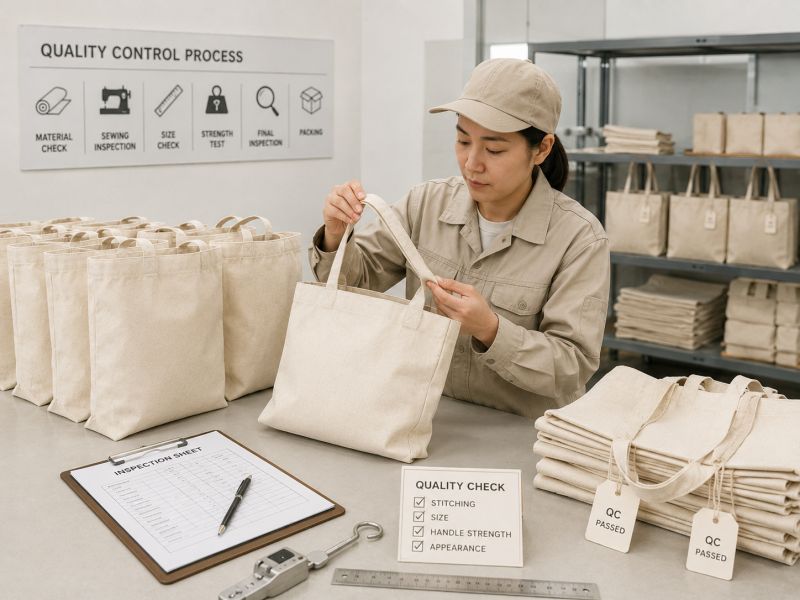
Canvas tote bags look simple from the outside. A piece of fabric, two handles, one logo, done. But anyone who has worked on a real branded tote program knows the fabric weight can quietly decide whether the bag feels useful, cheap, premium, stiff, easy to fold, or too heavy to ship.
A 6oz canvas tote may be perfect for an event giveaway. A 10oz tote may work better for a lifestyle shop. A 12oz tote may feel more solid for retail. A 16oz tote may look strong, but it can also raise sewing difficulty, carton weight, and landed cost. So the smarter decision is not “choose the thickest canvas.” The smarter decision is “choose the canvas weight that fits the job.”
For brands, fabric weight affects more than handfeel. It changes logo performance, handle strength, product photos, packing volume, sample approval, bulk consistency, and price. It also affects how the end user feels in the first three seconds after touching the bag. That moment matters. If the tote feels too thin, the brand may look less thoughtful. If it feels too heavy, the product may become harder to carry, fold, or ship.
A good canvas tote bag fabric weight should match the bag’s purpose, not just the brand’s taste. 6oz–8oz canvas is usually better for lightweight promotional bags and event handouts. 10oz–12oz canvas is often the safest choice for retail tote bags, private label merchandise, bookstore bags, museum bags, grocery totes, and daily-use designs. 14oz–16oz canvas works better when the project needs stronger structure, heavier loading, or a more premium product feel.
At Jundong, canvas tote bag projects are usually reviewed from several sides before sampling: fabric weight, bag size, handle load, logo method, color, packing style, carton plan, and bulk quality control. This is the part many low-cost product platforms skip. But for a brand program, these details decide whether the approved sample can become a stable repeat order.
What Does Canvas Tote Bag Fabric Weight Mean?
Canvas fabric weight means how heavy the fabric is per unit area. It is usually shown as oz or GSM. Oz is common in canvas and cotton duck fabric, while GSM means grams per square meter. Fabric weight does not mean the final weight of one tote bag. It tells you how thick, firm, soft, foldable, and strong the fabric may feel after cutting, sewing, washing, printing, and packing.
For example, 8oz canvas is lighter and easier to fold than 12oz canvas. 12oz canvas usually feels thicker and more structured, but it also costs more and may increase shipping weight. So oz and GSM should be treated as a starting reference, not the only decision tool.
Here is a simple way to understand common canvas weights:
| Canvas Weight | Approx. GSM | Common Feel | Common Use |
|---|---|---|---|
| 6oz | About 200 GSM | Light, flexible | Event bags, giveaways |
| 8oz | About 270 GSM | Soft but stronger than thin cotton | Promo tote bags, daily light use |
| 10oz | About 340 GSM | Balanced and stable | Retail tote bags, shopping bags |
| 12oz | About 410 GSM | Thicker, more structured | Private label bags, brand merchandise |
| 14oz | About 475 GSM | Strong and firm | Heavy-duty totes, premium programs |
| 16oz | About 540 GSM | Thick, strong, less foldable | Structured totes, grocery bags, work-use bags |
One common mistake is comparing quotes only by size. Two bags may both be 38 × 42 cm, but if one uses 8oz canvas and the other uses 12oz canvas, the cost, touch, structure, packing weight, and perceived value can be very different.
For a brand team, the better habit is to compare fabric weight, fabric composition, sewing construction, handle reinforcement, logo method, and packing together. That gives a clearer view of value.
Which Canvas Weight Is Best for Brand Tote Bags?

The best canvas weight depends on the bag’s purpose. For event giveaways, 6oz–8oz may be practical because it keeps the bag light and cost controlled. For retail tote bags, 10oz–12oz is often a safer choice because it gives better structure, stronger handfeel, and cleaner logo presentation. For premium, grocery, or heavy-use totes, 14oz–16oz may be worth considering if the project can accept higher cost and heavier packing.
There is no single best fabric weight for every brand. A skincare brand giving away bags at a product launch may choose 8oz canvas with a clean one-color logo. A bookstore may prefer 10oz or 12oz because books are heavy and the tote needs to feel reliable. A fashion brand may choose 12oz canvas with a woven label or embroidery to create a better retail feel.
This is why a fabric weight guide should not push one number. It should help the team understand trade-offs.
The main trade-off looks like this:
| Project Goal | Better Canvas Weight | Why |
|---|---|---|
| Low-cost event distribution | 6oz–8oz | Easier to fold, lighter to ship, more cost controlled |
| Daily-use brand tote | 8oz–10oz | Good balance between cost and usefulness |
| Retail tote bag | 10oz–12oz | Better shelf feel, stronger body, cleaner logo effect |
| Premium merchandise | 12oz–14oz | More solid handfeel and brand value |
| Heavy grocery or utility tote | 14oz–16oz | Better load support and longer use |
A small tote made in 16oz canvas may feel too stiff. A large grocery tote made in 6oz canvas may feel weak. The right fabric weight is always connected to size, use, load, and brand positioning.
If you are unsure which canvas weight fits your tote bag idea, send the bag size, target use, quantity, logo method, and packing style to info@jundongfactory.com. A practical comparison before sampling can save time later.
6oz vs 8oz vs 10oz vs 12oz Canvas Tote Bags: What Is the Difference?
The difference between 6oz, 8oz, 10oz, and 12oz canvas is mainly handfeel, structure, durability, logo performance, cost, and packing weight. 6oz canvas is lighter and better for simple giveaways. 8oz feels stronger while still staying flexible. 10oz is a balanced choice for daily tote bags. 12oz gives a firmer, more retail-ready feel and is often better for brand merchandise.
6oz canvas is useful when quantity, deadline, and distribution matter most. Think trade shows, school events, awareness campaigns, and lightweight gift packing. It is not the best option for heavy books, grocery loads, or premium retail displays.
8oz canvas gives a better first impression than very thin cotton bags. It still folds easily and works well for simple screen printing. Many brands choose this weight when they need a practical bag for events, seasonal campaigns, or starter merchandise.
10oz canvas is often the middle ground. It has enough body for daily use but does not feel too stiff. It is usually suitable for shopping totes, bookstore totes, lifestyle brand bags, and online shop merchandise. It can work well with screen printing, heat transfer, woven labels, and some embroidery designs.
12oz canvas gives the tote a stronger shape. It feels more valuable in the hand. It is a good option when the bag is not just a giveaway, but part of the brand experience. It is often used for retail merchandise, museum stores, fashion labels, beauty gift sets, and premium lifestyle programs.
Still, thicker canvas is not automatically better. Once you move into 14oz or 16oz, the bag may require stronger needles, stronger stitching, better handle reinforcement, and more careful folding or packing. Those details can raise the final cost.
Why Are Heavier Canvas Tote Bags Not Always Better?
Heavier canvas tote bags are not always better because weight must match the bag size, use, price target, logo method, and packing plan. A heavy canvas tote may feel premium, but it can also become too stiff, too costly, or too bulky for event handouts and small-size designs. The right choice is the weight that supports the product’s real use without creating unnecessary cost.
Many teams choose heavy canvas because they want the bag to feel high quality. That thinking makes sense, but only up to a certain. A 12oz tote can feel solid and refined. A 16oz tote can feel strong and premium. But if the bag needs to be folded into a compact mailer, packed into gift boxes, or shipped in large volume by air, the added weight may work against the project.
The bag’s structure also matters. A flat tote with no gusset does not behave the same way as a wide-bottom grocery tote. A small pouch-style tote does not need the same fabric as a large weekend shopper. Handle width, stitch density, side seam strength, bottom gusset, and inner reinforcement may matter as much as fabric weight.
A smarter way to think:
- If the bag needs to be low-cost and easy to distribute, do not overbuild it.
- If the bag needs to carry weight, check handle and seam strength, not just canvas weight.
- If the bag needs to look premium, match fabric weight with logo method and finishing.
- If the bag needs to ship efficiently, consider folded size and carton quantity.
- If the bag needs repeat orders, lock a fabric reference after sample approval.
The strongest tote is not always the one with the heaviest fabric. It is the one where material, structure, and use are aligned.
How Does Fabric Weight Affect Logo Printing, Embroidery, and Brand Look?

Fabric weight affects how a logo sits on the canvas, how clear the edges look, and how premium the finished tote feels. Lighter canvas is usually better for simple screen printing and event graphics. Medium-weight canvas, such as 10oz–12oz, works well for most brand logos. Heavier canvas can support embroidery, woven labels, patches, and premium details, but it may require more careful testing before bulk production.
Logo work is one of the first things people notice. A bag can use good canvas, but if the logo looks crooked, cracked, too small, too large, or poorly placed, the whole product feels wrong.
Screen printing works well for many canvas tote bags, especially when the artwork is clean. On lighter canvas, large simple graphics usually perform better than tiny details. On 10oz–12oz canvas, the fabric surface often gives a better balance between texture and print stability.
Embroidery can look strong on medium and heavier canvas, but it should be tested. Dense embroidery may pull the fabric, especially if the logo is large. The backing material, stitch count, logo size, and placement all matter.
Woven labels are a clean choice for retail tote bags. They do not depend as much on fabric surface smoothness, and they add a finished product feeling. For premium tote bags, rubber patches, leather patches, or metal plates can also work, but they need the right fabric weight and reinforcement.
Logo position should never be decided only on a digital mockup. A logo that looks centered on a flat drawing may look too low after the bag is filled. A large front logo may bend across seams or pockets. A small woven label may disappear if the canvas color is too strong.
For a stable result, confirm these details before bulk production:
| Logo Detail | Why It Matters |
|---|---|
| Logo size | Affects visibility and production accuracy |
| Logo placement | Prevents distortion near seams, pockets, or folds |
| Logo method | Must fit fabric texture and project budget |
| Print color | Needs contrast with canvas color |
| Test sample | Shows real effect before larger production |
Jundong supports logo placement review, screen printing, heat transfer, woven labels, rubber patches, PVC patches, metal plates, and related brand detail work for custom bag projects. The best result usually comes from testing the logo on the chosen fabric, not only approving a screen mockup.
How Does Canvas Weight Affect Price, MOQ, and Shipping Cost?
Canvas weight affects price because heavier fabric usually uses more material, may need stronger sewing, and can increase carton weight. It may also reduce how many bags fit into one carton. MOQ is affected by fabric sourcing, color, logo method, and production setup. A simple 8oz tote and a 14oz structured tote may look similar in photos, but their cost logic can be very different.
The unit price of a canvas tote bag is not only the fabric. It includes cutting, sewing, thread, handles, logo work, hardware if used, inner pockets, zipper, packing, labor, inspection, and export preparation. Fabric weight is a major factor, but not the only one.
For example, switching from 8oz to 12oz canvas can change:
- Fabric consumption cost
- Cutting pressure
- Sewing needle and thread choice
- Handle strength requirements
- Folded thickness
- Carton quantity
- Shipping weight
- Final landed cost
A heavier canvas tote may be right for a retail product that sells at a higher price. But for a one-day campaign bag, it may use too much budget where the end user does not need that level of strength.
MOQ should also be discussed honestly. At Jundong, the standard MOQ is usually 500 pcs per design. For simple styles, 200–300 pcs may be possible. Smaller runs often have a higher unit price because material sourcing and full production steps still need to happen. Once the order reaches 500 pcs or more, pricing usually becomes more competitive.
This is why a clear project brief helps. If the team can share size, fabric preference, quantity, logo method, packing needs, and delivery country, the quote will be much more useful than a rough price guess.
When Should Brands Choose 10oz or 12oz Canvas Tote Bags?
Brands should choose 10oz canvas when they want a balanced tote bag for daily use, retail programs, shopping, events, or online merchandise. It gives a stronger handfeel than light canvas without becoming too heavy. Choose 12oz canvas when the tote needs better structure, higher perceived value, stronger retail presence, or longer daily use. Both can work well, but the better choice depends on product purpose and price target.
10oz canvas is a practical choice when the project needs volume and quality at the same time. It works well for lifestyle stores, bookstores, grocery stores, fashion basics, campus shops, beauty gift programs, and brand merchandise. It can hold shape better than 6oz or 8oz but still remains manageable for folding and packing.
12oz canvas is a stronger choice when the tote is part of the product line rather than a low-cost giveaway. If the bag will be sold, gifted with a premium set, displayed in a retail shop, or photographed for online sales, 12oz often gives a better first impression.
Here is a simple comparison:
| Choice | Better For | Watch Out For |
|---|---|---|
| 10oz Canvas | Daily-use totes, retail basics, larger quantities | May need reinforcement for heavy loads |
| 12oz Canvas | Premium totes, gift sets, brand merchandise | Higher cost and slightly heavier packing |
If the decision is difficult, making one sample in 10oz and one in 12oz can be useful. The difference becomes much clearer when the team can touch the bag, place products inside, check the logo, and test the packing.
What Type of Canvas Tote Bag Fits Retail, Event, Grocery, and Lifestyle Brands?
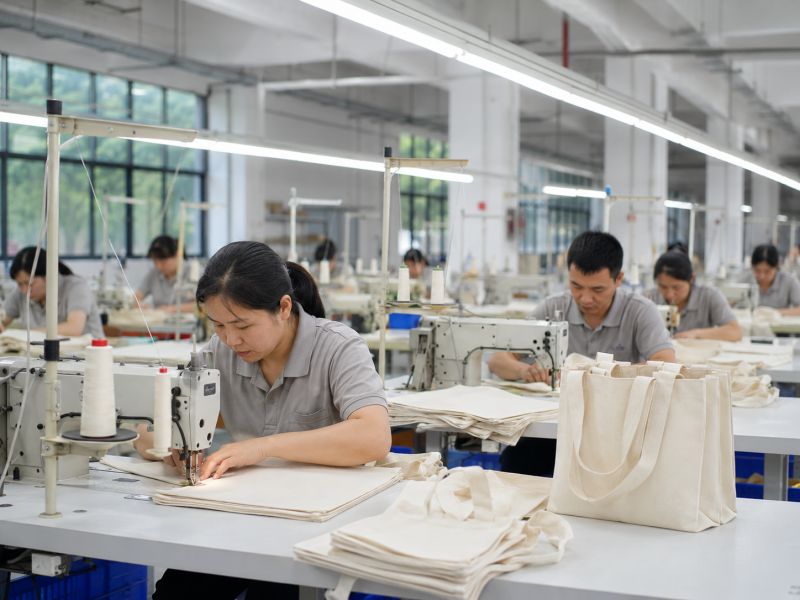
Different brand programs need different canvas tote bag structures. Event bags usually need light weight, fast handling, and visible logos. Retail tote bags need better touch and cleaner finishing. Grocery totes need load support and stronger handles. Lifestyle brands often need a balance of fabric feel, color, shape, and logo detail. Fabric weight should follow the use case, not the other way around.
For event tote bags, the bag must be easy to carry and easy to hand out. A 6oz or 8oz canvas may be enough if the contents are light. The logo should be clear and visible. The packing should be simple.
For retail tote bags, the product needs to feel worth keeping. 10oz or 12oz is often a better place to start. The bag should look good in photos, hold its shape when hanging, and feel better than a throwaway promotional item.
For grocery tote bags, weight support becomes more serious. 12oz–16oz can work better, but the handle stitching and bottom construction must be checked. Heavy fabric alone does not guarantee strength.
For lifestyle brands, the canvas tote often becomes part of the brand identity. Color, fabric texture, logo proportion, handle length, and finishing details matter. A simple tote can still feel high-value if every detail feels intentional.
| Brand Use | Better Direction |
|---|---|
| Event giveaway | 6oz–8oz, simple logo, easy packing |
| Retail shop tote | 10oz–12oz, cleaner finishing, stronger body |
| Grocery tote | 12oz–16oz, reinforced handles, load testing |
| Lifestyle brand tote | 10oz–14oz, better fabric touch and brand details |
| Museum or bookstore tote | 10oz–12oz, print quality and daily durability |
| Gift set tote | 12oz+, polished logo and packing details |
This is where an experienced factory can add value. The role is not only to produce the bag, but to help avoid a mismatch between product use and material choice.
How Should Brands Confirm a Canvas Tote Bag Sample Before Bulk Production?
Before bulk production, brands should confirm fabric weight, size, handle strength, logo effect, stitching, color, packing, and real-use performance. A sample is not only a visual approval item. It is a working reference for production. The more carefully the sample is checked, the lower the chance of bulk issues such as weak handles, poor logo placement, wrong fabric feel, or packing problems.
A sample should be tested like the final product. If the tote will carry books, put books inside. If it will be used for grocery shopping, test heavier items. If it will be sold online, photograph it under real lighting. If it will be packed with cosmetics, test the full set inside the bag.
Key checks before approval:
| Check Item | What to Review |
|---|---|
| Fabric weight | Does it feel right for the intended use? |
| Fabric color | Does it match the brand direction or Pantone reference? |
| Bag size | Does it fit the products inside? |
| Handle length | Hand carry or shoulder carry? |
| Logo effect | Clear, centered, correct size, correct color |
| Stitching | Even, clean, strong enough |
| Load support | Handles and seams hold expected weight |
| Packing | Folded size, polybag, hangtag, barcode, carton quantity |
| Bulk reference | Approved sample kept as production standard |
The sample approval stage is also the best time to make small improvements. Once production starts, changes become more expensive and slower.
Jundong supports pattern making, sample development, material confirmation, color sample confirmation, logo sample approval, and pre-production samples. For custom canvas tote bags, this early work helps keep the approved sample and bulk goods aligned.
How Long Does It Take to Make Canvas Tote Bag Samples and Bulk Orders?
Canvas tote bag sample time is usually about 5–7 days for many standard custom projects. Some simple styles can be completed in 2–3 days if materials and logo details are ready. Bulk production often takes about 20–30 days, depending on order quantity, fabric sourcing, logo method, structure, packing needs, and approval speed. A clear brief and fast sample feedback can shorten delays.
Lead time is not just a factory schedule. It is also affected by how complete the project information is.
A project with clear artwork, size, fabric weight, color, quantity, and packing details can move much faster. A project with missing logo files, unclear size, changing fabric direction, or late packing decisions will naturally take longer.
Here is a simple timing view:
| Stage | Typical Timing | What Can Slow It Down |
|---|---|---|
| Material confirmation | 1–3 days | Custom color, special fabric, unclear fabric weight |
| Sample making | 5–7 days | Complex structure, embroidery, patch, lining |
| Simple sample | 2–3 days | Only if materials and details are ready |
| Sample revision | Depends on changes | Size change, logo change, structure change |
| Bulk production | 20–30 days | Quantity, QC needs, packing details, shipping plan |
If the tote bag is tied to a launch date, event date, retail drop, or seasonal campaign, share the deadline early. The production plan should be built backward from the delivery date, not discussed after sample approval.
How Does a Custom Canvas Tote Bag Factory Control Bulk Quality?
A custom canvas tote bag factory controls bulk quality by checking materials, fabric weight, cutting, stitching, logo work, handle strength, finished product appearance, and packing. The goal is not only to make one nice sample. The goal is to keep hundreds or thousands of bags consistent with the approved sample. This is especially critical for retail, private label, event, and long-term repeat programs.
Quality control starts before sewing. Fabric weight and color should be checked before cutting. If the fabric batch changes, the handfeel and shade may change too. That is why material references and approved samples matter.
During production, the main risks are size tolerance, crooked stitching, uneven handles, logo shift, loose threads, weak seams, and inconsistent folding. These problems may look small, but they affect how the final bag feels to the end user.
For canvas tote bags, several checks matter most:
- Fabric weight and texture
- Cutting size
- Handle length and position
- Stitching strength
- Logo color and placement
- Load performance
- Thread trimming
- Folding and packing
- Carton marks and SKU separation
Jundong is based in Guangdong and has a production setup with 600+ staff, about 18,000 square meters of factory space, an export sales team, product development and design teams, a professional sample room, and 80 quality inspectors. This type of system is useful for brands that care about sample-to-bulk consistency, repeat orders, and long-term supply stability.
What Should Brands Send Before Asking for a Canvas Tote Bag Quote?
Before asking for a canvas tote bag quote, brands should send the bag size, preferred canvas weight, fabric color, logo file, logo method, order quantity, packing needs, delivery country, and target use. If those details are ready, the factory can suggest a more accurate fabric plan, sample process, unit price, and production schedule. A clear brief saves time and reduces wrong assumptions.
A useful request does not need to be perfect. But it should include enough information for a practical review.
Helpful details include:
| Detail | Why It Helps |
|---|---|
| Bag size | Affects fabric use and structure |
| Canvas weight | Affects cost, touch, and strength |
| Quantity | Affects unit price and production planning |
| Logo file | Needed for print, embroidery, or label review |
| Logo method | Changes cost and sample process |
| Fabric color | Natural canvas, dyed canvas, black, custom color |
| Handle style | Shoulder carry, hand carry, webbing, self-fabric |
| Inner details | Pocket, zipper, lining, snap button |
| Packing | Polybag, hangtag, barcode, carton mark |
| Delivery country | Affects shipping planning |
| Use case | Event, retail, grocery, gift set, daily use |
If you only have a rough idea, that is fine. A sketch, reference photo, size target, and logo file are enough to start a discussion. Send your tote bag project details to info@jundongfactory.com, and the team can help compare fabric weights, logo methods, sample options, and packing plans before production.
Closing Note
Choosing canvas weight is not a small technical detail. It is a product decision. It affects how the tote looks, feels, carries, prints, packs, ships, and sells.
For lightweight campaign bags, 6oz–8oz may be enough. For retail and private label tote bags, 10oz–12oz is often the safest place to start. For premium, grocery, or heavy-use designs, 14oz–16oz may be worth testing. But the best choice always depends on the full project: size, load, logo, packing, quantity, deadline, and target price.
A well-made tote bag should feel easy to understand the moment someone picks it up. The fabric should match the purpose. The logo should sit naturally. The handles should feel reliable. The packing should support the sales channel. And the approved sample should be repeatable in bulk.
That is the real value of choosing the right canvas tote bag fabric weight before production begins.
FAQs About Canvas Tote Bag Fabric Weight
FAQ 1: What is the best canvas weight for custom tote bags?
The best canvas weight for custom tote bags depends on how the bag will be used, not only how thick the fabric feels. For most brand projects, 10oz and 12oz canvas are the safest starting choices because they give a good balance of structure, handfeel, print quality, and cost control.
A 6oz or 8oz canvas tote can work very well for events, trade shows, campaign giveaways, school programs, or lightweight gift packing. These bags are easier to fold, easier to ship, and better for large-volume distribution. But if the tote needs to carry books, groceries, cosmetics kits, or retail merchandise, lighter canvas may feel too soft.
A 10oz canvas tote usually fits daily use, shopping, bookstore bags, lifestyle merchandise, and many private label programs. It feels stronger than a promotional cotton bag but does not become too stiff. A 12oz canvas tote gives a more solid feel and is often better for retail sales, museum shops, fashion labels, beauty gift sets, and brands that want a better first touch.
Here is a quick guide:
| Use Case | Suggested Canvas Weight |
|---|---|
| Event giveaway tote | 6oz–8oz |
| Daily-use tote bag | 8oz–10oz |
| Retail canvas tote | 10oz–12oz |
| Premium brand tote | 12oz–14oz |
| Grocery or heavy-use tote | 14oz–16oz |
The right choice should also consider size, handle style, logo method, packing, quantity, and target price. A professional sample check is often the fastest way to confirm the best fabric before bulk production.
FAQ 2: Is 10oz canvas good enough for retail tote bags?
Certainly, 10oz canvas is a strong and practical choice for many retail tote bags, especially when the brand wants a good balance between quality feel, cost, print clarity, and daily usability. It is not the thickest canvas, but it is often one of the most sensible choices for retail programs.
A 10oz tote bag usually has enough body to avoid looking too thin. It can hold its shape better than 6oz or 8oz canvas, and it still folds more easily than 14oz or 16oz canvas. This makes it suitable for bookstores, lifestyle shops, apparel brands, beauty brands, gift stores, online merchandise, and reusable shopping bags.
For logo work, 10oz canvas is also friendly. Screen printing, heat transfer, woven labels, and simple embroidery can all perform well when the artwork, fabric texture, and logo placement are tested properly. If the bag will be photographed for online sales, 10oz can look clean and natural without making the product too heavy or bulky.
However, 10oz may not be the best choice for every project. If the tote needs to carry heavy groceries, thick books, wine bottles, hardware, or large product kits, the design may need 12oz or heavier canvas, plus reinforced handles and stronger stitching.
A good factory should not simply say “10oz is enough” or “12oz is better.” The safer approach is to check the full use case. Bag size, handle length, bottom gusset, logo method, expected load, packing plan, and sales channel should all be reviewed before confirming the fabric.
FAQ 3: Is 12oz canvas better than 10oz canvas for brand tote bags?
Definitely, 12oz canvas can feel more premium than 10oz canvas, but it is not automatically the better choice for every brand tote bag. It is better when the project needs stronger structure, a more solid handfeel, better shelf presence, or a higher perceived value.
A 12oz canvas tote often works well for retail merchandise, museum shops, fashion brands, gift sets, beauty kits, bookstores, and lifestyle programs where the bag is part of the product experience. It feels more substantial in the hand, holds shape better, and can make a simple tote look more polished.
That said, 12oz canvas usually brings a higher fabric cost. It may also increase the finished bag weight, reduce carton quantity, and raise shipping cost. For a large event giveaway where the bag is handed out for free, 12oz may use budget that could be better spent on better logo printing, packaging, or larger quantity.
The choice between 10oz and 12oz should be based on this logic:
| Choose 10oz If | Choose 12oz If |
|---|---|
| You need a balanced retail tote | You want stronger structure |
| Cost control matters | Product feel matters more |
| The tote is for daily light use | The tote may be sold or gifted as a premium item |
| Folding and packing matter | Shelf presence and touch matter more |
For many brands, making one sample in 10oz and one in 12oz is worth the small extra step. Once the team can touch both bags, place products inside, test the logo, and check folded packing, the decision becomes much easier.
FAQ 4: Are heavier canvas tote bags always more durable?
Not always. Heavier canvas can improve strength and structure, but real durability also depends on sewing quality, handle reinforcement, thread choice, seam design, bottom construction, and load testing. A 16oz tote with weak handles can fail faster than a 12oz tote with strong stitching and proper reinforcement.
Many people assume fabric weight equals durability. It is part of the story, but not the whole story. The fabric body may be strong, while the handle stitching becomes the weak spot. Or the side seams may hold, but the bottom corner may tear if the bag carries sharp or heavy items. For grocery totes, bookstore totes, work totes, and heavy-use bags, the structure must be reviewed together with the fabric.
A stronger tote usually needs:
- Suitable fabric weight
- Proper handle width
- Reinforced handle stitching
- Clean seam allowance
- Strong thread
- Bottom gusset support if needed
- Load testing before approval
- Consistent bulk inspection
For example, a large tote bag made with 12oz canvas, reinforced cross-stitch handles, and a well-designed bottom gusset can perform very well for daily use. A 14oz tote with narrow handles and weak sewing may look strong but feel uncomfortable or fail under repeated loading.
So the smarter is not “How heavy is the fabric?” It is “Can this full construction support the way people will actually use the bag?” That is the mindset that reduces returns, complaints, and disappointment after delivery.
FAQ 5: Which canvas weight works best for logo printing and embroidery?
Of course, the best canvas weight for logo work depends on the logo method. For simple screen printing, 8oz–12oz canvas usually works well. For a more retail-ready logo, 10oz–12oz is often a strong choice. For embroidery, woven labels, rubber patches, leather patches, or metal plates, medium to heavier canvas is usually safer because it gives better support.
Screen printing is popular for canvas tote bags because it is clean, clear, and cost-friendly for many designs. It works best when the artwork has strong lines, proper color contrast, and the fabric surface is not too rough. For very thin canvas, large simple logos usually perform better than tiny detailed artwork.
Embroidery can look excellent, but it should be tested before bulk production. Dense embroidery on a thin canvas may pull the fabric or create wrinkles. A medium-weight canvas, such as 10oz or 12oz, often gives better support. For larger embroidered designs, backing material and stitch density must be reviewed.
Woven labels are a smart option for retail tote bags because they add a finished product feel. Rubber patches, PVC patches, leather patches, and metal plates can work well for premium bags, but they need the right fabric strength and placement.
Useful checks before confirming logo work:
| Logo Method | Better Fabric Direction | What to Check |
|---|---|---|
| Screen printing | 8oz–12oz | Edge clarity, color contrast |
| Heat transfer | Smoother canvas | Adhesion and wash behavior |
| Embroidery | 10oz–14oz | Fabric pull, backing, stitch density |
| Woven label | 8oz–14oz | Placement and sewing line |
| Patch or plate | 12oz+ preferred | Reinforcement and weight balance |
The logo should always be tested on the actual fabric, not only reviewed on a digital mockup.
FAQ 6: What canvas weight should brands choose for event giveaways?
Sure, for event giveaways, 6oz–8oz canvas is often the most practical choice because it keeps the tote light, easy to fold, easy to pack, and easier to distribute in large quantities. Event bags are usually judged by visibility, convenience, deadline control, and budget fit, not only fabric thickness.
A trade show tote, conference bag, campus event bag, charity campaign bag, or brand launch giveaway usually needs to do three things well: carry light items, show the logo clearly, and reach many people without pushing costs too high. In that situation, 6oz or 8oz can make more sense than 12oz or 14oz.
For example, if the tote only needs to hold brochures, small gifts, samples, or lightweight retail inserts, heavy canvas may not be necessary. A clean 8oz tote with a well-placed logo can look better than a thick tote with poor print quality or rushed packing.
However, there are cases where event totes should use 10oz canvas. If the event is premium, the bag is part of a paid ticket package, or the tote includes heavier product samples, 10oz may give a better experience. For luxury events or brand membership gifts, 12oz can also be considered.
A good event tote plan should check:
- Event date
- Distribution quantity
- Bag contents
- Logo visibility
- Packing method
- Carton quantity
- Shipping deadline
- Budget per piece
If the bag needs to arrive before a fixed event date, send project details early. Canvas weight is only one decision; timing and packing can be just as critical.
FAQ 7: How does canvas weight affect the final tote bag price?
Absolutely, canvas weight can affect the final tote bag price because heavier fabric usually costs more, weighs more, takes more effort to cut and sew, and may change packing volume. But fabric weight is only one part of the cost. Logo method, size, handle design, inner structure, packing, and quantity also influence the final price.
Two tote bags may look similar in a photo, but if one uses 8oz canvas and the other uses 12oz canvas, the cost can be quite different. The heavier version may use more material and require stronger stitching. It may also reduce the number of bags that fit in one carton, which can raise shipping cost.
The main cost factors are:
| Cost Factor | Why It Matters |
|---|---|
| Fabric weight | Heavier fabric usually costs more |
| Bag size | Larger bags use more material |
| Handle type | Wider or reinforced handles add cost |
| Logo method | Printing, embroidery, labels, and patches differ |
| Inner structure | Pockets, lining, zipper, snaps add labor |
| Packing | Polybag, hangtag, barcode, carton mark affect work |
| Quantity | Higher quantity usually improves unit cost |
At Jundong, the standard MOQ is usually 500 pcs per design. Some simple styles may be arranged at 200–300 pcs, but the unit price is usually higher because material sourcing and the full production process still need to run properly. Once the order reaches 500 pcs or more, pricing becomes more competitive.
For a more accurate quote, it is better to send size, fabric weight, logo file, quantity, packing method, and target use together.
FAQ 8: Can one canvas tote bag design use different fabric weights for different product lines
Certainly, one tote bag design can be developed in different canvas weights for different sales channels, price levels, or campaign needs. This is a smart approach when a brand wants one visual identity but several product options.
For example, the same tote shape can be made in 8oz canvas for event giveaways, 10oz canvas for online merchandise, and 12oz canvas for a retail store version. The logo can stay similar, while the handfeel, packing, price, and use case change. This allows the brand to serve different channels without creating a completely new design each time.
This strategy works especially well for:
- Lifestyle brands
- Bookstores
- Museums
- Beauty gift sets
- Apparel brands
- Campus stores
- Online private label programs
- Promotional campaigns with retail follow-up
However, the design should be checked carefully when changing fabric weight. A bag that works well in 8oz may feel different in 12oz. The handle may need adjustment. The folded size may change. The logo may sit differently on thicker fabric. The carton quantity may also change.
Before creating multiple versions, confirm:
| Detail | Why It Needs Review |
|---|---|
| Same size or adjusted size | Fabric stiffness changes shape |
| Same logo or adjusted logo | Print and texture may look different |
| Handle length | Heavier fabric changes drape |
| Packing style | Thicker canvas folds larger |
| Price level | Each weight creates a different cost structure |
This approach helps brands test demand, build a core tote series, and keep visual consistency across several channels.
FAQ 9: What should we check in a canvas tote bag sample before bulk production
Definitely, a canvas tote bag sample should be checked beyond appearance. The sample should confirm fabric weight, handfeel, size, handle length, logo effect, sewing quality, loading ability, folding method, packing, and whether the approved version can be repeated in bulk.
Many problems happen because the sample is approved too quickly. A tote may look fine on a desk but feel wrong once products are placed inside. A logo may look centered when the bag is flat but appear too low when carried. A handle may feel fine when empty but uncomfortable after loading.
Before approval, check these items:
| Sample Check | What to Review |
|---|---|
| Fabric feel | Does it match the intended product level? |
| Actual size | Does it fit the product or use case? |
| Handle length | Hand carry or shoulder carry? |
| Logo placement | Does it look right when carried? |
| Print or embroidery | Clear, stable, correct color |
| Stitching | Clean, even, no weak seams |
| Load test | Handles and seams hold expected weight |
| Folding | Works with the planned packing style |
| Label and barcode | Correct position and readable |
| Carton plan | Fits shipping and warehouse needs |
For retail programs, take photos of the sample in real use. Put products inside. Hang it. Fold it. Carry it. Test the exact experience your end user will have.
Jundong can support sample making, sample revision, material confirmation, color confirmation, logo sample approval, and pre-production samples. This helps reduce surprises before bulk production.
FAQ 10: How do we reduce risk when ordering custom canvas tote bags from an overseas factory?
Exactly, the best way to reduce risk is to confirm the product clearly before bulk production and work with a factory that has a stable process for sampling, material checking, logo testing, quality control, packing, and delivery updates. A low price alone does not reduce risk. A clear process does.
For custom canvas tote bags, the common risks are not mysterious. They usually come from unclear fabric weight, wrong logo placement, weak handles, color variation, size tolerance, late packing decisions, and rushed approval. These can be controlled if the project is managed properly from the start.
A safer process looks like this:
- Share size, quantity, use case, logo file, and packing needs.
- Confirm fabric weight and fabric color.
- Review logo method and placement.
- Make a sample.
- Test load, folding, logo, and real product fit.
- Confirm a pre-production sample if needed.
- Use the approved sample as the bulk standard.
- Check production through material, process, final, and packing stages.
Jundong is located in Guangdong and supports custom bag projects with a professional export team, product development support, design support, a sample room, over 600 staff, about 18,000 square meters of factory space, and 80 quality inspectors. For brands that care about repeat quality, stable delivery, and long-term cooperation, this type of setup matters.
If your project includes a fixed launch date, retail drop, event, or seasonal deadline, share the schedule early. Good planning is often the simplest way to avoid costly problems.