 Skip to content
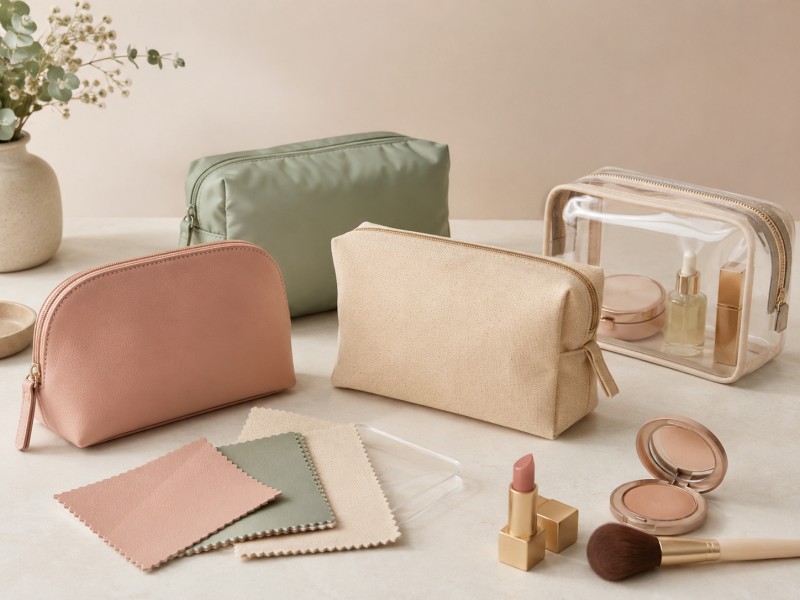
A cosmetic bag looks simple from the outside. One zipper. One body. Maybe one logo. Maybe one inner pocket. But anyone who has developed beauty accessories at scale knows the real decision starts much earlier: with material.
The wrong material can make a pretty pouch feel cheap. It can make a premium skincare set look flat. It can make a travel toiletry bag hard to clean. It can make a logo look unclear. It can push the price too high, slow down sampling, or make repeat orders harder to control.
The right material does the opposite. It supports the brand’s look, protects the product inside, works with the chosen logo method, fits the price plan, and holds up in daily use. For beauty brands, this matters because a cosmetic bag is rarely just “a bag.” It may be part of a launch kit, a retail set, a gift-with-purchase program, a travel collection, a subscription box, or a long-term private label line.
The best material for custom cosmetic bags depends on use, brand style, cleaning needs, target price, logo method, order quantity and packing plan. Polyester and nylon work well for scalable daily makeup pouches. PU leather and vegan leather suit premium beauty sets. Canvas and cotton fit natural-style brands. PVC, TPU and EVA are better for clear, wipe-clean or travel cosmetic bags. rPET and recycled nylon support eco-focused beauty programs. A strong material choice should also consider lining, zipper, pockets, sample testing and repeat order consistency.
A good material decision is not about choosing the most expensive option. It is about choosing the most suitable one. A promotional makeup pouch and a luxury skincare gift case should not use the same logic. A travel toiletry bag and a soft everyday pouch face different problems. A clear PVC bag and a quilted PU pouch speak to different shoppers. Material should match the real job of the bag.
What Is the Best Material for Custom Cosmetic Bags?
The best material for custom cosmetic bags is the one that fits the product’s real use. Polyester is practical for larger programs. Nylon is light and durable. Canvas gives a natural texture. PU leather and vegan leather create a refined look. PVC, TPU and EVA suit clear, wipe-clean or travel styles. rPET and recycled fabrics support eco-led collections.
The fastest way to choose is to start with the bag’s role. Is it a daily makeup pouch, a travel toiletry bag, a skincare gift set, a clear airport pouch, or a promotional beauty item? Each use calls for a different material balance.
A daily makeup pouch usually needs a clean look, good color options, stable cost and decent durability. Polyester, nylon and soft PU often work well. A travel toiletry bag needs stronger moisture handling, easy cleaning and better internal structure. PVC, TPU, EVA, coated nylon or coated polyester may be stronger choices. A premium beauty set needs a better handfeel and a polished opening experience. PU leather, vegan leather, velvet-touch fabrics, quilted materials or satin-lined constructions can work better.
Here is a practical material map:
| Project Type | Better Material Direction | Why It Works |
|---|---|---|
| Daily makeup pouch | Polyester, nylon, soft PU | Cost-stable, flexible, easy to customize |
| Premium skincare set | PU leather, vegan leather, quilted fabric | Better shelf appeal and handfeel |
| Travel toiletry bag | PVC, TPU, EVA, coated nylon | Easier to wipe and better for moisture |
| Natural beauty brand | Canvas, cotton, organic cotton | Textured, soft and lifestyle-driven |
| Eco beauty program | rPET, recycled nylon, recycled polyester | Supports a responsible material story |
| Clear cosmetic bag | PVC, TPU, EVA | Visible storage and travel-friendly look |
| Promotional beauty item | Polyester, rPET, simple nylon | Suitable for quantity and price control |
The smart choice is not always the “best-looking” material from a swatch. A material may look beautiful on a table but crease badly after packing. It may print well but stain easily. It may feel premium but push the unit cost outside the project plan. Real selection needs a finished sample, not only a material card.
Which Material Fits Your Beauty Brand Position?

A cosmetic bag material should match the brand’s price level, product category and retail style. A clean beauty line may prefer canvas, organic cotton or rPET. A premium skincare set may need PU leather or soft nylon. A travel beauty may need coated fabric, TPU or PVC. Material creates the first impression before the zipper is even opened.
Beauty brands often spend time on formulas, packaging colors and display trays, but the bag material can quietly strengthen or weaken the whole set. A cheap-feeling pouch inside a premium skincare box can reduce perceived value. A heavy, glossy material may not fit a soft natural brand. A raw canvas pouch may not suit a luxury fragrance set unless the full design makes sense.
Use the brand position as the starting filter.
| Brand Position | Suitable Materials | What It Communicates |
|---|---|---|
| Mass beauty promotion | Polyester, rPET, nylon | Practical, scalable, cost-aware |
| Clean beauty | Canvas, organic cotton, rPET | Natural, simple, responsible |
| Premium skincare | PU leather, vegan leather, soft nylon | Smooth, polished, gift-ready |
| Travel beauty | Nylon, PVC, TPU, EVA | Functional, organized, easy to clean |
| Color cosmetics | Printed polyester, PU, clear PVC | Bold, playful, highly visual |
| Luxury gift set | Velvet, quilted PU, satin lining | Refined, tactile, more special |
| Professional makeup | Oxford fabric, coated nylon | Durable, structured, tool-friendly |
Here is the key: the same material can feel different depending on design. Polyester can look basic in a simple pouch but much better with a good print, solid zipper, clean lining and sharp logo. PU leather can look premium, but only if the texture, thickness and logo method are well chosen. Canvas can look natural and warm, but it may need lining or coating if cleaning is a concern.
Material is part of the brand language. It tells people whether the bag is practical, premium, natural, travel-ready, youthful or eco-minded.
Polyester vs Nylon vs Canvas: Which Fabric Works Better?
Polyester, nylon and canvas are three of the most common fabric choices for custom cosmetic bags. Polyester is cost-stable and versatile. Nylon is smoother, lighter and often more durable for travel use. Canvas gives a natural texture and works well for lifestyle or clean beauty brands. The better choice depends on use, look, printing and cleaning needs.
Polyester is often the starting for many cosmetic bag projects. It works well for promotional makeup bags, subscription box pouches, simple retail sets and private label programs. It comes in many colors, supports common logo methods and can be paired with different linings. If a brand needs a cost-aware pouch that still looks neat, polyester is a strong candidate.
Nylon feels smoother and often performs better in travel settings. It is light, flexible and easy to carry. When paired with coating or a smooth lining, nylon can be a good choice for travel cosmetic bags, makeup organizers and toiletry pouches. It also works well when the bag needs a more technical or sporty feel.
Canvas has a different personality. It feels natural, casual and tactile. It works well for clean beauty, wellness, lifestyle brands and gift programs where a softer organic look matters. Canvas can take screen printing and embroidery well, but the texture may affect fine details. It can also absorb stains more easily than coated materials, so lining and color choice are worth reviewing.
| Fabric | Best For | Strength | Watch Out |
|---|---|---|---|
| Polyester | Bulk pouches, GWP, private label items | Stable cost, color options, easy branding | May need lining for better finish |
| Nylon | Travel pouches, organizer bags | Light, smooth, durable | Coating and thickness matter |
| Canvas | Natural beauty, lifestyle sets | Tactile, warm, brand-friendly | Stains, shrinkage and texture control |
If the project needs large quantity and fast decisions, polyester may be the safest. If the product is for travel, nylon may be better. If the brand wants a natural and reusable feel, canvas can work beautifully. The final choice should still be checked through a sample with real zipper, lining, label and packing.
PU Leather vs Vegan Leather: Which Is Better for Premium Cosmetic Bags?

PU leather and vegan leather are strong choices for premium cosmetic bags, skincare sets and gift programs. They create a smoother, more polished look than many woven fabrics. The choice should be based on texture, thickness, handfeel, logo method, folding behavior, lining match and packing result, not only on the name of the material.
PU leather is widely used for cosmetic pouches because it can look elegant while staying more cost-manageable than genuine leather. It can be smooth, pebbled, matte, glossy, quilted or textured. It works well for skincare pouches, fragrance sets, holiday kits and retail beauty bags. It also supports debossing, embossing, metal plates and foil effects when the surface is suitable.
Vegan leather is often chosen when the brand wants a premium feel without animal leather. In some cases, it may overlap with PU-based materials. In others, it may involve alternative material stories. The wording should be used carefully and supported by the material details the brand wants to communicate.
Premium material does not automatically create a premium product. A PU pouch can still look ordinary if the zipper is weak, the lining is thin, or the logo placement feels random. A vegan leather pouch can feel strong if the texture, stitching, zipper puller, inner lining and packaging all work together.
| Material | Best Use | What To Review |
|---|---|---|
| PU leather | Premium pouches, skincare sets | Texture, thickness, logo effect |
| Vegan leather | Beauty brands avoiding animal leather | Material story, surface feel, durability |
| Quilted PU | Gift sets, retail pouches | Stitching, padding, shape control |
| Soft PU | Everyday premium makeup bags | Creasing, lining, zipper match |
For premium programs, do not approve material from a swatch alone. Ask for a sample that includes the real logo, real zipper, actual lining and packing method. A material that looks perfect flat may behave differently after cutting, stitching, turning and packing.
PVC vs TPU vs EVA: Which Is Best for Clear or Waterproof Cosmetic Bags?
PVC, TPU and EVA are often used for clear, water-resistant, wipe-clean or travel cosmetic bags. PVC is practical and cost-friendly. TPU usually feels softer and more refined. EVA can support structured or semi-rigid designs. The right choice depends on clarity, softness, odor, thickness, folding, edge finish, price and intended use.
PVC is common in clear cosmetic bags and toiletry pouches. It is useful when visibility, moisture handling and cost control matter. Clear PVC bags are often used for travel kits, beauty sets and simple organized storage. The main checks are odor, stiffness, thickness, transparency and folding marks.
TPU is often softer and more flexible than standard PVC. It can feel cleaner and more premium, especially in clear cosmetic pouches or travel beauty bags. It may be a good choice when the brand wants a more upscale transparent look. The tradeoff is usually cost and sourcing stability.
EVA has a different role. It can be used in structured cosmetic cases, molded pouches or semi-rigid designs. EVA works well when the bag needs shape, protection or a more formed body. It may involve more structure planning than a soft pouch.
| Material | Strength | Watch Carefully |
|---|---|---|
| PVC | Clear, wipe-clean, cost-friendly | Odor, stiffness, folding marks |
| TPU | Softer, flexible, premium clear look | Higher cost and sourcing |
| EVA | Structured, protective, shape-friendly | Thickness, mold, structure planning |
Travel use has made these materials more visible. Many travel cosmetic bags now emphasize organization, easy cleaning, water-resistant surfaces, clear pockets and padded structures. These practical features matter because beauty products often include liquids, powders and fragile items. Product reviews in travel and lifestyle media often highlight durability, organization, padding and cleanable interiors when comparing makeup bags.
If your project involves skincare bottles, toiletry items or travel use, test the material with real product sizes before confirming.
What Materials Are Best for Eco-Friendly Cosmetic Bags?
Eco-focused cosmetic bags often use rPET, recycled polyester, recycled nylon, organic cotton, canvas, cork, washable kraft paper or selected vegan leather options. The right material should support both the brand story and production reality. Source, certification needs, color, handfeel, logo method, price and repeat order stability should all be checked.
Sustainable beauty is no longer only about the formula. Many brands now want the pouch, gift bag or travel kit to fit the same values. Search results and custom bag sites frequently mention rPET, organic cotton, recycled cotton, recycled nylon and vegan leather for sustainable cosmetic bag programs.
But eco material should not be chosen only because it sounds good. It still needs to work as a bag.
rPET is a strong choice for beauty brands that want a recycled material story with practical performance. Recycled polyester can be used in many pouch styles and can often be paired with prints, woven labels and functional linings. Recycled nylon can suit travel or organizer styles where durability matters. Organic cotton and canvas offer a softer, natural look, but cleaning and stain resistance need review.
| Eco Material | Best Use | What To Check |
|---|---|---|
| rPET | Beauty pouches, GWP, retail sets | Source, color, print effect |
| Recycled nylon | Travel pouches, organizers | Durability, coating, batch consistency |
| Organic cotton | Natural beauty and wellness | Shrinkage, stains, logo method |
| Canvas | Lifestyle and reusable pouches | Texture, lining, color stability |
| Vegan leather | Premium cruelty-free positioning | Surface feel, claim support, durability |
For eco collections, the key is proof plus execution. A responsible material story is useful, but the bag must still look good, feel right, print well and ship safely. If a brand needs material documentation, this should be discussed early, before sample approval and before the launch schedule is locked.
How Does Material Affect Logo, Color and Brand Presentation?

Material strongly affects logo clarity, color accuracy and final brand feel. A logo that looks sharp on polyester may look different on canvas, PU leather, PVC, TPU or rPET. The surface texture, coating, thickness and heat resistance all influence whether screen print, heat transfer, embroidery, debossing, patch or metal plate will work well.
A cosmetic bag is often a small product, so logo proportion matters. A large logo can overpower the pouch. A tiny logo can disappear on textured fabric. A metallic logo plate may look premium on PU leather but too heavy on a soft polyester pouch. Embroidery can look beautiful on canvas, but fine text may lose clarity.
| Material | Suitable Logo Methods |
|---|---|
| Polyester | Screen print, heat transfer, woven label |
| Nylon | Heat transfer, rubber patch, woven label |
| Canvas | Screen print, embroidery, woven patch |
| PU leather | Debossing, embossing, foil stamping, metal plate |
| PVC / TPU | Screen print, heat transfer, insert card |
| Velvet | Embroidery, woven label, metal plate |
| rPET | Screen print, woven label, recycled material label |
Color is another hidden issue. A brand color may look different on polyester, nylon, canvas and PU. Matte and glossy surfaces also change the visual effect. Dark colors can feel premium and hide stains. Light colors can look clean and elegant but may show makeup marks faster.
This is why logo approval should happen on the real material, not only on a digital mockup. If the bag will be part of a retail set, test the logo with the actual zipper, trim, lining and packaging. A good material and logo combination can make a simple cosmetic bag look much more valuable.
How Does Material Affect Price, MOQ, Sample and Lead Time?
Material affects the price, MOQ, sample schedule and delivery plan of custom cosmetic bags. Stock polyester and nylon are usually faster and more cost-stable. Custom dyed fabric, printed canvas, PU leather, PVC, TPU, EVA, rPET and complex structures may need more sourcing, testing, color review, logo trials and packing checks.
A material choice changes more than the fabric cost. It affects cutting loss, sewing difficulty, lining choice, zipper matching, sample revisions, quality checks and repeat order planning.
For example, stock polyester may allow a faster start. Custom dyed fabric may take longer because color approval is needed. Printed canvas needs print testing and shrinkage review. PU leather needs texture and logo testing. PVC and TPU need odor, thickness, transparency and folding checks. EVA may need structure planning or molded shape review. rPET may need source confirmation.
| Material Decision | Possible Impact |
|---|---|
| Stock polyester | Faster sample and stable cost |
| Custom dyed fabric | More time for color approval |
| Printed canvas | Print test and color control needed |
| PU leather | Texture, thickness and logo test needed |
| PVC / TPU | Odor, thickness, folding and sewing checks needed |
| rPET | Source and batch consistency should be confirmed |
| EVA | Shape, mold and structure planning needed |
MOQ can also change. Common materials may support smaller trial runs. Special materials, custom colors, printed lining or eco options may need higher starting quantities. For many custom cosmetic bag projects, 500 pcs per style is a practical planning number, while some simple styles may be reviewed at 200–300 pcs depending on material and structure. This should be checked case by case.
Sampling also depends on complexity. A simple pouch with stock material can move quickly. A custom material with logo, lining, multiple pockets and retail packing needs more review.
If you already know your target use, size, quantity, preferred material and logo method, send the details to info@jundongfactory.com. A practical material review before sampling can save several rounds of revision.
How Should Brands Test Materials Before Bulk Production?

Brands should test cosmetic bag materials through a finished sample before bulk production. A swatch is useful, but it cannot show the full result. The final sample should be reviewed for handfeel, thickness, shape, logo, lining, zipper, color, cleaning, odor, folding, packing and repeat order stability.
Material testing should feel simple but disciplined.
Touch the sample. Does it match the brand level?
Open the zipper. Does the material pull smoothly?
Check the logo. Is it clear and centered?
Place makeup items inside. Does the shape hold?
Wipe the surface. Does it clean well enough?
Smell the bag after it has been packed. Any material odor?
Fold it as it will be shipped. Does it crease badly?
Use this sample test list:
| Test Item | Why It Matters |
|---|---|
| Handfeel | Matches brand position |
| Thickness | Affects shape and sewing |
| Color | Needs to match trims and brand tone |
| Logo effect | Confirms print, emboss, patch or label |
| Wipe-clean test | Checks makeup stain handling |
| Odor check | Especially for PU, PVC, TPU and EVA |
| Folding test | Prevents packing marks |
| Stitching test | Checks edges, pockets and corners |
| Lining match | Improves inner use experience |
| Packing test | Checks final shipping condition |
The sample is not only a visual approval. It is the bridge between idea and real production. For repeat programs, keep approved samples, material references, color notes and photos. This helps the next order stay closer to the first approved version.
Jundong’s process supports this kind of review through material confirmation, pattern making, sample revision, logo approval, pre-production sample checks and multi-stage inspection. The factory profile also notes a professional pattern room, design team, material support, and an 80-person QC team.
Who Should Choose a Custom Cosmetic Bag Factory Instead of a Promo Platform?
A promo platform may work for a simple ready-made pouch with a basic printed logo. A custom cosmetic bag factory is a better fit when the project needs material selection, custom structure, private label details, special lining, brand color matching, custom packing, quality checks, and repeat order control.
There is nothing wrong with using a simple platform for simple jobs. If the project is a one-time event, low quantity, basic shape and no special requirement, a ready-made pouch may be enough.
But beauty brands often need more than that.
They may need a pouch that fits a skincare bottle set. They may need a clean lining for makeup stains. They may need a custom zipper puller, woven label, satin lining, color box, hangtag, barcode label or carton mark. They may need the same bag again next season. They may need material records and consistent color. They may need the pouch to look right inside a gift set.
| Project Need | Better Fit |
|---|---|
| Simple logo on stock pouch | Promo platform may work |
| Custom material and lining | Factory |
| Private label beauty set | Factory |
| Multi-SKU launch | Factory |
| Premium retail pouch | Factory |
| Travel toiletry bag development | Factory |
| Repeat order program | Factory |
| Custom packing and carton marks | Factory |
The deeper the product requirements, the more valuable a factory process becomes. Material, structure, logo, lining, packing and quality all need to be reviewed together. That is where a custom partner can reduce risk before production starts.
How Long Does It Take to Choose Material and Make a Sample?
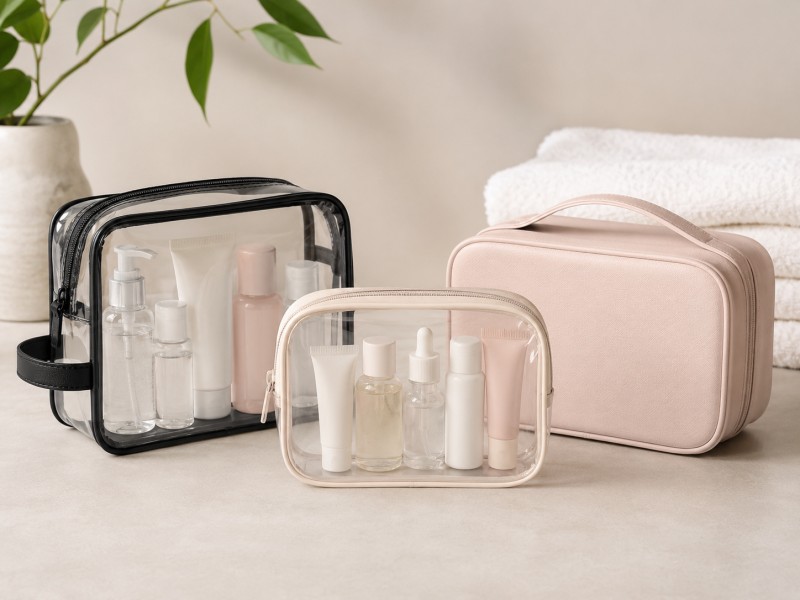
The timeline depends on material complexity. Standard polyester, nylon or PU options are usually faster to review. Custom colors, printed fabrics, eco materials, PVC, TPU, EVA, special lining, complex pockets and premium packing may need extra time. A clear brief helps shorten the process.
A practical development path often looks like this:
| Step | What Happens |
|---|---|
| Material direction | Choose based on use, price and brand style |
| Material check | Confirm color, thickness, texture and source |
| Logo test | Review print, emboss, label or patch |
| First sample | Build the real pouch with selected details |
| Sample review | Check structure, cleaning, packing and look |
| Revision | Adjust material, size, pocket or logo |
| Pre-production sample | Confirm before bulk cutting |
| Bulk production | Follow approved sample and records |
For Jundong projects, common sample timing is usually 5–7 days after key details are clear, while some simple styles may be faster. Bulk production is often around 20–30 days, depending on material, quantity, structure, logo, packing and production schedule.
To speed up review, prepare these details before sending an inquiry:
- Bag size
- Target use
- Preferred material
- Quantity
- Logo method
- Lining preference
- Pocket needs
- Packing style
- Target delivery date
- Reference photos or drawings
Clear project details lead to better material suggestions and fewer sample revisions.
Why Work With Jundong for Custom Cosmetic Bag Material Selection?
Choosing the best material is easier when the team can review outer fabric, lining, structure, logo, sample, packing and quality checks together. Jundong supports custom cosmetic bag projects from early material discussion to sample confirmation, bulk planning, quality control and shipment preparation.
Jundong is based in Guangdong and supports a wide of custom bag products, including cosmetic bags, makeup bags, toiletry bags, travel bags, clear bags, PU/PVC items, EVA bags, leather goods and many other soft goods. The factory profile notes 600+ employees, about 18,000 square meters of factory space, a professional pattern room, product development support, and 80 QC staff.
For cosmetic bag material selection, Jundong can help review:
- Polyester, nylon, canvas, cotton, PU, PVC, TPU, EVA, neoprene, leather, rPET and other materials
- Outer fabric and lining match
- Structure, size and pocket layout
- Logo methods such as screen print, heat transfer, embossing, debossing, woven label, rubber patch and metal plate
- Zipper, puller, trim and hardware matching
- Sample making and sample revision
- Color and material confirmation
- Individual packing, hangtags, labels, carton marks and export packing
- Quality checks before shipment
- OEM, ODM, private label and repeat order projects
The best time to discuss material is before the first sample. Once the structure is made with the wrong material, every revision costs time. If you are planning a beauty pouch, travel toiletry bag, gift set pouch, clear cosmetic bag or private label makeup bag, send your size, material idea, quantity, logo plan and packing needs to info@jundongfactory.com. Jundong can help compare practical material options before sampling begins.
FAQ: What Brands Ask Before Choosing Materials for Custom Cosmetic Bags
1. What material is best for custom cosmetic bags?
The best material for custom cosmetic bags depends on the bag’s purpose, brand style, cleaning needs, target price, logo method, and order quantity. For most projects, polyester, nylon, canvas, PU leather, PVC, TPU, EVA, and rPET are the main materials worth comparing.
Polyester is often the safest choice for large-volume cosmetic pouches because it is cost-stable, easy to color match, and suitable for screen print, heat transfer, and woven labels. Nylon is better when the bag needs a lighter, smoother, more travel-friendly feel. Canvas gives a natural and reusable look, which works well for clean beauty, wellness, and lifestyle collections. PU leather and vegan leather are better for premium skincare sets, fragrance gifts, and retail cosmetic pouches because they create a smoother, more polished appearance. PVC, TPU, and EVA are stronger choices for clear cosmetic bags, travel toiletry bags, and easy-clean designs. rPET and recycled nylon are useful when the project needs a more responsible material story.
A simple way to choose is this:
| Project Goal | Better Material Direction |
|---|---|
| Cost-friendly beauty pouch | Polyester, rPET |
| Premium skincare set | PU leather, vegan leather |
| Travel cosmetic bag | Nylon, PVC, TPU |
| Natural-style brand | Canvas, cotton |
| Clear makeup bag | PVC, TPU, EVA |
| Eco-positioned program | rPET, recycled nylon |
The best material is not always the most expensive one. It is the one that looks right, feels right, supports the logo, fits the price plan, and can stay consistent from sample to repeat orders.
2. Which material is most cost-effective for large cosmetic bag orders?
For large cosmetic bag orders, polyester is usually the most cost-effective material because it offers stable pricing, flexible color options, wide availability, and strong compatibility with common logo methods. rPET and simple nylon can also be practical choices when the project needs either an eco-positioned story or a slightly smoother handfeel.
Cost-effective does not mean “cheap-looking.” A well-designed polyester cosmetic bag can still look clean and professional if the zipper, lining, stitching, logo size, and packing are handled properly. Many beauty brands use polyester for gift-with-purchase pouches, subscription box bags, event sets, and private label programs because it allows better control over unit cost while keeping the finished product usable.
The real cost comes from more than the outer material. Lining, zipper quality, logo method, pockets, labels, packing, carton marks, and inspection all affect the project. A low material price can become expensive if the bag needs too many revisions or if the first bulk run does not match the approved sample.
| Cost Factor | What It Can Change |
|---|---|
| Material type | Base unit cost |
| Lining | Cleaning feel and inner finish |
| Logo method | Setup cost and durability |
| Pocket design | Sewing time and material use |
| Packing | Labor, volume, and display value |
| Order quantity | Material waste and unit price |
If the goal is a stable, scalable pouch, start with polyester or rPET. If the bag needs a higher perceived value, upgrade the zipper, lining, logo method, or finishing details before moving directly to a more expensive outer material.
3. Is PU leather a good material for premium cosmetic bags?
Certainly, PU leather is one of the most practical materials for premium cosmetic bags because it gives a smoother, more refined look while remaining more flexible in cost than genuine leather. It works especially well for skincare sets, fragrance kits, holiday beauty gifts, retail cosmetic pouches, and private label beauty accessories.
PU leather can be matte, glossy, pebbled, smooth, quilted, metallic, or textured. This flexibility makes it easy to match different brand styles. A soft matte PU pouch can feel calm and elegant. A quilted PU pouch can look more gift-ready. A pebbled PU cosmetic bag can feel more durable and leather-like. The material also works well with logo methods such as debossing, embossing, foil stamping, metal plates, woven labels, and custom zipper pullers.
That said, PU leather needs careful sample review. The same material can look very different depending on thickness, backing, surface texture, lining, zipper color, and packing method. Thin PU may crease too easily. Thick PU may make a small pouch feel stiff. Some glossy finishes may show scratches faster. If the logo will be debossed or embossed, the surface must be tested before bulk production.
For premium PU cosmetic bags, check these details:
| Check Item | Why It Matters |
|---|---|
| Thickness | Affects structure and handfeel |
| Surface texture | Affects brand style and scratch visibility |
| Logo test | Confirms depth, clarity, and placement |
| Lining match | Improves opening experience |
| Folding test | Shows whether packing creates creases |
| Zipper color | Changes the final product feel |
PU leather is a strong option, but it should be approved as a full sample, not just as a material swatch.
4. What material is best for travel cosmetic bags and toiletry bags?
For travel cosmetic bags and toiletry bags, the best materials are nylon, coated polyester, PVC, TPU, EVA, and structured PU, depending on the use. Travel bags need more than a nice surface. They need moisture handling, easy cleaning, good organization, flexible packing, and enough strength for repeated use.
A travel cosmetic bag may carry skincare bottles, sunscreen, makeup brushes, razors, toothpaste, perfume samples, liquid foundation, and small jars. That means the material must handle pressure inside a suitcase, possible leaks, and frequent opening. For soft travel makeup pouches, nylon and coated polyester are strong options because they are light, smooth, and easier to clean than many plain fabrics. For toiletry bags, PVC, TPU, or PEVA-style linings can work better because they handle damp items more confidently.
Clear travel bags often use PVC or TPU. PVC is more cost-friendly and widely used. TPU feels softer and more refined, which can suit higher-value travel sets. EVA can be useful for structured cases where the bag needs shape and protection.
| Travel Product | Suitable Material |
|---|---|
| Soft makeup pouch | Nylon, coated polyester |
| Toiletry bag | PVC, TPU, coated nylon |
| Clear travel pouch | PVC, TPU |
| Structured beauty case | EVA, structured PU |
| Brush organizer | Nylon, coated polyester, Oxford fabric |
| Hanging toiletry bag | Coated polyester, PVC panels |
The best travel cosmetic bag material should be tested with real product sizes. Bottles, brushes, compact powder, and skincare jars all affect the structure. If your design includes inner pockets, elastic loops, mesh sections, or clear compartments, material selection should be reviewed together with the full storage layout.
5. Is canvas a good material for cosmetic bags?
Absolutely, canvas is a good material for cosmetic bags when the brand wants a natural, reusable, lifestyle-friendly look. It works especially well for clean beauty brands, wellness collections, organic skincare lines, spa gift sets, handmade-style beauty kits, and retail pouches with a softer visual identity.
Canvas has a warmer texture than polyester or nylon. It feels less “industrial” and more personal. It can work beautifully with screen printing, embroidery, woven patches, leather labels, and simple cotton lining. It is also a strong choice when the cosmetic bag is meant to be kept and reused rather than treated as a disposable gift item.
However, canvas is not perfect for every cosmetic bag. It can absorb stains more easily than coated fabrics. Light-colored canvas may show makeup marks, oil stains, or handling marks faster. If the bag will carry liquid products or be used in bathrooms, canvas may need lining, coating, darker color, or a hybrid structure. For example, a canvas outer with a wipe-clean inner lining can balance natural appearance with practical use.
| Canvas Strength | Canvas Concern |
|---|---|
| Natural texture | Can absorb stains |
| Reusable feel | Light colors show marks |
| Good for embroidery | Fine print may be affected by texture |
| Works for lifestyle brands | May need lining for makeup use |
| Strong brand personality | Not ideal for wet-use toiletry bags |
Canvas is best when the brand wants warmth, texture, and a soft lifestyle feel. For heavy makeup, travel, or liquid product sets, combine canvas with the right lining and structure.
6. Which material is easiest to clean for makeup bags?
PVC, TPU, EVA, coated polyester, coated nylon, and PU-coated fabrics are usually easier to clean than plain cotton or canvas. These materials are better suited for makeup bags that may come into contact with foundation, lipstick, loose powder, skincare cream, sunscreen, or toiletry products.
Makeup bags get dirty in a very specific way. Powder settles into corners. Foundation can stain quickly. Lipstick can smear. Brush residue can collect inside pockets. A smooth or coated surface makes daily cleaning much easier. For example, coated polyester can work well for soft makeup pouches. PVC and TPU are practical for clear or toiletry-style bags. EVA can support structured cases that are easier to wipe on the surface.
Still, “easy to clean” is not only about material. Color matters too. Black, charcoal, navy, taupe, and deeper beige linings can hide stains better than white or pale pink. Structure also matters. A bag with many tight corners may be harder to clean even if the material is wipeable.
| Cleaning Need | Better Choice |
|---|---|
| Powder and brush residue | Smooth nylon, coated polyester |
| Foundation and cream stains | PU-coated fabric, PVC, TPU |
| Toiletry leaks | PVC, TPU, PEVA-style lining |
| Premium easy-clean pouch | Coated soft nylon, TPU |
| Everyday makeup bag | Dark lining with smooth finish |
For beauty brands, the smart choice is not always the most waterproof material. It is the material that gives the user a realistic cleaning experience while still matching the bag’s style, price, and brand presentation.
7. What material is best for eco-friendly cosmetic bags?
For eco-friendly cosmetic bags, rPET, recycled polyester, recycled nylon, organic cotton, canvas, and selected vegan leather options are among the most practical choices. The right material should support the brand’s sustainability message while still passing real product checks for color, handfeel, logo quality, cleaning, packing, and repeat order consistency.
rPET is often a strong option for beauty programs because it can support a recycled material story while remaining practical for pouch production. Recycled polyester is also useful for gift-with-purchase bags, subscription box pouches, and retail cosmetic bags. Recycled nylon can fit travel beauty organizers because it gives a more technical and durable feel. Organic cotton and canvas work well for natural beauty brands, but they need more attention to stain resistance and shrinkage. Vegan leather can support a premium animal-free message, but the material story and durability should be clear.
| Eco Material | Best Use | What To Review |
|---|---|---|
| rPET | Beauty pouches, gift sets | Source, color, print result |
| Recycled polyester | Scalable beauty programs | Batch consistency |
| Recycled nylon | Travel pouches | Durability and coating |
| Organic cotton | Natural beauty lines | Shrinkage and stains |
| Canvas | Reusable lifestyle pouches | Lining and logo method |
| Vegan leather | Premium animal-free pouches | Surface feel and claim support |
Eco-friendly does not mean automatically better. A responsible material must still look good, sew well, hold the logo clearly, and stay consistent in repeat orders. If a brand needs material documentation, that should be discussed before sampling, not after the design is approved.
8. How does material affect logo quality on custom cosmetic bags?
The material affects logo quality because every surface reacts differently to printing, heat transfer, embroidery, debossing, patches, and metal plates. A logo that looks sharp on polyester may look softer on canvas, deeper on PU leather, or more delicate on TPU. That is why logo approval should always be tested on the actual bag material.
Polyester works well with screen printing, heat transfer, woven labels, and simple patches. Nylon can support heat transfer and rubber patches, but heat sensitivity and coating must be checked. Canvas is excellent for embroidery, woven patches, and screen printing, though fine lines may be affected by fabric texture. PU leather is strong for debossing, embossing, foil stamping, and metal plates. PVC and TPU can support printing or insert card designs, but adhesion and folding behavior need review. rPET often works well with woven labels or screen printing, especially when the brand wants to keep the material story visible.
| Material | Strong Logo Methods |
|---|---|
| Polyester | Screen print, heat transfer, woven label |
| Nylon | Heat transfer, rubber patch |
| Canvas | Embroidery, screen print, woven patch |
| PU leather | Debossing, embossing, metal plate |
| PVC / TPU | Screen print, heat transfer, insert card |
| rPET | Woven label, screen print |
Logo size also matters. A small cosmetic pouch has limited space. Too large, and the logo feels heavy. Too small, and it disappears. For premium projects, test the logo with the real zipper, puller, lining, and packing style. A good material-logo match can make a simple pouch feel much more valuable.
9. How should a brand test cosmetic bag material before bulk production?
A brand should test cosmetic bag material through a finished sample, not only through a swatch. The sample should be reviewed for handfeel, thickness, structure, color, logo effect, lining match, zipper function, cleaning performance, odor, folding marks, packing result, and repeat order feasibility.
A material swatch tells you how the fabric feels in your hand. A finished sample tells you how the product behaves. That difference is huge. A material may feel soft as a swatch but become too weak after stitching. A PU surface may look premium flat but crease after turning. A PVC panel may look clear at first but show folding marks after packing. A printed canvas may look beautiful on a fabric piece but lose clarity after cutting into a small pouch.
A useful sample test should include:
| Test Item | What To Check |
|---|---|
| Handfeel | Does it match the brand level? |
| Thickness | Does it support the bag shape? |
| Color | Does it match trims and packaging? |
| Logo | Is it clear, centered, and durable? |
| Lining | Does it improve the inside experience? |
| Zipper | Does it open smoothly? |
| Cleaning | Can makeup stains be wiped reasonably? |
| Odor | Any smell after packing? |
| Folding | Any creases after storage? |
| Packing | Does the bag deform in final packing? |
10. What details should we send to get a useful material recommendation?
To get a useful material recommendation for custom cosmetic bags, send the bag size, target use, quantity, preferred look, logo method, cleaning needs, inner structure, packing style, and delivery plan. The more complete the brief, the faster the factory can suggest practical materials and avoid unnecessary sample revisions.
A simple request like “Please quote a makeup bag” is hard to price accurately. A pouch for lipstick sets, a toiletry bag for travel bottles, and a premium PU skincare pouch may all be called cosmetic bags, but they need different materials, structures, linings, logo methods, and packing plans.
A strong project brief can include:
| Detail | Why It Helps |
|---|---|
| Bag size | Controls material use and structure |
| Product use | Makeup, skincare, travel, gift set, retail |
| Quantity | Affects material sourcing and price |
| Outer material preference | Helps narrow material options |
| Lining need | Affects cleaning and inner finish |
| Logo method | Affects material suitability |
| Pocket layout | Changes structure and sewing time |
| Packing style | Affects folding, carton size, and display |
| Target price | Helps avoid overbuilt material choices |
| Delivery date | Guides material and production planning |
If you already have reference photos, drawings, Pantone colors, packaging files, or a sample bag, send them together. That helps the development team understand your target more clearly.
For many cosmetic bag projects, a standard MOQ is around 500 pcs per design, while some simple styles may be reviewed at 200–300 pcs depending on material and structure. Sampling is usually around 5–7 days after main details are clear, and some simple styles may move faster. Bulk timing often sits around 20–30 days, depending on material, quantity, logo, structure, and packing. Jundong can review your material direction before sampling through info@jundongfactory.com.