 Skip to content
Custom Cinch Bags Manufacturer for Bulk Logo Orders
A good custom cinch bag should be easy to carry, easy to distribute, and useful enough to stay in daily use after the event ends. That is why cinch bags are widely used for brand giveaways, trade shows, school programs, sports teams, gym promotions, corporate events, retail merchandise, charity campaigns, and eco-friendly projects.
- Custom logo, fabric, size, color, drawstring, pocket, label, and packing
- For events, schools, sports teams, gyms, retail, corporate gifts, and promotions
- Polyester, nylon, cotton, canvas, mesh, RPET, non-woven, and PVC options
- Standard MOQ around 500 pcs; simple styles may be reviewed from 200–300 pcs
- Sampling usually 5–7 days; simple styles may be faster
- Bulk production usually 20–30 days after sample approval
- 80 QC inspectors support material, logo, sewing, packing, and final checks
- Export-ready packing, barcode, carton mark, and label support

Why Custom Cinch Bags Still Work for Brand Programs
The strength of a custom cinch bag is not only its low weight or simple structure. Its real value comes from repeated use. A visitor may receive the bag at a trade show and later use it for documents or travel items. A student may use it for shoes, books, or sports clothes. A gym member may use it for towels and workout gear. A retail customer may keep using it if the material feels good and the logo looks clean.
That is why the same product can serve very different projects. A promotional cinch bag for a one-day event may focus on cost control and large logo visibility. A school drawstring backpack may need stronger seams, thicker cords, and better color sorting. A sports cinch bag may need mesh, nylon, reinforced corners, or a pocket for smaller items. A retail cinch bag may need canvas, cotton, woven labels, hangtags, barcode stickers, and individual packing.
The best result usually comes from matching the bag to the real use scene before confirming price. This helps avoid two common problems: choosing a bag that is too weak for repeated use, or overbuilding a simple giveaway and paying for details that are not needed.
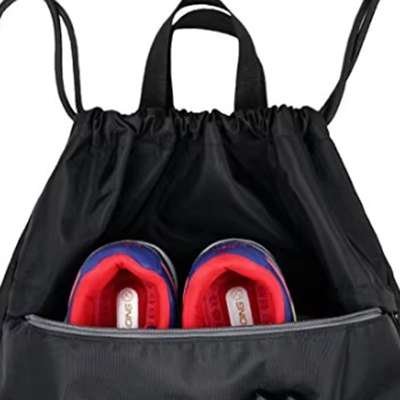
Jundong supports custom cinch bag projects for who need more than a blank bag with a printed logo. Custom options can include fabric, size, color, drawstring, logo method, pocket, reinforced corner, woven label, care label, hangtag, barcode sticker, individual packing, and carton mark. These details help the final bag fit event distribution, school use, retail sales, warehouse receiving, and repeat orders.
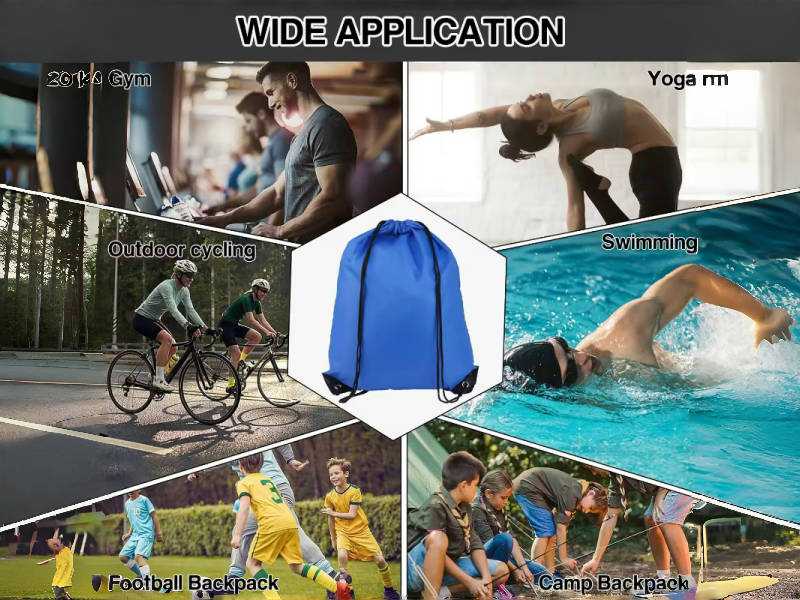
| Project Goal | Better Direction |
|---|---|
| Large event giveaway | Lightweight polyester or non-woven cinch bag |
| School or camp program | Stronger polyester drawstring backpack |
| Sports team use | Nylon, mesh, reinforced corners, thicker cords |
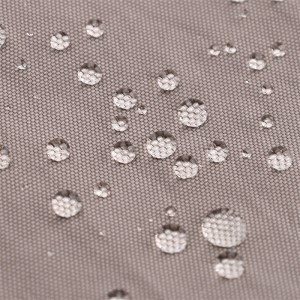
| Gym promotion | Water-resistant feel, front pocket, bold logo |
| Retail merchandise | Canvas, cotton, woven label, hangtag, barcode |
| Eco campaign | RPET, cotton, reusable structure, simple branding |
Start With the Use Case, Not Just the Unit Price
A custom cinch bag may look simple in a product photo, but the right specification changes with the project. If the bag is for a trade show, it may need to be light, flat-packed, easy to hand out, and printed with a large logo. If it is for a school program, it may need stronger stitching, group color sorting, and reliable drawstrings. If it is for a sports team, it may need to carry shoes, towels, uniforms, or training gear. If it is for a retail brand, it should feel polished enough to sell, not only give away.
This is why use-case planning should come before price comparison. A very low-cost bag may be fine for a short campaign, but it may not support repeated use. A stronger bag may cost more, but it can reduce complaints and make the brand look more reliable. The right choice is not the cheapest bag, but the bag that fits the project without adding unnecessary cost.
| Use Case | What Usually Matters |
|---|---|
| Trade shows | Flat packing, quick handout, large front logo |
| Schools | Strong seams, color options, easy group sorting |
| Sports teams | Reinforced corners, thicker cords, active use |
| Gyms | Water-resistant feel, towel and clothes storage |
| Corporate events | Clean logo, consistent color, neat packing |
| Retail merchandise | Better fabric, label, barcode, shelf-ready look |
| Eco campaigns | RPET, cotton, reusable material story |
| Event kits | Larger size, easy filling, clear carton marks |
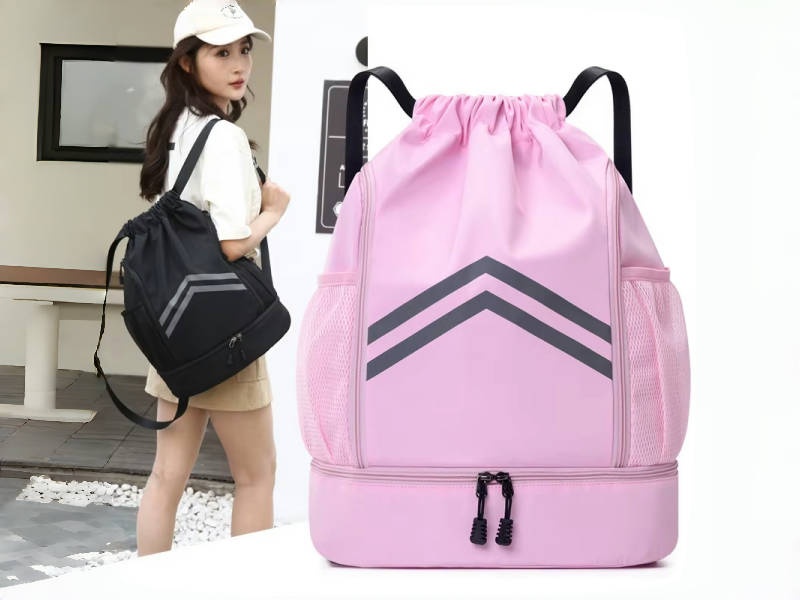
Fabric Choices That Shape Cost, Feel, and Durability
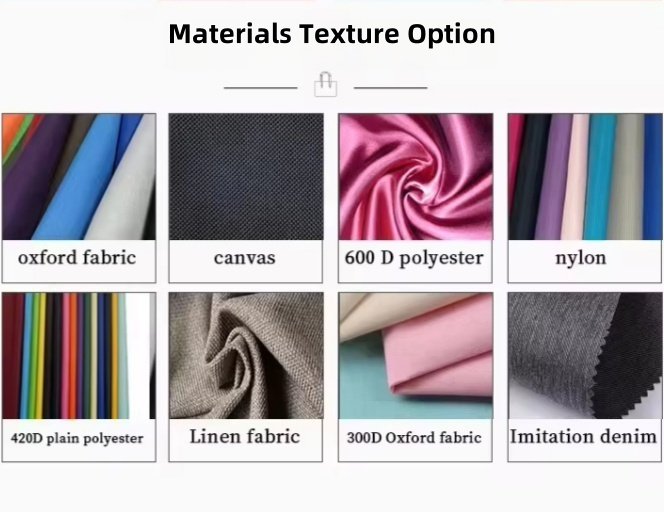
Fabric choice changes how a cinch bag feels, how it carries weight, how the logo appears, and whether people will keep using it after the event. A low-cost giveaway bag, a school drawstring backpack, a sports mesh bag, and a retail canvas cinch bag should not follow the same material logic. Choosing the right fabric early helps control cost, appearance, durability, and user experience.
Fabric also affects logo quality. A simple screen-printed logo on polyester will feel different from embroidery on canvas or a woven label on cotton. Smooth nylon may need a different branding method from mesh or non-woven material. For retail or private label projects, the fabric surface also affects how the bag photographs, folds, hangs, and feels in the customer’s hand.
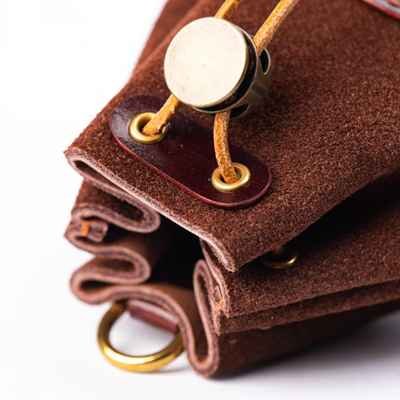
Jundong works with different soft materials, including fabric, PU, PVC, neoprene, leather, and related custom material directions. For cinch bag projects, this gives more room to choose a practical material direction instead of forcing every order into one standard stock fabric.
A good fabric decision can also make repeat orders easier. Once fabric weight, color, surface, logo method, and packing standard are confirmed, future orders can follow the same reference. This helps partners keep brand consistency across events, school seasons, retail drops, or promotional campaigns.
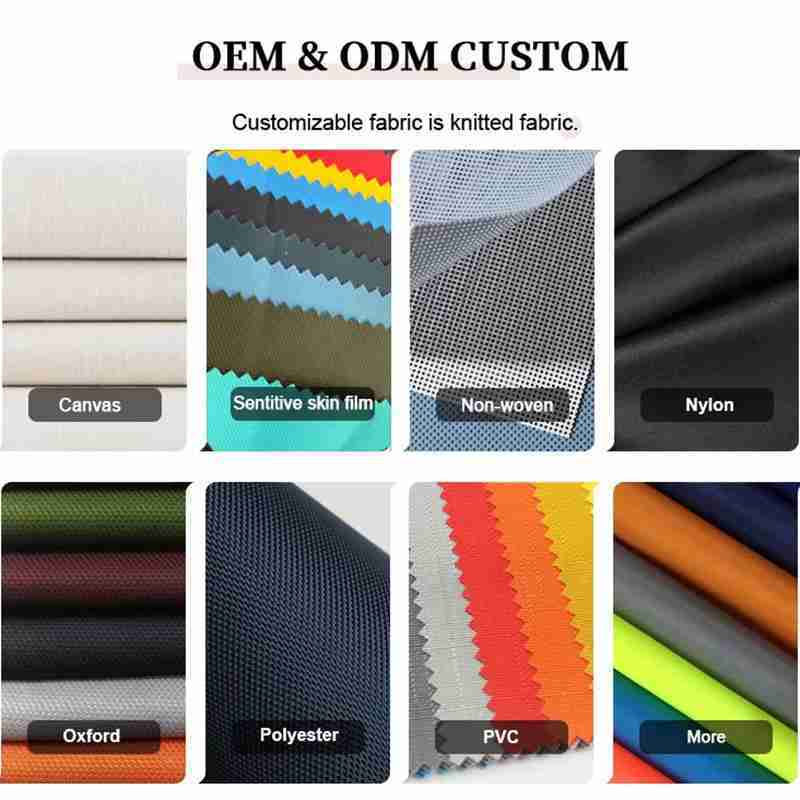
Common Fabric Options
| Fabric | Better Fit |
|---|---|
| 210D Polyester | Events, schools, bulk promotions |
| 420D Polyester | Repeated school or sports use |
| Nylon | Gym, travel, outdoor, active handling |
| Non-woven PP | Budget giveaways and short campaigns |
| Cotton | Eco-style gifts and lifestyle branding |
| Canvas | Retail merchandise and premium programs |
| Mesh | Swim, gym, laundry, sports storage |
| RPET | Sustainability campaigns and corporate programs |
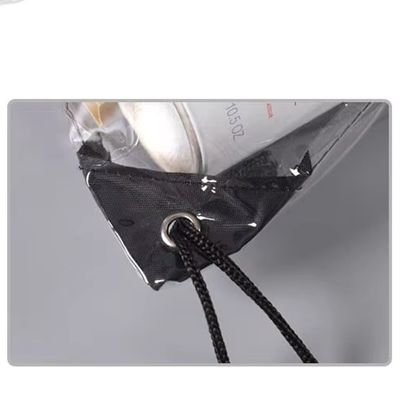
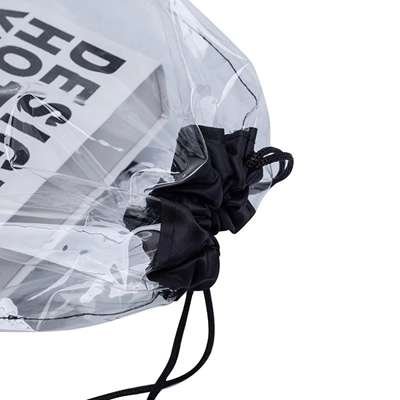
| Clear PVC / TPU | Stadiums, concerts, security events |
Logo Methods That Make the Brand Easier to Notice
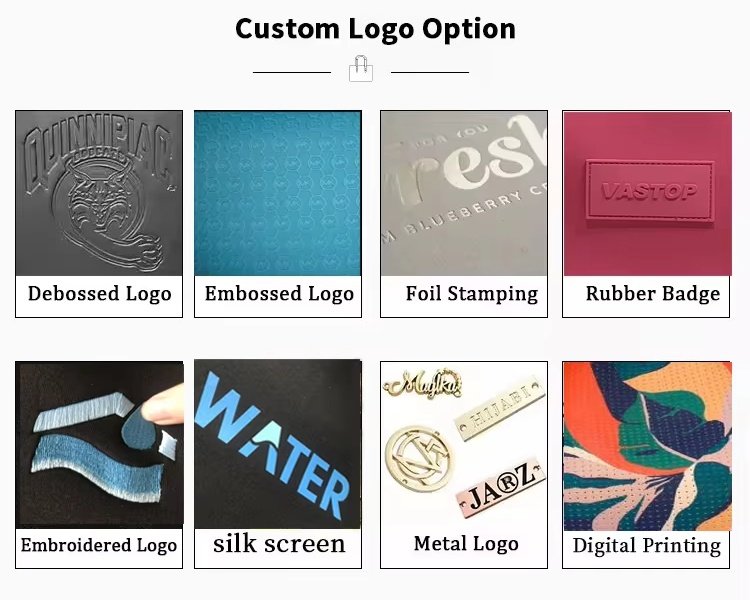
Different logo methods create different brand impressions. A simple one-color logo for a large event order may work well with screen printing. A colorful team graphic may need heat transfer or sublimation. A premium retail cinch bag may look better with embroidery, woven labels, or custom hangtags. A running or outdoor event may benefit from reflective printing. A private label program may need several brand details at the same time.
The practical question is not “Which logo method is the best?” The better question is: which logo method fits this fabric, quantity, artwork, budget, and use scene? A method that looks strong on canvas may not be the right choice for thin polyester. A low-cost print may be suitable for a one-day giveaway, but not for a retail merchandise line. A complex multi-color design may need a different process from a bold single-color corporate logo.
Before sampling, you can prepare the logo file, color reference, logo size, placement area, bag color, quantity, and use scene. Vector artwork is usually better for clean output. If only a rough image is available, the artwork may need a quick review before sampling.
Jundong can help match logo method to project needs, including custom logo cinch bags, printed drawstring bags, promotional cinch bags, school drawstring backpacks, sports cinch bags, retail canvas cinch bags, and private label drawstring bags.
Common Logo Method
| Logo Method | Better For |
|---|---|
| Screen printing | Large bulk orders with simple logos |
| Heat transfer | Multi-color artwork and detailed graphics |
| Sublimation | Full-pattern polyester bags |
| Embroidery | Canvas, cotton, premium merchandise |
| Woven label | Private label and repeat programs |
| Rubber / PVC patch | Sports, outdoor, lifestyle bags |
| Reflective print | Running, cycling, outdoor events |
| Hangtag + barcode | Retail and e-commerce projects |

Cinch Bag Styles for Different Project Levels
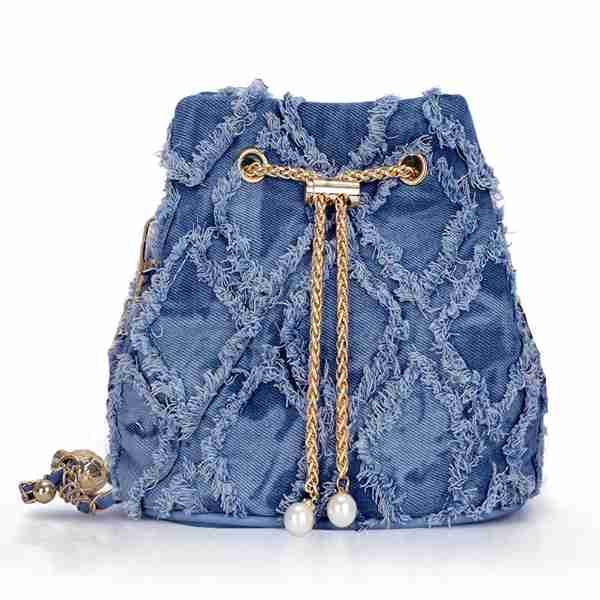
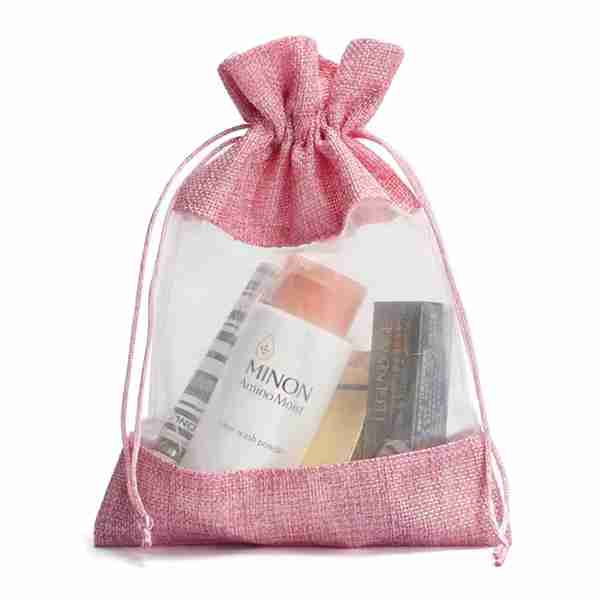
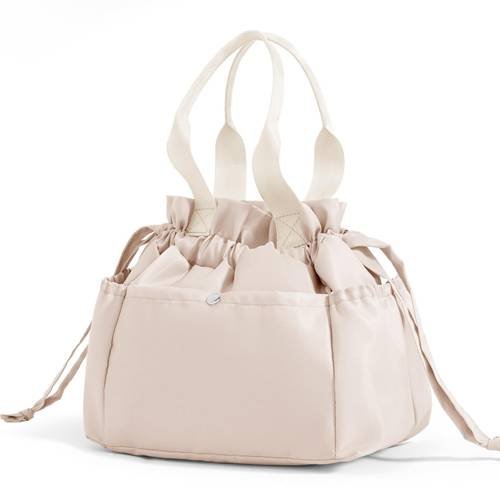
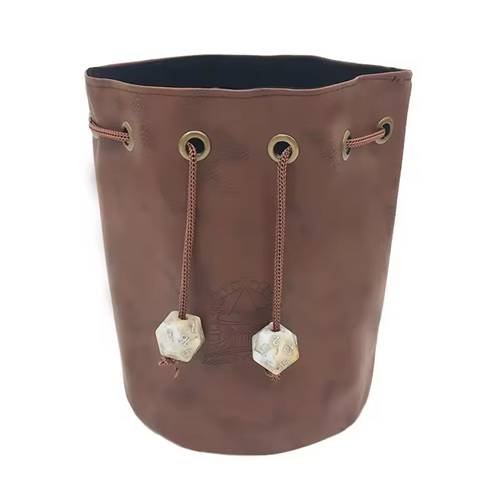
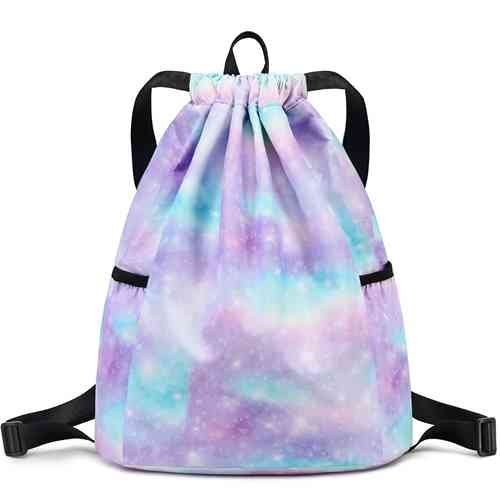
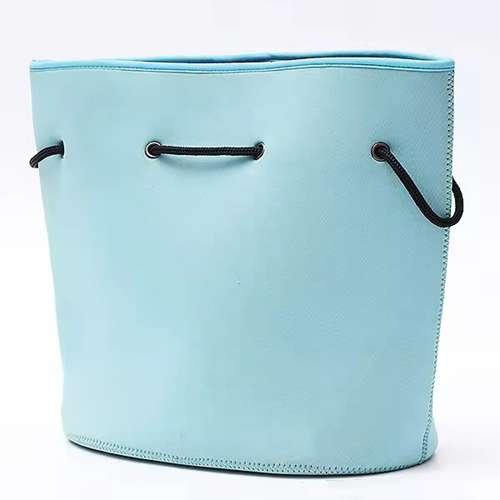
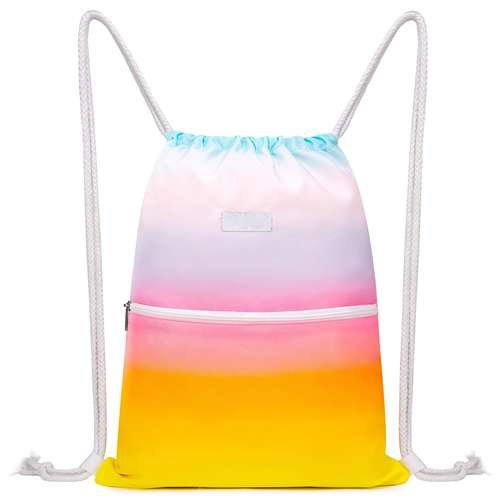
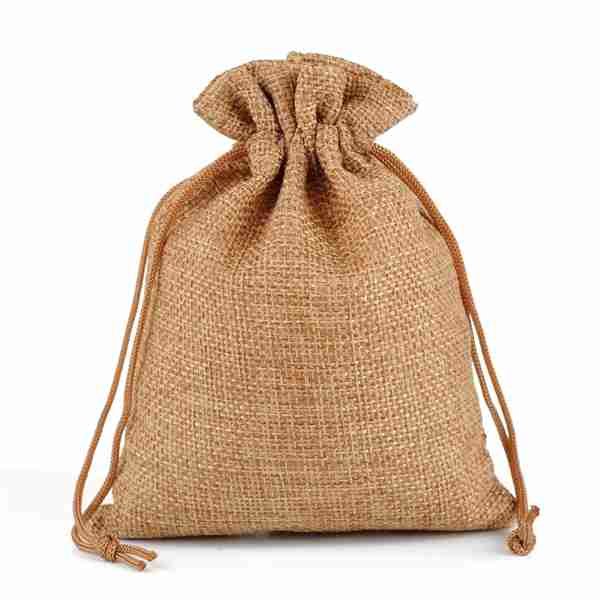
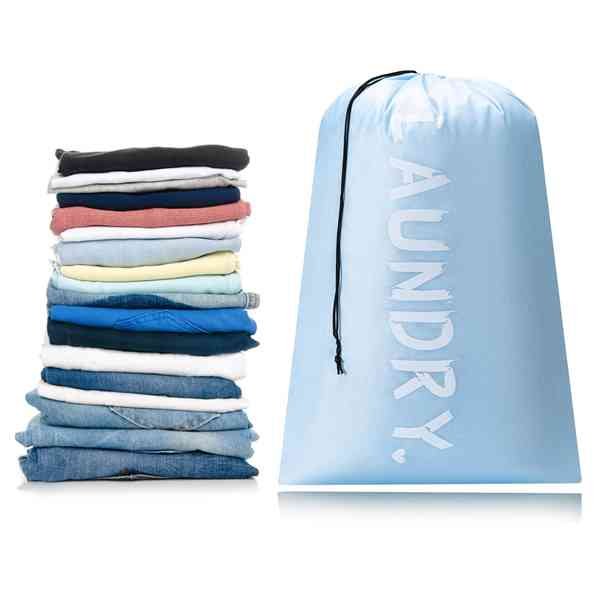
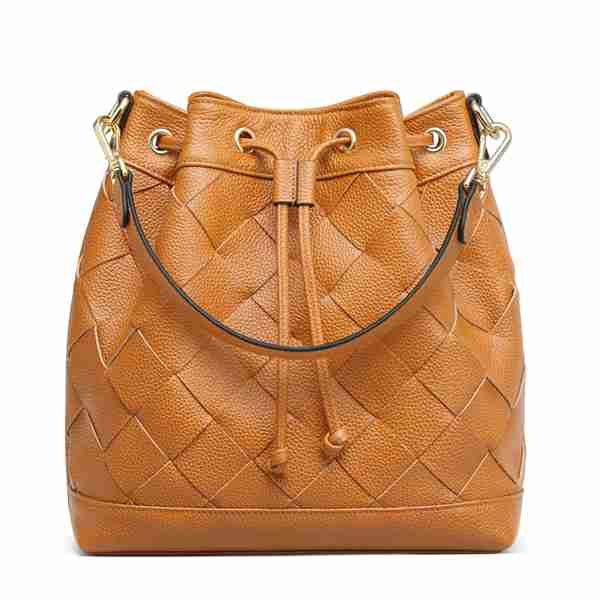
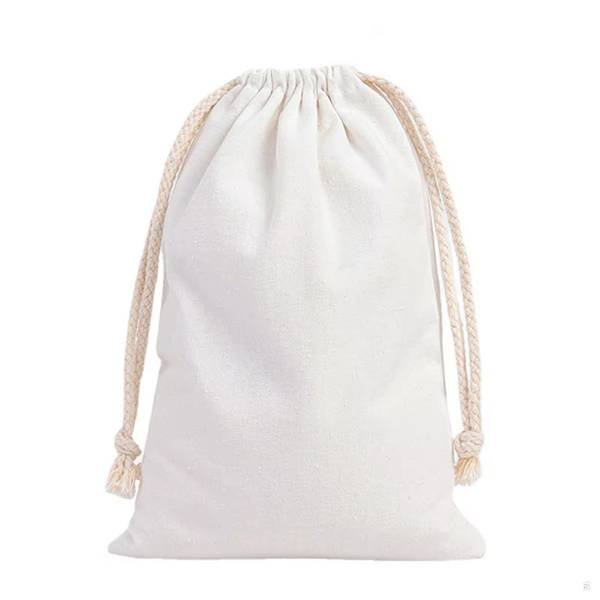
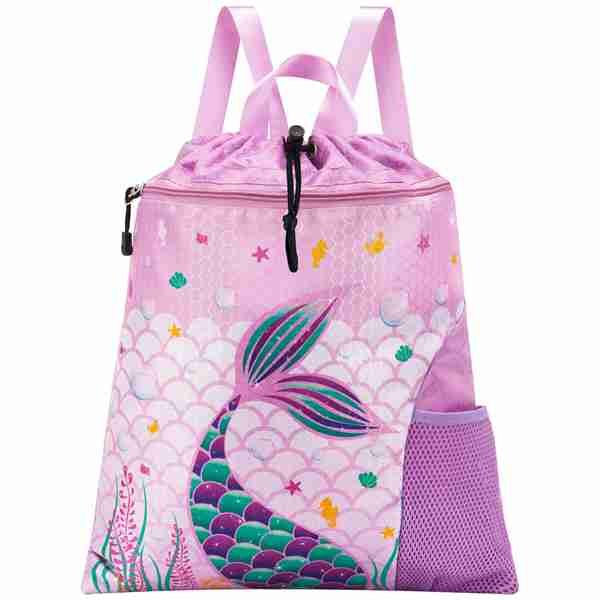
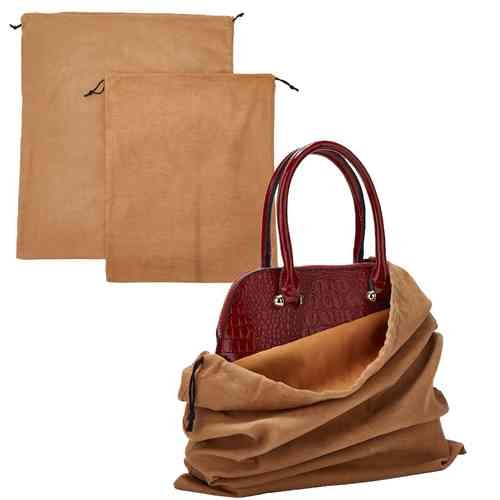
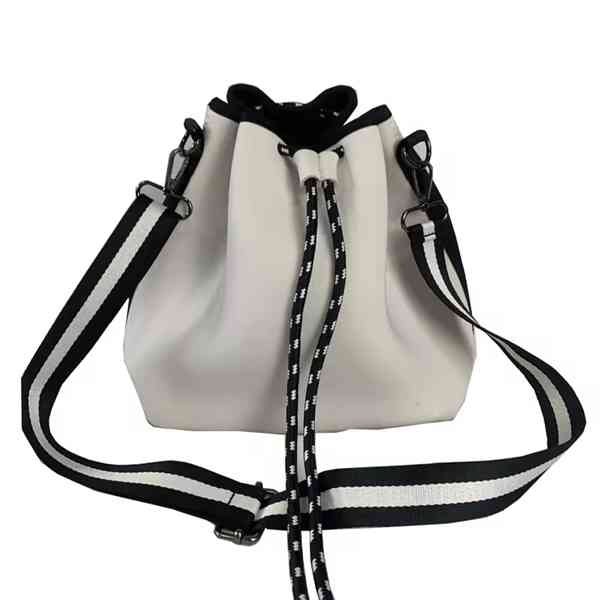
Custom cinch bags can be kept simple or developed into a more functional branded product. A basic flat cinch bag may be enough for a short event, while a sports team, school program, retail line, or gym promotion may need stronger materials, extra pockets, mesh panels, reinforced corners, or private label details. Choosing the right style helps keep the product practical without adding unnecessary cost.
The best cinch bag style depends on how the bag will be used and what level of brand impression the partner wants to create. A company ordering giveaway bags for a conference may focus on light weight, low unit cost, and a large printable front area. A school may need a stronger drawstring backpack that can handle daily use. A sports team may need mesh or nylon for shoes, uniforms, and training gear. A retail brand may prefer canvas, cotton, or RPET with a woven label and individual packing.
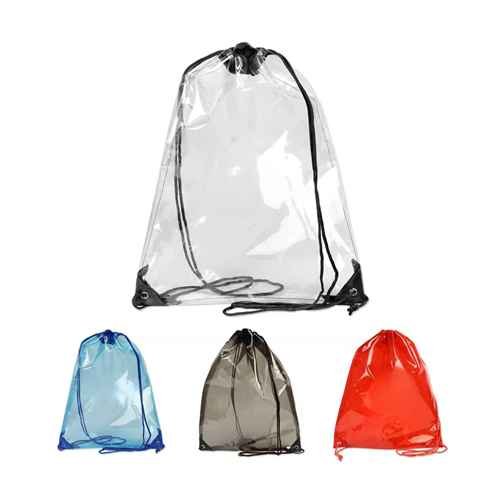
A basic cinch bag usually works well when the goal is quick distribution. A more structured drawstring backpack makes sense when the bag is expected to carry heavier items or be used repeatedly. A mesh cinch bag is helpful when breathability matters. A clear cinch bag can be used for stadiums, concerts, and security-controlled venues. A canvas cinch bag can turn a simple drawstring structure into a more polished retail item.
Style choice also affects logo placement. A flat bag gives a large front logo area. A front-pocket style may need the logo on the pocket, upper panel, or woven label. A mesh bag may require a solid print panel or label. A clear PVC cinch bag may need careful logo placement so visibility rules are not affected. Retail styles may need quieter branding, better finishing, and stronger label placement.
Jundong can support different cinch bag styles across promotional, school, sports, retail, eco, and private label projects. This allows to begin with a simple idea and adjust the style based on budget, quantity, end-user needs, and brand position.
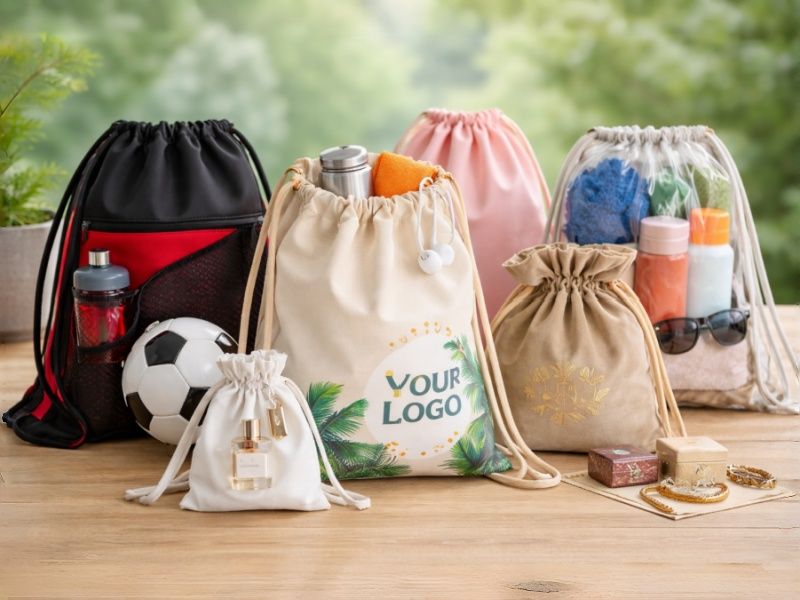
| Style | Better Fit |
|---|---|
| Basic flat cinch bag | Events, giveaways, school handouts |
| Drawstring backpack | Schools, gyms, clubs, sports teams |
| Front pocket cinch bag | Travel kits, gym gifts, member programs |
| Mesh cinch bag | Swim, laundry, sports, gym storage |
| Clear cinch bag | Stadiums, concerts, security events |
| Canvas cinch bag | Retail merchandise and premium gifts |
| RPET cinch bag | Sustainability campaigns |
| Kids cinch bag | Camps, schools, toy promotions |
| Shoe cinch bag | Sports, travel, retail packaging |




From Artwork Review to Approved Sample
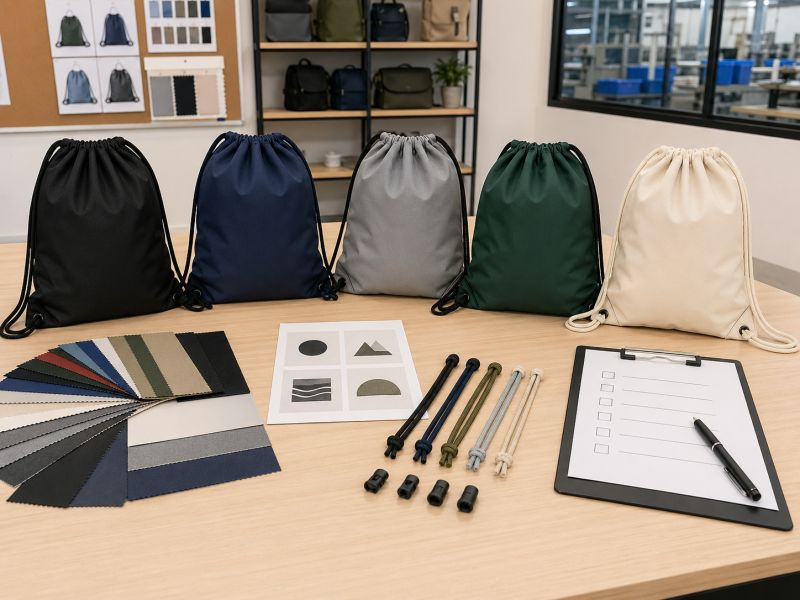
A custom cinch bag becomes much easier to produce when the sample is clear. The sample stage helps confirm the real fabric, bag size, logo position, print result, drawstring feel, pocket structure, label placement, and packing method. This step reduces uncertainty before production and gives both sides a practical reference for quality control.
Many custom cinch bag projects begin with a simple request: a logo, a quantity, and a delivery date. That is a good starting point, but it is usually not enough for a stable bulk order. Before production, the product details need to be translated into a clear sample: what fabric will be used, how large the bag will be, where the logo will sit, how the drawstring will feel, how the bag will be packed, and what standard the bulk goods should follow.
A clear sample helps partners avoid surprises. It shows whether the logo size looks balanced, whether the fabric feels suitable, whether the cord is strong enough, and whether the packing format fits the final use. It also helps internal teams compare options before choosing a final specification.
Jundong’s sample support is useful when partners need a physical reference before confirming bulk production. Regular sampling is usually 5–7 days, and some simple styles may be faster when materials are available and the structure is straightforward. For more detailed styles, such as canvas retail cinch bags, mesh sports bags, RPET drawstring bags, clear PVC cinch bags, or private label bags, sampling time may depend on material preparation, logo proofing, and packaging details.
You can speed up the sample stage by sending clear information early. Helpful details include logo file, target quantity, bag size, preferred fabric, color request, use scene, packing needs, and delivery window. If you do not yet know the best material or logo method, Jundong can suggest practical options based on the project goal.
Sample Review Path
| Step | What Gets Checked |
|---|---|
| Project details | Use case, quantity, deadline, target budget |
| Artwork | Logo file, color, size, print position |
| Material | Fabric type, thickness, color, surface feel |
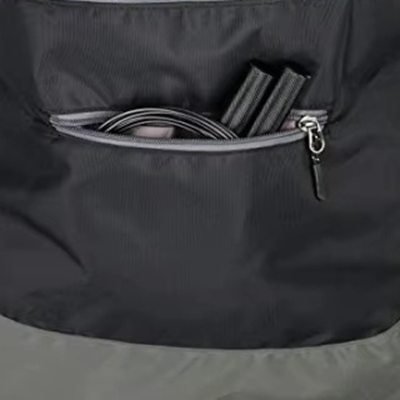
| Structure | Size, cord, corner, pocket, opening |
| Branding | Print, embroidery, label, patch, hangtag |
| Packing | Folding, polybag, barcode, carton mark |
| Approval | Final reference for bulk production |
MOQ, Sampling, and Bulk Lead Time
For most custom cinch bag projects, Jundong’s standard MOQ is usually around 500 pcs per design. Some simple styles may be reviewed from 200–300 pcs, especially when the structure is basic and available materials can be used. Final MOQ may change based on fabric type, custom color, logo method, size, pocket structure, label details, and packing requirements.
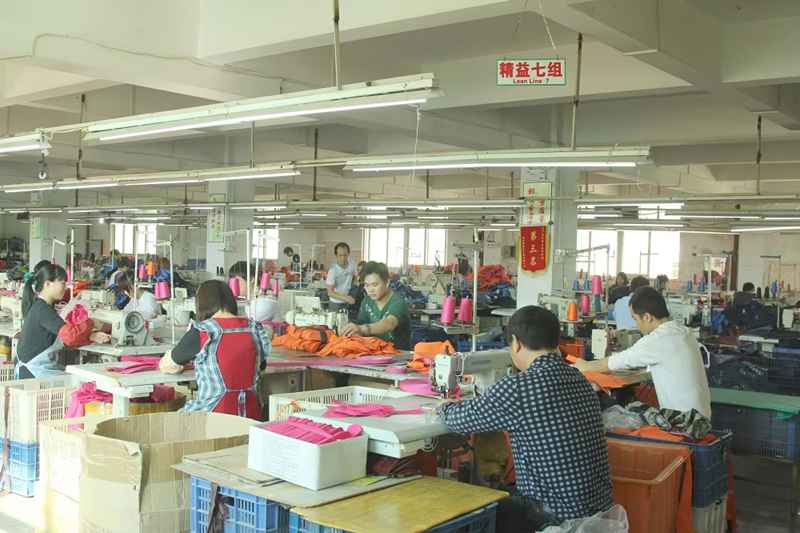
MOQ is connected to real production work. Even a small cinch bag order still needs material preparation, cutting, logo setup, sewing, trimming, inspection, packing, and carton preparation. When quantity is too low, the same setup cost is spread across fewer pieces, so the unit price often rises. Planning repeat orders, starting with a realistic MOQ can make later production smoother and more stable.
Lead time should be planned from the partner’s actual deadline. Trade shows, school openings, sports seasons, corporate events, product launches, charity campaigns, and retail drops all have fixed schedules. A safe timeline should include artwork review, sample making, sample approval, material preparation, bulk production, QC, packing, shipping, and overseas receiving.
If the deadline is tight, you can share the required delivery date early. Jundong can then help review whether the project should use available fabric, a simpler structure, a faster logo method, or standard packing to make the schedule more realistic.
| Item | Usual Reference |
|---|---|
| Standard MOQ | Around 500 pcs per design |
| Simple style review | 200–300 pcs may be considered |
| Sampling time | Usually 5–7 days |
| Simple sample | May be faster if materials are available |
| Bulk production | Usually 20–30 days after approval |
Quality Checks Before the Bags Leave the Factory
Small details decide whether a custom cinch bag feels reliable in daily use. A logo that shifts out of position, a cord that pulls unevenly, weak corner stitching, wrong color sorting, or unclear carton marks can create problems after delivery. For bulk orders, quality control should cover the bag itself and the way the order is packed.
A cinch bag may look simple, but bulk production still needs clear checks. The fabric should match the approved reference. The logo should be placed correctly. The seams should hold under normal use. The drawstring should open and close smoothly. The colors should be sorted correctly. The packing should match the receiving or distribution plan.
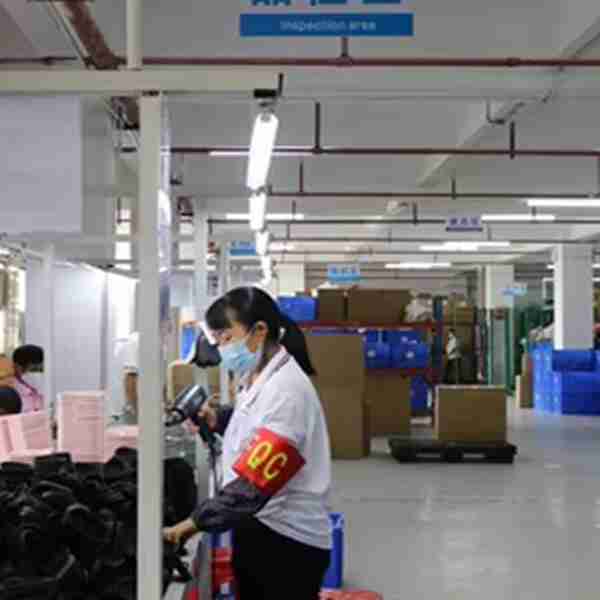
Jundong has 80 QC inspectors and multi-stage checks that cover materials, production, finished goods, and packing. This helps reduce sample-to-bulk differences and supports more stable repeat orders.
QC Checklist
| Checkpoint | What Matters |
|---|---|
| Fabric | Color, thickness, surface condition, handfeel |
| Cutting | Size, shape, panel direction |
| Logo | Position, color, clarity, adhesion |
| Sewing | Stitching line, seam strength, corner finish |
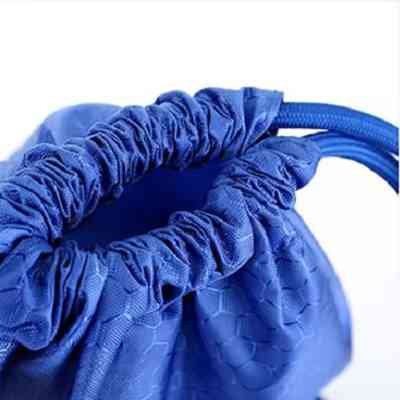
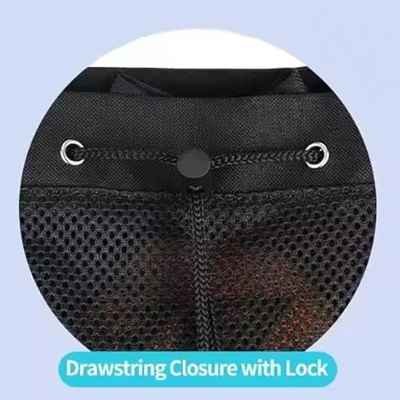
| Drawstring | Length, smooth pulling, closure function |
| Reinforcement | Eyelets, corner patches, stress points |
| Packing | Quantity, color mix, labels, barcode, carton marks |
| Final goods | Appearance, measurement, function, packing accuracy |










Packing and Labeling for Easier Overseas Receiving
A custom cinch bag order does not end when the bags are finished. The goods still need to be counted, received, stored, sorted, scanned, distributed, or prepared for retail sale. Clear packing and labeling can save time after arrival, especially for event teams, schools, sports programs, retailers, distributors, and e-commerce sellers.
Packing is often treated as a small detail, but it can affect the whole order experience. A well-made cinch bag can still cause problems if cartons are not marked clearly, colors are mixed without labels, barcode stickers are missing, or units are packed in a way that does not match warehouse or event plan.
For a trade show order, bulk packing by color may be enough. For a school program, cartons may need to be sorted by class, group, or color. For a sports team, bags may need team-color packing or name label support. For retail or e-commerce, individual packing, hangtags, barcode stickers, SKU labels, and carton marks become much more useful.
Packing should be confirmed before bulk production, not after the goods are already finished. You can review folding method, individual bag size, quantity per carton, carton weight, barcode position, carton mark format, and whether the order will be shipped to one warehouse or several locations.
Jundong can support packing details such as individual polybags, custom packaging bags, hangtags, labels, barcode stickers, carton marks, and export-ready packing. These details are useful when custom cinch bags are used for retail programs, promotional campaigns, school orders, sports team supply, corporate gifts, event kits, and repeat B2B orders.
Good packing also helps future orders. Once the packing format is set, the same carton quantity, label position, barcode format, and carton mark can be used again. This makes repeat ordering easier for who manage seasonal events, school programs, corporate campaigns, or retail replenishment.

| Project Type | Useful Packing Detail |
|---|---|
| Event giveaway | Bulk packing, color sorting, clear carton quantity |
| School program | Group labels, class sorting, color separation |
| Sports team order | Team color packing, name label option |
| Retail merchandise | Individual polybag, hangtag, barcode, SKU label |
| E-commerce order | Unit packing, barcode sticker, carton mark |
| Corporate gift | Branded packing bag, insert card, clean folding |
| Distributor order | Carton breakdown, item list, mixed color label |
| Repeat order | Fixed packing method and stable carton quantity |
Private Label Details for Retail and Repeat Orders
When a cinch bag is sold as merchandise, packed into a brand kit, used as a member gift, or reordered across multiple campaigns, private label details become more valuable. A front logo may be enough for a simple giveaway, but retail and long-term brand programs often need labels, hangtags, barcodes, packing bags, and carton marks to keep the product easier to sell, receive, and reorder.
Private label details help a cinch bag look more complete and easier to manage. They are not only for premium products. Even a simple promotional cinch bag can become easier to sort, distribute, and reorder when the label and packing system is clear.
For retail programs, the product may need to be scanned, displayed, stored, and shipped as a single unit. For e-commerce sellers, each bag may need a barcode or SKU label. For distributors, carton marks and mixed-color labels help warehouse teams process goods faster. For brand owners, woven labels, care labels, hangtags, and packaging details help the product feel more connected to the brand.
A private label cinch bag may include several layers of branding. For example, a canvas retail drawstring bag may use embroidery on the front, a woven label on the side, a hangtag near the drawstring, a barcode sticker on the polybag, and a carton mark for warehouse receiving. A promotional event bag may use a simpler setup: front screen print, color-sorted bulk packing, and clear carton labels.
The right level depends on the sales channel. A bag used only for one event should stay simple. A bag sold online or in stores needs better product information and cleaner unit packing. A repeat corporate gift program may benefit from locked label positions, fixed carton quantity, and stable packing instructions.
Jundong can support private label details for custom drawstring bags, logo cinch bags, promotional cinch bags, canvas cinch bags, RPET drawstring bags, retail drawstring backpacks, and custom packing bags. These options help you move from a basic logo product to a more complete branded item.
Private Label Options
| Detail | Why It Helps |
|---|---|
| Woven label | Adds long-term brand identity |
| Care label | Shows material or handling information |
| Hangtag | Supports retail display and brand story |
| Barcode sticker | Helps scanning, inventory, and fulfillment |
| SKU label | Useful for multi-color or multi-style programs |
| Individual polybag | Keeps each unit clean and organized |
| Custom packing bag | Improves brand presentation |
| Insert card | Adds message, use note, or campaign information |
| Carton mark | Helps warehouse receiving and sorting |

Custom Manufacturer vs. Stock Promotional Platform
Many custom cinch bag orders start with a simple request: “We need drawstring bags with our logo.” For a short event or one-time giveaway, a stock promotional platform may offer enough options. You can choose a standard style, upload a logo, and place the order quickly.
But not every project fits that model.
A school program may need bags sorted by color or class. A sports team may need reinforced corners and stronger cords. A retail brand may need canvas, cotton, RPET, woven labels, hangtags, barcode stickers, and individual packing. A distributor may need stable carton marks and repeatable packing rules. A corporate gift project may need a cleaner finish, better logo placement, and consistent color across multiple batches.
That is where a custom manufacturer becomes more useful. The focus is not only on adding a logo. The focus is on building a bag that fits the project from material to packing.
Comparing custom cinch bags, custom drawstring bags, custom drawstring backpacks, and logo drawstring bags, the best choice depends on the project depth.
If the order is simple, urgent, and does not need many changes, a stock promotional platform may be enough. If the order needs a specific material, custom size, pocket, stronger drawstring, special logo method, woven label, retail packaging, barcode sticker, or carton mark, a custom bag manufacturer is usually a better fit.
A custom manufacturing route is also more useful for repeat programs. Once the approved sample, fabric reference, logo position, packing method, and carton information are confirmed, the same standard can be used again for future orders. This is valuable for partners managing annual events, school seasons, sports programs, retail replenishment, corporate campaigns, or distributor supply.
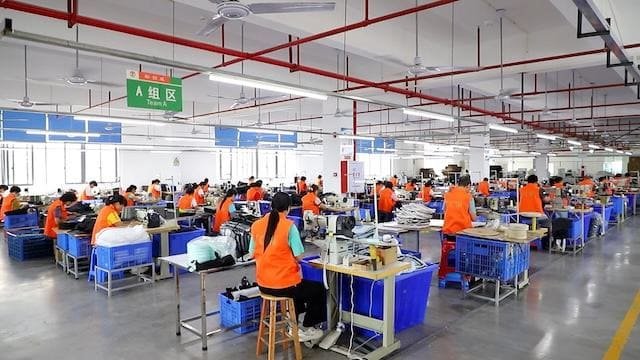
Jundong is a better fit for who want the cinch bag to work as part of a larger project, not just a quick giveaway. Your order can be reviewed by use scene, quantity, fabric, logo method, structure, packing, and delivery plan before sampling begins. This helps reduce wrong assumptions at the start and makes the final order easier to approve, produce, receive, and reorder.

Quick Comparison
| Stock Promotional Platform | Custom Bag Manufacturer |
|---|---|
| Best for quick ready-made orders | Better for project-based custom orders |
| Limited fabric and structure choices | Wider options for fabric, size, construction, and trim |
| Mainly focuses on logo imprint | Reviews logo method based on fabric and use |
| Standard packing is common | Packing can match retail, event, warehouse, or distributor needs |
| Useful for simple giveaways | Useful for schools, sports, retail, eco, and repeat programs |
| Chooses from catalog | Product details can be built around the use case |
| Less control over sample-to-bulk details | Better control over sample, QC, packing, and reorder consistency |
Make a sample first ?
A useful custom cinch bag should match more than a logo. It should match the people who will use it, the items it will carry, the event or sales channel it will serve, and the way it needs to be packed, shipped, received, and reordered. When these details are clear from the beginning, the whole project becomes easier to quote, sample, produce, inspect, and deliver.
Client Testimonials
800+ brand Clients Trust Jundong


Ready to Build a Custom Cinch Bag That Fits Your Project? Contact Us!
Your custom cinch bag project may be simple, or it may need several layers of detail. A large event giveaway may need a lightweight polyester bag with a clear front logo and simple bulk packing. A school program may need stronger stitching, color sorting, and reliable drawstrings. A sports team may need mesh, nylon, reinforced corners, or thicker cords. A retail line may need canvas, cotton, RPET, woven labels, hangtags, barcode stickers, and individual packing.
The best result usually starts with a clear project brief. You do not need to have every detail finalized before reaching out. If you already have a logo file, size, material reference, or previous sample, that will help. If not, you can start with the basics: what the bag is for, how many pieces you need, what logo or design should be added, and when the goods need to arrive.
Jundong can help turn those early details into a workable custom cinch bag specification. The review can include fabric choice, bag size, logo method, drawstring type, pocket structure, reinforcement, label options, packing method, MOQ, sample timing, bulk lead time, QC checkpoints, and shipment preparation.
For faster review, send your logo, quantity, use scene, material preference, packing needs, and delivery timeline to info@jundongfactory.com. If your project is still open-ended, share the goal first: event giveaway, school program, sports team supply, gym promotion, retail merchandise, corporate gift, eco campaign, or private label order. A practical recommendation can start from there.
The right custom cinch bag is not always the most complex option. It is the option that fits the project, protects the brand presentation, stays useful for the end user, and can be produced at a realistic cost and timeline.
Custom cinch Bags products Made Easy
At Jundong factory, we make complexity simple! Follow these three steps to get started immediately:
1. Tell Us Your Needs
Provide us with detailed information about your requirements, supply design drawings or tech packs, reference images, and share your ideas.
2. Get Solutions and a Quote
We will customize the best solution based on your needs and drawings, and provide a specific quote within 24 hours.
3. Confirm for Mass Production
Once we receive your confirmation and deposit, we will commence mass production and take care of the subsequent shipping arrangements.
FAQs, You ask, we answer
Choosing custom cinch bags becomes much easier when the key details are clear from the beginning. The right answer may change depending on whether the bags are used for a trade show, school event, sports team, gym program, retail line, or corporate giveaway. These questions cover the practical points often check before sampling, including fabric, logo method, MOQ, lead time, packing, labels, and bulk quality control.


A custom cinch bag is most often used for brand giveaways, trade shows, school programs, sports teams, gyms, corporate events, retail merchandise, charity campaigns, and promotional kits because it is lightweight, easy to distribute, and practical for daily carrying.
A good custom cinch bag does more than hold small items. It gives the user a simple way to carry shoes, clothes, documents, samples, towels, school supplies, sports gear, or event materials. For brands, that means the logo can continue to appear after the event ends. This is why custom drawstring bags, logo cinch bags, and promotional drawstring backpacks remain popular across many B2B programs.
Different projects need different versions of the bag. A trade show giveaway may need a lightweight polyester cinch bag that can be packed flat and handed out quickly. A school program may need stronger stitching, color options, and reliable drawstrings because students may use the bag repeatedly. A sports team may need nylon, mesh, reinforced corners, or thicker cords for gear storage. A retail brand may need canvas, cotton, RPET, woven labels, hangtags, barcode stickers, and individual packing.
The best starting point is not only the logo. It is the real use scene. Before confirming a design, should think about who will use the bag, what it will carry, how long it should last, whether it will be given away or sold, and how it needs to be packed.
| Project Type | Better Cinch Bag Direction |
|---|---|
| Trade show giveaway | Lightweight polyester, large front logo |
| School program | Stronger seams, group colors, durable cords |
| Sports team | Mesh or nylon, reinforced corners |
| Gym promotion | Easy-clean fabric, bold logo, useful size |
| Retail merchandise | Canvas, cotton, label, barcode, individual packing |
| Eco campaign | RPET, cotton, reusable structure |
Jundong helps partners match fabric, size, logo method, drawstring, structure, label, and packing to the real project instead of treating every cinch bag as the same basic giveaway.
A cinch bag is usually a lightweight drawstring backpack-style bag, while drawstring bag is a broader term that can include cinch backpacks, pouches, shoe bags, dust bags, gift bags, and fabric packaging bags.
Use cinch bag, drawstring bag, drawstring backpack, and drawstring sportpack almost interchangeably. But in production and quotation, the difference matters. A custom cinch bag usually means a soft bag with a top drawstring closure and shoulder-carry cords. It is often used for events, schools, sports teams, gyms, trade shows, promotional campaigns, and corporate giveaways.
A drawstring bag can be much broader. It may refer to a backpack-style cinch bag, a small cotton pouch, a shoe dust bag, a jewelry pouch, a garment packaging bag, a gift pouch, or a storage bag. If the product structure is not clear, the supplier may quote the wrong size, material, cord type, or packing method.
For a clearer quote, you’d better define the structure early. Does the bag need to be worn like a backpack? Does it need one drawstring or two shoulder cords? Does it need reinforced corners? Will it carry shoes, books, gym clothes, retail goods, or event materials? Will it need a front pocket, mesh panel, clear PVC body, canvas fabric, RPET material, or private label details?
| Term | Common Meaning |
|---|---|
| Custom cinch bag | Lightweight drawstring backpack for carrying |
| Custom drawstring bag | Broad term covering backpacks, pouches, dust bags, and packaging bags |
| Drawstring backpack | Backpack-style bag with cords used as shoulder straps |
| Drawstring pouch | Smaller pouch for gifts, shoes, jewelry, or packaging |
For website search and SEO, it is smart to use both terms naturally: custom cinch bags, custom drawstring bags, custom drawstring backpacks, logo drawstring bags, and promotional cinch bags. For sourcing, it is better to describe the actual product structure so the quotation and sample are more accurate.
The best material for custom cinch bags depends on the use case: polyester is common for events and schools, nylon suits active use, mesh works for sports and swim programs, cotton and canvas feel more retail-ready, RPET supports eco campaigns, and non-woven material fits budget giveaways.
There is no single best fabric for every custom cinch bag project. A bag used for a one-day conference does not need the same material as a school drawstring backpack, gym bag, sports team bag, or retail merchandise item. The right material should match cost, durability, handfeel, logo method, packing style, and user expectations.
For large promotional programs, 210D polyester cinch bags are often a practical choice because they are lightweight, easy to pack, available in many colors, and suitable for simple logo printing. For school or sports use, stronger polyester, nylon, or mesh may be better because the bag may be pulled, carried, and reused more often. For a retail line, canvas cinch bags or cotton drawstring bags can create a more natural and premium feel. For sustainability-focused campaigns, RPET drawstring bags give the product a recycled material story. For stadiums or security events, clear PVC or TPU may be considered when visibility is required.
| Material | Better For | Main Benefit |
|---|---|---|
| 210D polyester | Events, schools, promotions | Lightweight and cost-friendly |
| 420D polyester | Repeated use | Stronger body |
| Nylon | Gym, travel, outdoor use | Smooth feel and active-use durability |
| Mesh | Sports, swim, laundry | Breathable and quick-dry |
| Cotton | Lifestyle gifts | Natural handfeel |
| Canvas | Retail merchandise | Stronger texture and higher value feel |
| RPET | Eco campaigns | Recycled material story |
| Non-woven PP | Budget giveaways | Low cost for large distribution |
| Clear PVC / TPU | Stadiums, concerts | Content visibility |
Jundong can help you compare materials based on the project’s budget, logo artwork, quantity, use scene, packing needs, and delivery timeline. A clear material choice at the beginning makes sampling easier and reduces the risk of changing direction after the first sample.
The best logo method for custom cinch bags depends on fabric, artwork detail, logo color count, order quantity, budget, and use scene; common options include screen printing, heat transfer, sublimation, embroidery, woven labels, rubber patches, reflective printing, hangtags, and barcode labels.
The logo is the most visible part of a custom cinch bag. A good logo should look clear on the chosen fabric, stay in the right position, and match the project level. A large single-color logo for a trade show giveaway may work well with screen printing. A colorful sports team graphic may need heat transfer or sublimation. A retail canvas cinch bag may look better with embroidery, a woven label, or a custom hangtag. A running event or outdoor campaign may benefit from reflective printing.
The key is to match the logo method to the actual product. Thin polyester, nylon, canvas, mesh, cotton, RPET, and clear PVC do not behave the same way during branding. A logo method that looks strong on canvas may not be the best choice for a lightweight polyester promotional bag. A low-cost print may be enough for a short event, but a private label retail program may need more polished branding details.
| Logo Method | Better For | Main Benefit |
|---|---|---|
| Screen printing | Bulk orders, simple logos | Cost-friendly and clear |
| Heat transfer | Multi-color artwork | Better color detail |
| Sublimation | Polyester full-pattern designs | Strong visual coverage |
| Embroidery | Cotton, canvas, premium bags | Textured and higher value feel |
| Woven label | Private label and retail programs | Clean long-term brand identity |
| Rubber / PVC patch | Sports, outdoor, lifestyle bags | More dimensional branding |
| Reflective print | Running, cycling, outdoor events | Added visibility |
| Hangtag / barcode | Retail and e-commerce projects | Easier selling and inventory handling |
For a smoother sample, You’d better send a vector logo file, color reference, preferred logo size, bag color, logo placement area, quantity, and use scene. If the artwork is not final, it is better to review it before sampling. This helps avoid blurry printing, wrong logo size, poor color match, or placement issues during bulk production.
For most custom cinch bag projects, the standard MOQ is usually around 500 pcs per design, while some simple styles using available materials may be reviewed from 200–300 pcs depending on fabric, structure, logo method, packing, and production setup.
MOQ is not only a number on a quotation sheet. It is connected to real production work. Even a simple custom drawstring bag needs fabric preparation, cutting, logo setup, sewing, trimming, inspection, packing, and carton preparation. These steps do not disappear when the order quantity is low. When fewer pieces share the same setup cost, the unit price usually becomes higher.
For basic promotional cinch bags, a lower trial quantity may sometimes be possible if the fabric is available, the structure is simple, and the logo method is not complex. For example, a basic polyester cinch bag with a one-color screen print may be easier to review at a lower quantity than a custom canvas cinch bag with embroidery, woven label, hangtag, barcode, and individual packing.
Projects that may require higher MOQ include custom-dyed fabric, unusual colors, special fabric sourcing, multi-pocket structure, heavy canvas, custom mesh, clear PVC, rubber patches, embroidery, private label packaging, or several color combinations under one design.
| Project Situation | MOQ Direction |
|---|---|
| Basic polyester event bag | Lower quantity may be reviewed |
| Standard logo cinch bag | Around 500 pcs is more realistic |
| Custom color fabric | Higher MOQ may apply |
| Embroidery or patch branding | Depends on logo and material |
| Private label retail bag | Depends on label and packing details |
| Multi-style order | Reviewed by style, color, and total quantity |
You can reduce cost pressure by keeping the first order practical. Available fabric colors, simple bag structure, clear logo artwork, and standard packing can make the order easier to produce. If the project is for testing, it is better to discuss the expected next order as well, so the first sample and specification can support future repeat production.
Custom cinch bag sampling usually takes about 5–7 days, some simple styles may be faster, and bulk production usually takes about 20–30 days after sample approval, depending on material, logo method, quantity, packing, and production schedule.
Lead time should be planned from the real deadline, not only from the factory’s production days. Many custom cinch bag orders are connected to fixed dates, such as trade shows, school openings, sports seasons, charity events, corporate campaigns, product launches, retail drops, and gym membership programs. If the bags arrive late, even a well-made product may lose its value.
A practical order timeline usually includes more than sampling and production. partners need time for artwork review, material selection, sample making, sample feedback, final approval, material preparation, logo production, sewing, QC, packing, shipment preparation, transit, customs, and warehouse receiving.
| Stage | What Happens |
|---|---|
| Inquiry review | Use case, quantity, budget, deadline |
| Artwork check | Logo file, color, size, position |
| Material decision | Fabric, color, thickness, trim |
| Sampling | Physical sample for review |
| Sample revision | Adjustments if needed |
| Bulk production | Cutting, logo process, sewing, finishing |
| QC and packing | Inspection, labels, carton marks |
| Shipment preparation | Export packing and logistics coordination |
A simple polyester logo cinch bag with available fabric can move faster than a canvas retail drawstring bag, mesh sports bag, RPET eco bag, clear PVC cinch bag, or private label project with multiple labels and packaging details. More custom details usually mean more confirmation time.
For urgent orders, partners should share the required delivery date at the beginning. Jundong can then review whether available fabric, a simpler structure, a faster logo method, or standard packing can help meet the timeline. For larger programs, early planning is safer because it leaves room for sample changes, QC, packing, and shipping.
You should choose custom cinch bags by use scene first: event bags should be easy to distribute, school bags should handle repeated use, sports team bags should support gear storage, and gym bags should be practical, lightweight, and easy to clean.
A custom cinch bag may look similar across projects, but the real requirements can be very different. A trade show giveaway is often judged by logo visibility, packing efficiency, and low unit cost. A school drawstring backpack may be judged by how well it holds books, shoes, uniforms, or activity supplies. A sports team bag may need stronger drawstrings, reinforced corners, and fabric that can handle movement. A gym promotion bag may need a cleaner surface, useful size, and enough comfort for daily carrying.
For event organizers, the bag should be simple, flat-packed, easy to hand out, and clear enough for the logo to be seen quickly. For schools and camps, color options, group sorting, and stronger seams matter more. For sports teams, mesh, nylon, thicker cords, and corner reinforcement can make the bag more suitable for uniforms, towels, shoes, and training gear. For gyms and fitness brands, polyester, nylon, or water-resistant-feel fabrics are often practical because users may carry towels, clothes, bottles, and workout accessories.
| Use Scene | Suggested Focus |
|---|---|
| Trade shows | Lightweight fabric, large logo, flat packing |
| School programs | Stronger seams, color options, group labels |
| Sports teams | Reinforced corners, thicker cords, mesh or nylon |
| Gyms | Easy-clean fabric, useful size, bold branding |
| Camps | Bright colors, name label option, durable cords |
| Corporate events | Clean logo, consistent color, neat packing |
| Charity campaigns | Budget control, visible logo, easy distribution |
Before sampling, you can prepare a simple use brief: who will use the bag, what it will carry, how often it may be used, whether it will be given away or sold, and how the order should be packed. This helps Jundong suggest the right fabric, size, drawstring, logo method, reinforcement, and packing plan for the project.
Yes, custom cinch bags can be developed for retail and private label programs with better fabric, cleaner finishing, woven labels, care labels, hangtags, barcode stickers, SKU labels, individual packing, and carton marks.
A cinch bag does not have to be a simple giveaway. With the right material and branding details, it can become a sellable product, a brand merchandise item, a gift set component, a subscription box item, or a repeat retail SKU. Retail and private label projects usually need more attention than one-time promotional orders because the product will be scanned, stored, displayed, shipped, reviewed, and possibly reordered.
For a retail program, you may care about fabric texture, color consistency, label placement, logo finish, packaging neatness, barcode accuracy, and carton organization. A canvas cinch bag, cotton drawstring bag, RPET cinch bag, or structured drawstring backpack can feel more suitable for retail than a very basic giveaway bag. For private label programs, branding may include several layers: front logo, side woven label, inner care label, hangtag, barcode sticker, insert card, and individual polybag.
| Private Label Detail | Why It Helps |
|---|---|
| Woven label | Adds long-term brand identity |
| Care label | Shows material and handling information |
| Hangtag | Supports retail display and brand story |
| Barcode sticker | Helps scanning and inventory control |
| SKU label | Useful for multi-color or multi-style orders |
| Individual polybag | Keeps each unit clean and organized |
| Insert card | Adds message, campaign note, or use instruction |
| Carton mark | Helps warehouse receiving and sorting |
The right private label setup depends on the sales channel. An Amazon or e-commerce order may need barcode stickers and unit packing. A retail store order may need hangtags and shelf-ready presentation. A distributor order may need carton marks and mixed-color labels. A repeat corporate gift program may need locked specifications, stable packing, and consistent labels across different batches.
Jundong can support these private label details for custom drawstring bags, logo cinch bags, retail drawstring backpacks, canvas cinch bags, and RPET promotional bags, helping you move from a simple logo product to a more complete branded item.
Jundong controls bulk custom cinch bag quality through material checks, logo checks, sewing checks, drawstring function checks, packing checks, and final inspection, helping reduce sample-to-bulk differences and improve repeat order consistency.
A custom cinch bag may look simple, but quality problems often appear in details. A logo may shift out of position. A print may look unclear on the chosen fabric. A seam may open after repeated use. A drawstring may pull unevenly. A color assortment may be packed incorrectly. A carton mark may be unclear for warehouse receiving. These issues can create real problems for event teams, schools, sports programs, retailers, and distributors.
For bulk orders, quality control should not happen only at the end. It should begin with material review and continue through production, finishing, packing, and final goods inspection. Jundong has 80 QC inspectors and multi-stage checks covering incoming materials, in-process production, finished goods, and packing.
| QC Point | What Gets Checked |
|---|---|
| Material | Fabric color, thickness, surface condition, handfeel |
| Cutting | Size, panel shape, fabric direction |
| Logo | Position, color, clarity, adhesion |
| Sewing | Stitching line, seam strength, corner finish |
| Drawstring | Cord length, pull smoothness, closure function |
| Reinforcement | Eyelets, corner patches, stress points |
| Packing | Quantity, color mix, barcode, label, carton mark |
| Final inspection | Appearance, measurement, function, packing accuracy |
Different projects need different inspection priorities. A trade show giveaway may focus on logo clarity and correct quantity. A school drawstring backpack needs stronger attention to stitching and cords. A sports cinch bag needs checks around corners and load points. A retail cinch bag needs cleaner finishing, label placement, hangtags, barcode stickers, and individual packing accuracy.
For better control, parers should confirm the approved sample, fabric reference, logo position, cord length, label placement, packing method, and carton information before bulk production. Clear references help both sides check the order against the same standard.
For an accurate custom cinch bag quote, you should send the logo file, target quantity, bag size, material preference, color request, logo method, use scene, packing needs, delivery country, and expected deadline.
A vague request such as “Please quote custom cinch bags with logo” is usually not enough for accurate pricing. Two bags may look similar in photos but cost very differently because of fabric weight, size, logo method, cord type, pocket structure, reinforcement, label details, packing method, and shipping preparation.
The more clearly the project is described, the faster a supplier can recommend a practical direction. If you already have a tech pack, sample photo, artwork file, or previous order reference, those can help. If not, a simple brief is still enough to start: what the bag is for, how many pieces are needed, what logo should be added, and when the goods need to arrive.
Quote Preparation Checklist
| Information | Why It Matters |
|---|---|
| Logo file | Helps review print method, size, and clarity |
| Quantity | Affects MOQ, unit price, and production setup |
| Bag size | Changes fabric use and carrying function |
| Fabric preference | Affects cost, feel, durability, and logo result |
| Bag color | Helps check available colors or custom color needs |
| Logo method | Affects setup, cost, and appearance |
| Use scene | Helps match structure and material |
| Packing needs | Affects labor, labels, carton size, and receiving |
| Delivery country | Helps review export and shipment preparation |
| Deadline | Helps check sampling and production feasibility |
If some details are not confirmed, you can still send the basics: logo, quantity, use scene, target budget, and delivery date. Jundong can then suggest whether the project fits a basic polyester cinch bag, reinforced school drawstring backpack, mesh sports bag, canvas retail bag, RPET eco bag, or private label drawstring bag.
For faster review, you can send project details to info@jundongfactory.com with the subject line: Custom Cinch Bag Quote Request.
Yes, custom cinch bags can be made with eco-friendly or recycled material options such as RPET, cotton, canvas, reusable polyester, and other lower-waste material directions, depending on the project budget, brand positioning, and target market requirements.
Eco-friendly cinch bags are often used for corporate sustainability campaigns, charity events, school programs, retail merchandise, environmental organizations, outdoor brands, and reusable giveaway programs. For these projects, the material story can be as important as the logo. You may want the bag to communicate reuse, reduced single-use packaging, recycled content, or a more natural handfeel.
RPET drawstring bags are a common option when you want to use recycled polyester material. They are practical for promotional programs because they can still be lightweight, printable, and available in many colors. Cotton drawstring bags and canvas cinch bags can create a more natural look and may feel more suitable for retail or lifestyle branding. For some projects, a reusable polyester cinch bag may also be a practical direction if the main goal is durability and repeated use rather than a specific recycled-material claim.
| Eco Direction | Better Fit |
|---|---|
| RPET cinch bag | Corporate eco campaigns, promotional events |
| Cotton drawstring bag | Lifestyle gifts, natural branding |
| Canvas cinch bag | Retail merchandise, premium reusable bags |
| Reusable polyester bag | Schools, events, repeated daily use |
| Minimal packing | Lower packaging waste, simple distribution |
Partners should confirm whether they need a specific material claim, documentation, label wording, or retail packaging. It is better to decide this early because eco materials, labels, hangtags, and packaging can affect MOQ, cost, sampling time, and final presentation.
For a smoother project, partner can share the sustainability goal first: recycled material, reusable product, natural fabric feel, reduced packing, or retail-ready eco branding. Jundong can then help compare material options and suggest a practical direction for the order.
You can reduce custom cinch bag cost by keeping the structure simple, using available fabric colors, choosing a suitable logo method, avoiding unnecessary trims, standardizing packing, and increasing quantity when possible, while still protecting the parts users notice most.
Cost control should not mean making the bag look weak or disposable. For many custom cinch bag projects, you can save cost by making smarter decisions rather than simply choosing the thinnest fabric or cheapest finish. The goal is to protect the details that affect user experience and brand perception, while simplifying the parts that do not add much value.
A large event giveaway may not need a pocket, embroidery, custom-dyed fabric, or individual retail packaging. It may perform well with a standard polyester fabric, simple screen print, and bulk packing. A school or sports project may need stronger cords and seams, but may not need complex packaging. A retail project may need better fabric and labels, but could simplify structure to control cost.
| Cost Area | Smarter Cost Control |
|---|---|
| Fabric | Use suitable standard fabric before custom dyeing |
| Logo | Choose screen print for simple bulk logos |
| Structure | Keep shape simple if pockets are not needed |
| Color | Use available fabric colors when possible |
| Packing | Use bulk or standard polybag packing if retail packing is not needed |
| Quantity | Higher quantity can reduce unit setup cost |
| Labels | Add only labels that support the sales channel |
The most visible areas should be protected: logo clarity, fabric handfeel, drawstring function, stitching strength, and packing accuracy. These details affect how users judge the bag. Cutting cost in the wrong place may cause broken cords, weak seams, unclear logos, or poor brand impression.
A practical approach is to define the must-have details and optional details before sampling. Jundong can help you compare material, logo, structure, and packing choices to reach a better balance between budget and product quality.
Before bulk production, you should confirm folding method, individual packing, quantity per carton, color sorting, barcode placement, SKU labels, carton marks, insert cards, and whether the goods will be shipped to one warehouse or multiple locations.
Packing can affect how smoothly a custom cinch bag order is received, stored, distributed, or sold. It is not only a shipping detail. It can influence warehouse labor, event preparation, retail scanning, inventory management, and presentation.
For a simple event order, bulk packing by color and clear carton quantity may be enough. For a school project, cartons may need to be separated by group, class, grade, or color. For retail and e-commerce orders, individual polybags, hangtags, barcode stickers, SKU labels, and carton marks may be needed. For distributor orders, mixed-color packing and item lists can reduce sorting time.
| Packing Detail | Why It Matters |
|---|---|
| Folding method | Affects appearance and carton size |
| Individual polybag | Keeps each bag clean and organized |
| Quantity per carton | Helps warehouse counting and receiving |
| Color sorting | Reduces event or school distribution mistakes |
| Barcode sticker | Supports retail and e-commerce scanning |
| SKU label | Helps multi-color and multi-style inventory |
| Carton mark | Makes warehouse receiving easier |
| Insert card | Adds instruction, brand note, or campaign message |
| Shipping destination | Affects carton planning and logistics |
Packing should be confirmed during sample approval, not after the goods are finished. If you wait until the end, changes may create delays or extra labor. Early packing confirmation also helps calculate carton size, carton weight, storage needs, and delivery planning.
For repeat orders, stable packing details are very useful. Once carton quantity, label format, barcode position, and packing method are locked, future orders become easier to receive and reorder. Jundong can help you prepare packing details for event giveaways, retail drawstring bags, school orders, sports team supply, distributor orders, and private label cinch bags.
The first sample matters because it turns the logo, fabric choice, size, structure, drawstring, label, and packing idea into a physical reference that can be reviewed before bulk production.
A custom cinch bag sample is not only a display piece. It is a working reference for decision-making. It helps partners check whether the fabric feels right, whether the logo size is balanced, whether the drawstring opens smoothly, whether the bag size fits the intended items, and whether the packing method makes sense.
Many problems are easier to fix at sample stage than during bulk production. If the logo looks too small, it can be adjusted. If the fabric feels too thin for school or sports use, a stronger material can be reviewed. If the drawstring feels weak, the cord can be changed. If the bag needs a pocket, label, or barcode position, these details can be confirmed before production starts.
| Sample Check | What Should Review |
|---|---|
| Fabric | Handfeel, thickness, color, surface |
| Size | Fit for books, shoes, gym gear, event materials |
| Logo | Position, size, color, clarity |
| Drawstring | Length, pull smoothness, comfort |
| Sewing | Seam strength and corner finish |
| Label | Woven label, care label, hangtag position |
| Packing | Folding, polybag, barcode, carton reference |
The first sample does not always need to be perfect in every small detail, but it should answer the most important questions. Is the direction right? Does the bag match the use scene? Is the logo method suitable? Are the materials aligned with the budget? Can this specification be repeated in bulk?
A clear approved sample also protects internal communication. Marketing, purchasing, product, warehouse, and sales teams can all review the same physical reference. Once approved, the sample helps guide production, QC, packing, and future repeat orders.
Repeat orders become easier when partners lock the approved sample, fabric reference, logo position, color standard, drawstring details, label placement, packing method, carton quantity, and barcode or SKU format from the first order.
Custom cinch bags are not a one-time product. They may be reordered for annual trade shows, school seasons, sports programs, membership gifts, charity events, corporate campaigns, retail replenishment, or distributor supply. A smooth repeat order depends on how clearly the first order is recorded.
The most useful repeat-order details include material type, fabric weight, bag size, logo file, logo method, logo position, cord length, stitching details, pocket structure, label position, packing method, carton quantity, and carton mark format. If these references are unclear, the second order may require repeated confirmation, or worse, may look different from the first batch.
| Detail to Lock | Why It Helps Repeat Orders |
|---|---|
| Approved sample | Gives a physical standard |
| Fabric reference | Keeps handfeel and color consistent |
| Logo file and position | Prevents branding differences |
| Cord and trim details | Keeps function consistent |
| Label placement | Supports private label stability |
| Packing method | Helps warehouse receiving |
| Carton quantity | Keeps storage and logistics predictable |
| Barcode / SKU format | Supports retail and e-commerce systems |
You can also make repeat orders easier by keeping a simple project record. This can include approved sample photos, measurement notes, material names, print artwork, label files, packing photos, carton mark references, and any QC comments from the first order.
Jundong can help you maintain repeatable specifications for custom logo cinch bags, promotional drawstring bags, school cinch backpacks, sports drawstring bags, retail cinch bags, and private label drawstring bags. When the details are clear, future orders can move faster with fewer revisions and more stable product consistency.