Skip to content
Makeup Bag Lining Fabric
Makeup Bag Lining Materials for Wipe-Clean, Spill-Resistant Cosmetic Bags
Compare makeup bag lining fabric options for cosmetic pouches, travel beauty bags, toiletry bags, gift-ready cases, and retail beauty organizers. The right lining affects far more than the inside look. It shapes wipe-clean performance, spill resistance, odor control, wrinkle behavior, structure, and daily usability. From polyester lining, nylon lining, TPU lining, PEVA lining, and laminated interiors to more leak-aware construction choices, this guide helps you match lining material with real product use. Choose a lining direction that supports cleaner packing, better protection, and more consistent results from sample to bulk.
Inside Fails Before Outside
A makeup bag can still look attractive on the outside, even though the inside is already causing trouble. In real use, the lining takes the first hit from foundation, cream, powder, micellar water, alcohol wipes, and small leaks from sample bottles. That is why many quality complaints begin with the interior, not the shell.
The most common lining failures are rarely dramatic at first. They start as stain shadows, surface bubbling, peeling after wiping, color transfer, or loose lining pockets that catch items, making the bag feel untidy. These are small signals, but they quickly change how the bag feels in daily use.
Common inside-first problems
| Inside issue | What it usually causes |
|---|---|
| Lining stains too easily | The bag looks old too fast |
| Surface peels after cleaning | Interior loses trust immediately |
| Loose lining tension | Items catch, bunch, and shift |
| Color transfer | Light products and hands get marked |
| Poor seam hold | The leakage risk feels higher |
A stronger bag does not only need a better outer fabric. It needs an interior that stays smooth, attached, and cleanable after repeated contact with real cosmetic products.
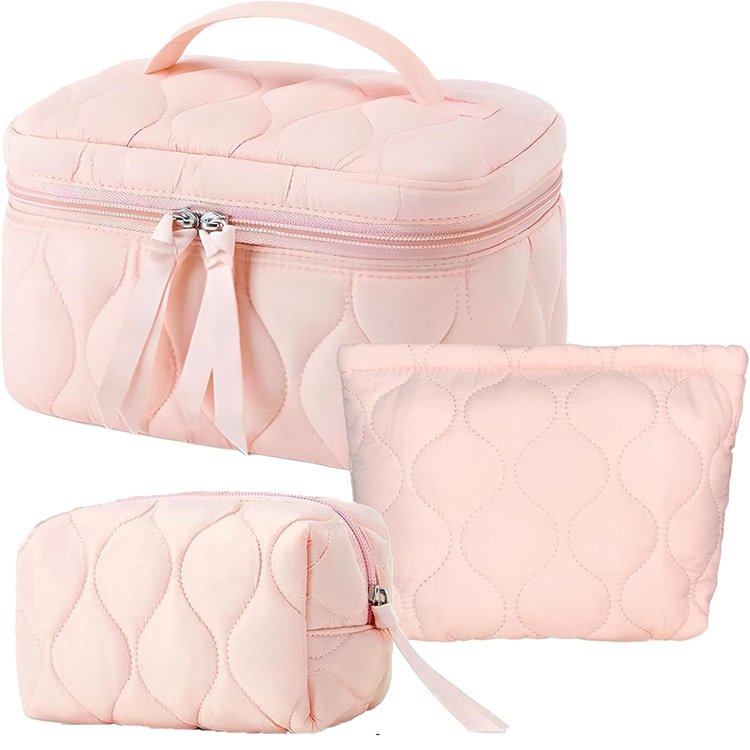
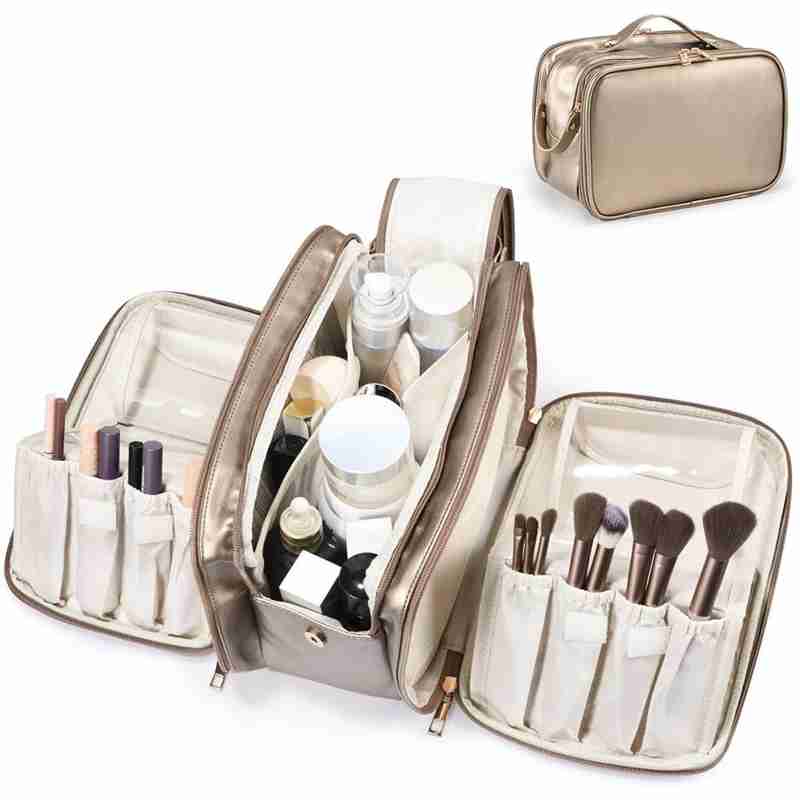

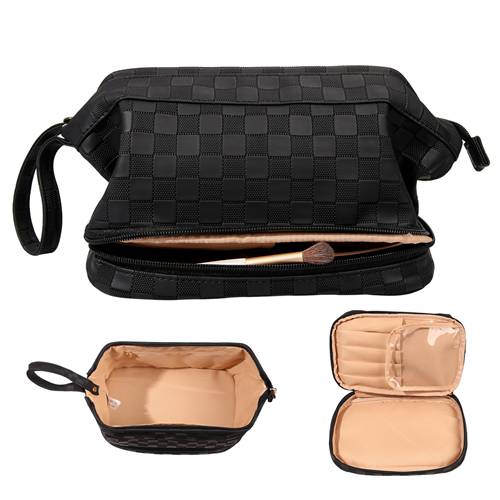

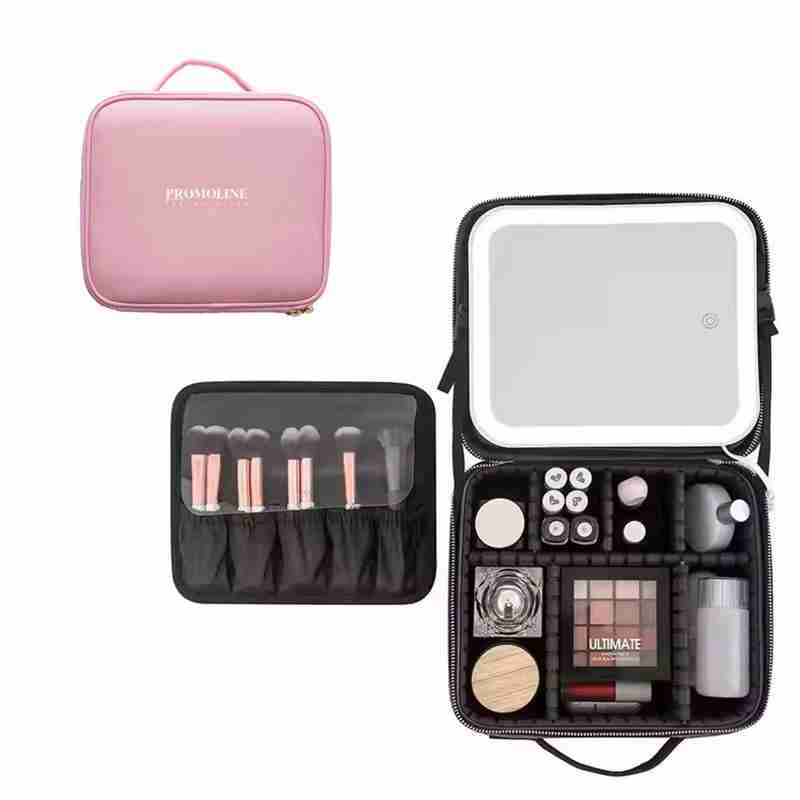




Not All Bags Need Same Leline
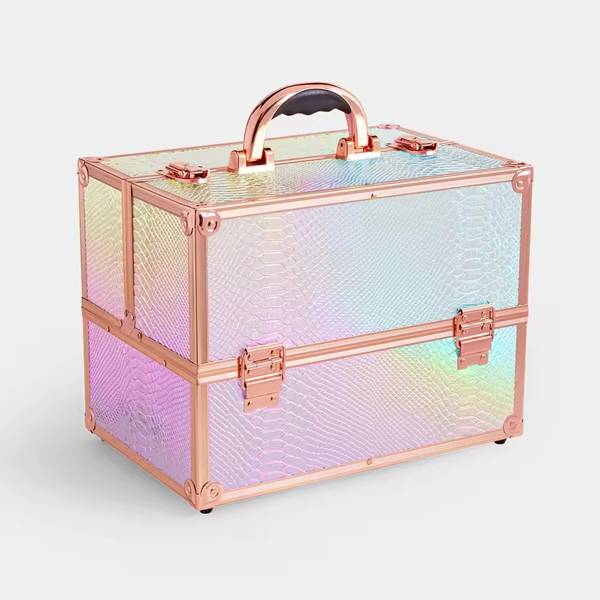
It is a mistake to treat all makeup bag interiors as if they need the same solution. A daily makeup pouch, a travel toiletry bag, a gift-ready cosmetic case, and a brush bag do not face the same mess, moisture, or cleaning routine. The right lining depends on what goes inside, how often it gets cleaned, and whether the bag needs to feel soft, structured, quiet, technical, or premium.
A simple matching guide helps:
| Bag type | Lining priority |
|---|---|
| Daily makeup pouch | Easy wipe-clean, low stain visibility |
| Travel toiletry bag | Better spill control, smoother sealing behavior |
| Gift-ready cosmetic case | Cleaner appearance, softer presentation |
| Brush or tool bag | Lower snag risk, smooth interior movement |
| Technical or wet-use style | Stronger moisture barrier |
This is why one lining choice rarely fits every collection. A soft gift pouch may not need a technical film-backed interior. A travel wash bag may need more than standard fabric lining. A premium cosmetic case may need the lining to look clean in photos and still survive repeated cleaning later.
Wipe-Clean Matters More
For many makeup bags, the more useful question is not “Is the lining waterproof?” but “Does it wipe clean without staining, peeling, or bubbling?” Most cosmetic bag mess is not caused by heavy rain. It comes from foundation, lip products, cream, powder dust, micellar water, or small liquid leaks inside the bag.
That is why a strong interior should be judged by real cleanup behavior, not by dramatic claims alone.
Better lining up questions to ask
| Common claim | Better question |
|---|---|
| Waterproof lining | Does it actually contain small leaks inside? |
| Easy-clean interior | Does pigment wipe off without shadow marks? |
| Durable coating | Does it stay smooth after repeated alcohol wipes? |
| Soft lining feels | Does it wrinkle, bubble, or separate later? |
In many cosmetic uses, a lining that handles oil, pigment, alcohol, and repeated wiping well is more practical than one that simply sounds more technical. A technical moisture barrier matters for some travel or spill-prone bags. But for a large share of beauty pouches, the daily test is simpler: after a real mess, does the inside still look under control?




Different Linings, Different Jobs
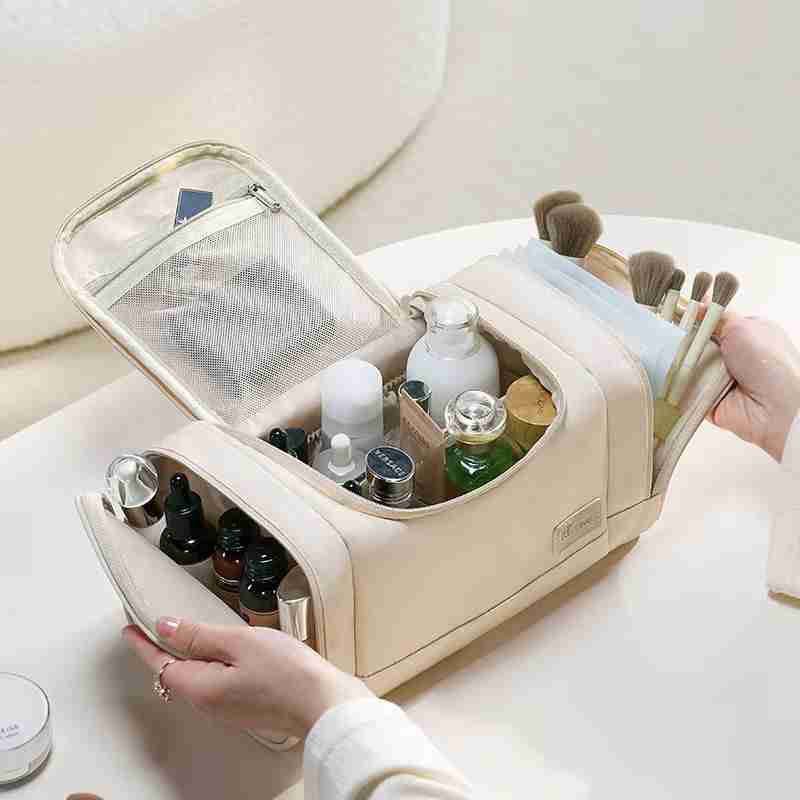
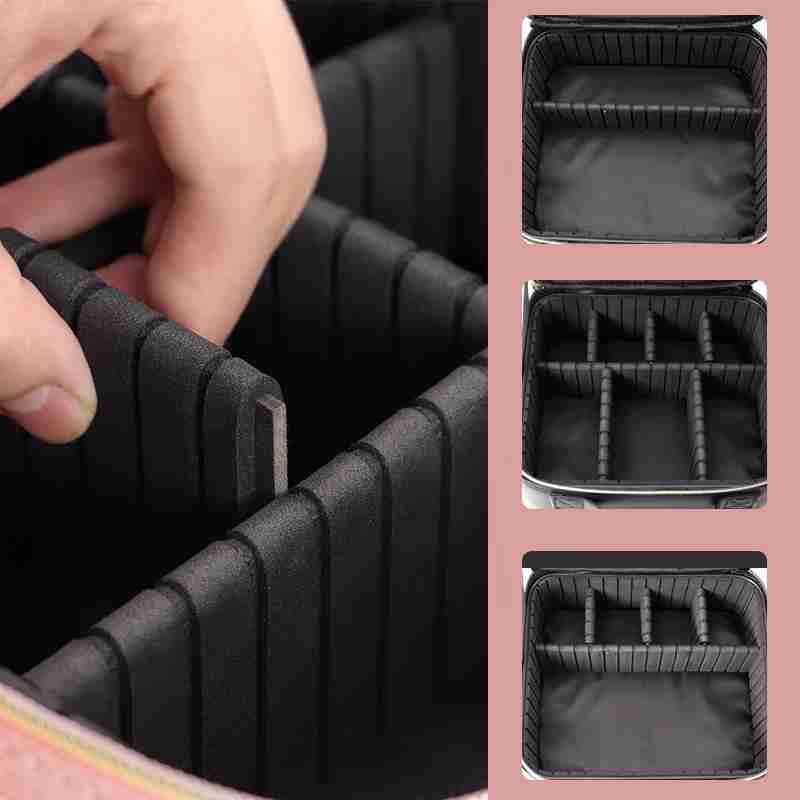
A lining choice becomes clearer once the bag is judged by what it needs to survive, not by material names alone. In makeup bags, these materials are often compared together because each one solves a different kind of problem. Polyester lining is widely used because it is stable, familiar, and easy to pair with wipe-clean coatings. Nylon lining usually brings a lighter, smoother, more technical feel. TPU-laminated lining is often chosen when stronger moisture resistance, flexibility, and cleaner wipe behavior matter. PEVA lining is commonly used when a smooth, easy-clean, leak-contained interior is needed. Laminated interiors are useful when the project needs the bag to look more controlled after spills or repeated wiping.
Quick lining comparison
| Lining type | Usually chosen for | Watch-outs |
|---|---|---|
| Polyester lining | General cosmetic use, stable base, coated, easy-clean interiors | Alone, it is not a spill barrier |
| Nylon lining | Lighter handfeel, smoother inside movement, travel-oriented styles | Surface finish can vary a lot |
| TPU-laminated lining | Better moisture barrier, flexible wipe-clean use | Fold areas still need good bonding |
| PEVA lining | Easy-clean interiors, leak-contained travel use | Not every project needs this level |
| Laminated lining | Spill control, easier cleanup, cleaner interior look | Poor lamination can peel later |
Light Looks Better, Dark Lasts
Lining color is not a small visual detail. It changes how stains show, how products are found, how the bag photographs, and how quickly the inside looks “used.” A light lining often makes a cosmetic bag feel cleaner, brighter, and easier to read when opened. It can also help users find lip products, pencils, or sample bottles faster. But light interiors usually show foundation tint, powder transfer, and cream shadows much sooner.
A dark lining usually hides daily marks better and ages more quietly with repeated use. That makes it useful for travel, high-contact routines, and bags that are expected to carry pigment-heavy or spill-prone products. The trade-off is visibility: darker interiors can make small items harder to find, especially in compact bags with narrow openings.
Light vs dark lining logic
| Lining color | Better for | Main trade-off |
|---|---|---|
| Light lining | Cleaner photo look, easier product visibility | Shows stains sooner |
| Mid-tone lining | Balanced visibility and stain control | Less visually distinctive |
| Dark lining | Better stain masking, travel-heavy use | Small items can disappear inside |



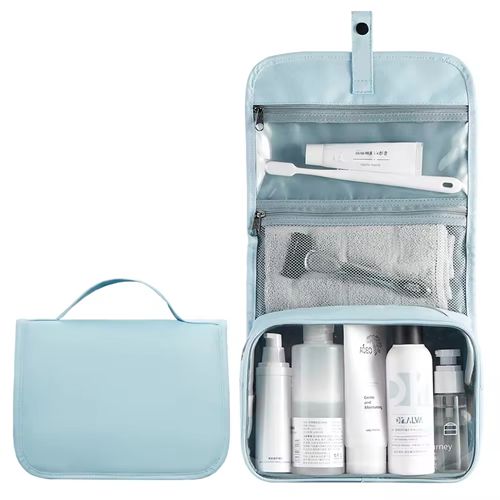

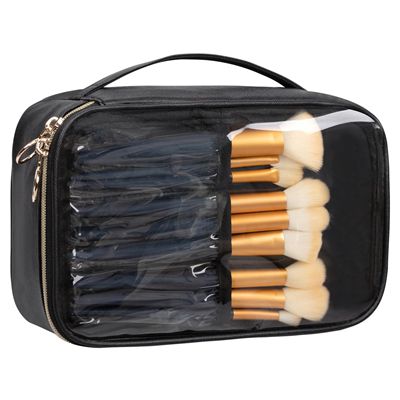
Choose Lining by Spill Risk
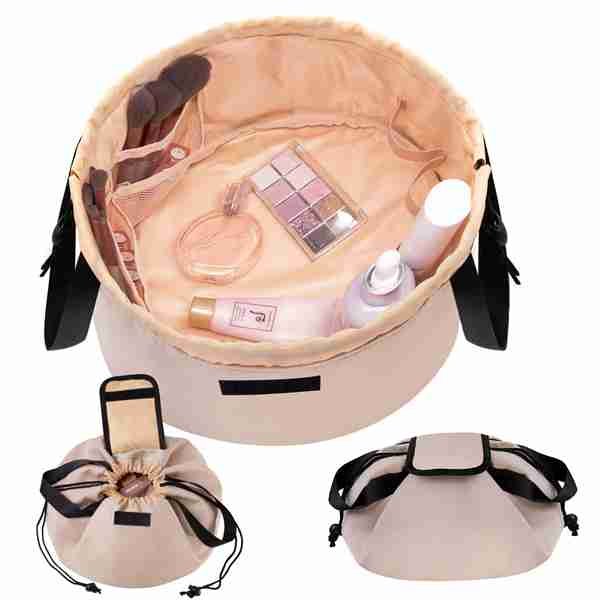
The inside material should be chosen by risk type, not by habit. A makeup bag carrying pressed powder, eyeshadow, and dry compacts faces one kind of mess. A travel pouch with serum bottles, lotion, micellar water, or liquid samples faces another. A brush bag may deal more with powder dust, oil residue, and color transfer than with actual leakage. A toiletry-style bag can face repeated moisture, cap failures, and wipe-down cleaning.
Choose a lining based on the interior risk
| What goes inside | Better lining priority |
|---|---|
| Powders and compacts | Low stain shadow, easy dust cleanup |
| Creams and lip products | Better wipe-clean behavior, smoother surface |
| Serums and travel bottles | More spill control, cleaner seam behavior |
| Brushes and tools | Lower snag risk, smoother interior friction |
| Wet-use or wash items | Stronger moisture barrier, easier wipe-down |
Smooth, Clean, and Attached
A lining should not be judged only on day one. The better test is how it behaves after repeated wiping, folding, opening, and contact with real cosmetic residue. In wipe-clean interiors, the weak points usually appear at fold lines, corners, seams, and areas that get cleaned again and again. Delamination risk rises when laminated surfaces are bent repeatedly or stored with harsh, folded creases, and several bag-focused material guides specifically call out fold areas and corners as the places where wipe-clean layers start to peel first.
What better lining should still be used after repeated use
| Check area | What “good” still looks like |
|---|---|
| Surface smoothness | No bubbling, no heavy wrinkling |
| Bonding | No peeling at folds or corners |
| Cleanup | Wipes clean without shadow stains building fast |
| Seam behavior | No obvious puckering or liquid-wicking feel |
| Touch | Still flexible, not brittle or noisy |
A lining that starts clean but becomes stiff, bubbly, noisy, or loose after a short period will quickly damage the whole impression of the bag. The stronger choice is the one that still feels controlled after ordinary mess, ordinary wiping, and ordinary travel handling.





Catch Leline Problems Early
Many lining problems are easier to prevent than to fix. In cosmetic bags, the issues worth catching early are usually not dramatic leaks first. They have a chemical odor on opening, laminate peeling at folds, color transfer after rubbing, and wrinkles that make the inside look cheap, even when the shell still looks fine. Bag-focused sourcing guides call out odor and lining delamination as repeat complaints, while textile colorfastness guidance treats rubbing transfer as a measurable performance issue rather than a minor cosmetic flaw.
Early-warning issues worth checking before approval
| Problem | Why it matters |
|---|---|
| Odor | Strong smell damages the first open experience |
| Delamination | Wipe-clean value disappears quickly |
| Color transfer | Hands, products, and light linings get marked |
| Wrinkling | The bag looks older and less controlled |
| Surface instability | Cleanup becomes harder and less predictable |
Color transfer deserves more attention than it usually gets. Textile crocking references make clear that rubbing can transfer color from one surface to another, especially when moisture is involved, which matters for dark linings, printed interiors, and frequently wiped sections. The goal is not only a lining that survives the lab. It is a lining that stays calm when the bag is opened, rubbed, cleaned, and repacked again and again.
Test Lining Before Approval
A lining sample should be approved under the same conditions it will face later. Several makeup-bag material guides explicitly recommend testing with foundation, lotion, micellar water, alcohol pads, spills, abrasion, and real-world packing, because lining behavior changes once the bag is filled, folded, wiped, and stored. Waterproof-lining guidance also recommends repeated folding and field-style use checks to catch delamination and coating wear before bulk.
A more useful lining approval checklist
| Sample test | What it should reveal |
|---|---|
| Real stain test | Whether pigment leaves shadow marks |
| Alcohol or wipe test | Whether the surface stays stable after cleanup |
| Fold test | Whether corners and crease lines start peeling |
| Packed-state test | Whether stuffing or flat packing creates permanent marks |
| Filled-use test | Whether the lining still looks smooth with real contents inside |
The sample should not only look clean on the table. It should survive a week’s worth of realistic cosmetic behavior compressed into one approval round. That means checking stain release, odor, seam behavior, fold memory, and cleanup response before bulk decisions are locked. When the lining is tested this way early, later surprises become much easier to avoid.




Make A Sample First?
See your idea come to life before mass production.
At Jundong Factory, we offer free design mockups and custom samples to ensure every detail is perfect — from material and color to logo placement and stitching.
Start your project with confidence today: info@jundongfactory.com.
FAQs About Makeup Bag Lining Fabric
What lining material works best for makeup bags?
The best lining material is the one that matches the mess pattern inside the bag, not the one with the most technical-sounding name. In cosmetic use, lining materials are usually compared across polyester, nylon, TPU-laminated fabrics, PEVA-backed interiors, and other laminated constructions because each one solves a different combination of cleanup, spill control, flexibility, and appearance needs. Cosmetic-bag and waterproof-lining guides consistently describe polyester as a common stable base, nylon as smoother and lighter in handfeel, and TPU or PEVA as more useful when wipe-clean and moisture control matter more.
A practical way to compare them is to stop asking “Which one is premium?” and ask what the lining must survive. If the bag mainly carries pressed powders, blush, and dry compacts, the interior needs low stain visibility and easy dust cleanup more than a heavy barrier layer. If the bag carries travel bottles, lotion, micellar water, or leak-prone minis, the lining needs better surface sealing and simpler wipe-down behavior. If the bag is used for brushes and tools, smoother movement and lower snag risk matter more than leak containment. That is why one collection may reasonably use different interior constructions for different bag roles.
| Lining option | Usually better for | Main caution |
|---|---|---|
| Polyester lining | General cosmetic pouches, coated wipe-clean interiors | By itself, it is not a spill barrier |
| Nylon lining | Travel-oriented, smoother interior feel | Surface finish varies widely |
| TPU-laminated lining | Wipe-clean, moisture control, more technical use | Fold areas need strong bonding |
| PEVA-type lining | Easy-clean toiletry-style interiors | May be more technical than some soft gift styles need |
| Other laminated interiors | Spill handling and cleanup-focused bags | Weak lamination may peel later |
The better decision is usually made by ranking three priorities: cleanup, spill control, and appearance after repeated use. If the bag is opened often and wiped often, easy-clean surface stability matters more. If it travels with liquids, seam behavior and barrier logic matter more. If it is a gift-ready cosmetic case, the interior may need to look smooth and refined first, then survive moderate cleaning later. Once those priorities are ranked, the “best lining” question becomes much easier to answer.
Is “waterproof lining” really what most makeup bags need?
For many makeup bags, “wipe-clean” is a more practical requirement than full waterproofing. Real cosmetic mess usually comes from foundation smears, lip product residue, powder dust, lotion drips, or small bottle leaks inside the bag. Guides focused on cosmetic and toiletry bags repeatedly describe water-resistant or wipe-clean interiors as useful because they help contain minor spills and make routine cleanup easier, but they do not suggest that every beauty pouch needs the same level of liquid barrier as a wet-use travel organizer.
This distinction matters because “waterproof” can sound reassuring while hiding the real daily problem. A lining may resist moisture, yet still stain badly from pigment. Another may hold a small leak, but wrinkle, bubble, or peel after repeated alcohol wipes. A third may feel smooth and clean at first, yet show dark shadow marks after just a few foundation contacts. That is why the more useful review questions are: Can the interior be wiped clean quickly? Does pigment leave permanent shadows? Does repeated wiping weaken the surface? Do seams stay neat after a small spill? These are the questions that usually affect long-term satisfaction more than a broad waterproof claim.
| Common phrase | Better decision question |
|---|---|
| Waterproof lining | Can it contain minor leaks and still clean up well? |
| Easy-clean lining | Does pigment wipe off without visible shadow marks? |
| Durable interior coating | Does the surface stay stable after repeated wiping? |
| Travel-friendly lining | Does it handle bottle leaks, folds, and packing pressure? |
A more realistic way to specify the lining is to match it to the bag’s actual risk level. A vanity pouch for dry cosmetics does not need the same interior as a toiletry bag carrying serum bottles and wash items. A premium gift pouch may prioritize a refined look plus moderate cleanup. A travel case may need stronger seam control, wipe-down behavior, and better moisture handling. Once the use scene is defined clearly, the lining spec becomes more precise and much easier to defend.
Should makeup bag linings be light or dark?
Light linings improve visibility and photo cleanliness, while dark linings usually hide daily marks better. Cosmetic-bag sourcing guides repeatedly discuss lining color because it changes how quickly the inside looks used, how easy it is to find small items, and how obvious powder, foundation, or cream shadows become over time. Light interiors tend to make the bag feel brighter and easier to read when opened. Dark interiors tend to age more quietly in real use.
That is why lining color should be treated as a functional decision, not only a style choice. A light beige, pale gray, or blush-toned interior can be excellent for vanity use, gift-ready presentation, and small-item visibility. It helps users find lip pencils, sample bottles, and compacts quickly. But the trade-off is obvious: foundation tint, cream smears, and powder transfer usually show earlier. A dark navy, charcoal, or black lining hides those daily marks more effectively and can make the bag look cleaner for longer, especially in travel or high-contact routines. The trade-off there is visibility. Tiny items disappear faster in a dark interior, particularly in compact bags with narrow openings.
| Lining color | Usually better for | Main compromise |
|---|---|---|
| Light | Easier visibility, cleaner open-bag look | Shows stains faster |
| Mid-tone | Balance between visibility and masking | Less distinctive visually |
| Dark | Better stain masking, travel-heavy use | Small items are harder to spot |
A useful way to decide is to ask which problem matters more: finding items quickly or keeping the inside looking newer for longer. If the bag is mainly used at a vanity or in gifting, light linings can add clarity and freshness. If it is built for travel kits, high-pigment routines, or repeated handling, darker interiors often make maintenance easier. Neither is automatically better. The right choice depends on how the bag will actually be used after the first photo moment is gone.
How can we tell if a lining will peel or delaminate later?
The earliest warning signs of future delamination usually appear at fold lines, corners, and repeatedly wiped areas. Waterproof-lining and cosmetic-bag material guides repeatedly note that laminated surfaces can begin to fail where they bend most, especially when the bonding is weak, or the bag is stored with sharp, repeated folds. In real use, the problem often starts quietly: a slight bubble at the crease, a roughened corner, a whitening line after bending, or a wipe-clean layer that no longer feels flat.
That is why a sample review should include more than a flat visual check. A good pre-bulk routine usually involves repeated fold tests, wipe tests, and packed-state checks. If the lining is supposed to be wipe-clean, the fold zones should still look stable after several cleanups. If the bag will ship flat, the interior should be checked after that same folded storage condition. If the project is travel-oriented, the corners and seams should be reviewed after the bag has been packed with realistic contents and opened multiple times. These are simple actions, but they expose weaknesses that a clean tabletop sample can easily hide.
| Early warning sign | What it may mean |
|---|---|
| Tiny bubbles at creases | Bonding stress is already showing |
| Whitening after bending | The surface is being over-stressed |
| Peeling at corners | Fold and edge bonding is weak |
| Noisy, stiff interior after wipes | The surface may be aging too quickly |
The safest approach is to treat delamination as a handling issue, not just a material issue. A lining may be acceptable for a softly used vanity pouch and still be wrong for a fold-heavy travel case. So the right question is not only “Will it peel?” It is “Will it stay bonded under the way this specific bag is opened, cleaned, packed, and stored?”
Does lining color transfer really matter for makeup bags?
Yes—color transfer matters because a bag interior is repeatedly rubbed by products, fingers, cloths, and other surfaces during normal use. AATCC’s crocking method is specifically designed to measure how much color transfers from a colored textile surface to another surface by rubbing, with both dry and wet procedures. That matters directly for bag interiors, especially darker linings, printed interiors, and sections that are frequently wiped with damp cloths or alcohol-based cleaning materials.
In cosmetic bags, color transfer shows up in very practical ways. A dark lining may mark a white wipe cloth during cleaning. A printed interior may smear slightly after repeated rubbing. A highly saturated interior may leave trace marks on light mini bottles, tissue, or pale outer fabrics if the bag is packed tightly. Wet rubbing can make the problem more visible than dry rubbing, which is why lining colorfastness should not be treated as an abstract textile issue. It directly affects whether the inside looks controlled after cleaning and handling.
| Risk area | Why color transfer matters |
|---|---|
| Dark lining and light products | Visible marks show fast |
| Printed interior | Repeated rubbing can dull or smear the print |
| Frequent wipe-clean use | Moisture can increase transfer risk |
| Gift-ready light interiors | Even a small transfer looks obvious |
This does not mean every lining needs laboratory-level performance targets written into a simple project. But it does mean dark interiors, printed linings, and wipe-heavy bags deserve extra attention during sample review. A white cloth rub test, both dry and slightly damp, can reveal problems early. When a transfer shows up there, it is far better to catch it before bulk than after the bag has already been filled, cleaned, and handled in daily use.
How should lining samples be tested before bulk starts?
A lining sample should be tested with real cosmetic mess, real cleanup, real folding, and real packing—not just checked under clean studio light. Cosmetic-bag material guides repeatedly recommend testing against foundation, lotion, micellar water, alcohol wipes, humidity, and abrasion because lining behavior often changes after the bag is filled, wiped, folded, and stored. Waterproof-lining references also warn that laminated interiors can fail first at fold lines and corners, so approval should include repeated bending and packed-state checks, not only a flat visual review.
A more reliable sample routine usually includes five checks. First, a real stain test shows whether pigment leaves a shadow after wiping. Second, an alcohol or wet-wipe test shows whether the surface stays smooth or starts to bubble, discolor, or lose finish. Third, a fold test helps expose early delamination at corners and crease lines. Fourth, a filled-use test shows whether the lining still looks neat once bottles, brushes, or compacts are inside. Fifth, a packed-state test shows whether flat packing or stuffing creates permanent marks, pressure lines, or surface instability. These are simple tests, but they reveal much more than a clean sample on a table.
| Sample test | What it should reveal |
|---|---|
| Real stain test | Whether pigment leaves shadow marks |
| Alcohol or wipe test | Whether the surface stays stable after cleanup |
| Fold test | Whether corners and crease lines start peeling |
| Filled-use test | Whether the lining still looks smooth with real contents |
| Packed-state test | Whether storage and shipping pressure damage appearance |
A good lining sample should compress a week of real use into one approval round. It should be judged after contact with oils, pigments, damp cloths, alcohol-based cleaning, repeated opening, and realistic packing. When a sample passes only the “looks good when new” stage, later surprises are much more likely. When it passes realistic handling, cleanup, and storage checks, the decision becomes much safer.
Do toiletry bags and makeup pouches need different lining logic?
Yes—makeup pouches and toiletry bags usually need different lining logic because the risks inside them are not the same. Toiletry-bag references describe these bags as carrying lotions, razors, toothbrushes, and wash items, often with waterproof or leak-proof linings, multiple compartments, and a stronger focus on containing moisture and liquid spills. Cosmetic pouches, by contrast, are more often used for powders, creams, compacts, pencils, and small beauty items, where wipe-clean behavior, stain control, and visibility may matter more than heavy liquid containment.
That difference changes what the lining must do. A toiletry bag often needs better spill control, more confidence around bottle leaks, and an interior that handles repeated damp wipe-downs without losing structure. A makeup pouch often needs smoother cleanup for pigment and oil residue, lower stain visibility, and a cleaner open-bag look. Even when both are called “cosmetic bags” in casual language, the interior expectations are not the same. A gift-ready pouch for makeup items may prioritize a refined, neat-looking interior. A travel wash bag may prioritize PEVA, PVC, or TPU-style wipe-clean linings because it faces a much higher chance of shampoo, toner, or mouthwash leakage.
| Bag type | Lining priority |
|---|---|
| Makeup pouch | Wipe-clean surface, lower stain show, neat appearance |
| Toiletry bag | Leak control, moisture handling, easier full wipe-down |
| Travel beauty case | Balance of cleanup, spill control, and structure |
| Gift-ready cosmetic case | Cleaner interior look with moderate wipe-clean function |
A useful mistake to avoid is forcing one interior spec across both categories without checking what the bag actually carries. A powder-heavy pouch does not always need the same lining as a wash kit with liquid bottles. Once the product mix is defined clearly, the lining choice becomes much easier and much more defensible.
How do odor and lining feel affect the perceived quality of a cosmetic bag?
Starting with one strong base style is usually safer, but developing a small related collection often creates better long-term value. The right choice depends on whether the project is testing a concept or building a fuller routine around it. Publicly visible bag pages often expand one visual idea into several connected formats, such as a main pouch, a toiletry version, a brush case, or a gift-ready set, because one format rarely covers every real use scene.
A useful rule is this:
| Project stage | Better starting move |
|---|---|
| New concept test | One core pouch |
| Travel or skincare line | Two related sizes |
| Gift set or retail display | Small coordinated set |
| Tool-led line | Main pouch + tool/brush format |
A single pouch makes first approval easier. Fewer variables usually mean clearer cost control, faster revisions, and less confusion around packing and labeling. But a small collection can make the line feel more complete and easier to scale. One shared color system, one logo language, and one trim direction can often support several sizes without forcing a full restart each time.
So the decision should follow the role of the bag. If it is mainly a first-run test, start with one core format. If it is part of a broader beauty routine or gift strategy, a mini collection may create much stronger continuity.
Can one lining work across a whole cosmetic bag collection?
Sometimes yes, but only when the bags in that collection face similar mess, cleanup, and storage conditions. Cosmetic-bag guides repeatedly separate daily pouches, travel organisers, vanity cases, brush holders, and clear travel bags because different product mixes create different interior risks. Toiletry-bag guidance also makes a strong distinction between makeup-focused pouches and wash kits with liquid items, which usually need more moisture control.
One line can work across a collection when the bags share the same job. For example, a group of gift-ready cosmetic pouches in several sizes may all work well with one wipe-clean polyester-based interior if they mainly hold dry or low-risk beauty items. A set of vanity pouches for daily makeup can often share the same lining if the priorities are visibility, moderate cleanup, and a consistent open-bag appearance. But once the collection starts mixing roles—such as one pouch for powders, one organizer for brushes, one travel bag for liquids, and one wash bag for toiletries—the idea of “one lining for everything” becomes much less safe. The more the risks change, the more the interior logic usually needs to change as well.
| Collection type | One lining more realistic? |
|---|---|
| Same-use vanity pouches | Often yes |
| Gift set pouches with similar contents | Often yes |
| Travel + liquids + brushes mixed | Usually no |
| Makeup pouch + toiletry bag combo | Often needs at least two interior logics |
A better rule is to standardize only after the collection is grouped by actual use. If the interiors will face the same pigment, moisture, wiping, and packing conditions, one lining can help simplify development and create visual consistency. If the bags do different jobs, forcing one lining across all of them may create weak performance in the most demanding pieces.
How do we compare lining options without comparing the wrong things?
The safest way to compare lining options is to align the risk level, cleanup expectation, and use scene first—then compare materials. Waterproof-lining references describe lining choice in terms of protection level, flexibility, abrasion resistance, weight, and edge-sealing capability, while cosmetic-bag guides focus on wiping behavior, chemical resistance, odor, delamination risk, and repeatability from sample to bulk. If those factors are not aligned first, two lining options can look similar on paper while solving very different problems.
A more useful comparison sheet usually asks the same set of questions for every option:
| Comparison area | What should be aligned first |
|---|---|
| Use scene | Daily makeup, travel liquids, gift set, brush bag, wash bag |
| Main interior risk | Pigment, oil, leakage, dampness, repeated wiping |
| Surface behavior | Wipe-clean response, shadow stains, feel after cleaning |
| Construction risk | Fold stress, corner bonding, seam behavior |
| Visual requirement | Light or dark lining, smoothness, premium look |
| Care expectation | Spot-clean only, damp wipe, repeated alcohol wipe |
| Cost logic | Is the extra performance actually needed for this bag? |
This matters because online discussions are easy to distort with broad language. “Waterproof” may sound stronger than “wipe-clean,” but it may not solve the real problem if the bag mostly carries powder and cream. A very technical lining may raise cost without improving the actual user experience in a gift pouch. On the other hand, a soft standard lining may be too weak for a travel beauty case with liquid bottles. The comparison only becomes meaningful when the lining is judged against the bag’s real interior risk.
A good rule is to compare in this order: what goes inside, how it gets cleaned, how often it is folded, how it will be packed, and what level of failure is acceptable. Once those are fixed, lining options become much easier to rank and much harder to compare incorrectly.
Everything You Need to Know Before Customizing Your Bags
The inside of a makeup bag looks simple, but lining decisions quietly control cleanup, odor, stain visibility, leakage risk, fold behavior, and long-term appearance.
That is why line discussions usually become more important after the first sample, not before it. At the sketch stage, most attention goes to outer fabric, shape, logo, and color. But once the bag is opened, wiped, packed, and used with real products, the lining starts to decide whether the bag still feels clean, controlled, and worth keeping. Practical sourcing guides for cosmetic and toiletry bags consistently treat wipe-clean behavior, spill resistance, lining bonding, odor management, and repeatability from sample to bulk as core review areas, not secondary details.
The FAQs focus on the lining issues that most often affect project decisions: material choice, wipe-clean performance, color choice, delamination risk, and sample approval. They are arranged in the order that usually helps a makeup bag project move from concept to sample with fewer surprises later.