 Skip to content
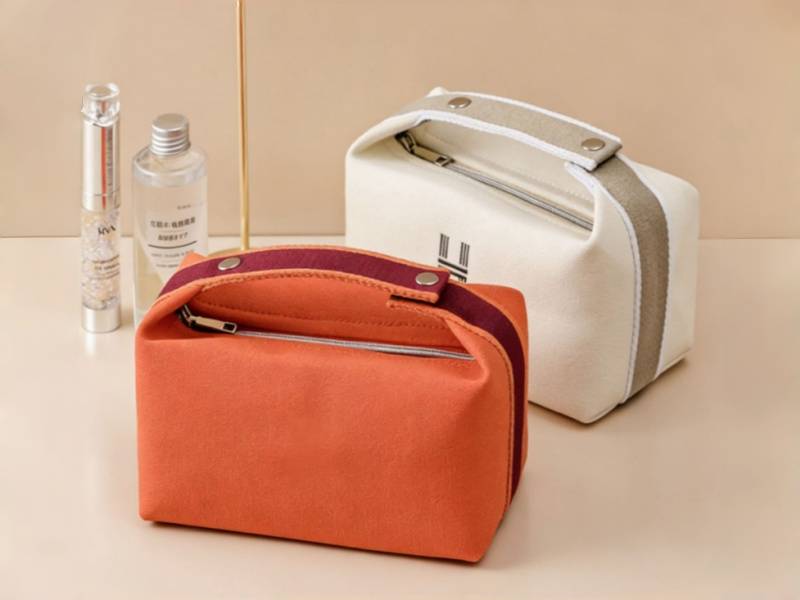
A zipper is not always the smartest place to start. That may sound strange in a bag business, because many people assume a makeup bag needs a zipper to feel complete. In real use, though, a zipper is often the part that creates the most hesitation. It adds hardware, narrows the opening, raises the skill level for sewing, and becomes the first thing people blame when a pouch feels stiff, awkward, or cheap. A zipper can look polished, yes. But it can also make a small cosmetic bag harder to sew, harder to sample, and harder to get right at scale.
A zipperless makeup bag solves a different problem. It favors ease, speed, softness, and access. That is why drawstring cosmetic bags, snap-flap pouches, and other no-zip styles keep showing up in sewing tutorials and custom bag collections. Some open fully so brushes and bottles are easy to see. Some close with one quick press. Some are better for gifting than daily travel. The best version depends less on fashion and more on what goes inside, how often the bag opens, how messy the contents may be, and how the bag will be sold or given away. Tutorials built around drawstring and snap closures show that people keep looking for options that are easier to sew and easier to use, especially for starter projects, travel sets, and wipe-clean cosmetic storage.
A makeup bag without a zipper can work very well if the closure matches the job. A drawstring style is excellent for wide opening and quick access. A flap with a snap is simple, neat, and beginner-friendly. Button-loop and elastic closures suit light contents and softer silhouettes. The real success of a zipperless cosmetic bag depends on four things: the right closure, the right body structure, a lining that handles spills well, and a sewing sequence that prevents the bag from collapsing or gaping open.
What Is a Makeup Bag Without a Zipper, and Why Are More Brands Choosing It?
A zipperless makeup bag is any cosmetic pouch that closes with a drawstring, snap, flap, button loop, elastic, or fold-over construction instead of a zip track. More teams choose it because it can be easier to sew, easier to sample, easier to brand, and easier to use in light-duty beauty, gift, travel, or promotional settings. It also removes one of the most failure-prone hardware components from the bag.
A good no-zip cosmetic bag is not just “a pouch with something else on top.” It is a different product logic. A zip pouch is built around a narrow opening that protects the contents through closure tension. A zipperless version is built around access and movement. That means the opening shape, body stiffness, flap overlap, and seam behavior matter more than they do on a zip pouch. If those parts are wrong, the bag feels unfinished even if the sewing itself is neat.
That is also why these bags keep appearing in beginner projects and travel-friendly tutorials. The drawstring version opens flat and closes fast. The snap-flap version removes zipper installation entirely. Both formats reduce friction for early sampling and early testing. For a small cosmetic pouch, that can be a real advantage. You get to judge shape, fabric hand, logo placement, and fill behavior before you spend time tuning zipper tape, slider quality, and zipper insertion accuracy.
From a commercial angle, a zipperless makeup bag often works best where the bag is part of a set rather than the hero product itself. Think gift-with-purchase, event kits, beauty subscriptions, sleepover kits, hotel amenity pouches, or starter cosmetics bundles. In those cases, fast opening and low sewing difficulty can matter more than maximum closure security.
Which Closure Type Is Best for a Zipperless Makeup Bag: Drawstring vs Snap vs Flap vs Button?
The best closure depends on the bag’s job. A drawstring is best for wide access and flexible capacity. A flap with a snap is best for a clean silhouette and quick sewing. A button loop works for soft, light bags with a handmade feel. A fold-over or flap-only design can look minimal, but it usually needs more body structure to stay tidy.
Here is the simple comparison most teams actually need:
| Closure Type | Best Use | Main Strength | Main Risk |
|---|---|---|---|
| Drawstring | Brush sets, vanity use, travel touch-up kits | Opens wide, closes fast, flexible fill volume | Can look casual if the body is too soft |
| Snap + Flap | Gift pouches, starter cosmetic kits, small retail sets | Clean front look, easy to sew, low hardware count | Flap must be sized well or it pops open |
| Button Loop | Fabric-first, craft-style, light contents | Soft look, low cost, easy to personalize | Slower to open, weaker for heavy contents |
| Fold-Over / Flap Only | Minimal kits, soft pouch concepts | Very clean shape, no extra hardware needed | Needs structure or it can sag and gape |
A drawstring bag is strong because it changes the opening geometry. Instead of reaching through a narrow slot, the user opens the whole top field. That is why lay-flat drawstring cosmetic bags are so appealing for makeup brushes, compacts, and quick routine items. They reduce rummaging. They also give more room for printed fabric, quilting, and soft branding touches. But there is a trade-off: a drawstring bag can drift toward a casual, almost gift-pouch look unless the base, side wall, or flap is built with some discipline.
A snap-flap bag is the safest starting format for many no-zip cosmetic projects. It keeps the sewing sequence clean. It gives the front face a stable area for embroidery, debossing, woven labels, or screen print. And it feels more controlled than a loose flap. The reason many beginners like it is the same reason many beauty teams like it: it is easy to open, easy to close, and easy to understand at a glance.
My practical rule is simple. If the contents are many small pieces used on a counter, choose drawstring. If the contents are a few items carried in a handbag or gift pack, choose flap and snap. If the project is mainly about a soft crafted look, a button loop can work nicely. If the order needs a sharp retail face, skip the button and keep the front cleaner.
What Fabrics, Linings, and Interlinings Are Best for Sewing a Makeup Bag Without a Zipper?
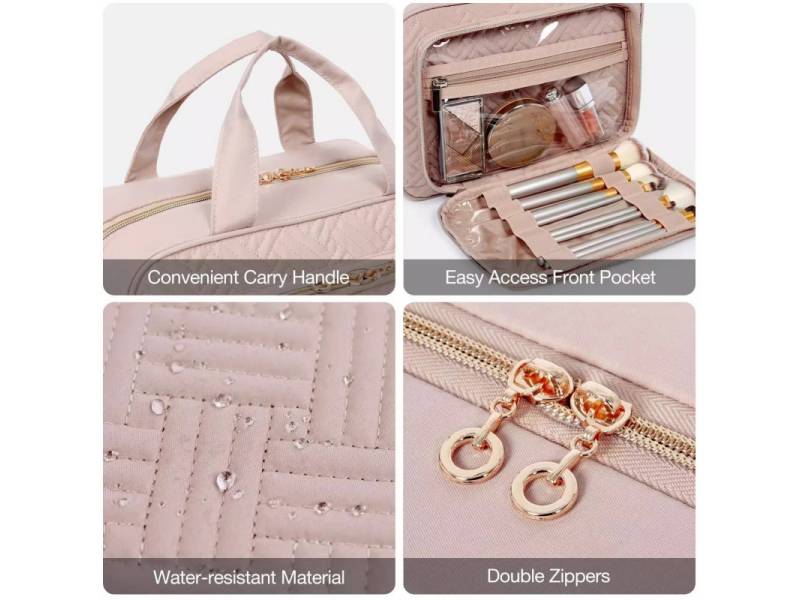
The best fabric stack for a zipperless makeup bag is usually a stable outer, a spill-friendly lining, and enough internal support to hold shape without making the bag bulky. Cotton canvas, quilted cotton, nylon, laminated cotton, and selected faux leather can all work. For lining, wipe-clean surfaces often outperform pretty ones. For support, woven fusible interfacing is a strong baseline, while fleece or firmer stabilizers add body when needed.
A lot of weak cosmetic bags fail before the first stitch. They fail on the cutting table because the fabric stack is wrong. People choose a pretty outer and forget the bag has to open, close, fold, stand, survive spills, and keep its face. A no-zip bag needs even more help from fabric because it cannot hide construction weakness behind zipper hardware.
For the outer, lightweight canvas is a very good starting place. It feels casual but not flimsy, takes print well, and behaves predictably through curves and topstitching. Quilted cotton also works well when you want softness and light padding. If the look needs a more polished edge, faux leather can work, but the pattern must respect turning thickness and seam bulk. On drawstring styles, fabric that is too heavy can bunch and refuse to close properly. That is a known issue in drawstring makeup bag tutorials, and it is worth respecting.
For the lining, cosmetic use changes the math. Makeup leaks. Powder dust builds up. Brushes carry residue. So a wipe-clean lining is often a better choice than a decorative one. Vinyl-lined or laminated-cotton interiors are popular for exactly that reason. Waterproof nylon can also work nicely in soft drawstring styles. The bag may look almost the same from the outside, but the user experience changes a lot once the inside can be wiped instead of washed every time something opens or spills.
Interfacing is where many small bags quietly get better. SF101 Shape-Flex is widely recommended as a dependable woven base that adds stability without turning the fabric into cardboard. Needled fleece such as Thermolam helps soft bags feel fuller and better padded. Firmer options such as Deco-Fuse move the bag closer to a store-bought look. The trick is not choosing the heaviest option. The trick is choosing the lightest structure that still keeps the bag from looking tired.
How Do You Sew a Makeup Bag Without a Zipper Step by Step?
The simplest path is a lined pouch with a curved or straight flap and a snap closure. Cut outer and lining pieces, fuse support to the outer, shape the flap, sew outer and lining right sides together, turn and press, close the side seams or boxed corners, topstitch, and attach the snap only after the bag is tested with real contents inside. That last step matters more than most people think.
Here is a clean sewing sequence that works for many soft cosmetic pouch styles:
- Define the fill first. Put the actual products on the table. Add a little room for fingers, not a lot of empty space.
- Cut outer, lining, and support. If you want the bag to feel neater, fuse the support to the outer before sewing anything else.
- Shape the flap early. A curved flap looks softer. A straight flap looks cleaner and more modern.
- Add any front branding now. Printing, embroidery, labels, or patches are easier before assembly.
- Sew outer to lining around the flap area. Leave the turning gap where it will be least visible.
- Turn, press, and test the fold line. Do not guess the closure placement. Fold the bag with actual contents inside.
- Sew the body and corners. A flat pouch is quickest. Boxed corners give more room for skincare bottles.
- Topstitch and install the closure. Only now should the snap, button loop, or magnetic element go on.
That sequence sounds simple, but the fill test is the step people skip. They place the snap using a ruler instead of the actual products. Then the flap floats too high, presses too low, or pulls the front panel into a wrinkle. On small cosmetic bags, closure position is not decoration; it is structure.
If you prefer a drawstring version, the order shifts a little. You build the casing, create the channels, and keep the body soft enough to gather. The bag may open flatter and feel more generous, but the trade-off is that the top edge needs cleaner balance. Too much stiffness and it refuses to cinch. Too little and it looks limp. That is why drawstring cosmetic bags are often best in canvas or lighter constructions rather than dense padded stacks.
How Long Does It Take to Make a Sample, and What Is the Usual Sewing Process for Small-Run Production?
For a simple cosmetic pouch, a home sewist can finish a basic sample the same day. In small-run production, a common sample window for personalized pieces is about 3–7 working days, while more customized setups can take longer. After sample approval, a common bulk window is roughly 15–30 days, though size, material sourcing, decoration, and order complexity can stretch that.
Here is the production rhythm most teams should expect:
| Stage | Typical Window | What Usually Changes the Timing |
|---|---|---|
| Draft / tech setup | 1–3 days | Missing dimensions, unclear branding files |
| Sample sewing | 3–7 working days | New materials, multiple sizes, logo tests |
| Extra custom setup | 5–10 days | New molds, unusual trims, non-stock inputs |
| Approval revision | 3–10 days | Feedback speed, closure changes, size reset |
| Bulk sewing after approval | 15–30 days | Quantity, season, complexity, packing method |
The sewing process itself is usually straightforward: material confirmation, cutting, logo application, panel sewing, lining assembly, body closing, shape correction, inspection, trimming, and packing. What slows the job is usually not the sewing line. It is late decisions on lining, closure placement, logo scale, or packaging.
This is where a no-zip bag can save time. You remove zipper sourcing, slider choice, zipper color matching, zipper insertion, and zipper testing from the sequence. For many small cosmetic projects, that is enough to shorten the path from sketch to workable sample.
For custom development, Jundong’s makeup bag program already supports size, material, color, logo, low MOQ, free design support, and fast sample production. If you already know your target size, closure idea, and use scene, sending that brief early makes the sample round much more efficient. You can reach Jundong at info@jundongfactory.com for a tailored review of your concept.
Why Do Some Zipperless Makeup Bags Look Cheap, and How Can Better Structure Fix That?

Most zipperless makeup bags look cheap for one reason: the body has no discipline. The bag collapses, the opening gapes, the flap floats, the corners wrinkle, or the base cannot support the fill. Better structure fixes that through the right support layer, controlled seam bulk, tested closure placement, and a shape that fits the actual cosmetics instead of a guessed rectangle.
People often blame fabric, but structure is the real story. A beautiful print cannot rescue a bag that folds in the wrong place. Nor can a shiny snap rescue a pouch that caves in around a compact or stands open after it is closed. In a zip pouch, the zipper creates a visible top line. In a zipperless bag, the fabric itself has to create the discipline.
There are four fixes that work over and over:
- Stabilize the front panel so branding sits flat.
- Support the bottom so the bag does not puddle on a shelf.
- Reduce seam bulk where the flap folds and turns.
- Test the closure with real fill before locking placement.
A soft handmade pouch can still look premium if the structure is intentional. That usually means the bag should neither fight the hand nor collapse into it. For quilted or canvas styles, a woven fusible plus light fleece can create that balance. For smoother retail styles, a firmer stabilizer may be better. The wrong move is to overbuild the whole bag. That gives you hard corners and stubborn turning, not polish.
Another reason bags look cheap is poor proportion. Tiny flap on a thick body. Large body with no depth. Deep body with a weak opening. Cosmetic bags live close to the hand and close to the face. Proportion errors show immediately.
Who Should Choose a Zipperless Makeup Bag, and When Does It Work Better Than a Zipper Bag?
A zipperless makeup bag works best for people who value quick access, soft feel, simple sewing, or lower hardware use. It is often a better fit for vanity setups, travel touch-up kits, gift pouches, event bundles, junior beauty kits, and promotional programs. A zipper still wins when the bag will be overstuffed, tossed around daily, or used for many loose liquids in transit.
The best way to decide is not to ask, “Is no zipper better?” Ask, “How will the bag really be used?”
A drawstring style is often better if the bag lives on a vanity, opens flat, and closes only after use. A snap-flap bag is often better if the bag drops into a tote or gift box and carries a short list of items: lip products, a compact, a brush, a small mirror, maybe a travel skincare pair. A soft fold-over pouch can be lovely for spa kits or boutique sets where the pouch is part of the mood, not heavy-duty daily gear.
A zipper is still the safer call for airline liquids, bags thrown into gym lockers, or pouches holding many small loose items that must stay fully enclosed. There is no shame in that. The strongest product decisions come from honest use-case matching, not forcing one format into every job.
Is a Zipperless Makeup Bag Better for Custom, Private Label, and Promotional Orders?
In many small and mid-volume cosmetic projects, a zipperless bag is easier to customize than a zip pouch. It gives cleaner fabric surfaces for logo work, removes zipper color-matching problems, lowers sewing complexity, and can make sample revisions faster. That makes it especially attractive for gift sets, event drops, branded accessories, and quick-turn beauty programs.
That said, “better” depends on the line you are building. If your line needs a highly secure travel pouch, a zipper may still carry more commercial weight. But if your line needs a bag that feels giftable, soft, easy to brand, and easy to reproduce across colors or seasonal prints, zipperless styles can be very efficient.
They also help with visual branding. A snap-flap bag gives a neat front face. A drawstring bag gives broad print area and a soft silhouette that works nicely for fashion prints, quilting, or seasonal color stories. Without zipper tape interrupting the top edge, a pouch can sometimes look more textile-driven and more brand-specific.
For custom programs, the fastest wins usually come from keeping the first version disciplined: one size, one closure logic, one lining strategy, one print or logo method, one packing method. Once that first version behaves well, color extensions and gift-pack variations become much easier. If you want to build that type of program with low MOQ, sample support, and multiple material options, Jundong can review your direction at info@jundongfactory.com.
What Affects Price: Material, Size, Closure Type, MOQ, Factory Setup, and Packing Details?

Price is rarely decided by fabric alone. A small cosmetic pouch can become expensive if it uses tricky lining, thick support layers, complex shape, custom hardware, dense branding, or premium retail packing. A zipperless style can reduce some cost pressure by removing zipper materials and zipper sewing time, but the savings disappear if the bag gains extra shaping, thick quilting, or multiple decorative steps.
Here is the cost logic that matters most:
| Cost Driver | Tends Lower | Tends Higher |
|---|---|---|
| Outer Material | Plain canvas, standard nylon | Faux leather, laminated, specialty quilted fabrics |
| Lining | Standard fabric lining | Wipe-clean laminated or vinyl-lined interior |
| Closure | Flap only, simple snap | Custom button loop, magnetic closure, extra casing details |
| Shape | Flat pouch | Boxed base, curved flap, layered body |
| Branding | Woven label, simple print | Embroidery, deboss, multi-step logo treatment |
| MOQ | Larger volume | Small trial run |
| Packing | Polybag only | Gift box, inserts, hangtags, barcode, set packing |
The mistake is assuming “no zipper” always means “cheap.” Not true. If you remove the zipper but add quilting, laminated lining, curved flap, custom snap, edge paint, and retail box packing, the bag can still land at a premium level. On the other hand, a well-planned snap-flap pouch in stable canvas with a woven label can be very cost-efficient and still feel tidy.
For costing, the cleanest brief includes: flat size, filled size, closure type, outer fabric, lining type, branding method, target quantity, and packing style. Without those, quotes drift because every factory imagines a different bag.
If you are pricing a custom pouch for a beauty set, gift program, or private-label launch, it helps to request the sample and the packing plan at the same time. That avoids one of the most common budget surprises: a pouch that was easy to sew but awkward to fold, box, or barcode later. Jundong can review both the pouch and the packing path together at info@jundongfactory.com.
FAQ Section: 10 Things People Usually Want to Know Before Developing a Makeup Bag Without a Zipper
FAQ 1: Is a makeup bag without a zipper secure enough for daily use?
Yes, it can be secure enough for daily use, but only when the closure style matches the real use scene. This is where many teams make the wrong call. They compare a zipperless makeup bag with a zipper bag in a very general way, as if all cosmetic pouches are used the same way. They are not. A zipperless style works very well for touch-up kits, vanity storage, gift sets, hotel amenity kits, brush pouches, skincare sets, and light travel use. It is usually less suitable for loose liquid items thrown into a crowded tote, or for very small items that can slip out if the bag is squeezed.
Security comes from design logic, not from the absence or presence of a zipper alone. A drawstring style can be very practical when the bag opens wide on a counter and closes after use. A flap with a snap can feel neat and dependable when the contents are simple and the flap overlap is long enough. A button loop can also work, but only if the bag is not overfilled and the closure tension is tested properly.
The real issue is not “Can it close?” The real issue is what happens after filling. Does the bag stay shut when lifted? Does the flap shift? Does the opening collapse? Does the body lose shape after repeated use? These are the checks that matter. A well-developed zipperless makeup bag should be tested with actual cosmetics inside, not just empty samples on a table.
If the project is meant for daily handbag use, lightweight cosmetics, or giftable presentation, a zipperless style can absolutely work. If the project is meant for heavy movement, many loose pieces, or leak-prone liquids, a zipper may still be the safer route. Good development starts with honest use, not assumptions.
FAQ 2: Which closure works best for a zipperless makeup bag?
The best closure depends on what the pouch needs to hold, how often it will be opened, and what kind of image the finished piece should give. There is no single best closure for every style. The smarter approach is to match the closure to the bag’s role.
Here is a practical comparison:
| Closure Type | Best For | Main Strength | Main Risk |
|---|---|---|---|
| Drawstring | Brush kits, vanity use, casual beauty sets | Opens wide, flexible capacity, quick access | Can look too soft if body has no structure |
| Snap + Flap | Gift pouches, compact kits, everyday touch-up bags | Clean look, simple closure, easy to use | Flap length must be accurate |
| Button Loop | Soft fabric styles, handmade look, light contents | Charming, low hardware use, simple feel | Slower to open, weaker for heavy fill |
| Fold-Over Flap | Minimal styles, boutique presentation | Clean silhouette, low visual clutter | Needs support or it may sag |
A lot of people pick the closure based only on appearance. That usually creates trouble later. A beautiful closure means nothing if the pouch becomes awkward after filling. For example, a drawstring style may look playful and soft, but if the fabric is too thick or the casing is too stiff, it will not gather well. A snap-flap style may feel cleaner and more polished, but if the flap is too short, it will sit under tension and pop open. A button loop may look charming in photos, but it is not always ideal for quick everyday access.
For most branded cosmetic pouch projects, snap + flap is often the safest starting direction because it balances appearance, ease of use, and production control. For projects built around wide opening and counter use, drawstring can be excellent. The closure should never be chosen in isolation. It should be chosen together with size, fill, fabric, lining, and structure.
FAQ 3: What materials work best for a makeup bag without a zipper?
The best material setup is usually one that balances appearance, structure, cleanability, and sewing behavior. Outer fabric alone does not decide whether a bag feels good. What matters is the full combination: outer, lining, support layer, and closure behavior. A zipperless makeup bag depends more on fabric discipline than a zip pouch because it cannot rely on a zipper to create a clean top line.
For many projects, canvas is a strong starting. It gives enough body, takes print well, and feels familiar for cosmetic pouches. Quilted cotton works nicely when a softer, friendlier look is needed. Nylon is practical when lighter weight and easier cleaning matter. PU or selected faux leather can create a cleaner, dressier look, but the pattern and seam construction need more care because bulk builds up quickly. If the bag is meant for gift sets, boutique collections, or seasonal launches, the outer fabric should support the visual mood without making the pouch hard to turn, fold, or close.
The lining matters even more than many people expect. A makeup bag should not just look good on day one. It should also be easy to live with after powder dust, lipstick residue, or skincare marks appear. That is why wipe-clean lining, laminated lining, coated nylon, or easy-clean polyester often make more practical sense than decorative lining alone.
Support layers are what separate a pouch that looks tidy from one that looks tired. Here is a simple guide:
| Part | Good Starting Options | Why It Matters |
|---|---|---|
| Outer | Canvas, nylon, quilted cotton, selected PU | Controls overall look and hand feel |
| Lining | Easy-clean polyester, coated lining, laminated options | Helps with spills and daily mess |
| Support Layer | Light fusible, woven support, soft padding | Helps the pouch hold shape |
| Trim | Snap, cord, button loop, label, piping | Affects both function and finish |
If the goal is a pouch that looks neat, lasts longer, and stays pleasant to use, the material decision should always start with real use, not just color or trend.
FAQ 4: Why do some zipperless makeup bags look soft and premium, while others look cheap?
The difference usually comes down to structure, proportion, and finish. People often assume a bag looks cheap because the fabric is cheap. That can happen, but it is not the main reason. More often, a zipperless makeup bag looks weak because the body has no control. The flap floats. The opening collapses. The corners wrinkle. The front panel warps once products are inside. These problems make the whole pouch feel low-value, even if the material itself is fine.
A zipper hides many small structural weaknesses because it creates a fixed line at the top. Remove the zipper, and the rest of the bag has to do more work. That means the front panel, bottom, side behavior, flap shape, and fold line suddenly matter much more. If those parts are not designed together, the pouch may look acceptable when empty and disappointing when filled.
The fix is not always adding more stiffness. Too much stiffness creates a different problem. The bag starts to feel hard, bulky, and unpleasant in the hand. Good structure is about balance. The pouch should hold shape, but still close naturally. It should stand or sit well, but not feel like a box unless that is the intended direction.
There are four upgrades that improve appearance very quickly:
- Stabilize the front panel so branding stays flat
- Support the base so the pouch does not puddle
- Reduce seam bulk at the flap and fold areas
- Test the closure after filling, not before
Another common issue is proportion. A deep body with a tiny flap rarely looks convincing. A wide pouch with no side control often looks sleepy. A beautiful zipperless makeup bag usually feels simple, but that simplicity is built on careful proportion. When the silhouette, flap depth, and body support are right, the pouch feels soft in a good way, not soft in a weak way.
FAQ 5: How do I decide the right size for a zipperless makeup bag?
Start with the actual products, not with guessed outer dimensions. This is one of the most expensive mistakes in pouch development. Many teams begin by saying they want a small, medium, or travel-size cosmetic bag. That sounds reasonable, but it is too vague. The right size depends on what goes inside, how the pouch opens, how easy it needs to be to reach into, and how full it should look after packing.
A zipperless pouch needs extra attention here because the closure behavior changes with the fill. A snap-flap bag with too much depth may feel bulky and hard to close. A drawstring bag that is too shallow may open nicely but fail to contain taller items. A pouch that is too large for the fill may look empty and cheap, even if the sewing is perfect.
The best process is simple:
- Lay out the real items
- Group them by use, not just by size
- Add room for fingers and natural movement
- Check how the pouch behaves when opened and closed
- Confirm whether the pouch should look full, relaxed, or structured
This is especially important for gift sets, skincare bundles, travel kits, and promotional cosmetic pouches. A bag that looks slightly full usually feels more complete than one that looks half-empty. That affects perceived value more than many people expect.
Here is a practical way to think about size:
| Use Scene | Typical Fill Logic | What Usually Matters Most |
|---|---|---|
| Touch-up pouch | Lip product, compact, mini mirror | Slim body, fast access |
| Brush pouch | Several brushes, maybe one or two tools | Opening width, length |
| Travel cosmetics set | Bottles, tubes, compact care items | Depth, lining, closure control |
| Gift set pouch | Curated set with visual presentation | Full look, brand face, packing fit |
If you are unsure, build the pouch around the fill first, then adjust the outside dimensions. That usually leads to a pouch that feels more deliberate and looks more finished.
FAQ 6: How long does sample development usually take, and what should be checked before approval?
A simple sample can move quite quickly, but speed only helps if the review is done properly. In practice, the sample stage is not just about seeing whether the pouch looks nice. It is the stage where teams decide whether the closure works, whether the size feels right, whether the pouch keeps its shape after filling, and whether the details are realistic for repeat production.
For a straightforward zipperless makeup bag, the first sample can often be prepared in a relatively short window once the basic details are clear. The exact timing depends on how much is already decided. If the size, material direction, closure type, logo method, and lining choice are all clear, development usually moves more smoothly. If the brief is still changing, time is lost not in sewing, but in back-and-forth decisions.
Before approving a sample, these are the checks that matter most:
- Does the pouch close naturally with real products inside?
- Does the front stay neat after filling?
- Is the opening easy to use in one hand or two?
- Does the lining feel practical for cosmetic use?
- Do the seams, corners, and flap behave well after repeated opening?
- Does the pouch still feel on-brand once the logo is added?
A common mistake is approving a sample while focusing only on color or shape. That is not enough. The smarter approach is to review the pouch like a real user. Put in actual cosmetics. Open it several times. Close it while full. Place it in the intended outer pack or gift box. Only then can you judge whether it truly works.
If you already have a rough direction and want to move to sampling, Jundong can help review the size, closure logic, material stack, logo treatment, and packing fit before the first sample is made. That often cuts down unnecessary revisions. You can reach the team at info@jundongfactory.com.
FAQ 7: What usually affects the price of a zipperless makeup bag, and how can I control cost without making it look cheap?
Price is shaped by construction choices more than many people expect. People often assume removing the zipper automatically makes the pouch inexpensive. That is not always true. A zipperless makeup bag can still become costly if it uses a more demanding material stack, a shaped flap, thicker support, detailed branding, or premium packing. On the other hand, a well-planned no-zip pouch can stay cost-effective and still look polished.
The main cost drivers are usually these:
| Cost Area | Lower-Cost Direction | Higher-Cost Direction |
|---|---|---|
| Outer Material | Standard canvas, standard polyester | PU, special finish, quilted or custom-treated fabric |
| Lining | Regular polyester lining | Easy-clean coated lining, laminated lining |
| Closure | Simple snap, drawcord | Special hardware, complex loop or custom metal |
| Shape | Flat pouch | Boxed shape, shaped flap, layered body |
| Branding | Woven label, simple print | Embroidery, metal badge, multi-step decoration |
| Packing | Simple polybag | Gift box, insert, barcode set packing |
The better way to control cost is not to remove everything that gives the pouch character. The better way is to protect the features that matter most and simplify the ones that matter less. For example, a clean canvas body with good proportions and a neat snap can often look more expensive than a pouch overloaded with decorative steps. A smart lining choice may matter more than a fancy outer. A well-sized logo may do more than expensive trim.
The clearest quotes usually come from a brief that includes filled size, closure type, outer material, lining preference, branding method, target quantity, and packing style. Without those details, prices can shift because every team is imagining a different pouch. If you want a cleaner cost review for a custom cosmetic pouch, Jundong can help break down the construction choices and suggest which details are worth keeping and which can be simplified. The contact email is info@jundongfactory.com.
FAQ 8: What branding options work especially well on a zipperless makeup bag?
A zipperless makeup bag often gives more usable branding space than a zip pouch, especially on the front face. That is one of its strongest commercial advantages. Without zipper tape breaking the top line, the pouch can look cleaner and more fabric-led. This gives more freedom for print, embroidery, woven labels, debossing, patches, or small metal details, depending on the style direction.
That said, more branding space does not mean every pouch should carry more decoration. Good branding on a cosmetic pouch should feel natural to the silhouette. If the pouch is soft and casual, a woven label or clean print may work best. If the pouch is more polished and structured, debossing or a neat metal element may feel more fitting. If the project is gift-driven or seasonal, pattern and color may do more than a large logo.
The front panel matters most because it becomes the “face” of the pouch. A zipperless style makes that face more visible. That is why front panel stability is so important. If the panel is too soft, even a good logo treatment can wrinkle or distort after filling. The branding should be chosen together with the panel support, not afterward.
Strong branding choices usually follow three rules:
- Match the branding method to the material
- Keep the scale right for the pouch size
- Let the closure and logo work together, not compete visually
A small pouch rarely needs oversized decoration to feel branded. Often, a clean label placement, a good material color, and a closure that fits the mood create a more refined result. In custom development, the branding should help the pouch feel intentional, not overloaded.
FAQ 9: How can a zipperless makeup bag be made easier to clean and better for cosmetic use?
A makeup bag should be developed for real mess, not idealized use. That means the inside matters just as much as the outside. Cosmetics leave powder residue, cream marks, oil transfer, and occasional leaks. A zipperless style can still work very well for beauty use, but only if the lining and shape are planned with maintenance in mind.
The easiest improvement is choosing a lining that is more forgiving. A pretty lining may look nice at the sample stage, but if it stains easily or traps residue, the pouch becomes annoying to use very quickly. For cosmetic pouches, it is often smarter to use easy-clean lining, coated lining, or a smoother inner surface that can be wiped down. This does not have to make the pouch look technical or cold. It simply makes it more practical.
The second improvement is controlling the inside shape. If the base folds awkwardly or the corners trap product dust, the pouch becomes harder to keep tidy. Rounded interiors can feel soft, but they should not become dead corners that are hard to wipe. Likewise, if the bag is too deep and narrow, it may be difficult to reach inside without smearing product onto the lining.
A useful makeup pouch should be checked for these things:
- Can residue be wiped off easily?
- Is the opening wide enough for real use?
- Do corners trap dirt?
- Does the pouch stay stable while open?
- Does the closure stay clear of makeup transfer?
Many teams focus heavily on the outside because it sells the first impression. But the inside decides whether people keep using the pouch. When the lining, opening, and body shape are designed well, the pouch feels more practical, more pleasant, and more worth keeping.
FAQ 10: What details should be confirmed before moving to bulk production?
The smoothest production runs usually come from clear confirmation before bulk starts, not from fixing issues later. For a zipperless makeup bag, a few small details can create large problems if they are left vague. This is especially true for closure placement, body support, size tolerance, and packing method.
Before bulk starts, these details should be locked:
| Area | What Should Be Confirmed | Why It Matters |
|---|---|---|
| Size | Flat size and filled size | Affects look, use, and closure behavior |
| Closure | Exact type, position, tension | Determines whether the pouch closes naturally |
| Material Stack | Outer, lining, support layer | Controls shape, weight, and sewing behavior |
| Branding | Method, size, placement | Affects appearance and consistency |
| Packing | Folded method, inserts, labeling | Affects presentation and shipping efficiency |
| Tolerance | Key dimensions and acceptable variation | Helps reduce disputes and rework |
One of the most common problems is approving a pouch that looks fine when empty, then realizing during packing that it behaves differently once filled. Another is confirming the pouch itself, but not the way it will be folded, packed, tagged, or boxed. A cosmetic pouch may sew well and still cause trouble later if it does not fit the insert card, the gift box, or the barcode setup.
That is why it helps to review the pouch as part of a complete set, not as an isolated item. Check the pouch with real products, real packing, and real handling. Open it, close it, fill it, box it, and review it again. If you want to move from sample to bulk with fewer surprises, Jundong can help review the full setup, including pouch construction, branding, and packing fit, before production begins. The email is info@jundongfactory.com.