 Skip to content
A drawstring bag looks simple. That is exactly why many teams underestimate it.
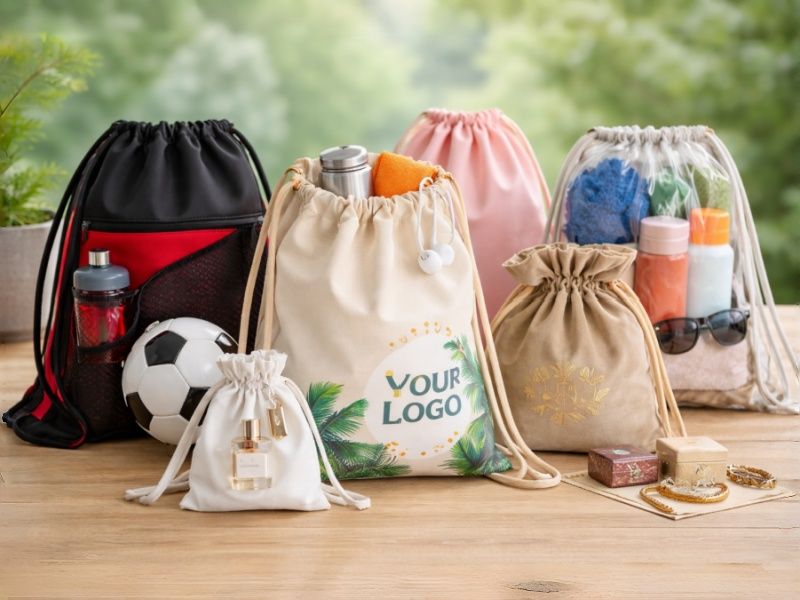
At a glance, it is just a soft bag with a cord closure. But in actual use, it can sit in very different roles. It can be a low-cost event giveaway. It can be a gym carry bag. It can be a retail packaging pouch. It can be a shoe bag, a dust bag, a gift bag, a merch item, or even a light travel backup bag folded inside a suitcase. That is why this product keeps showing up across sports programs, schools, retail brands, beauty sets, trade events, and promotional campaigns. Current catalog and product listings still show drawstring bags across polyester sport packs, cotton styles, clear styles, non-woven options, and higher-touch gift pouches, which says a lot about how flexible the format remains.
The mistake is assuming all drawstring bags are basically the same. They are not. A cheap non-woven event bag and a well-made canvas or nylon drawstring bag serve very different goals. One is built for short-term distribution and cost control. The other may need better printing, cleaner seams, stronger cords, better abrasion resistance, or a more premium hand feel. In other words, the real value of a drawstring bag is not the closure itself. It is the fit between use scene, material, structure, print method, and order economics. That is where good sourcing decisions are made.
Featured Snippet
A drawstring bag is a soft bag that closes by pulling cords at the top opening. In many styles, those cords also act as shoulder straps, which makes the bag light, simple, and easy to carry. Drawstring bags are widely used for sports gear, school activities, promotions, retail packaging, travel organization, and gift sets. Compared with backpacks, they usually have fewer compartments, less structure, and lower cost, but they are faster to pack, easier to fold, and more practical for light-load use.
That is why brands still keep ordering them. The format is easy to understand, easy to distribute, easy to brand, and easy to adapt. But the best results come when the bag is specified with more discipline than most people expect. Material choice changes the whole impression. Cord thickness changes comfort. Size changes usefulness. Printing method changes how professional the bag feels. Even packaging matters when the bag is being sold, gifted, or packed together with another product. If you are planning a custom project and want a version that actually fits your brand, you can reach Jundong at info@jundongfactory.com.
What Is a Drawstring Bag and How Is It Different From a Backpack?
A drawstring bag is a lightweight soft bag that closes by cinching cords through a top channel. In many sport-pack styles, those cords also serve as shoulder straps. Compared with a backpack, it is usually simpler, lighter, cheaper, and easier to fold, but it offers less structure, fewer compartments, and less carrying comfort for heavy loads. That makes it better for light, quick-use carrying, while backpacks fit heavier daily use better.
The easiest way to understand a drawstring bag is to look at what it leaves out. It usually does not have a rigid body. It often does not have padded shoulder straps. Many versions do not have a laptop sleeve, organizer panel, or reinforced base. Instead, the bag depends on a simple cut-and-sew body, a top hem or casing, and a cord system that both closes and carries the bag. That construction is part of the reason the style stays relevant: fewer components often mean lower cost, faster production, and easier bulk distribution.
A backpack serves a different job. Backpack comparisons published by current bag sites consistently frame the backpack as the better choice for heavier loads, better organization, and longer wear comfort, while drawstring bags are framed as better for lightweight trips, gym gear, quick errands, and casual use. That distinction matters for product planning. If the end user will carry shoes, a towel, event handouts, or spare clothes, a drawstring bag may be exactly right. If the end user will carry a laptop, books, chargers, and lunch every day, the format starts to show its limits.
| Feature | Drawstring Bag | Backpack |
|---|---|---|
| Closure | Cinch cord top | Zipper or flap |
| Structure | Soft, unstructured | More structured |
| Compartments | Usually minimal | Usually multiple |
| Carry comfort | Better for lighter loads | Better for heavier loads |
| Portability | Folds easily | Bulkier |
| Best fit | Events, sports, spare carry, packaging | School, commuting, heavier daily use |
This comparison also helps explain why often confuse the two categories at the start of a project. A drawstring bag is not automatically a cheap backpack substitute. It is a separate format with its own strengths. When specified well, it can do a better job than a backpack for mass distribution, gym programs, seasonal promotions, retail add-ons, and branded gift packaging. The right is not “Which one is better?” It is “Which one matches the carrying task better?”
What Is the History of the Drawstring Bag and Why Is It Still Popular Today?

The history of the drawstring bag is much older than modern sports packs. Museum and historical references show that people used pouch-style bags closed with cords long before today’s retail and promotional versions. Medieval purses and pouches often hung from belts and closed with drawstrings, while early nineteenth-century reticules were small drawstring handbags used to carry personal items. The modern drawstring bag stays popular because the format is still practical: light, flexible, easy to make, easy to brand, and useful in many settings.
The historical trail matters because it shows that the core idea never depended on one single trend. People have long needed a simple way to gather and carry small items. The Metropolitan Museum notes that medieval purses closed with drawstrings and hung from belts before clasped purse styles became more common in the fifteenth century. That means the drawstring principle is not a modern shortcut. It is a long-standing bag solution built around convenience.
The Glanmore museum’s notes on the Victorian reticule show another important shift. These small drawstring bags were carried by women and used for essentials such as calling cards, money, and toiletries. In other words, the drawstring format has not only served utility. It has also served presentation, style, and personal carry. That same dual role still exists today. One drawstring bag may be purely functional. Another may be intended to feel premium, giftable, or fashion-adjacent.
What changed over time was not the basic logic. What changed was the material palette and the business role. Today’s drawstring bags can be made in polyester, cotton, satin, velvet, mesh, clear plastic, non-woven polypropylene, nylon, RPET, Tyvek, and more. That allows the same basic closure format to move into completely different jobs: shoe storage, beauty packaging, sports kits, branded merch, giveaway programs, and travel organization. History explains why the category survived. Material and branding explain why it still scales.
Which Types of Drawstring Bags Are Most Common?
The most common drawstring bag types fall into a few practical families: sport drawstring backpacks, promotional cinch bags, cotton or canvas pouches, non-woven event bags, clear drawstring bags, mesh utility bags, and premium fabric pouches such as satin or velvet styles. The structure may look similar, but the intended use is very different. The best way to classify them is by job, not by closure alone.
The most visible type is the classic sport-pack. This is the lightweight backpack-style version with two back cords and a soft body, often made in polyester. It is common in school activities, gym use, team programs, and event distribution. Product listings across promotional platforms still show these as one of the most active categories, with many low-cost styles, pockets, reflective details, and color options.
Then there is the promotional and event bag group. These are often built for cost control first. Non-woven polypropylene, lighter polyester, or simple budget constructions are common here. They work when the goal is wide distribution, logo visibility, or an easy bag for handouts and take-home materials. They are not always meant to become long-term carry pieces, so the design priorities are different from a retail or private-label project.
A third group is the retail and packaging pouch. This includes cotton, canvas, satin, velvet, muslin, and other softer-touch materials used for beauty products, jewelry, accessories, shoes, gifts, candles, or premium kits. These bags do not have to function like sport packs. They need to feel right in the hand, protect the product, and present the product well when opened. That is why the same “drawstring bag” label can cover both a seventy-cent giveaway and a much more refined packaging component.
There are also specialist formats. Mesh drawstring bags work well when airflow matters. Clear bags fit security-sensitive or visibility-driven use. Shoe and dust bags protect products during storage and transit. Travel organizer pouches help separate garments, accessories, or toiletries. Good development starts when these use cases are treated separately instead of being forced into one generic bag spec. If you are unsure which type fits your project, send your target use, size, and artwork to info@jundongfactory.com, and Jundong can help narrow the bag style before sampling.
Which Materials Are Best for a Drawstring Bag?

There is no single “best” material for every drawstring bag. The right material depends on what the bag needs to do, how long it needs to last, what it needs to look like, and how much cost pressure the project has. Polyester is common for sport packs and giveaways, nylon works for stronger performance use, cotton and canvas suit natural or retail-friendly looks, non-woven polypropylene suits budget distribution, and satin or velvet are better when a softer, more premium feel matters.
Material selection is where many projects either become more convincing or fall apart. A team may think it is ordering “drawstring bags,” but the real choice is between very different product identities. A 210D polyester sport pack communicates speed, practicality, and cost efficiency. A cotton pouch feels calmer and more natural. A velvet pouch signals gift value. A clear PVC bag emphasizes visibility and wipe-clean practicality. A jute or burlap bag pushes in a rustic direction. The closure system may stay the same, but the message changes completely.
Here is a simple way to think about the main materials:
| Material | Best Fit | What It Does Well |
|---|---|---|
| Polyester | Sports packs, mass giveaways, school programs | Light, printable, cost-friendly, fast to scale |
| Nylon | Travel, commuting, stronger everyday use | Better abrasion resistance, stronger feel |
| Cotton / Canvas | Retail, natural branding, gift and merch | Softer hand feel, natural look, good print surface |
| Non-woven PP | Events, low-cost distribution | Budget-friendly, lightweight, easy for bulk programs |
| Mesh | Gym gear, shoes, wet or ventilated items | Airflow and visibility |
| Clear PVC / Vinyl | Security venues, beach, sports access | Visibility, wipe-clean use |
| Satin / Velvet | Beauty, jewelry, gift packaging | Premium touch, softer presentation |
| RPET | Eco-positioned programs | Recycled story with familiar performance feel |
Current product and fabric guides support the same broad pattern. Polyester remains one of the most common choices because it balances durability, print quality, and cost. Nylon is often positioned as a stronger, more rugged step up for heavier use. Cotton and canvas stay popular for natural-feel retail use. Non-woven polypropylene remains common in budget bags. Satin and velvet are used when feel and presentation matter more than hard-wearing sport performance.
A useful rule is this: Do not choose material by trend alone. Choose it by failure risk. If the bag may rub against shoes, get stuffed into lockers, or be reused often, go stronger. If the bag is there to elevate a gift or protect a boxed product, surface feel matters more. If the bag is for a large handout campaign, print stability and cost may matter most. That is why sampling should not stop at color. You need to touch the fabric, test the cord feel, and look at how the bag behaves when actually loaded.
Who Uses Drawstring Bags, and Why Do Brands Still Order Them in Bulk?
Drawstring bags are still ordered in bulk because they are one of the few bag formats that combine low complexity, wide usefulness, easy branding, and flexible price levels. Current promotional and catalog still place them in schools, sports teams, church groups, camps, trade events, corporate giveaways, shopping use, and lightweight everyday carry. That wide spread matters. A bag does not need to be expensive to stay useful. It needs to be easy to keep and easy to reuse.
Schools and sports programs like them because they are light and simple. One bag can hold shoes, a change of clothes, a towel, or practice gear. Event organizers like them because they are easy to stack, easy to hand out, and easy to logo. Retail and beauty brands like them when the bag can do double duty as packaging and after-use storage. Travel users like them because they fold flat and take almost no room when empty. Those are very different audiences, but the same underlying advantages keep showing up.
Bulk ordering also makes more sense with drawstring bags than with more complex bag styles because the barrier to distribution is lower. People generally know how to use them. They do not need instructions. They are light to ship. They give visible logo area without requiring a rigid structure. That makes them attractive for campaigns where cost per piece, speed, and reach matter. Current product still show bulk-friendly pricing, low opening quantities on some stock styles, and quick ship timelines, which helps explain why the format has stayed active.
But a bulk order only works well when the bag has a real reason to exist after distribution. That is where many branded bags fail. If the fabric feels weak, the cords feel rough, the opening is awkward, or the size is wrong, the bag gets used once and forgotten. The stronger projects are the ones that match the bag to a believable habit: gym, shoes, travel sorting, beauty storage, school extras, merch carry, event kits, or lightweight shopping. That is what turns a simple bag into something people actually keep.
How Does a Custom Drawstring Bag Sample and Production Process Work?
A custom drawstring bag project usually moves through a practical sequence: briefing, material and size selection, artwork review, prototype or sample, revision, pre-production confirmation, bulk production, packing, and shipment. The best results come when teams lock the bag’s job early. That means deciding what the bag must carry, how it should look, how the logo should be applied, and what price level the project needs to stay within before sampling begins.
The brief stage is more important than many teams think. A sketch or reference photo is helpful, but it is not enough on its own. A usable brief should include size, intended contents, fabric target, color target, cord style, printing method, expected quantity, and packaging plan. Even for a simple cinch bag, these decisions change the result. A bag meant for a team giveaway may need a wide printable front panel and fast output. A bag meant for premium gift packaging may need softer fabric, cleaner seams, and a more elegant cord.
Sampling should test more than appearance. It should test opening and closing feel, cord comfort, bottom depth, panel balance, logo clarity, and actual carrying behavior. A drawstring bag can look fine when laid flat and still feel wrong when filled. Cords may be too thin. The opening may be too tight. The body may collapse awkwardly. Or the logo placement may distort when the bag is loaded. These are sample-stage problems, not bulk-stage surprises.
A disciplined sample flow often looks like this:
- Project brief confirmed
- Material, color, and logo method selected
- Sample made
- Size, print, stitching, and cord reviewed
- Revisions made if needed
- Pre-production sample approved
- Bulk output begins
- Packing and shipment confirmed
For teams building a branded program rather than a one-off order, that sample stage is where repeatability is won or lost. Jundong usually advises locking not just the look, but also the fabric reference, cord reference, print position, tolerance, and packing method before bulk output starts. That reduces drift between early approval and final delivery. If you want a custom drawstring bag developed around your own use scene, you can send specs or reference photos to info@jundongfactory.com.
What Affects Drawstring Bag Price, MOQ, and Lead Time?
Drawstring bag price is mainly shaped by material, size, construction, logo method, quantity, and packing requirements. Current promo listings show how wide the spread can be. Some stock-style non-woven or basic drawstring bags are listed from around $0.74 or around $1.15–$1.47 each, while other versions with pockets, special panels, or more upgraded materials move higher. Some catalog items also open at 50 pieces, while others start at 75 or 125. These figures are useful as reference, but they do not represent every custom project.
The first cost driver is material. A basic non-woven giveaway bag and a canvas retail pouch are not competing in the same logic. Polyester sport packs may stay efficient at scale, while nylon, heavier canvas, special textures, recycled fabrics, or premium packaging fabrics usually push the cost higher. The second driver is construction. A flat bag is cheaper than a bag with a gusset, zipper pocket, lining, reinforced corners, or heavier cords. The third is decoration. A simple one-color print is very different from embroidery, woven labels, sublimation, metallic detail, or a premium patch.
MOQ is closely tied to those choices. Stock promotional platforms often show low opening quantities because they are decorating existing styles. A true custom project is different. The moment you change size, fabric, panel layout, cord, label system, or packaging, the economics shift. Material purchasing, print setup, and labor planning all start to matter more. That is why the best way to discuss MOQ is not as one fixed number, but as a balance between bag complexity, fabric type, and target unit cost.
Lead time follows the same logic. A stock bag with simple decoration can move much faster than a custom bag that needs special fabric booking, dye matching, sample approval, and export packing. sometimes focus only on the bag body and forget that lead time can also move because of hangtags, inserts, barcode stickers, carton marks, or individual packaging. If you are planning a launch, event, or seasonal program, build time around the full pack-out, not just the sewing line.
A practical way to estimate a project is to ask for three versions early:
Version A: best price baseline
Version B: balanced version
Version C: upgraded version
That gives a clearer view of where cost is moving and where it is not. If you already have a target quantity and want Jundong to estimate the most sensible construction path, email info@jundongfactory.com with your size, fabric idea, print requirement, and delivery target.
How Do You Choose the Best Drawstring Bag Factory?
The best drawstring bag factory is not the one with the lowest initial quote. It is the one that can keep the project clear, repeatable, and commercially sensible from sample through delivery. For a simple bag category, the risk is often hidden in details: weak fabric choice, uncomfortable cords, poor seam control, fuzzy printing, unstable color, or packaging errors. A strong factory helps prevent those problems before they become expensive.
Start with material depth. Can the factory really support the fabric families your project may need, or only the most standard versions? A useful partner should be able to discuss polyester, nylon, cotton, canvas, non-woven, clear materials, or premium pouch fabrics in practical terms, not just say “we can do it.” They should also be able to explain what changes when you move from one to another: print result, cost, stiffness, weight, and delivery impact.
Then look at sampling discipline. A bag factory worth working with should not rush straight into bulk talk. It should ask what the bag will carry, where it will be used, what look matters, and what cost ceiling matters. It should also be comfortable revising details such as cord thickness, bottom shape, pocket placement, or print size after a first sample. A simple bag still deserves a real development process.
Quality control matters even more than catalog width. Ask how incoming material is checked. Ask how print placement is controlled. Ask how cord routing and seam quality are reviewed. Ask what happens if the bag is being packed with inserts, stickers, or mixed SKUs. Many bag projects do not fail because the sewing was impossible. They fail because the execution was loose.
Communication is the last filter. You need a team that can explain tradeoffs clearly. Not every project should be pushed into the cheapest version. Not every project needs a premium version either. The right factory helps you land in the middle where use, look, cost, and timing still make sense together.
For teams developing drawstring bags alongside other bag categories, Jundong can be a practical choice because the company already works across a wide product scope and multi-material bag development, with support in design, sampling, quality control, and export coordination. If you want to compare a few directions before making a decision, send your concept to info@jundongfactory.com and ask for a sampling path rather than only a fast quote.
Top 10 FAQs About Drawstring Bags
FAQ 1. What material is best for a custom drawstring bag?
The best material depends on what the bag needs to do after it leaves the carton. This is the part many teams rush, and it is also where many projects go wrong. A drawstring bag used for a sports event, a school program, a beauty gift set, and a retail add-on should not all be built the same way.
If the bag is meant for lightweight sports use, gym gear, or event distribution, polyester is often the most practical choice. It is light, easy to print, and usually keeps the total cost under control. If the bag needs a more durable feel, better abrasion resistance, or a slightly cleaner finish, nylon can be a stronger option. For brands that want a more natural, softer, or more lifestyle-driven appearance, cotton and canvas often work better. If the project is mostly about short-term distribution at the lowest cost, non-woven fabric may be enough. For beauty, jewelry, candles, or gift packaging, velvet, satin, or softer pouch materials usually create a more refined first impression.
| Material | Best For | Main Advantage |
|---|---|---|
| Polyester | Sports, events, school use | Light, practical, easy to print |
| Nylon | Repeated use, stronger bags | Better wear resistance |
| Cotton / Canvas | Lifestyle, retail, gift use | Natural look and feel |
| Non-Woven | Budget distribution | Lower cost |
| Velvet / Satin | Beauty, jewelry, gifting | Softer, more premium feel |
The right way to choose is not by trend. It is by load, frequency of use, brand positioning, and target cost. A fabric that looks nice in a swatch book may perform poorly once shoes, bottles, or daily friction enter the picture. A strong project usually starts with one simple line: What will this bag actually carry, and how long should it stay in use?
FAQ 2. What size should a drawstring bag be?
The right size should be based on the bag’s real job, not just what looks standard on a sketch. Many teams choose size too early, often by copying another bag they saw online, and later find out the opening is too tight, the body is too short, or the overall shape feels awkward once the bag is filled.
For a lightweight sport-pack style, a common body size often falls around the everyday carry zone, large enough for shoes, a T-shirt, a towel, or event handouts. But that “common” size is not always right. A youth program bag may need a smaller body and thinner cords. A trade event bag may need to fit brochures, samples, and a water bottle without looking stuffed. A retail packaging pouch may need a slimmer shape that fits neatly around a box, bottle, or folded textile. A shoe or dust bag usually works better when it follows product dimensions closely instead of using a generic loose size.
A useful way to confirm size is to review three things together:
1. What goes inside
2. How full it should look
3. How the bag should feel in the hand or on the back
Do not forget the effect of the top opening. Two bags can share the same body width and height but feel very different if the drawstring channel, seam allowance, or depth is handled differently. Sample review is where this becomes obvious. A bag that looks correct when laid flat may feel too narrow once the cords are pulled and the opening closes around the contents.
The safest approach is to test size against the actual items. That sounds basic, but it prevents expensive mistakes. In drawstring bag development, a few centimeters can change the whole result.
FAQ 3. Are drawstring bags only for promotions, or can they also work for retail and brand programs?
They can absolutely work for retail, gift sets, brand programs, and repeat-use projects. The problem is not the drawstring format itself. The problem is that many people only associate it with cheap event giveaways. That happens because low-cost versions are common, visible, and widely distributed. But the format is much more flexible than that.
A drawstring bag becomes “cheap-looking” when the wrong combination is used: thin fabric, weak cords, flat construction, poor print, and an unbalanced size. The same format can look far more considered when the project uses better fabric weight, cleaner sewing, stronger corner reinforcement, more deliberate proportions, and a logo method that suits the surface. A cotton pouch for candles, a velvet bag for jewelry, a canvas bag for branded kits, or a nylon drawstring bag for a sports collection can all feel completely different from a basic event handout.
This is why it helps to stop asking, “Is a drawstring bag premium or cheap?” and start asking, “What role should this bag play?”
That role could be:
- Light carry bag for a sports or school program
- Gift pouch for beauty or accessories
- Dust bag for shoes or leather goods
- Bonus bag packed with a product set
- Retail add-on that people keep using
- Merch item tied to an event or collection
When the bag has a believable use after delivery, it stays in circulation longer. That makes the branded impression stronger. If your team wants a drawstring bag that feels more refined than a simple giveaway, Jundong can help compare fabric, structure, and logo options before sampling at info@jundongfactory.com.
FAQ 4. How strong are drawstring bags, and how much weight can they carry?
A drawstring bag can be surprisingly useful, but its strength depends almost entirely on how it is built. There is no single load figure that applies to every style, because material weight, seam construction, cord thickness, corner reinforcement, and bag dimensions all affect the outcome. A lightweight non-woven event bag and a reinforced polyester or canvas drawstring bag should never be judged by the same expectation.
In real use, the biggest weak are usually not the body panels. They are the corners, the cord attachment area, and the top channel. If those parts are poorly constructed, the bag may fail even when the fabric itself seems acceptable. That is why a bag that looks fine in photos can still disappoint quickly in actual use. It may wrinkle too much, stretch at the corners, or feel uncomfortable because the cords dig into the shoulders under weight.
A practical view of strength should include these four checks:
| Check Area | Why It Matters |
|---|---|
| Fabric weight | Heavier or denser material usually resists wear better |
| Corner reinforcement | Helps reduce tearing where cords pull hardest |
| Cord thickness | Affects both durability and carrying comfort |
| Stitching quality | Controls how well the bag holds shape under load |
For lighter jobs like spare clothes, shoes, brochures, or gym accessories, a standard construction may be enough. For repeated use, school programs, or more demanding daily carry, it often makes sense to upgrade the corners, adjust the cord, and choose a stronger fabric. The bag should be developed around the real carrying habit, not just the desired look. That is what keeps a simple bag from turning into a short-lived one.
FAQ 5. What logo method works best on a drawstring bag?
The best logo method depends on the bag’s fabric, surface texture, order quantity, and the kind of impression the brand wants to create. There is no universal “best” print option. A method that works beautifully on flat polyester may look weak on textured canvas. A finish that looks clean on cotton may not be the smartest choice for high-speed event distribution.
For many everyday drawstring bag projects, screen printing remains one of the most practical options. It is widely used, cost-efficient for simple artwork, and often gives solid logo visibility on polyester, cotton, canvas, and non-woven bags. If the design has multiple colors, gradients, or more complex image detail, heat transfer or other transfer-based options may be more suitable. If the bag is meant to feel more elevated, embroidery, woven labels, rubber patches, or even small metal logo plates can help move the overall look upward, depending on the bag style.
A simple comparison looks like this:
| Logo Method | Best Use | Visual Effect |
|---|---|---|
| Screen Print | Simple graphics, larger quantities | Clear, direct, practical |
| Heat Transfer | More complex artwork | Sharper detail |
| Embroidery | Heavier fabric, premium look | Textured, elevated |
| Woven Label | Small brand sign-off | Clean and subtle |
| Rubber Patch / Badge | Sporty or outdoor styles | Stronger visual identity |
One common mistake is choosing the logo method before the fabric is finalized. That often leads to a mismatch. The smarter order is this: bag function first, fabric second, logo method third. The logo should support the bag, not fight it. Good sample approval should always include a check for logo clarity, scaling, placement, edge quality, and how the logo looks once the bag is actually filled and cinched.
FAQ 6. What should be confirmed before approving a drawstring bag sample?
This is one of the most important parts of the whole project. A drawstring bag sample should never be approved based only on color and overall appearance. A bag may look acceptable in a flat photo and still perform poorly once it is packed, pulled closed, carried on the back, or handled repeatedly. That is why strong sample approval focuses on use behavior, not just looks.
Before approval, the team should confirm at least these areas:
- Body size and usable opening
- Fabric feel and thickness
- Cord thickness, touch, and sliding smoothness
- Corner construction and reinforcement
- Logo clarity, position, and scale
- Bag balance when filled
- Packaging method and labeling details
A very common mistake is checking the bag while empty. The better method is to fill it with the real items it is meant to carry. Then review how it closes, whether the opening feels tight, whether the bag shape collapses awkwardly, and whether the logo distorts. If the bag is for a sports program, test it with shoes, clothing, or a towel. If it is a gift pouch, test it with the actual product box. If it is for retail, look at how it photographs, how it opens, and how it feels in the hand.
It is also smart to lock a few written references before bulk output starts: approved fabric, approved cord, approved print location, approved size tolerance, and approved packing method. These details reduce drift between the sample and the final shipment. A simple bag deserves this level of control, because simple products often leave less room to hide small mistakes.
FAQ 7. How much does a custom drawstring bag usually cost?
The real is that price varies widely, and it should. A drawstring bag can sit in very different cost zones depending on material, size, construction, decoration, and packing. A low-cost event bag and a more refined branded bag are not the same product, even if both use a cinch closure.
The biggest price drivers are usually these:
| Cost Driver | How It Changes Price |
|---|---|
| Material | Polyester, nylon, canvas, velvet, and non-woven all behave differently in cost |
| Size | Larger bags use more fabric and often need stronger construction |
| Construction | Gussets, pockets, lining, or reinforcement increase work content |
| Logo Method | Simple print is different from embroidery or custom patches |
| Quantity | Larger quantities usually reduce unit cost |
| Packing | Individual bags, inserts, barcodes, and special cartons all add cost |
That means there is no useful single figure for “the price of a drawstring bag.” The better way to price it is by target level. Many teams ask for one quote, but a smarter method is to request three directions:
basic version, balanced version, and upgraded version.
This helps reveal which details are driving cost and which details matter most to the project.
It is also worth remembering that a lower opening quantity often means a higher unit cost. Fabric booking, print setup, labor handling, and packaging still need to be managed even when the order is not large. A small run can absolutely be done, but it should be planned with realistic expectations. If you want Jundong to review your target size, fabric idea, and branding method, you can send your concept to info@jundongfactory.com for a more grounded estimate.
FAQ 8. What is a realistic MOQ for a custom drawstring bag?
A realistic MOQ depends on whether the project is based on an existing style or a truly custom one. This distinction matters a lot. Many people see low opening quantities online and assume the same will apply to every project. In reality, those low figures often relate to stock styles with limited changes. Once the bag size, fabric, color, structure, or branding details start changing, the economics change too.
For a simple project using common fabric, straightforward printing, and standard construction, a relatively low opening quantity may still be workable. But the lower the quantity, the harder it becomes to keep the unit cost attractive. Even a simple bag still requires fabric preparation, printing setup, sewing time, checking, and packing. That is why a very small run often carries a noticeably higher unit price.
A more realistic way to view MOQ is this:
- Low-quantity trial runs can be useful for testing a concept
- Mid-level quantities usually offer a better balance of flexibility and cost
- Larger quantities often unlock the strongest pricing and more stable planning
The right quantity should match the bag’s purpose. A one-time event program may justify a different quantity plan than a year-round retail accessory. A launch bag, a school bag, and a gift pouch all behave differently in sales rhythm and reorder logic. Rather than chasing the lowest possible opening quantity, it is usually better to ask: What quantity gives this project a sensible cost without forcing the design into the cheapest version?
FAQ 9. How long does drawstring bag sampling and bulk production usually take?
Timing depends on how custom the project really is. A simple bag with common fabric, a standard size, and a straightforward print can move much faster than a project that needs special materials, custom color matching, multiple sample rounds, special labels, or retail packing requirements. This is why timing should always be discussed from the full project view, not just the sewing step.
A typical flow often includes:
- Project brief and artwork review
- Material and construction confirmation
- Sample development
- Revisions if needed
- Pre-production confirmation
- Bulk output
- Packing and shipment arrangement
In practice, delays often come from places teams forget to count. A bag may be ready, but the woven label is not. The print may be approved, but the packaging card is still changing. The fabric may be available, but the final color confirmation is late. Or the shipping carton marks may still be under review. These details matter because a drawstring bag is often part of a broader program, not a standalone item.
The best timing discussions are honest and detailed. It helps to separate the schedule into sample time, approval time, bulk time, and packing time. That makes the full path more visible. If the project connects to an event, launch, school season, or holiday window, it is wise to leave buffer time for one extra revision. In bag development, the tightest schedules are usually not ruined by the bag body itself. They are ruined by late decisions around details.
FAQ 10. How do you choose the right factory for a custom drawstring bag project?
The right factory is not simply the one that replies fastest or posts the lowest opening quote. The better choice is the one that understands the role of the bag, communicates clearly about trade-offs, and can keep the result consistent from sample through shipment. Drawstring bags look simple, which is exactly why weak execution shows up quickly. There is nowhere to hide poor fabric choice, rough cords, uneven print, weak corners, or careless packing.
A strong factory usually shows its value in five areas:
| What To Check | Why It Matters |
|---|---|
| Material understanding | Helps match fabric to real use instead of guessing |
| Sample discipline | Reduces mistakes before bulk output |
| Construction detail | Improves comfort, durability, and appearance |
| Quality control | Keeps the shipment closer to the approved sample |
| Communication clarity | Makes timing, pricing, and revisions easier to manage |
For brands planning a more considered drawstring bag program, it helps to work with a team that can support fabric selection, structure advice, sample revision, logo placement, quality checks, and export coordination together. That is where Jundong can be useful. If you want to compare material directions or develop a bag around your own target use, you can send your brief or reference images to info@jundongfactory.com.