 Skip to content
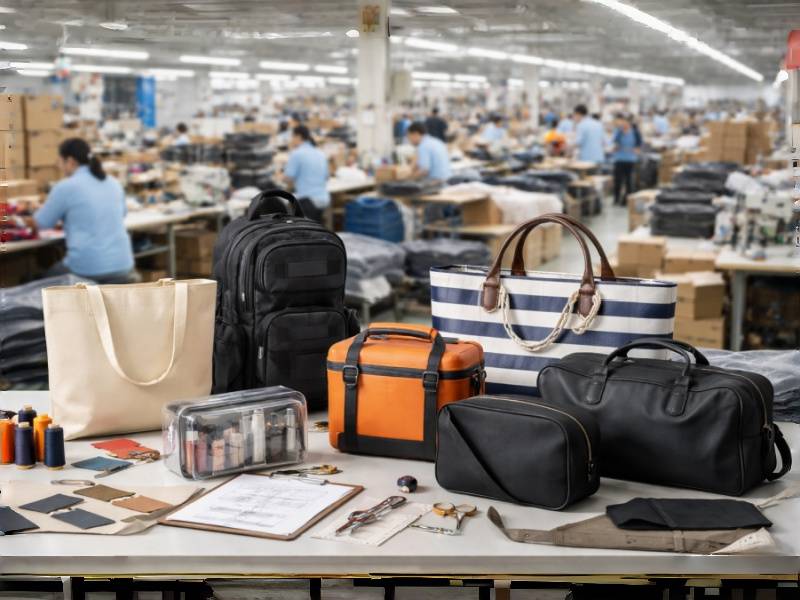
A bulk bag order rarely fails because of one dramatic mistake. More often, it fails because several small gaps quietly stack together. A fabric color is approved from a swatch but not from the final dye lot. A sample looks strong because the best technician made it by hand, but the line later uses a different seam allowance. A zipper is “similar,” not identical. Carton dimensions are left open until the last week. Someone changes a logo size in chat, but the old file stays in the workshop. By the time anyone notices, cutting is finished, trims are booked, and the project is no longer flexible.
That is why risk control in bag production is not mainly about reacting fast. It is about locking the right details at the right stage. Good teams do not wait for defects to appear. They build checkpoints before the defect becomes expensive. They treat the sample, the tech pack, the approved materials, the production line, the inspection checklist, and the shipping terms as one connected system. If one part is vague, the whole order becomes fragile.
To reduce mass bag production risks, you need to control six things early: factory fit, sample accuracy, material lock, production checkpoints, change approval, and shipment responsibilities. The safest projects do not chase the lowest quote or the fastest promise. They create a clear path from development to delivery: approved tech pack, golden sample, pre-production review, in-line quality control, final inspection by agreed criteria, and shipping terms that define who carries which cost and risk. This is how brands reduce delays, defect disputes, hidden cost creep, and sample-to-bulk inconsistency.
What Are the Biggest Risks in Mass Bags Production for Brands, Importers, and Private Label ?
The biggest risks are usually not random defects. They are predictable failures in spec clarity, material control, process discipline, timing, communication, and shipment responsibility. When teams treat bag production as only a sewing task, they miss the real danger: bulk failure often begins much earlier, at quotation, sample approval, trim booking, artwork version control, or packing setup.
Most troubled orders can be traced back to one of three root causes. The first is vagueness. The second is late decisions. The third is misaligned expectations between the brand side and the factory side. If your team has not defined what “approved” means, then each department will quietly define it differently. Sales may think the sample is confirmed. Design may still be adjusting logo scale. The workshop may still be waiting for final hardware color. All three believe the project is moving. In reality, risk is growing.
Another common mistake is treating visible defects as the only defects. In bag projects, many costly failures are commercial rather than cosmetic. Wrong carton quantity. Wrong barcode position. Wrong warning label language. Wrong handfeel. Wrong shoulder strap drop. Wrong zip pull finish. A bag can look “almost correct” and still be unusable for retail, e-commerce, gifting, or travel use.
A more useful way to think about risk is by stage:
| Stage | Typical Risk | What It Damages |
|---|---|---|
| Quotation | Incomplete assumptions | Price, lead time, feasibility |
| Sampling | Unmeasured approval | Sample-to-bulk consistency |
| Material booking | Wrong trim/fabric version | Appearance, function, color match |
| Bulk production | Weak line control | Defect rate, rework, delay |
| Packing | Incomplete packing spec | Carton errors, mixed SKUs, retail rejection |
| Shipment | Poor trade term choice | Hidden cost, responsibility disputes |
Why Do Good Bag Samples Still Fail in Bulk Orders?
A strong sample can still fail in bulk because a sample proves possibility, while bulk proves repeatability. Those are two different tests. A sample may be made by a senior technician with extra time, hand-picked materials, and close attention. Bulk is made by a line that must repeat the same result at speed, across many operators, with real lot variation in fabric, foam, webbing, hardware, and print application.
This is the most misunderstood part of custom bag development. People assume the sample is the miniature version of production. It is not. In many projects, the sample is more like a promise. It shows the desired direction. It does not automatically prove that every seam, reinforcement area, edge fold, zipper path, logo transfer, and packing method is stable at scale.
That is why some sample approvals are too visual and not technical enough. A team may approve the shape and the color, but fail to record stitch density, foam thickness, strap bartack placement, zipper brand or size, logo temperature setting, webbing width tolerance, or carton drop sensitivity. Later, when the first bulk units are made, the line follows what is written, not what was “understood.”
Inspection firms stress that pre-production control should verify that the correct materials, components, and accessories have been ordered before bulk begins, and that product inspection checklists should be built around the specific product requirements rather than generic quality language.
The practical fix is to create three approvals, not one.
Visual approval for look.
Technical approval for measurable construction details.
Commercial approval for labels, packaging, barcode, carton count, and shipment readiness.
If you only approve the first one, the project still has loose ends.
A useful rule is this: if a feature matters enough to complain about later, it matters enough to write down before bulk. That includes details often skip at sample stage, such as puller orientation, zipper stop position, tape color shade, inner pocket depth, edge paint tone, handle softness, and the exact distance between logo and top edge.
This is one reason Jundong’s bag projects are better handled through a sample-to-bulk control flow, not just a “sample approved, now produce” mindset. When a project needs a more careful review before mass production, your team can send drawings, photos, and target details to info@jundongfactory.com for a pre-bulk check.
Which Type of Bag Factory Is Best for Your Project: Factory-Direct vs Trading Company vs OEM/ODM Development Partner?

The best setup depends on your project, not on a slogan. Factory-direct often works well when your design is already clear and you want fast execution, tighter visibility, and direct line feedback. A trading company can help when you need wider sourcing across several categories. An OEM/ODM development partner is usually the better fit when your bag still needs design translation, structure advice, trim matching, and repeated sample refinement.
Many teams ask the wrong question here. They ask, “Which one is better?” The better question is, “Who owns the risk at each stage?” Who is checking pattern accuracy? Who is controlling trim substitutions? Who is updating the BOM? Who is checking whether the sample can really run on a line? Who will handle a problem when the first 1,000 pieces do not match the signed sample?
A direct factory gives you better access to the workshop reality. That matters when your project has demanding details such as structured panels, EVA shells, complex zipper tracks, special foam, stitched logo patches, or multi-material construction. You hear earlier when something is hard, slow, unstable, or likely to change price. That early discomfort is useful. It is often what prevents a bigger failure later.
A trading office may still be a good option if your project is broad, seasonal, or spread across many unrelated product types. But then your protection depends heavily on the strength of their technical follow-up. If they mainly relay messages and prices, rather than manage specifications and corrective action, they add distance without adding control.
Third-party audit providers describe technical and production audits as a way to assess a factory’s systems, processes, facilities, and capability, not just its sales pitch. That is the right lens to use when comparing partners. You are not choosing who speaks best. You are choosing who can repeat your standard under pressure.
For many bag programs, the strongest partner is not the one with the lowest quote or the biggest catalog. It is the one that can say, very clearly:
this part is safe,
this part needs a second sample,
this trim is risky,
this lead time is realistic,
and this specification must be locked before cutting.
How Do You Audit a Bag Factory Before You Confirm Price, MOQ, Capacity, and Production Process?
A proper factory audit should tell you how the factory works when things are normal and how it reacts when things go wrong. You are not only checking whether a workshop exists. You are checking whether the operation can protect your order from avoidable instability. That means looking at workflow, material control, sample room quality, workshop discipline, inspection practice, subcontracting logic, corrective action, and communication quality.
A basic online search or video call is not enough for this. Photos can show a neat workshop. They do not show whether the line records defects, whether incoming materials are separated by status, whether rejected trims are blocked, or whether operators follow the same seam and reinforcement method every time.
Start your audit with product fit. Ask to see projects close to yours in structure, material, and use case. A tote bag line is not proof of strength in tactical bags. A laptop sleeve sample is not proof of control in molded EVA cases. A cosmetic pouch workshop is not automatically ready for fireproof document bags or structured travel gear.
Then move to process depth. Ask these:
- How is sample information transferred to bulk?
- Who signs off on pattern changes?
- How are approved and unapproved materials identified?
- What happens if fabric arrives outside color tolerance?
- Is there in-line inspection, or only final checking?
- Are production problems escalated on the same day?
- Which steps are done in-house, and which are outsourced?
Technical audits are designed to assess a factory’s systems and identify gaps that could affect quality levels, while production audits evaluate facility reliability and capability. That is useful because the real purpose of an audit is not just selection. It is risk prediction.
One more thing matters a lot: how the factory talks about problems. A team that says “no problem” too quickly can be more dangerous than one that flags concerns early. The safer partner usually sounds more specific. They ask for tolerances. They ask for packaging details. They ask whether a logo is measured from the top seam or the finished edge. They ask who approves changes. Specific are a good sign.
When Should You Lock Materials, Tech Pack, Golden Sample, Logo Method, and Packaging Details?
You should lock these details before bulk starts consuming irreversible cost. In practice, that means before cutting, before trim booking becomes fixed, and definitely before your team assumes the quoted lead time is final. The later you lock core details, the more expensive every correction becomes.
Many teams wait too long because they separate “small details” from “important details.” In bag projects, that split is dangerous. A logo finish is not a small detail if the heat transfer cracks. A zipper pull is not a small detail if the replacement changes the look. A carton size is not a small detail if it raises freight cost or causes retail handling problems.
The safest locking sequence usually looks like this:
- Tech pack lock Final dimensions, structure, pocket layout, strap details, reinforcement areas, logo size and position, stitch notes, tolerance notes.
- Material and trim lock Fabric code, coating, backing, color reference, zipper type, puller finish, webbing, buckle, foam, lining, label material.
- Golden sample lock The signed reference that matches the approved spec.
- Packing lock Polybag, tissue, insert, hangtag, barcode, carton quantity, carton size, shipping mark, warning label, assortment method.
Initial production check services are built around this logic. Intertek describes IPC as verification of raw materials, components, and accessories prior to production, while QIMA notes that inspection checklists should match the product’s exact requirements and can be customized to the client’s own specs.
Packaging also deserves earlier attention than many teams give it. QIMA’s packaging checklist guidance highlights basics that often get ignored until late: correct packing materials, correct quantity per carton, and correct carton marking. These are simple items, but late mistakes here create shipping claims, warehouse confusion, and retail rejection.
A helpful mindset is this: lock what is hard to reverse first. Fabric dye lot. Molded parts. Printed logos. Branded trims. Carton size after master pack calculation. Those choices shape cost, lead time, and risk. They should never be left floating while bulk planning is already underway.
How Do Pre-Production Checks, In-Line QC, and Final Inspection Reduce Custom Bag Defect Risks?
These checkpoints reduce risk because they catch different kinds of failure at different times. Pre-production checks catch wrong materials and wrong setup before the line gains speed. In-line checking catches process drift while correction is still affordable. Final inspection catches shipment-level problems before the goods leave. One checkpoint alone is never enough. Each one protects a different part of the order.
This is where many teams oversimplify quality control. They believe final inspection is the main defense. It is not. Final inspection is the last defense. If your line has been sewing the wrong reinforcement method for a week, a final check may discover the issue, but it cannot erase the lost time, material, and labor.
Intertek describes Initial Production Check (IPC) as inspection of raw materials and components prior to production, while Final Random Inspection (FRI) begins only after production is complete and the goods are ready and packed for shipment. QIMA describes on-site product inspections as tailored to the item and focused on specifications, dimensions, function, appearance, performance, and workmanship.
A practical control structure looks like this:
| Control Stage | What It Should Catch | Best Use |
|---|---|---|
| Pre-production check | Wrong fabric, trim, labels, color, components | Before bulk starts |
| First-line / early in-line check | Wrong construction method, stitch density, logo placement, pocket layout | As soon as first units are made |
| During production check | Process drift, operator inconsistency, defect trends, packing mismatch | Mid-production |
| Final random inspection | Shipment readiness, defect rate, assortment, packing, carton marks | When goods are complete and packed |
Inspection acceptance often relies on AQL, which sits under ANSI/ASQ Z1.4. ASQ explains that Z1.4 is an acceptance sampling system with normal, tightened, and reduced plans for attribute inspection. That matters because inspection is not just “good” or “bad.” It is a statistical decision method that only works when defect categories and acceptance criteria were defined clearly in advance.
So the real protection is not only the inspection visit. It is the inspection standard. If you do not define what counts as critical, major, or minor for your specific bag, even a formal inspection can still leave room for dispute. For example, a loose thread may be minor on one project. On a premium retail gift bag, it may be unacceptable. A small print deviation may be minor on a giveaway tote, but major on a luxury cosmetic bag.
The strongest factory teams build feedback loops between these stages. A defect seen at in-line stage should update operator guidance, work instruction, and final inspection attention. That is how control becomes active rather than ceremonial.
Is the Lowest Price Really the Best Choice, or a Hidden Risk in Mass Bag Production?

The lowest price is often the most expensive option after the order starts. Cheap quotes can hide weaker reinforcement, lighter materials, lower hardware grade, shorter inspection time, unstable trim sourcing, unrealistic lead time, or vague packing assumptions. A low quote is not dangerous by itself. It becomes dangerous when the team cannot see what was removed to make it low.
A bag quote is not one number. It is a bundle of assumptions. Fabric weight. Coating. Foam density. Zipper quality. Stitch count. Labor time. Packaging level. Inspection intensity. Rework tolerance. Delivery term. If two offers are far apart, the correct next step is not excitement. It is decomposition.
One of the easiest ways to destroy margin is to save money in the wrong place. For example, a team might accept a cheaper quote with less robust hardware or lower foam density, then spend more later on claims, returns, rushed rework, replacement stock, or air shipment to recover a missed launch date. That is not a cheaper order. That is a shifted cost.
Trade terms matter here too. ICC states that Incoterms® are eleven three-letter trade terms used in contracts for the sale of goods and meant to clarify tasks, costs, and risk transfer. ICC guidance also notes that EXW can create problems in cross-border shipments because the handles export formalities, while FCA is often better suited to multimodal transport and places export clearance on the seller.
That means “price” should always be read together with:
spec level,
quality control level,
packing scope,
trade term,
payment term,
and recovery plan if there is a defect or delay.
A better sourcing habit is to compare offers scope to scope. Ask every factory to quote against the same BOM, same logo method, same packaging standard, same inspection expectation, and same trade term. Without that, you are not comparing cost. You are comparing different realities.
Who Should Approve Changes During Production, and How Do You Control Delay, Rework, and Communication Risk?
Production changes should be approved by a small named group, not by everyone who joins the chat. The safest setup is one commercial owner, one technical owner, and one factory-side project lead. If decision rights are blurry, small changes pile up, line confusion grows, and the order starts drifting without anyone feeling fully responsible.
Many bulk problems are not quality failures. They are change-control failures. Someone approves a new zipper pull in a message. Someone else approves a logo resize verbally. The workshop receives one change but not the other. The sample photo is updated, but the BOM is not. Then the first cartons are packed using mixed information from three places.
A simple change matrix prevents a lot of pain:
- Green change: no effect on cost or lead time Example: typo correction on insert card.
- Yellow change: small effect on one area Example: lining color adjustment before cutting.
- Red change: likely effect on cost, tooling, materials, or lead time Example: size change, zipper spec change, logo process change, carton quantity change.
Every change should answer five questions:
What changed?
Who approved it?
When was it approved?
Which files were replaced?
What cost or time effect follows?
The factory side also needs one rule that is often ignored: no line change based on screenshot-only approval. If a change matters enough to alter sewing, printing, packing, or trimming, it should update the master production document. Chat messages are useful for speed. They are weak as a production record.
This is also where disciplined communication creates real savings. Fast replies help, but clear replies help more. A short message like “approved” is often risky. A safer message is: “Approved: logo width 45 mm, centered to pocket, black matte transfer, update pack list and artwork to Rev C.” That kind of instruction reduces both error and argument.
When a project has many SKUs, colorways, or retailer-specific pack-outs, Jundong can support a more structured change-control path before bulk starts. For project reviews or risk checks, reach out at info@jundongfactory.com.
How Long Does Mass Bag Production Take, and What Is the Safest Process From Sample to Shipment?
A safe timeline is rarely the shortest one. The safest process gives enough room for sample correction, material confirmation, pre-production review, bulk execution, final inspection, and export preparation. When teams compress these stages too early, they do not remove work. They only move risk deeper into the order.
The first mistake is to think that sewing time equals project time. In reality, the calendar is shaped by many linked steps: material booking, dyeing, logo files, sample revisions, trim lead time, workshop scheduling, inspection timing, carton confirmation, booking space, and customs documents. If one step is left open, the headline lead time becomes unreliable.
A cautious flow often looks like this:
- Development and quotation review Clarify structure, materials, target use, logo method, quantity, and packing scope.
- Sample stage Make first sample, review fit and function, correct issues, then approve golden sample.
- Material and pre-production lock Confirm bulk fabric, trims, labels, carton details, and work instructions.
- Bulk production Start with early-line review, continue with in-line control, then complete packing.
- Final inspection and shipment release Inspect finished goods, confirm documents, release shipment, monitor transit.
For transit itself, Freightos notes that rough estimates can be 1–3 days by express, 5–10 days by air, and 20–45 days or more by sea, while its April 2026 China-to-U.S. guide says sea freight door-to-door is often around 30–40 days. Maersk also notes that sea freight can commonly run 20–45 days, with peak seasons taking longer.
Import compliance also needs attention. U.S. Customs and Border Protection states that the importing and exporting community shares responsibility for compliance, and CBP says entry documents must be filed within 15 calendar days after arrival for formal entry. That is a reminder that shipment risk does not end when the factory closes the carton.
So, how long should you plan? Not by copying someone else’s promise. Plan backward from your launch date. Add time for one sample correction loop even if you hope not to need it. Add time for inspection. Add time for booking uncertainty in peak periods. The best delivery date is not the fastest theoretical date. It is the date that can still survive one real-world problem.
The Real Way to Reduce Bulk Bag Risk

The history of most failed bulk bag orders is not dramatic. It is procedural. Something was assumed instead of confirmed. Something was approved visually but not technically. Something changed, but the master file did not. Someone chased a low quote without checking scope. Someone treated final inspection as the only shield.
The safer approach is more disciplined, but also more profitable over time. Choose the right production partner. Lock the spec early. Build stage-based controls. Use written change approval. Compare price on equal scope. Treat shipment terms as part of risk control, not admin. That is how strong bag programs are built.
If your team is preparing a custom bag order and wants support on sample review, risk mapping, material lock, or bulk planning, Jundong can help you turn a vague project into a controlled production path. Contact info@jundongfactory.com.
Top 10 FAQs About Reducing Mass Bags Production Risks
1) Can one approved sample really protect a bulk bag order?
Not by itself. One approved sample is useful, but it does not fully protect a bulk order unless it is backed by a written spec, a signed reference sample, and a material list that matches what will actually go onto the line. A sample proves that a bag can be made. It does not automatically prove that the same result can be repeated across hundreds or thousands of pieces under real production conditions. That is why inspection firms separate early checks, in-line checks, and final checks instead of treating the sample as the only control tool. Intertek’s Initial Production Check is designed to verify that the correct materials, components, and accessories have been ordered before production starts, while QIMA’s inspection approach is built around product specifications, dimensions, function, appearance, performance, and workmanship.
The safer habit is to treat approval as a three-layer system. The first layer is visual approval: shape, color, handfeel, logo look, and overall balance. The second layer is technical approval: measurements, stitch method, seam reinforcement, zipper spec, webbing width, foam thickness, pocket depth, and tolerance. The third layer is commercial approval: barcode, hangtag, warning label, inner packing, carton quantity, and shipping mark. If only the first layer is approved, the project still has too many moving parts. That is why good teams keep a golden sample together with the latest drawing, BOM, logo file, and packing sheet in one controlled file set.
A simple rule works well here: if a detail matters enough to complain about later, it should be written down before cutting starts. That includes zipper tape shade, puller finish, logo distance from the seam, shoulder strap drop, inner label wording, and the exact carton assortment. For projects with multiple colors or retail pack-outs, this matters even more. If you want a second review before moving from sample to bulk, Jundong can help check whether the signed sample is really ready for production at scale. You can send your files to info@jundongfactory.com.
2) How many sample rounds are normal before bulk starts?
There is no single magic number, because the right number depends on how new the design is, how complex the construction is, and how strict the finish standard is. A very simple tote may move fast. A structured travel bag, EVA case, cooler bag, or multi-material private-label program often needs more than one development round. What matters is not chasing the smallest number of sample rounds. What matters is whether each round removes a real risk. When teams rush through development just to “save time,” they often push unresolved issues into bulk, where correction becomes slower and more expensive. Inspection and audit systems are built around this idea: prevent early, don’t only react late. QIMA’s technical audit model focuses on the factory’s systems, stock control, incoming material inspection, production process, and pre-shipment controls because those are the areas where unstable projects usually fail.
A practical way to think about sample rounds is this:
| Sample Stage | Main Purpose |
|---|---|
| Proto sample | Check shape, function, construction logic |
| Revised sample | Correct visible and structural issues |
| Golden sample | Lock the approved standard for bulk |
| PP sample | Confirm the bulk version with real materials and trims |
This sequence does not have to be rigid, but the logic is sound. A prototype should not be treated like a final approval tool. A golden sample should not be signed if the bulk fabric, final zipper, logo process, or packing method is still open. A PP sample is especially useful when the bulk materials differ from sample-room materials, or when the order includes special coating, print, or packaging requirements.
A good test is very simple: if your team still has open comments like “zipper can be better,” “logo maybe slightly smaller,” or “strap feels a bit stiff,” then the order is usually not ready for bulk. Vague discomfort becomes expensive fast once cutting begins. A slower sample stage often creates a faster bulk stage.
3) What should be locked before cutting starts?
Before cutting starts, you should lock everything that is hard to reverse without cost, delay, or shipment risk. That usually includes the final tech pack, finished dimensions, tolerance, material code, color reference, logo method, zipper model, puller finish, webbing, buckle, lining, foam, label content, hangtag, polybag requirement, carton quantity, carton size, and shipping mark. This sounds like a long list, but most bulk problems come from one of these items being treated as “small” and left open too long. Intertek’s IPC process exists specifically to verify that the correct raw materials, components, and accessories have been ordered to the approved spec before production proceeds.
The part many teams underestimate is packing. Packing is not just a shipping afterthought. It affects freight cost, warehouse handling, retailer acceptance, and even transit damage. QIMA’s packaging checklist highlights three critical items that inspectors review: product variety and quantity per carton, correct packing materials, and barcodes/labeling. It also notes that missing or illegible markings can cause fines or delays, and that customs may hold or reject shipments if required information is not visible on packaging.
A good lock sequence looks like this:
- Spec lock – dimensions, construction, pockets, reinforcement, logo position.
- Material lock – fabric, trim, hardware, foam, labels, lining.
- Sample lock – signed golden sample tied to the latest revision.
- Packing lock – unit packing, inserts, hangtags, assortment, cartons, marks.
If you leave any of these open while booking bulk materials, you are no longer controlling the order. You are hoping the order stays aligned by accident. That hope is where many claims begin.
4) When should a pre-shipment inspection be booked, and what can it really catch?
A pre-shipment inspection should be booked near the end of production, when the order is substantially complete and packed, not when goods are still halfway made. QIMA explains that a pre-shipment inspection is typically carried out when production is at least 80% complete, and its quantity check notes that to pass, 80% of the order must be finished and packed. This timing matters because a final inspection is supposed to judge real shipment readiness, not just early progress.
A proper pre-shipment inspection can catch much more than surface defects. It can verify quantity, dimensions, color, construction, labeling, artwork, packing, carton markings, and overall conformity to the approved sample and written spec. QIMA also notes that inspections use client-provided samples and specifications, and that checks can include product-specific tests such as zipper pull tests, seam-related checks, and fabric-related checks where relevant. That is why final inspection works best when you prepare a project-specific checklist instead of relying on a generic “look okay” standard.
What it cannot do is erase earlier mistakes cheaply. If the whole line has used the wrong reinforcement method or the wrong zipper spec for a week, the final inspection may still find the issue, but the rework cost will already be high. So the smartest setup is not PSI alone. It is IPC + in-line control + PSI. That creates protection at the beginning, in the middle, and at the end. If your order is valuable, seasonal, or tied to a launch date, skipping the final check usually saves very little and risks a lot.
5) Is AQL enough for bag inspection, or do we need a more detailed standard?
AQL is useful, but AQL alone is not enough. AQL gives you a sampling method, not a complete definition of what counts as acceptable for your specific bag. ASQ explains that ANSI/ASQ Z1.4 is an acceptance sampling system used with switching rules on a continuing stream of lots for a specified AQL, and that it provides tightened, normal, and reduced plans for inspection by attributes. In simple terms, it helps determine how many pieces to inspect and when a lot should pass or fail based on the number of nonconforming units found.
But this is where many teams make a mistake. They think quoting an AQL level automatically solves the quality problem. It does not. You still need a defect language that fits your project. For example, is a slightly slanted inside label minor, or is it major because this is a premium retail program? Is a loose thread acceptable on a giveaway tote, but not on a luxury cosmetic bag? Is a 3 mm logo shift acceptable, or not? AQL helps structure the sampling decision, but your defect classification still decides whether the inspection result is meaningful. QIMA’s inspection system is designed around checks tailored to the product and the client’s requirements, which is exactly why project-specific criteria matter.
The stronger way to use AQL is to combine it with three lists:
- Critical defects – safety, wrong product, missing required label, severe failure
- Major defects – saleability, function, visible damage, wrong construction
- Minor defects – small finish issues that do not affect use
Once those lists are written clearly, AQL becomes much more powerful. Without them, AQL is just a table without context.
6) What is the safest way to handle material, logo, or size changes after bulk has started?
The safest way is to treat every change as a controlled engineering and commercial event, not as a casual chat instruction. Once bulk has started, even a small change can affect cost, output speed, material loss, packaging fit, and shipment timing. A zipper pull change may seem minor, but it can alter the visual feel of the bag and require a new trim booking. A size change can affect pattern, fabric yield, foam size, carton count, and freight cost all at once. This is exactly why audit systems focus so heavily on process control, incoming materials, stock management, and production discipline. Those systems are what keep mid-order changes from turning into chaos.
A strong change-control path usually includes five items:
what changed, who approved it, when it was approved, which files were replaced, and what cost or lead-time effect follows. If one of those items is missing, the project becomes vulnerable to mixed instructions. The workshop may follow one revision, the sample room another, and the packing team a third. That is how “we already approved that” arguments begin.
It helps to separate changes into three levels:
| Change Level | Example | Typical Risk |
|---|---|---|
| Light | Insert card wording | Low |
| Medium | Lining color before cutting | Moderate |
| Heavy | Bag size, zipper spec, logo process | High |
The rule should be simple: no production change is valid until the master file is updated. Screenshots are useful for speed, but not strong enough as the final production record. If your team is managing many colors, SKUs, or retailer pack-outs, this discipline becomes even more important. It can save both margin and relationships.
7) How should we compare bag quotes without creating hidden risk?
The only fair way to compare quotes is scope to scope. If one factory is pricing 600D polyester with branded zippers, thicker foam, full inspection, and stronger export packing, while another is pricing lighter fabric, unbranded trims, lighter QC, and simpler carton setup, those numbers are not true comparables. A low number can look attractive at the quotation stage and become costly later through rework, claims, returns, air shipment, or missed launch timing. The right question is never just “Which price is lower?” The right question is “What exactly is included, and what was removed to make it lower?”. QIMA’s audit guidance is useful here because it points back to systems, stock management, incoming material inspection, and packing procedures—the areas where hidden quote differences usually show up later.
Trade terms are part of this comparison too. ICC states that are eleven three-letter trade terms used to clarify tasks, costs, and risks in delivery. That means you are not only comparing bag cost. You are also comparing who handles export clearance, who bears which transport risk, and where responsibility transfers. If two quotes use different delivery terms, the cheaper one may not really be cheaper once the full logistics responsibility is included.
A clean quote comparison sheet should include:
- material code and weight
- zipper and hardware level
- logo method
- packing detail
- inspection scope
- delivery term
- payment term
- tooling or sample charges
- lead-time assumption
When those items are aligned, pricing becomes much easier to trust. When they are not aligned, a “cheap” quote is often just an incomplete quote.
8) Which packing mistakes cause the most shipment problems in bag orders?
The most damaging packing mistakes are surprisingly ordinary: wrong assortment, wrong quantity per carton, weak outer cartons, incorrect barcode or shipping mark, and packaging that does not match the route or handling method. These problems often appear late because teams spend most of their attention on the bag itself and treat packing like admin work. But once goods leave the factory, poor packing can trigger warehouse confusion, retailer rejection, customs delays, freight claims, and damage in transit. QIMA’s packaging quality checklist highlights product variety and quantity per carton, correct packing materials, and barcodes and labeling as critical elements. It also notes that missing or illegible markings can lead to delays or fines, and customs may hold or reject shipments if required information is not visible.
Pre-shipment and container-loading checks are especially useful here. QIMA explains that PSI can confirm packing, carton specifications, quantities, and shipping marks before dispatch, helping avoid shipping delays and rework after shipment. Its container loading check also verifies that cartons reflect the correct quantity and that packaging contains the correct barcodes, labeling, and packing materials, while ensuring goods are loaded securely.
A practical packing review should cover three layers:
- Unit level – polybag, tissue, insert, hangtag, warning label
- Carton level – quantity, assortment, dimensions, weight, shipping mark
- Load level – pallet logic, stack stability, moisture protection, container loading plan
For a bag order, good packing is not decoration. It is product protection, freight control, and delivery accuracy in one system.
9) Which shipping term is usually safer for a factory-direct bag order: EXW or FCA?
For many cross-border bag orders, FCA is often the safer and cleaner choice than EXW, especially when the goods are moving in containers or through multimodal transport. ICC explains that EXW places very limited obligation on the seller and leaves export responsibilities with the , which can create complications when goods are crossing a border. ICC Academy goes further and strongly encourages parties to consider FCA instead of EXW in such cases. Under FCA, the seller delivers the goods to the carrier or nominated party at the agreed place and is responsible for export clearance. FCA is also described as suitable for multimodal shipments, which makes it practical for many bag orders moving by truck plus sea freight.
Why does this matter so much? Because trade terms are not just legal wording. They shape risk transfer, loading responsibility, export documentation, cost visibility, and dispute potential. Under EXW, the may carry more administrative and operational burden than expected. Under FCA, the handover is often more aligned with the reality of international cargo movements. ICC also states that are meant to clarify the tasks, costs, and risks involved in delivery, which is exactly why the wrong term can create misunderstandings even when the bag itself is produced correctly.
That does not mean FCA is always the perfect option. It means the term should be selected deliberately, based on who controls export procedures, loading, booking, and the first risk-transfer point. If the commercial side is clear but the delivery term is vague, the project is still exposed.
10) What should we do if defects are found before shipment or after arrival?
The best response depends on when the issue is found, how serious it is, and whether the defect is cosmetic, functional, packing-related, or compliance-related. If the issue is found before shipment, you still have room to choose among rework, sorting, partial release, replacement, packing correction, or shipment hold. That is why pre-shipment inspection is so valuable. QIMA describes PSI as the final opportunity to take corrective action before an order is completed and shipped, and notes that it helps protect importers from paying for defective or unsellable goods.
A useful first triage looks like this:
| Defect Type | Best First Move |
|---|---|
| Wrong product / wrong logo / wrong label | Stop shipment, isolate affected stock |
| Function issue | Re-test, rework, check batch spread |
| Minor appearance issue | Grade severity, sort if needed |
| Packing error | Correct cartons, marks, counts before dispatch |
| Transit-damage risk | Strengthen packaging, repeat loading review |
If defects are found after arrival, speed matters, but documentation matters even more. You need clear photos, lot traceability, carton reference, quantity breakdown, and a decision path: refund, replacement, credit, claim, or rework support. If the goods are entering the U.S., customs timing can also matter. CBP states that entry documents must be filed within 15 calendar days after a shipment arrives, and Freightos notes that transit times can vary widely by mode, with rough estimates of 1–3 days for express, 5–10 days for air, and 20–45 days or more for sea, while China-to-U.S. ocean shipments are often around 30–40 days door to door under regular conditions. Those timing realities are one more reason not to leave problem-solving until after departure.
If your team wants a more controlled pre-bulk review or a stronger defect-response path before shipment, Jundong can help assess the spec, sample, packing, and inspection plan. Contact info@jundongfactory.com.