Skip to content
How to Avoid Quality Issues in Custom Bags
Quality issues in custom bags rarely come from “bad luck.” They come from unclear specs, weak stress-zone rules, uncontrolled materials, and missing proof at key checkpoints. This guide shows a practical way to prevent the classic failures—broken straps, zipper jams, logo peeling, size drift, and packing damage—before bulk production starts. You’ll get a customer-ready playbook: how to build an approval package, how to use PP samples, what QC evidence to request, and how to keep multi-SKU orders consistent. Use it to cut returns, protect timelines, and make reorders smooth.
Quality Failure Map: Common Bag Defects
A bag is a system, not a fabric choice. When quality problems appear, they usually land in one of these buckets:
(1) Stress-zone failures (load and pull and repeat use)
Common symptoms: strap tearing, handle stitch blowout, D-ring pull-out, base corner cracking, seam splitting. The root cause is rarely “thin fabric” alone. It’s usually missing reinforcement rules: no backing, inconsistent stitch patterns, wrong thread or tension, or weak layer stacking. Customers should treat strap anchors, zipper ends, and base corners as “must-lock” construction rules.
(2) Moving-part failures (zippers, buckles, hardware alignment)
Symptoms: zipper jamming, separating, end splitting, slider failure, buckle cracking. These defects appear when the zipper grade is under-specified, tape alignment is uncontrolled, or the zipper-end finish is weak. Many programs skip defining what “pass” looks like: smooth open/close under realistic load, correct end stops, clean alignment, and no waviness.
(3) Branding failures (logo durability, placement drift, color mismatch)
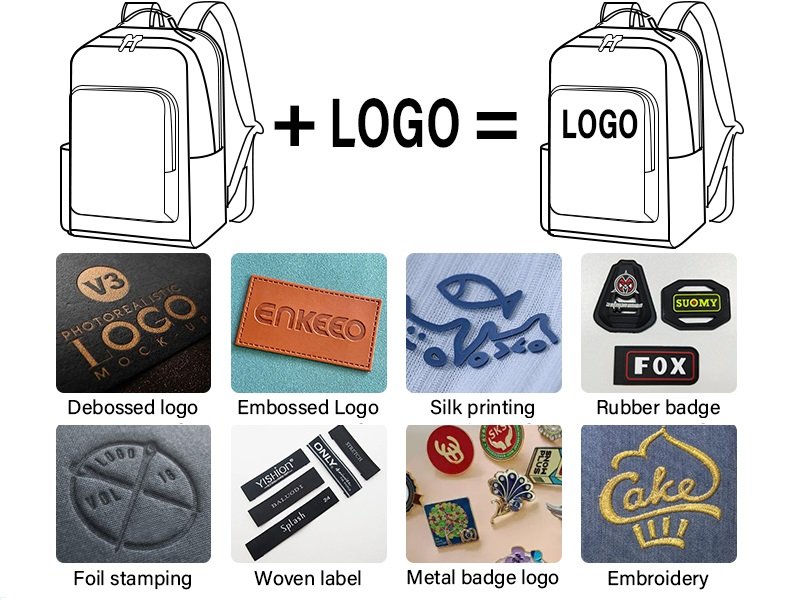
Symptoms: logo peeling on coated surfaces, cracking, uneven print, embroidery distortion, and misalignment of woven labels. These show up when the logo method is not matched to the fabric finish or coating, when placement tolerance is not defined, or when rubbing zones are ignored (hip contact points, strap contact, base abrasion).
(4) Measurement drift (size, symmetry, fit points)
Symptoms: “same style, different size,” laptop sleeve not fitting, strap lengths inconsistent, pockets positioned off-center. This happens when buyers approve photos but don’t lock a measurement sheet with tolerances and measuring points.
(5) Packing & logistics damage (scuffs, creases, deformation, mixed SKUs)
Symptoms: coated fabric scuffing, deep creases, crushed shape, wrong items in cartons. This category is often underestimated. Even perfect sewing can arrive damaged if pack-out rules are vague.


Build a customer-Ready Approval Package
Think of the Approval Package as your production contract. When it exists, bulk consistency becomes easier. When it’s missing, every reorder becomes a new debate.
A customer-ready Approval Package should include these blocks (keep it simple, but complete):
(1) BOM (Bill of Materials) — what the bag is made of
Lock the material system, not just “polyester” or “nylon.” Specify outer fabric finish/coating, lining, padding, webbing, zipper grade, hardware, thread, binding tape, and labels. Add notes like “same grade as PP sample.”
(2) Measurement sheet and tolerances — what counts as pass or fail
List key measurement points: opening width, body width/height, strap length range, laptop sleeve fit, and pocket positions. Define tolerances. This prevents emotional arguments during inspection.
(3) Reinforcement map — how stress zones must be built
For anchors, zipper ends, base corners: define stitch pattern (bar-tack or box-X), backing material, layer stacking, and stitch length. Add close-up reference photos from the approved sample.
(4) Branding spec — logo method and placement and durability rules
Include artwork files, logo method, placement dimensions, and placement tolerance. Add “no logo in high-friction zone” notes when needed.
(5) Packing & carton marks — how goods arrive without damage or mix-ups
Define polybag, protection sheets for coated surfaces, flat-pack vs shape-protected, carton marks, carton numbering 1/XX, barcode placement, and packing list format by carton number.
How this links to real production: our team supports design and development, sampling revisions, PP Sample, and staged inspection (incoming, in-process, final). Those steps exist to reduce uncertainty before bulk starts.


Sampling Stages: Prototype, Revisions, PP Sample
Sampling stages exist to remove unknowns. When you skip stages, unknowns show up in bulk.
Prototype sample
Goal: validate layout and function. Check pocket usability, carry comfort, opening path, silhouette, and capacity. At this stage, don’t over-focus on tiny stitching details. Focus on whether the product should exist in this form.
Revision rounds
Goal: fix what the prototype reveals. This is where you adjust pattern geometry, panel tension, strap angles, pocket depth, zipper path, and reinforcement placement. Many bulk defects come from “small changes” that weren’t stabilized here.
Material and logo confirmations
Goal: confirm that your chosen fabric finish or coating works with the logo method, and that colors match your channel expectations. Coated surfaces can behave differently with transfers. Embroidery can pucker on thin fabrics. This stage prevents logo failures and ugly outcomes.
PP Sample
Goal: reduce uncertainty before bulk. A true PP sample should use the intended bulk materials and processes. It is where you lock the Approval Package: BOM, tolerances, reinforcement map, logo placement, and the packing rules.
This isn’t theory. Our internal service scope includes multi-round sampling support, material, color, logo approvals, and PP Sample as a named step to reduce bulk uncertainty.
What to request from the supplier at the PP sample stage:
- Close-up proof of strap anchors (stitch pattern + backing)
- Zipper-end finishing photos (alignment, end reinforcement)
- Base corner construction proof (binding, patch, stitch route)
- Measurement sheet filled with actual numbers
- Packing proof: polybag, protection sheets, carton mark, carton numbering
- Version note: what changed vs the last revision

aterial Control to Stop Silent Downgrades
A bag is only as reliable as its weakest component. If you want fewer returns, fewer reworks, and fewer “why is bulk different?” emails, treat materials as a controlled system—then request proof at the right time.
(1) Lock a Material System, not just “polyester” or “nylon.”
Customers often write “600D polyester” and expect the quality to be fixed. But performance depends on weave density, finish, coating direction, backing, and hand-feel target. Your RFQ should define:
- Outer fabric: finish (matte, soft-touch), coating intent (water resistance vs wipe-clean vs none), and hand-feel target (structured vs soft)
- Lining: thickness and noise, hand-feel expectations (some linings sound “crinkly,” which causes complaints)
- Padding or foam: thickness, rebound, and whether it affects shape
- Webbing: width, thickness, and edge feel (sharp edges cause discomfort and fraying)
- Zipper: grade, chain type, slider style, and puller expectations
- Hardware: coating color, corrosion expectation, and strength level
- Thread or binding tape: color match and abrasion resistance
(2) Create a “No-Substitute List” (your risk firewall)
For startup brands, cash flow is real, so you may allow flexible options on non-critical parts. But you should never allow substitutions on:
- Zippers (grade and smoothness)
- Webbing & strap anchors backing
- Outer fabric finish or coating direction
- Key hardware (D-rings, hooks, tri-glides for load-bearing bags)
(3) Require Incoming Material Inspection evidence
A supplier can be honest and still ship different materials if there’s no incoming gate. That’s why “incoming inspection” matters. Ask for:
- Incoming photos of fabric rolls (label and batch), zippers, webbing
- Simple checks: webbing width, or thickness, zipper smoothness, color match vs approved swatch
- A “match or not match” confirmation in writing before cutting begins
This aligns with your own service framing around Incoming Material Inspection as a dedicated QC step.
(4) Practical tip for multi-SKU programs: control “batch mixing.”
When you have multiple colors or SKUs, the biggest risk is mixing trims across lines. Use:
- SKU matrix (what changes vs what must not change)
- Carton-level separation rules (covered in Module 6)
- Version naming (V1/V2) so your team and the factory speak one language


Stress-Zone Rules: Anchors, Zippers, Base Corners
A strong bag is designed like a controlled load path. In bulk production, failure happens where the load path is unclear or under-built. Here’s a customer-ready stress-zone rule set.
(1) Strap anchors: don’t just stitch—build a load-bearing stack
Anchor failures happen when webbing is stitched into a single thin panel without backing. Prevention requires:
- Defined stitch pattern: bar-tack or box-X, not random lines
- Defined backing: reinforcement fabric or patch inside, matched to the outer fabric
- Defined layer stacking: how many layers at the anchor, and how far the reinforcement extends
- Defined stitch density: consistent stitch length and thread standard
Evidence to request: close-up photos of anchor stitching and inside backing (during PP sample and pilot).
(2) Zipper ends: treat the end stop as a “stress joint”
Zipper problems often originate at the end stop because tension concentrates there. Prevention rules:
- Zipper grade matched to use case
- Alignment control: zipper tape flat, no waviness, no twisting
- End reinforcement: secure finishing at the zipper end, clean stop, and consistent seam allowance
- Functional check: open or close under realistic load, not an empty bag
Evidence to request: zipper-end close-ups and a short functional test note.
(3) Base corners: friction, impact, and shape loss
Base corners face abrasion and impact (warehouse floors, car trunks, daily set-down). Prevention options:
- Corner patch or binding control
- Stable stitch route (no “floating” corner edges)
- If structured shape matters: internal stiffener or controlled padding
Evidence to request: base corner construction close-ups and the pack-out method that protects corners.
(4) Turn stress zones into a “reinforcement map” (a single-page standard)
Here’s a sample map you can copy:
| Zone | Failure Risk | Mandatory Rule | QC Evidence |
|---|---|---|---|
| Anchor | tear-out | stitch and backing and stack | anchor close-ups |
| Zipper end | split or jam | alignment and end reinforcement | zipper-end photos |
| Base corner | abrasion or shape loss | patch, binding, and route | corner photos |
| Handle wrap | seam split | consistent seam allowance | in-process checks |
Procurement takeaway: If a supplier cannot describe these stress-zone rules clearly, your bulk risk is high—no matter how good the sample looks.

QC Checkpoints and Evidence Plan Checklist
A customer-friendly QC plan should be simple enough to execute, yet strict enough to prevent the common failures. Here’s a staged system aligned with how your own capability list positions QC and testing services (incoming, in-process, final, functional, durability, load tests, QC team support, reporting).
Gate 1: Incoming Material Inspection (before cutting)
Goal: prevent wrong fabric finish, wrong zipper grade, and wrong webbing thickness.
Evidence to request:
- Material batch photos (fabric roll labels, zipper batch, webbing spec)
- Quick checks recorded (webbing width or thickness, zipper smoothness)
- “Match approved swatch or not match” confirmation
Gate 2: In-Process Quality Control (during sewing)
Goal: catch drift early, before 1,000 pieces are wrong.
Focus points:
Anchors: stitch pattern and backing exist and are consistent
Zipper ends: alignment and end reinforcement
Base corners: patch or binding control and stitch route
Evidence to request: close-up photos per line or shift, not only “one perfect piece.”
Gate 3: Final Product Inspection (pre-pack)
Goal: confirm measurement tolerances, function, and appearance.
Evidence to request:
Measurement sheet filled with real numbers
Functional checks (zip open or close under load, buckle function)
Logo placement within tolerance
This aligns with your listed Final Product Inspection and Functional Testing scope.
Gate 4: Packing Verification (warehouse reality)
Goal: prevent mixed SKUs, barcode chaos, and transport damage.
Evidence to request:
- Carton marks photo and carton numbering (1/XX)
- Packing list sample by carton number
- Barcode placement proof
- If coated fabrics: protection sheets and scuff prevention proof
Optional tests (high value for performance programs)
If your bags target daily use, travel, industrial, or high-value retail, request simple tests: durability and load or stress checks. Your capability list explicitly names Durability Testing and Load & Stress Testing, which helps buyers trust that these checks can be supported as part of the program.
Here’s a customer-ready evidence table:
| QC Stage | What It Prevents | Minimum Evidence |
|---|---|---|
| Incoming | silent material downgrade | batch photos and match note |
| In-process | anchor or zipper drift | close-ups per line |
| Final | size and function failures | measurement and function notes |
| Packing | mix SKUs and damage | carton marks and packing photos |
Procurement takeaway: Ask for evidence as a normal part of production—not as a “special favor.” Reliable suppliers treat proof as routine because it protects both sides.
If you want us to review your current spec and build an evidence plan around your SKUs, send your draft RFQ and target use case to info@jundongfactory.com


Branding Durability: Prevent Peel, Crack, Drift
Logo quality is not only about how it looks on the table. It’s about how it survives friction, heat, folding, and daily handling. To avoid peeling and cracking, treat branding like a small engineering decision.
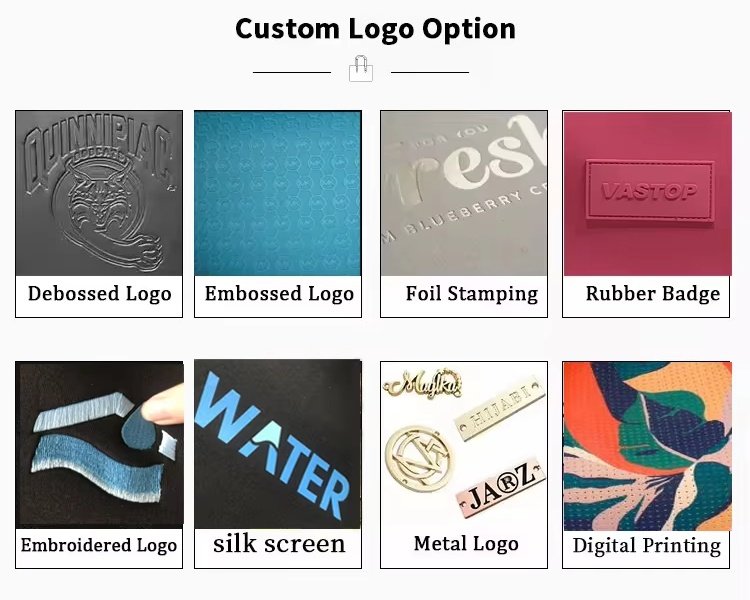
(1) Choose the logo method based on the surface finish, not the fabric name
A “polyester bag” can be matte, coated, PU-backed, TPU-laminated, or textured. Each finish changes adhesion and distortion risk.
Common logo failure patterns and causes
- Peeling or edge lifting: transfer film not compatible with the coating, or insufficient bonding conditions
- Cracking: print too thick for a flexible panel, or placed on a high-fold area
- Color shift: wrong ink system vs coating, or insufficient cure
- Embroidery distortion: fabric too thin, stitch density too high, no stabilizer
- Placement drift: no measurable reference point, only “centered” instructions
Use this decision table:
| Bag Surface or Use Case | Best-Fit Branding | Higher-Risk Branding | Buyer Notes |
|---|---|---|---|
| Matte woven fabric | Embroidery, woven label, screen print | thick transfer on fold zones | stable look, good durability |
| Coated or wipe-clean | woven label, rubber patch (stitched), heat transfer tested | cheap transfer without tests | CoatingA needs compatibility proof |
| Thin lightweight fabric | woven label, light print | heavy embroidery | stabilizer is required for embroidery |
| High-friction zones (hip or back) | woven label, stitched patch | large prints | AvoidA large logos where rubbing happens |
(2) Lock a “Logo Spec Pack” that production can follow
Your logo file alone is not enough. Lock these items in the approval package:
- Artwork file and color reference (Pantone if needed)
- Logo method (transfer, embroidery, woven, patch) and size
- Placement measurement: defined from fixed points (seam, pocket edge, top opening)
- Placement tolerance (example: ±3 mm, based on bag size)
- “No-logo zone” notes (areas that fold, rub, or scuff)
A simple placement instruction that reduces drift:
“Measure from the top opening seam to the logo top edge means X mm”
“Measure from the left side seam to the logo left edge means Y mm.”
This is far clearer than “center it.”
(3) Require small, fast durability checks before bulk
You don’t need expensive lab work for every program. For most B2B bag orders, practical checks on the PP sample and pilot are required:
- Rub test (dry rub and damp rub) on the exact surface finish
- Fold test on the logo area (repeat folding cycles)
- Heat exposure check (simulate a warm warehouse or transit)
- Adhesion check for transfers (edge pick test)
Use a pass or fail list:
| Test | What It Catches | When to Run |
|---|---|---|
| Rub | ink/film wear | PP + pilot |
| Fold | cracking on bends | PP |
| Heat | softening/edge lift | PP |
| Adhesion edge | peeling risk | PP |
(4) Procurement takeaway
If you want fewer returns, treat branding as a controlled spec: method choice and placement rules, and simple tests and evidence photos. It costs little compared to rework and returns.

Multi-SKU Control: Stop Mix-Ups and Drift
If you sell to e-commerce or retail, a single mixed-SKU mistake can create a chain reaction: wrong stock counts, chargebacks, late deliveries, and customer complaints. Preventing that is not about “being careful.” It’s about system design.
(1) Build a SKU Matrix that separates “variables” from “must-not-change” rules
Every SKU program should have two columns: what can change and what must stay locked.
| Category | Can Change by SKU? | Must Stay Locked? |
|---|---|---|
| color or fabric | yes | finish spec must match |
| logo placement | yes | measurement method and tolerance |
| packaging inserts | yes | carton marks format |
| zipper grade | no | match approved |
| webbing and anchor backing | no | match reinforcement map |
| key measurements | limited | The tolerance table applies |
This matrix becomes your internal truth and prevents random scope creep.
(2) Use version control: one language for everyone
Most drift comes from “small changes” not documented. Use simple naming:
- Style Name and Version: “City Tote V1.”
- Update notes: “V2 means new zipper pull and logo moved 10mm up”
- Lock dates: when V2 became active
Even a basic version control reduces costly misunderstandings.
(3) Line-side separation rules
Multi-SKU orders fail when trims and labels are not physically separated. Require:
- Separate bins for each SKU’s zippers, labels, and webbing
- Line-side SKU card (photo and key spec) posted at the station
- “First-piece confirmation” per SKU before full run
- Clear rework handling: rework items must be re-verified as the correct SKU
(4) Packing plan linked to SKU control
SKU control is not complete until packing is controlled. Require:
- carton numbering 1/XX
- packing list by carton number
- barcode placement rule
- If mixed SKUs are allowed: inner separation and outer label listing all SKUs inside
(5) Procurement takeaway
Multi-SKU success comes from clarity and separation: matrix, version, and physical segregation and packing proof. That’s how you keep a complex program stable.


Anti-Damage Packing: Prevent Scuffs and Creases
Packing is part of product quality. If your bag arrives damaged, the customer experience and brand trust still suffer—even if sewing was perfect.
(1) Choose the packing mode by product type and channel
Not every bag should be flat-packed. Decide based on structure and the selling channel.
| Bag Type or Channel | Best Packing Mode | Why |
|---|---|---|
| soft tote (promo, wholesale) | flat-pack and crease control | cost efficient |
| structured backpack (retail) | shape-protected and stuffing | protects silhouette |
| coated wipe-clean bag | surface-protected and separators | Scuffs are costly |
| e-commerce fulfillment | retail-ready inner pack | reduces returns |
Crease control ideas: fold lines placed away from logo zones, use tissue sheets, and avoid tight compression bands.
(2) Protect high-risk surfaces and hardware
Scuffs often happen from internal friction, not outside damage. Use:
- individual polybag (thickness matched to finish)
- protective sheets for coated panels
- hardware protection (avoid metal contact marks)
- corner protection for structured bags
(3) Carton marks and warehouse-friendly documentation
Packing disputes come from missing standards. Require:
- carton numbering 1/XX
- carton marks template (SKU, color, qty, gross or net weight, carton size)
- packing list by carton number
- barcode placement standard
This helps receiving teams process faster and reduces claims.
(4) Shipping mode risks: moisture, heat, compression
Transit environment matters. If your route includes humid storage or long sea transit, plan for:
- moisture barrier or desiccants if needed
- carton strength appropriate for stacking
- avoid over-packing that crushes bags
(5) Evidence to request before shipment
Ask for packing proof photos:
- inside carton view (separation, stuffing, protection sheets)
- carton mark, photo, and carton numbering
- packing list sample matching carton numbers
- barcode placement photo
Procurement takeaway: A controlled pack-out standard reduces returns, warehouse disputes, and brand damage. It’s one of the highest ROI steps in bag programs.
If you want a ready-to-use carton marks template and packing list format, email info@jundongfactory.com and tell us your channel (wholesale, retail, e-commerce) and whether your bag has coated surfaces.
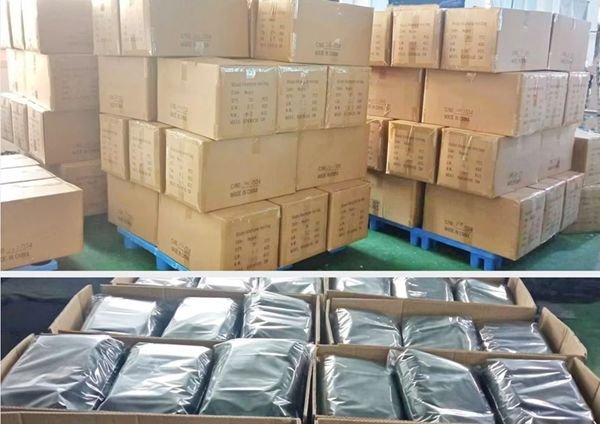

One-Page Checklist to Avoid Quality Issues
Use this checklist in order. If a supplier can’t answer these clearly, your bulk risk is high.
(1) Spec & Approval Package
- Do we have a BOM that lists outer, lining, padding, webbing, zipper grade, hardware, thread, and labels?
- Do we have a measurement sheet with key points and tolerances?
- Do we have a reinforcement map (anchors, zipper ends, base corners) with stitch rules and backing rules?
- Do we have a branding spec (method, size, and placement from reference points and tolerance)?
- Do we have a packing standard (flat vs shape-protected, carton marks, barcode placement, packing list by carton)?
(2) Sampling Stages
- Prototype: did we validate function (capacity, comfort, pocket usability)?
- Revisions: Did we stabilize structure changes (pattern geometry, stress-zone build)?
- Logo or material: Did we confirm compatibility (coated surface vs transfer vs patch)?
- PP sample: Did we lock the approval package and collect close-up evidence?
(3) Materials & Incoming Gate
- Do we have a “No-Substitute List” (zipper grade, webbing thickness, outer finish, key hardware)?
- Will the supplier run incoming material inspection before cutting?
- Will they provide batch photos and “match or not match” confirmation?
(4) In-Process & Final QC Gates
- In-process: do they check anchors, zipper ends, base corners early (not at the end)?
- Final inspection: do we get measurement sheets, function checks, logo placement verification?
- If performance matters: do we run basic durability and load or stress checks?
(5) Multi-SKU Control (if applicable)
- Do we have a SKU matrix (what changes vs what must not change)?
- Do we use version naming (V1/V2) with change notes?
- Are trims or labels physically separated line-side?
- Do we get carton-level packing evidence?

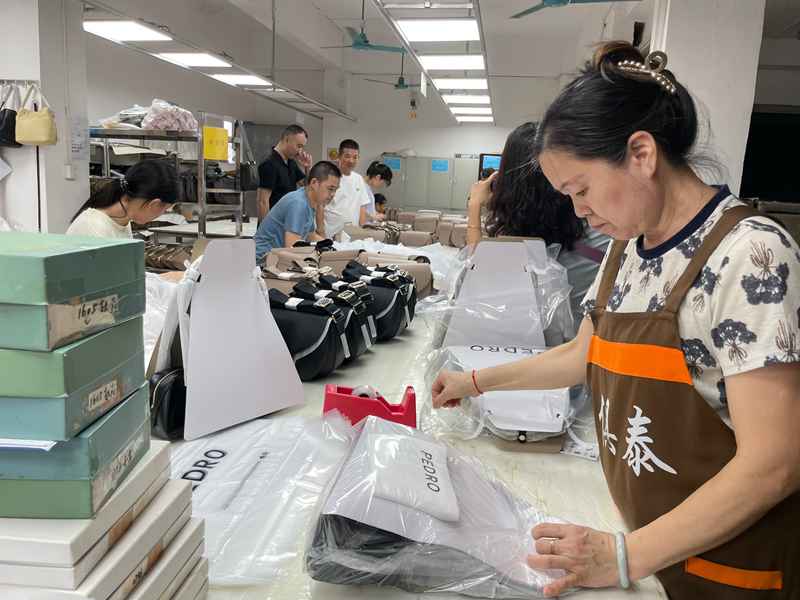
Supplier Decision Table for Quality Control
Use this scorecard during supplier selection. A “Yes” should come with proof (photos, sample docs, or a clear SOP).
| Decision Area | Supplier A (Claims) | Supplier B (System) | What You Want |
|---|---|---|---|
| Approval Package | “We follow the sample.” | BOM, tolerances, and map | documented standard |
| Material Lock | “Same quality” | no-substitute list | batch control |
| PP Sample | “We can do a sample.” | PP as a gate | bulk readiness |
| Incoming Inspection | optional | required before cutting | Stop silent downgrades |
| In-process QC | random checks | stress-zone checkpoints | catch drift early |
| Final Inspection | visual only | measurement and function | measurable pass or fail |
| Packing Verification | “We pack well.” | carton marks and proofs | warehouse-ready |
| Multi-SKU Control | “No problem.” | matrix, version, and separation | anti-mix system |
| Evidence Sharing | limited | routine proof photos | auditable production |
What to ask in the first call (high-signal questions)
- Can you show a sample measurement sheet with tolerances from a recent order?
- What is your standard for strap anchor reinforcement (pattern and backing)?
- Do you do incoming inspection before cutting, and can you share batch photos?
- How do you handle multi-SKU separation on the line and in cartons?
- What packing proofs do you provide before shipment?
Procurement takeaway: Choose suppliers who can show systems and evidence. That’s what scales safely.
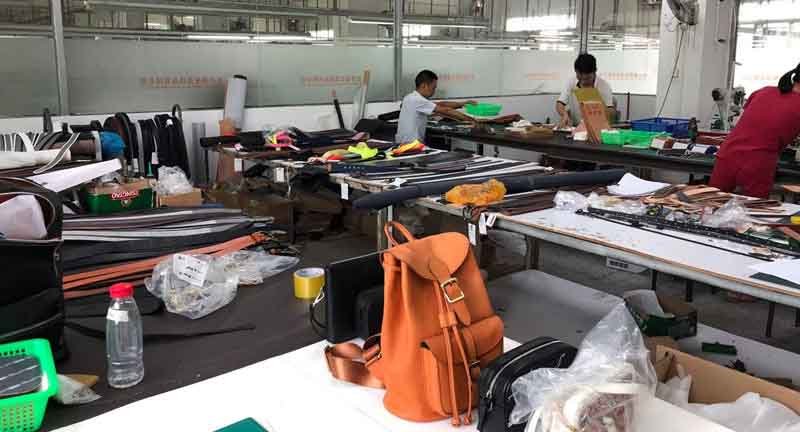

Make A Sample First?
See your idea come to life before mass production.
At Jundong Factory, we offer free design mockups and custom samples to ensure every detail is perfect — from material and color to logo placement and stitching.
Start your project with confidence today: info@jundongfactory.com.
Avoid Quality Issues: Custom Bag FAQs
What information should I provide in the RFQ to prevent quality issues from day one?
The best way to prevent quality issues is to send an RFQ that locks the material system, stress-zone reinforcement rules, branding method, tolerance targets, and a clear QC evidence plan—so the factory can’t “fill gaps” with assumptions that later become defects.
When buyers send a short RFQ like “make a backpack, 600D polyester, logo print,” the factory has to guess dozens of details. Those guesses are exactly where problems start: the “same” polyester feels different in bulk, the zipper grade changes quietly, webbing thickness varies by batch, logo placement drifts because “centered” wasn’t measurable, and packing scuffs coated surfaces during transit. A strong RFQ doesn’t mean a long document. It means a complete decision set that removes ambiguity and defines what must match the approved sample.
Here’s the buyer-friendly RFQ structure that consistently reduces defects:
(1) Define the use case and channel (because it drives specs)
State where the bag will live: e-commerce, retail shelves, wholesale promo, travel, gym, daily commute, industrial carry, etc. This affects everything from zipper grade to packing method. For example, e-commerce needs fewer “first impression” defects (wrinkles, scuffs), while travel/gym needs stronger stress zones (anchors, base corners).
(2) Lock the material system (not just “polyester or nylon”)
A bag is a system: outer + lining + padding + webbing + zipper + hardware + thread + label. If you only name one component, the remaining parts become flexible—and flexibility is where quality drifts. Ask the supplier to confirm each component matches the approved sample or your BOM. If you can’t pick exact specs yet, define “must-not-change” parts: zipper grade, webbing thickness, outer finish/hand-feel, and load-bearing hardware.
(3) Provide a stress-zone reinforcement map (or ask the factory to propose one)
Quality failures cluster in three zones: strap anchors, zipper ends, base corners. Your RFQ should require stitch pattern (bar-tack or box-X), backing reinforcement, layer stacking, and photo evidence during PP/pilot.
(4) Branding rules that factories can execute
Don’t write “logo centered.” Write placement measured from fixed reference points (top seam, side seam, pocket edge) and include tolerance (e.g., ±3–5 mm depending on size). Also, lock the branding method by surface finish: coated fabrics often need stitched patches or tested transfers, while thin fabrics may distort under heavy embroidery.
(5) A QC evidence plan (the “minimum proof set”)
Ask for proof as routine, not as a favor:
| Stage | Minimum Evidence You Request | Why It Prevents Defects |
|---|---|---|
| Incoming materials | batch photos + match confirmation | stops silent substitutions |
| In-process | anchor/zipper-end/base-corner close-ups | catches drift early |
| Final inspection | measurement sheet with real numbers | prevents size/function failures |
| Packing | inner packing + carton marks + carton numbering | prevents scuffs/mixed SKUs |
(6) Timeline and sampling gates
Include sampling stages: proto → revisions → PP sample → pilot/bulk. Make PP a real gate: bulk materials, bulk processes, and evidence photos.
If you want, you can send your draft RFQ and target use case, and we can help turn it into a cleaner “no-gap” spec that suppliers can follow without guessing (only when you’re ready to move forward).and
How do I prevent “approved sample vs bulk drift” when production scales?
You prevent sample-to-bulk drift by treating the PP sample as a production gate, locking a no-substitute list, defining tolerance rules, and requiring routine evidence photos at incoming/in-process/final/packing stages—so bulk follows a repeatable system, not “best effort.”
“Approved sample vs bulk drift” is the most common frustration in custom bag sourcing. It rarely happens because the factory “suddenly got worse.” It happens because scaling introduces new variables: different material batches, different operators, different production lines, time pressure, and multi-SKU complexity. Drift is usually silent until cartons arrive at your warehouse. The fix is not to demand perfection; the fix is to design a system that makes drift hard.
(1) Make PP sample a true gate (not a formality)
A real PP sample should be made with intended bulk materials and bulk construction methods. It must include proof: stress-zone close-ups, measurement sheets, logo placement verification, and packing plan confirmation. If PP is just another showroom sample, bulk will drift.
(2) Lock a “no-substitute list” that protects your weak points
Even honest suppliers swap components under schedule or stock pressure. Define a short list of items that cannot change without approval:
Zipper grade and slider feel.
Webbing thickness/edge feel
Outer fabric finish/hand-feel
Load-bearing hardware
Branding method (transfer/patch/label)
This list prevents “similar” replacements that cause failure later.
(3) Define tolerances that match real production
If you don’t define tolerance, you will argue about what is “acceptable.” For bags, define measurement tolerances for critical points (opening width, height, strap length, pocket depth) and logo placement tolerances. The best tolerances are realistic: tight enough to protect fit, loose enough to be manufacturable.
(4) Require evidence at the right moments
Evidence turns quality from a promise into an auditable routine:
| Gate | Evidence | What It Stops |
|---|---|---|
| Incoming | batch photos + match confirmation | wrong materials |
| In-process | stress-zone close-ups per line/shift | construction drift |
| Final | measurement sheet + function check notes | size/function failures |
| Packing | carton marks + inner packing photos | shipping damage/mix |
(5) Use a pilot order for startup programs
If your brand is launching or changing suppliers, a small pilot order is a smart risk reducer. It validates: material consistency, stress-zone build, packing performance, and warehouse receiving clarity before you scale.
(6) Procurement of the takeaway
Drift prevention is not about more arguing; it’s about fewer unknowns. PP gate + locked components + measurable tolerances + evidence is the fastest path to stable reorders.
What tolerances and inspection standards should I set for custom bags?
Set tolerances around fit/function, branding placement, and stress-zone construction, then link them to a simple inspection standard (incoming/in-process/final/packing) with measurable pass/fail criteria—so quality is judged by data, not opinions.
Tolerances are where many procurement projects either succeed or collapse. If you don’t define tolerances, every defect becomes a debate: “It’s normal,” “It’s within reason,” “We did our best.” A good standard protects both sides: it tells the factory what matters most, and it tells your team what you can approve without slowing production.
(1) Start with “critical-to-function” measurements
These measurements affect usability and customer satisfaction: opening width, overall height, strap length range, laptop compartment fit, pocket depth, zipperand opening size. Define a target and an allowable range. For example, a laptop sleeve that is 8 mm smaller than spec can cause real returns. A decorative pocket depth that is 5 mm off usually won’t.
(2) Branding placement tolerance must be measurable
Logo tolerance is not just aesthetics; it’s brand consistency. Define placement from fixed reference points and set tolerance based on bag size. Small pouches can be ±2–3 mm; larger bags may allow ±3–5 mm. The key is consistency: if you don’t define it, factories will interpret “centered” differently across lines.
(3) Construction tolerances: what to lock in stress zones
Some “tolerances” are structural, not dimensional: stitch pattern type, backing reinforcement presence, and stitch density in anchors and zipper ends. These must be defined as “must match” rules, not flexible targets.
(4) Connect tolerances to a simple inspection plan
A tolerance without an inspection moment is just a wish. Link your tolerance sheet to these checkpoints:
| Inspection Stage | What You Check | How You Record It |
|---|---|---|
| Incoming | Key materials match approved | batch photos + match note |
| In-process | anchors/zipper ends/corners built correctly | close-up photos + spot checks |
| Final | measurements + function checks | filled measurement sheet |
| Packing | carton marks + protection | packing photos + carton numbering |
(5) A practical tolerance table you can use
Below is a buyer-friendly starting point (adjust by product type):
| Item | Suggested Tolerance | Notes |
|---|---|---|
| Overall size (H/W) | ±5 mm (small) / ±8 mm (large) | choose by scale |
| Strap length | ±10 mm | affects comfort |
| Logo placement | ±2–5 mm | defined by bag size |
| Stitch density at anchors | must match the approved | structural rule |
| Zipper smoothness | must pass load open/close | functional rule |
(6) Procurement takeaway
The best standards are: few, clear, measurable. Focus on what affects fit, brand look, and failure risk—then demand proof in the right gates.
How do I prevent zipper failures (jamming, splitting, slider break) in bulk custom bag production?
Prevent bulk zipper failures by locking the zipper specification, controlling tape alignment + zipper-end reinforcement, and requiring loaded functional tests + zipper-end evidence photos at PP/pilot—because most failures start at the zipper ends, not in the middle.
Zipper complaints typically fall into three categories: (1) jamming (hard to pull, teeth snag), (2) splitting (zip closes but opens behind the slider), and (3) slider/puller failure (breakage or deformation). The root cause is usually not “bad luck.” It’s a mismatch between zipper grade and use case, combined with sewing drift at the zipper tape and weak finishing at the end stops.
(1) Lock the zipper spec the right way
In your RFQ, define:
- Zipper type: coil vs molded tooth vs metal (coil is smoother; molded often stronger in harsh use; metal can corrode or snag if environment is rough)
- Size/grade: specify performance level, not only size
- Slider type: auto-lock vs non-lock, double slider if needed
- Puller: shape, plating, and whether it must resist scratching
- Water-resistant zipper? If yes, specify tape + coating expectations and confirm smoothness under load
Procurement tip: If your bag is used daily or in dusty/oily environments, treat the zipper as a “performance component,” not a decorative part.
(2) Require zipper-end reinforcement
Zipper ends are stress joints. Require:
- Clean end stop finishing (no loose tape, no exposed raw edges)
- End reinforcement stitch (small reinforcement patch or controlled back-tack)
- Consistent seam allowance at zipper ends (drift creates misalignment and jamming)
- No twisting/waviness in zipper tape after sewing
(3) Ask for functional tests that simulate real use
A zipper that feels smooth on an empty sample can fail once the bag is loaded. Require:
- Loaded open/close test (bag filled to realistic capacity)
- Cycle test (repeat open/close, especially on curved openings)
- If your market is rough-use: basic dust/sand exposure check and re-test function
- Temperature consideration: if shipping/storage can be hot, confirm no sticky tape behavior
the
Ask for:
- Zipper-end close-up photos (both ends) from PP/pilot
- A short note confirming loaded function checks passed
- Incoming batch photos for zippers (to prevent silent substitution)
How do I prevent strap/handle failures (anchor tear-out, webbing fray, stitching break)?
Strap failures are prevented by defining a load-bearing stack (webbing + reinforcement backing + stitch pattern), locking webbing thickness, and requiring anchor inside-proof photos + basic load tests—because anchors fail from structure choices, not from “more stitches.”
Most strap issues come from one mistake: treating the strap anchor like a cosmetic seam. In reality, the anchor is a structural joint. When bags fail in the field, the webbing often tears out of the body panel, the stitching line cuts into fabric, or the webbing edge frays because the thickness and weave were not controlled.
(1) Lock webbing as a spec, not a commodity
Webbing varies dramatically. In the RFQ, define:
- Width + thickness range (thickness matters as much as width)
- Edge feel (soft edge vs sharp edge)
- Finish (matte vs glossy) and color match rule
- If heavy-use: require higher abrasion performance and stable weave density
(2) Define the anchor build: stitch pattern + reinforcement backing + stacking
A reliable anchor is a stack, not a line:
- Stitch pattern: bar-tack or box-X (choose based on style)
- Reinforcement backing: internal patch matched to the outer fabric
- Stacking rule: how far the reinforcement extends beyond the anchor
- Thread rule: correct thread size and consistent stitch length
(3) “Wrong placement” can cause failure even with strong stitching
Anchors fail faster when they are too close to an edge, sit on a weak panel area, or overlap seams that create uneven thickness. Ask the supplier to confirm anchor geometry and show inside photos of stacking.
(4) Tests and evidence that matter
You don’t need expensive labs for every program. Require:
- Static load test on a filled bag (hold for a set time)
- Cyclic lift test (repeat lifts)
- Visual check: no stitch skipping, no puckering at anchor, no tearing around the anchor
How do I manage multi-SKU orders to avoid mixed cartons, wrong labels, and warehouse disputes?
Multi-SKU success comes from a simple system: SKU matrix + version control + physical separation + carton-level documentation, backed by packing proof photos—because “be careful” is not a control plan.
Multi-SKU is where good products fail operationally. Even if each bag is fine, mixing SKUs in cartons, swapping labels, or mis-packing barcodes can create chargebacks, inventory chaos, and delayed launches.
(1) Build a SKU matrix that defines variables vs locked items
Create a table that lists what can change (color, logo, insert card) and what must not change (zipper grade, webbing thickness, reinforcement rules). This prevents hidden scope creep.
(2) Use version control (V1/V2)
Any change—logo placement, zipper pull, lining—must create a version record with an effective date. Otherwise, you’ll receive mixed versions and argue about “which is correct.”
(3) Require physical separation on the line (the real-world fix)
Ask the factory to:
- Separate bins for each SKU’s trims/labels
- Post a line-side SKU card (photo + key specs)
- Do “first-piece confirmation” per SKU before running full quantity
- Quarantine rework items and re-verify SKU identity
(4) Packing controls that prevent disputes
Require:
- Carton numbering 1/XX
- Packing list by carton number
- Barcode placement standard photo
- If mixed SKUs are allowed, inner separation + outer label listing all SKUs inside
| Stage | Risk | Control | Evidence |
|---|---|---|---|
| Cutting | wrong fabric | batch match gate | roll labels |
| Sewing | wrong label | line-side cards | station photos |
| Final | wrong placement | measurement check | sheet |
| Packing | mixed cartons | carton list | photos |
How do I avoid scuffs, peeling, and “sticky surface” complaints on coated/wipe-clean bags?
Prevent coated-surface complaints by matching coating type to handling, choosing branding methods that won’t crack, and using an anti-scuff packing standard (separators + hardware protection + no over-compression), verified with pre-ship packing photos.
Coated bags (PU/TPU/PVC or wipe-clean finishes) are popular but sensitive. Many “quality issues” are actually surface damage from friction inside cartons, heat during transit, or incompatible logo films that lift at edges.
(1) Identify the coating risk profile
Ask: Is the surface prone to scratching? Does it block/stick under heat? Is it flexible enough for folds? Coatings behave differently under compression and heat.
(2) Branding must match coated surfaces
For coated panels, stitched patches (rubber/PU label stitched) and woven labels are often safer than cheap transfers. If transfer is required, demand compatibility tests: rub + fold + heat exposure.
(3) Packing is the biggest ROI lever
Require:
- Individual polybag or tissue wrap (anti-scuff layer)
- Separators between coated panels (avoid face-to-face rubbing)
- Hardware protection to prevent metal marks
- Avoid over-tight straps/bands that create permanent creases
- If shape matters, stuffing/shape support
(4) Simple tests that catch big failures
- Dry + damp rub test
- Fold test near logo area
- Heat aging check (warehouse simulation)
- Visual inspection for scuff marks after packing trial
| Complaint | Cause | Prevention | Evidence |
|---|---|---|---|
| Scuffs | carton friction | separators + wrap | packing photos |
| Peeling logo | incompatibility | test + method choice | test notes |
| Sticky feel | heat blocking | packing + material choice | heat check |
What’s the best PP sample + pilot process to catch defects before full production?
The safest process is PP sample as a gate + first-article confirmation + small pilot order, with locked BOM/tolerances and evidence checkpoints—because it converts quality from “hope” into a repeatable workflow.
A PP sample only works if it represents real production. The goal is not a prettier sample; it’s proof that the factory can repeat your spec under production conditions.
Recommended 3-step process
Step 1: PP sample gate
PP must use intended bulk materials and include: BOM confirmation, stress-zone close-ups, measurement sheet, branding placement check, and packing plan.
Step 2: First-Article Confirmation
Before the full run, confirm the first pieces on the line match PP. If drift appears here, you fix it before hundreds are made.
Step 3: Pilot order (risk-reduction)
A small pilot validates: incoming material consistency, sewing stability, packing performance, and receiving clarity—then you scale.
The evidence bundle you should require
- Incoming material batch photos
- Anchor/zipper-end/base-corner photos during sewing
- Measurement sheet with actual numbers
- Loaded function checks
- Packing proof photos
| Stage | What It Proves | What It Prevents |
|---|---|---|
| PP | Spec is buildable | wrong assumptions |
| FAI | line repeatability | early drift |
| Pilot | real-world stability | late surprises |
If my budget is limited, which QC checkpoints deliver the highest ROI?
With limited budget, prioritize incoming inspection before cutting, stress-zone in-process checks, and packing verification—because these three gates prevent the most expensive mistakes and the most common buyer complaints.
Not every program needs heavy lab testing. But every program needs a few “gates” that stop high-cost failures early.
a
Stops wrong fabric finish, wrong zipper grade, and wrong webbing thickness. Catching these before cutting saves the most money.
High-ROI Gate 2: In-process stress-zone audit
Focus on anchors, zipper ends, and base corners. If these drift, you get real failures and returns.
High-ROI Gate 3: Packing verification
Many “defects” are scuffs, creases, deformation, mixed SKUs. Packing proof reduces these immediately.
| Gate | Cost Level | Risk Reduced | Typical Complaints Prevented |
|---|---|---|---|
| Incoming | low | very high | substitutions, color/feel drift |
| In-process | low-mid | high | anchor/zipper failures |
| Packing | low | high | scuffs, creases, mix cartons |
I’m switching suppliers. How do I quickly tell if a manufacturer can truly control quality?
The fastest way is to ask for system evidence—sample measurement sheets, stress-zone standards, incoming inspection proof, and packing verification photos—then run a small pilot; factories that rely only on promises usually can’t deliver repeatable bulk.
When you switch suppliers, your biggest risk is believing the sample equals production. A strong supplier shows you how they prevent drift.
High-signal questions (ask on the first call)
- Can you show a recent measurement sheet with tolerances and real numbers?
- What is your standard for anchor reinforcement (pattern + backing)?
- Do you do incoming inspection before cutting, and can you share batch photos?
- How do you manage multi-SKU separation line-side and in cartons?
- What pre-ship packing proofs do you provide?
What “good” looks like
- A clear “no-substitute list” policy
- PP sample treated as a gate, with documented sign-off
- In-process photo evidence focused on stress zones
- Packing standard with carton marks + carton numbering + carton-level lists
Pilot plan (the simplest risk reducer)
Run a pilot order sized to reveal defects: include at least one stress-zone-heavy SKU and your real packing mode. Require the minimum evidence set. If they can pass the pilot cleanly, scaling is safer.
| Signal | Weak Supplier | Strong Supplier |
|---|---|---|
| QC talk | “We have QC” | shows gates + evidence |
| PP sample | optional | mandatory gate |
| Packing | vague | standard proofs |
How do I control color difference and “hand-feel drift” between batches?
Control color and hand-feel drift by locking a material reference standard, requiring batch approval (lab dips / strike-offs where needed), and using an incoming inspection gate that compares bulk materials to the approved sample under consistent lighting—because “same fabric name” does not mean same finish or touch.
Color difference and hand-feel drift are among the most common reasons buyers reject bulk goods, especially for startup brands that rely on consistent product photography and reviews. The hard truth: fabric labels like “600D nylon” or “polyester oxford” describe a category, not a guarantee. Two mills can produce the “same” fabric with different dye lots, different coatings, different weave tightness, and different finishing—leading to noticeable changes in tone, sheen, stiffness, or softness.
(1) Define what “match” means (visual + tactile)
You need two standards:
Color standard: a physical swatch or approved sample panel
Hand-feel standard: a short description of stiffness/softness, surface gloss, and “crinkle” level
If your product is photographed for e-commerce, even small shifts in sheen or saturation can look like a different product.
(2) Use the right approval method for your risk level
- Low-risk colors (black, dark navy): compare against approved swatch under consistent lighting
- High-risk colors (bright tones, pastels, brand-specific colors): request lab dip or strike-off approval before bulk
- Coated fabrics: require both color match and “blocking” behavior check (does it stick when stacked?)
(3) Incoming inspection gate: compare before cutting
Require that the factory checks bulk fabric rolls before cutting and confirms match. If the roll is off, you stop the problem early.
(4) Lighting and photography discipline
Color disputes happen when different people judge color under different conditions. Standardize:
- D65-like daylight or consistent white lighting
- Photo proof with a reference swatch in the frame
- Record dye lot/batch number
(5) Quick control table
| Risk | What Changes | Control Action | Evidence |
|---|---|---|---|
| Color shift | dye lot variation | lab dip/strike-off | approved record |
| Sheen shift | coating/finish | finish lock + sample compare | swatch photos |
| Hand-feel drift | weave/finish | incoming tactile check | match confirmation |
How do I prevent size deviation, distorted shape, and “collapsed bag” complaints?
Prevent size/shape problems by locking pattern geometry, defining measurement points + tolerances, controlling seam allowance and padding thickness, and confirming shape through a packed-fit test—because many “quality issues” are actually pattern and construction drift, not material defects.
Customers don’t complain because a seam is 4 mm off in an invisible area. They complain when the bag looks smaller than photos, the bottom collapses, or the opening doesn’t fit the intended items. These are shape and structure failures, and they typically come from unstable patterns, uncontrolled seam allowance, wrong foam thickness, or missing internal support panels.
(1) Lock pattern geometry (not just final measurements)
Measurements tell you the outcome. Pattern geometry tells you repeatability. Ask the supplier to keep key pattern parts locked: base panel, side panel curve, gusset width, and pocket placement.
(2) Identify “critical-to-fit” measurement points
Define the measurement method (flat vs filled). Many disputes happen because buyers measure one way and factories measure another. For bags, specify:
- Overall height/width/depth
- Opening width
- Strap drop or strap length
- Laptop sleeve internal size (if applicable)
(3) Control seam allowance, foam, and stiffener thickness
Small changes here cause big shape changes. If a bag needs structure, specify:
- Padding thickness range
- Stiffener board thickness (if used)
- Stitch line position relative to edge
(4) Require a packed-fit and “standing test.”
If the bag must stand, require a standing test with realistic fill. If it must fit a laptop, require a fit-proof photo with the target size.
| Complaint | Root Cause | Control | Evidence |
|---|---|---|---|
| Looks smaller | seam drift | seam allowance lock | measurement sheet |
| Collapses | wrong foam/stiffener | thickness lock | standing test |
| Fit fails | wrong measurement method | method defined | fit proof |
Everything You Need to Know Before Customizing Your Bags
Custom bag sourcing decisions are rarely based on appearance alone. A reliable evaluation depends on clear answers around MOQ versus bulk pricing, lead time, material and component control, reinforcement standards, logo durability, packing rules, and repeat-order consistency. This FAQ section is designed to address these operational questions upfront, helping you assess supplier fit quickly while reducing unnecessary internal back-and-forth.
We recommend structuring FAQs around real decision triggers: what information is required to start sampling, how to prevent sample-to-bulk drift, how to stop silent material substitutions, how to engineer stress zones for real load conditions, how to manage multi-SKU programs without mixing or version confusion, and which QC checkpoints and evidence packs protect long-term repeatability. When written clearly, these FAQs also support long-tail search intent such as “custom bag quality control,” “sample vs bulk difference,” “bag manufacturing QC checklist,” or “how to prevent logo peeling on bags.”
For a quick evaluation, share your bag type, target dimensions, material direction, logo method, SKU plan, and packing requirements. Our team will review your inputs and reply with a practical build plan: key risk zones, spec lock items, QC checkpoint photos to request, and a stable sampling route from prototype to PP to bulk and reorders.