 Skip to content
Nylon Bags Manufacturer for Custom Programs — Materials, Specs, QC, and Repeatable Bulk
If you’re sourcing a nylon bags manufacturer for bulk orders, the real risk isn’t the first sample—it’s repeatable production, stable materials, and clean receiving. Our Guangdong factory supports nylon tote bags, backpacks, duffels, and technical organizers with an approval package (BOM lock, tolerances, reinforcement map, logo spec, packing rules) plus staged QC checkpoints that focus on high-failure zones like strap anchors and zipper ends. Share your use case and reference photos to get a realistic build plan, MOQ, and lead-time route.
Nylon Bags: Strength, Weight, Finish, Sourcing
A practical definition: a nylon bag uses nylon as the main outer material, then relies on a full component set—lining, interfacing/padding, webbing, zippers, and reinforcement—to reach the performance level your buyers expect. Nylon is used across backpacks, totes, duffels, promo bags, travel organizers, laptop sleeves, drawstring bags, and technical carry products.
Why customers pick nylon:
- Strength-to-weight ratio: Nylon can feel light while still resisting tearing and scuffing, which helps when shipping costs matter or the end user carries it daily.
- Surface finish control: Nylon accepts multiple appearance directions—matte, semi-gloss, textured, crisp, soft—depending on weave and coating. This matters for brand feel and retail presentation.
- Functional coating options: Many nylon fabrics can take PU or TPU coatings, or DWR-like surface treatments, to manage water and stain behavior.
- Scalable customization: Nylon supports common branding methods like screen printing, heat transfer, woven labels, embroidery, and patches.

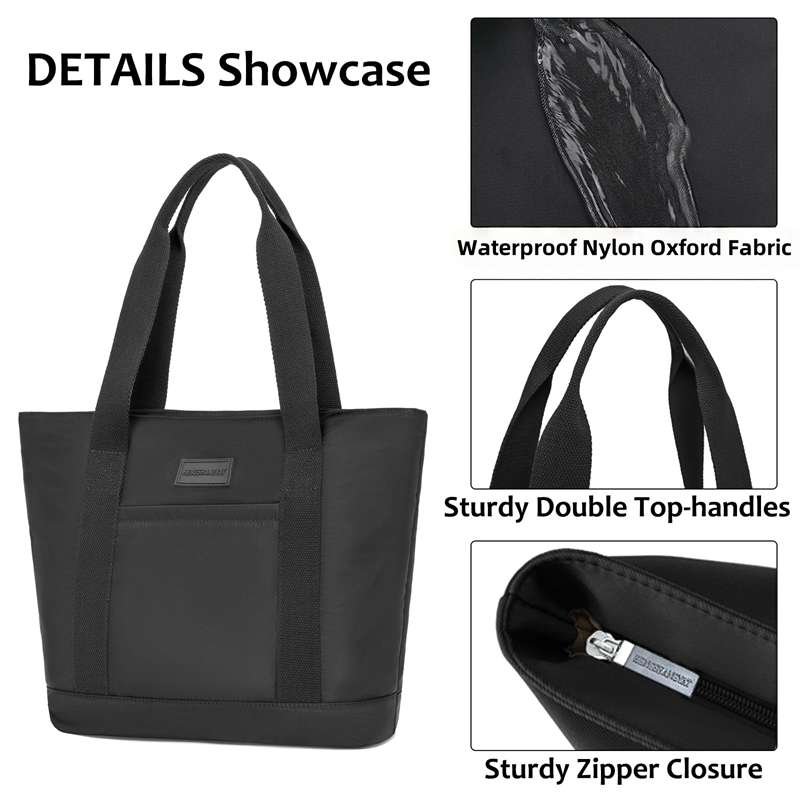

Nylon Fabric Comparison: 210D to 1680D
Fabric choice sets your entire bag program: structure, durability, and even how logos look. Below is a practical comparison. Use it as a starting point, then lock final details during sampling.
Nylon Fabric Quick Comparison:
| Nylon Type (Common RFQ) | Typical Feel / Structure | Best For | Watch-Outs in Bulk | Suggested Pairings |
|---|---|---|---|---|
| 210D–300D (often ripstop) | Light, flexible, packable | pouches, packable totes, organizers, linings | can feel “thin” if you expect structure | Add foam or structured panels if needed |
| 420D | balanced, mid-weight | daypacks, casual totes, travel bags | Hand feel varies with coating | match coating feel to brand positioning |
| 600D | sturdy, common standard | backpacks, duffels, school bags | wide quality range across suppliers | lock yarn quality and coating spec |
| 840D | more rigid, higher abrasion | heavier carry, tactical looks | can crease if the coating is too stiff | use the right lining + reinforcement map |
| 1680D (ballistic-style) | heavy-duty, premium rugged | tool bags, industrial carry, protective products | weight and cost rise; sewing needs stronger needles/thread | pair with strong webbing, reinforced base, premium zippers |


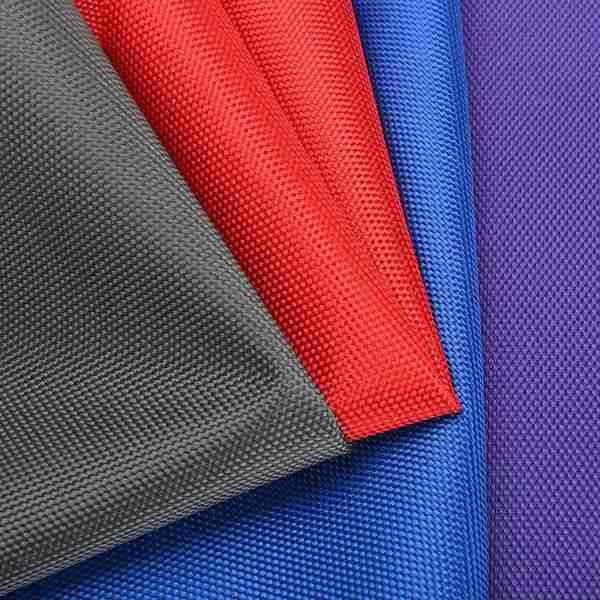
Nylon Bag Styles Matched to Use
Below is a practical “use case to build direction” map. It helps you choose a nylon bag style that fits your channel and reduces return risk.
Nylon Bag Type Decision Map:
| Customer Scenario | Recommended Nylon Bag Type | Typical Build Focus | Common Branding |
|---|---|---|---|
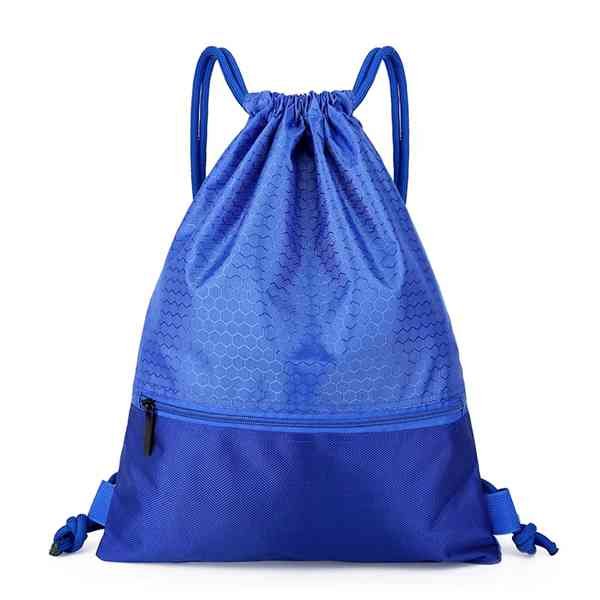
| Promotional giveaways / events | nylon tote, drawstring, simple pouch | lightweight fabric, clean seams, fast production | screen print, heat transfer |
| Retail daily use | casual backpack, tote with pockets | structure hold, strap comfort, clean finishing | woven label, embroidery, patch |
| Travel & airport | duffel, carry-on organizer, packing cubes | zipper reliability, handle comfort, abrasion resistance | subtle logo, woven label |
| Outdoor / sports | gym duffel, waterproof-ish backpack | water behavior, sweat/stain, reinforced base | heat transfer, embroidery |
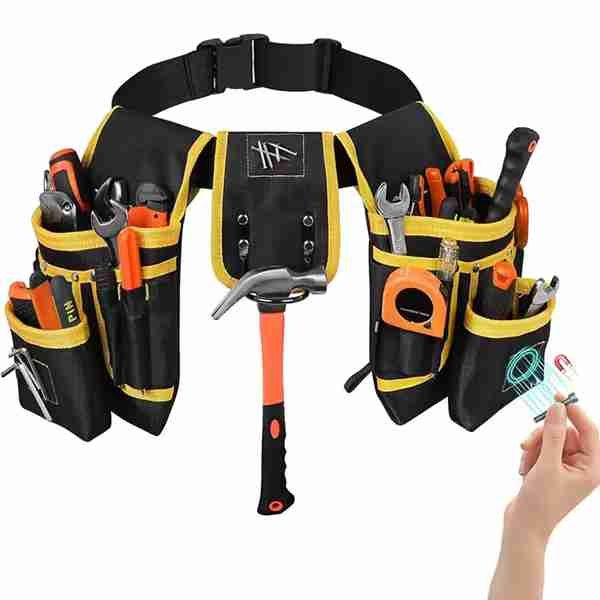
| Industrial / tools | tool tote, heavy-duty carry bag | 1680D-style nylon, base reinforcement, hardware grade | patch, reflective label |
| Electronics carry | laptop backpack, tech organizer | padding system, compartment layout, edge protection | woven label, minimal print |


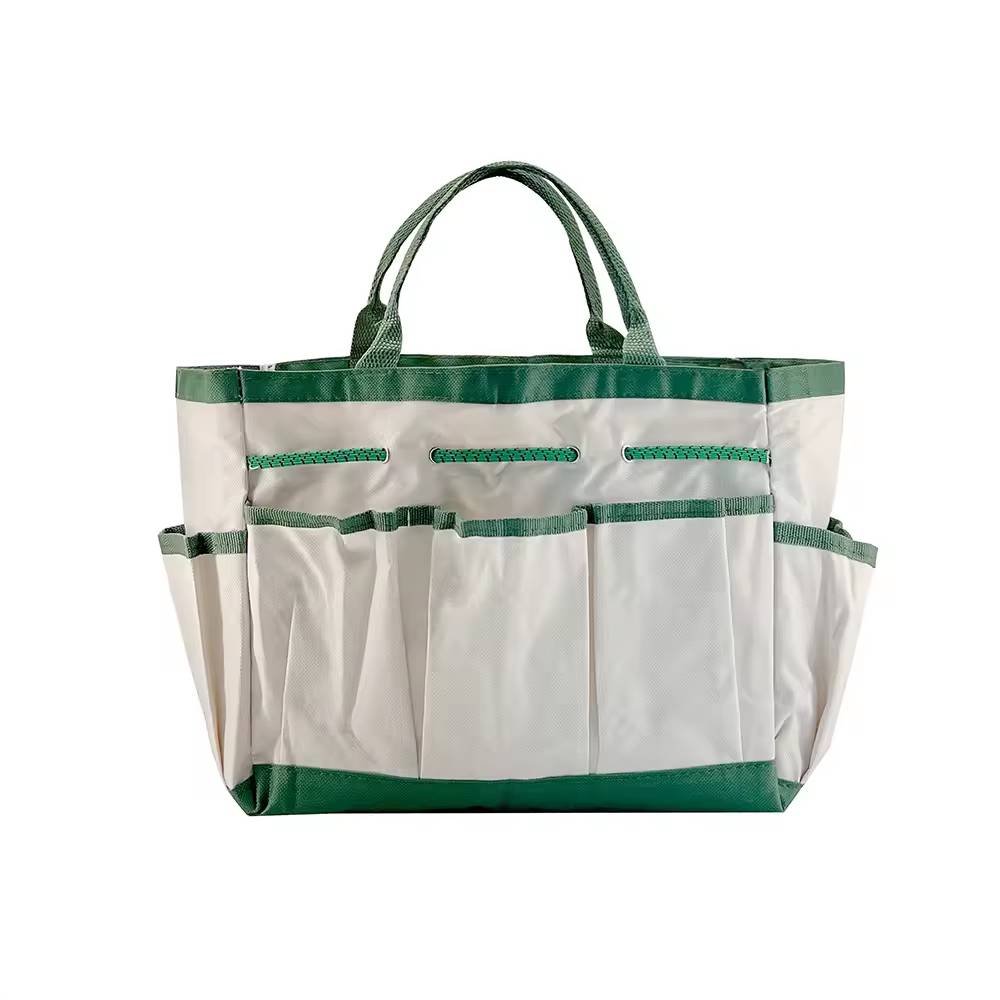

Customize Nylon Bags: Size and Use-Proof Details
A custom nylon bag is more than color and logo. It’s an engineering system built around pattern geometry, a defined fabric specification, a clear reinforcement map, and the right component grade. The fastest way to set direction is one question: which failure is unacceptable (strap break, zipper jam, base wear-through, shape collapse, logo peeling). Then the build is designed to prevent that failure mode.
Key customization decisions for RFQs and approvals:
Size and capacity
Lock L×W×H and add tolerances (example: ±0.5 cm on critical seams, ±1.0 cm overall). If sold online, specify a “photo-ready” packed volume expectation.Structure level
Choose unstructured (light, foldable), semi-structured (foam with stabilizers for backpacks and duffels), or structured (base board, thicker foam, reinforced walls for tool and protective styles).Pocket and layout plan
Define pockets by real packing behavior: quick-access pocket, internal zipper pocket, elastic organizers, shoe or laundry compartment, mesh pockets. Lock the opening path so zipper direction matches daily use.Closures and hardware
Specify zipper size, slider type, puller, and zipper-end reinforcement. Match buckles and hooks to load.Reinforcement map
Identify stress zones: handle roots, strap anchors, base corners, zipper ends, pocket corners. Lock layer count and stitch rules like bar-tack and box-X.

Nylon Bag Branding: Print, Embroidery, Patch
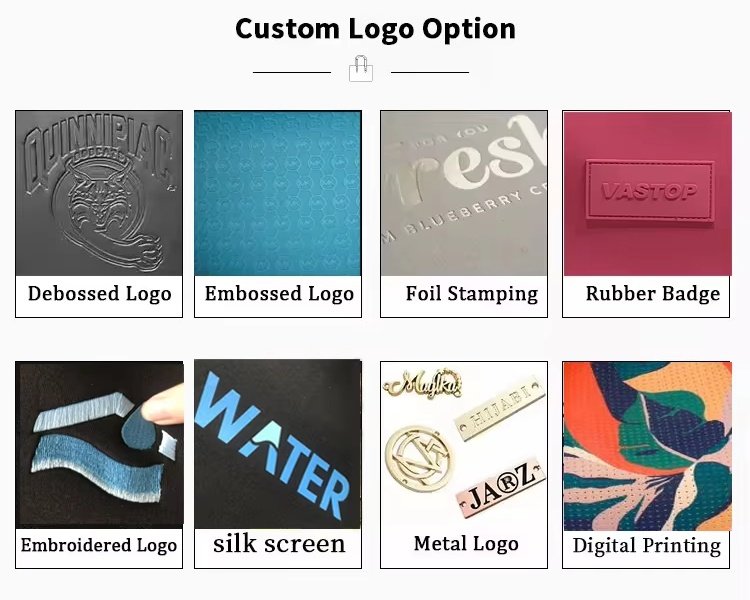
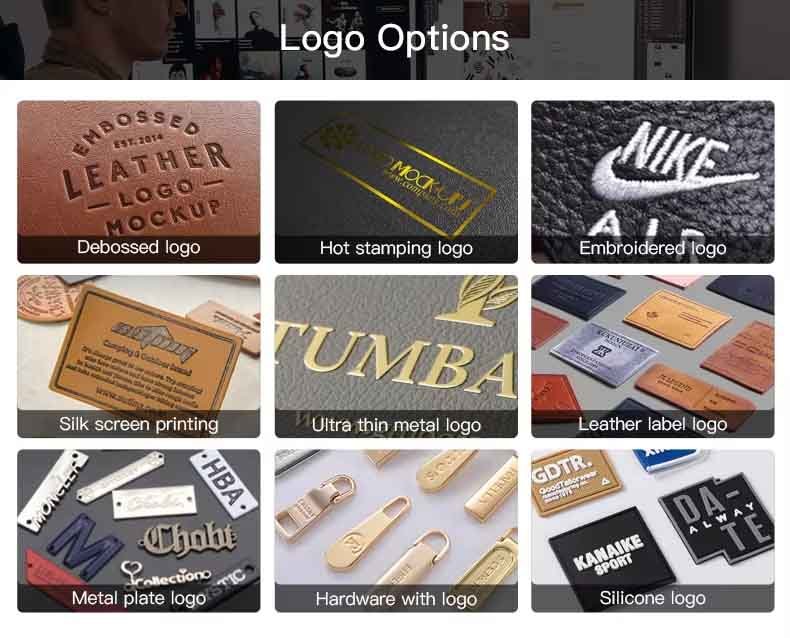
Nylon accepts many branding styles, but the correct method depends on fabric weave, coating, and bag use (wash, abrasion, outdoor exposure). Below is a buyer-ready comparison.
Branding Methods Comparison (for nylon):
| Branding Method | Best When | Strengths | Common Failures | How to Prevent |
|---|---|---|---|---|
| Screen printing | promo bags, large simple logos | cost-effective, fast | cracking on flex points, color shift | print placement away from folds; confirm ink type |
| Heat transfer | clean logos, gradients, small text | high detail | peeling if coating changes | lock fabric + coating; run peel test on bulk-like fabric |
| Embroidery | premium feel, durable branding | long life, tactile | puckering on thin nylon | add backing; avoid on ultra-light nylon |
| Woven label | subtle brand, retail positioning | clean and consistent | edge fray if not stitched well | lock fold type and stitch method |
| Rubber/TPU patch | sporty/tactical | strong identity | patch edge lifting | define sew-on vs glue + sew; corner reinforcement |
| Metal plate | premium minimal | sharp look | scratching, bending | choose thickness; round edges; protected placement |
Nylon Bag Sampling: A Controllable Workflow
A controlled sampling process reduces cost and time. Here is a buyer-friendly workflow you can apply.
Step 1 — RFQ Clarity (before any sample)
Provide: dimensions, use case, target load, expected price level, logo method, quantity, and key photos or sketches. Define “must not change” items (size, pockets, logo placement, zipper path).
Step 2 — Material Confirmation (before cutting fabric)
Confirm: nylon type (denier and weave), coating or hand-feel, lining, webbing, zipper grade, and hardware. If unsure, choose two fabric options and sample both.
Step 3 — Pattern & Structure Lock
Confirm pocket plan, seam allowance rules, reinforcement positions, foam or base board decisions. This is where repeatability is created.
Step 4 — Prototype Sample (function first)
Check: carrying comfort, opening path, pocket usability, zipper smoothness, strap anchor strength. Don’t over-focus on cosmetics yet.
Step 5 — Pre-Production Sample (bulk-like)
This sample should reflect bulk processes and finishing standards. Confirm: stitching quality, logo durability, trimming, binding, and packaging requirements (barcode, hangtag, carton marks).
Step 6 — Approval Package (to protect bulk)
Ask the factory to create an approval file:
final measurements and tolerances
bill of materials (fabric, lining, webbing, zipper/hardware)
reinforcement map photos
logo method spec
packaging rules
This becomes your “reference standard” for bulk.
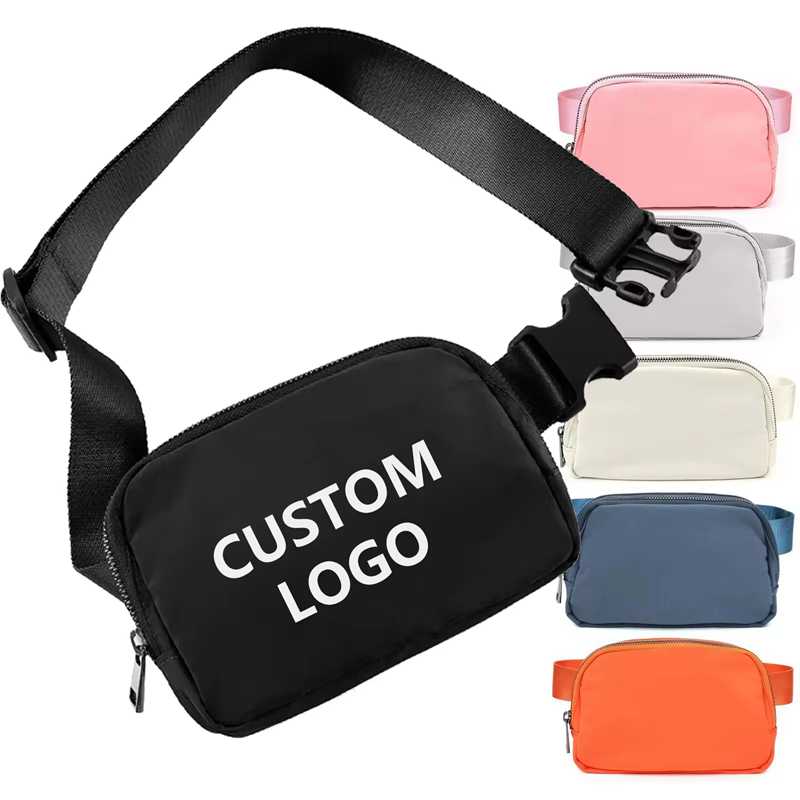

Nylon Bag QC Checkpoints That Prevent Drift
A strong QC plan protects total cost better than pushing for a lower unit price. Nylon bag issues are often small but expensive: missed stitches at a strap anchor, zipper misalignment, webbing fray, or logo peeling after flex. The fix is a checkpoint system tied to known failure zones.
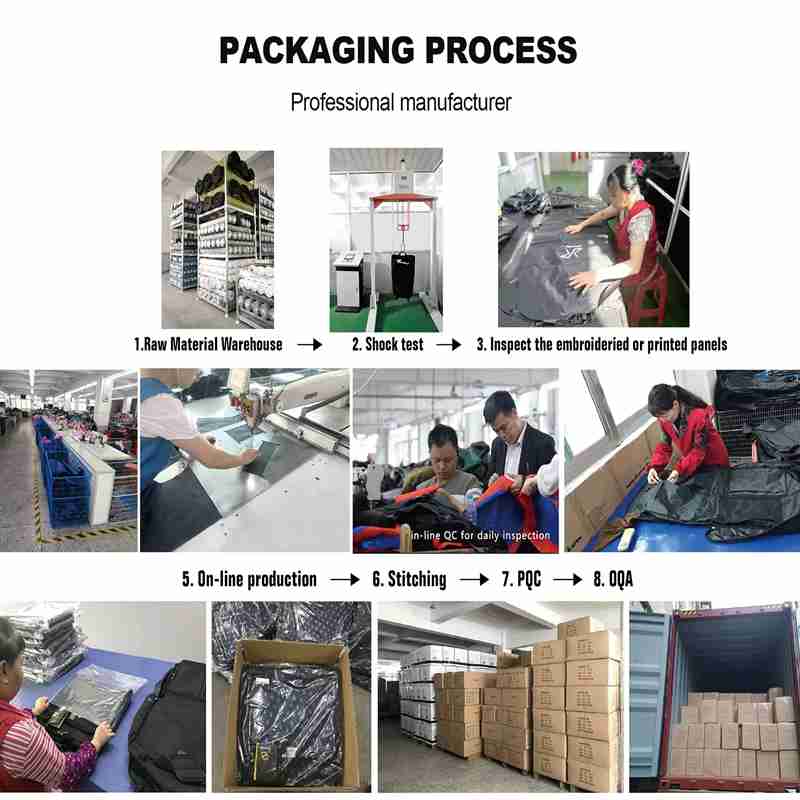
QC Stage 1: Incoming Inspection (materials, components)
Verify fabric match to approved swatch (hand feel, color, weave), coating consistency (gloss, stiffness), webbing width and density, zipper size and slider type with smooth operation, hardware finish and sharp-edge risk, and thread specification aligned to durability needs.
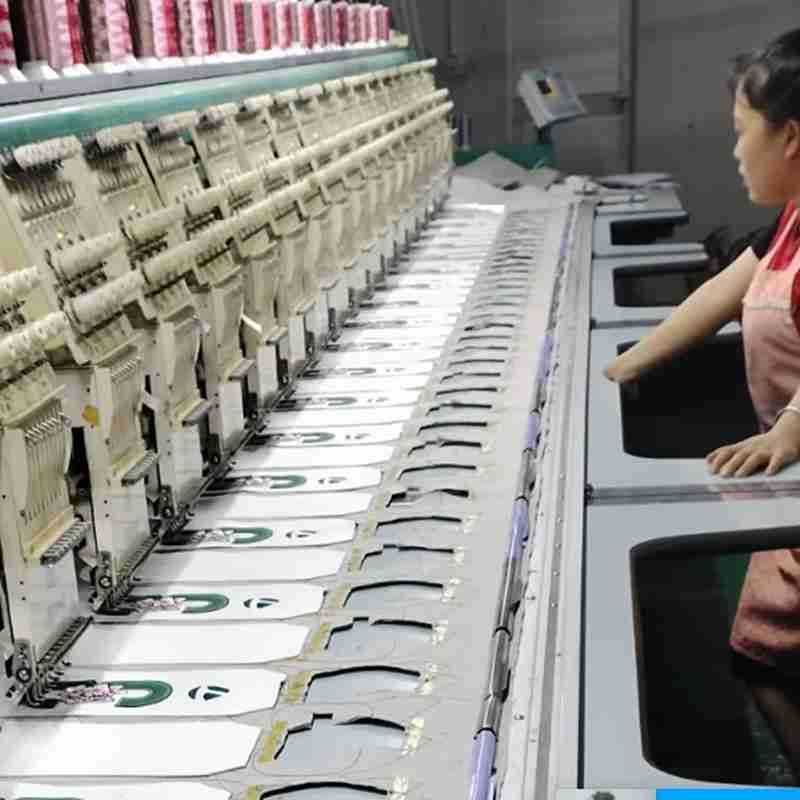
QC Stage 2: In-Process Inspection (construction consistency)
Check seam allowance stability and stitch density, bar-tack and box-X placement at strap anchors, reinforcement layers in stress zones, zipper alignment and zipper-end finishing, pocket symmetry and placement, and binding or edge finishing for fray prevention.
QC Stage 3: Final Inspection (function and appearance)
Confirm measurement tolerances, full function (open-close, carry comfort, strap adjustment), a loaded zipper check (not empty only), logo clarity with a quick flex and adhesion check, cleanliness (trimming, stains, glue marks), and packaging accuracy (unit bag, hangtag, barcode labels, carton marks).

Nylon Bag MOQ and Lead Time Planning
In nylon bag manufacturing, MOQ and lead time are driven by materials, labor minutes, and how early the spec is locked. A “low MOQ” is realistic when you use stock fabrics and colors, standard zippers and hardware, and a simple logo method. MOQ usually increases with custom-dyed nylon, special coatings, custom patches or transfer films, branded zipper pullers, complex pocket layouts, and retail packaging steps like hangtags, barcode labels, and inserts.
A reliable timeline is built in stages: spec confirmation, sampling (prototype plus pre-production sample), material booking, bulk production with in-process checks, then packing and shipping (label placement, carton marks, freight booking). Most delays happen when materials are booked and then the spec changes, or when custom trims arrive late.
Unit cost is most affected by nylon grade, coating choice, reinforcement rules at strap anchors and zipper ends, and component quality. A safer first order is a controlled pilot: lock one reference SKU, confirm materials and hardware, then scale.

Nylon Bag Compliance and Testing Checklist
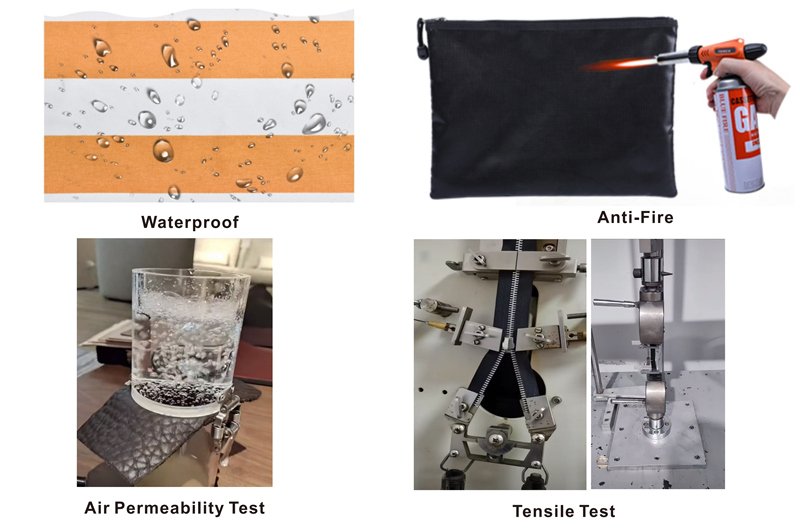
Compliance requirements vary by market and by use case. A promo nylon tote is very different from a kids’ bag or a food-related accessory pouch. Across most nylon bag programs, focus on three areas: chemical safety, durability performance, and labeling traceability.
Key testing categories:
Durability: strap-anchor strength, seam strength, zipper function, abrasion at base corners, load test based on expected carry weight.
Appearance stability: colorfastness to rubbing (dry and wet), washing fastness (if washable), UV risk check for outdoor use.
Material compliance: coatings and prints (inks, transfers), metal accessories (finish and potential nickel concerns), packaging materials, and required warnings.
Risk-control approach:
Lock the material system early: fabric, coating, logo method, and hardware.
Test the highest-risk items first: coatings and prints, then accessories.
Keep one file set: BOM, product spec, labeling layout, packaging rules, and test report list tied to the final version.
Nylon Bag Packing and Shipping Control
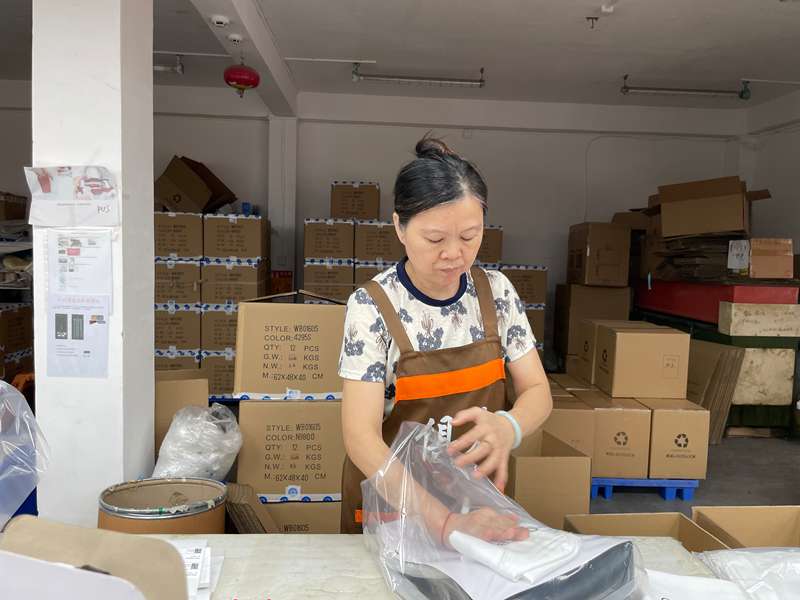
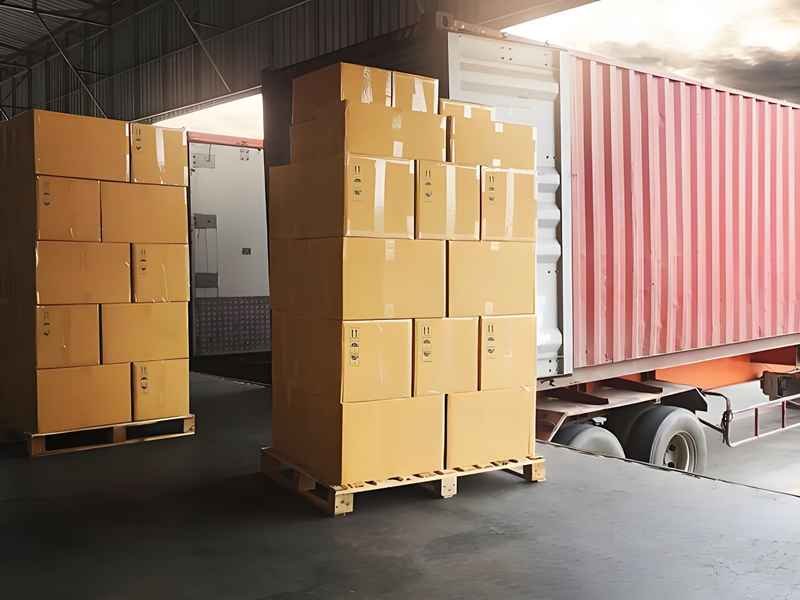
Packaging should match the bag structure and channel requirements. A lightweight promo tote can ship flat, while a structured backpack needs shape protection. Duffels with metal hooks also need scratch control. Use the rules below to reduce deformation, claims, and receiving errors.
(1) Anti-deformation rules
Unstructured bags: ship flat; add paper separators if the surface scuffs easily.
Semi-structured bags: add light paper stuffing in key zones to protect the silhouette.
Structured bags: use internal supports (paper forms or airbags) and avoid over-compression in cartons.
(2) Hardware scratch control
Wrap metal hooks and buckles to prevent rubbing.
Add separator sheets when hardware can touch fabric during transit.
(3) Carton marks and receiving clarity
Specify the SKU code, color, qty per carton, carton number, gross and net weight, dimensions, country of origin (when required), and barcode label placement for outer cartons and inner polybags, where needed.
Why Brands Choose Our Nylon Factory
A strong nylon bag supplier should be evaluated on repeatability, not just price. Here are proof-style reasons teams select us for nylon bag programs, written as measurable practices.
Material system locked early
Nylon consistency depends on the full set: outer nylon, lining, padding, webbing, zipper and hardware, reinforcement. We lock specs and suppliers to prevent silent substitutions that change hand-feel, stiffness, or durability.Pattern and sampling run as one workflow
In-house pattern engineering and sampling speed up corrections on sewing routes, reinforcement placement, and fit details, so the approved version can be repeated in bulk.QC runs in stages with real checkpoints
Incoming, in-process, and final checks focus on known nylon failure zones: strap anchors, bartacks, zipper-end finishing, base corners, and logo adhesion or flex risk.Approval files protect bulk and reorders
We standardize measurements and tolerances, BOM, reinforcement photo references, logo specs, and packing rules to keep multi-SKU and repeat orders stable.Receiving-ready packing and labeling
Carton marks, barcode placement, and SKU separation rules reduce warehouse errors and chargebacks.


Nylon Bag Workflow: RFQ to Bulk Control Points
A nylon bag program stays predictable when every stage produces a clear, checkable output. Here is a practical workflow.
RFQ and feasibility: Confirm bag type, use case, target size, load target, nylon grade, logo method, order quantity, colors, and packaging requirements. Output: build direction and key open points.
Material system lock: Define outer nylon spec, coating feel, lining, webbing, zipper grade, hardware finish, and reinforcement layers. Output: BOM direction for sampling, reducing silent substitution.
Pattern and sampling: Convert the design into sewing-ready panels and stitch routes. Validate pocket usability, zipper path, strap comfort, and reinforcement placement. Output: functional sample and revision log.
Pre-production sample: Match bulk intent for stitch density, binding rules, branding durability, trimming standard, barcode and carton marks. Output: pre-production standard and approval files.
Bulk with QC gates: Run incoming, in-process, and final checks focused on strap anchors, zipper ends, base corners, measurements, and labeling accuracy.
Make A Sample First?
See your idea come to life before mass production.
At Jundong Factory, we offer free design mockups and custom samples to ensure every detail is perfect — from material and color to logo placement and stitching.
Start your project with confidence today: info@jundongfactory.com.
Nylon Bags Manufacturer FAQs
What nylon fabric is best for my bag: 420D vs 600D vs 840D vs 1680D?
The “best” nylon depends on your use case, not the denier number alone—most buyers choose 420D for lightweight retail/promo, 600D as a reliable all-around baseline, 840D for higher abrasion and more structure, and 1680D for heavy-duty/industrial carry where failure costs more than weight.
Here’s how procurement teams usually decide in real projects. First, define the bag’s “pain point”: is it base abrasion, strap anchor pull, shape collapse, water behavior, or print clarity? Denier helps predict thickness and ruggedness, but the full performance comes from a material system (outer nylon + lining + padding + webbing + zipper/hardware + reinforcement). A 1680D shell paired with weak webbing can still fail at the strap. Conversely, a 420D shell with smart reinforcement can outperform a sloppy 600D build.
Procurement tip: If your bag is retail-facing, you may prioritize hand-feel and clean branding. In that case, 600D or 840D with the right coating can look more premium than “overly rugged” 1680D. If your bag is industrial, a higher denier plus stronger webbing and reinforced base corners usually reduce returns.
The safest sourcing method is to sample two options using the same pattern: one “cost-optimized” (420D/600D) and one “durability-optimized” (840D/1680D). Decide by touch, structure, and loaded carry testing—not by spreadsheets.
How can I prevent sample-to-bulk deviation when making nylon bags overseas?
You prevent sample-to-bulk deviation by locking a buyer-controlled Approval Package (measurements + BOM + reinforcement photos + logo spec + packaging rules) and requiring production checkpoint evidence, not by repeatedly “asking the factory to be careful.”
Most drift happens for predictable reasons: fabric batches change in hand-feel or coating, operators interpret reinforcement differently, zipper finishing varies, and pocket placement shifts when there’s no tolerance standard. The solution is to convert your approved sample into a written and visual reference that production must follow.
Use this Approval Package checklist (buyers can copy/paste into POs):
- Final measurements + tolerances (critical seams tighter; overall looser)
- BOM lock: outer nylon (denier + weave + coating feel), lining, foam, base board, webbing spec, zipper size/slider, hardware finish, thread spec
- Reinforcement map photos: strap anchors, handle roots, base corners, zipper ends, pocket corners—show layer counts and stitch patterns (bar-tack, box-X)
- Logo method spec: artwork file, placement dimensions, process type, and a simple durability check requirement (flex/peel/rub)
- Packaging rules: polybag, hangtag, barcode placement, carton marks, packing list format
Then add three checkpoint moments during bulk:
- Incoming material confirmation (fabric, webbing, zippers match approved)
- In-process sewing checkpoint (anchor stitching + zipper-end finishing photos)
- Final inspection checkpoint (measurements + function checks + packaging verification)
What’s the realistic MOQ for custom nylon bags, and how do I reduce MOQ without killing quality?
MOQ is usually driven by fabric/color, logo tooling, and hardware minimums, not only by the factory’s willingness. To reduce MOQ safely, simplify SKUs, use stock colors/components for V1, and spend your budget on stress zones and zippers, not on unnecessary complexity.
Buyers often assume MOQ is a single number. In reality, MOQ can change by component: custom-dyed nylon may require a higher fabric minimum; custom zipper pullers or molded patches may require supplier minimums; and multi-color orders split production batches.
Here’s a procurement-friendly view:
| MOQ Driver | Why It Increases MOQ | Low-Risk Way to Reduce |
|---|---|---|
| Custom fabric color | dye/production minimum | start with stock colors |
| Custom hardware/puller | supplier minimum/tooling | use standard hardware first |
| Complex patch/transfer | setup and yield risk | choose woven label or simple patch |
| Many SKUs/colors | batching complexity | start with 1–2 hero SKUs |
| Retail packaging kits | extra operations | phase packaging upgrades later |
Quality should not be compromised where it matters. Even in low-MOQ runs, buyers should protect:
strap anchors (bar-tacks/box-X + reinforcement layers)
zipper grade (smoothness and durability under load)
base corners (abrasion and tear prevention)
These upgrades often cost less than handling returns or reworking inventory.
How do I evaluate a nylon bag factory quickly (without flying to China)?
You can evaluate a nylon bag manufacturer remotely by checking three things: process control (approval files + QC checkpoints), material system knowledge (nylon + coating + components), and evidence quality (photos, records, and sample consistency)—not by reading generic capability claims.
Remote evaluation works when you ask questions that reveal whether the factory thinks in systems. Use this three-step audit:
Step 1: Ask for a “reference standard” approach
Request how they lock an approved sample into bulk. A serious factory will mention: measurement tolerances, BOM lock, reinforcement map photos, and packaging rules. If the answer is only “we have strict QC,” that’s too vague.
Step 2: Ask material-system questions (nylon is not one thing)
Ask:
What nylon denier/weave do you recommend for my use case and why?
How do you control coating hand-feel across bulk?
What zipper grade do you match to daily use vs industrial use?
A capable partner will answer with tradeoffs and risk points, not one-size-fits-all.
Step 3: Ask for evidence, not promises
Request:
close-ups of strap anchors (bar-tacks / box-X)
zipper-end finishing photos
in-process QC checkpoint photos (not only final packing)
sample revision history if applicable
This shows whether their process is real.
What should I approve in the pre-production sample for nylon bags?
Approve the pre-production sample for what protects bulk: material feel, measurements with tolerances, reinforcement map, zipper-end finishing, logo durability method, and packaging/labeling accuracy—not only cosmetics.
A pre-production sample (PPS) is your last chance to confirm “bulk reality.” Prototype samples often look great, but don’t reflect bulk workflows. PPS should be made with bulk-like sewing routes, binding rules, and component grades.
Use this PPS approval checklist:
(A) Material System (must match bulk)
- outer nylon denier/weave + coating hand-feel matches the approved direction
- lining and padding match thickness expectations
- webbing width/feel is correct
- zipper size/slider is correct and smooth
(B) Construction Consistency
- stress zones reinforced: strap anchors, handle roots, base corners, zipper ends
- stitch density and seam allowance stable
- pocket symmetry and placement correct
(C) Functional Testing
- zipper works under load (bag filled)
- straps adjust and hold; no slipping
- carrying comfort matches the user scenario
(D) Branding & Durability Controls
- logo placement within tolerance
- basic peel/flex/rub test performed or confirmed
(E) Packaging & Receiving
- barcode placement correct (bag + carton if required)
- hangtag/inserts correct
- carton marks match packing list and SKU codes
A simple PPS decision rule buyers use: If the PPS passes the function + repeatability, you can approve cosmetics with minor tolerance. But if anchors, zippers, or labels are unstable, do not approve—those defects scale massively in bulk.
PU coating vs TPU coating on nylon: which is better for bags?
PU-coated nylon is often chosen for cost-effective water resistance and broad availability, while TPU-coated nylon tends to offer a tougher, more flexible coating with better feel stability in some use cases—so the right choice depends on your target durability, hand-feel, and channel expectations.
Buyers ask “PU or TPU?” because both show up in nylon bag specs, but they behave differently. The decision should consider: water behavior, coating durability under flex, long-term appearance, and how the coating interacts with branding methods.
Here’s a practical comparison table:
| Coating | Typical Buyer Reason | Strengths | Watch-Outs | Best For |
|---|---|---|---|---|
| PU coating | cost-effective protection | widely available, good splash resistance | hand-feel can vary by batch if not locked | promo, retail standard bags |
| TPU coating | higher toughness & flexibility | more durable in flex, often “cleaner” feel | cost can be higher; spec must be clear | outdoor, heavy-use, premium technical |
Procurement reality: the coating choice also affects how heat transfers adhere and how the bag ages. If your branding relies on high-detail transfers, you must lock coating type and confirm adhesion testing on bulk-like material. If your bag is heavy-use (tools, outdoor, travel), a tougher coating may reduce complaint rates.
How to specify coating correctly:
- coating type: PU or TPU
- coating side: back coating vs face treatment
- target hand-feel: soft/matte vs crisp/stiff
- target water requirement: splash/rain/high
- logo method compatibility: screen/transfer/patch
- quality control: confirm coating feel vs approved swatch
Decision tip: If you are launching a new program and need stable cost, PU is often practical. If your product positioning is premium technical or the bag faces frequent flex and abrasion, TPU can be worth it—provided the coating spec and tests are controlled.
My nylon bag zippers keep failing. How do I choose the right zipper and prevent returns?
Zipper failures are usually caused by mismatch (zipper grade vs environment) and weak finishing at zipper ends, so buyers should specify zipper size/slider type, require zipper-end reinforcement, and test zippers under real load, not just empty.
For nylon bags, zipper issues show up as jamming, separation, broken sliders, or tape tearing. In B2B programs, zippers fail when:
- bags are overstuffed and tension concentrates at the end stops
- dust/oil contaminates the chain (industrial or travel environments)
- sewing alignment drifts and the zipper tape twists
- zipper grade is too light for the product’s load
Use this procurement checklist:
Zipper selection checklist:
- zipper size grade appropriate for bag type (don’t under-spec backpacks/duffels)
- slider type matched to usage frequency
- zipper tape quality and stitching alignment controlled
- zipper end reinforcement mandatory (extra layers + bar-tack)
- zipper path design reduces tension at corners (avoid sharp turns)
How do I set measurement tolerances for nylon bags so bulk is realistic but consistent?
Set tolerances by separating critical measurements (must be tight) from overall dimensions (can be looser), and include a simple measurement method so inspectors measure the same way every time.
Buyers often set tolerances either too loose (bulk looks inconsistent) or too tight (factory can’t comply, causing delays). Nylon is flexible; thickness and structure choices affect final size. The right approach is to define what matters most for your channel: fit (laptop compartment size), shelf presentation (front panel symmetry), or packing (must fit in cartons).
Practical tolerance approach:
- Critical zones: openings, pocket placement, laptop sleeve width, strap length—tighter tolerances
- Non-critical zones: overall height/width—slightly wider tolerances
Use this table as a starting point (adjust by product type):
| Measurement Type | Examples | Suggested Approach |
|---|---|---|
| Critical | laptop sleeve width, zipper opening length | tight tolerance + measurement method |
| Placement | logo center position, pocket height | medium tolerance + alignment rule |
| Overall | bag height/width | realistic tolerance due to fabric variability |
Also define measurement method: bag laid flat, lightly tensioned, measured from seam to seam or edge to edge. Without a method, two inspectors can create “differences” from the same bag.
Procurement tip: Put tolerances into the approval file and require final inspection sheets. This protects you in reorders because the tolerance standard stays consistent.
I need a multi-SKU nylon bag order (colors/sizes). How do we prevent mix-ups and receiving chaos?
Multi-SKU success depends on a clear SKU coding system, carton-level labeling rules, and packing checkpoints—most mix-ups happen during packing, not sewing, so buyers should control pack-out logic and carton marks.
A multi-SKU program becomes expensive when cartons arrive mixed, labels are wrong, or warehouses can’t receive quickly. The fix is to treat packing as part of QC.
Buyer pack-out control framework:
- Define SKU codes: style + size + color + version (example structure)
- Require carton marks that match SKUs and quantities
- Barcode placement rules: inner polybag + outer carton if needed
- Packing list format: carton number (1/30), SKU, qty, gross/net weight
- Packing photos: one photo per carton type or per SKU batch
Use this table:
| Control Item | What It Prevents | What to Request |
|---|---|---|
| SKU coding | confusion across variants | SKU map sheet |
| Carton marks | warehouse receiving errors | carton mark template |
| Carton numbering | missing cartons | 1/30 style numbering |
| Packing photos | hidden mix-ups | photo proof before shipment |
Procurement tip: Start with a “reference SKU” approval file, then apply the same structure to all SKUs. And insist on carton-level checks. This is how buyers keep multi-SKU programs profitable.
What information should I send first to get a fast quote and a reliable build plan?
To get a fast quote and a reliable build plan, send a short RFQ with use case, size, nylon preference, logo method, quantity, and reference photos—this allows the factory to recommend a stable material system and avoid re-quoting later.
Many quote delays come from missing context. A factory can’t choose webbing grade or zipper grade correctly without knowing target load and channel. Here is the minimum “fast path” package:
Fast Quote Package (minimum):
- bag type + use scene (promo/retail/travel/industrial)
- target size (L×W×H)
- expected load or typical items carried
- nylon direction (420D/600D/840D/1680D; ripstop or not)
- logo method (print/transfer/patch/label)
- quantity + colorways
- packaging needs (barcode/hangtag/carton marks)
- 3–6 reference photos (front/back/inside + stress zones)
Then add your “must not change” list (logo placement, key pocket count, critical dimensions). This prevents endless revisions.
A procurement-friendly approach: If you’re uncertain about fabric, request two build options: cost-optimized vs durability-optimized. This yields faster decisions because you can feel the difference and test under load.
If you prefer email, you can send the above to info@jundongfactory.com with the subject line “Nylon Bags RFQ — [Brand] — [Qty]”.
How do I avoid color mismatch on nylon bags (especially black/bright colors) in bulk orders?
You avoid color mismatch by locking a color standard, setting a practical tolerance, controlling fabric batch booking, and validating color under consistent lighting—because nylon dyes and coatings can shift appearance across lots.
Color mismatch is one of the most frustrating bulk issues. Nylon can show differences due to dye lots, coating gloss level, and even weave texture. Bright colors and deep black are especially sensitive.
Customer controls that work:
- Specify color method: Pantone target vs stock color
- Approve a physical swatch (or confirmed standard) as the reference
- Define tolerance: acceptable ΔE or a practical “visual approval under D65 light” rule
- Require one-batch fabric booking for the same SKU (when possible)
- Confirm coating gloss/matte direction because it changes perceived color
- Ask for pre-cutting material confirmation photos
Quick table:
| Control Item | Why It Matters | Evidence to Request |
|---|---|---|
| approved swatch | sets reference | swatch photo + code |
| coating direction | affects appearance | coating note + sample |
| batch booking | reduces lot variation | material booking record |
| lighting standard | prevents disputes | approval under standard light |
Procurement tip: If your order has multiple shades, limit the first run to fewer colors. Multi-color launches amplify mismatch risk.
How do I verify a factory’s capacity and lead-time reliability for nylon bag production?
Verify capacity by checking line planning, evidence of staged QC, sampling speed, and how the factory handles multi-SKU batching—because capacity is not just headcount; it’s scheduling discipline and process control.
Buyers get burned when a factory accepts orders beyond its stable capacity. Reliable suppliers can explain how they schedule materials, cutting, sewing lines, and packing—especially for complex nylon bags.
Buyer questions that reveal reliability:
- How do you plan production lines for my style?
- What are your incoming/in-process/final QC checkpoints?
- How do you manage multi-SKU batching and avoid mix-ups?
- Can you share timeline milestones: material booking date, cutting start, sewing start, packing start?
- What triggers lead-time delays in your view, and how do you reduce them?
Evidence to request (remote-friendly):
- production planning snapshot (not confidential details, but milestone logic)
- QC checkpoint photos
- packing photo examples and carton mark templates
- sample turnaround history (how many revisions, how long)
Capacity assessment table:
| Area | What Good Looks Like | Red Flag |
|---|---|---|
| Scheduling | milestones and buffers | vague “no problem.” |
| QC | staged checkpoints | only final inspection |
| Multi-SKU | SKU coding + carton marks | “We will be careful.” |
| Communication | clear questions | endless unclear back-and-forth |
Procurement tip: Start with a controlled pilot run. Once bulk stability is proven, scaling is safer and often faster.
Everything You Need to Know Before Customizing Your Bags
Nylon bag sourcing decisions are rarely based on appearance alone. For procurement teams, effective evaluation depends on clear answers around MOQ versus bulk pricing, lead time, load capacity, layout feasibility, reinforcement standards, zipper and hardware specifications, packing logic, and repeat-order consistency. This FAQ section is designed to address these operational questions upfront, helping you assess supplier fit faster and reduce avoidable back-and-forth.
We recommend structuring FAQs around real sourcing triggers: what information is required to start sampling, how to prevent sample-to-bulk drift in hand feel and structure, how to match reinforcement architecture to real load and wear conditions, how to plan multi-channel or multi-region distribution, and which QC checkpoints protect long-term durability and repeatability. When written clearly, these points also support long-tail search intent such as “custom nylon bag MOQ,” “nylon bag manufacturer,” “nylon backpack OEM,” or “nylon duffel bag wholesale supplier.”
For a quick evaluation, share your use case, target load, packing list, target dimensions, and channel requirements. Our team will review your inputs and provide structure recommendations, nylon material system options (fabric, lining, padding, webbing, zipper and hardware), and a practical development route to support your nylon bag program from sampling to repeat production.
