 Skip to content
In a world obsessed with convenience and connectivity, even our bags are getting smarter. Imagine walking through an airport where your luggage tracks itself, charges your phone, and locks automatically when you step away. It’s not fiction — it’s the everyday reality of smart bags, an innovation transforming how people travel, commute, and protect their belongings.
A smart bag is a traditional bag integrated with electronic components such as GPS, Bluetooth, sensors, and batteries to offer extra functions like tracking, charging, locking, and alerts. These features make daily travel more convenient, secure, and personalized — blending fashion with functionality.
Smart bags appeal not only to tech lovers but also to frequent travelers, professionals, and brands seeking innovative ways to stand out. As global demand rises, smart bag production is becoming one of the fastest-growing sectors in the luggage and accessories industry.
At Jundong, a China-based factory with over 20 years of manufacturing expertise, the integration of smart technology into customizable backpacks, luggage, totes, and tactical bags has become a strategic advantage. In this article, we’ll explain what defines a smart bag, the technology behind it, its benefits and challenges, and how your brand can create its own smart bag line with Jundong’s OEM and ODM capabilities.
So, let’s dive into the future of bags — and see how “smart” they can really be.
What Is a Smart Bag? — Definition & Core Concept
A smart bag is any backpack, suitcase, or tote that integrates digital technology — GPS tracking, Bluetooth connectivity, smart locks, or charging systems — to add convenience and safety. These bags combine traditional craftsmanship with embedded electronics, making them more functional, secure, and tech-friendly than ordinary bags.
A “smart bag” isn’t defined by one single feature — it’s a blend of functionality and innovation. Think of it as a hybrid product that merges the textile strength of a traditional bag with the intelligence of a portable gadget.
- The evolution: Early versions were simple — USB charging backpacks. Today’s models include GPS tracking, biometric locks, and sensors that sync to mobile apps.
- The goal: to simplify users’ lives by solving everyday pain points — lost luggage, dead batteries, security risks.
- The tech: Sensors, batteries, Bluetooth modules, and microcontrollers are discreetly installed without compromising the bag’s design.
- The experience: Users can lock, locate, or charge their bag from their phone, receive alerts, or track data through a companion app.
Smart bags blur the line between fashion accessory and mobile device — and as technology improves, this line will disappear entirely.
Which Key Technologies & Features Define Smart Bags?

Smart bags combine features like GPS/Bluetooth tracking, USB charging, smart locks, weight sensors, and companion apps. These technologies enhance security, convenience, and connectivity, transforming how users interact with their bags.
Here’s a breakdown of the main smart technologies inside today’s best-selling bags:
| Feature | Function | User Benefit |
|---|---|---|
| GPS Tracking | Real-time location monitoring | Prevents loss or theft |
| Bluetooth Alerts | Proximity alarms | Reminds users if they leave the bag |
| USB/Type-C Charging | Integrated battery output | Keeps devices powered on the go |
| Smart Lock | Fingerprint or app unlock | Enhances safety |
| Weight Sensor | Measures bag load | Avoids airline overweight fees |
| RFID Blocking | Protects card data | Prevents digital theft |
| Solar Panel | Converts light to energy | Extends battery life |
Each feature addresses a distinct problem — lost luggage, security anxiety, or dead devices. But the real success of a smart bag lies in balance: not every feature fits every user.
For instance:
- A business traveler may value GPS + charging ports.
- A commuter might need anti-theft locks and RFID protection.
- An outdoor adventurer benefits more from solar power and environmental sensors.
The key for manufacturers and brands is to identify which technologies match which customers. Jundong helps clients select, test, and integrate these modules during the design phase — ensuring each smart bag line delivers value and stays compliant with international safety standards.
How Do Smart Bags Work? (System Design & Integration)

Smart bags operate through embedded hardware (sensors, battery, connectivity), firmware that manages logic, and software apps that control functions like tracking, locking, and alerts. All systems communicate wirelessly while managing energy and safety.
Every smart bag functions as a mini ecosystem — electronics, firmware, and textile design must all work together seamlessly.
1. The Core Hardware Setup
Inside a smart bag are small printed circuit boards that host chips, sensors, and batteries. A GPS or Bluetooth module sends data to a paired smartphone. A control unit interprets signals (like motion or distance) and activates responses — for instance, locking the bag or sounding an alarm.
2. Power Management
Most bags use lithium-ion batteries (2,000–10,000mAh). Because of airline restrictions, batteries must be removable or meet UN38.3 safety standards. Smart systems enter “sleep mode” to conserve power, waking only when motion or Bluetooth activity is detected.
3. Software & Connectivity
A companion mobile app lets users monitor bag status, check charge levels, view GPS location, and configure alerts. Cloud integration allows firmware updates and remote diagnostics.
4. Durability & Safety
Components must survive heat, vibration, and moisture. Manufacturers like Jundong design smart bags with waterproof zippers, fireproof linings, and modular compartments to protect circuits.
5. User-Centered Engineering
The goal is invisible technology. The smartest design hides all components so the bag feels natural — not bulky. Engineers balance form, function, and safety while maintaining elegance.
Smart bags are not gadgets disguised as luggage — they’re luggage elevated by technology.
What Are the Benefits & Challenges of Smart Bags?
Smart bags add convenience, safety, and brand differentiation by offering charging, tracking, and anti-theft functions. However, they face challenges such as higher cost, battery regulation, maintenance, and user education.
How Do Smart Bags Deliver Real Value to Users? (Benefits & Use Cases)
- Convenience on the Go: Built-in chargers keep devices alive through long commutes or flights.
- Safety & Tracking: GPS and smart locks reduce theft and loss — a common concern for travelers.
- Efficiency: Weight sensors prevent check-in fines; BLE alerts prevent forgetting items.
- Brand Differentiation: Smart designs attract tech-conscious consumers, allowing premium pricing.
In short: smart bags offer tangible, lifestyle-improving value — not just tech gimmicks.
Do Smart Bags Have Drawbacks or Constraints? (Challenges & Limitations)
Every innovation has trade-offs. The main barriers include:
- Cost: Components and certifications raise the unit price by 20–40%.
- Battery Rules: Airlines prohibit non-removable lithium batteries.
- Durability: Electronics can fail if exposed to moisture or impact.
- Education: Some users find smart apps complicated.
- Support: Firmware updates and warranties require maintenance systems.
To overcome these, Jundong adopts modular, replaceable designs — allowing easy servicing, compliance with global safety standards, and long-term reliability.
Which Types of Bags Can Be Smart Bags? (Product Categories & Applications)
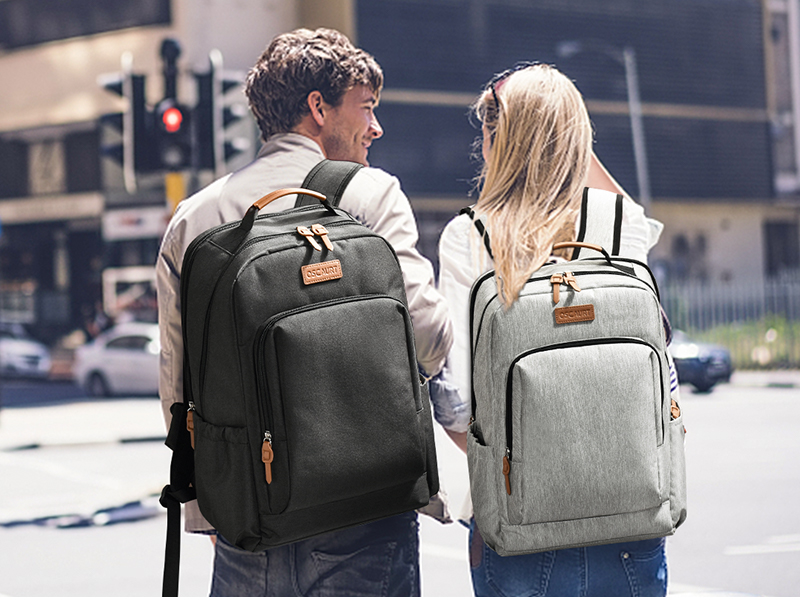
Smart technology works best in travel luggage, backpacks, and lifestyle bags. Other niches—like tactical, cosmetic, or delivery bags—also benefit from sensors, GPS, and locks when tailored to their use cases.
Not every bag needs to be “smart.” The smartest approach is selective innovation — integrating technology where it enhances the user’s core experience.
Which Segments or Product Types Are Well Suited for Smart Bag Integration?
| Category | Ideal Smart Features | Use Case |
|---|---|---|
| Travel Luggage | GPS, weight sensor, smart lock | Long-distance travel |
| Backpacks | Bluetooth, USB, RFID, anti-theft | Commuters, students |
| Tote/Work Bags | RFID, light sensors, app locks | Professionals, office |
| Tactical/Outdoor Bags | GPS, SOS, weather sensors | Military, hikers |
| Delivery Bags | Tracking, temperature alerts | Logistics, riders |
| Cosmetic Bags | RFID, humidity sensors | Travelers |
Each segment benefits differently:
- Backpacks make sense for everyday charging.
- Luggage is ideal for tracking.
- Outdoor bags thrive on smart safety.
- Delivery bags need data and temperature control.
Example Insight:
According to Grand View Research, the global smart luggage market was valued at USD 2.24 billion in 2024 and is projected to reach USD 4.14 billion by 2030, growing at 11.3% CAGR. This growth highlights strong adoption across business and leisure travelers.
Smart Backpacks vs. Smart Luggage
- Smart Backpacks appeal to younger users and urban commuters.
- Smart Luggage serves frequent flyers and premium markets. Both are excellent entry points for brands exploring this category.
Jundong works with brands globally to produce customized smart versions of these categories — helping small buyers and large labels alike build tech-forward collections.
How to Develop / Customize Smart Bags as a Manufacturer or Brand?
Developing smart bags involves defining core features, integrating modular electronics, testing prototypes, meeting certifications, and managing costs. Factories like Jundong provide full OEM/ODM customization, from design to delivery.
Developing a smart bag requires strategic planning across four stages — concept, integration, compliance, and mass production.
1. Define the Product Concept
Start with user pain points. Ask:
- Do users need anti-theft or charging?
- Are they travelers, commuters, or students? Focus on features that solve real problems.
2. Choose the Right Technology
Use modular electronic kits to simplify assembly and maintenance.
Jundong partners with trusted module suppliers to integrate:
- Removable batteries
- BLE / GPS trackers
- App-linked smart locks
- Weight sensors
3. Prototype and Test
Every Jundong prototype undergoes:
- 48-hour vibration testing
- Moisture exposure simulation
- Charging cycle verification (500+ uses)
- Drop & impact resistance tests
This ensures every product is safe, compliant, and durable.
4. Quality, MOQ & Cost Management
Jundong offers low MOQ (as few as 100 units) for new brands, with fast sample delivery and free design.
To visualize the process:
| Step | Description | Lead Time |
|---|---|---|
| Sample Design | Free CAD + Mockup | 3–5 days |
| Prototype Production | Functional sample | 7–10 days |
| Testing & Feedback | Revisions + Validation | 10–14 days |
| Mass Production | Final assembly | 25–30 days |
Smart bag production costs depend on selected modules, but the goal is always value efficiency — delivering premium features at competitive factory pricing.
What’s Next? Future Trends & Market Outlook
Smart bag markets are growing rapidly, driven by demand for connectivity and safety. Future trends include AI-powered functions, modular upgrades, sustainability, and deeper ecosystem integration for brands.
1. Market Growth
- Smart bag market to hit USD 10.5 billion by 2034 .
- Smart backpack subcategory growing at 8.4% CAGR (GMI Insights).
- Asia-Pacific is the fastest-growing production base due to advanced manufacturing and low cost.
2. New Technology Directions
- AI and Predictive Learning: Bags that adjust power-saving modes automatically.
- Self-Following Suitcases: Robotic mobility using LiDAR and sensors.
- Modular Upgrades: Replaceable smart cores for sustainability.
- Voice Assistant Integration: “Hey bag, where are you?” is becoming real.
3. Sustainability & Design Future
- Brands now demand eco-friendly materials like RPET and recycled nylon.
- Jundong combines smart tech with recycled fabrics and biodegradable linings to meet eco-trends.
- Modular electronics reduce waste and extend product life.
4. Brand Opportunities
For OEM and ODM brands, smart bags are a profitable, growing niche that commands higher margins and brand prestige. The first movers in this category often gain strong differentiation and long-term customer loyalty.
Conclusion: Partner with Jundong for Smart Bag Customization
Smart bags are no longer a novelty — they’re the future of everyday carry. With technology, safety, and convenience combined, they create a new standard for modern travelers and consumers.
But making a reliable smart bag takes more than components — it requires experience, engineering, and precision manufacturing.
That’s where Jundong stands out.
As a China-based factory with over 20 years of OEM/ODM experience, Jundong offers:
- Full customization (logo, fabric, electronics integration)
- Low MOQ starting at 100 pcs
- Free design and prototyping
- Fast sampling and delivery
- 100% quality inspection and warranty support
Whether you’re a startup exploring tech-driven luggage or an established brand expanding into smart accessories, Jundong helps you turn your vision into a successful product line.
👉 Ready to create your own smart bag?
Contact Jundong today for a free design consultation and quotation. Let’s build smarter bags — together.