 Skip to content
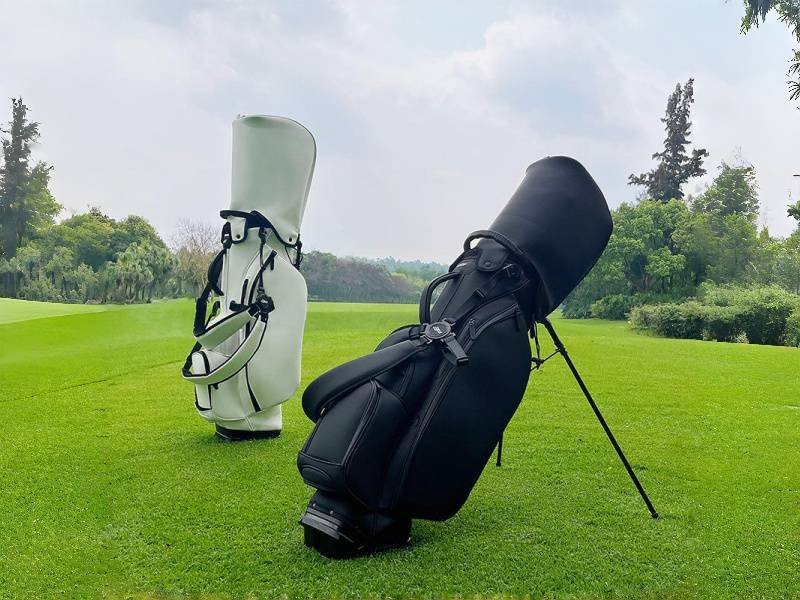
Imagine walking onto the first tee with your clubs packed, your bag—your trusted companion—balancing comfort, function and style. The right golf bag doesn’t just hold your clubs—it supports your game, your brand identity, your retail offering. Whether you’re a golfer choosing your next bag, a retailer deciding which models to stock, or a brand looking for custom-OEM production, understanding what separates the “best” golf bags from the rest is crucial.
The best golf bags combine the right format (stand, cart, travel), high-quality materials (nylon, PU leather, carbon-reinforced), smart construction (dividers, pockets, stand stability), and custom-friendly features (logo placement, low MOQ options) for players and brands alike.
Now picture this: A mid-sized golf brand decides to launch a custom cart bag line—bold branding, weatherproof finish, premium hardware. They partner with a manufacturer capable of custom fabrics, low run orders and full design support. On opening day? They sell out. That story is possible because they understood what makes a top-tier golf bag—and how to source it smart. Let’s dig in.
What Makes a Golf Bag “the Best” — and What Features Really Matter?

A truly best-in-class golf bag excels at material durability, ergonomic carry comfort, intelligent club and accessory organisation, and weather protection. For retailers and OEM buyers, it’s also about manufacturing quality, customization potential and brand alignment.
When we ask ourselves what makes a golf bag “the best,” we need to evaluate the category from multiple angles: the user (golfer) experience, the retail or OEM brand experience, and the manufacturing/supply chain perspective.
User Experience Perspective
Golfers carry their bags — walking 18 holes, towing carts, or traveling abroad. A bag that is too heavy, badly balanced or offers poor organisation will quickly be a negative experience. For example, testers noted that a standout bag weighed only 1.4 kg (~3 lbs) and had comfortable dual straps—resulting in long-day comfort for walkers.
Key features:
- Lightweight yet stable stand system.
- Leg-stands that deploy cleanly on uneven terrain.
- Multiple external and internal pockets for valuables, rain hoods, drinks.
- Clean top cuff and full-length dividers to prevent club tangling.
Retail/OEM Brand Perspective
For a brand or retailer, the bag must not only perform—it must sell. That means:
- On-trend materials and finishes: These communicate premium perception.
- Branding space: ample panel areas for logos, colour runs that support brand identity.
- Supply chain reliability: consistent quality, low defect rates, reproducible finishes across runs.
- Custom potential: Small MOQ, multi-colourways, seasonal drops.
Manufacturing & Sourcing Perspective
From the factory viewpoint, quality depends on material selection, hardware, construction methods, and QC regime.
Material quality directly impacts cost, durability and brand margin. For example: Nylon is noted for strength and water resistance.
Construction aspects: Shall the stitching be double-tail, handle attachments reinforced, base molded or stitched? The difference affects longevity and perceived value.
Smart buyers will ask: Are the zippers YKK? Are the dividers full-length? Is the base stable without wobble on grass? Is the bag protected against moisture? A bag may look good but fail quickly if corners were cut.
In short: The “best” golf bag is the intersection of design, ergonomics, materials, and supply chain reliability. That holistic view is what sets apart the bag that sells and sustains from those that disappoint.
Which Types of Golf Bags Are Most Popular?

The main golf bag types are stand bags (for walkers), cart bags (for ride use), staff bags (premium pro use), pencil/sunday bags (light carry) and travel bags (protection for flying). Picking the right type depends on how you use the bag and how your brand or retail line needs to serve segments.
Let’s break down the major golf bag formats, what makes each popular, and how brands and OEM buyers should think about offering them.
Major Bag Formats
- Stand Bags
- Designed for walking golfers: dual-leg stands deploy to keep bag upright.
- Typically lighter weight (2–4 kg) so it’s comfortable over 18 holes.
- Popular among fitness-focused or minimalist golfers.
- Reviews highlight need for stability, storage and build quality.
- For a brand: good entry product, wide appeal.
- Cart Bags
- Bigger volume, more pockets, heavier weight (4–6 kg+), no stand legs in many cases.
- Designed to sit on a golf cart or push cart with strap-through loop.
- Best for recreational golfers who ride.
- For OEM: offers space for value-add features (cooler pockets, umbrella sleeve, premium hardware).
- Staff Bags
- Professional-grade, premium finish, large 14-way tops, luxurious materials.
- Typically used by touring pros or high-tier golfers.
- Example products cost $300–600 retail.
- For OEM/private label: exclusivity and high margin potential but higher production cost.
- Pencil / Sunday Bags
- Minimalist and ultra-light (1–2 kg), for a quick round, or 9-hole play.
- Fewer pockets, simpler layout.
- For startups or gift lines, low cost, entry segment.
- Travel Bags
- Protection for clubs and bag when flying: hard shells, reinforced components, wheels.
- Growing demand as golfers travel more.
- For manufacturers: material requirements differ significantly (shells, reinforced panels, wheels).
How Brands Should Balance Their Offerings
If you’re a brand or retailer deciding what to stock or produce, consider this model:
| Segment | User Need | Ideal Format | Brand Opportunity |
|---|---|---|---|
| Everyday Walk | Lightweight, organized | Stand Bag | Entry model, wide appeal |
| Ride / Social | High storage, stylish | Cart Bag | Mid-tier, features for comfort & value |
| Premium | Status, premium aesthetics | Staff Bag | High margin, brand halo product |
| Travel | Protection, mobility | Travel Bag | Accessory extension for existing line |
By offering 2-3 core formats with clear differentiation, a brand can capture different user needs while managing production complexity.
Are Hybrid Golf Bags Worth It?
Yes—they’re increasingly popular. Hybrid bags combine features: dual-leg stands + cart strap loop, convertible top formats, modular pockets. They appeal to golfers who both walk and ride or want future flexibility. As the market leans toward versatility, hybrids offer brands a competitive edge. They do, however, bring manufacturing complexity (more moving parts, reliability challenge). OEM partners must have strong engineering capability.
How Much Does a Good Golf Bag Cost and What Affects the Price?
Price of a good golf bag varies widely: entry models retail around $80-120, mid-tier $150-250, premium staff bags $300+. On the OEM manufacturing side, factory costs range $25-35 for entry, $40-60 for mid, and $70-120 for premium units. Price is driven by material quality, hardware, build complexity, branding and volume.
Understanding cost and pricing for golf bags is vital—it influences margin, market positioning, and manufacturing strategy.
Cost Drivers Explained
- Material Quality: High-denier nylon, PU/leather, carbon fiber parts all raise cost. High-denier nylon offers durability and strength.
- Construction & Hardware: Reinforced stitching, full-length dividers, quality zippers, stand mechanism, molded base—all impact durability and cost.
- Branding & Customization: Custom colourways, foil logos, metal plates, limited runs all add cost.
- Volume & MOQ: Smaller runs increase per-unit cost. Factory cost is often lower when MOQ is high.
- Logistics & QC: Premium bags need more QC steps, packaging, shipping protection.
Price Tiers & Factory Cost Table
| Tier | Target Market | Typical Retail Price | Approx Factory Cost (USD) | MOQ |
|---|---|---|---|---|
| Entry | Beginners / mass market | $80-120 | $25-35 | 200 pcs |
| Mid | Regular users / club play | $150-250 | $40-60 | 150 pcs |
| Premium | Pros / luxury brand lines | $300-600 | $70-120 | 100 pcs |
This model allows brands to map production cost to end-price and margin. For example, if the factory cost is $35 and retail is $119, that gives margin room for retailer + brand + R&D.
Sourcing Implications for OEM Buyers
As a buyer sourcing bags:
- Choose a factory with material diversity (nylon, PU leather, carbon-stand components).
- Ask for sample cost breakdown (fabric, hardware, labour) and how future options scale.
- Negotiate MOQ that supports your first run without over-capitalising.
For instance, a factory like Jundong which can handle multiple materials and formats will make it easier to transition from an entry model (entry fabric) to a premium model (leather, carbon) without changing supplier.
Are Custom or Private Label Golf Bags Worth Investing In?
Yes—custom/private-label golf bags present strong value for brands: they allow differentiation, control over materials and look, low MOQ pilots to test market, and margin upside. For sports retailers, pro shops or clubs, manufacturing OEM/ODM bags offers unique branding while reducing reliance on generic stock.
Customization has become a differentiator in golf gear. Gone are the days when a brand simply sold the same bag everyone else did. Let’s explore why custom golf bags are smart—and how to execute.
Why Brands Choose OEM/ODM Custom Golf Bags
- Brand differentiation: Unique colour ways, branding panels, special features (insulated pockets, magnetic closures).
- Control over value chain: Choose materials, hardware, layouts. For example, a brand might choose RPET fabric for sustainability.
- Flexibility and scalability: Lower MOQ allows seasonal collections, limited editions, event-specific branding (club tournaments, corporate golf days).
- Margin benefit: If you order directly from a factory, cost per unit is lower than buying from third-party branded suppliers. That means higher margin or competitive retail pricing.
Emerging Trends & Brand Opportunity
According to market research, the golf bag industry is growing: projected to reach USD 2.32 billion by 2030 with CAGR ~9.5%.
Key trends:
- Lightweight design: Golfers walking more want sub-3 kg bags.
- Sustainability: Use of recycled nylon, RPET, eco-friendly leather alternatives.
- Tech-enhanced gear: Magnetic pockets, insulated drink holders, USB charge pockets.
- Hybrid formats: Stand/cart hybrid bags gaining popularity. Brands that lean into these trends with custom lines will gain competitive edge.
How to Work With an Experienced OEM Factory
- Choose a factory with multi-format capability: stand, cart, travel.
- Confirm they have low MOQ for testing.
- Ensure free design support: CAD sketches, colour runs, logo plate mock-ups.
- Ask for sample turnaround and quality guarantee. At Jundong Factory, you get: 20+ years manufacturing experience, free design, low MOQ, fast sampling, 100% quality guarantee. Ideal for launching your custom golf bag line.
Do Golf Bags Differ for Men, Women and Travel Use?
Yes—differences arise in ergonomics, styling and use case. Women’s golf bags may be lighter, smaller strap systems, softer colours. Travel golf bags focus on hard-shell protection, wheels and club safeguarding. Men’s traditional bags focus on storage and premium materials.
Segmenting by gender and use-case helps brands tailor their lines appropriately.
Women’s Golf Bags
Women often prefer lighter bags due to walking courses plus family routines. Features:
- Reduced overall weight (often 10-15% less than men’s equivalent).
- Dual-strap systems suited to shorter torso lengths.
- Colour palettes and prints that appeal (navy/rose, pastel, stylish neutrals).
- Storage pockets tailored for drinks/snacks/phone/electronics. Capitalising on this segment means designing models with adjusted ergonomics and style cues.
Travel Golf Bags
Travel bags require a different engineering approach:
- Structure: Hard or semi-hard shell to protect clubs.
- Mobility: Wheels, handle extension systems, TSA-friendly locks.
- Materials: Impact-resistant panels, reinforced corners, and waterproof fabrics. With rising golf tourism and international play, travel bags are a growth area. OEM brands should consider rating these for airline handling and consider logistics in supply chain.
Men’s / Traditional Bags
Men’s lines often emphasise premium materials (PU/leather), larger storage for accessories. They may prioritise status, luxury finishes, and brand heritage. Offering these alongside performance-walk models gives full line coverage.
How to Choose the Right Golf Bag Manufacturer or Supplier?

Selecting the right manufacturer means checking for experience (e.g., 20+ years), material sourcing capability (nylon, leather, carbon), low MOQ flexibility, sample design service, certifications (ISO/BSCI), and global shipping/logistics support.
From a B2B sourcing perspective, this is where brands separate good from great. Let’s walk through key criteria.
Supplier Vetting Checklist
- MOQ and flexibility: Can you start with 100–200 pcs for pilot runs?
- Sample design and turnaround: Free design or low cost, 5–7 day sample lead time.
- Materials sourcing: Access to high-denier nylons, PU leather, carbon parts for stands, water-proof coatings.
- Certifications: ISO 9001, BSCI, SGS for factory audits and materials.
- Quality guarantee: Pre-shipment inspection, each bag tested for stand stability, zipper function, water resistance.
- Communication & logistics: Multilingual team, global shipping (air/sea), streamlined packaging.
Why Integrated Factory Matters
When design, sampling, production and shipping are handled in one factory, the speed and cost efficiencies stack up. Fewer hand-offs mean fewer defects, better alignment, and faster launch cycles. A factory like Jundong offers design → sample → production → QC → shipping all in one place with low MOQ and quick lead times.
Cost/Time Considerations
- Sample run: often 5–7 business days after design approval.
- Regular production lead time: 25–35 days (depends on quantity, materials, standing stock).
- Shipping: Choose sea freight for cost savings, air freight for speed. Brand buyers should build this timeline into their product launches or seasonal drops.
FAQ: Everything About Buying, Using & Customising Golf Bags
Q1. What materials are best for golf bags?
High-denier nylon and PU leather are excellent. Nylon offers lightweight durability; PU leather gives premium look and weather resistance.
Q2. Are waterproof golf bags worth it?
Yes — for early morning starts or wet conditions, waterproof fabric and sealed seams protect clubs.
Q3. Which golf bag size suits beginners?
Beginners often benefit from mid-size stand bags (~3 kg weight) with good storage but manageable size.
Q4. Can small brands order custom golf bags with low MOQ?
Yes – many OEM factories support MOQs of 100–150 units for private-label production.
Q5. How long does OEM sampling and production take?
Typically sample in 5–7 days, full production in 25–35 days after design and material approval.
Q6. Do we need to consider gender differences?
Yes – women’s models often adjust strap/frame length and use lighter fabrics or different aesthetic finishes.
Q7. What trends should we watch in golf bags?
Market growth is strong (CAGR ~9.5%) and trending toward lightweight design, sustainability, tech-features and hybrid formats.
Final Call to Action
If you’re ready to launch your next golf bag line—whether you’re targeting walkers, cart users, premium professionals or travelling golfers—understanding features, formats, materials and sourcing gives you the strategic edge.
At Jundong Factory, we bring over 20 years of bag manufacturing expertise. We specialise in custom golf bags with:
✅ Free design support & CAD renderings
✅ Flexible low MOQ (100 pcs)
✅ Fast sampling (5–7 days)
✅ Multi-material capability (nylon, PU leather, carbon components)
✅ Full quality guarantee and global shipping